Late-Season Food Sources for Illinois Whitetails
Hunting in the late season in Illinois can feel like a completely different ballgame compared to the early weeks or even the peak of the rut. The once-abundant food sources are now depleted, the weather has turned bitter, and deer have faced months of relentless pressure, making them ghosts in the timber. Finding what those whitetails are truly focusing on for sustenance is the key to punching your tag when the temperatures plummet and the days grow short. This guide will walk you through identifying and effectively hunting the crucial late-season food sources that Illinois whitetails rely on to survive the harsh winter months.
The Crucial Role of Food in Illinois's Late Season
As the calendar flips into December and January, the landscape in Illinois undergoes a dramatic transformation. The lush greenery of summer is long gone, most crops have been harvested, and the deer, having navigated the demands of the rut and evaded hunters for weeks, are now solely focused on survival. Their metabolism ramps up to combat the cold, and every calorie counts.
Why Deer Prioritize Calories in Winter
Imagine trying to keep warm when it's well below freezing, and your body is constantly burning energy just to maintain core temperature. That's the reality for a whitetail in late-season Illinois. They've often lost a significant amount of body weight during the breeding season, especially the bucks, and now they need to recover. Their bodies are telling them one thing: find calories, and lots of them. They'll seek out the most energy-rich foods available, often traveling farther and exposing themselves more than they would at other times of the year, just to fuel their internal furnace. This intense drive for sustenance means that if you can pinpoint these high-energy food sources, you've found the deer. It's a matter of survival, not just a preference, which makes these areas absolute magnets.
The Impact of Cold Weather and Hunting Pressure
Beyond the basic need for calories, cold weather dictates where and when deer will feed. They're trying to conserve energy, so they'll often feed during the warmest parts of the day, typically late afternoon or even midday. The bitter cold also drives them to seek thermal cover near food, minimizing the distance they have to travel and exposing themselves to the elements. Combine this with the cumulative effect of hunting pressure from the archery season, youth hunts, and both firearm seasons, and you have deer that are incredibly wary. They've learned to associate open fields and easy access with danger. This means they'll often feed under the cover of darkness or in secluded pockets adjacent to heavy cover. Understanding this dynamic is crucial. A food source that was active in October might be completely abandoned in December if it's too exposed or has seen too much hunting traffic. Hunters often lament the "December lull," but it's less a lull and more a shift in deer behavior driven by these factors. Effective strategies for hunting the late-season December lull require a keen understanding of these changes.
Identifying Prime Late-Season Food Sources
When snow blankets the ground and temperatures hover near freezing, certain food sources become undeniably more attractive to Illinois whitetails. These aren't always the lush green fields of early season but rather calorie-dense, often forgotten, or weather-resistant options.
Agricultural Leftovers: The Winter Buffet
For many deer in the agricultural heartland of Illinois, harvested farm fields are the ultimate late-season buffet.
The most sought-after are typically:
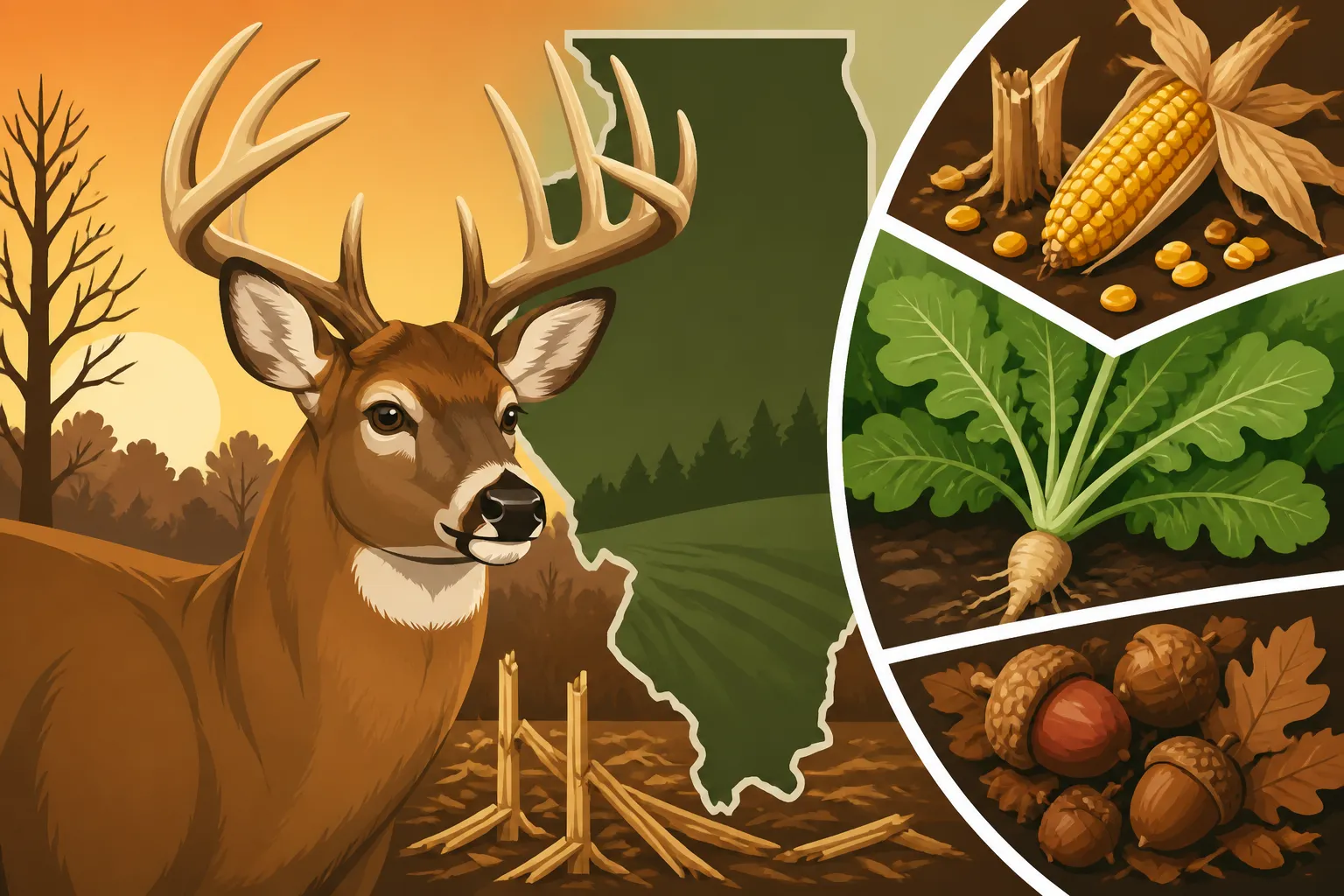
- Standing or Picked Corn: Even after combines have passed through, shattered corn and overlooked ears can provide a tremendous amount of energy. Deer will meticulously pick through these fields, especially if there's standing corn that offers some cover. Whole kernels are packed with carbohydrates, and deer will work hard to find them. If you're hunting central Illinois farmland deer, this is often your bread and butter. Look for areas where combines struggled, like wet spots, ditches, or edges near timber, as these often hold more missed kernels.
- Soybean Fields: While not as calorie-dense as corn, leftover soybeans are still a critical protein source. Deer will graze on dropped beans or even nibble on the remaining pods if pickings are slim elsewhere. These fields are often preferred when temperatures are extremely cold and deer need a quick, easily digestible energy boost. Scouting here is key, as deer often prefer specific areas within a large field that offer slightly more cover or are closer to bedding.
- Winter Wheat or Alfalfa: These green fields can be goldmines, especially in milder late-season conditions or when a light snow cover makes them the only visible green. Winter wheat, planted in the fall, offers a palatable, nutritious option. Alfalfa fields, if managed well, can remain green and attractive deep into the season. Deer will hit these for vital protein and moisture.
The trick with ag fields is often finding the safest access points for deer. They know these fields are exposed.
Native Browse and Mast: The Natural Pantry
Don't underestimate the power of natural food sources, especially in timbered areas or during mild winters.
- Acorns and Hard Mast: If there's an oak ridge with leftover acorns, deer will find them. While most acorns are consumed by early winter, some pockets, particularly white oak acorns which are less bitter and decay faster, can still be found under leaf litter or snow. Areas with persistent red oak acorns, which take longer to sprout and can remain viable longer, are also worth checking. After a poor acorn year, deer will be even more desperate for these. Beyond acorns, consider other hard mast like hickory nuts or beechnuts if available, though these are less common as primary late-season forage.
- Woody Browse: As other food sources diminish, deer turn to woody browse. Favorites include sumac, multiflora rose, greenbrier, honeysuckle, and young regeneration in timber cuts. These might not be as calorie-rich as corn, but they provide essential roughage and nutrients. Look for areas with recent logging, clear-cuts, or natural disturbances that encourage new growth. Creek bottoms for late-season deer can be excellent spots for finding diverse browse. A useful tool like GoHunt can often help identify these timbered and brushy areas on satellite imagery, allowing you to scout from home.
- Persistent Fruits and Berries: While less common, certain persistent fruits like wild grapes, persimmons (especially after a few freezes), or even crabapples can be hit hard if present. These often provide a sweet, energy-rich treat that deer will travel for. Small groves of crabapple trees or a thicket of wild grapes along a fencerow for late-season deer can be hidden gems.
Food Plots: Designed for Attraction
Thoughtfully planted food plots are specifically designed to attract and hold deer, and their value becomes immense in the late season.
- Brassicas (Turnips, Radishes, Rape): These are perhaps the quintessential late-season food plot. They sweeten up significantly after a hard frost or two, making them incredibly palatable and highly nutritious. Deer will consume both the leafy tops and, crucially, dig up the energy-rich bulbs or tubers. A well-established brassica plot can hold deer for weeks. They are an excellent option for a green field planted for deer, providing both above-ground forage and hidden nutrition.
- Winter Grains (Cereal Rye, Winter Oats): Similar to winter wheat, these provide green forage that can persist under snow. They offer a good source of protein and carbohydrates, making them a consistent draw. Deer will often prefer these during milder winter days or in between hitting more intense carbohydrate sources like corn.
- Clover: While not always the top choice in extreme cold, certain perennial clovers can remain green and attractive, especially if snow cover isn't too deep. They offer a good protein boost, and deer will graze them opportunistically. A well-maintained clover plot at first light can still see traffic.
When evaluating food plots, consider their size, location relative to bedding cover, and the surrounding natural food availability. A large, diverse plot managed by a seasoned hunter or conservation group will likely see more consistent late-season activity. Using mapping tools like GoHunt can help you locate and assess potential food plot areas on public or private ground you have access to.
| Late-Season Food Source | Primary Benefit | Preferred Conditions | Typical Location | Scouting Sign to Look For |
|---|---|---|---|---|
| Standing Corn | High Carbohydrate Energy | Cold, light snow | Harvested fields, field edges, creek bottoms | Trails, scattered kernels, nibbled stalks, droppings |
| Soybeans | Protein, Carbohydrates | Moderate to cold, light snow | Harvested fields, field edges | Dropped beans, nibbled pods, concentrated tracks |
| Winter Wheat/Rye | Green Forage, Protein | Milder cold, light snow | Planted fields, food plots | Grazing evidence, fresh droppings |
| Brassicas (Turnips) | High Energy Bulbs, Greens | Cold, after hard frost | Food plots, managed clearings | Dug-up bulbs, heavily browsed leaves, extensive tracks |
| Acorns (Red Oak) | Energy, Fat | Any late season | Oak ridges, timbered draws | Scraped leaves, deer nose marks in snow, droppings |
| Woody Browse | Fiber, Nutrients | Extreme cold, deep snow | Clear-cuts, thickets, fencerows, river bottoms | Browsed twigs, rub lines on small saplings, bedding nearby |
| Clover Plots | Protein | Milder cold, less snow | Food plots, open timber | Fresh growth, tracks, light grazing |
Strategies for Hunting Late-Season Food
Finding the food is only half the battle. Successfully hunting late-season whitetails requires a blend of meticulous scouting, strategic setup, and a willingness to adapt to the conditions and the deer's heightened senses.
Scouting for the Last Supper
Late-season scouting is about confirming current deer activity, not just historical data. Snow is your best friend here. A fresh blanket of snow reveals every track and trail, making it easy to identify active travel corridors and feeding areas. Look for heavily used trails leading from bedding cover to specific food sources. Pay attention to the size and freshness of tracks, distinguishing between individual deer and consistent group movement. Droppings will tell you what they're eating and how recently they were there. Focus on the edges of agricultural fields, dense cedar thickets, and south-facing slopes that absorb more sun and might melt snow faster, revealing browse. GoHunt's satellite imagery and mapping features can be incredibly useful for pinpointing potential bedding areas near these food sources, allowing you to plan your approach without disturbing the deer. Remember, deer are at their most vulnerable in late season, and any unnecessary pressure can send them nocturnal or off your property. Your goal is to pinpoint their current routine with minimal intrusion.
Setting Up for Success: Stands and Blinds
Once you've identified an active late-season food source, your setup needs to be precise. Deer are incredibly sensitive to intrusion now.
- Wind and Sun: Always hunt with the wind in your favor. This is non-negotiable. Additionally, consider the sun's position. On bitter cold afternoons, deer often prefer to feed with the sun on their backs. Setting up on the downwind side, facing the sun, might be uncomfortable for you but can put deer at ease.
- Proximity to Bedding: Deer will choose the shortest, safest route between bedding and food. Your stand or blind should be positioned to intercept them along this path, ideally where they feel secure enough to feed in daylight. This often means being closer to the cover than you might in earlier seasons. For instance, if deer are hitting a standing soybean field, set up in the timber edge where they'll first emerge. A well-brushed-in blind on a field edge or a hanging stand just inside the timber can be deadly.
- Ground Blinds vs. Treestands: In deep snow or bitter cold, a ground blind offers superior concealment and protection from the elements, allowing you to stay longer and remain more comfortable. Just ensure it's brushed in thoroughly and set up well in advance to allow deer to get used to it. Treestands offer a higher vantage point for spotting, which can be advantageous in open terrain or for seeing over smaller rises, but expose you more to the cold. Consider your specific hunting situation, and if it's too cold for a treestand, don't be afraid to utilize a ground blind on Illinois public land.
Adapting to Weather and Pressure
Late season is all about flexibility. Weather fronts, especially cold fronts, can dramatically impact deer movement. After a bitter cold front, deer will often move heavily to feed, making it a prime time to be in the stand. Conversely, a warm spell might make them more complacent and less predictable.
- Cold Fronts: These are your best friends. The day or two following a significant drop in temperature often sees increased daylight activity around high-calorie food sources. Deer need to replace lost energy.
- Snowfall: A fresh snowfall can initially suppress movement, but once it stops, deer are often quick to get up and feed, especially if it's light snow that doesn't hinder movement. This is also when your scouting becomes easiest!
- Pressure: If a food source is getting hit too hard by other hunters, deer will go nocturnal or abandon it entirely for a more secluded option. Be willing to move and seek out forgotten corners of property. Utilizing mapping apps like GoHunt can reveal small, overlooked food pockets on public land that might not see as much pressure. Understanding how to find ground others walk past is key to late-season success.
Beyond the Plate: Holistic Late-Season Approach
While food is the primary driver, successful late-season hunting in Illinois demands a comprehensive approach that considers all aspects of a whitetail's survival strategy. It’s not just about where they eat, but where they rest, how they move, and how you interact with their environment.
Considering Cover and Thermal Protection
In the late season, thermal cover becomes almost as important as food. Deer burn enormous amounts of energy just staying warm, so they will seek out the densest cover available, especially on north-facing slopes, to escape bitter winds and hold residual heat.
- Dense Conifers and Thickets: Cedar thickets, stands of pines, or dense multiflora rose patches offer excellent thermal protection. They block wind and can be several degrees warmer inside than the ambient air temperature. Deer will bed in these areas, often within easy walking distance of a primary food source. When you're scouting, look for well-used trails leading directly from these thickets to fields or browse areas. These tight cover areas are also where you'll find where Shawnee National Forest bucks bed, seeking refuge from the elements.
- South-Facing Slopes: During sunny, cold days, south-facing slopes absorb more solar radiation, warming up faster and offering a welcome respite from the cold. Deer will often bed on these slopes, soaking up the sun's rays to conserve energy. Look for these areas in conjunction with food sources. If a south-facing slope is also covered in thick brush or young timber regeneration, it becomes a dual-purpose haven for whitetails.
- River Bottoms and Leeward Sides: In river bottom country, the leeward side of ridges (the side sheltered from prevailing winds) provides natural thermal breaks. Deer will often gravitate to these areas, especially where there's dense cover and access to woody browse. Hunting Illinois River bottom funnels, for example, means understanding how deer use the terrain to avoid wind and easily access food.
Understanding the interplay between food and cover is critical. A deer might expose itself in an open field for high-calorie corn, but it won't stray far from the safety and warmth of its bedding area. Your approach should respect this need for security and warmth.
Access and Exit: Minimizing Disturbance
In no other season is stealth more important than in the late season. Deer have been hunted for months, and they are incredibly sensitive to human presence. One wrong move can blow an entire hunt or even push deer off a property.
- Stealthy Entry and Exit Routes: Plan your routes to and from your stand or blind meticulously. Avoid walking through bedding areas or directly across major food sources. Use terrain features like creek beds, ditches, or dense fencerows to hide your approach. Walk slowly and quietly, minimizing noise. If you're hunting an evening food source, consider entering well before deer typically move and staying until full dark to ensure you don't spook deer feeding in the field.
- Timing is Everything: Focus your hunting efforts during the warmest part of the day, typically the last few hours of daylight, when deer are most likely to move from bedding to food. On extremely cold days, midday hunts can also be productive as deer might get up for a quick snack. However, sitting all day in extreme cold without a solid plan can lead to unnecessary disturbance if you move around too much or exit prematurely.
- Managing Your Scent: Even in cold weather, scent control is paramount. Wear clean clothes, use scent-eliminating sprays, and play the wind religiously. Any lingering human odor can alert wary deer to your presence, especially if they're moving into a food source from downwind. Be mindful of how your body heat and breath might carry scent in the cold, dense air.
By combining an understanding of these late-season food sources with disciplined scouting, strategic setups, and a commitment to minimal disturbance, you can turn the challenging late season into a rewarding opportunity to fill your freezer and punch a late tag. The deer are there; you just have to adapt to their winter rhythm.
Disclaimer
Hunting is an inherently dangerous activity. Always prioritize safety, follow all local and state regulations, and obtain proper licenses and permits before heading afield. The information provided in this guide is for informational purposes only and should not replace professional instruction or advice.