How Many Acres Shawnee National Forest Covers
Stepping onto public land, especially a sprawling expanse like Shawnee National Forest, can feel incredibly liberating, yet also a little daunting. You know it's massive, but wrapping your head around just how much ground that actually is, and what it means for your hunting strategy, can be tough. This guide is here to break down the sheer scale of Shawnee National Forest, help you understand its true acreage, and give you practical insights into how to navigate and hunt this incredible Illinois resource effectively.
The Sheer Scale of Shawnee National Forest
When you talk about public land in Illinois, Shawnee National Forest almost always comes up first. It's truly a gem, offering a different kind of landscape and hunting experience than much of the prairie state. But its size isn't just a number on a map; it's a feeling you get when you're deep in its timber, far from any road, and it's a huge factor in how you plan your hunt.
The Official Numbers and Its Vastness
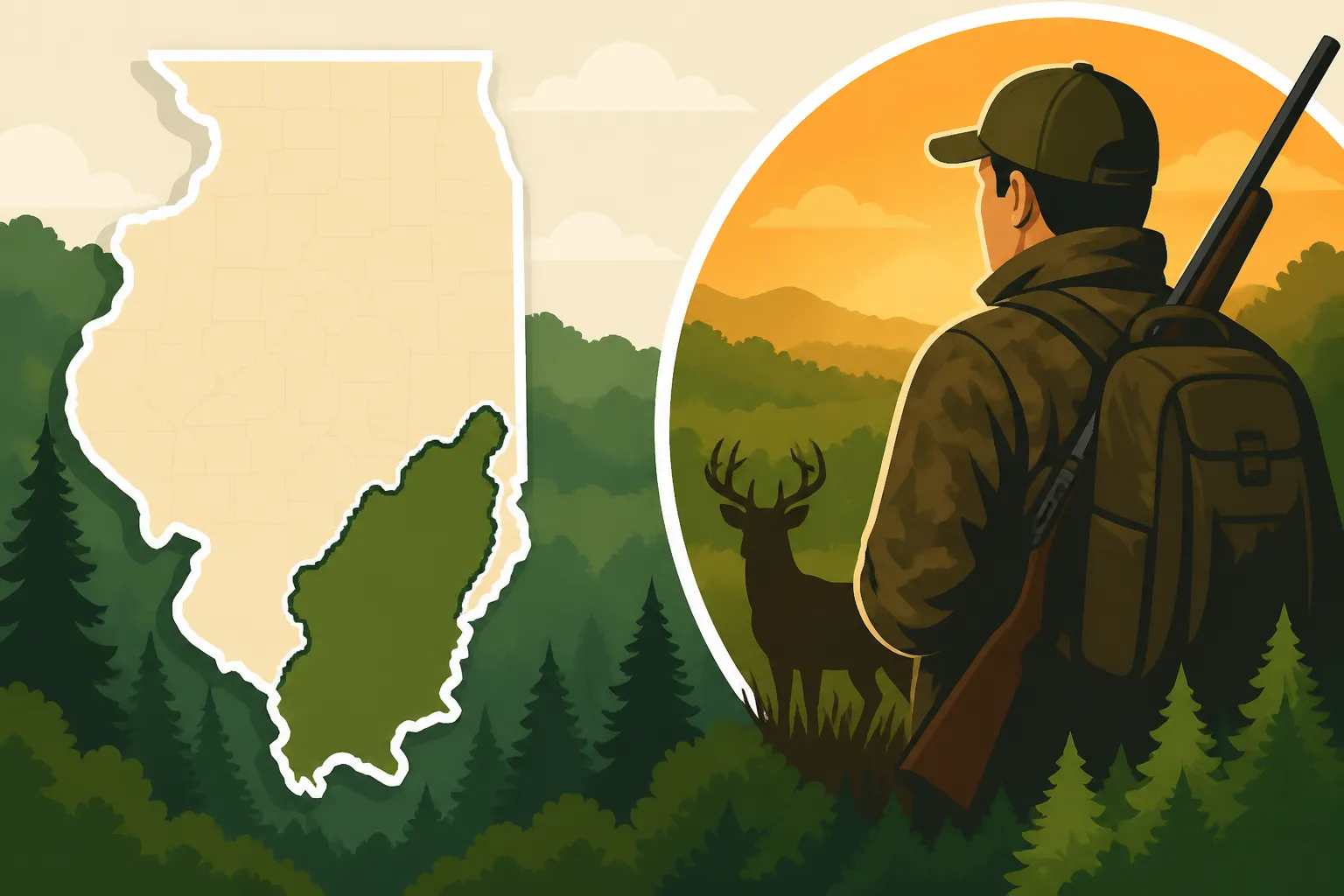
So, let's get down to brass tacks: Shawnee National Forest covers approximately 280,000 acres. Think about that for a moment. That’s nearly half a million football fields, all woven into the rugged terrain of Southern Illinois. It stretches across 10 counties, creating a vast mosaic of hardwood forests, rolling hills, dramatic bluffs, and winding creek bottoms. It’s a land of elevation changes, something you don't always expect in Illinois, making it a unique challenge and reward for hunters. This kind of acreage means genuine opportunities for solitude, to push further than the average hunter, and to truly immerse yourself in the wild.
Compared to other public hunting opportunities in the state, Shawnee stands alone. While you might find impressive tracts like those managed by the Illinois Department of Natural Resources (IDNR), such as Pyramid State Recreation Area or Jim Edgar Panther Creek, none of them come close to the contiguous scale of the Shawnee. It truly lives up to its "National Forest" designation, providing a taste of big woods hunting right here in Illinois. If you're looking for an overview of other options, you can read more about How Many Acres of Public Land Illinois Has.
Why the Acreage Can Feel Misleading
Here's the kicker, though: while "280,000 acres" sounds like one continuous block of woods, the reality on the ground is a little more complex. Shawnee National Forest is what's known as an "interspersed" forest. This means that while the federal government owns a massive amount of land, it's often broken up by privately owned tracts, farms, and even small communities. You might be deep in national forest land, only for a narrow strip of private property to cut right through it.
This intermingled ownership can be both a blessing and a curse. It means you always have to be vigilant about property lines, especially if you're still-hunting or trying to recover a deer. However, it also means that these private in-holdings can create unique edge habitat and pinch points for wildlife, offering potentially excellent hunting opportunities right next to public ground. The important thing is to understand this characteristic and prepare for it with the right tools and mindset.
What Shawnee's Size Means for Hunters
The sheer scale of Shawnee National Forest isn't just a fun fact; it fundamentally changes the hunting experience. It presents both incredible advantages and significant challenges that every hunter needs to consider before heading out.
Opportunities for Solitude and Exploration
One of the biggest draws of hunting Shawnee National Forest is the potential for solitude. On smaller public land tracts, especially during popular seasons like firearm deer season, it can feel like you're sharing the woods with half the county. Not so in Shawnee, if you're willing to work for it. Its vastness allows you to get away from the crowds, to push deeper into areas that most hunters won't bother with. This means less pressured game, and a much more peaceful, wilderness-like experience.
Imagine hiking a mile or two back into a rugged river bottom, finding a secluded ridge-top saddle, and setting up your stand, knowing that you're likely the only hunter within earshot. That's the Shawnee experience. This makes scouting and putting in the legwork even more rewarding because those hard-to-reach spots often hold the unpressured bucks and gobblers. For tips on maximizing your time in these remote spots, consider strategies like Treestand Setups in Shawnee National Forest.
Challenges of Navigating Such a Large Area
Of course, with great size comes great responsibility – or at least, great challenges. Navigating Shawnee National Forest can be tricky. It's easy to get disoriented in the endless timber and rolling topography. Roads can be few and far between, and cell service is often nonexistent in deeper valleys or thick stands of trees. This is not the place to go without a solid navigation plan.
I’ve had my share of white-knuckle moments trying to find my truck after a long, dark walk out, realizing my internal compass was way off. It's a humbling experience. This is where modern technology becomes an absolute game-changer. Tools like onX Hunt or GoHunt are invaluable here. They allow you to download maps for offline use, pinpoint your exact location, mark waypoints for your stand, truck, or even game recovery, and clearly delineate public and private land boundaries. Without a robust mapping system, you’re essentially guessing, and that’s a risky proposition in such a vast, wild area. Learning to use apps like these effectively is crucial for any hunter considering Hunting the Shawnee Hills Region.
| Factor | Smaller Public Tracts (e.g., State Parks) | Shawnee National Forest (280,000 acres) |
|---|---|---|
| Average Hunter Density | High, especially near access points | Lower, but varies by popular spots |
| Terrain Variety | Limited, often flatter | High, including hills, bluffs, river bottoms |
| Opportunity for Solitude | Low | High, if willing to hike |
| Navigation Difficulty | Moderate, usually well-marked | High, easy to get lost, limited cell service |
| Physical Demands | Moderate | High, rugged terrain, long walks |
| Mapping Tool Importance | Useful | Essential |
| Deer Pressure | High | Variable, less in remote areas |
Maximizing Your Hunt on Shawnee's Expansive Lands
Hunting such a massive area requires a different approach than what you might be used to on smaller, more manicured public lands or private tracts. It’s all about smart planning, diligent scouting, and realistic expectations.
Utilizing Mapping Tools for Effective Scouting
Your number one ally in Shawnee National Forest is a good mapping system. As mentioned, tools like onX Hunt are not just helpful; they're practically mandatory. Before you ever step foot in the woods, spend hours poring over aerial imagery and topographic maps. Look for key features:
- Ridge lines and saddles: These are natural travel corridors for deer. Reading a Ridge for Shawnee Forest Deer can give you an edge.
- Drainages and creek bottoms: These often funnel deer movement, especially in thick cover.
- Clear-cuts and diverse timber stands: Different timber ages provide different food sources and bedding cover.
- Water sources: Ponds, creeks, and even ephemeral seeps can be crucial, especially during dry spells.
- Access points: Identify small, lesser-used parking areas or walk-in access points that might deter other hunters.
Use your mapping app to mark potential stand locations, bedding areas, and pinch points. During your actual boots-on-the-ground scouting, confirm these spots and add new waypoints for sign like rubs, scrapes, and trails. This meticulous approach will save you countless hours of wandering aimlessly and significantly increase your chances of finding unpressured game.
Focusing on Smaller, Manageable Sections
The idea of hunting 280,000 acres can paralyze a hunter. Instead of trying to conquer the whole forest, break it down into smaller, manageable chunks. Pick a specific section, perhaps a few hundred or a thousand acres, and learn it intimately. Treat it like your own private parcel. Focus on understanding the prevailing winds, thermal currents, and how deer use the terrain. This might mean dedicating entire weekends to just one drainage or one ridge system.
Start by identifying remote areas that are at least a mile or more from the nearest road or popular access point. Most hunters don't want to walk that far, especially carrying gear. These deep pockets are where you’re more likely to find consistent deer activity away from human pressure. Look for areas with good cover and food sources, but remember that food can be scattered across the forest. Understanding Where Shawnee National Forest Bucks Bed can help you narrow your focus.
Strategic Planning for Access and Extraction
Because of the vastness and ruggedness, planning your access and, more importantly, your extraction, is critical. A long walk in is one thing; dragging a deer out of a deep hollow in the dark is quite another.
- Entry and Exit Routes: Always consider your wind and thermals, especially in the hilly terrain of Shawnee. Plan multiple routes to your stand, so you can adapt to changing conditions without blowing your spot. For general tips on finding optimal spots, check out Scouting Illinois Public Land Before Season.
- Physical Conditioning: Don’t underestimate the physical demands. You'll be climbing hills, traversing uneven ground, and potentially covering long distances. Be in shape.
- Game Recovery Plan: Have a solid plan for recovering game. Do you have a cart? Can you quarter the animal if necessary? Will you have help? Knowing how you'll get a deer out of a difficult spot before you pull the trigger is paramount.
- Emergency Preparedness: Carry a first-aid kit, a headlamp with extra batteries, fire-starting material, and enough water and snacks. Tell someone exactly where you’re going and when you expect to be back.
Shawnee National Forest is an incredible resource for Illinois hunters, offering a unique opportunity for a true wilderness experience. Embrace its size, respect its challenges, and prepare thoroughly, and you’ll find it to be one of the most rewarding hunting grounds in the state. Remember to always have your Illinois Hunting Licenses and What They Cost in order and review the Illinois Deer Season Structure Explained before you go.
Disclaimer
This article is for general informational purposes only and does not constitute professional advice. Laws, prices and regulations vary by location and change over time. Consult a qualified professional for guidance on your specific situation.