Vehicle Rules on Illinois Public Land
One of the most common headaches for hunters exploring Illinois public land isn't finding deer sign or locating a turkey roost; it's figuring out where you can legally drive and park your vehicle. The rules can be a confusing maze, often varying from one piece of public ground to the next, leaving many of us scratching our heads and worried about inadvertently breaking the law. This guide aims to clear up that confusion, diving deep into the vehicle rules and regulations that govern Illinois's public hunting areas, helping you plan your next trip with confidence and stay on the right side of the rules.
The Basics of Vehicle Access on Illinois Public Land
Navigating public land in Illinois can feel like a riddle, especially when it comes to where you can, and cannot, take your vehicle. It’s not a one-size-fits-all situation, and the general assumption that "if there's a road, I can drive it" is a quick way to find yourself in a bind. Illinois, like many states, has a patchwork of land managers, each with their own set of guidelines, but they all share a common goal: protecting the natural resources and ensuring public safety.
The fundamental principle governing vehicle access is often tied to the impact of the vehicle itself. Public land agencies are trying to balance recreational access with land preservation. Unrestricted vehicle use can lead to significant soil erosion, habitat destruction, and disturbance to wildlife. This is why you'll see a lot of variation in rules, from heavily regulated state-managed sites to more lenient federal lands, though even federal lands have strict rules for off-road use. Understanding these overarching principles helps make sense of the specific regulations you encounter.
Always remember that public land is a shared resource. The rules are there not just to protect the environment, but to ensure that everyone has a safe and equitable opportunity to enjoy it. Respecting closures, staying on designated routes, and understanding the "why" behind these rules is a crucial part of being a responsible hunter and conservationist. It also helps prevent the kind of damage that can lead to further restrictions for all of us in the future.
Understanding "Open to Public Vehicle Traffic" vs. "Administrative Use Only"
This distinction is perhaps the most critical concept to grasp when it comes to vehicle access on public hunting lands in Illinois. When you see a sign or read regulations for a specific site, these phrases will pop up frequently, and misunderstanding them can lead to tickets, vehicle damage, or worse, irreversible harm to the ecosystem. "Open to Public Vehicle Traffic" means exactly what it sounds like: the road or trail is designated for public use by cars, trucks, and often motorcycles (depending on the site). These are typically well-maintained gravel or dirt roads, sometimes even paved, that lead to parking areas, boat ramps, or established access points. You can drive your standard street-legal vehicle here without issue, provided you stay on the designated path.
Conversely, "Administrative Use Only" is a strict warning. This means the road or trail is not open to the general public. These paths are maintained for staff, emergency services, or contractors for specific management purposes, like timber harvesting, wildlife surveys, or facility maintenance. They are often gated, sometimes not well-maintained, and driving on them can result in significant fines. Many hunters see these as tempting shortcuts to get deeper into the woods, but it's never worth the risk. It's not just about avoiding a ticket; it's about protecting sensitive areas that are not designed to withstand public vehicle traffic. These rules are rigorously enforced by site superintendents and conservation police.
The challenge comes when a road might look like it's open, but it's actually for administrative use. Always look for clear signage. If there's no sign, or if a gate is locked, assume it's closed to public vehicles. When in doubt, it’s always better to park and walk. You'll often find that the best hunting spots are a good hike from vehicle access anyway, as they see less pressure. Embrace the legwork, and you'll often be rewarded.
The "Leave No Trace" Philosophy and Vehicle Use
The "Leave No Trace" principles are an internationally recognized set of ethics designed to promote conservation in outdoor recreation. While initially focused on backcountry travel, these principles apply directly to vehicle use on public lands, especially when we consider their impact. For vehicles, this means minimizing our footprint, literally. It’s not just about picking up trash; it’s about preventing erosion, avoiding habitat destruction, and reducing noise and air pollution that can disturb wildlife and other users.
When you drive on public land, sticking to existing roads and designated parking areas is paramount. Driving off-road, even "just a little bit" to turn around or avoid a puddle, can compact soil, crush vegetation, and create new, unauthorized trails that quickly become erosion channels. These seemingly small actions accumulate over time across thousands of acres, leading to significant environmental degradation. Imagine if every hunter took a "shortcut" through a field edge – the damage would be extensive. By staying on marked routes, we concentrate our impact to areas designed to handle it, allowing other areas to remain wild and undisturbed.
Furthermore, the "Leave No Trace" philosophy extends to our behavior around vehicles. This means keeping noise levels down, especially during sensitive times like early morning or late evening when wildlife is most active. It means proper disposal of any vehicle-related waste, like oil or fuel. And crucially, it means being prepared to recover your vehicle if it gets stuck, without causing further damage to the land. Remember, we are guests in these wild spaces, and our actions directly reflect on the hunting community as a whole. Adhering to these principles ensures these lands remain accessible and healthy for future generations of hunters and outdoor enthusiasts.
Specifics for Different Public Land Types
Illinois boasts a diverse array of public hunting opportunities, from sprawling national forests to smaller, intensely managed state sites. The vehicle rules can differ significantly based on who manages the land. What might be perfectly acceptable in one area could be strictly prohibited in another. It's like comparing apples to oranges, or more accurately, comparing a gravel logging road in the deep woods to a designated parking lot adjacent to a popular fishing lake. Always check the specific regulations for the site you plan to visit.
This variation isn't arbitrary; it's often a reflection of the land's primary purpose, its ecological sensitivity, and the type of recreational use it's designed to accommodate. A site managed primarily for waterfowl might have very different access points and restrictions than a large upland game area or a timber-rich state forest. Knowing which agency manages the land is your first step to understanding the rules, as it will point you to the correct sources for detailed information.
Before you even load up your truck, take a few minutes to look up the specific rules for your chosen hunting destination. A quick search on the Illinois Department of Natural Resources (IDNR) website or the U.S. Forest Service site can save you a lot of grief. Don't rely on word-of-mouth from a friend who hunted there five years ago – rules can change, sometimes without much fanfare. Be proactive, be informed, and you'll have a much smoother, more enjoyable hunt.
Illinois State Fish and Wildlife Areas (FWAs)
Illinois State Fish and Wildlife Areas (FWAs) are managed by the IDNR and generally have some of the most stringent and specific vehicle regulations. These sites are often smaller, intensively managed for specific game species or habitat types, and as such, vehicle access is usually limited to designated parking areas and main access roads. You'll rarely find opportunities for driving deep into the hunting grounds on an FWA. The emphasis here is on walk-in access to minimize disturbance and habitat fragmentation.
Parking at FWAs is almost exclusively confined to marked gravel or asphalt lots. These are usually located off paved county or state roads, or at the entrance to internal gravel roads that are often clearly signed "Administrative Use Only" beyond a certain point. It's not uncommon to find gates across these roads, even during hunting season, indicating that further vehicle travel is prohibited. This means you should plan for foot travel from your parking spot to your hunting location. Many of these sites are specifically designed with walk-in access in mind, sometimes even featuring designated "parking and walk-in only" areas.
Before heading to an FWA, it's absolutely essential to consult the site-specific regulations, often found on the IDNR website. Many sites have detailed maps showing legal parking areas and marked trails. Some FWAs might have very limited exceptions, such as specific dates or permits for retrieving downed deer with a vehicle, but these are rare and always clearly outlined. Without exception, obey all posted signs and gates. Trying to circumvent these rules can lead to citations and even losing your hunting privileges on state land. Consider using a good mapping app like onX Layers for Illinois Land Status to confirm boundaries and access points before you go.
Shawnee National Forest Regulations
Shawnee National Forest, being a federal property managed by the U.S. Forest Service, operates under a different set of rules compared to state-managed FWAs. As Illinois's largest piece of public ground, it offers more extensive vehicle access through a network of forest roads. However, this doesn't mean it's a free-for-all. The Forest Service also employs strict regulations to protect its vast natural resources, especially considering the diverse ecosystems within the forest's boundaries.
Vehicle travel in Shawnee National Forest is generally restricted to designated Forest Service Roads (FSRs) and state/county roads that pass through the forest. These FSRs are often gravel or dirt, and while some are well-maintained, others can be rough, especially after heavy rains. The key is that they are numbered and mapped as part of the Forest Service road system. You can often pick up free motor vehicle use maps (MVUMs) from local Forest Service ranger district offices or download them online. These maps are invaluable as they clearly delineate which roads are open, which are seasonally closed, and which are strictly for administrative use.
Off-road vehicle use, including ATVs and UTVs, is generally prohibited in Shawnee National Forest, except on specifically designated trails, which are few and far between and primarily for recreational use, not hunting access. Driving cross-country, creating new trails, or driving on closed roads is a violation of federal regulations and carries significant penalties. This rule is in place to prevent habitat destruction, soil erosion on steep slopes, and minimize disturbance to wildlife. When exploring Shawnee, always stick to the clearly marked and open roads, park in established pull-offs or alongside the road where it's safe and legal, and be prepared to How Far to Walk From a Forest Road to get to your hunting area. Remember, the deeper you walk, the less pressure you'll likely encounter.
State Parks and Recreation Areas
Illinois State Parks and State Recreation Areas present another distinct category for vehicle regulations. While some state parks offer hunting opportunities, especially for deer management purposes, they often have even stricter rules than FWAs due to their primary focus on general recreation, camping, and conservation. Vehicle access is typically limited to paved roads leading to designated parking lots, campgrounds, and day-use areas. Driving off these main arteries onto trails, fields, or undeveloped areas is almost universally prohibited.
Hunting in state parks is often done through special permit systems, quota hunts, or specific seasonal allocations. Even if you have a permit to hunt within a state park, your vehicle access will likely be restricted to specific entrance points and parking areas. You will then need to walk to your hunting location. These rules are put in place to manage the high volume of diverse recreational users, ensure visitor safety (hunters and non-hunters alike), and protect delicate ecosystems that often see heavier human traffic. Always check the specific park regulations, as a state park might have completely different rules than an FWA even if they are managed by the same agency (IDNR).
For example, a park that allows camping will have strict rules about vehicles staying on paved roads within the campground, and driving into wooded areas to set up a camp is out of the question. Camping Rules on Illinois State Forest Land might give you some insight, but park rules are often even more restrictive. If hunting is allowed, it will be clearly delineated on park maps and in their specific regulations. Never assume that because a state park is open, you can drive anywhere. When planning your hunt, consider that your vehicle will likely be stationary in a parking lot for the duration of your trek into the woods.
ATVs, UTVs, and Off-Road Vehicles
The allure of an ATV or UTV for hunting is undeniable. Imagine effortlessly cruising deep into your hunting grounds, hauling gear, or quickly retrieving a downed deer. It sounds fantastic, right? Unfortunately, the reality on Illinois public land is a lot more restrictive than most hunters hope for. While these vehicles are incredibly useful tools on private property, their use on state and federal public lands is heavily regulated, and in many places, outright prohibited for general hunting access.
The main reason for these prohibitions is the significant environmental impact off-road vehicles can have. Their tires can churn up soil, create deep ruts, destroy vegetation, and spread invasive species. They also generate noise that can disturb wildlife and other outdoor recreationists who are seeking peace and quiet. Public land managers prioritize the long-term health of the ecosystem and the diverse experiences of all users, which often means limiting activities that cause widespread disturbance.
Before you even consider loading your ATV or UTV for a public land hunt in Illinois, you must verify the specific rules for your destination. Do not rely on assumptions or what you've seen others do, as enforcement can be strict. In many cases, using an ATV or UTV for hunting access on public land is a surefire way to get a ticket and potentially have your vehicle impounded.
General Prohibitions and Exceptions
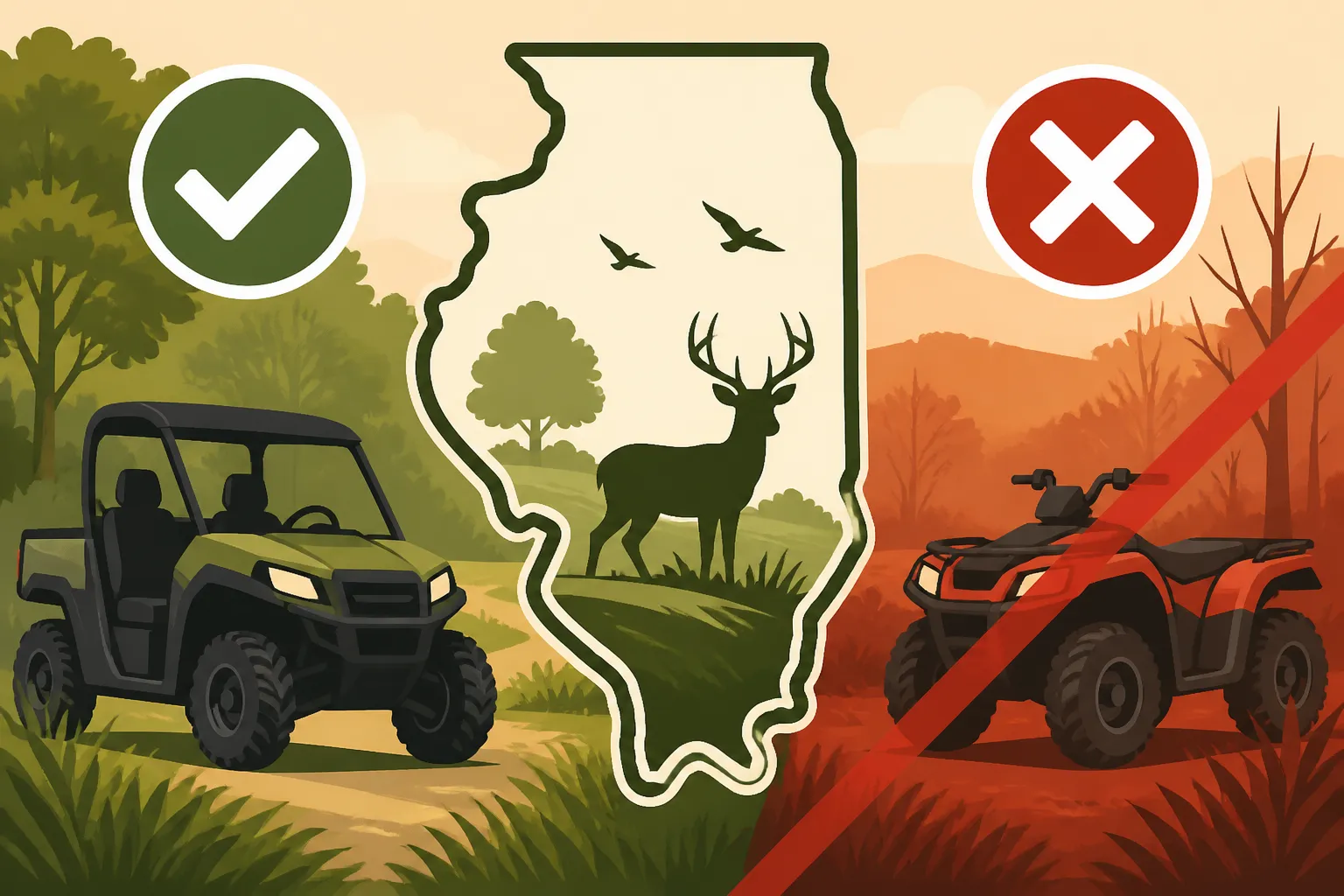
The general rule of thumb for ATVs, UTVs, and other off-road vehicles on Illinois public hunting land is: they are prohibited for general hunting access. This means you cannot use them to drive to your stand, scout new areas, or retrieve game, even if you see an old logging road that looks inviting. This applies across most Illinois State Fish and Wildlife Areas, State Parks, and many federal lands. The agencies are very clear on this: if it's not a street-legal vehicle on a road open to the public, it's likely not allowed.
There are, however, very limited exceptions to this general prohibition, which are almost exclusively tied to specific programs or individuals with disabilities. For instance, some sites might offer special permits for hunters with mobility impairments to use ATVs on designated administrative roads for game retrieval. These programs are rare, require specific applications, and are not a blanket allowance for anyone. Each site's regulations will clearly outline if such an exception exists and how to qualify for it. You absolutely cannot assume you qualify or that the exception applies to you without explicit permission and a permit.
Another common misunderstanding is the difference between an ATV and a golf cart. While golf carts might seem less invasive, if they are not street-legal and operated on a public road, they fall under the same "off-road vehicle" category in many regulations and are equally prohibited for general hunting access. Always assume that if your vehicle isn't licensed, insured, and built for highway use, its presence on public land outside of a designated parking lot will be questioned.
Designated Trails and Special Use Permits
While general hunting access with ATVs/UTVs is restricted, some public lands, particularly sections of Shawnee National Forest or specific State Recreation Areas, might have designated multi-use trails that do allow ATV/UTV use for recreational purposes. It's crucial to understand that these trails are almost never intended for hunting access, but rather for trail riding. If you are using such a trail, you must adhere to all trail rules, stay on the designated path, and often display specific permits or registrations. You cannot just veer off a recreational ATV trail into a hunting zone.
Special Use Permits are the rare golden ticket for off-road vehicle use, but they are highly specific and not easy to obtain for general hunting purposes. These permits are typically issued for specific administrative tasks, for researchers, or for individuals with documented mobility challenges as part of an accessibility program. They often come with strict conditions, including designated routes, time limits, and specific vehicle requirements. For example, a hunter with a disability might receive a permit to use a UTV to access a specific blind or retrieve an animal on a pre-approved route at a particular FWA.
If you believe you might qualify for such a special use permit due to a disability, your first step should be to contact the specific land management agency (IDNR for state sites, US Forest Service for Shawnee) well in advance of your hunt. They can provide information on application processes, required documentation, and available programs. Don't show up with your ATV expecting to get a permit on the spot. Planning and communication are key, and remember that these permits are exceptions, not the rule.
| Vehicle Type | General Public Land Access | Common Use Cases (Hunting) | Specific Considerations |
|---|---|---|---|
| Cars/Trucks | Allowed on designated roads and parking areas | Transport to access points, game transport (roads only) | Must be street-legal, stay on marked routes, obey parking rules |
| ATVs/UTVs | Generally Prohibited | Limited exceptions for disabled hunters with specific permits; recreational trails (not hunting access) | Strict regulations, often requires special permit/license, check site-specific rules |
| Golf Carts | Generally Prohibited | Rarely allowed; similar to ATVs unless street-legal | Assume prohibited unless explicitly stated otherwise |
| Bicycles | Often allowed on trails and roads | Accessing hunting areas quietly, scouting, retrieving light gear | Check trail-specific rules; may be restricted on some trails |
| Electric Bikes (E-Bikes) | Varies greatly by site | Growing area of regulation; some sites treat as bicycles, others as motorized | Check specific site rules; generally more restrictive than traditional bikes |
Practical Tips for Navigating Vehicle Rules
Knowing the rules is one thing, but practically applying them in the field is another. Illinois's public land system is not always intuitive, and signs can sometimes be sparse or easily missed. This is where proactive preparation and smart strategies come into play. You don't want to be guessing when you're deep in the woods, especially if you're trying to stay legal and respectful of the land.
The best defense against a vehicle violation is a good offense in your planning. Never assume. Always verify. This might mean making a phone call, checking an online map, or even scouting an area in the off-season just to get a feel for the access roads and parking situations. A few minutes of research before you leave home can save you hours of frustration, potential fines, and even vehicle recovery costs if you get stuck where you shouldn't be.
Remember that Illinois's public lands are often surrounded by private property. Parking legally and accessing public land can sometimes involve navigating narrow strips of public access or designated easements. Be extra vigilant about property lines, especially when parking or turning around. The last thing you want is a landowner dispute on top of a public land vehicle violation. Tools that show property boundaries are incredibly valuable for this.
Pre-Trip Research and Mapping Tools
Before you even pack your hunting vest, the most crucial step is thorough pre-trip research. This means more than just looking up the dates for Illinois Deer Season Structure Explained. Start by identifying the specific public hunting site you intend to visit. Once you have the site name, go directly to the Illinois Department of Natural Resources (IDNR) website for state-managed sites, or the U.S. Forest Service website for Shawnee National Forest. Look for "site-specific regulations" or "property facts" sheets. These documents are gold mines, detailing everything from hunting hours to, you guessed it, vehicle access rules and designated parking areas. Many sites even have downloadable maps that clearly mark open roads, gates, and parking.
Beyond official government websites, modern mapping applications are indispensable tools for navigating public land vehicle rules. Brands like onX Hunt and GoHunt have revolutionized how hunters approach public ground. These apps layer public land boundaries, private property lines, and often even designate specific access roads and trails. With a premium subscription, you can download maps for offline use, which is critical because cell service can be spotty, especially in the more remote parts of Shawnee National Forest. Before you leave home, spend time studying these maps. Identify all the designated access points, scout out potential parking areas, and mark any roads that are clearly labeled "Administrative Use Only."
Using tools like onX Layers for Illinois Land Status allows you to visualize land ownership directly on your phone, preventing accidental trespass. It also helps you understand the topography and plan your walk-in routes from legal parking. When you're out in the field, even if you lose signal, your downloaded map will show your precise location relative to roads, boundaries, and parking. This level of preparation not only keeps you legal but also makes you a more efficient and confident hunter, maximizing your time afield and reducing stress about potential violations.
Respecting Posted Signage and Law Enforcement
This might sound like common sense, but it bears repeating: always respect posted signage. Signs are there for a reason, whether it's to protect a sensitive area, guide you to proper parking, or warn you of a closure. Ignoring a "Road Closed" or "Administrative Use Only" sign is not only illegal but also disrespectful to the land managers who put them there and to other users. These signs are often the primary method by which land managers communicate specific rules for a given area. If a gate is closed, it's closed, even if it looks like a perfect shortcut.
Illinois Conservation Police Officers (CPOs) and Forest Service Law Enforcement Officers patrol public lands specifically to enforce these regulations. They are well-versed in the local rules and are not shy about issuing citations for vehicle violations. A common scenario is a hunter driving around a gate or attempting to access an administrative road, only to find a CPO waiting. These officers are protecting our resources and ensuring everyone plays by the same rules. Being caught violating vehicle rules can result in significant fines, loss of hunting privileges, and even confiscation of your vehicle in extreme cases.
If you are approached by a law enforcement officer, be courteous, cooperative, and provide any requested information. If you're unsure about a rule, it's far better to ask an officer or call the local site office before you act, rather than explain yourself after a violation. Remember, ignorance of the law is generally not considered a valid excuse. By respecting signage and cooperating with law enforcement, you contribute to a positive image of hunters and help ensure continued access to these valuable public lands for everyone. It's all about being a responsible steward of the land and a respectful member of the hunting community.
Disclaimer
This article is for general informational purposes only and does not constitute professional advice. Laws, prices and regulations vary by location and change over time. Consult a qualified professional for guidance on your specific situation.