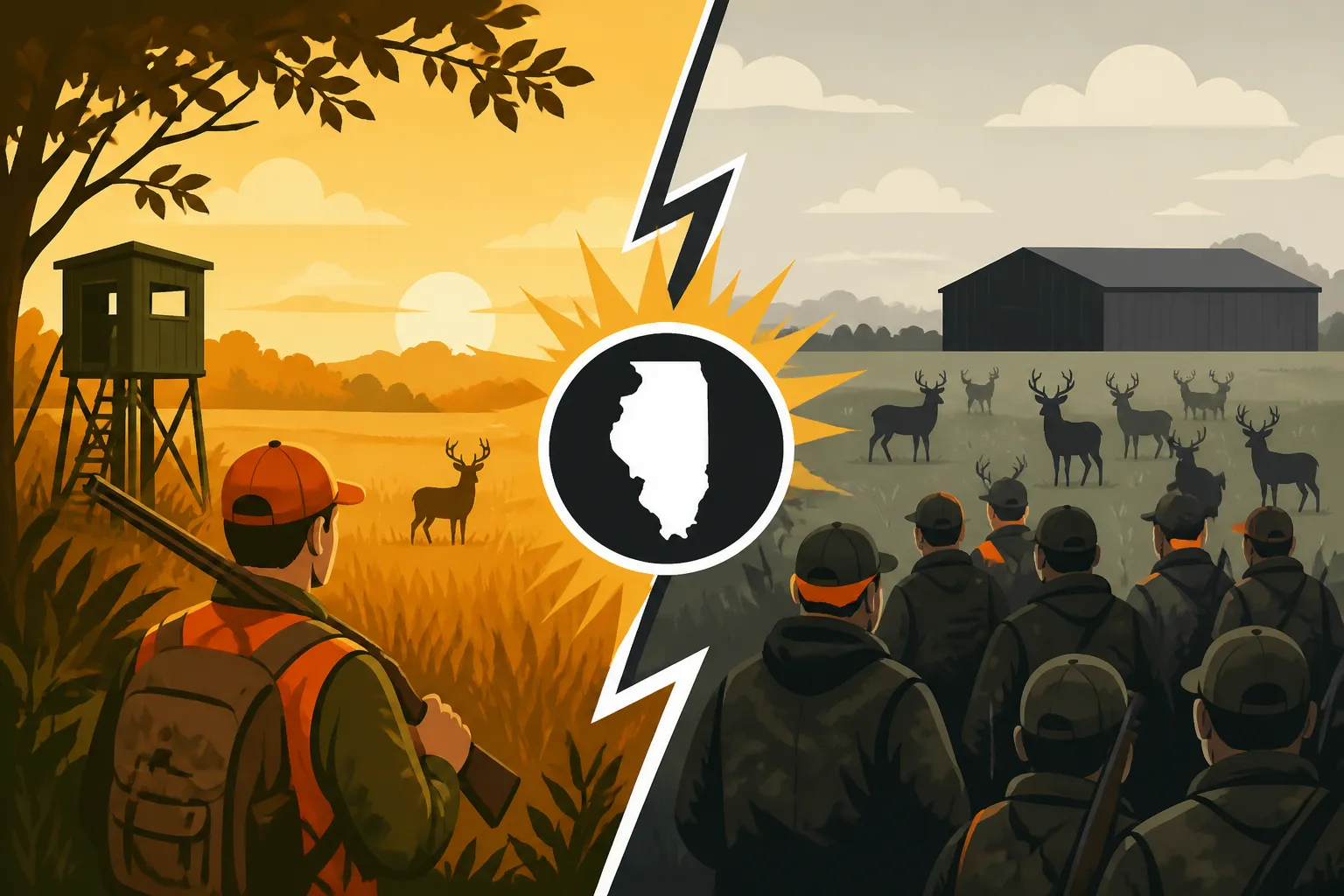
Small Syndicate Leases Versus Big Clubs
It's tough out there trying to secure quality hunting ground in Illinois, especially when you're looking beyond public land. Many hunters dream of consistent private access, but the path to getting it often forks between joining a large, established hunting club or opting for a more intimate small syndicate lease. This guide will help you understand the core differences between these two common approaches, weighing the benefits and drawbacks of each so you can make an informed decision that aligns with your hunting style and budget.
Navigating Illinois Hunting Access: Leases, Syndicates, and Clubs
For many Illinois hunters, particularly those eyeing consistent access to prime deer, turkey, or waterfowl ground, public land can feel like a crowded proposition. While incredible opportunities exist on properties like Shawnee National Forest Hunting or various Illinois State Fish and Wildlife Areas, the competition can be fierce. This drives a lot of hunters to seek private land access, and that's where the world of hunting leases and clubs comes into play. It's a spectrum, really, from a simple handshake agreement with a landowner to a full-blown corporate hunting operation. Understanding where small syndicate leases and larger clubs fit on this spectrum is the first step in deciding which path is right for you.
What Defines a Hunting Lease in Illinois?
At its core, a hunting lease is a formal agreement where a landowner grants a hunter or group of hunters the exclusive right to hunt on their property for a specified period, usually a year, in exchange for a fee. This arrangement is common across Illinois, from the sprawling farmlands of central Illinois to the timbered hills of the southern part of the state. Leases can be as simple as a few buddies pooling money to rent a hundred acres, or as complex as a large entity leasing thousands of acres across multiple counties. The beauty of a lease, particularly for smaller groups, is the direct relationship and often greater control over how the land is managed for hunting purposes. You're not just buying a membership; you're essentially renting a piece of land to treat as your own for the season. For more general information on costs, you can check out Illinois Hunting Lease Costs.
The Evolution of Hunting Clubs in the Prairie State
Hunting clubs, on the other hand, often represent a more formalized and sometimes larger-scale approach to securing hunting access. These can range from a group of friends who form an official club to manage a large lease, to well-established organizations with multiple properties, dedicated staff, and extensive amenities. The idea is to create a shared resource, spreading the financial burden and responsibility among many members. Illinois has a long history of hunting clubs, particularly for waterfowl along the Illinois and Mississippi River valleys, but also for deer in prime areas like Pike County. These clubs often offer a more turnkey experience, sometimes even including lodging or guided hunts, but they come with a different set of rules, expectations, and costs, usually structured as annual dues.
The Intimacy and Control of Small Hunting Syndicate Leases
When hunters talk about "small syndicate leases," they're typically referring to a handful of individuals – maybe 2 to 6 or 8 close friends or family members – who collectively lease a tract of land directly from a landowner. This model is incredibly popular for those who cherish autonomy, a tight-knit hunting circle, and a direct hand in managing their hunting experience.
Direct Control Over Habitat and Rules
One of the biggest draws of a small syndicate lease is the unparalleled level of control you and your trusted partners have over the property. Imagine you've leased 200 acres of prime timber and CRP ground in west-central Illinois. Your syndicate can collectively decide where to place food plots, whether to implement selective timber stand improvement, or even exactly where to hang stands or set up blinds. If you want to put in a new trail camera system, it's a group decision, not one dictated by a club committee. This direct influence allows you to tailor the property's management specifically to your hunting goals and preferences, fostering a deep sense of ownership and investment. This kind of hands-on approach stands in stark contrast to the often more rigid rules of a larger organization. You're essentially creating your own private hunting haven, with only a few trusted individuals sharing the space. You might even find insights into Hunting Small Private Tracts in Illinois useful for maximizing a smaller footprint.
Building Deep Bonds and Shared Experiences
Hunting is often about camaraderie, and a small syndicate lease amplifies this aspect significantly. You're not just sharing a lease payment; you're sharing the work, the scouting, the successes, and the frustrations with a very small, carefully chosen group. This leads to deeper friendships and a more cohesive hunting experience. Think about those chilly mornings spent hanging stands together, the satisfaction of harvesting a deer on a food plot you collectively installed, or the shared stories around a campfire after a long day in the woods. Because the group is small, communication is usually easier, and conflicts, while they can still arise, are often resolved more directly and quickly. There's less bureaucracy and more direct collaboration. When you're looking for available properties, online platforms can be a great starting point. Websites like BookYourHunt often list leases, and you can filter by size and location to find something that might suit a small syndicate.
Potential Challenges of a Small Syndicate
While the benefits are numerous, small syndicate leases aren't without their challenges. The financial burden, though shared, can still be substantial, especially for prime ground in top-tier counties. Since it's a small group, if one member decides to drop out, the remaining members might face a sudden increase in their share of the lease fee. Furthermore, all the work—from mowing trails and planting food plots to maintaining blinds and tracking deer—falls directly on the shoulders of the few syndicate members. If everyone isn't equally committed, resentment can build. And, of course, finding a suitable piece of land can be a hunt in itself. It often requires diligent searching, networking, and sometimes a bit of luck to find a landowner willing to lease to a small, private group. Tools like GoHunt can be invaluable here, helping you scout potential properties from afar and understand land ownership before even knocking on a farmer's door for permission.
Embracing Community and Resources with Larger Hunting Clubs
On the other end of the spectrum, large hunting clubs offer a different set of advantages and experiences. These clubs can range from several dozen members sharing a substantial tract of land to extensive operations with thousands of acres, multiple lodges, and even professional guides. They appeal to hunters who value amenities, a broader social network, and a more structured approach to hunting access.
Extensive Resources and Amenities
One of the most compelling aspects of joining a large hunting club is access to resources and amenities that would be impractical or cost-prohibitive for an individual or small syndicate. Many big clubs boast impressive infrastructure: comfortable lodges with full kitchens, dedicated game processing facilities, well-maintained road systems for easier access, and extensive food plot programs managed by the club. Imagine having access to dozens of pre-hung stands, strategically placed ground blinds, or managed timber areas without having to lift a finger yourself. This can be a huge time-saver for hunters with busy schedules or those who simply prefer to show up and hunt. Some clubs even have resident managers or biologists who oversee habitat improvements, ensuring the property is continually optimized for wildlife. You might also find clubs that organize Deer Drives on Illinois Public Land on adjacent public ground, or those that have strong relationships with local landowners for broader access.
Shared Responsibility and Social Opportunities
In a larger club, the responsibilities of land management, maintenance, and administrative tasks are typically distributed among many members or handled by club staff. This means less individual workload compared to a small syndicate where everyone pulls their weight directly. For hunters who want to maximize their hunting time without the added chore of property management, this can be a significant benefit. Beyond the hunting itself, larger clubs often foster a vibrant social environment. You'll meet a diverse group of fellow hunters, sharing stories, strategies, and sometimes even meals at the lodge. This can lead to new friendships, mentorship opportunities, and a broader network of hunting contacts. Some clubs organize social events, competitive hunts, or even youth hunting days, creating a true community around the shared passion for hunting. Information on what's typically included in club dues can be found in What Illinois Hunting Club Dues Include.
Navigating Club Rules and Costs
While offering many benefits, large hunting clubs come with their own set of considerations. The primary one is often the cost, which typically involves annual membership dues that can be substantial, in addition to initiation fees or other assessments. These costs reflect the value of the land, amenities, and management provided. Another key aspect is the club's rules and regulations, which can be extensive and sometimes feel restrictive. Decisions about stand placement, harvest limits, guest policies, and even the types of weapons allowed are usually made by a governing body, not individual members. This means you sacrifice some of the personal control you'd have with a small syndicate lease. Conflicts can also arise in larger groups, often stemming from differing expectations about rules enforcement, hunting pressure, or resource allocation. It's crucial to thoroughly vet any club you consider, asking about their rules, management philosophy, and member satisfaction before committing. Websites like BookYourHunt occasionally list club memberships or packages, which can give you a feel for what's available and at what price point.
Weighing Your Options: A Detailed Comparison for Illinois Hunters
Deciding between a small syndicate lease and a large hunting club in Illinois boils down to your personal priorities, budget, and hunting philosophy. There's no single "better" option; only the one that aligns best with what you seek from your hunting experience.
Key Factors to Consider
Let's break down the main points of comparison to help you analyze which option might be a better fit for you in the Illinois hunting landscape.
| Feature | Small Syndicate Lease | Big Hunting Club |
|---|---|---|
| Control | High (direct input on habitat, rules) | Moderate to Low (rules set by club leadership, less personal) |
| Cost Structure | Shared annual lease fee, direct maintenance costs | Annual dues, potential initiation fees/assessments, includes amenities |
| Workload | High (all property management is DIY by group) | Low to Moderate (managed by club, staff, or shared tasks) |
| Social Aspect | Close-knit, deep bonds, shared work with a few trusted friends | Diverse group, broader social network, potential for varied personalities |
| Amenities | Basic, DIY camp gear, often rustic | Lodges, skinning sheds, road systems, food plots, more curated experience |
| Flexibility | High (easy to adapt rules/plans as a small group) | Low (governed by established rules, slower to change) |
| Availability | Often found through networking, harder to secure | Easier to find openings, structured application processes |
| Privacy | High (only your chosen few) | Moderate (more members, more activity on property) |
When evaluating the cost, remember to look beyond just the raw numbers. A lower lease fee for a syndicate might hide significant time and monetary investments in food plots, trail camera expenses, or even just fuel for checking on the property. Conversely, higher club dues might seem steep but could encompass lodging, guides, and extensive habitat management efforts. Consider what your overall "cost of hunting" truly entails, including your time. If you're struggling to find available leases or clubs, platforms like GoHunt can provide valuable insights into land ownership in specific Illinois counties, helping you identify potential areas even before you start contacting landowners. You might also want to brush up on Getting Private Land Permission in Illinois for tips on how to approach landowners directly, which is often key for smaller leases.
Which Option Suits Your Hunting Style?
You might prefer a small syndicate lease if:
- You value a hands-on approach to habitat management and want direct control over your hunting experience.
- You have a tight-knit group of hunting partners you trust implicitly.
- You enjoy the work involved in improving a property for hunting.
- Your budget allows for a shared lease fee and the associated maintenance costs.
- You prioritize privacy and minimize interactions with other hunters on your ground.
You might prefer a large hunting club if:
- You seek a more "turnkey" hunting experience with amenities like lodges, managed food plots, and maintained trails.
- You enjoy the social aspect of meeting and hunting with a larger community of like-minded individuals.
- You have limited time for property maintenance and prefer that responsibility to be handled by others.
- Your budget accommodates annual dues, which often cover a broader range of services and access.
- You're comfortable adhering to established club rules and don't require absolute personal control over property management decisions.
Ultimately, the best choice depends on what aspects of hunting are most important to you. Whether it's the personal touch of a small group managing their own piece of Illinois or the comprehensive offerings of a larger club, both pathways can lead to memorable and successful hunting seasons. Just make sure to do your homework, ask the right questions, and find the situation that truly feels like "home" for your hunting pursuits. For general licensing requirements, don't forget to check Illinois Hunting Licenses and What They Cost.
Disclaimer
This article is for general informational purposes only and does not constitute professional advice. Laws, prices and regulations vary by location and change over time. Consult a qualified professional for guidance on your specific situation.