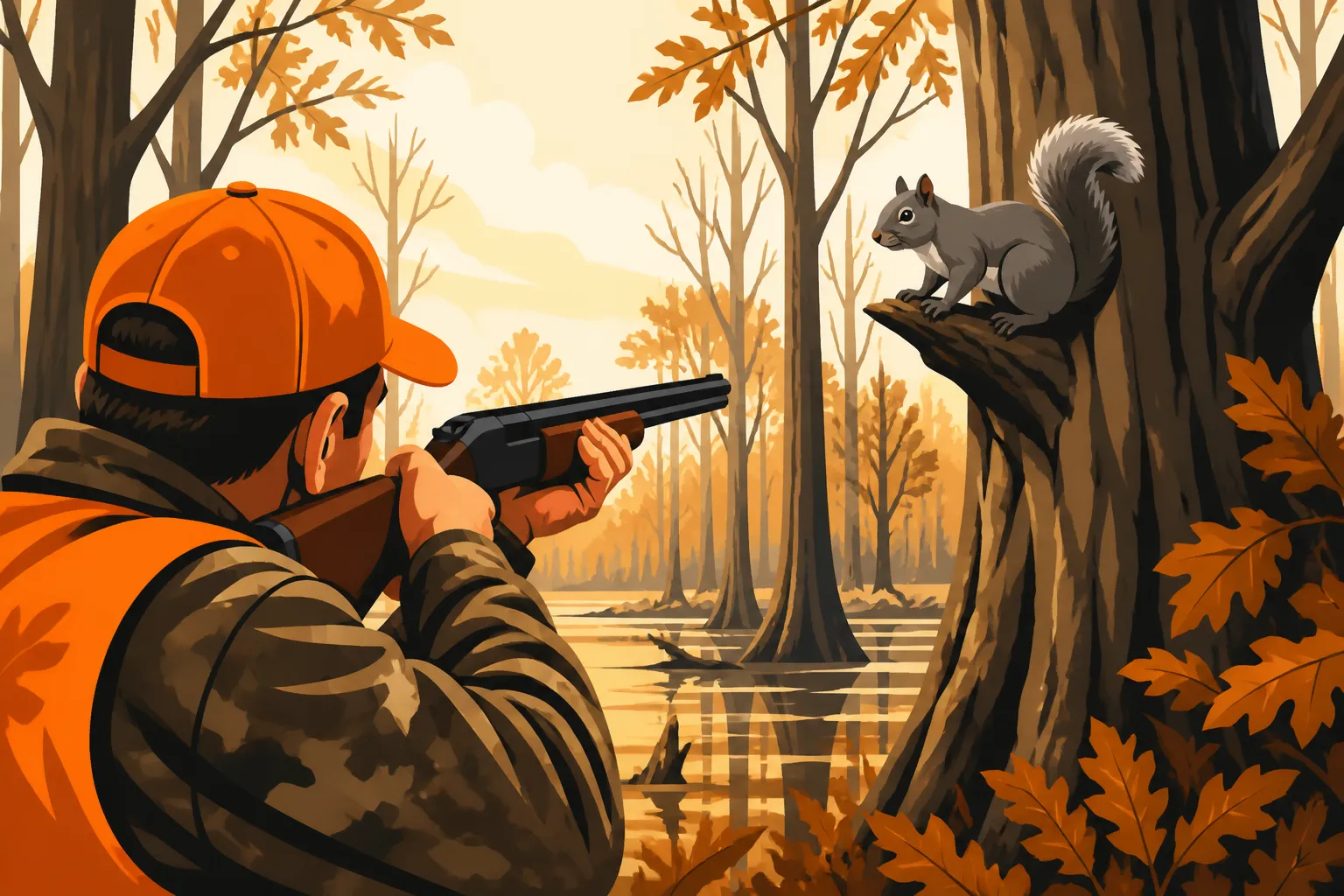
Squirrel Hunting Illinois Bottomland Hardwoods
Feeling the itch to get out in the woods, but maybe you're not ready for the big deer hunt or just want to hone your skills in a more relaxed setting? Squirrel hunting in Illinois offers a fantastic opportunity to do just that, especially when you venture into the rich, vibrant world of bottomland hardwoods. It can feel a bit daunting figuring out where to start with all that dense timber and potential water, but this guide is designed to cut through the confusion and get you ready for a productive and enjoyable hunt in some of Illinois's most underrated habitats.
Understanding Illinois Bottomland Hardwoods for Squirrels
Illinois might be known for its vast farmlands, but tucked away along our rivers and major creeks are incredible stretches of bottomland hardwoods – veritable squirrel paradises. These areas offer a unique hunting experience, different from the upland timber many hunters are accustomed to. Understanding their nuances is key to consistent success.
What Makes Bottomlands a Squirrel Paradise
The secret to bottomland hardwoods being such a hotbed for squirrels lies in their incredible biodiversity and consistent resource availability. Think about it: these low-lying areas, often bordering waterways, typically boast a richer, deeper soil composition than their upland counterparts. This fertile ground is a powerhouse for nut-producing trees like various species of oak (pin oak, swamp white oak, cherrybark oak), an abundance of hickories (shagbark, shellbark), and even pecans in the southern reaches of the state. These aren't just isolated trees; often, you'll find vast groves creating a veritable buffet for squirrels. Beyond the hard mast, bottomlands often feature other soft mast producers like wild grapes, persimmons, and various berry bushes, providing a varied diet throughout the season. The constant presence of water from adjacent rivers, creeks, or sloughs also contributes to the lushness, ensuring food sources remain viable even during drier periods. This combination of abundant, diverse food sources, coupled with the dense canopy and thick undergrowth for cover, creates an ideal environment where squirrels can thrive and multiply.
Navigating the Unique Terrain
Hunting bottomland hardwoods isn't just about spotting squirrels; it's about navigating a distinct, often challenging, landscape. Unlike the relatively consistent terrain of upland forests, bottomlands are a mosaic of subtle elevation changes, oxbow lakes, sloughs, and intermittent drainages. You'll encounter areas of incredibly thick undergrowth – often referred to as "jungle-like" – where briars and dense brush make quiet movement nearly impossible. Then there are the wet spots: muddy stretches that can suck the boots right off your feet, standing water in sloughs that force detours, and even flowing creeks that require careful crossing. The ground itself can be uneven, littered with fallen logs, root wads, and soft, boggy patches. It’s a place where a small topographical map can be your best friend, helping you identify subtle rises that might offer drier footing or act as natural travel corridors for game. A good mapping application, such as one from GoHunt, can provide crucial satellite imagery and topo lines to help you visualize these hidden features before you even step foot in the woods, allowing you to plan your route to avoid the worst of the muck and find the higher, drier ground where squirrels might be more active.
Seasonal Changes and Their Impact
The dynamic nature of bottomlands means that the hunting experience shifts dramatically with the seasons. Early fall, when the leaves are still thick on the trees, presents a visual challenge. Squirrels have ample cover, and spotting them high in the canopy can be tough. However, this is also when the nut crop is dropping, leading to intense feeding activity on the ground. As the season progresses into late fall and early winter, the leaf drop becomes your ally. With less foliage, visibility improves dramatically, allowing you to spot squirrels at greater distances and track their movements more easily. This is often when you'll find squirrels burying nuts for winter, making their presence obvious with frantic activity.
Winter brings its own set of considerations. Colder temperatures can mean lower activity during midday, but squirrels will often be out feeding aggressively during the warmer parts of the day. Snow cover, if it arrives, can make tracking incredibly easy, revealing fresh travel routes and feeding areas. Crucially, water levels in bottomlands are highly variable. Heavy rains can turn dry sloughs into impassable waterways, flood low-lying timber, and create new challenges. Conversely, dry spells can make areas accessible that were previously submerged. Always check local weather and river levels before heading out. Understanding these seasonal shifts helps you adapt your tactics, from where you focus your efforts to what gear you bring, ensuring you're prepared for the conditions you'll encounter.
Essential Gear for Hardwood Squirrel Hunting
Hunting squirrels in bottomland hardwoods requires a slightly different approach to gear than a typical upland hunt. The environment itself—wet, dense, and often unforgiving—demands careful consideration of what you carry and wear.
Firearm Choices and Ammunition
When it comes to firearms for bottomland squirrel hunting, you've got two main contenders: the .22 rifle and the shotgun. Each has its devotees and specific advantages in this environment.
The .22 rifle is a classic squirrel gun for good reason. It’s quiet, accurate, and incredibly economical to shoot. For hunters focused on headshots to preserve meat, or those who enjoy the challenge of precision, a .22 is an excellent choice. In bottomlands, where timber can be quite open in places, a good shot with a .22 can reach squirrels high in the canopy or across small sloughs. However, the downside is that it requires a clear shot and a steady hand. If squirrels are moving quickly through dense branches, or if you only get a quick glimpse, connecting with a .22 can be tough. Ammunition choice often comes down to personal preference, but standard velocity or subsonic rounds are popular for minimizing noise, while high-velocity rounds offer a flatter trajectory over slightly longer distances.
A shotgun, on the other hand, offers more forgiveness, particularly in the dense, often brushy bottomland environment. When a squirrel is running along a limb, or if you're trying to quickly drop one before it disappears into a leaf nest, a shotgun gives you a pattern of shot rather than a single projectile. Most hunters opt for a .410, 20-gauge, or 12-gauge, with shot sizes typically ranging from #4 to #6. A 20-gauge with #6 shot is a common and highly effective combination for squirrels. The trade-off is often more damaged meat if body shots are taken, and of course, shotguns are louder. In extremely thick cover or when jump-shooting squirrels on the ground, a shotgun’s quick-pointing ability and pattern can be invaluable. It really boils down to your hunting style and the specific conditions of the day.
Here's a quick comparison:
| Feature | .22 Rifle | Shotgun (e.g., 20-gauge) |
|---|---|---|
| Accuracy | High precision, ideal for headshots | Pattern spread, more forgiving |
| Range | Longer effective range with practice | Shorter effective range, especially in thickets |
| Noise | Quieter, less disruptive to other game | Louder |
| Meat Damage | Minimal with headshots | More potential with body shots |
| Ease of Use | Requires steady aim, patience | Quicker target acquisition, easier on moving targets |
| Ammunition | Inexpensive, small rounds | More expensive, larger shells |
| Best Scenario | Still-hunting, patient hunters, open timber | Fast-moving squirrels, dense cover, jump-shooting |
Regardless of your choice, always ensure you have a safe backstop and positive identification of your target. An ethical shot is paramount.
Clothing and Footwear for Wet Conditions
The reality of bottomland hardwoods is that they are often, well, wet. This means your clothing and footwear choices are paramount for comfort and safety.
Your footwear is arguably the most critical component. Forget your casual hiking boots; you need serious waterproofing. Knee-high rubber boots are practically a uniform for many bottomland hunters. Brands like Lacrosse or Muck Boots are popular for their warmth, comfort, and, most importantly, their ability to keep water out, whether you're wading through shallow sloughs, slogging through deep mud, or traversing dew-soaked vegetation. Ensure they fit well and offer good ankle support, as uneven terrain can quickly lead to a twisted ankle.
For clothing, layers are your friend. Early season hunts might only require light, breathable layers, but as the season progresses into late fall and winter, you'll need insulation. A moisture-wicking base layer is essential to draw sweat away from your body, preventing chills. Mid-layers of fleece or wool provide warmth without excessive bulk. Your outer layer should be quiet, durable, and offer protection from the elements. A good waterproof and windproof jacket is non-negotiable. Camouflage patterns should lean towards darker, earthier tones to blend with the often shadow-filled timber, especially when the leaves are off. Consider patterns that mimic tree bark or dark brush rather than open-field patterns. Don't forget durable, waterproof gloves and a hat or beanie to retain body heat. Staying dry and comfortable not only makes the hunt more enjoyable but also allows you to focus longer and deeper on the task at hand.
Navigation and Essential Carry Items
Venturing deep into bottomland hardwoods, especially unfamiliar territory, means you absolutely need reliable navigation tools and a few other essentials.
A good GPS device or a mapping app on your smartphone is a game-changer. Services like GoHunt provide incredibly detailed topographical maps and aerial imagery that can help you identify high ground, creek crossings, and potential squirrel hotbeds even before you step out of the truck. Make sure to download offline maps, as cell service can be spotty in remote bottomland areas. Always carry a traditional compass as a backup, and know how to use it, just in case electronics fail. Mark your starting point and any key features as you go.
Beyond navigation, a small, comfortable backpack is indispensable. Fill it with essentials:
- Water and Snacks: Staying hydrated and fueled is crucial, especially if you're out for several hours.
- First-Aid Kit: Minor cuts, scrapes, and insect bites are common. A compact kit with bandages, antiseptic wipes, and pain relievers is a must.
- Game Bag or Vest: A mesh game bag or the pouch in your hunting vest will keep harvested squirrels clean and secure.
- Headlamp: Even if you plan to be out before dark, a headlamp is invaluable for unexpected tracking, gear retrieval, or an unforeseen late exit from the woods.
- Knife or Multi-tool: Useful for field dressing, cutting cordage, or various minor repairs.
- Hand warmers: For those chilly late-season hunts, a few hand warmers can make a big difference in comfort.
- Orange Vest/Hat: Even if not strictly required for squirrel hunting, wearing a blaze orange vest or hat for visibility, especially during busy deer seasons, is always a good safety practice.
- Licenses and Permits: Make sure you have all necessary paperwork, including your Illinois Hunting Licenses and What They Cost, and any specific permits. You can check the requirements for your Illinois Resident License Options and the Illinois State Habitat Stamp.
Being well-prepared with the right gear ensures you can focus on the hunt, not on discomfort or getting lost.
Strategic Approaches to Squirrel Hunting in Bottomlands
Squirrel hunting might seem straightforward, but mastering it in bottomland hardwoods involves a blend of patience, keen observation, and adapting to the environment. Different tactics can be more effective depending on the conditions and your personal style.
Still-Hunting and Stalking Tactics
Still-hunting is perhaps the most rewarding and challenging method for squirrels in bottomlands, as it actively engages your woodsmanship skills. It involves moving incredibly slowly and deliberately through the timber, pausing frequently to scan and listen. The rhythm is often three steps, then stop for a full minute or two. During these pauses, resist the urge to immediately scan for squirrels. Instead, first listen intently for any rustling leaves, the distinct "bark" or "chuck" of a squirrel, or the tell-tale cutting sound of them chewing on nuts. Then, systematically scan the trees: look along limbs, check the crotches of branches, and examine leaf nests for any tell-tale twitch of a tail or an eye peeking out. Use binoculars if you have them to pick apart distant canopies.
Stalking in bottomlands also means paying close attention to the ground. Squirrels leave plenty of sign:
- Cuttings: Small pieces of chewed nut shells, often found around the base of a feeding tree, are clear indicators of recent activity.
- Tracks: While subtle, squirrel tracks can be seen in soft mud or snow.
- Tree Rubs/Scratches: Less common, but sometimes evident.
- Nests: Leaf nests or tree cavities are their homes, often indicating where they'll retreat to or emerge from.
When you do spot a squirrel, evaluate the shot opportunity. If it's a clear shot, take it. If not, try to use natural cover – a large tree trunk, a thick bush – to slowly close the distance or get a better angle. Be mindful of your footfalls; crunchy leaves or snapping twigs can send a wary squirrel scurrying. This method is particularly effective during the early season when leaves are still up and squirrels are moving between feeding sites, or during the late season when visibility improves and squirrels are concentrating on specific food sources. Learning how Early Season Squirrels Give Themselves Away can greatly improve your success here.
Sit-and-Wait Ambush Techniques
Sometimes, the most effective approach in a specific area of bottomland hardwoods is simply to sit down, get comfortable, and let the squirrels come to you. This strategy works best when you've identified a prime feeding area, like a concentrated grove of oak or hickory trees, or a well-used travel corridor. Find a spot with good visibility and a comfortable backrest – leaning against a large tree trunk is often ideal. Settle in and become part of the landscape.
Patience is the watchword here. Squirrels are naturally curious and, if you remain still and quiet, they will often resume their activities after a short time. This method is particularly fruitful during the early morning and late afternoon, which are peak feeding times for squirrels. Listen for the sound of falling nuts, the scratching of claws on bark, or the gentle rustling of leaves as they forage on the forest floor. A good pair of binoculars can help you pick apart distant trees and identify hidden squirrels without unnecessary movement. When a squirrel presents a shot, take it deliberately. If you bag one, remain still; often, another will appear shortly, drawn to the same feeding grounds. This tactic can be especially productive when hunting Squirrel Hunting Illinois Hickory Groves, where the concentrated food source keeps squirrels in a smaller area.
Using Calls and Decoys
While not as common as in turkey or deer hunting, some squirrel hunters do incorporate calls and, very occasionally, decoys into their strategy, especially in areas with significant hunting pressure or during times of lower activity.
Squirrel calls typically mimic the barks or "chucks" of squirrels, or the sound of them cutting nuts. The most popular are small, handheld calls that produce a realistic "bark" or "chatter." The idea is to pique a squirrel's curiosity, making it pause or reveal itself from behind a tree. Some hunters also use small pieces of "cut-in-half" nut shells to simulate the sound of a squirrel chewing, which can be surprisingly effective at drawing attention. Don't overdo it with calling; a few barks every few minutes is usually enough. Listen for a response – a bark back, or a tail flick – that indicates a squirrel is in the vicinity.
Decoys are much less common for squirrel hunting, largely because squirrels are usually moving, and setting up an effective decoy that looks natural can be difficult. However, some specialized hunters might use a taxidermy squirrel or a realistic plastic one, often affixed to a branch, to draw in territorial squirrels. This is a niche tactic and usually employed in very specific scenarios, like attracting a wary bushytail in an open area. For most bottomland hunters, focusing on stealth and observation will be far more productive than relying on calls and decoys, but it's a technique worth knowing about for those particularly challenging days.
Incorporating Dogs for Enhanced Success
For many, squirrel hunting isn't truly complete without a good squirrel dog. These canine companions can dramatically increase your success rate and make the hunt incredibly fun, especially in the dense, often difficult terrain of Illinois's bottomland hardwoods.
Small, agile breeds like feists and curs are popular choices for squirrel hunting. These dogs are bred for their keen sense of smell and sight, allowing them to locate squirrels that a human hunter might completely miss. They excel at "treeing" squirrels – tracking them to a specific tree and barking excitedly to indicate their location. This is invaluable in bottomlands where squirrels can easily disappear into thick canopies or dense undergrowth. Once a dog trees a squirrel, the hunter can then move in, pinpoint the squirrel, and take a shot.
A well-trained squirrel dog will not only find squirrels but also help retrieve downed game, preventing lost squirrels in thick brush or water. Training a squirrel dog requires patience and consistency, starting with scent training and progressing to real-world scenarios. Dogs need to learn to ignore other game like deer or rabbits and focus solely on squirrels. While they add another layer of complexity to the hunt, the benefits of having a dog in bottomland hardwoods are undeniable. They cover ground faster, locate hidden game, and add an exciting dynamic to the experience. For a deeper dive into small game hunting, you might want to read our guide on Squirrel and Small Game Hunting in Illinois.
Finding and Accessing Prime Bottomland Habitat in Illinois
One of the biggest hurdles for any hunter, especially when targeting a specific habitat like bottomland hardwoods, is simply finding where to go. Illinois offers diverse opportunities, but knowing how to identify and access these prime locations is crucial.
Identifying Productive Public Land Areas
Illinois boasts a surprising amount of public hunting land, and many of these areas include excellent bottomland hardwood habitat. The trick is knowing where to look and how to interpret maps. Major river systems like the Illinois River Valley and the Mississippi River backwaters are classic destinations. These areas are often managed by the Illinois Department of Natural Resources (IDNR) as Fish and Wildlife Areas or within federal refuges. Smaller river drainages and larger creeks throughout the state also hold pockets of productive bottomland timber.
To find these spots, start with the Illinois DNR Map Tool. This online resource allows you to zoom in on specific counties and see designated public hunting areas. Look for green patches along waterways. Once you've identified potential areas, cross-reference them with satellite imagery on platforms like GoHunt. This is where you can truly "scout" from your couch: identify oxbow lakes, winding creek beds, areas of mature timber, and subtle rises that lead away from consistently wet ground. Look for areas with a high concentration of oak, hickory, and pecan trees.
Don't be afraid to explore smaller, less-known public parcels. While popular spots might see more pressure, many bottomland areas are extensive enough to absorb hunters, especially for squirrels. Remember that public land rules can vary, so always check the specific regulations for the site you plan to hunt. Understanding Public Hunting Land in Illinois is a great starting point for any new public land hunter in the state.
Seeking Private Land Permission
While public lands offer great opportunities, gaining private land access can often lead to less pressured hunting and more consistent results, especially for species like squirrels. Many Illinois farmers and landowners have small woodlots or extensive timbered creek bottoms that are excellent squirrel habitat. The challenge, of course, is getting permission.
The best approach is often a face-to-face conversation. Knock on doors well in advance of the season, ideally when landowners aren't busy with planting or harvest. Be polite, well-groomed, and clearly state your intentions. Offer to share some of your harvest, help with chores, or simply pick up trash. Emphasize that you are a safe, responsible hunter and will respect their property. Many landowners appreciate responsible hunters who can help manage squirrel populations, which can sometimes cause minor crop damage.
Focus your efforts on areas adjacent to known public lands or areas you've identified as likely squirrel habitat from maps. Sometimes, a short conversation can open up access to a fantastic piece of hunting ground that sees very little pressure. A little persistence and a lot of respect can go a long way in securing private land hunting opportunities in Illinois.
Interpreting Maps and Aerial Photos
Before you ever set foot in the woods, the best scouting happens from your computer or phone screen, especially when targeting specific habitats like bottomland hardwoods. Effectively interpreting maps and aerial photos is a skill that will save you countless hours of unproductive walking.
Start by looking at the broader landscape. On a topographic map, bottomlands will typically be identified by closely spaced contour lines near a river or creek, indicating relatively flat terrain at a low elevation. Look for features like "oxbows" (U-shaped bends in former river channels, often forming sloughs or lakes) and tributary creeks, which are natural travel corridors and often lined with prime timber.
Aerial photos, found on platforms like GoHunt, are your absolute best friend. Zoom in and look for areas of dense, mature hardwood timber. You can often distinguish different tree species by their canopy shape and color, even from the air. Identify areas with a high concentration of large, mature oak and hickory trees – these are squirrel magnets. Look for openings in the canopy that might indicate older clear-cuts or storm damage, which can lead to dense regrowth that squirrels love for cover. Pay close attention to the edges of fields or clearings within the timber; squirrels often forage at these transition zones.
Crucially, use aerial photos to identify potential access points and plan your routes. Look for old logging roads, powerline cuts, or natural ridges (even subtle ones) that offer easier, drier passage into the heart of the bottomland. Avoid areas that look excessively thick or perpetually flooded, unless you specifically want to target those very wet zones. Layers on apps like GoHunt or onX Layers for Illinois Land Status can also clearly delineate public and private boundaries, preventing accidental trespass. By combining topo maps with detailed aerials, you can formulate a highly effective hunting plan, identifying key squirrel hangouts and the best ways to approach them quietly and safely. Our guide on Scouting Illinois Public Land Before Season offers more tips on this crucial preparation.
Safety and Ethical Considerations
Hunting in bottomland hardwoods presents unique challenges, making safety and ethical conduct paramount. Being aware of potential hazards and your responsibilities as a hunter ensures a safe and enjoyable experience for everyone.
Water Safety and Terrain Hazards
Bottomland hardwoods, by their very nature, are often associated with water, which introduces a distinct set of hazards. Intermittent creeks can swell rapidly after rainfall, turning into swift, dangerous currents. Sloughs and oxbows, which might appear shallow, can have deep, soft muck that can trap a hunter or dog. Always assume water is deeper and mud is softer than it looks. If you're planning to cross a waterway, assess the current, depth, and bottom stability. Carrying a sturdy wading staff can provide an extra point of contact and help gauge depth. Never try to cross swift, deep water alone.
Beyond water, the terrain itself can be treacherous. Fallen logs, tangled root wads, and dense briar thickets are common. Uneven footing can lead to falls, especially when carrying a firearm. Always watch your step, and move slowly and deliberately. If hunting near swamps or stagnant water, be mindful of snakes, especially during warmer months. While rare, venomous snakes like cottonmouths and copperheads can be found in southern Illinois bottomlands. Wear appropriate footwear, watch where you step, and never reach into hollow logs or dense brush without looking first. Knowing the potential hazards helps you prepare, move cautiously, and react appropriately.
Firearm Safety and Shot Placement
Regardless of whether you choose a .22 rifle or a shotgun, stringent firearm safety rules must always be followed, especially in a dynamic hunting environment. Always treat every firearm as if it were loaded. Keep the muzzle pointed in a safe direction at all times, ideally upwards or towards the ground away from anyone. Keep your finger off the trigger until you are ready to shoot. Be absolutely sure of your target and what is beyond it. In bottomland hardwoods, branches and dense foliage can obscure targets, so patience is key to ensuring a clean, safe shot.
For squirrel hunting, the goal is often a quick, clean kill. With a .22, aim for the head or neck to ensure minimal meat damage and a humane harvest. With a shotgun, try to place your shot pattern on the squirrel's body, aiming for the vitals, while being mindful of potential damage to the prized meat. Avoid taking marginal shots that might only wound the animal, leading to unnecessary suffering and difficulty in recovery. A wounded squirrel can disappear into a leaf nest or thick brush, never to be found. By practicing good shot placement, you uphold ethical hunting standards and maximize your chances of a successful and humane harvest.
Respecting the Resource and Other Hunters
Ethical hunting extends beyond safety; it encompasses respect for the game, the land, and your fellow outdoorsmen. Always adhere to bag limits and season dates, such as the Illinois Squirrel Season Dates and Illinois Squirrel and Rabbit Season Rules, which are put in place by the IDNR to ensure sustainable populations. Only take what you can reasonably use and process. After a successful hunt, field dress your squirrels promptly to cool the meat and preserve its quality. Properly dispose of entrails away from trails and public view.
When hunting public lands, be aware that you might encounter other hunters, hikers, or even birdwatchers. Practice courtesy and common sense. If you see another hunter, give them ample space and avoid encroaching on their area. A friendly wave or a brief, quiet conversation can go a long way. Leave no trace of your presence; pack out all trash, including spent shell casings. Our hunting heritage depends on all of us acting as responsible stewards of the land and its wildlife. By doing so, we ensure that the rich tradition of hunting, especially in magnificent habitats like Illinois bottomland hardwoods, remains vibrant for generations to come.
Disclaimer
Please remember that hunting regulations and seasons in Illinois can change. Always consult the most current Illinois Department of Natural Resources (IDNR) regulations before heading afield. This guide is for informational purposes only and should not replace official state documentation. Ensure you have all required licenses and permits, and adhere to all safety guidelines.