Scrape Lines Along a Logging Road
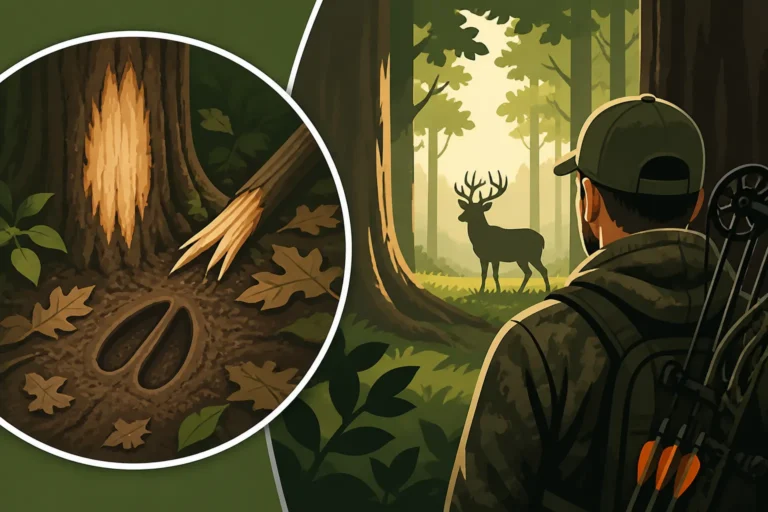
It’s a scenario every Illinois deer hunter knows well: you’re walking a forgotten logging road, perhaps scouting in the off-season or slipping quietly through the timber during hunting hours, and then you see it—a fresh patch of disturbed earth, a tell-tale scrape. Immediately, your mind starts racing. Is this an active scrape? Is it a primary communication hub, or just a random scratch? The frustration of not knowing how to interpret this crucial sign, or how to best capitalize on it, can be enough to make you walk right past it. This guide aims to clear up that uncertainty, diving deep into understanding scrape lines along logging roads and how to use them to your advantage for Illinois whitetails.
The Allure of Logging Roads for Illinois Whitetails
Logging roads, whether they're well-maintained gravel paths or overgrown two-tracks, are much more than just old access routes. For whitetails in Illinois, they represent natural travel corridors, transition zones, and often, critical hubs of communication. Understanding why deer are drawn to these linear features is the first step in unlocking their hunting potential.
Natural Travel Corridors
Think about it from a deer’s perspective. While a mature buck might push through thick tangles and briar patches when pressured or bedding, given the choice, deer prefer the path of least resistance. Logging roads, even those that are barely visible, provide an open lane through otherwise dense timber. This makes them prime travel routes between bedding areas, feeding grounds, and watering holes. These aren't always the main highways, but often the subtle back roads where deer feel secure enough to move. In areas like Shawnee National Forest, where the timber can be vast and thick, these old roads become indispensable arteries for deer movement. They may use them for morning and evening commutes, or even for midday cruising during the rut. The wider, more open nature of these paths also gives deer a better line of sight and an easier escape route if a predator is spotted, adding to their sense of security despite the openness.
Edge Habitat and Transition Zones
Logging roads naturally create an edge, and edge habitat is a goldmine for whitetails. The disturbance from logging opens up the canopy, allowing sunlight to reach the forest floor, which in turn encourages a flush of new growth—succulent forbs, brambles, and young saplings that deer love to browse. This creates a smorgasbord of food right alongside the protected cover of older timber. Moreover, these roads often run along topographic features like ridge tops, benches, or creek bottoms, connecting different habitat types. A logging road might follow a creek, connecting an open agricultural field to a dense timber block, creating a natural funnel. These transition zones are where deer movement is often concentrated. Recognizing these "soft" edges, where dense cover meets more open travel, is key to identifying potential pinch points. You can use tools like the Illinois DNR app or GoHunt's detailed satellite imagery to identify these edges and corridors from home before you even step foot in the woods. Pay close attention to how these roads intersect with different timber types or crop fields when you're scouting, as these intersections can amplify deer activity.
Communication Hubs
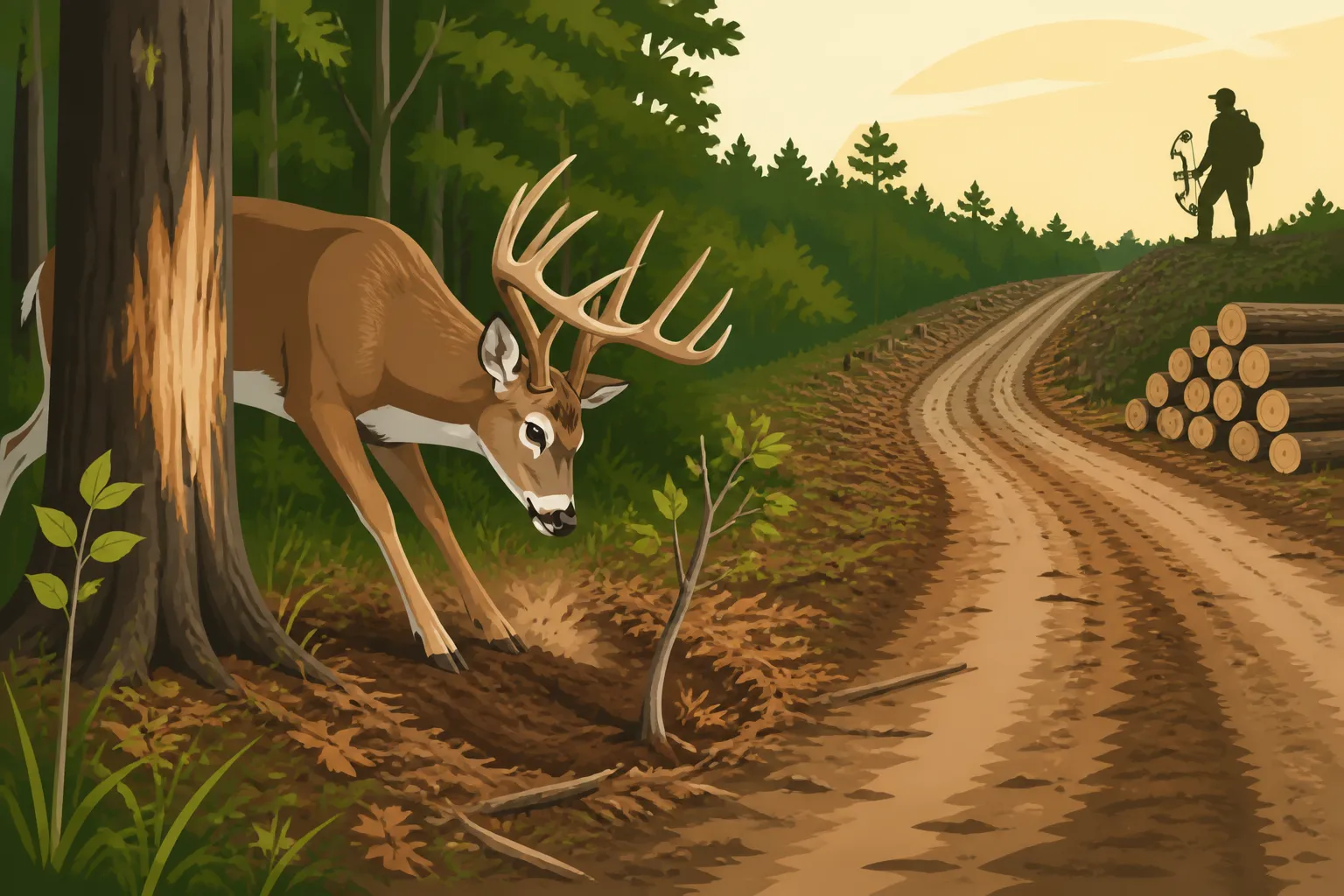
Perhaps the most significant aspect of logging roads for hunters, especially during the breeding season, is their role as communication hubs. Bucks, particularly, will utilize these clear pathways for laying down scent. Scrape lines are often found along these roads because they offer an open, discernible path where a buck can leave his calling card for passing does and rival bucks. The scrapes themselves are patches of bare earth, pawed clean by a buck, often directly under an overhanging branch (the "licking branch"). Bucks will rub their preorbital glands on these branches and urinate into the scrape, creating a powerful scent message. Alongside these, you'll frequently find rubs on nearby saplings, further demonstrating a buck's presence and dominance. These aren't just random acts; they're deliberate, strategic messages placed where other deer are most likely to encounter them, making these roads prime locations for "Rattling and Grunting in Illinois" or even a well-placed stand.
Decoding Scrape Lines: What the Dirt Tells You
Finding a scrape is exciting, but not all scrapes are created equal. Learning to read the subtle nuances of a scrape line can tell you a lot about the deer using it, when they're using it, and how to best hunt it.
Primary Scrapes Versus Secondary Scrapes
It’s crucial to differentiate between a primary (or community) scrape and a secondary scrape.
- Primary Scrapes: These are the holy grail. Primary scrapes are often larger, frequently visited, and usually located in highly visible, central areas along a logging road—perhaps where two roads converge, near a bottleneck, or at a natural travel corridor where multiple deer trails intersect. They might be maintained by several bucks and visited by numerous does, acting as a deer communication bulletin board. The ground will be heavily worked, often with multiple hoof prints, and the licking branch above will be chewed and frayed. These scrapes indicate consistent, high-traffic deer movement and social interaction. When you find one, especially one that's kept fresh over several days, you know you're in a prime location. You'll often see multiple rubs nearby, indicating a dominant buck in the area.
- Secondary Scrapes: These are more numerous and less intensely maintained. They're often smaller, found off the main travel routes, or sporadically along a logging road. A secondary scrape might be made by a younger buck testing the waters, or it could be a satellite scrape off a larger primary scrape. While they indicate deer presence, they don't necessarily signal consistent, high-value activity. However, a string of fresh secondary scrapes can lead you to a primary scrape, or at least confirm a buck's general travel path. They are still worth noting but don't command the same immediate hunting pressure as a primary scrape.
Interpreting Freshness and Activity
The freshness of a scrape is paramount. A scrape with wet, recently disturbed earth and strong scent of urine is active. Look for fresh leaves or debris kicked out, indicating recent pawing. A crisp, strong scent on the licking branch is another excellent indicator. Conversely, a scrape covered in fallen leaves, or with dirt that has dried and crusted over, is old and inactive. Hunting an old scrape is typically a waste of time. Bucks will refresh scrapes, especially as the rut approaches and during its peak. During "Hunting the Rut in Early November", bucks are often checking these communication points daily. A logging road with multiple fresh scrapes and rubs is a sign of intense buck activity.
It's also important to consider the weather. Rain can wash away scent and make a scrape look older than it is, but a fresh scrape after a rain is a huge indicator of recent activity. Dry periods can make it harder to assess freshness by sight alone, so relying on scent and nearby fresh tracks or rubs becomes more important. GoHunt's mapping features can also help you mark these scrapes and monitor them over time, giving you a better understanding of their use patterns.
| Scrape Type | Characteristics | Interpretation | Hunting Implication |
|---|---|---|---|
| Primary | Large, heavily worked, multiple tracks, chewed licking branch, often in high-traffic areas. | High deer traffic, community communication hub, likely a dominant buck. | Prime stand location, hunt frequently during the rut. |
| Secondary | Smaller, less worked, fewer tracks, sporadically found. | Solo buck activity, less consistent, exploratory. | Note location, may lead to primary scrape, lower priority for stand. |
| Fresh (Active) | Wet, disturbed earth, strong scent, fresh tracks. | Recent deer visit, actively being used. | High potential, hunt soon. |
| Old (Inactive) | Covered in leaves, dry/crusted earth, no fresh sign. | No recent deer visit, currently not in use. | Avoid hunting, may become active later. |
Strategic Setups for Hunting Logging Road Scrapes
Once you've identified active scrape lines along an Illinois logging road, the next step is to devise a strategic hunting plan. This involves careful consideration of stand placement, wind direction, and entry/exit routes.
Optimal Stand Placement Near Active Scrapes
Your stand placement is critical for success. You want to be close enough for a shot, but far enough away to remain undetected. The ideal distance is usually 15-25 yards from the scrape. Look for a tree that offers good cover and a clear shooting lane to the scrape, as well as along the logging road itself, as deer will approach from either direction. Consider how the deer will use the logging road. Will they walk directly on it, or parallel it in the thicker cover just off the edge? Often, they'll skirt the edges, using the cover for security. This means your setup might need to be 10-15 yards off the logging road, looking back towards it and the scrape.
Elevated stands, such as a hang-on or ladder stand, are generally preferred as they keep your scent above the deer's nose and offer a better vantage point. If the cover is exceptionally thick, or if you prefer a more concealed approach, a well-brushed-in ground blind can also be effective. Just remember to brush it in thoroughly and allow ample time for deer to get used to its presence, especially on public land.
Think about the sun's angle. Early morning hunts will have the sun rising in the east; evening hunts, setting in the west. Position your stand so the sun is not in your eyes during peak activity, and ideally, so the sun is in the deer's eyes if they are looking in your direction. This minimal detail can make a huge difference in staying hidden.
Wind and Scent Management
Wind direction is always a hunter’s nemesis, but especially when hunting a scrape, which is itself a scent-based communication point. You must play the wind correctly. Never hunt a scrape if your wind is blowing towards where you expect deer to approach from, or directly over the scrape itself. Deer will walk into the wind, or crosswind, to scent-check a scrape. Your goal is to be downwind of their expected travel path and the scrape.
Use hunting apps like GoHunt to check real-time wind forecasts and predict thermals. In Illinois’s timbered areas, especially in the undulating terrain of the Shawnee Hills, thermals can pull your scent uphill in the morning and push it downhill in the evening. Understanding how thermals work in your specific location is just as important as the prevailing wind. Always have multiple stand locations for different wind directions, or be prepared to sit somewhere else if the wind isn't right. Good scent control practices—scent-free sprays, clean clothes, and careful entry/exit—are non-negotiable.
Strategic Entry and Exit Routes
Your approach and departure from the stand can make or break the hunt. Deer are incredibly sensitive to pressure, and stomping through their bedding or feeding areas to get to your stand will alert them to your presence long before you even sit down. Plan a route that keeps you out of known bedding areas and ideally, out of sight. Use ditches, creek beds, or thick brush as natural cover for your walk in.
Whenever possible, try to enter and exit with the wind in your favor, even if it means taking a longer, roundabout route. Early morning hunts often mean entering in the dark, and evening hunts mean exiting in the dark. Use this to your advantage to minimize your visual impact. If possible, have an "unobtrusive" entry point that doesn't put pressure on key deer areas. Consider a hidden trail that only you know, or use a natural barrier like a large creek to mask your movements. For more on this, check out our guide on "Entry Routes Through Standing Corn", which, while focused on corn, offers principles applicable to any stealthy approach.
Avoiding Common Pitfalls When Hunting Scrapes
Even with the best intentions, hunters often make mistakes that can turn a promising scrape line into a frustrating bust. Being aware of these common pitfalls can help you increase your chances of success.
Overhunting a Scrape
One of the biggest mistakes is overhunting a single scrape. Just because a scrape is active doesn't mean you should sit on it every day. Whitetails, especially mature bucks, are incredibly wary, and repeated human presence will quickly make them nocturnal or shift their patterns entirely. If you hunt a scrape too often, you'll educate the deer, and they'll start avoiding the area during daylight hours.
A good rule of thumb is to hunt an active primary scrape once every 3-5 days, or even less frequently if pressure is high. If you put pressure on a scrape, give it time to cool off before returning. Use trail cameras (adhering to public land rules where applicable) to monitor activity remotely. A single picture of a buck at night is a good sign, but a string of daylight pictures shows consistent movement you can capitalize on. If you're seeing only nocturnal activity, it's time to back off and let the deer regain their confidence in the area. Rotating between different stand locations, as outlined in our article "Treestand Setups in Shawnee National Forest", is also a smart strategy.
Ignoring Other Sign or Lack Thereof
A scrape is a powerful piece of evidence, but it's rarely the only sign you should consider. Don't fall into the trap of focusing solely on the scrape while ignoring the bigger picture. Look for fresh rubs, parallel deer trails, droppings, and natural funnels that lead to or from the scrape. Is there a water source nearby? A preferred food source? A thick bedding area?
Conversely, if a scrape looks fresh but there's no other sign—no fresh tracks, no rubs, no parallel trails—it might be a secondary scrape made by a curious younger buck, or a scrape that's just not getting consistent action. A single scrape, without accompanying evidence of heavy deer traffic, might not be worth investing much hunting time in. The best scrapes are often part of a "scrape line" or are surrounded by other indicators of heavy deer use. Use your knowledge of "Reading Aerial Photos for Southern Illinois Deer" to understand how the scrape fits into the broader landscape and deer movement patterns.
Underestimating Deer Senses
This cannot be stressed enough: deer have an incredible sense of smell, hearing, and sight. Many hunters know this but still underestimate it in practice. When hunting a scrape along a logging road, deer will often approach cautiously, scent-checking the area well before they step out into the open or directly onto the scrape.
Every movement you make, every sound, every puff of wind carrying your scent, can blow your hunt. Practice quiet movement, both on your approach and in your stand. Minimize any metallic noises or rustling of clothes. Wear camouflage that blends with the specific timber you're hunting. And, as mentioned before, play the wind meticulously. Never assume you're hidden enough; always strive for maximum concealment and scent control. Remember, just because you can't see or hear them, doesn't mean they can't see, hear, or smell you.
Maximizing Your Chances: Beyond the Scrape
While scrape lines on logging roads are fantastic indicators of deer activity, integrating them into a broader hunting strategy will truly elevate your success. Think of them as one piece of a larger puzzle.
Incorporating Trail Cameras
Trail cameras are your eyes and ears in the woods when you're not there. Place a camera on a logging road scrape, positioned to capture images of deer working the scrape and approaching from both directions. This intel is invaluable. It tells you:
- When deer are visiting: Are they coming at night, dawn, or dusk? Is there a consistent time of day?
- Which deer are visiting: Are there mature bucks, young bucks, or just does? This helps you understand the buck-to-doe ratio in the area.
- Approach patterns: How are deer entering and exiting the scrape area? This can refine your stand placement.
Remember to check your cameras strategically to avoid putting too much pressure on the area. A once-a-week check, ideally during midday when deer activity is typically lower, is a good practice. Always check with scent control in mind. For more detailed advice, refer to our guide on "Where to Hang a Camera on a Logging Road".
Combining Scrapes with Other Key Features
Logging road scrapes rarely exist in isolation. They are part of a larger network of deer movement. Successful hunters learn to connect these dots. Look for scrapes that are:
- Near bedding areas: If a scrape is close to thick cover where deer are bedding, it indicates a buck might be checking it first thing in the morning or last thing in the evening as he moves to and from his bed.
- Along funnels: Scrapes located within natural funnels—like a narrow strip of timber between two fields, or a saddle on a ridge—are high-percentage spots. Deer are forced to use these narrow paths, increasing the odds they'll encounter the scrape and your stand. This strategy is especially powerful when "Hunting a Funnel Between Two Woodlots".
- Adjacent to food sources: A scrape between a bedding area and a preferred food source, such as an acorn flat or a standing soybean field, is a classic rut setup. Bucks will scent-check these scrapes as they travel towards the feeding area, hoping to intercept a hot doe.
- Connected by rub lines: A scrape that is part of a distinct rub line indicates a buck is actively marking his territory and traveling a specific route. These rub lines often follow logging roads or the edges of thick cover.
By integrating scrape lines with these other key features, you develop a more complete understanding of deer movement in your hunting area, allowing you to pick the absolute best stand locations. Scouting is paramount, and the more time you spend deciphering these patterns, the better your chances will be, starting from "Scouting With the Illinois DNR App".
Disclaimer
Hunting is an inherently dangerous activity. Always prioritize safety, follow all local and state regulations, and obtain proper licensing. The information provided in this guide is for informational purposes only and does not guarantee hunting success. Conditions in the field can vary greatly, and individual judgment is always required.