Grunt Calls in Mature Illinois Timber
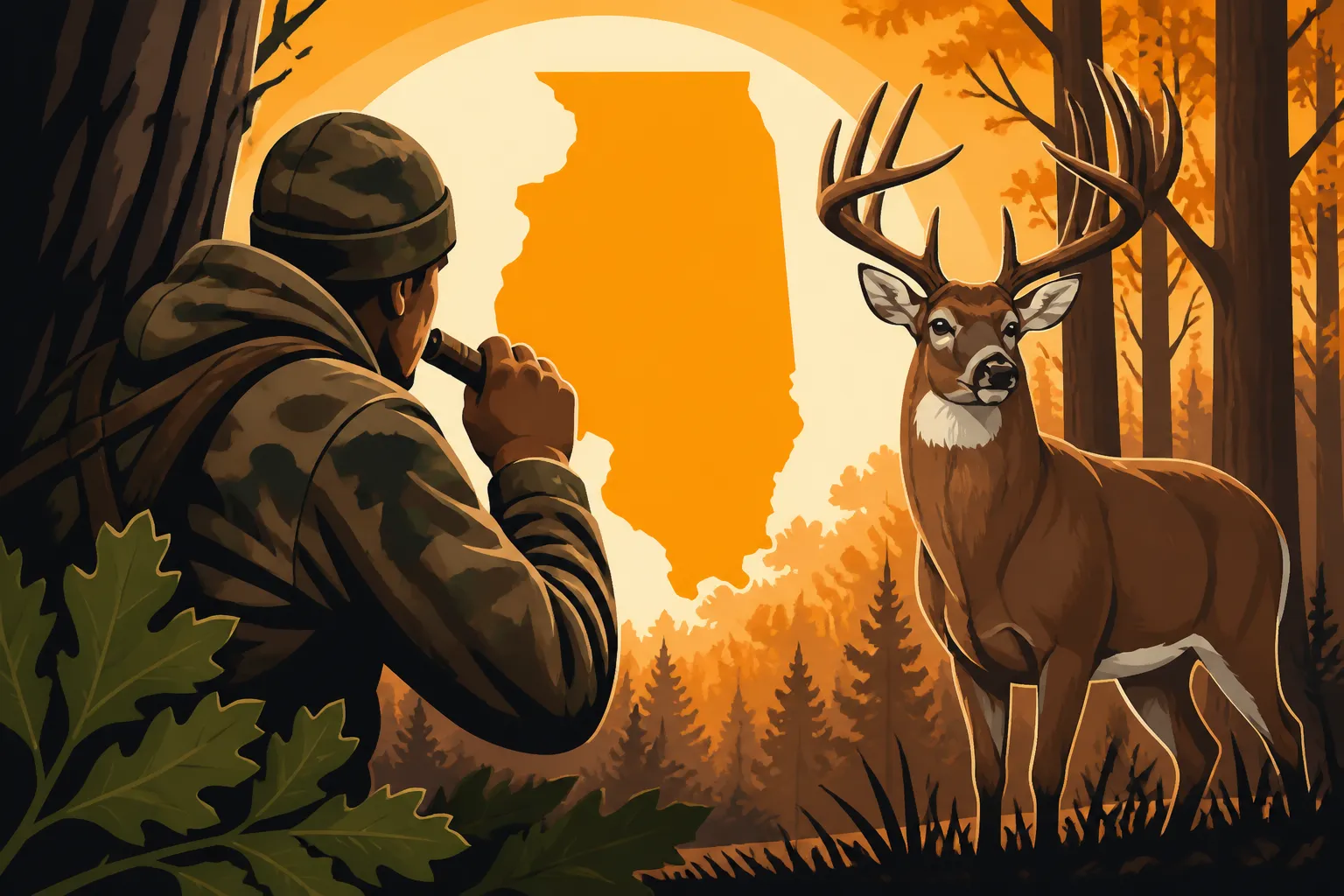
The distinct quiet of mature Illinois timber can be both a blessing and a curse for deer hunters. While it offers unparalleled concealment, it also presents a significant challenge when trying to effectively use grunt calls to bring in a wary buck. Many hunters find their calls disappear into the canopy or get swallowed by dense brush, leaving them frustrated and wondering if the deer even heard them. This comprehensive guide is designed to help you navigate the unique acoustic landscape of mature Illinois woodlands, ensuring your grunt calls cut through the silence and elicit a response from that elusive whitetail.
Understanding the Acoustics of Mature Timber
Hunting in mature timber is a different ballgame than sitting on a field edge. The environment itself plays a huge role in how sound travels, and if you don't account for it, your best grunt calls might just be whispers in the wind. It's not enough to simply blow a call; you have to understand how that sound is going to carry – or not carry – through the woods.
How Dense Cover Muffles Sound
Mature timber, by its very definition, means big trees and often a well-developed understory of saplings, thickets, and brush. All of this physical matter acts like a giant sound sponge. Unlike an open field where sound can travel for hundreds of yards with minimal obstruction, every tree trunk, every branch, every patch of briars absorbs or deflects sound waves. Imagine trying to talk across a crowded room versus an empty gym; the noise and objects in the room make it harder to hear clearly. The same principle applies here. Your grunt call's sound energy dissipates rapidly, meaning its effective range is significantly reduced. This isn't a problem unique to Illinois, but with the mix of hardwood forests, particularly in areas like the Shawnee Hills region, it's something every hunter needs to contend with.
It's a common frustration to make a series of perfect grunts, only to have a deer appear silently from a direction you weren't expecting, clearly having heard the call but from a much closer range than you anticipated. This muffling effect necessitates a different approach to calling volume and frequency. You can't rely on the sound carrying far and wide; instead, you need to focus on drawing deer that are already within a relatively close proximity, or using the call to pinpoint a deer that might be moving in silently. Understanding this limitation is the first step toward effective calling in these environments.
The Limited Range of a Grunt Call in Woods
Given the sound-muffling properties of dense timber, the practical range of your grunt call shrinks dramatically. What might be effective for 200-300 yards in an open field could be limited to 50-75 yards in thick woods. This isn't to say a deer won't hear it further away under perfect conditions, but expecting a consistent response from those distances is often wishful thinking. Think of it like shouting: in a canyon, your voice echoes; in a dense forest, it's swallowed up.
This limited range profoundly impacts your strategy. Instead of broad-spectrum calling hoping to pull deer from afar, you're now focused on more targeted, localized calling. It means your scouting efforts are even more crucial. You need to identify areas where deer are likely to be within that effective calling radius, such as bedding areas, travel corridors, or staging zones. Before the season, take time for Scouting Illinois Public Land Before Season to pinpoint these high-traffic spots. You're not just broadcasting a message; you're having a more intimate conversation with a deer that's already in the neighborhood. This often means adjusting your setup to be closer to known deer travel routes or bedding locations, increasing the odds that your grunts fall on receptive ears.
Reading the Wind and Thermals for Effective Sound Travel
Beyond just the physical obstructions, the wind and thermals play a massive, often underestimated, role in how sound travels in the woods. Just as a deer uses the wind to detect scent, it also uses it (and thermals) to gauge where sounds are coming from. The wind can carry your grunt call further downwind, but it also carries your scent, which is a double-edged sword. More importantly, wind can distort and dissipate sound, making it harder for a deer to pinpoint the source.
Thermals, the rising and falling air currents, are equally critical, especially in hilly or varied terrain common in places like the Shawnee National Forest. In the mornings, air warms and rises, carrying sound (and scent) uphill. In the evenings, air cools and falls, carrying sound (and scent) downhill. Ignoring these natural air movements can render your calling useless or, worse, alert deer to your presence from an unfavorable direction. For example, if you're set up on a ridge and calling downhill in the morning, your sound might be carried away from where deer are moving. Understanding Wind and Thermals on a Southern Illinois Ridge is vital. Always consider how the air currents are moving and position yourself, and your calls, accordingly. Your goal isn't just to make noise, but to have that noise arrive at the deer in a believable, directional manner.
Timing and Situational Awareness for Grunt Calls
Just as important as how you call is when you call. The effectiveness of a grunt call can swing wildly depending on the time of year, the specific phase of the rut, and the individual temperament of the buck you're trying to attract. What works in early October might send deer running in December.
The Rut: Prime Time for Aggressive Calling
Let's be honest, the rut is when most of us dream of grunting in that monster buck. And for good reason – it's often the most effective time. During the breeding season, bucks are highly vocal and incredibly competitive. They're seeking does, chasing rivals, and generally more agitated and responsive to territorial challenges or the sound of a hot doe. This is when you can afford to be more aggressive with your calls, often mimicking the sounds of a buck chasing a doe or a challenging grunt to draw out another dominant male. During Hunting the Rut in Early November, a well-timed series of grunts, especially combined with rattling, can be irresistible to a buck spoiling for a fight or looking for a receptive female.
However, "aggressive" doesn't mean non-stop. Even during the rut, discretion is key. An overabundance of calling can still make a buck suspicious, especially older, wiser deer that have heard it all before. Focus on short, sharp bursts of grunts, followed by periods of silence to listen and observe. Watch for body language – a buck stopping, turning its head, or bristling its hair could indicate interest. It's a delicate dance of provocation and patience.
Early Season and Late Season Nuances
Outside of the peak rut, grunt calls still have their place, but the strategy shifts dramatically. In the early season (September-October), bucks are often still in bachelor groups or focused heavily on food sources. They're less interested in fighting and more concerned with putting on weight. A soft, inquisitive grunt might pique their curiosity, but aggressive calling is usually counterproductive. Think about a buck's mood: in September, he's just hanging out, eating acorns. A challenging grunt out of nowhere might just make him walk away. A more subtle approach, like a tending grunt or a contact call, might work better to make him think another deer is simply moving through.
Come late season (December-January), after the main rut has passed, bucks are exhausted and wary. Many does have been bred, and the remaining ones are highly sought after. At this point, the primary focus for deer is often Late-Season Food Sources for Illinois Whitetails and conserving energy. A lone, soft tending grunt, mimicking a buck still with a doe, might pull in a satellite buck hoping for a last chance at breeding. However, over-aggressive calling is likely to alarm these post-rut, high-pressure deer. It's a time for extreme subtlety and patience, using calls more to confirm a deer's presence or draw a curious glance rather than to challenge.
When to Be Subtle, When to Be Bold
The key to effective grunt calling in mature timber is truly situational awareness. There’s no universal "best way" to grunt call; it all depends on the deer's current behavior, the time of year, and the hunting pressure in your area.
For instance, if you're bowhunting in thick cover and spot a buck cruising just out of range, a soft, single grunt might be enough to stop him or turn him to investigate. On the other hand, if you're targeting a dominant buck during the peak of the rut and he's unresponsive to lighter calls, a more aggressive series of grunts, perhaps even imitating a fight sequence with some short, sharp rattling (for more on this, check out Rattling Volume in Thick Cover), could be the trigger you need. The general rule of thumb: start subtle and escalate only if necessary. A deer can always hear a louder call if you increase volume, but you can't "un-spook" a deer that was turned off by an overly aggressive call. Pay attention to the overall Illinois Deer Population Estimate and age structure. In areas with a healthier Illinois rutting buck age structure, aggressive calling might be more effective as there are more mature, competitive bucks. In areas with lower deer numbers or high pressure, subtlety is almost always the better choice.
Techniques for Grunt Calling in Thick Woods
Now that we understand the environment and timing, let's dive into the actual techniques that will make your grunt calls more effective in mature Illinois timber. It’s not just about owning a call; it’s about mastering its use within specific environmental constraints.
Varying the Call and Volume
Because sound doesn't travel far in dense woods, varying your call and volume is crucial. You can't just blast out the same series of grunts over and over. Instead, think about having a conversation. Start with soft, inquisitive grunts, almost like a contact call. If you don't hear or see a response, you can slowly increase the volume and intensity. A series of three to four medium-volume tending grunts, followed by a minute or two of silence, is often a good starting point. If you suspect a buck is closer, reduce the volume significantly.
A good grunt call, like those offered by GoHunt, allows for a range of vocalizations, from soft bleats to deep, guttural grunts. Practice using these variations. Sometimes, a series of short, choppy "challenge grunts" can imitate a buck actively pursuing a doe. Other times, a more drawn-out, nasal "social grunt" might simply signal another deer moving through, piquing curiosity without alarm. The key is to make it sound natural and varied, mimicking the genuine vocalizations you might hear if you spent enough time Reading Illinois Mud for Fresh Deer Movement and observing deer firsthand. Don't be afraid to experiment, but always prioritize sounding natural and measured.
Strategic Positioning and Decoy Use
Your position in the timber is paramount when using grunt calls. Since the sound doesn't travel far, you need to be set up in a spot where deer are likely to pass within your effective calling radius. This means focusing on natural funnels, ridge-top saddles, creek bottoms, or the edges of known bedding areas. When hunting areas like Hunting a Ridge-Top Saddle for Rutting Bucks or the timbered sections of Hunting Shawnee Hills Ridgelines, think about sightlines. When a deer responds to your call, it will likely try to circle downwind to scent-check the source. Position yourself so you have good shooting lanes in the directions a deer is most likely to approach, particularly downwind.
Decoys can also play a huge role, especially during the rut. A realistic buck or doe decoy, placed so that it's visible but also protected from direct approach (forcing the real deer to expose itself), can give a responding buck a visual to commit to. If using a buck decoy, a challenging grunt and the visual of another buck can often be too much for a dominant deer to resist. However, be cautious with decoys on heavily pressured public land, as they can also attract other hunters. Always ensure you are highly visible to other hunters with plenty of blaze orange, especially when using a decoy during firearm season.
Combining Grunts with Other Deer Vocalizations
Grunt calls are powerful on their own, but they become even more potent when combined with other deer vocalizations. Think of building a whole conversation rather than just saying one word.
- Doe Bleats: A few soft doe bleats before or after grunts can simulate a buck tending a doe, or a doe looking for company. This can be especially effective during the rut, making a cruising buck think a receptive female is nearby.
- Fawn Bleats: In the early season, a soft fawn bleat can sometimes bring in a doe (which might be followed by a buck), or even pique a buck's curiosity if he's feeling protective or simply wondering what's happening.
- Rattling: As mentioned earlier, combining grunts with rattling is a classic rut strategy. Start with some light sparring sounds, then add some aggressive grunts, as if a subordinate buck is trying to get in on the action or a dominant buck is asserting himself. Make it sound like a full-blown argument for maximum impact. This can often convince a hesitant buck that what he's hearing is genuine interaction.
- Snort-Wheeze: This is an aggressive challenge call, usually reserved for dominant bucks. If you hear a buck snort-wheeze, or if you're trying to challenge a very specific buck you know is in the area, a well-placed snort-wheeze followed by a deep grunt can sometimes bring him in hot, ready to fight. Be careful with this one; it's a high-stakes call that can either draw a deer in aggressively or send it running the other way.
By layering these sounds, you create a more realistic and compelling scenario, drawing on a deer's natural instincts and curiosity. Just remember to allow periods of silence between sequences to listen for approaching deer. The GoHunt app, for example, often has soundboards or guides that can help you practice these sequences, ensuring your calls sound authentic in the timber.
Common Mistakes and How to Avoid Them
Even with the best intentions and the right gear, it's easy to fall into common traps when grunt calling in mature timber. Avoiding these pitfalls can significantly increase your success rate and prevent you from inadvertently spooking deer.
Overcalling and Spooking Deer
One of the most common mistakes is simply calling too much or too loudly. While a buck may be curious or aggressive, relentless calling can make him suspicious. Imagine someone shouting at you repeatedly from the bushes – you'd probably be more wary than curious. Mature bucks, especially in areas with significant hunting pressure, become highly educated. They've heard it all before, and they know what sounds unnatural.
In dense timber, where the sound doesn't carry far, overcalling can feel like you're not doing enough, but it still has negative consequences. Deer are incredibly sensitive to sound and can pinpoint its origin with astonishing accuracy. If you're constantly calling, you're not giving the deer time to respond, or more importantly, time to approach stealthily. Instead, adopt a rhythm: a few grunts, then silence for several minutes. Use that silence to scan the woods, listen for approaching footsteps, or watch for subtle movements. It's often the soft, infrequent calls that entice the wariest deer to commit. Remember, it's a conversation, not a monologue.
Impatient Calling and Waiting for a Response
Another significant mistake is a lack of patience. Many hunters will grunt a few times, wait a minute or two, and if nothing happens, either pack up or move on. This is a huge disservice to the effectiveness of grunt calls, especially in mature timber. Deer, particularly mature bucks, rarely come barreling in immediately. They are cautious creatures, and they will often circle downwind, taking their time to assess the situation and get a read on any potential danger.
After a calling sequence, commit to staying put and remaining absolutely silent and still for at least 15-20 minutes, sometimes longer. During this time, every rustle of leaves, every flick of an ear, could be a sign of an approaching deer. Many bucks are killed because the hunter saw nothing for a while, started to move, and spooked a buck that was slowly circling into position. This patience also extends to your overall hunt strategy. If you've been working a specific area, resist the urge to abandon it too quickly. Sometimes, a deer might be out of earshot and simply takes longer to move in, especially if you've done your homework by Reading Aerial Photos for Southern Illinois Deer to identify long travel corridors.
Ignoring Your Scent and Movement
This might seem obvious, but it's astonishing how often hunters neglect basic scent control and minimize movement when they get caught up in the excitement of calling. When a buck responds to a grunt call, his primary goal is to find the source of the sound, and just as critically, to smell it. If your scent cone is blowing directly toward his approach, or if you're fidgeting and making sudden movements, your calling efforts will be completely undermined.
Always hunt with the wind in your favor, positioning yourself so your scent is carried away from where you expect deer to approach. Use high-quality scent-eliminating sprays, wash your hunting clothes in scent-free detergent, and store them properly. More advanced hunters might even consider portable ozone generators from brands like ScentLok or Ozonics, particularly for longer sits in dense cover. When calling, remain absolutely still. Use minimal movements to operate your call, and then return to complete stillness. Even subtle movements can be picked up by a deer's keen eyesight, especially in the broken light of dense timber. You can have the best grunt call in Illinois, but if your scent and movement betray you, that buck will vanish before you even know he was there. If you're using a crossbow during Crossbow Rules During Illinois Archery Season, ensure you can quietly raise and cock it without excessive movement.
Grunt Call Volume and Frequency Guide for Mature Timber
Here's a quick reference table to help guide your grunt calling strategy in mature Illinois timber, accounting for different seasons and deer behavior. This is a general guide, and remember that adapting to real-time deer reactions is always paramount.
| Season Phase | Deer Behavior | Suggested Call Type | Volume | Frequency | Notes |
|---|---|---|---|---|---|
| Early Season | Food-focused, bachelor groups, less aggressive | Soft social grunts, inquisitive grunts, occasional doe bleat | Low | Infrequent (1-2 grunts every 10-15 min) | Aim for curiosity, not challenge. Good for confirming deer presence or subtly stopping a walking deer. |
| Pre-Rut | Bucks scouting, checking scrapes, increasing activity | Soft grunts, tending grunts, occasional light rattling | Low to Medium | Moderate (2-3 grunts every 5-10 min) | Bucks are starting to get antsy. May respond to a buck tending a doe. Good time for Scrape Lines Along a Logging Road. |
| Peak Rut | Chasing, breeding, highly aggressive & competitive | Aggressive grunts, challenge grunts, tending grunts, snort-wheeze, rattling | Medium to High | Frequent (3-5 grunts every 2-5 min) | This is your window for aggressive calling, but don't overdo it. Combine with rattling for a full fight scenario. Watch for immediate responses. Remember that Hunting the Rut in Early November is peak time. |
| Post-Rut/Late Season | Wary, exhausted, primarily food-focused | Soft tending grunts, lone buck grunts | Low | Infrequent (1-2 grunts every 15-20 min) | Bucks are looking for last-chance does or just trying to survive. Extreme subtlety is key. Don't expect aggressive rushes. |
| Blind Calling | No deer seen, trying to pull from cover | Varied: start soft, increase volume/intensity if no response | Low to Medium | Moderate (2-3 grunts every 5-10 min) | Cycle through different call types. Be patient. Always consider wind direction for sound and scent. |
| Targeted Calling | Deer seen, trying to stop or draw in | Single soft grunt, tending grunt | Low | As needed (1-2 grunts for immediate action) | Use to stop a walking deer, turn its head, or pique interest. Don't call if the deer is already headed your way. |
This table serves as a guide, but always let the deer's response (or lack thereof) dictate your next move. Good luck in the timber!
Disclaimer
Hunting is an inherently dangerous activity. Always prioritize safety, follow all Illinois Department of Natural Resources regulations, and obtain proper licenses and permits before heading afield. This guide provides general information and should not replace professional instruction or personal judgment. Always be aware of your surroundings and the presence of other hunters.