Hunting a Ridge-Top Saddle for Rutting Bucks
It can be incredibly frustrating during the peak of the rut, when you know those big Illinois bucks are on the move, but you just can't seem to intercept them. You spend hours on stand, checking scrapes and rub lines, only to see does and yearlings. This guide is going to walk you through one of the most consistently productive locations for finding cruising rutting bucks: the ridge-top saddle. We'll dive deep into why these natural pinch points are so effective, how to scout them, and the best tactics for success.
Why Ridge-Top Saddles Are Deer Magnets During the Rut
When the whitetail rut kicks into high gear across Illinois, bucks change their entire demeanor. They're no longer content to stick to predictable patterns; instead, they become relentless wanderers, searching for receptive does. Ridge-top saddles offer a unique combination of terrain advantages that make them absolute hotspots for intercepting these cruising brutes. Understanding why these spots are so good is the first step to hunting them effectively.
Understanding Deer Movement Patterns in Hill Country
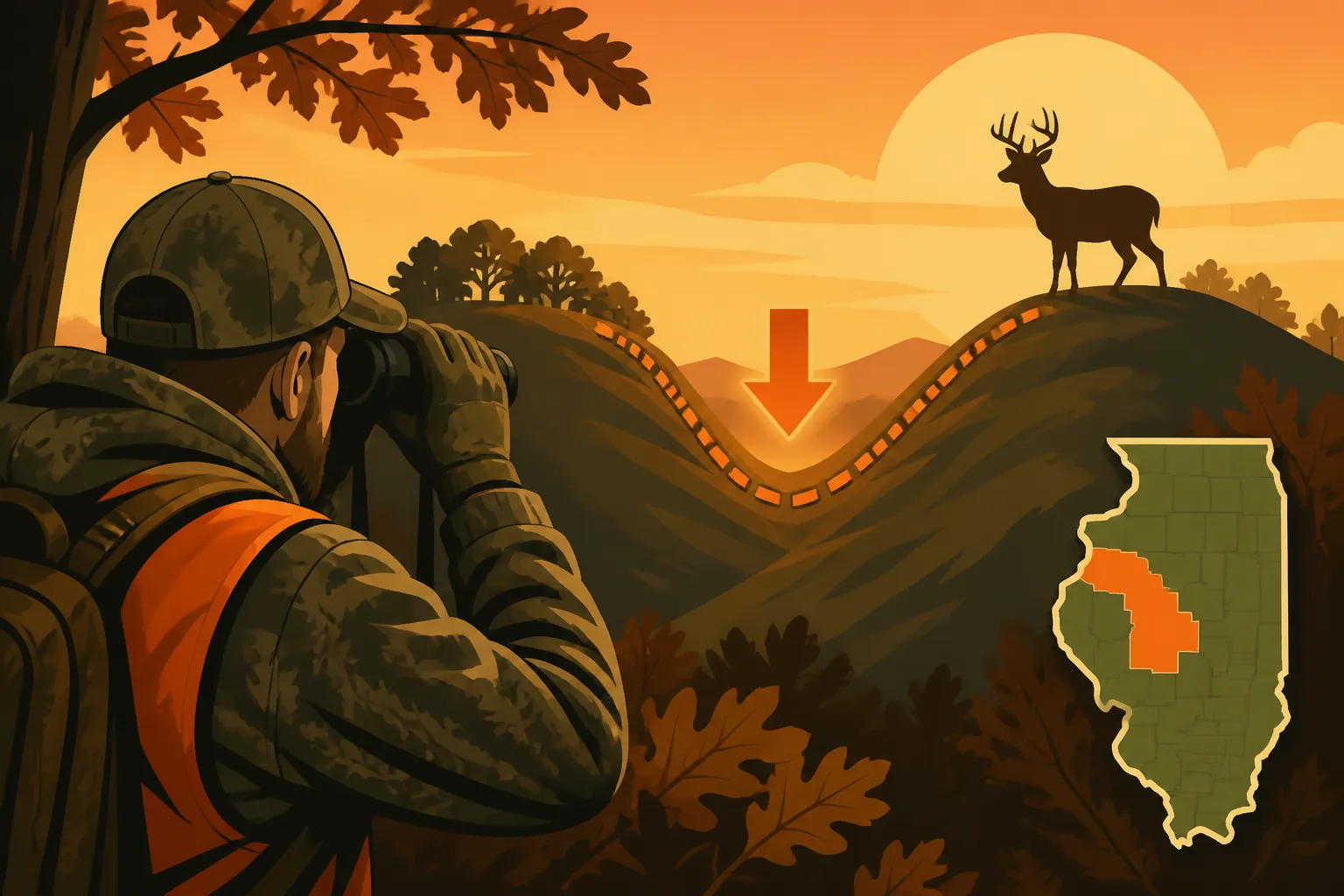
Deer, like most animals, are inherently efficient. They conserve energy whenever possible, and that means they'll choose the path of least resistance when traveling. In the rolling hills and bluffs found in many parts of Illinois, especially in regions like the Shawnee National Forest or the Illinois River Valley, this often leads them to saddles. A saddle is essentially a low spot or dip in a ridge line that connects two higher points. Instead of expending precious energy climbing over a peak, a buck will naturally opt to slip through the saddle. This is especially true when they're covering miles during the rut, driven by instinct to find does.
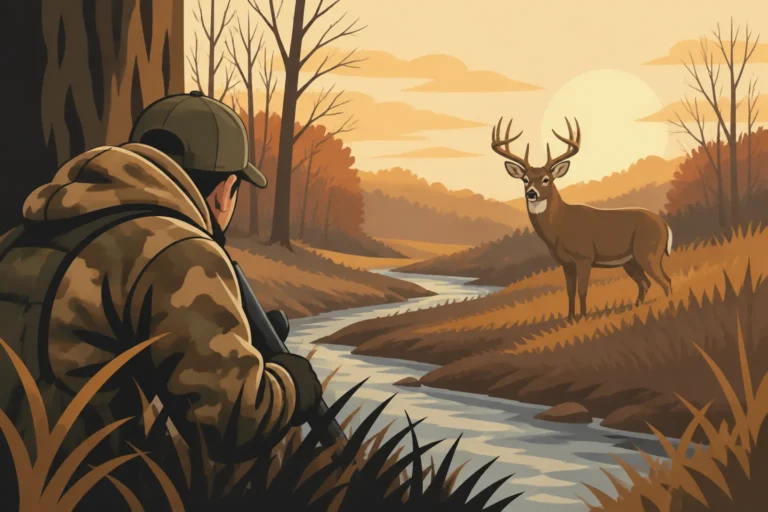
Imagine a mature buck that has just finished checking a bedding area on one side of a deep valley. He knows there are more does on the adjacent ridge, perhaps feeding in a powerline cut or bedded on a sunny, south-facing slope. Instead of dipping all the way down into the valley, crossing a creek, and then climbing a steep ascent, he'll likely parallel the ridge, using any subtle dips or saddles to seamlessly transition from one side to the other. He might even be scent-checking the air currents that funnel through the saddle as he travels. This efficient travel behavior makes these spots predictable ambush points.
The Funnel Effect and Natural Pinch Points
The real magic of a ridge-top saddle lies in its ability to funnel deer movement. Think of it like a natural hourglass. When deer are moving along a ridge, whether it's from one bedding area to another, or from a feeding area to a watering hole, the terrain naturally narrows their path through these low points. This geographical constriction means that if deer are moving along that ridge, they have to pass through the saddle, concentrating their movement into a smaller, more predictable area for hunters.
While creek bottoms and thick fencerows also act as funnels, saddles offer a distinct advantage: elevation. From a stand in a saddle, you often have excellent visibility down both sides of the ridge, allowing you to spot deer approaching from a distance. These natural pinch points can be easily identified on topographical maps or aerial photography. Mapping apps like GoHunt are invaluable for this, letting you zoom in and see those subtle dips in contour lines that indicate a saddle. The combination of easy travel and concentrated movement makes saddles prime real estate for setting up during the rut when bucks are truly unpredictable elsewhere.
Connecting Bedding, Feeding, and Water Sources
Productive saddles rarely exist in isolation. Their effectiveness is often amplified by their strategic location, linking critical habitat components. A saddle might connect a dense cedar thicket on one ridge, perfect for thermal bedding, to an old-growth oak flat on the next, laden with acorns. During the rut, a buck might move from his bedding area, cruise the saddle to scent-check for does, and then continue on to a feeding area, or even a hidden water source in a low draw. These saddles serve as crossroads in the deer woods, acting as natural highways for bucks on the prowl.
Consider a setup in Southern Illinois, perhaps in the Shawnee Hills region. A buck might be bedded on a thermal slope mid-ridge, and during the day, he'll get up to check for does. A saddle located between his bedding and a known doe bedding area or feeding plot becomes a primary travel corridor. Bucks often use these areas not just for travel, but as checkpoints, where they might pause to scent-check the wind, make a quick scrape, or rub a sapling before continuing their journey. Knowing Where Shawnee National Forest Bucks Bed and where the does tend to congregate can give you a significant advantage in identifying these high-traffic saddles.
Scouting and Locating Productive Saddles in Illinois
Finding a saddle on a map is one thing; confirming its potential and understanding how deer use it is another entirely. Effective scouting is paramount to ensure you're not just hunting a topographical feature, but a genuine deer funnel. This involves a mix of armchair detective work and boots-on-the-ground investigation.
Interpreting Topographical Maps and Aerial Imagery
Your scouting efforts should always begin long before you set foot in the woods, preferably from the comfort of your home with a good mapping application. Look for contour lines on a topo map that dip down between two higher elevations along a ridge. This "hourglass" shape is your primary indicator of a saddle. The closer those contour lines are, the steeper the terrain around the saddle, potentially making it an even tighter funnel. Don't just look for obvious dips; subtle changes in elevation can also create significant travel corridors for deer.
Once you've identified potential saddles on your topo map, switch to the aerial view. This is where tools like GoHunt really shine. Look for connecting cover, dense bedding areas, old logging roads, or even subtle changes in vegetation that might indicate a travel route. Does this saddle connect a thick pine plantation to a hardwood bottom? Is there a creek crossing nearby? Are there any visible trails or openings in the canopy that suggest frequent deer traffic? By combining both views, you can prioritize which saddles to investigate further on foot. For more detailed insights into this process, check out our guide on Reading Aerial Photos for Southern Illinois Deer.
Boots-on-the-Ground Reconnaissance for Fresh Sign
There's no substitute for walking the ground. Once you've marked promising saddles on your map, it's time to put boots on the ground, ideally during the off-season or early archery season when your presence is less disruptive. What you're looking for is concrete evidence of deer activity. Heavy, worn trails converging through the saddle are a clear sign. Look for rub lines—especially fresh ones from the previous season—that indicate a buck's travel path. You might find a series of rubs leading into and out of the saddle, suggesting a preferred route.
Perhaps even more telling are scrape lines. Bucks often establish scrapes in these high-traffic areas as communication hubs, especially during the pre-rut and rut. Finding a "super scrape" with overhanging licking branches, torn up earth, and an active deer presence is like hitting the jackpot. Don't just focus on the saddle itself; check the immediate areas above and below the saddle for sign. Look for tracks in soft soil, droppings, and browse lines. This ground reconnaissance is critical for confirming that deer are not just passing through the saddle, but actively using it as a part of their rutting circuit. Our piece on Finding Sign in Big Shawnee Forest Timber delves deeper into what to look for.
Reading Wind and Thermals in Hilly Terrain
Understanding wind and thermals is absolutely critical when hunting ridge-top saddles. The "wind" in a saddle can be notoriously tricky, often swirling and unpredictable due to the terrain features. Thermals, the natural air currents that rise and fall with temperature changes, play a huge role. In the morning, as the sun warms the earth, thermals will typically rise, pulling your scent up the ridge. In the evening, as the air cools, thermals will typically drop, pulling your scent down the ridge into the valley.
This means you need to plan your stand placement and your entry/exit routes meticulously. For a morning hunt, you might want to set up slightly below the saddle, allowing rising thermals to carry your scent over any deer approaching from below. For an evening hunt, setting up slightly above the saddle might be better, with dropping thermals carrying your scent down and away from the ridge top. Always use a wind checker, like powder or milkweed, to constantly monitor air currents. Neglecting the wind in a saddle is almost a guaranteed way to bust deer. You can learn more about this complex topic in our guide to Wind and Thermals on a Southern Illinois Ridge.
Optimal Stand Placement and Hunting Strategies
Once you've identified a prime saddle and understand its dynamics, the next step is to choose the perfect ambush point and employ effective hunting strategies. This isn't just about picking any tree; it's about making calculated decisions that maximize your chances of intercepting a rutting buck.
Choosing the Right Tree and Approach
Selecting the ideal tree for your stand in a ridge-top saddle involves several considerations beyond just height. First and foremost, you need a tree that offers adequate cover to break up your silhouette. A lone oak might give you height, but if it's sparse, you'll stick out like a sore thumb. Look for a tree that's part of a cluster, or one with low-hanging branches or a thick canopy that provides natural camouflage. Next, consider your shooting lanes. While you want good visibility, ensure you have clear paths to likely deer travel routes through the saddle. You might need to do some minimal, strategic trimming before the season, being mindful of public land rules if applicable.
Your approach and exit routes are just as important as your stand placement. You absolutely cannot afford to blow your scent into the saddle, especially during the rut when bucks are hyper-alert. Plan a route that keeps you downwind or crosswind of the saddle, using terrain features like creek bottoms or low draws to conceal your movement and scent. Try to avoid walking directly through the areas you intend to hunt. For more detailed advice on setting up stands in challenging terrain, check out Treestand Setups in Shawnee National Forest. Remember, a quiet and scent-free entry and exit can make or break your hunt.
Calling and Decoy Tactics for Rutting Bucks
During the peak of the rut, bucks are actively searching for does, making them much more responsive to calling and decoys than at other times of the year. In a ridge-top saddle, your calls can carry well, and the funneling effect increases the chances that a buck will respond and come to investigate. Rattling antlers can simulate two bucks fighting, a potent trigger for a dominant buck looking to assert his territory or steal a doe. Combine rattling sequences with grunts and snort-wheezes to create a realistic scenario.
Doe bleats and estrus calls can also be highly effective. A lone buck cruising the saddle might hear a bleat and come to investigate, hoping to find a receptive doe. Consider using a small doe decoy, placed strategically to be visible from typical travel routes through the saddle. A decoy can draw a buck's attention away from your stand and offer a more relaxed shot opportunity. However, be cautious with buck decoys; they can sometimes spook younger, less aggressive bucks or draw an overly aggressive charge from a dominant one. Our guides on Rattling and Grunting in Illinois and Grunt Calls in Mature Illinois Timber provide excellent insights into these tactics.
All-Day Sits and Timing Your Hunt
The rut is a marathon, not a sprint, and this is especially true when hunting ridge-top saddles. While deer movement typically peaks in the early morning and late afternoon, rutting bucks are known to move at all hours of the day. A buck might finish checking a feeding area at 10 AM, then cruise a saddle at noon to check a new bedding area for does, only to return to a different feeding area in the evening. This makes all-day sits in a well-chosen saddle incredibly productive. Many big bucks are taken midday during the rut because hunters are willing to put in the time when others have gone back to camp for lunch.
To successfully execute an all-day sit, come prepared. Pack enough food, water, and snacks to last you the entire day. Dress in layers to adapt to changing temperatures, as midday sun can be warm even in November, while early mornings and late evenings can be frigid. Bring a comfortable cushion and a good book or podcast for quiet moments, but always remain vigilant. Keep your binoculars handy and periodically scan the ridge lines and draws for movement. The payoff for enduring a long sit during Hunting the Rut in Early November can be a buck of a lifetime.
Gear Considerations and Safety in Ridge Country
Hunting ridge-top saddles, especially in the more rugged parts of Illinois, requires specific gear and an unwavering commitment to safety. The terrain can be challenging, and being prepared is key to both success and a safe return home.
Essential Gear for a Saddle Hunt
When tackling ridge-top saddles, every piece of gear counts. A lightweight, comfortable treestand is a must, especially if you plan to move it based on changing conditions or new sign. Popular options like Summit climbing treestands or various hang-on models are ideal for portability. Good optics, like 10×42 binoculars, are invaluable for scanning the terrain and identifying deer movement far off. Scent control is non-negotiable; sprays, scent-eliminating clothing, and careful hygiene are critical to prevent alert bucks from winding you.
Don't forget navigation tools. Even with excellent scouting, getting disoriented in thick timber or rugged terrain is easy. A reliable GPS unit or a mapping app on your phone (like GoHunt, which works offline) is crucial for knowing your precise location, marking stand sites, and navigating your entry and exit routes in the dark. A headlamp with a red light option is also vital for navigating without spooking game. Carry a small daypack with essentials like a first-aid kit, emergency whistle, and a multi-tool.
Treestand Safety and Harness Use
Safety should always be your number one priority, especially when elevated. When hunting from a treestand in a saddle, a full-body harness and a lineman's belt are absolutely non-negotiable. Always be connected to the tree from the moment your feet leave the ground until they touch it again. Use a lifeline for easy attachment and detachment when climbing. Before each hunt, especially after harsh weather, meticulously inspect your stand, straps, and the tree itself for any signs of wear, damage, or instability.
Falling from a treestand is one of the leading causes of hunting accidents. No buck is worth a serious injury or worse. Make sure your stand is properly secured, stable, and rated for your weight plus gear. Practice using your harness and lifeline at ground level before heading into the woods. Let someone know exactly where you are hunting and when you expect to return. For more vital safety information, review our post on Hanging a Stand on a Southern Illinois Ridge.
Navigating Challenging Terrain Safely
Ridge country, while beautiful, can be physically demanding and present unique safety challenges. Good quality, supportive hiking boots with excellent ankle support are essential for navigating uneven, often rocky, or slick terrain. Pay attention to your footing, especially when carrying gear or a harvested animal. Leaves, mud, or frost can hide hazards like loose rocks, roots, or holes.
Be prepared for sudden weather changes, which are common in Illinois during the fall. A warm, sunny day can quickly turn cold and rainy, making conditions slick and potentially leading to hypothermia if you're not properly dressed. Carry extra layers, rain gear, and a fire-starting kit in your pack. A fully charged phone (and a portable charger) is a good idea for emergencies. Always tell someone your hunting plans, including your exact location and expected return time. Hunting responsibly means prioritizing your safety in addition to your hunting success.
| Saddle Feature | How to Identify on Map (GoHunt) | Why it's Important | Optimal Hunt Time |
|---|---|---|---|
| Contour Dip | Closely spaced contour lines that dip between two higher points. | Deer conserve energy by traveling through low points. | All day (rut), especially midday |
| Connecting Cover | Dense timber or thickets leading into and out of the saddle. | Provides security for deer movement between bedding and feeding. | Morning/Evening for travel, Midday for cruising |
| Rub Lines | Series of small trees with bark rubbed off near the saddle. | Indicates a buck's travel path and territorial marking. | Morning/Evening |
| Scrape Lines | Disturbed ground with an overhanging branch in or near the saddle. | Communication hub for bucks and does, especially active during rut. | All day (rut) |
| Bedding Areas | Thick, dense cover on adjacent ridge points. | Bucks will travel through saddles to check adjacent bedding areas for does. | All day (rut) |
| Feeding Areas | Oak flats, agriculture fields, clearcuts on adjacent ridge points. | Saddles connect bedding to feeding; bucks use them as travel corridors. | Morning/Evening |
| Wind Swirl | Often indicated by terrain variations; check with a wind checker. | Critical for stand placement to avoid blowing scent. | Constantly monitor |
Disclaimer
The information provided in this guide is for educational and entertainment purposes only. Hunting regulations, seasons, and requirements can change frequently. Always consult the official Illinois Department of Natural Resources (IDNR) regulations before planning any hunting activity. Adhere to all local, state, and federal laws. Safety should always be your paramount concern when hunting.