Rattling and Grunting in Illinois
There's nothing quite like the heart-pounding anticipation of calling in an Illinois whitetail, but many hunters struggle with knowing when and how to effectively use rattling antlers or grunt tubes. It’s frustrating to put in the effort, only to have bucks spook or ignore your carefully planned sequence. This guide will walk you through the nuances of deer vocalizations, helping you understand how to speak the language of Illinois whitetails and increase your chances of bringing a buck within range.
The Science and Art of Deer Vocalizations in Illinois
Calling deer isn't just about making noise; it's about understanding the subtle language whitetails use to communicate their intentions, dominance, and presence. In Illinois, where deer populations are robust and diverse across agricultural fields, river bottoms, and timbered hills, mastering these vocalizations can be a game-changer.
Decoding Deer Communication: Why Calls Work
Deer, particularly bucks during the pre-rut and rut, are constantly assessing their surroundings for other deer. They use a surprisingly wide range of sounds to communicate everything from alarm to dominance to a simple invitation to breed. When you use a call, you're tapping into these primal instincts. A well-executed grunt or rattle sequence can mimic a scenario that a buck simply can't ignore, whether it's two rivals sparring or a receptive doe signaling her presence. The effectiveness of calls hinges on replicating these sounds accurately and, more importantly, understanding the context in which a real deer would make them. If a buck hears a fight, his instinct might be to investigate, either to join in or to size up the competition. If he hears a doe bleat, his breeding drive takes over. Knowing when to mimic these situations is as crucial as knowing how to make the sound itself.
The Illinois Rut: Prime Time for Calling Action
While you can technically call deer year-round, the Illinois rut is undeniably the most effective period for rattling and grunting. This is when bucks are actively seeking does, establishing dominance, and traveling extensively, making them far more responsive to vocalizations. Generally, the pre-rut begins in mid-October, with scrape and rub lines appearing more frequently, and bucks becoming more visible. The peak rut in Illinois typically falls in Hunting the Rut in Early November, when breeding activity is at its highest. During this intense period, a buck's hormonal drive often overrides his natural caution, making him more likely to investigate a challenge or a potential mate. As the rut winds down into the post-rut in late November and early December, calling can still be effective, but bucks tend to be more worn out and selective. Understanding the local nuances of deer activity can be supported by tools like GoHunt, which often provides regional rut forecasts and deer movement data, helping you pinpoint those crucial days.
Factors Affecting Calling Success in Different Regions
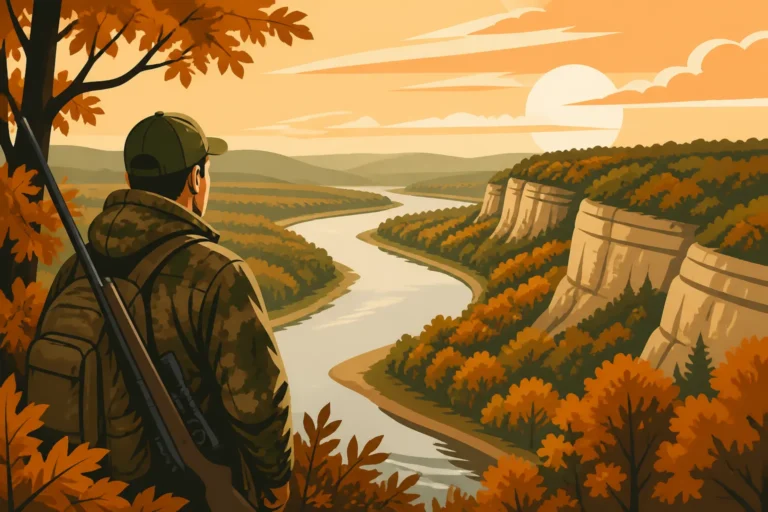
Illinois is a long state, stretching from the dense timber of the Shawnee National Forest in the south to the rolling farmlands and smaller woodlots of the north. This diverse landscape means that what works in one area might not be as effective in another. For instance, in the thick, expansive woods of southern Illinois, where visibility might be limited, louder, more aggressive rattling and grunting might be necessary to cut through the cover. Bucks here might also be more spread out, making them harder to find without a strong attractant. Conversely, in the fragmented agricultural landscapes of central Illinois, where small woodlots are interspersed with vast fields, subtler calling can be incredibly effective. Deer here often travel field edges and creek bottoms, and a loud call might be too jarring in an otherwise quiet environment. Hunting Central Illinois Farmland Deer often involves careful consideration of call volume and timing. Furthermore, hunting pressure plays a huge role. Heavily hunted public lands may have more call-shy bucks, requiring a more nuanced approach than less pressured private land.
Essential Calling Tools and Techniques for Illinois Hunters
To become a proficient deer caller in Illinois, you need to be familiar with the various tools available and, more importantly, how to use them to mimic the sounds that resonate most effectively with whitetails. Each call has its time and place, and understanding these can elevate your success.
Rattling Antlers: Simulating a Buck Fight
Rattling is one of the most exciting and dynamic forms of deer calling. It's designed to mimic the sounds of two bucks clashing antlers, a direct challenge that often brings curious or dominant bucks in to investigate. You can use natural shed antlers, synthetic rattling bags, or artificial rattling horns. For Illinois, where bucks can grow substantial headgear, using a set of good, heavy antlers provides the most authentic sound. The key is to make it sound real. Start with a gentle clashing, as if two bucks are just testing each other, then gradually increase intensity. Incorporate breaking twigs, rustling leaves, and even some grunts or snort-wheezes to make the "fight" sound more convincing. The duration and intensity of your rattling sequence should match the time of year and the personality of the bucks you're targeting. Early season, a short, light sparring session might be enough; during the peak rut, a longer, more aggressive battle can be devastatingly effective. Remember that Rattling Volume in Thick Cover should be adjusted to ensure the sound carries effectively without being overtly artificial.
Grunt Calls: The Universal Deer Language
The grunt call is arguably the most versatile and essential call in any Illinois deer hunter's arsenal. Bucks, does, and fawns all grunt, making it a universal form of communication. A deep, guttural buck grunt typically signifies a buck trailing a hot doe or asserting his presence. Shorter, softer grunts can indicate a deer contentedly feeding or moving. There are numerous grunt tubes on the market, from simple mouth calls to adjustable models that allow for a range of tones. The key is to master the basic buck grunt: a deep, drawn-out unnnnhh sound. Vary the cadence and intensity. A "tending grunt" is a series of short, choppy grunts made by a buck trailing a doe, while a "social grunt" is softer and less aggressive. You can use grunts to stop a moving deer for a shot, to pique the interest of a distant buck, or to complement your rattling sequences. In the mature timber of southern Illinois, Grunt Calls in Mature Illinois Timber can echo effectively, drawing in deer from considerable distances.
Snort-Wheezes, Bleats, and Other Niche Calls
Beyond rattling and grunting, several other vocalizations can be highly effective in specific situations:
- Snort-Wheeze: This aggressive sound is made by a buck to challenge another male. It's a short, sharp snort followed by a drawn-out wheeze. This is a high-risk, high-reward call. It can either bring a dominant buck charging in or send a timid buck running the other way. Use it sparingly and only when you're confident there's an aggressive buck in the area.
- Doe Bleats and Fawn Bleats: These calls are softer and more innocent. A doe bleat can attract bucks looking for a receptive female, especially during the rut. A fawn bleat, often sounding like a lost or distressed young deer, can attract maternal does, and sometimes even curious bucks looking for the doe. These are excellent choices for early season or when you want to avoid alarming deer with aggressive calls. Many calls, such as those from Primos or Buck Expert, offer versatile options for these sounds.
- Dominant Buck Roar: While less common, some specialized calls mimic the deep, throaty roar of a truly dominant buck. This is a very aggressive call and should be used with extreme caution, primarily during the peak of the rut in areas known for mature, aggressive bucks.
- Estrus Bleat: This specific type of doe bleat signals that a doe is in heat and ready to breed. It's often a longer, more drawn-out bleat than a regular social bleat, designed to grab a buck's attention from afar. This can be especially potent when hunting the peak of Hunting the Illinois Rut in Early November.
Strategic Setups and Execution for Effective Calling
Calling deer is only part of the equation; your setup and execution are equally critical. A perfect calling sequence can be ruined by a poor wind, lack of cover, or insufficient visibility. In Illinois, where deer can be incredibly wary, paying attention to these details can make all the difference.
Picking Your Spot: Wind, Cover, and Visibility
Before you even think about rattling or grunting, you need to pick a strategic location. The wind is paramount; you must always hunt with the wind in your favor, ideally carrying your scent away from where you expect deer to approach. Deer will almost always circle downwind to scent-check the source of a call before committing. This means you need to set up with open shooting lanes downwind of your position.
Cover is another crucial element. Whether you're in a treestand or a ground blind, you need enough cover to break up your silhouette and allow you to draw your bow or shoulder your rifle undetected. Consider natural topography: ridge lines, creek bottoms, and timber edges often serve as natural travel corridors for deer. Using scouting tools like GoHunt's property maps can help you identify these features, especially when Scouting Illinois Public Land Before Season. Finally, ensure you have good visibility. You need to see deer approaching from a distance to gauge their reaction and prepare for a shot. Avoid calling in thick, impenetrable cover where a buck might be on top of you before you even see him.
Calling Sequences: When to Be Aggressive, When to Be Subtle
The type of calling sequence you employ should depend on the time of year, hunting pressure, and the specific deer you're trying to attract.
- Pre-Rut (Late September-Mid October): Bucks are still establishing dominance and territory. Use light rattling sequences, mimicking short sparring matches, combined with social grunts and doe bleats. Keep it subtle, as bucks aren't yet in full "fight" mode.
- Peak Rut (Late October-Mid November): This is when you can be more aggressive. Longer, more intense rattling sequences, mimicking full-blown buck fights, combined with aggressive buck grunts and snort-wheezes, can be highly effective. This is the time to really sell the illusion of a full-blown confrontation.
- Post-Rut (Late November-December): Bucks are tired but still looking for any remaining receptive does. Focus on doe bleats and tending grunts. You can also use softer rattling to suggest a small buck passing through, which might appeal to a worn-out, dominant buck looking for an easy challenge.
- All Season: Use a single, soft grunt to stop a walking deer for a shot. This is a universal tactic that works when a deer is within range and you need them to pause for a clean ethical shot.
A good rule of thumb is to start subtle and escalate if you get no response. A typical sequence might be: light rattling for 30 seconds, wait 2-3 minutes, then a series of grunts, wait another 5 minutes, then repeat with more intensity. Always give deer ample time to respond before repeating or moving.
Adapting Your Approach to Public vs. Private Land
The differences between public and private land in Illinois significantly impact calling strategies. On public land, deer are often more pressured and accustomed to human scent and sounds. This means you'll likely need to be more cautious and subtle.
Public Land Challenges:
- Increased Pressure: Bucks on public land are often call-shy. They've heard it all before. This means being less aggressive, focusing on shorter, more realistic sequences, and perhaps relying more on quiet grunts and bleats rather than crashing antlers.
- Competition: You might not be the only one calling. If you hear other hunters calling, consider moving or switching up your strategy to something different.
- Movement: Bucks on public land are often nocturnal or move in thicker cover during daylight. Focus your calling efforts during the early morning and late evening, and consider deep penetration into cover. Hunting Pressure on Illinois Public Land dictates a more conservative approach.
Private Land Advantages:
- Less Pressure: On unpressured private land, deer may be more responsive to calls, and you can often get away with more aggressive sequences.
- Patterned Movement: If you have permission to hunt Hunting Small Private Tracts in Illinois, you can scout extensively and learn specific deer patterns. This allows you to set up calling scenarios with greater precision.
- Controlled Environment: You can manage habitat, put out food plots, and reduce overall pressure, creating a more conducive environment for calling success.
Regardless of the land type, always observe deer behavior. If a buck starts acting nervous, back off the calls. If he responds positively, maintain a convincing sequence to draw him in.
Common Mistakes and How to Refine Your Calling Game
Even experienced hunters make mistakes with deer calls. Understanding these pitfalls and learning how to interpret deer reactions will help you refine your technique and boost your confidence in the field.
Overcalling and Under-calling: Finding the Balance
One of the most common mistakes in Illinois deer calling is overcalling. Hunters often get excited and lay into their calls too frequently or too loudly, spooking deer. Imagine you're a buck; if a fight or a hot doe is making constant noise, it might seem suspicious or unnatural.
Overcalling Issues:
- Sounding Unnatural: Real deer don't constantly make noise. Excessive calling sounds fake and can alert deer to your presence.
- Revealing Your Position: Too much noise can pinpoint your location for wary deer before they get close enough for a shot.
- Making Deer Cautious: Pressured deer quickly learn that continuous, loud calling often means a human is behind it.
Under-calling Issues:
- Not Enough Interest: If your calls are too soft or too infrequent, a distant buck might not hear or might not be intrigued enough to investigate.
- Missing Opportunities: During the peak rut, a more aggressive approach might be necessary to get a dominant buck's attention.
The balance lies in observation and patience. A general rule: if a buck is approaching, lessen your calling or stop altogether. Let him come to you. If he hangs up or seems hesitant, a soft grunt or bleat might be enough to encourage him the last few yards. Many hunters recommend a 15-20 second calling sequence, followed by 5-10 minutes of silence, listening and watching intently before the next sequence. Consistency and patience, especially when Hunting the Late-Season December Lull, are your greatest allies.
Reading Deer Body Language and Reactions
Understanding how a deer reacts to your call is paramount. Their body language tells you whether to continue, stop, or change your strategy.
Positive Reactions:
- Head Up, Ears Swiveling: The deer heard you and is trying to locate the source. Continue with the same or a slightly softer call.
- Walking Towards You: Success! Stop calling and prepare for a shot. Let the deer commit.
- Circling Downwind: The deer is trying to scent-check. This is a critical moment. Get ready, as they will often come into shooting range before or after the check.
- Stomping or Hair Erect: The deer is agitated or curious. Continue with a soft, enticing call, or use a decoy.
Negative Reactions:
- Flagging Tail and Running: You spooked them. They're gone.
- Staring Intently, Not Moving: They're wary. Reduce calling or stop. If they don't move, you might have to try a different tactic or wait them out.
- Moving Parallel, Not Approaching: They're curious but hesitant. A change in call type or intensity might be needed.
GoHunt maps can also help you visualize deer travel patterns and predict where a buck might circle downwind, allowing you to position yourself for the shot. Being able to anticipate their movement based on their reaction is key.
Dealing with Pressured Deer and Call-Shy Bucks
Hunting pressured deer in Illinois requires a different approach. Bucks on heavily hunted public lands or properties surrounded by other hunters can become extremely cautious and even "call-shy."
Strategies for Pressured Deer:
- Subtle and Realistic: Ditch the aggressive, loud sequences. Opt for soft social grunts, feeding bleats, or quiet, short rattling. Mimic natural deer behavior as closely as possible.
- Vary Your Calls: Don't use the same call over and over. If bucks are conditioned to certain sounds, try a less common one.
- Less is More: Short, infrequent calling is often more effective than extended sessions. Let curiosity do the work.
- Focus on Cover: Call from areas with dense cover where deer feel safe. Bucks might be more willing to investigate if they can do so under the perceived safety of thick brush.
- Combine Tactics: Instead of relying solely on calling, combine it with still-hunting, slow movement through cover, or even a careful stalk to within range of where you expect deer to be. Deer Drives With Three or Four Hunters can sometimes push deer towards a waiting, softly calling hunter.
Remember, a call-shy buck isn't necessarily uncallable; he's just more discerning. Patience and a natural presentation are your best tools.
Mastering Advanced Tactics for Stubborn Illinois Bucks
Sometimes, the basic grunts and rattles aren't enough to entice a wary Illinois buck. This is where advanced tactics, often involving a combination of strategies, can make the difference. Integrating decoys, understanding how to pair calling with movement, and year-round preparation all contribute to becoming a more effective deer caller.
Decoy Usage with Calling Sequences
Adding a deer decoy to your calling setup can be incredibly effective, especially during the rut, by providing a visual stimulus to go along with the auditory one. A buck decoy paired with aggressive rattling and grunting can challenge a dominant buck or draw in a curious younger one. A doe decoy, especially an estrus-scented one combined with doe bleats, can lure in bucks looking for a receptive mate.
Tips for Decoy Use in Illinois:
- Positioning: Always position your decoy downwind of your stand or blind, facing slightly away from you. This way, any approaching buck will try to circle downwind to scent-check the decoy, putting him in front of you for a shot.
- Visibility: Place the decoy where it's easily visible but also has enough cover around it to make it seem natural. Clearings in timber or along field edges are prime locations.
- Motion: Some decoys allow for subtle head or tail movement, which can add to the realism.
- Scent: Use deer urine or estrus scents around the decoy to further enhance the illusion.
- Buck vs. Doe: During the pre-rut and peak rut, a buck decoy can work well with aggressive calling. A doe decoy is more versatile and can be used throughout the rut to attract bucks. Be mindful of setting up a buck decoy if you expect rival hunters; it's safest on private land or in very isolated public areas.
Remember, a decoy isn't a magic bullet. It needs to be combined with realistic calling and proper wind direction for maximum effectiveness.
Combining Calling with Still-Hunting or Drives
Calling doesn't always mean sitting still in a stand. Sometimes, an active approach, where you combine calling with careful movement, can be highly productive, particularly in varied Illinois terrain.
Still-Hunting and Calling:
- Slow Movement: When still-hunting, move incredibly slowly through the woods, pausing frequently to listen, look, and call.
- Short Sequences: After moving 50-100 yards, stop in a concealed position and perform a short, subtle calling sequence – perhaps a few soft grunts or light rattling. Wait 5-10 minutes, then move again.
- Terrain Adaptability: This works exceptionally well in areas with diverse terrain, like the rolling hills of Southern Illinois where Still-Hunting Southern Illinois Ridges can be highly effective. The calls can draw in deer from draws and pockets of cover you might otherwise miss.
- Cover Blending: Use the terrain and natural cover to your advantage, always breaking up your outline.
Calling During Deer Drives:
- Strategic Placement: If you're participating in Deer Drives With Three or Four Hunters, the standers at the end of the drive can use soft grunts or bleats. This can sometimes make deer feel more at ease as they approach, thinking they're encountering other deer, or it can draw out a buck that's trying to slip past the pushers.
- Minimalist Calling: During a drive, calls should be very subtle. Over-calling will likely spook deer that are already on edge. A soft bleat or a single grunt can be just enough to make a deer pause or alter its course slightly.
Year-Round Practice and Scouting for Better Results
Becoming a master deer caller isn't something that happens overnight; it takes practice and dedication.
Off-Season Practice:
- Mimicry: Listen to recordings of real deer vocalizations (easily found online or on hunting apps like GoHunt) and try to mimic them with your calls. Pay attention to pitch, duration, and cadence.
- Consistency: Practice regularly so the sounds become second nature. You don't want to fumble with your call when a buck is staring you down.
- Experiment: Try different grunt tubes and rattling devices to find what feels most natural and produces the most realistic sounds for you.
Year-Round Scouting:
- Learn Deer Habits: Spend time in the woods throughout the year, even outside of hunting season. Observe deer movement patterns, identify their preferred travel corridors, bedding areas, and feeding locations. Tools for Reading Aerial Photos for Southern Illinois Deer can greatly assist in this.
- Identify Vocal Bucks: Pay attention to any deer vocalizations you hear while scouting. This can give you clues about the personality of local bucks. Some areas consistently have more responsive deer than others.
- Monitor Scrapes and Rubs: While not directly calling, active scrape lines and rub routes indicate areas where bucks are asserting dominance and are more likely to respond to territorial calls like rattling or aggressive grunts. Scrape Lines Along a Logging Road are excellent places to set up.
The more you understand the deer you're hunting and the sounds they make, the better equipped you'll be to communicate effectively with them when it matters most.
| Call Type | Primary Use Case (Illinois) | Best Season | Aggressiveness | Notes |
|---|---|---|---|---|
| Rattling (Light) | Simulating sparring, establishing presence | Pre-Rut | Moderate | Short, soft clashes; good for curious bucks. |
| Rattling (Aggressive) | Mimicking intense buck fight, challenging dominance | Peak Rut | High | Long, loud sequences with grunts; best for dominant bucks. |
| Buck Grunt | Attracting bucks, stopping deer for a shot | All Season | Low-Moderate | Versatile. Short grunts for passing deer, tending grunts for bucks trailing does. |
| Doe Bleat | Attracting bucks looking for a mate, reassuring does | All Season | Low | Can attract bucks, does, and even fawns. Very versatile. |
| Estrus Bleat | Specifically signaling a receptive doe | Peak Rut | Low-Moderate | Longer, more drawn-out bleat than a regular doe bleat. Highly attractive to bucks. |
| Fawn Bleat | Attracting does (and sometimes curious bucks) looking for young | Early Season | Low | Mimics a lost or distressed fawn; can bring in maternal does. |
| Snort-Wheeze | Aggressive challenge, asserting dominance | Peak Rut | Very High | High-risk, high-reward. Only use for truly aggressive, dominant bucks. |
This table provides a quick reference for integrating different calls into your hunting strategy in Illinois, helping you decide what sound to make based on the situation you find yourself in.
Disclaimer
Hunting is an inherently dangerous activity. Always follow all local, state, and federal hunting regulations and safety guidelines. Be aware of your surroundings, properly identify your target, and wear appropriate safety gear, including blaze orange when required by Illinois law. The information provided here is for educational purposes and should not replace proper hunter education and adherence to all laws.