Hunting Central Illinois Farmland Deer
Hunting Central Illinois farmland deer can feel like a puzzle with a million pieces. You’re staring at vast, open fields, maybe a few scattered woodlots, and you wonder how in the world you're supposed to pinpoint a whitetail when they have endless places to hide and feed. This guide is all about cutting through that challenge, giving you the practical strategies and insights needed to consistently find and harvest deer in the unique landscape of Central Illinois.
Understanding the Central Illinois Farmland Deer Environment
Central Illinois is a tapestry of agriculture, a mosaic of corn, soybeans, and wheat that stretches for miles. This isn't the big timber hunting you might find downstate; it's a game of leveraging small cover, understanding crop rotations, and mastering the subtle movements of deer in an often-exposed landscape. The deer here are masters of using minimal cover to their advantage, making them both predictable and incredibly elusive.
The Dominance of Row Crops and Habitat Fragmentation
The overwhelming presence of row crops like corn and soybeans dictates almost everything about deer behavior in Central Illinois. These crops provide abundant food and, crucially, exceptional cover for much of the hunting season. A standing cornfield can hide an entire herd of deer, making them incredibly difficult to locate until the combine rolls through. This creates distinct phases in the hunting season: pre-harvest, when deer are buried deep in the fields, and post-harvest, when they are suddenly exposed and forced into smaller, remaining cover.
Beyond the crops, the habitat is often fragmented. You'll find isolated woodlots, brushy fencerows, and creek bottoms that act as critical travel corridors and bedding areas. These small pockets of natural cover become deer magnets, especially after the crops come down. Understanding how deer utilize these scattered pieces of habitat, often traveling significant distances between them, is key to success. It's not about finding the biggest woods, but rather the most strategic, often overlooked, small patches of cover that connect food and safety.
Identifying Key Landscape Features and Deer Movement
Deer in Central Illinois are incredibly efficient. They use the path of least resistance and the most cover available. This means focusing your attention on transition zones and natural funnels. Look for the edges where timber meets crops, where a brushy draw snakes through a field, or where a fencerow offers a hidden travel route between two woodlots. These are the highways and byways deer use daily.
Drainage ditches, often overgrown with brush and small trees, also serve as crucial travel corridors and bedding areas. They offer protection from the elements and predators, allowing deer to move unseen across otherwise open country. Identifying these subtle features on a map, and then verifying them on the ground, can reveal prime stand locations. Deer will often bed right in these draws during the day, emerging to feed in the adjacent fields in the evenings. Learning to read the subtle topography can make all the difference when you're Reading Aerial Photos for Southern Illinois Deer.
Food Sources and Seasonal Shifts
The deer diet in Central Illinois is heavily dependent on agriculture. In the early season, standing corn and lush soybean fields are primary food sources. As these crops mature and are harvested, the deer's focus shifts. They'll transition to waste grain left behind in the fields, often preferring soybeans or shelled corn. Later in the season, winter wheat fields, standing milo, and any remaining mast crops in woodlots become critical.
This seasonal shift in food sources directly influences deer movement. A field that was hot in October might be barren in December, forcing deer to change their patterns. Keeping an eye on what crops are in the ground and when they are harvested is paramount. A quick drive around your hunting area can provide invaluable insights into current food availability. Often, the best late-season hunting is found on fields with residual waste grain, or those planted specifically for winter forage. Remember, mature bucks will prioritize food sources that offer proximity to dense cover, minimizing their exposure.
Scouting Strategies for Farmland Deer
Scouting is your most powerful tool in Central Illinois. With such vast landscapes and constantly changing conditions, you can't just stumble into success. You need a methodical approach that combines technology with on-the-ground boots-on-the-ground effort. This will help you pinpoint those crucial deer hot spots that might otherwise go unnoticed.
Aerial Reconnaissance and Digital Mapping
Before you ever set foot in the field, spend time poring over satellite imagery. Tools like GoHunt or other digital mapping platforms are invaluable for identifying key features. Look for the subtle changes in elevation, the small drainages, the hidden pockets of timber, and the precise boundaries of different crop fields. Pay close attention to how these features connect. Are there pinch points where deer are forced to travel a narrow corridor? Are there hidden entry routes that allow you to access a stand without spooking deer?
Digital maps allow you to mark potential bedding areas, travel routes, and feeding locations, giving you a comprehensive overview of the landscape. You can identify potential stand locations and plan your entry and exit strategies long before you physically scout. This saves valuable time and ensures your efforts are focused on the most promising areas. For example, identifying where a fencerow meets a creek bottom, or where a small timber stand has easy access to a harvested soybean field, can be a game-changer. These digital tools are essential for hunters who are Scouting Illinois Public Land Before Season or even private tracts.
On-the-Ground Sign Reading
Once you have a good understanding of the area from aerial maps, it's time to hit the ground. Early season scouting, before the crops grow too tall, is crucial for finding old sign like rub lines and scrape areas that indicate historical buck activity. Look for well-worn trails leading into and out of woodlots, fencerows, and drainage ditches. Pay attention to the size of tracks and droppings to get an idea of the deer population and buck presence.
During the season, fresh sign becomes even more important. After a rain, check field edges and trails for fresh tracks. Look for freshly rubbed saplings and active scrapes, especially as the rut approaches. These signs tell you not only where deer are, but when they're active. If you find a fresh rub line along a timber edge, it's a strong indicator that a buck is frequently using that corridor. Don't be afraid to walk property lines (with permission, of course) or access points, but always be mindful of disturbing potential hunt areas too much.
Using Trail Cameras Effectively in Open Country
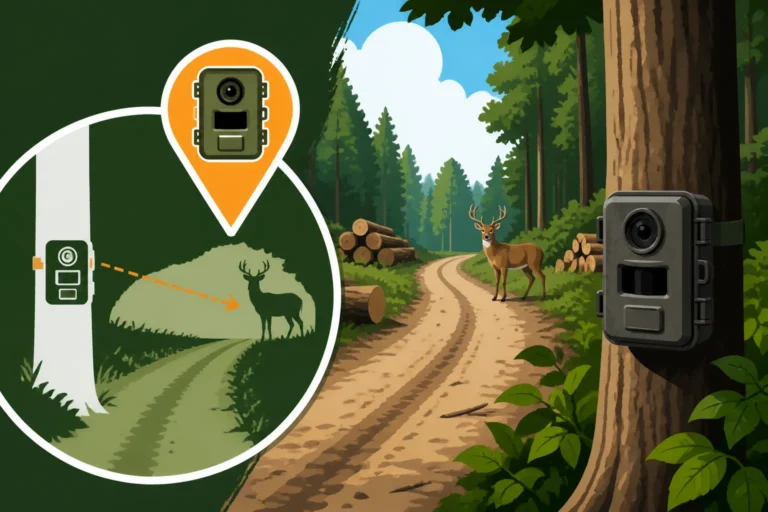
Trail cameras are your eyes in the field when you can't be there, and they're especially effective in the more predictable funnels and bottlenecks of farmland. Place cameras strategically on known travel corridors, such as bottlenecks where a fencerow meets a creek crossing, or where a timber edge narrows down. Positioning them on scrape lines or over late-season food sources can also yield valuable intelligence.
In open country, consider using cellular cameras from brands like Tactacam Reveal or Exodus Render. These allow you to monitor deer activity remotely, reducing human intrusion and helping you identify real-time patterns. This is incredibly helpful when determining Entry Routes Through Standing Corn or knowing when deer are leaving a standing bean field before harvest. Pay attention not just to what deer are moving, but when they are moving. This helps you narrow down your hunting windows and target specific bucks more effectively. Analyzing movement patterns throughout different times of the day and under varying weather conditions can reveal consistent buck behavior.
Stand and Blind Placement Tactics
Placing your stand or blind effectively in Central Illinois is critical, as deer often have fewer natural obstructions to contend with. You need to think about sightlines, wind direction, and how to maximize the limited cover available. Getting this wrong can blow your hunt before it even begins.
Maximizing Small Woodlots and Creek Bottoms
Small woodlots, even those just an acre or two, are gold mines in farmland country. Deer will often bed in these during the day, especially if they offer thick cover, and then filter out to feed in adjacent fields. Focus on the downwind side of these woodlots, where deer will typically approach from or scent check before entering open areas. Look for pinch points within the timber, where deer trails converge.
Creek bottoms and drainage ditches, with their often-dense vegetation, are equally important. These natural depressions offer deer concealment and act as highway systems. Setting up on the edge of a creek bottom, especially where it intersects a field edge or another cover type, can be incredibly effective. Consider a mobile setup, like a hang-on stand, that allows you to adjust quickly based on current sign and wind. These areas are prime spots for Hunting a Funnel Between Two Woodlots, where deer movement is concentrated.
Utilizing Field Edges and Standing Cover
Field edges are classic Central Illinois hunting spots, but not all edges are created equal. Focus on edges that offer some degree of cover, like a brushy fencerow, a tall grass strip, or a line of mature trees. Deer often hug these edges as they move from bedding to feeding areas, using the cover for security. For example, Setting Up on a Central Illinois Field Edge might involve a treestand overlooking where a standing cornfield meets a timber strip.
When crops are still standing, particularly corn, the interior edges where the crop meets timber are phenomenal. Deer will often stage just inside the corn before entering the woods or use the corn as a security blanket before venturing into the open. After harvest, look for fields where a portion of the crop was left standing, or fields with winter wheat or milo. These become instant sanctuaries and food sources. A ground blind brushed into the corner of a standing crop or along a fencerow can be incredibly effective, especially for wary bucks.
Ground Blinds for Mobility and Concealment
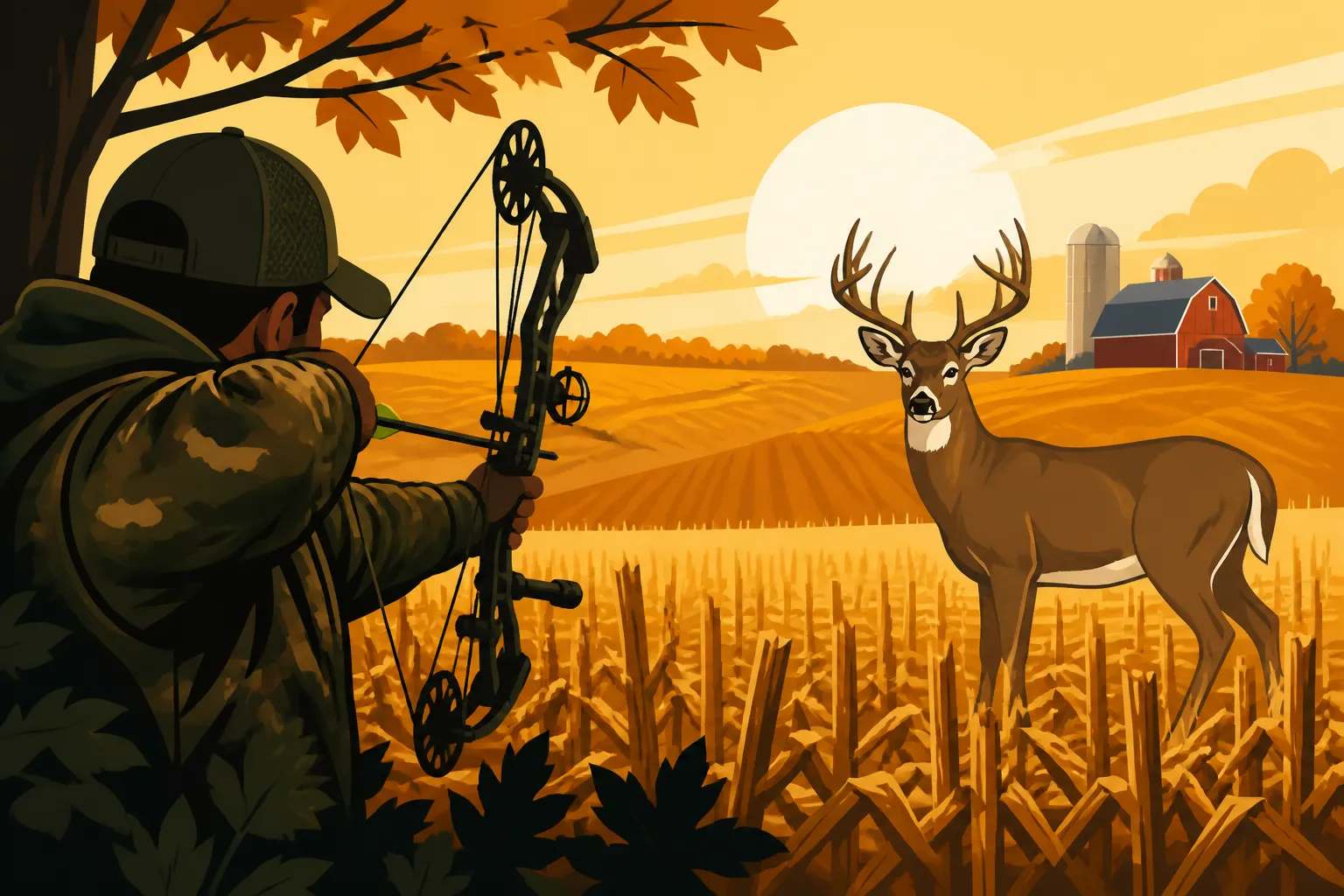
Given the often-flat and open nature of Central Illinois farmland, ground blinds can be an excellent option for bowhunters and firearm hunters alike. They offer superior concealment and allow for greater movement inside, which is crucial on long sits. When setting up a ground blind, brush it in thoroughly with natural vegetation from the area. This helps break up its outline and makes it blend seamlessly with the environment.
Mobility is another huge advantage. You can move a ground blind quickly to adapt to changing deer patterns or wind shifts. Consider deploying several blinds in different locations, moving between them as conditions dictate. This tactic is especially useful for Using a Ground Blind on Illinois Public Land where fixed stands might not be an option or where deer patterns change frequently. Look for natural backdrops like thickets, fencerows, or even large hay bales to help camouflage your blind.
Hunting Approaches and Techniques
Successfully hunting central Illinois farmland deer requires a blend of patience, strategic movement, and understanding how deer react to various stimuli in this unique environment. It’s about leveraging every advantage, from the wind to your calls.
Still-Hunting and Stalking in Farmland
While many hunters default to sitting in stands, still-hunting and stalking can be incredibly effective in Central Illinois, especially in specific scenarios. During archery season, still-hunting slowly along a brushy creek bottom or through a standing cornfield (if permission allows) can lead to close encounters. The key is to move at a snail's pace, pausing frequently to glass and listen. Use the wind to your advantage, always moving into it or with a crosswind.
Stalking becomes a viable option when crops like corn are still standing, providing ample cover, or in larger woodlots. After a light snow, tracks can guide your approach, and the snow deadens sound. However, this is a tactic that requires immense patience and discipline. One wrong move, and the game is over. Focus on using every available piece of cover, no matter how small, to break up your outline and hide your movement. In the rolling terrain of some Central Illinois regions, a careful stalk can allow you to get within range of a feeding deer without being seen.
Calling Strategies
Deer calling can be highly effective in Central Illinois, particularly during the pre-rut and rut phases. Grunt tubes are versatile tools. A subtle doe or young buck grunt can pique the curiosity of a passing deer, drawing them closer for a shot. Don't be afraid to experiment with different volumes and cadences. During the peak of the rut, more aggressive buck grunts or even snort-wheezes can challenge a dominant buck and bring him in looking for a fight. Remember, Rattling and Grunting in Illinois can work wonders, but less is often more.
Rattling antlers can also be very productive, especially from a concealed ground blind or thick cover. Mimicking a buck fight can draw in curious bucks from a distance. The open nature of farmland means sound travels further, so start with softer rattling sequences and increase intensity if you don't get a response. Always be ready for a deer to appear quickly and from an unexpected direction after a calling sequence, as they will often circle downwind to scent-check the source of the sound.
Mastering Entry and Exit Routes
This is perhaps one of the most overlooked, yet critical, aspects of hunting farmland deer. Deer in Central Illinois are incredibly sensitive to human pressure. A poorly planned entry or exit can educate deer for weeks, making them nocturnal or pushing them off your property entirely. Always choose routes that offer the most concealment, whether it's walking through a ditch, staying in a timbered fencerow, or using the cover of darkness.
Using topography to your advantage, such as walking on the backside of a ridge or staying in the lowest part of a creek bottom, minimizes your silhouette. Pay close attention to the wind for both your entry and exit. You never want your scent blowing into a bedding area or an active feeding zone. In the early morning, enter under the cover of darkness. In the evening, try to leave after dark, allowing deer to filter back into the fields before you move. Knowing how to set up Hunting the Rut in Early November means knowing how to get to your stand without spooking the deer that are moving.
Adapting to Pressure and Weather
Central Illinois deer, especially on smaller or public tracts, can face significant hunting pressure. Combine that with the often-unpredictable Midwestern weather, and you've got a dynamic challenge. Successful hunters are those who can read the conditions and adjust their plans accordingly.
Hunting Pressured Deer on Small Tracts
Hunting pressure is a reality across much of Illinois, and Central Illinois farmland is no exception. Deer quickly learn to avoid areas with human activity. On pressured properties, focus on overlooked pockets of cover that other hunters might ignore. This could be a tiny thicket in the middle of a field, a dense patch of timber surrounded by open ground, or a brushy drainage that seems too small to hold deer. Often, the biggest bucks will seek out these sanctuaries.
Adjust your hunting times. If deer are going nocturnal, try hunting mid-day, especially during the rut when bucks are more apt to move. Utilize ground blinds that allow you to set up on new, overlooked spots with minimal disturbance. Be extra meticulous about scent control and silent movement. The less impact you make, the more likely deer are to feel secure and return to their natural patterns. Sometimes, the key is to find "the ground others walk past" by seeking out areas that are difficult to access or seem unappeunting at first glance.
Wind, Thermals, and Their Impact in Flat Terrain
In flat or gently rolling farmland, understanding wind and thermals is paramount. While big hills create predictable thermal currents, even subtle elevation changes in Central Illinois can influence air movement. In the mornings, thermals generally rise, carrying your scent upward. In the evenings, they fall, carrying your scent downward. This means a stand location that's perfect for a morning hunt might be terrible for an evening hunt, even if the primary wind direction is the same.
Always favor a crosswind or an incredibly consistent wind that carries your scent away from where you expect deer to approach. Use a wind checker frequently, as wind direction can swirl unexpectedly, especially around woodlots or breaks in the tree line. In very flat areas, a strong prevailing wind will dominate, but even then, micro-thermals can occur near waterways or field edges. Understanding how Wind and Thermals on a Southern Illinois Ridge works is equally applicable in subtler Central Illinois terrain – you just need to be more observant.
Capitalizing on Weather Fronts
Weather fronts, particularly cold fronts, can trigger significant deer movement in Central Illinois. A sudden drop in temperature, especially after a period of warm weather, often gets deer on their feet. Hunting the day after a strong cold front moves through can be incredibly productive, as deer will often feed heavily to build up reserves. The same goes for the period just before a major storm system arrives.
Snowfall can also be a game-changer. Fresh snow helps with tracking and often deadens sound, making still-hunting more effective. Deer are also easier to spot against a white backdrop. During periods of heavy snow, deer will concentrate around remaining food sources, making these areas prime for targeting. Keep an eye on the forecast and plan your hunts around these weather events to maximize your chances of success. Late-season food sources for Illinois whitetails are especially critical during and after cold snaps.
Seasonal Food Source & Cover Strategy for Farmland Deer
To further aid your planning, here's a table outlining general strategies based on seasonal food and cover availability in Central Illinois:
| Season Phase | Primary Food Sources | Key Cover Types | Optimal Hunting Strategy |
|---|---|---|---|
| Early Bow (Oct) | Standing Soybeans, Corn, Alfalfa | Standing Corn, Thick Woodlots, Creek Bottoms | Hunt field edges where corn/soybeans meet timber. Focus on transition lines and early morning/late evening movements. Use digital maps to pinpoint overlooked thickets. |
| Pre-Rut (Late Oct) | Standing Corn, Waste Grain (early harvest) | Standing Corn, Dense Woodlots, Brushy Draws | Shift to areas near active scrapes and rub lines. Begin subtle calling. Hunt travel corridors between bedding and feeding. Consider hunting mid-day when bucks cruise. |
| Rut (Early Nov) | Waste Grain, Acorns (if available) | Woodlots, Brushy Fencerows, Thick Draws | Aggressive calling and rattling can be effective. Hunt all day, focusing on major travel corridors and funnels, especially in the mornings and evenings. Bucks are more apt to expose themselves. Don't forget Hunting the Illinois Rut in Early November is prime time. |
| Post-Rut (Late Nov/Early Dec) | Waste Grain (corn, beans), Winter Wheat | Deep Woodlots, Thickest Cover | Deer become more food-focused. Hunt over concentrated food sources. Look for trails leading directly from dense bedding areas to food. Movement may be more restricted to low light. |
| Late Season (Mid-Dec – Jan) | Waste Grain, Winter Wheat, Food Plots | Small, Dense Thickets, Creek Bottoms, Thermal Cover | Focus almost exclusively on limited, high-calorie food sources. Hunt closer to bedding areas, especially on cold, clear days. Use ground blinds for warmth and concealment. Look for thermal cover in conifers or dense evergreens. This is often the time for Late-Season Food Sources for Illinois Whitetails. |
Disclaimer
Hunting is an inherently dangerous activity. Always prioritize safety, follow all local, state, and federal hunting regulations, and obtain appropriate licenses and permits. The information provided in this guide is for informational purposes only and does not supersede official hunting regulations or safety guidelines. Practice ethical hunting and respect wildlife and private property.