Hunting the First South Zone Turkey Period
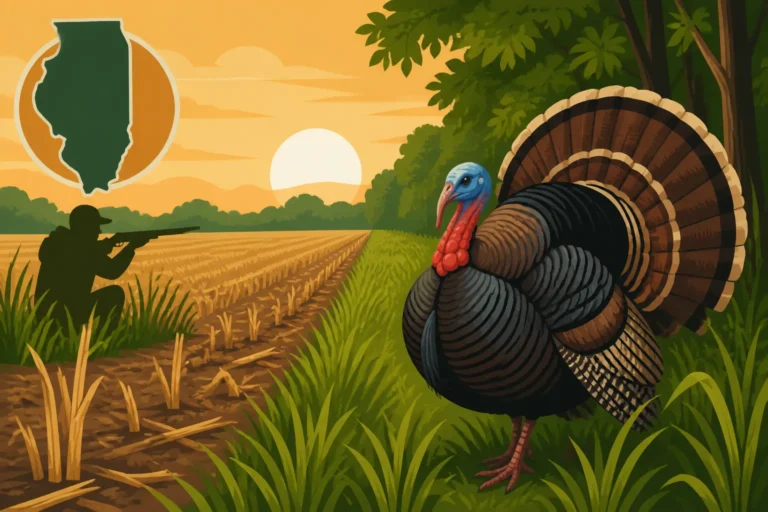
That first Illinois South Zone turkey period is a beast, isn't it? The woods are just waking up, gobblers are on fire, but so is the competition, and Mother Nature hasn't quite made up her mind about spring yet. It's a thrill, but it can also be incredibly frustrating when those early season birds seem to vanish into thin air or clam up after fly-down. This guide is all about giving you the edge, breaking down the specific strategies that work when hunting the first South Zone turkey period, helping you turn those early morning jitters into successful hunts.
The Unique Dynamics of Illinois's First South Zone Turkey Period
Hunting turkeys during the inaugural South Zone period in Illinois isn't just about calling; it's about understanding the specific stage of the breeding cycle and how local conditions influence bird behavior. This early window presents both incredible opportunities and distinct challenges that you won't encounter later in the season. Getting a handle on these nuances is the first step toward a successful hunt.
Early Season Bird Behavior and Breeding Phases
During the first period, gobblers are often still sorting out their dominance hierarchies, which can make them incredibly vocal and responsive. They're eager to establish their territories and attract hens. Many hens might already be bred, but they haven't typically committed to a nest yet. This means they're often still roaming and responsive to gobblers, which can either work in your favor by drawing in a tom looking for companionship, or frustrate you if a real hen pulls your bird away.
You'll also find that bird flocks are often just beginning to break up from their larger winter groupings. While some solitary gobblers are already seeking mates, you might still encounter smaller bachelor groups of longbeards or larger mixed flocks. The weather can also be a major player. Early spring in Illinois can bring anything from crisp, cold mornings to sudden thunderstorms, and these shifts directly influence a turkey's mood and movement. Understanding these factors is critical to adapting your approach, especially compared to how turkeys might act during later periods when nesting is in full swing.
Typical Landscape and Habitat Conditions
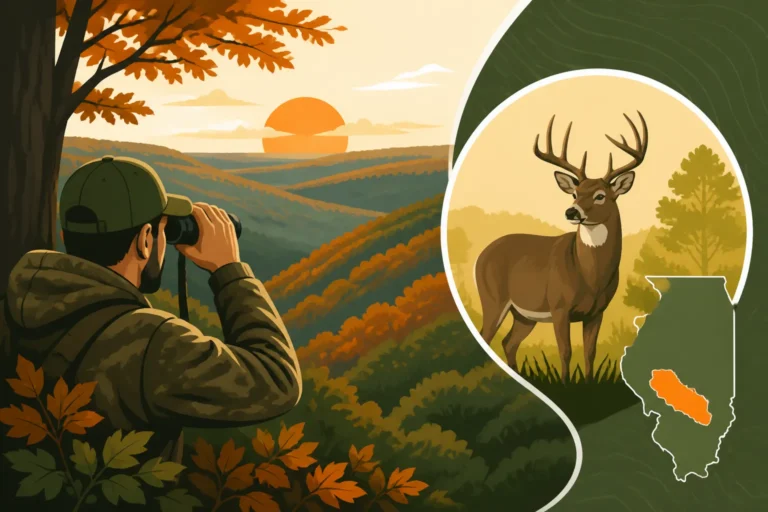
The Illinois South Zone encompasses a varied landscape, from the rolling hills and hardwood timber of the Shawnee National Forest to the rich river bottoms and agricultural fringes. During the first period, the vegetation is just starting its spring explosion. This means less dense undergrowth and more visibility than you'll find in May. While this can make spotting birds easier, it also reduces concealment for hunters.
Key habitats to focus on often include mature timber for roosting, especially along ridges or near water sources. River bottom funnels, timbered creek beds, and field edges adjacent to dense cover are also prime spots where turkeys will travel, feed, and strut. Areas around lakes like Horseshoe Lake Fish and Wildlife Area or timber blocks in Saline County often hold significant turkey populations. Turkeys will still be actively seeking out remnants of hard mast from the previous fall, like acorns, along with waste grain in any unplanted fields, and the earliest green-ups of insects and tender vegetation.
Pre-Season Scouting and Intelligence for First Period Success
Success in the early South Zone isn't usually a matter of stumbling into a bird; it's the result of diligent homework. Before you even set foot in the woods with your shotgun, you need to know where the birds are, what they're doing, and where other hunters might be. This pre-season intelligence gathering is your most valuable asset.
Locating Roost Sites and Travel Corridors
The most crucial piece of information you can have for an early season hunt is the location of an active roost. Hearing birds gobble from the limb just before fly-down is an incredible advantage. This requires pre-season scouting, often in the twilight hours of dusk or dawn, listening from roads or trails for gobblers sounding off. Using locator calls like owl hoots or crow calls can often prompt a shock gobble, giving away a bird's position.
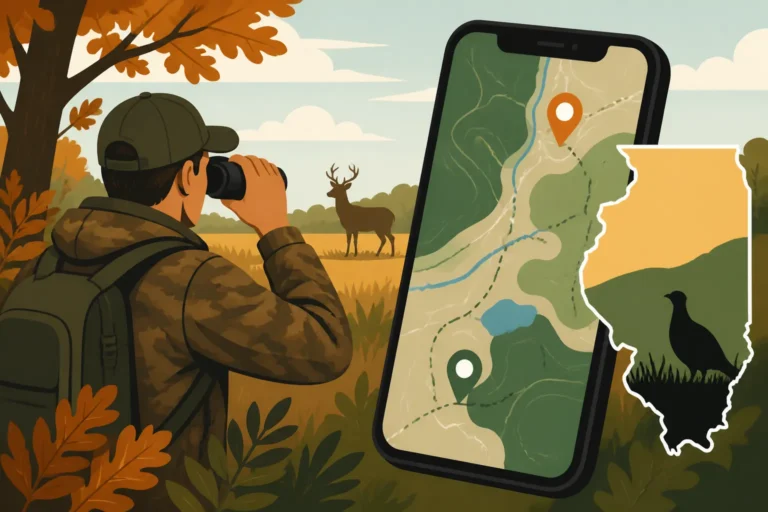
Before even heading out to listen, leverage mapping applications. Tools like the GoHunt app can be invaluable for pinpointing large timber blocks, identifying potential roost trees near water sources or along ridges, and mapping out access points and potential travel corridors. Look for areas with mature, open-canopy timber, especially big oaks or sycamores, which turkeys prefer for roosting. Once you've identified potential roosting areas, examine the ground for physical signs like droppings, scattered feathers, and even strut marks. Remember, approaching a roost site on opening morning requires extreme stealth; you want to get in and set up without letting the birds know you're there. Learn more about Roost Hunting Illinois Gobblers for advanced strategies.
Understanding Pressure and Adapting Your Plan
One of the undeniable realities of hunting the first South Zone turkey period, especially on public land, is the hunting pressure. Opening weekend draws a crowd, and pressured birds behave differently than unpressured ones. While Illinois offers fantastic opportunities on public lands such as parts of the Shawnee National Forest or various State Fish and Wildlife Areas, it's wise to assume you won't be alone.
Your scouting should extend beyond just finding birds; it needs to identify areas that might see less pressure. This could mean walking deeper into public tracts, finding obscure access points, or focusing on smaller, overlooked woodlots that other hunters might pass by. Using your mapping app to mark parking areas and likely hunter entry points can help you anticipate where the crowds will be. Always have a Plan B (or C and D) ready. If your primary spot has a truck parked at it, gracefully move to another pre-scouted location. Adapting to hunting pressure is paramount for consistent success during these early, busy periods.
On-the-Ground Tactics for First Period Gobblers
Once you've done your scouting and you're in the woods, it's time to put your turkey hunting skills to the test. The first South Zone period often offers high-energy interactions, but it also requires a nuanced approach to calling and setup to seal the deal.
Aggressive Calling Versus Patient Approach
Early season gobblers can be famously "hot." They're full of vigor, haven't been heavily pressured yet, and are actively seeking hens. This often means you can be more aggressive with your calling. After a bird gobbles on the roost, soft tree yelps, clucks, and purrs can entice him. Once he flies down, don't be afraid to hit him with a series of excited yelps and cuts. The key is to sound like an eager hen, ready for company.
However, "aggressive" doesn't mean "constant." You still need to read the bird. If he's gobbling his head off and closing the distance, a few well-placed calls might be all you need. If he seems to hang up or starts moving away, a period of silence can sometimes pique his curiosity and draw him in. Different call types—slate calls for soft, subtle sounds; diaphragm calls for versatility; and box calls for loud, resonant tones—all have their place. Understanding how and when to use them is part of the art. When you're trying to coax a bird right off the limb, Calling an Illinois Gobbler Off the Roost provides excellent insights.
Strategic Setup and Decoy Use
Your setup is just as critical as your calling. Getting into position quickly and quietly, ideally before the birds fly down, is essential. Always choose a setup that provides excellent concealment and a clear line of sight for a shot, without compromising your ability to remain still. A large oak tree with a wide trunk or a natural blowdown can offer excellent back cover. Refer to tips on Setting Up Against a Big Oak for more specific advice on using natural cover.
Decoys can be highly effective in the early season when birds are less wary. A single hen decoy can be enough to draw a gobbler in, but a jake and hen combination often proves irresistible to dominant gobblers who want to challenge the perceived intruder. Place your decoys where the gobbler will have to come into your shooting lane to investigate. Always consider safety when using decoys, particularly on public land, and ensure your decoys are realistic. The objective is to make your setup look as natural and inviting as possible without drawing unwanted attention from other hunters.
Running and Gunning or Sitting Tight?
The decision to run-and-gun or sit tight often depends on the temperament of the birds and the terrain you're hunting. In the early South Zone, you might find success with both strategies. If you're hearing gobblers in multiple directions but they're not committing to your calls, a run-and-gun approach, moving quickly and calling aggressively to locate a responsive bird, can be very effective. This is particularly true in areas with open timber or rolling terrain. For specific guidance, review strategies for Run-and-Gun Turkey Tactics on Public Land.
However, if you've got a bird gobbling steadily and closing the distance, sitting tight and being patient is usually the better option. Don't risk spooking him with unnecessary movement. This strategy is especially useful when hunting along field edges or in dense creek bottoms where birds might take their time to approach. When sitting near ag fields, knowing Turkey Tactics for Farmland Field Edges can make a huge difference in your success. Sometimes, letting the woods go silent for a bit can be just as powerful as your best yelps.
Overcoming Challenges and Maximizing Your Opportunity
Even with the best scouting and tactics, turkey hunting in the first South Zone period can throw curveballs. Gobblers can be fickle, hens can be distracting, and regulations must always be top of mind. Knowing how to react to common frustrations and staying within the law are crucial for a rewarding experience.
Dealing with Hung-Up Birds and Hens
One of the most common frustrations in turkey hunting, especially with early season toms, is the "hung-up" gobbler. You've called him in, he's gobbling ferociously, but he just won't commit that last 50 yards. Often, this is because he expects the hen to come to him, or he might have real hens nearby pulling him in another direction. When a bird hangs up, resist the urge to overcall. Sometimes, going silent for a period, or switching to very soft clucks and purrs, can make him curious enough to take those final steps. If the terrain allows, a subtle, slow repositioning to get an angle on him or cut off his approach can also work, but this is risky.
If hens are pulling your gobbler away, it's a tough situation. Your best bet is often to try and get ahead of the flock, setting up to intercept them or to mimic a dominant hen to draw the gobbler's attention away. Sometimes, you just have to be patient and hope the real hens lose interest or move on, allowing your calls to become the most appealing option again. Patience truly is a virtue when dealing with a stubborn gobbler.
Legalities and Ethical Hunting Considerations
Before you head out, make sure you're fully aware of all current Illinois regulations. This includes understanding the Illinois Turkey Hunting Hours, which typically run from half-hour before sunrise to 1 p.m. during the spring season. Knowing these hours helps you plan your hunt and ensures you're always within legal boundaries. It’s also important to remember permit limits; Illinois allows hunters to purchase up to three permits. Understanding how to best utilize these permits and what constitutes Making the Most of Three Spring Turkey Permits can be a game-changer for your season.
Beyond the regulations, always prioritize safety and ethical hunting. Positively identify your target before taking a shot, and be absolutely certain of your background. Turkey hunting, especially with decoys, requires extra vigilance for other hunters. Ethical shot placement—a clean head or neck shot—ensures a quick harvest and minimizes suffering. After a successful hunt, remember the reporting requirements for your harvest, which can often be done easily through the Illinois DNR app.
| Early Season Gobbler Behavior | Hunter Tactic | Rationale |
|---|---|---|
| Gobbling on the roost | Get close, set up fast, subtle tree yelps | Birds are vocal, establishing territory, but still grouped. Don't spook them off. |
| Fly-down and gobbles freely | Aggressive yelps, cuts, jake/hen decoy setup | High energy, looking for hens. Can draw them in quickly. |
| Gobbles but hangs up | Go silent, subtle clucks, purrs, or reposition | Often has hens or suspects something. Patience is key; don't overcall. |
| Silent after fly-down | Soft clucks/purrs, then patient wait, or move | Could be with hens or spooked. Avoid aggressive calling initially. |
| Following hens | Get ahead of the flock, intercept, mimic dominant hen | Gobbler is committed to hens. Intercepting or challenging hens can work. |
Disclaimer
Hunting is an inherently dangerous activity. This guide provides information for educational purposes only and does not substitute for professional training, adherence to all local, state, and federal laws, or personal responsibility. Always prioritize safety, respect wildlife, and obtain all necessary licenses and permits before hunting. Conditions and regulations can change, so always consult the latest Illinois Department of Natural Resources (IDNR) guidelines.