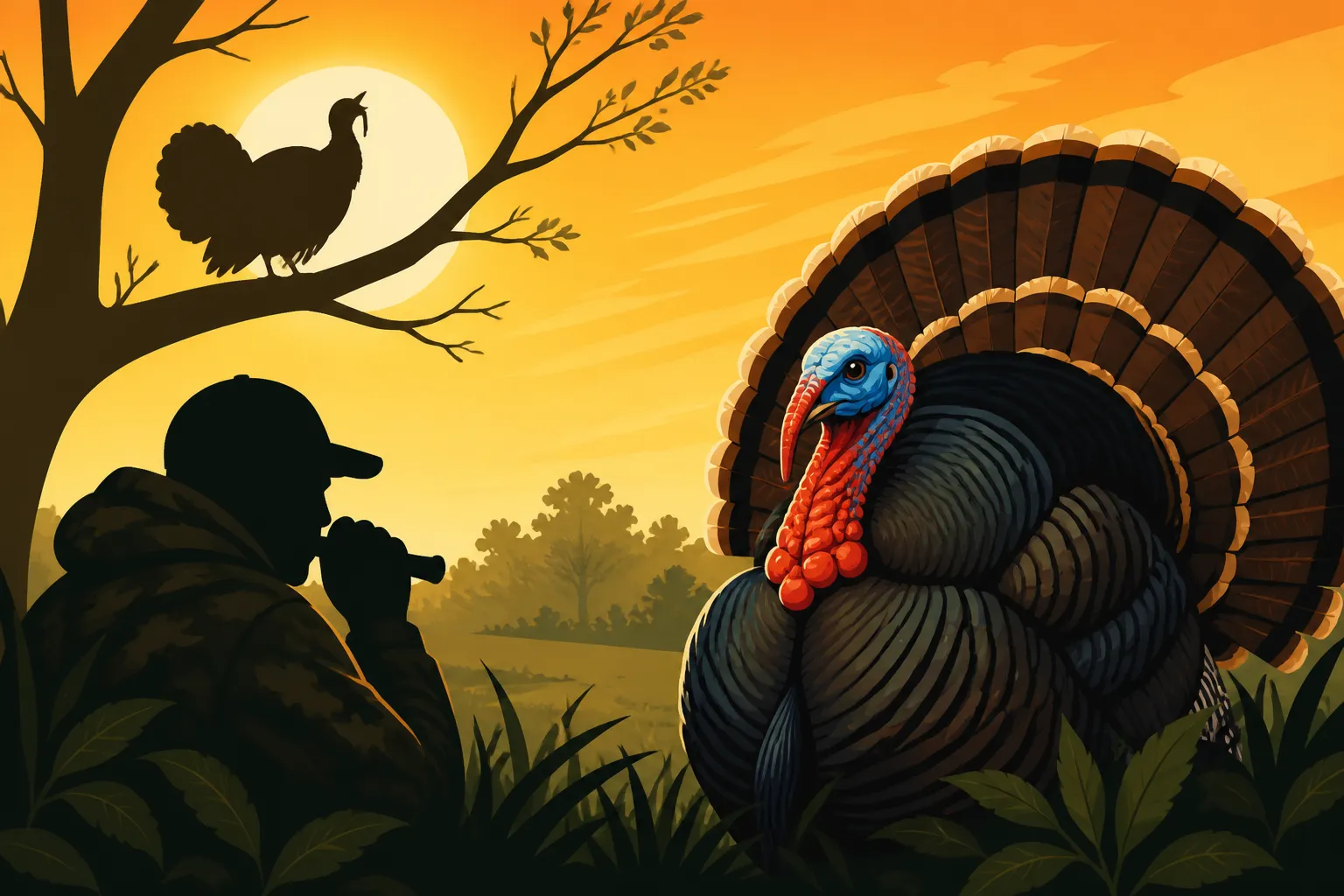
Calling an Illinois Gobbler Off the Roost
There’s almost nothing more thrilling, and sometimes more frustrating, than listening to an Illinois gobbler hammering away on the limb before daylight. He’s sounding off, announcing his presence to the world, and every call you make seems to get a reaction. But then, as the woods lighten, he just won’t fly down and come to you. This guide is all about tackling that exact challenge, offering proven strategies and insights to coax those elusive Illinois gobblers off their roosts and into your setup.
The Art of the Pre-Dawn Approach: Setting the Stage
Getting to your spot before first light without spooking a roosted gobbler is often half the battle. This critical phase dictates everything that follows, and a single mistake can send your morning hunt spiraling before it even begins. It’s a delicate dance of stealth, timing, and knowing your ground.
Silent Ingress and Optimal Distance
Imagine slipping through the dark woods, the leaves crunchy underfoot, your headlamp a low beam guiding your path. Every snap of a twig sounds like a gunshot in the pre-dawn quiet. The goal here is absolutely silent ingress. That means carefully picking your steps, avoiding brush, and often taking the longest, clearest path rather than the most direct one. You need to get close enough to the roost tree to be heard clearly, but not so close that the gobbler can spot your movement or hear your approach once he starts to stir. A good rule of thumb is to aim for a distance of 100 to 150 yards, sometimes even more if the terrain is particularly noisy or if you know the birds are heavily pressured. Any closer, and you risk bumping him off the limb or having him spot you when he flies down. Remember, those birds have incredible eyesight, even in low light. If you can hear him clearly gobble, he can probably hear you. Using a mapping tool, like the features available on GoHunt, can be invaluable here. You can mark potential roost trees from previous scouting missions and then plot a silent approach route that utilizes terrain features like creek beds, ridge lines, or thick timber to mask your movement.
Understanding the Roost Tree Environment
Not all roost trees are created equal, and understanding the environment around where an Illinois gobbler decides to spend the night is crucial. Turkeys often roost in the tallest trees on a ridge, overlooking a valley, or near a water source, giving them a commanding view and a quick escape route. Think about the dominant trees in the area – big oaks, sycamores along a river bottom, or even tall pines in a mixed forest. They choose these spots for security from ground predators. When you’re scouting, look for droppings, shed feathers, and even disturbed bark at the base of large trees, indicating a regular roosting spot. Knowing these specific trees can help you predict where a gobbler might pitch down. Will he fly directly towards an open field, or will he pitch to a nearby bench on the ridge where his hens might be waiting? Your setup needs to anticipate his preferred fly-down direction. Often, these areas are near good food sources or open clearings where hens will congregate, making them natural rendezvous points once their feet hit the dirt.
Decoding Roosted Gobblers: Understanding Their Morning Routine
Calling a gobbler off the roost isn't just about making the right sounds; it's about understanding the complex morning rituals of wild turkeys. Their actions, from the first tree gobble to their final pitch-down, are all part of a predictable, yet often frustrating, sequence. Your success hinges on knowing how to interpret these subtle cues and intervene at the right moment.
The Stages of a Roosted Gobbler's Morning
A gobbler's morning typically unfolds in several distinct stages, each offering an opportunity – or a pitfall – for the hunter. It starts well before dawn with the "tree gobble" – that explosive sound echoing through the still woods. This initial gobbling is often a territorial announcement, but also a call to his hens. As the sky lightens, the gobbling usually intensifies, becoming more frequent and often accompanied by soft clucks and yelps from nearby hens still on the limb. This is the stage where the gobbler is feeling confident, trying to gather his harem.
Then comes the "fly-down." This is the moment of truth. He'll typically pitch down to a clearing or a slightly elevated spot, often with his hens, ready to strut and breed. Once on the ground, his behavior can change dramatically. He might continue gobbling, but often shifts his focus to displaying for the hens that have joined him. Understanding this sequence is vital. If you call too aggressively too early, you might spook him. If you wait too long, he might fly down with his hens and be completely unresponsive to your calls. In some pressured areas, especially during a Late North Zone Turkey Period where birds have heard it all, gobblers might even fly down silently, making your approach and setup even more critical.
The Influence of Hens and Weather
Hens are the ultimate variable in the roost game. If a gobbler has hens with him on the roost, he’s far less likely to respond to your calls. Why would he leave a sure thing for a potential, unseen hen? In these scenarios, your goal changes from directly calling him to you, to trying to draw his hens past your setup. If you can lure the lead hen, the gobbler often follows. Mimicking soft, content hen clucks and yelps, rather than aggressive locator calls, can sometimes draw in a rival hen, which in turn brings the gobbler along.
Weather also plays a significant role. On calm, clear mornings, gobblers tend to be more vocal and less wary. A strong wind, however, can make them quieter and more hesitant to leave the security of their roost. Rain or heavy fog can also suppress gobbling activity. It's often during these quieter, less ideal conditions that a subtle, well-placed call might just be the ticket. Checking the forecast using resources like the Illinois DNR app or a weather overlay on your GoHunt map can help you anticipate how vocal birds might be and adjust your strategy accordingly.
Mastering the Roost Call: Strategies for Every Gobbler
Calling a gobbler off the roost is an art form, not a science. There's no single "magic call" that works every time. Instead, it's about understanding the different types of calls, when to use them, and how to adapt to the specific gobbler you're working. The goal is always to sound like a real hen, naturally, in the right context.
The Soft and Subtle Approach
When a gobbler is hammering on the limb, it's incredibly tempting to cut him off with loud, aggressive calling. But often, especially in Illinois where birds can be pressured, a soft and subtle approach is far more effective. Think about what a hen sounds like on the roost – sleepy, contented clucks and soft tree yelps. She's not screaming her head off. Start with just a few soft tree yelps or muffled clucks just before or right at first light. The idea is to let him know a hen is nearby, but not to challenge him or put him on edge.
If he gobbles in response, don't immediately call back. Let him gobble a couple of times, creating a sense of anticipation. Then, offer a few more soft yelps, maybe a little louder but still not aggressive. This approach sounds natural and might just convince him that a willing hen is waiting quietly for him to fly down. Patience is absolutely key here. Many hunters make the mistake of overcalling, which can make a gobbler wary or cause him to hang up out of range. Remember, the objective isn't to have a calling contest, but to gently persuade him.
Aggressive Calling and Locator Calls
While subtlety is often preferred, there are times when a more aggressive approach or the use of locator calls can be beneficial. Locator calls aren't turkey sounds at all – think owl hoots, crow caws, or even coyote howls. These are used to "shock gobblers" into giving up their position without indicating the presence of a hen. A good owl hoot before light can often get a gobbler to sound off, telling you exactly where he's roosted without putting any pressure on him.
Aggressive calling, like loud cutting and yelping, can be effective if a gobbler has flown down and is with hens, but seems hesitant to move. By mimicking a dominant, bossy hen, you might incite jealousy in the gobbler or draw a rival hen in, bringing the gobbler along for the ride. However, this is a high-risk, high-reward strategy. Used too early or too often, it can easily shut down a wary gobbler. It's generally best reserved for later in the morning, after he's already on the ground and seemingly unresponsive to softer calls, or when you know he has a harem of hens around him that you're trying to break up.
| Strategy | Description | Pros | Cons | Ideal Situation |
|---|---|---|---|---|
| Soft & Subtle | Gentle tree yelps, soft clucks, minimal calling before fly-down. | Mimics natural hen behavior, less likely to spook wary birds. | May not get attention of dominant, less responsive gobblers. | Pressured birds, early season, gobbler sounds close. |
| Aggressive Cuts | Loud, sharp yelps and cuts, mimicking a demanding hen. | Can provoke a gobble from tight-lipped birds, incite jealousy. | High risk of spooking, can sound unnatural if overdone. | Gobbler is on the ground with hens, seems hung up, mid-morning. |
| Locator Calls | Owl hoots, crow caws, coyote howls to elicit a shock gobble. | Pinpoints gobbler location without alerting him to a hen. | Does not attract the gobbler, only reveals his position. | Before first light, or when trying to locate a silent bird. |
| Silence & Patience | Minimal to no calling, especially after initial responses. | Allows gobbler to commit naturally, can be effective for pressured birds. | If gobbler has hens, he might move away without ever hearing you. | Gobbler is very vocal on roost, seems to be moving your way, heavily pressured areas. |
Beyond the Call: Field-Craft and Contingency Plans
While calling is paramount, successful turkey hunting, especially for roosted gobblers, relies heavily on your field-craft and adaptability. Sometimes the perfect call isn't enough, and you need a solid plan B (or C) when things don't go as expected.
Strategic Setup and Concealment
Your setup is just as crucial as your calling. Once you've located a roosted gobbler and made your silent approach, finding the perfect spot to set up is vital. You want to choose a location that offers maximum concealment, breaks up your silhouette, and gives you a clear shooting lane. Think about Setting Up Against a Big Oak or a thick cedar tree, ensuring your back is against something wider than your shoulders. Utilize natural terrain features. A slight rise in the ground, a brushy fence row, or a downed log can provide critical cover.
Crucially, consider the gobbler's likely fly-down path. If he's roosted on a ridge overlooking a field, he's probably going to pitch to the field edge or a nearby opening. Set up between him and that likely landing zone. You also need to think about your visibility from his perspective. Turkeys have incredible vision, so any slight movement, even a subtle shift of your gun, can bust your hunt. Make sure you have enough cover to draw your gun or bow without being seen. On public lands, especially during Spring Turkey Hunting in Illinois, pressured birds are extra wary, making flawless concealment non-negotiable.
When the Gobbler Hangs Up or Moves Off
So, you've done everything right: silent approach, perfect setup, subtle calling, and he's hammered back. But then he flies down, sounds like he's going the other direction, or worse, he hangs up just out of range, gobbling his head off but refusing to commit. This is where patience and adaptability come into play.
- Patience is a Virtue: If he's hanging up, still gobbling but not moving closer, resist the urge to call too much. Let him wonder where that hen went. Sometimes, completely shutting up for 15-20 minutes after he flies down can be the best strategy. He might get curious and start heading your way.
- Reading His Direction: Pay close attention to the direction of his gobbles after he flies down. If he's consistently moving away, it might be time for a strategic reposition. This could mean a long, quiet circle to get ahead of him, or simply deciding to move on to another bird if you're on public land.
- The Run-and-Gun: If the roosted gobbler moves off completely, don't despair. This is where Run-and-Gun Turkey Tactics on Public Land can save the day. Pack up silently and quickly, then move to another known gobbling area, or simply start walking and calling to locate a new bird. Sometimes a change of scenery and a fresh gobbler is all you need.
- Decoys: If he's hanging up, deploying a single hen decoy or a jake/hen combination might be just enough to pull him those last critical yards. Decoy Placement for Pressured Illinois Birds is key here – make sure they're visible but not overly exposed, and facing towards the expected approach of the gobbler. A jake decoy can sometimes infuriate a dominant gobbler into charging in.
Common Mistakes and How to Avoid Them
Even seasoned turkey hunters make mistakes, especially when the adrenaline is pumping from a hot gobbler on the roost. Recognizing and actively avoiding these common blunders can significantly increase your chances of calling an Illinois gobbler off the limb and into your freezer.
The Perils of Overcalling
This is perhaps the most common mistake made by turkey hunters, particularly those newer to the game or those experiencing an intense morning hunt. It's incredibly exciting when a gobbler is responding to your calls from the roost, and the natural inclination is to keep calling, to keep him fired up. However, turkeys are wild animals, not pets. Overcalling sounds unnatural. Imagine a real hen screaming incessantly before daylight – it just doesn't happen. A gobbler will quickly get suspicious if a "hen" is too eager or too loud, especially in areas where he's heard a lot of calling pressure throughout the Illinois Spring Turkey Zones and Periods.
Instead of constant calling, aim for moderation. Once you get a response, a few soft yelps or clucks are usually sufficient. Let the gobbler do most of the gobbling. Your calls should be just enough to let him know you're there and available, creating a sense of curiosity and anticipation. If he feels like he has to work a little to find you, he’s more likely to commit. If you're constantly cutting him off, he might just decide it's not worth the effort or that something feels off. This is where a subtle touch, even a period of complete silence, often outperforms aggressive calling.
Bumping the Roost and Inadequate Scouting
Another critical error is bumping a gobbler off his roost. This happens when you approach too closely, make too much noise, or are spotted moving in the low light. A spooked bird off the roost is almost impossible to call back that morning, and often he’ll just fly off in the opposite direction, making him incredibly wary for days to come. This is why the "Silent Ingress" discussed earlier is so vital. It’s better to be 200 yards away and not spook him than 75 yards away and blow him out of the tree.
Inadequate scouting directly contributes to bumping birds. If you haven't taken the time to Scouting Illinois Public Land Before Season or even private ground, you won't know the terrain, potential roost trees, or the best approach routes. Using tools like GoHunt's satellite imagery can help you identify high-ground features, dense timber, and potential obstacles that might make noise. Marking these points on a map and planning your approach during daylight hours, well before the season, can prevent you from fumbling in the dark and disturbing a roosting gobbler. Knowing where they like to roost, and how to get close silently, is paramount. Taking the time to observe turkey movement in the off-season, even if it's just a few evenings before the season opens, can give you priceless information about where birds are spending the night and their general direction of travel in the morning.
Disclaimer
Hunting is an inherently dangerous activity. Always prioritize safety, adhere to all local and state regulations, and ensure you have proper training and licensing before heading afield. The information provided here is for educational purposes and should not replace professional guidance or official regulations from the Illinois Department of Natural Resources.