Run-and-Gun Turkey Tactics on Public Land
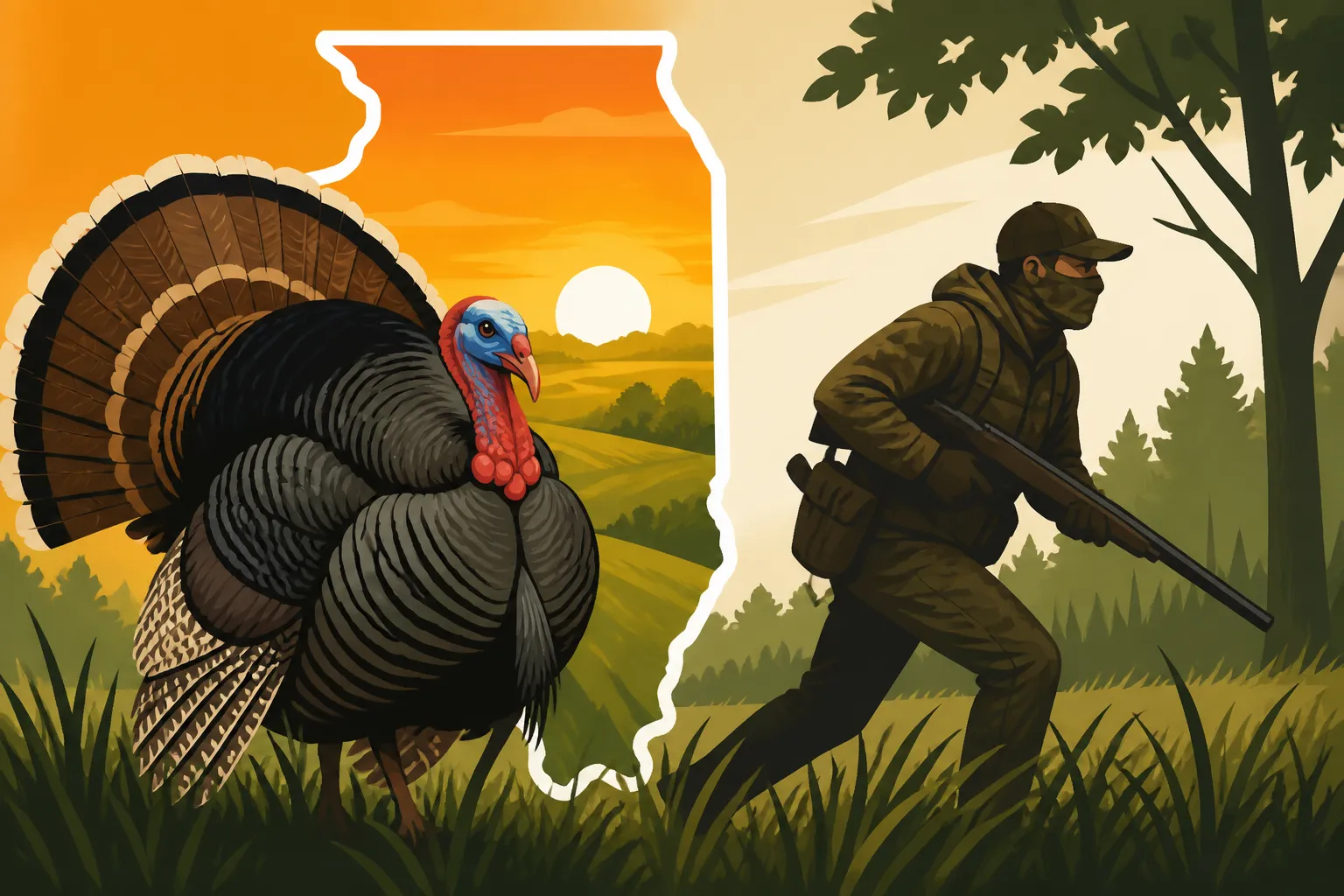
There’s nothing quite as frustrating as waking up before dawn, hiking deep into your favorite public land spot here in Illinois, only to have that gobbler you heard on the roost fly down the opposite direction and disappear, or worse, clam up completely. It happens all too often on pressured ground. This guide is all about embracing a different strategy: the run-and-gun method, designed to help you actively pursue those wary public land turkeys and increase your chances of getting a shot.
Understanding the "Run-and-Gun" Philosophy for Illinois Public Land Turkeys
Hunting public land turkeys in Illinois can be a real head-scratcher. These birds learn quickly, and what works for a week or two on private ground might not cut it when they've been pressured by other hunters. The "run-and-gun" approach is all about being adaptable, aggressive, and willing to cover ground to find those turkeys that aren't willing to come to you.
Why Traditional Roost Hunting Can Fall Flat
Many hunters, myself included, started turkey hunting with the idea of finding a roost tree the night before, slipping in silently before dawn, and waiting for the show. And sometimes, that works like a charm. But on public land, especially heavily trafficked areas, those turkeys often have different plans. They might fly down and immediately head for thick cover, or they might have multiple hens already with them, making them extremely difficult to pull away.
The biggest issue with traditional roost hunting on public land is the pressure. Turkeys hear hunters, see hunters, and learn that the loud gobbler on the limb is often a target. They might gobble once or twice, then clam up and slip away unnoticed. Sitting in one spot, even if it feels like the perfect ambush, can mean you're waiting for a bird that's already halfway across the county, or one that never intended to come your way in the first place. You’re essentially putting all your eggs in one basket, hoping a bird follows the script.
The Core Principles of Mobile Turkey Hunting
The run-and-gun philosophy is rooted in constant movement, active listening, and aggressive, yet smart, calling. Instead of waiting for a bird to come to you, you're actively searching for the bird. This means hiking, stopping to call, listening for a response, and then adjusting your plan based on what you hear. It’s a dynamic dance with the turkeys.
The goal isn't to set up and commit to a spot for hours. It’s to cover ground efficiently, identifying areas turkeys might be, making a series of calls, and if you don't get a response within a reasonable timeframe (which might be 15-20 minutes in a new spot), you pack up and move to the next promising location. This method demands confidence in your calling, the ability to read the terrain quickly, and the stamina to keep moving until you locate an eager gobbler.
Essential Gear for the Mobile Illinois Turkey Hunter
When you’re planning to cover miles of Illinois public land in pursuit of a longbeard, every ounce in your vest matters. A streamlined, efficient gear setup is crucial to staying comfortable and effective. You don't want to be bogged down when a hot gobbler suddenly sounds off a few hundred yards away and you need to close the distance quickly.
Lightweight & Minimalist Setup
Forget the heavy pack full of unnecessary gadgets. For run-and-gun, lighter is always better. Start with a comfortable, compact turkey vest that only holds the essentials. Look for vests with good internal organization but minimal bulk. On a typical run-and-gun morning, I'm usually only carrying a handful of diaphragm calls, one or two friction calls, a compact seat cushion, a bottle of water, a headlamp, and my trusty shotgun. That's it. Some hunters even ditch the vest entirely, opting for just a lightweight backpack or fanny pack.
Modern technology can also play a huge role in keeping you light and efficient. Many hunters use their phones for GPS mapping apps like GoHunt, which can help you identify property lines, terrain features, and potential turkey hot spots without having to carry bulky paper maps or a separate GPS unit. Using digital tools to scout and navigate means less weight and more agility in the field.
Calls and Decoys for Aggressive Tactics
Your calling arsenal should be versatile but not overwhelming. Diaphragm calls are essential for hands-free calling while you're moving or shouldering your gun. Carry a few different reeds – single, double, triple – to mimic a variety of hen sounds, from soft clucks and purrs to aggressive yelps and cutts.
Friction calls, like slate or glass pot calls, and a good box call, offer different tones and are excellent for cutting through the wind or generating louder locator calls. Don't underestimate a good locator call either; an owl hooter or crow call can often elicit a shock gobble when other turkey calls might not. When it comes to decoys, think minimalist for public land. A single hen decoy or even a jake decoy can sometimes be effective, but often on pressured public ground, going without any decoy is the smartest play. Turkeys quickly learn what decoys mean, and a static setup can make them wary. If you do carry one, make sure it’s lightweight and easy to deploy and pack up in a hurry.
Mastering the Art of Movement and Calling
The run-and-gun strategy isn't just about moving; it's about smart movement and strategic calling. You're a hunter, but also a skilled detective, constantly gathering information from your surroundings to piece together the turkey's puzzle.
Strategic Locating and Listening
Your movement needs to be deliberate and quiet, but also efficient. Walk at a brisk pace through areas you deem less likely to hold birds, saving your slower, more cautious steps for prime habitat. As you move, stop frequently – every 150-200 yards in open timber, or more often in dense cover – and listen intently. Give it a full minute or two of absolute silence to pick up on distant gobbles, subtle hen yelps, or even the drumming of a strutting tom.
This is where your locator calls come in. After a period of silence, hit an owl hooter, a crow call, or a sharp series of cackles on your box call. The goal is not to sound like a turkey, but to make a loud, distinct noise that might shock a gobbler into revealing his location. If you get a response, pinpoint his direction and distance, and start planning your approach. The ability to quickly determine a bird's general location is paramount to success. This is also where an understanding of how birds use topography, such as those found while Scouting Illinois Public Land Before Season, really pays off.
Aggressive Calling Sequences
Once you've located a bird, your calling strategy needs to be adaptable. Start with a series of excited yelps and cutts, mimicking a hen that’s eager to breed. On public land, you often need to be more aggressive with your calling to get a response. Don't be afraid to put some emotion into your yelps and try to sound like a very hot hen. Sometimes, a series of excited cackles, followed by some sharp cutts, is enough to get a wary gobbler to commit.
However, be prepared to scale back if the bird seems hesitant. If he’s gobbling hard but not closing the distance, try softer clucks and purrs. He might be curious but cautious. Knowing when to be loud and when to go quiet is a learned skill that comes with experience. Every interaction is a conversation, and you need to speak the right language. You might find that a confident series of yelps and purrs, similar to techniques used for Calling an Illinois Gobbler Off the Roost, can draw a tom in from surprisingly far off.
Reading the Land: Identifying High-Probability Areas on Illinois Public Land
The most successful run-and-gun hunters aren't just good callers; they're also masters of reading the landscape. Illinois offers a variety of public land habitats, from rolling timber to expansive farmland edges, and knowing where turkeys are likely to be at different times of day is key.
Topography and Habitat for Turkeys
Turkeys, especially on public land, love diverse habitat that offers food, water, and security. Focus your efforts on areas where different habitat types converge. Think about the transition zones: where thick timber meets a creek bottom, or where a woodlot borders a freshly planted field. These are natural travel corridors and feeding areas. Ridgelines, especially those with mature timber, are often used as travel routes and can hold gobblers looking for hens. Creek bottoms, particularly those with plenty of mast trees like oaks and hickories, provide excellent foraging opportunities.
When you're moving, always be on the lookout for fresh turkey sign. Droppings, tracks in soft earth, and shed feathers are all clues that turkeys are actively using an area. If you find a fresh dusting bowl or a strut mark in a field edge, you know you're in a high-probability zone. Understanding turkey patterns in various terrains, such as those discussed when Hunting Illinois River Bottom Funnels, can also greatly inform your run-and-gun strategy.
Understanding Pressure and Escape Routes
Public land turkeys are inherently more cautious than their private land counterparts. They've learned to associate human presence with danger. This means they often utilize thicker cover and more secluded areas, especially as the day progresses. When scouting with tools like GoHunt, look for areas that appear less accessible or further from established trails and parking areas. These often hold less-pressured birds.
Also, pay close attention to natural escape routes. If a gobbler is pushed, where will he go? Turkeys will often use dense briar patches, thick stands of evergreens, or deep ravines to quickly disappear. Positioning yourself to intercept a bird moving along these escape routes, or to cut off his escape, can be a game-changer. Don't be afraid to push into thicker cover that other hunters might avoid; that's often exactly where the wise old longbeards are hiding out.
Setting Up for the Shot: Quick Transitions and Concealment
The moment a gobbler responds and starts heading your way, the "run" part of run-and-gun quickly transitions to the "setup" part. This is where speed, quiet movement, and effective concealment become critical. You don't have the luxury of spending twenty minutes brushing in a blind.
Rapid Deployment and Field of View
As soon as that gobbler commits, whether it's with a booming gobble or the subtle drumming of a strut, you need to find a suitable setup spot immediately. Look for a tree that's wider than your shoulders, offering good concealment from the bird's acute eyesight. Ideally, this tree should have some background cover to break up your silhouette. Quickly sit down, lean against the tree, and get your shotgun shouldered or in a ready position.
Before you sit, take a moment to scan for shooting lanes. Are there any branches or thick brush that will deflect your shot? Clear any small twigs or leaves that might interfere with your swing. You want a clear line of sight, ideally out to 40 yards, in the direction you expect the turkey to approach. Don't overthink it in the moment – pick the best available option, get still, and be ready. This quick thinking and decisive action is crucial to capitalising on a hot bird. If you're on a ridge or open area, a quick setup against a substantial tree, much like when Setting Up Against a Big Oak, can provide the necessary concealment.
Natural Concealment and Decoy Placement
Your natural concealment is your biggest asset. Utilize fallen logs, dense brush piles, or the contours of the land to further hide your presence. Even small depressions or a slight rise in the terrain can give you an advantage by masking your approach and breaking up your outline. Remember that a turkey's eyesight is legendary; any unnatural movement or shape will send them running.
If you choose to use a decoy, deploy it quickly and strategically. Place it within 15-20 yards of your position, slightly off to the side, facing the direction you expect the gobbler to come from. This allows the bird to focus on the decoy, giving you a better chance to draw your gun without being seen. On public land, some hunters choose to go without a decoy altogether to avoid having to carry it or to prevent other hunters from mistaking them for a bird. However, a well-placed, minimalist decoy can sometimes be the final piece of the puzzle to pull a bird into range.
Adapting to Challenging Scenarios
Not every run-and-gun scenario goes smoothly. Turkeys, especially on public land, are notorious for being unpredictable. Knowing how to adapt to common challenges will separate success from frustration.
Dealing with Hung-Up Gobblers
The "hung-up" gobbler is the bane of every turkey hunter's existence. He's gobbling his head off, sounds close, but he just won't commit and step into range. This often happens when a bird has seen too many hunters, or he's waiting for the hen (you) to come to him. When this happens, patience is key, but so is strategy. First, go silent. Sometimes, letting the woods go quiet makes him nervous enough to come looking.
If silence doesn't work, try a very subtle, soft cluck or purr. A timid hen sound can sometimes be enough to pique his curiosity. If he's still hung up, you might need to try a "reposition." This involves carefully, and silently, circling around him to change the angle of your approach. Sometimes, moving 50-75 yards and calling from a slightly different direction can convince him that the hen has moved and he needs to close the distance. This is a high-risk, high-reward move, so only attempt it if you're confident you can do so undetected.
Mid-Day Lulls and Locating New Birds
After the initial morning flurry of gobbling subsides, turkeys often go quiet. This "mid-day lull" can be disheartening, but it's not a reason to quit. This is when the run-and-gun strategy truly shines. Instead of sitting and hoping, you continue to cover ground, often moving into areas that might be overlooked by other hunters. Turkeys will often spend the mid-day hours foraging, dusting, and loafing in shaded areas or thick cover.
During these quieter hours, focus on softer, more inquisitive calls. Use clucks, purrs, and soft yelps every few hundred yards. Be extra vigilant for subtle sounds – distant gobbles, hens calling, or even the tell-tale drumming of a strutting tom that's now ready to look for company. Don't be afraid to try some aggressive cutting and yelping again if you hit a new pocket of habitat, as it might just trigger a response from a previously silent bird. It's often during this "slow" period that hunters who persist are rewarded. Understanding when Illinois Gobblers Go Quiet in May can give you an advantage in predicting these lulls.
| Gear Item | Run-and-Gun Setup | Traditional Roost Setup |
|---|---|---|
| Vest/Pack | Lightweight turkey vest or small backpack | Full-size vest with ample storage, potentially larger pack |
| Calls | 3-4 diaphragm calls, 1-2 friction calls, 1 locator | Wider variety of calls, more specialized |
| Decoys | Minimalist (1 hen or jake, or none) | Multiple hen/jake/full strutting tom decoys |
| Seating | Compact seat cushion or simply lean against tree | Folding stool, sometimes a ground blind chair |
| Optics | Binoculars (compact), sometimes none | Binoculars or spotting scope, potentially rangefinder |
| Navigation | Smartphone with GoHunt app, compact GPS unit | Paper maps, dedicated GPS, compass |
| Weapon | Shotgun (often lighter gauge/shorter barrel) | Shotgun, possibly heavier gauge |
| Other Essentials | Water, headlamp, small first-aid, tag, gloves, mask | Water, snacks, larger first-aid, extra shells, rain gear |
Disclaimer
Hunting is an inherently dangerous activity. Always prioritize safety, follow all local, state, and federal hunting regulations, and ensure you have the proper licenses and permits before heading afield. The information provided in this guide is for informational purposes only and should not replace professional safety training or personal responsibility.