Glassing a Powerline Cut at Last Light
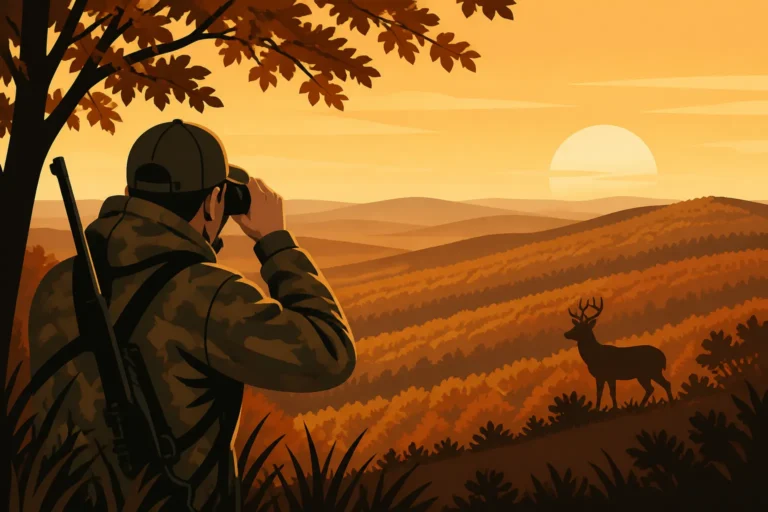
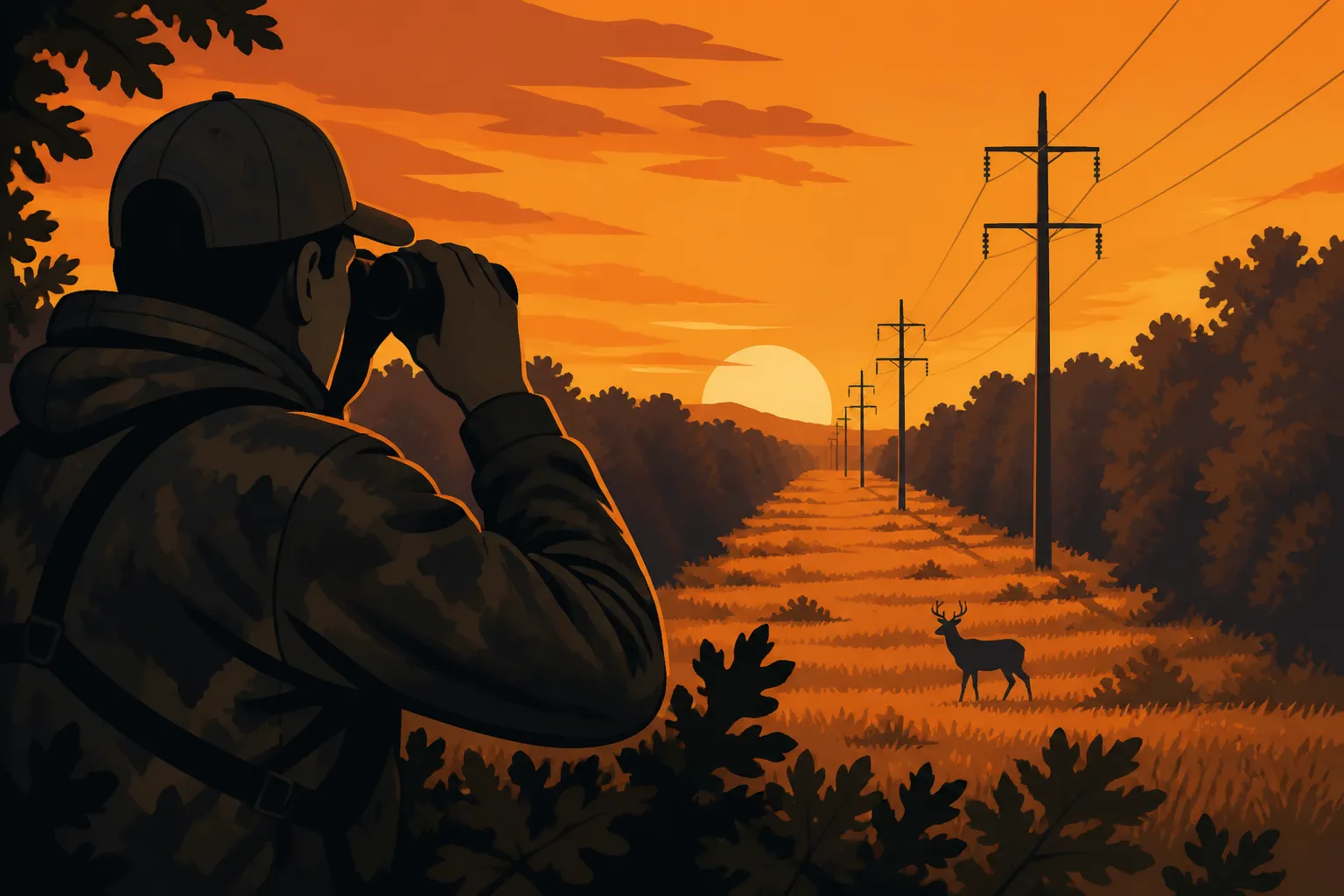
The last rays of sunlight are fading, and you’re perched on a ridge overlooking a sprawling powerline cut in Illinois, straining your eyes against the encroaching gloom. This is often the most magical, yet frustrating, time to hunt, when the big bucks finally decide to stir from their beds. Knowing how to effectively use that dwindling light to your advantage, especially by glassing these open corridors, can make all the difference between going home empty-handed and putting a tag on a mature whitetail. This comprehensive guide will walk you through everything you need to know about successfully glassing a powerline cut at last light in the diverse Illinois landscape, from gear selection to strategic tactics and avoiding common mistakes.
Why Powerline Cuts Are Prime Last-Light Spots
Powerline cuts, those man-made clearings that slice through timbered landscapes, often create irresistible magnets for deer, especially during the critical last hour of daylight. They're not just open spaces; they're dynamic ecological zones that offer a combination of security, food, and travel advantages that whitetails simply can't ignore.
Natural Funnels and Edge Habitat
Imagine a dense forest. Deer move through it, of course, but often along subtle trails or through thickets where visibility is minimal. A powerline cut disrupts this uniform canopy, creating a stark edge where forest meets open ground. This "edge habitat" is a biological hotspot, attracting a wider variety of plant life and, consequently, more wildlife. For deer, these edges provide both immediate security cover and quick access to browse. They can linger just inside the timber, concealed, before stepping out into the opening.
Furthermore, these linear clearings often act as natural funnels. If a powerline cuts across a ridge or between two woodlots, it effectively channels deer movement. Deer, being creatures of least resistance, will often use these relatively open paths to travel from bedding areas to feeding grounds. It’s a bit like a superhighway for them, allowing for quicker, easier travel while still offering nearby escape routes into the surrounding timber. This behavior is particularly pronounced as the sun dips, when deer are more inclined to move with a sense of urgency towards their evening meal.
Increased Visibility and Openings
Perhaps the most obvious, and certainly the most beneficial, aspect of hunting near a powerline cut at last light is the dramatically increased visibility. In the deep woods, legal shooting light can seem to disappear an hour before the actual sunset, making ethical shot placement nearly impossible. However, the wide-open expanse of a powerline allows what little light remains to filter in, extending your effective viewing and shooting window significantly.
This extended visibility isn't just about seeing better; it's about seeing first. In dense timber, deer often detect you before you ever see them, especially if they're downwind. But by setting up in a strategic position overlooking a powerline, you gain the advantage of a long sightline. You can meticulously scan the edges, the open interior, and the transition zones where deer are most likely to emerge. This gives you precious minutes to evaluate a buck, confirm legal shooting light, and prepare for a shot, all while the deer might still be unaware of your presence. It's a game-changer compared to the close-quarters encounters often found in thick cover.
Preferred Forage and Browsing Opportunities
Powerline cuts aren't just clearings; they're often lush food plots in disguise. The constant maintenance required to keep them clear of large trees means that young successional growth, weeds, shrubs, and various forbs thrive in the abundant sunlight. These plants, often ignored in a dense, shaded forest, become highly palatable browse for deer, especially late in the season when other food sources dwindle. Think about it: a patch of green clover or even tender shoots of young saplings can be a major draw.
Many powerline cuts are not regularly mowed or sprayed with herbicides across their entire width, allowing for a mosaic of diverse vegetation. This creates varied food sources throughout the season. In the fall, certain weeds and grasses might hold nutrient-rich seeds, while young woody browse offers a different kind of sustenance. Deer will often venture out into these areas specifically to feed on this readily available vegetation. This makes them predictable last-light destinations, as deer emerge from bedding to grab a quick bite before heading to more substantial food sources or as their primary meal on days where agricultural fields aren't an option.
Essential Gear for Effective Last-Light Glassing
To truly master the art of glassing a powerline cut at last light, you can't just rely on luck. Having the right tools, and knowing how to use them, is absolutely critical. This isn't just about spotting deer; it's about identifying them, assessing their size, and making an ethical decision as the light fades.
High-Quality Optics Are Non-Negotiable
When the sun begins to dip below the horizon, good optics become your most valuable asset. Forget those cheap binoculars you got years ago; for effective last-light glassing, you need binoculars designed to gather as much light as possible. Opt for models with larger objective lenses (the front lenses), like 42mm or even 50mm, as these allow more light to enter, creating a brighter, clearer image in low-light conditions. Magnifications like 8x or 10x are excellent for handheld use, offering a good balance of field of view and magnification. If you plan to use a tripod, a 12x magnification can be incredibly effective for picking apart distant shadows.
But it’s not just about objective lens size. The quality of the glass and coatings makes a huge difference. High-end binoculars feature superior prisms and multi-coated lenses that minimize glare and maximize light transmission, giving you precious extra minutes of usable light. Brands like Vortex, Leica, Swarovski, and Zeiss are renowned for their low-light performance. Using a steady platform, like a tripod or bipod, is equally important. Even the steadiest hands will shake eventually, making it impossible to resolve fine details at distance as light fades. A solid tripod allows you to painstakingly pick apart every shadow and flicker of movement without eye strain. When researching gear, I often check review sites or even forums on platforms like GoHunt for hunters' real-world experiences with different binocular models and their low-light capabilities.
Scent Control and Concealment
Even though you’ll be glassing from a distance, don't underestimate the power of a deer's nose, especially in the calm air of dusk. While binoculars allow you to see far, they don't negate the need for rigorous scent control. That gentle breeze that was perfect an hour ago might drop with the setting sun, allowing your scent to settle directly into the powerline cut where deer are emerging. Always play the wind, checking it frequently with a powder bottle or milkweed seeds. Your location, even if seemingly distant, needs to be chosen with this in mind.
Concealment is also key. While you want a good vantage point, you don't want to be silhouetted against the skyline. Use natural cover – a thick cedar tree, a dense brush pile, or even a rise in the terrain – to break up your outline. Your camouflage pattern should match the general surroundings, but remember, breaking up your shape is often more important than the exact pattern. Sitting still, minimizing movement, and blending into your backdrop will make you practically invisible, allowing you to observe undisturbed activity. This combination of scent control and concealment allows you to remain undetected while your optics do the heavy lifting of spotting deer.
Mapping and Scouting Tools
Successful glassing isn't just about showing up with good binoculars; it starts long before the hunt. Modern mapping applications, such as those found on GoHunt or OnX Hunt, are invaluable for identifying prime powerline cuts, potential access routes, and strategic glassing locations. These tools allow you to study aerial imagery, identifying where powerlines intersect timber, agricultural fields, or thick bedding areas. Look for features like terrain changes, subtle creek drainages, or benches that might funnel deer directly into or across the open cut.
Prior scouting, both digitally and on foot, is crucial. Use your mapping app to find elevated positions that offer expansive views of the powerline. Walk the edges of the cut before the season, looking for established deer trails, rub lines, and old scrapes that indicate consistent deer movement. Pay attention to the types of vegetation growing within the cut; is there natural browse, or is it mostly mowed grass? This information helps you predict where deer are most likely to enter and exit, and where they might pause to feed. Understanding the lay of the land, even when you're just looking at a screen, gives you a massive advantage when it comes time to choose your glassing setup. You can even use these tools to scout for ideal spots to set up a ground blind on Illinois public land if the terrain doesn't offer a natural elevated position for glassing.
| Magnification | Objective Lens (mm) | Low-Light Performance | Field of View | Stability Requirement | Best Use Case |
|---|---|---|---|---|---|
| 8x | 42 | Good | Wide | Handheld/Tripod | All-around, handheld scanning |
| 10x | 42 | Very Good | Medium | Handheld/Tripod | General hunting, slightly more reach |
| 10x | 50 | Excellent | Medium | Handheld/Tripod | Optimal low-light, slight weight increase |
| 12x | 50 | Superior | Narrow | Tripod recommended | Long-range glassing, picking apart distant details |
Strategic Glassing Techniques at Dusk
Successfully glassing a powerline cut at last light demands more than just pointing your binoculars at the field. It requires a methodical approach, keen observation skills, and an understanding of how deer behave as the day winds down.
Choosing Your Vantage Point
Your choice of vantage point is paramount for last-light glassing. Ideally, you want an elevated position that offers an unobstructed view of the entire powerline cut and the timber edges it dissects. This could be a natural ridge, a knoll, or even a strategically placed tree stand if you're not planning to shoot from that exact spot. The higher you are, the better your perspective, allowing you to see deer as they emerge from thick cover or skirt along the edges of the cut.
Crucially, wind direction is absolutely paramount. No matter how good your optics are, if a buck catches your scent, your hunt is over. Always position yourself with the wind in your face or a steady crosswind that blows your scent away from where you expect deer to be. Thermals, especially at dusk, can be tricky; as the ground cools, air often starts to sink, pulling your scent downhill. Pay close attention to how the wind is behaving, not just at eye level but also at ground level. Another vital consideration is your background. Avoid silhouetting yourself against the sky. Instead, try to have some form of cover behind you – a dense tree line, a dark hill – to help you blend in and break up your outline. This allows you to observe deer without them becoming aware of your presence, giving you the luxury of time to make a plan.
The Grid Method and Slow Scans
Once you’re in position, resist the urge to simply glance across the powerline cut. Deer are masters of camouflage, and in fading light, they can seem to materialize out of thin air. The most effective technique is the "grid method." Start at one end of the powerline and systematically scan in small, overlapping sections, as if you’re reading a book. Move your binoculars slowly, pausing at every potential point of interest: a cluster of saplings, a shadowed indentation in the treeline, a small rise in the terrain.
Don't just look for an entire deer. Often, you'll first spot a subtle clue: an ear flick, the horizontal line of a deer's back against vertical trees, a patch of brown that seems a little too solid, or even just the shine of an antler tine. Focus on the edges of the timber, where deer will feel safest emerging, and any draws or low spots that might offer cover. As the light dims, these subtle movements or unnatural shapes become your best indicators. Patience is your greatest virtue here. Many hunters miss deer simply because they scan too quickly. Take your time, letting your eyes and the optics do their work, slowly picking apart the cover. It’s a completely different approach than the quick scans you might do during the brighter parts of the day.
Anticipating Deer Movement
To maximize your chances, you need to think like a deer. As last light approaches, deer are typically moving from their bedding areas towards their evening food sources. If the powerline cut itself offers desirable browse, they might step right into it to feed. More often, however, they are using the cut as a travel corridor to reach a nearby agricultural field, a destination you might have identified by Reading Aerial Photos for Southern Illinois Deer.
Consider how terrain features interact with the powerline. Is there a subtle ridge that leads into the cut? A small creek bottom that crosses it? These are natural travel paths. A deer might hug the timber line as it moves through the opening, utilizing the security of the trees. If you've been Scouting Illinois Public Land Before Season, you might have found tracks indicating where deer are crossing the powerline, or where they're entering and exiting. Remember that in some areas, deer will use any linear feature, like a Hunting a Funnel Between Two Woodlots, to move between larger parcels of timber. Pay attention to historical patterns, local knowledge, and current conditions. For instance, if it's an evening after a cold front, deer movement might be more pronounced as they seek to feed more actively. By understanding these patterns, you can anticipate not just if a deer will appear, but where and how it will move within the powerline cut, allowing you to focus your glassing efforts on the most promising zones.
Common Pitfalls and How to Avoid Them
Even with the best gear and techniques, last-light hunting, especially in transitional zones like powerline cuts, presents unique challenges. Being aware of these common mistakes and actively working to avoid them can significantly increase your success and ensure an ethical hunt.
Impatience and Rushing the Shot
The fading light creates a palpable sense of urgency. You've been glassing for what feels like an eternity, and suddenly, a buck steps out. The adrenaline surges, and the temptation to quickly shoulder your rifle or draw your bow is immense. This is precisely when many mistakes happen. Rushing a shot in low light is one of the most common causes of unethical hits and lost deer. Before you even think about taking a shot, pause.
Take a deep breath and quickly cycle through your mental checklist. Can you clearly identify the animal? Are you absolutely certain it’s a legal buck? Do you have a clear, unobstructed shot lane to the vitals? What is the background behind the deer? And, most critically, is there enough light for an ethical shot? Knowing your equipment's limitations is crucial. Can your scope gather enough light for a precise shot, or is your peep sight becoming too dark for your bow? It's far better to let a deer walk than to take a risky shot that results in a wounded animal. Remember that Hunting the Rut in Early November brings out more deer, but doesn't excuse poor shot selection in low light. If there's any doubt about shot placement or light availability, hold your shot. The goal is a clean, quick kill, and that might mean waiting for another day.
Ignoring Wind Shifts and Thermals
While we stressed the importance of wind earlier, it's a factor that can change drastically and unexpectedly at last light. During the day, prevailing winds might be fairly consistent, but as the sun sets and the landscape cools, thermals begin to drop. This means that air, and your scent along with it, will start to flow downhill, even against the general wind direction. If you're set up on a ridge overlooking a powerline, your scent could easily be pulled down into the cut where deer are likely to be emerging.
It’s not enough to check the wind once when you sit down. Continuously monitor it throughout the evening. Use a small squeeze bottle of scentless powder or carry some milkweed seeds to toss periodically. Watch how your indicator falls. If you notice a significant shift, especially a thermal drop, you might need to adjust your position. This could mean moving to a lower elevation, shifting to a different side of the cut, or even packing it in for the evening if the wind becomes truly unpredictable. Ignoring these subtle shifts is a recipe for disaster, as deer will often hang up just inside the timber, scent-checking the open areas before committing. Wind and Thermals on a Southern Illinois Ridge are particularly tricky, so practicing vigilance is key.
Not Having an Exit Strategy
Let's say you've had a successful hunt and a deer is down. Now what? The last thing you want is to be caught unprepared in the dark, potentially disturbing other deer in the area, or worse, losing your animal. Before you even sit down to glass, mentally map out an exit strategy. If you harvest a deer, how will you approach it without alarming other animals still in the area? What’s the easiest way to get it out of the powerline cut and back to your vehicle? Consider the terrain, any obstacles, and the distance.
Even if you don't take a shot, a well-planned exit is crucial. You want to leave the area as quietly and with as little disturbance as possible to avoid educating other deer for future hunts. Have a reliable headlamp with a red-light option – red light is less disruptive to wildlife and preserves your night vision better than white light. Plan your route out to avoid known bedding areas or other prime feeding zones you might want to hunt tomorrow. Consider the implications of Tracking a Deer in Fresh Illinois Snow versus through thick brush in the dark. Always think about how your actions tonight will impact your hunting opportunities tomorrow. A well-executed exit ensures that the area remains productive, whether you're bringing out a deer or simply heading back to camp.
Binocular Magnification and Objective Lens Comparison for Last-Light Glassing
| Magnification | Objective Lens (mm) | Light Gathering (Relative) | Field of View (Relative) | Ideal Glassing Distance | Common Use | Pros | Cons |
|---|---|---|---|---|---|---|---|
| 8x | 32 | Good | Very Wide | < 500 yards | Lightweight hiking, close timber | Compact, easy to hold steady | Less powerful for distant details |
| 8x | 42 | Very Good | Wide | 500-800 yards | All-around hunting, diverse terrain | Excellent balance of light & field of view | May require tripod for extended glassing |
| 10x | 42 | Excellent | Medium | 800-1000 yards | Open country, long powerline cuts | More detail at range, still portable | Slightly narrower field of view, harder to hold steady |
| 10x | 50 | Superior | Medium | 800-1200 yards | Dedicated low-light, stationary glassing | Maximizes light, great detail | Heavier, bulkier, often requires tripod |
| 12x | 50 | Exceptional | Narrow | 1000+ yards | Long-range spotting, open plains | Unparalleled detail at extreme distances | Almost always requires a tripod, narrow field of view |
Disclaimer
Hunting is an inherently dangerous activity. Always prioritize safety, follow all local and state regulations, and ensure you have the necessary licenses and permits, as outlined in the Illinois Deer Season Structure Explained. This guide is for informational purposes only and does not substitute for proper hunter education, in-field experience, or professional guidance. Be aware of Crossbow Rules During Illinois Archery Season and all other weapon-specific regulations. Always verify current hunting laws and season dates with the Illinois Department of Natural Resources before heading afield.