Hunting Shawnee Hills Ridgelines
Hunting the expansive, rugged ridgelines of Illinois's Shawnee Hills can feel like a completely different world compared to the flat farm fields most people associate with our state. It's a place where the deer move differently, the wind swirls in unpredictable ways, and your legs will get a workout you rarely experience elsewhere in Illinois. If you've ever felt overwhelmed by the sheer scale of the Shawnee, or found yourself scratching your head trying to decipher deer movement in that broken country, you're not alone. This guide is all about equipping you with the knowledge and tactics to confidently navigate and successfully hunt the challenging, yet incredibly rewarding, ridgelines of Southern Illinois.
Understanding the Shawnee Hills Terrain
The Shawnee Hills are a geological anomaly in Illinois, a testament to the power of ancient rivers and the resilience of land untouched by glaciers. Unlike the vast majority of our state, which was flattened and reshaped by massive ice sheets, this region remained exposed, creating a unique and often challenging landscape for hunters.
The Unique Topography of Southern Illinois
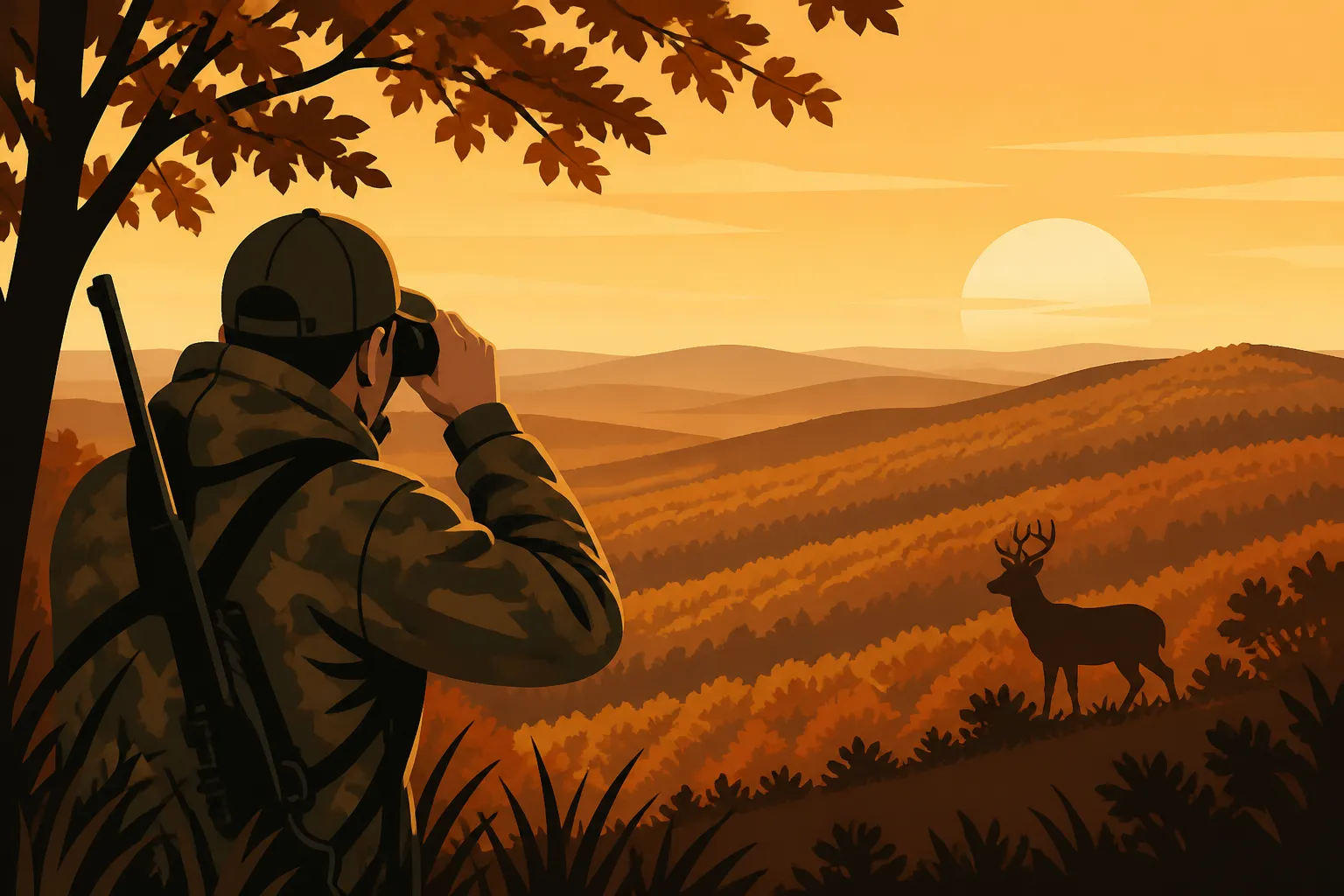
When you venture into the Shawnee Hills, particularly areas within the sprawling Shawnee National Forest Hunting, you're stepping into an unglaciated wonderland of steep slopes, deep ravines, and narrow, winding ridgelines. Picture dense hardwood timber — oaks, hickories, maples – clinging to inclines that can quickly test your stamina. These ridges aren't like the subtle rises in a cornfield; they can be sharp, rocky, and drop off abruptly into creek bottoms or hollows. It’s a completely different experience than Hunting Central Illinois Farmland Deer. The elevation changes, while not mountainous by western standards, are significant enough to drastically impact deer movement and your hunting strategy.
The density of the timber on these hillsides means visibility can be limited, and the cover for deer is abundant. You won't always see deer at a distance across open fields here. Instead, you'll often be hunting tighter pockets, relying on sign and understanding how deer use the terrain to move unseen. This also means sound travels differently, often muffled by the dense canopy or carried away by tricky thermals. It's a quiet hunter's paradise, where patience and keen observation are paramount.
How Ridgelines Influence Deer Movement
Deer, like most wildlife, are creatures of efficiency. In the Shawnee Hills, ridgelines are often the highways and superhighways of their world. They offer higher ground, providing a better vantage point for scanning for predators or other deer. More importantly, ridges present the path of least resistance for travel, avoiding the energy-sapping climbs and descents into every hollow.
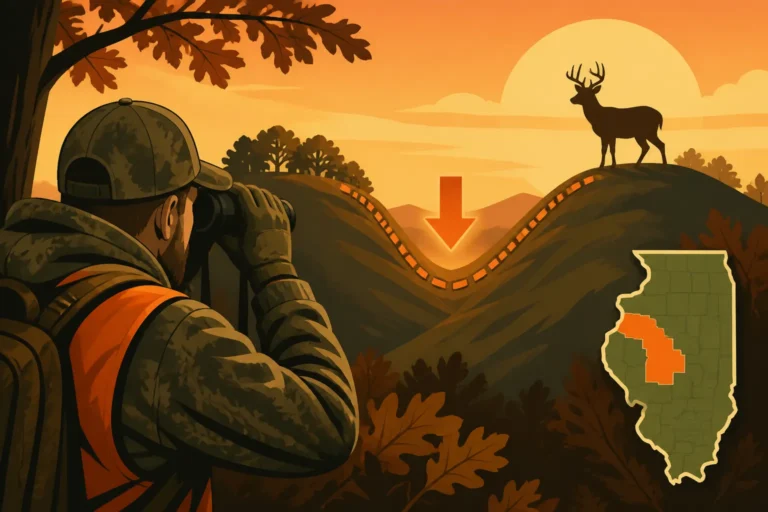
Think of ridgelines as natural travel corridors. Bucks will cruise these features during the rut, scent-checking for does, especially along the edges where the ridge starts to drop off into thicker cover. Does will lead their fawns along these routes to avoid danger and navigate the dense woods. But it's not just about simple travel. Ridgelines also contain crucial topographical features like saddles – low points along a ridge – which act as natural funnels, concentrating deer movement. Benches, flatter sections on a steep hillside, are often bedding areas or staging points where deer might mill around before heading to a food source. Understanding these subtle variations in the ridge system is key to anticipating where deer will be and, more importantly, where you should be waiting for them. Knowing Where Shawnee National Forest Bucks Bed can be a game-changer when targeting these ridge systems.
Strategic Scouting for Ridgeline Success
You can't just wander into the Shawnee and expect to stumble upon a trophy buck. This type of terrain demands meticulous scouting, both from the comfort of your home and with boots on the ground. It's an investment of time that pays dividends.
Interpreting Topo Maps and Aerial Imagery
Before you ever set foot in the woods, your digital scouting game needs to be strong. Online mapping tools are your best friend here. Services like GoHunt provide invaluable satellite imagery, topographic maps, and public land overlays that can reveal hidden gems. Start by zooming in on areas of Public Hunting Land in Illinois, specifically within the Shawnee. Look for prominent ridgelines and trace their paths.
What you're really looking for are irregularities along these ridges:
- Saddles: These are often very subtle depressions, but they are critical funnel points. Deer will almost always take the path of least resistance over a saddle rather than climbing over a high point. Mark these on your map.
- Pinch Points: Places where the ridge narrows significantly, or where steep drops on either side force deer into a tighter corridor.
- Benches/Terraces: Look for any flatter sections on the side of a steep ridge. These can be ideal bedding areas, especially if they offer good thermal cover or thick undergrowth.
- Ridge Intersections: Where two or more ridges converge or cross. These can be major travel hubs.
- Water Sources: Identify perennial creeks or small springs at the base of ridges. Deer will move up and down from these.
- Thick Cover: Look for areas of dense, brushy regrowth, often a sign of past logging or a fire. These are prime bedding and security cover.
GoHunt or similar apps allow you to create waypoints and draw lines, helping you visualize potential travel routes and stand locations. This digital reconnaissance helps narrow down vast expanses of timber into manageable, high-potential areas for physical scouting. Make sure to download offline maps, as cell service can be spotty in the deeper parts of the Shawnee.
Boots-on-the-Ground Reconnaissance
Once you've identified promising areas on your maps, it's time to hit the woods. This is where you verify your digital findings and discover the nuances only visible from eye-level. Early season or post-season is ideal for this, as the foliage is less dense, making it easier to spot sign and see the lay of the land. Our comprehensive guide on Scouting Illinois Public Land Before Season offers even more detailed tips for this crucial step.
When you're walking a ridgeline, move slowly and deliberately, just as you would when hunting. Pay close attention to:
- Deer Trails: Look for well-worn paths, especially those crossing saddles or connecting benches. These tell you where deer are consistently moving.
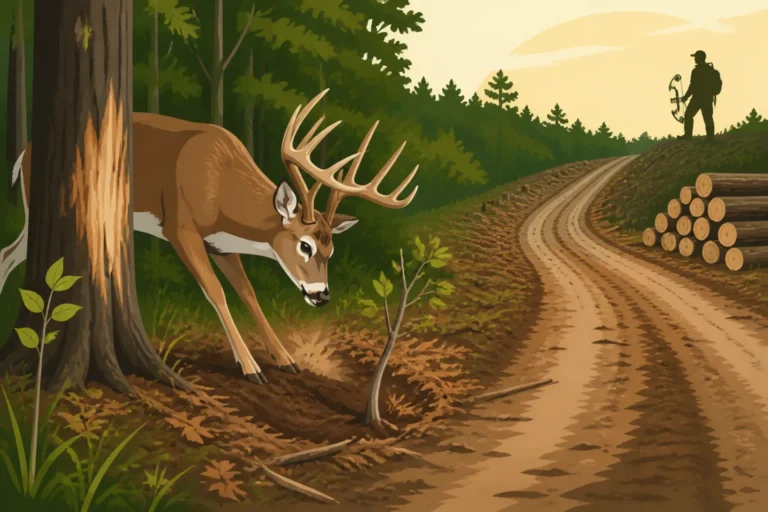
- Rubs and Scrapes: While not as common on the very top of a barren ridge, you'll often find these on the edges of ridges, especially where they drop into thicker cover or near transitions in timber type. Active scrapes are big indicators of buck presence.
- Bedding Areas: Look for matted-down spots, particularly on south-facing slopes (for warmth) or in dense thickets (for security). These are often found on benches or just below the crest of a ridge.
- Food Sources: Identify mast crops like oak flats (acorns are gold!), persimmon trees, or honeysuckle patches that might be along the ridge or in adjacent hollows. Deer will always be near food.
- Natural Funnels: Confirm those saddles and pinch points you saw on the map. Notice how deer trails naturally converge in these areas.
Understanding the specific characteristics of these ridgelines will help you in Reading a Ridge for Shawnee Forest Deer, allowing you to predict deer movement with greater accuracy.
Effective Hunting Tactics for Shawnee Ridgelines
Hunting ridgelines requires a blend of patience, stealth, and a deep understanding of how deer use the terrain. It’s a dynamic environment that often requires adaptation.
Stand Placement and Wind Considerations
The success of your hunt on a Shawnee ridgeline often hinges on intelligent stand placement and an almost obsessive attention to wind direction and thermals. Unlike flat ground where the wind is more predictable, hilly terrain creates swirling currents that can carry your scent in unexpected directions.
-
Optimal Stand Locations:
- Downwind of Saddles: This is a classic tactic for a reason. Deer use saddles consistently. Positioning your stand 20-40 yards downwind of a saddle allows your scent to blow away from the approach lanes, catching deer as they cross.
- Ridge Crests (with caution): Sometimes, setting up right on the crest of a narrow ridge can be effective, especially if you have good visibility on both sides. However, your scent will likely be carried down both sides, so this is very wind-dependent.
- Just Below the Crest: Often, placing your stand 5-10 yards below the top of the ridge on the downwind side is a better bet. Deer will often skirt just below the crest for cover, and this helps keep your silhouette below the skyline.
- Terrain Breaks: Any subtle change in elevation or vegetation can be a good spot. Look for small humps or rock outcrops that can conceal your setup.
-
Wind and Thermals: This is the trickiest part of Wind and Thermals on a Southern Illinois Ridge.
- Morning Thermals: As the sun rises and warms the earth, air begins to rise. This means thermals typically draw scent up the hillside in the morning. For morning hunts, you want your stand to be high, with your scent blowing up and over the ridge.
- Evening Thermals: As the day cools, air flows down the hillside into the hollows. For evening hunts, you generally want to be lower, with your scent being carried down into the drainage away from approaching deer.
- Prevailing Wind: Always factor in the dominant wind direction. Even with thermals, a strong prevailing wind can override them. Use tools like GoHunt's wind prediction features to analyze how wind will affect your chosen spot throughout the day.
- Testing the Wind: Always carry a wind checker, whether it's milkweed fluff or powder, and use it frequently. The wind can shift rapidly in these hills.
When selecting a stand site, consider the natural deer travel corridors and how you can approach and leave your stand undetected. Think about Hanging a Stand on a Southern Illinois Ridge safely and efficiently. Remember, a deer's nose is its primary defense, and in the Shawnee, it's often your biggest challenge.
Still-Hunting and Stalking Approaches
Sometimes, sitting in a stand isn't the most effective strategy, especially if you're exploring new ground or hunting pressured deer. Still-hunting and stalking can be incredibly productive on Shawnee ridgelines, allowing you to cover ground and adapt to what you're seeing. Our article on Still-Hunting Southern Illinois Ridgelines goes deep into this topic, but here are some key considerations.
- Slow and Deliberate: The key to still-hunting is to move at a snail's pace. Take five steps, then stop for five minutes, scanning every tree, every shadow, every cluster of brush. Your eyes should be constantly searching for horizontal lines (a deer's back) in a vertical world (trees).
- Use the Terrain: Walk just below the crest of the ridge on the downwind side. This keeps your silhouette lower and often gives you a slight elevation advantage looking down into the hollow, while your scent is carried away. Use the natural undulations of the ridge, thickets, and large trees for cover.
- Wind in Your Face: Always hunt into the wind. This is non-negotiable for still-hunting. If the wind shifts, you either need to change your direction or rethink your approach.
- Sound Discipline: Every step matters. Wear quiet clothing, take short steps, and pick up your feet to avoid scuffing leaves. The timber in the Shawnee can be crunchy, especially in dry conditions.
- Identify Ambush Points: As you move, constantly identify potential ambush points. If you jump a deer, where would you have wanted to be positioned to get a shot? These observations refine your future stand placements.
- Focus on Transitions: Deer often hold tight in the thick stuff near the top of the ridge, especially where the timber transitions from mature hardwoods to younger, thicker growth. Spend extra time scrutinizing these areas.
Stalking in this dense, broken country requires a high level of concentration and skill, but it can put you on deer that a stationary hunter might never see. It's a truly engaging way to hunt.
Using Calls and Decoys in Hilly Terrain
While primarily a visual game in open country, calls and decoys can sometimes play a role on Shawnee ridgelines, though with some caveats due to the dense timber and tricky acoustics.
- Grunt Calls and Rattling: These can be effective during the rut, especially if you're positioned in a saddle or on a bench where deer are likely to be traveling. The key is moderation.
- Volume Control: In dense timber, sound doesn't travel as far, but it can also echo and make it hard for a deer to pinpoint the source. Start with soft grunts and rattles, increasing volume only if you don't get a response. Often, deer on these ridgelines are accustomed to silence, so loud, aggressive calling might spook them.
- Timing: Use grunts to stop a deer that's walking, or to draw a curious buck closer. Rattling can simulate a fight, drawing in dominant bucks. Be ready for a quick shot if you do rattle, as deer can come in fast and silently.
- Doe Bleats: These can be useful for does or younger bucks, especially if you've spotted one and want to get its attention or stop it for a shot.
- Decoys (Limited Use): Decoys are generally less practical on heavily timbered ridgelines due to limited sight lines and the difficulty of packing them in. If you do use one, a simple doe or small buck decoy could be placed in an open area within a saddle or on a bench, giving a passing buck something to focus on. Ensure you have clear shooting lanes around it, and always be aware of other hunters in public land settings.
Remember, the primary focus on Shawnee ridgelines should be on stealth, wind management, and understanding deer movement patterns. Calls and decoys are secondary tools to be used strategically and sparingly.
Gear and Preparedness for Challenging Terrain
Hunting the Shawnee Hills isn't just about strategy; it's also about having the right gear and being physically prepared for the demands of the landscape. Your comfort and safety depend on it.
Essential Gear for Steep Climbs and Long Hauls
The hilly, rugged nature of the Shawnee means you'll be doing a lot of climbing and, hopefully, a lot of hauling. Having the right gear makes all the difference.
- Footwear: Invest in high-quality, waterproof, and supportive hunting boots. Look for good ankle support and aggressive tread for traction on steep, leaf-covered slopes. You'll be covering varied terrain, from muddy creek bottoms to rocky ridges, so durability is key. Brands like Kenetrek or Schnee's are popular for a reason, but even sturdy options from Merrell or Salomon can work.
- Layered Clothing: Illinois weather can be notoriously fickle. Dress in layers that you can easily add or remove as you heat up from climbing or cool down while sitting. Moisture-wicking base layers are crucial to prevent chilling from sweat.
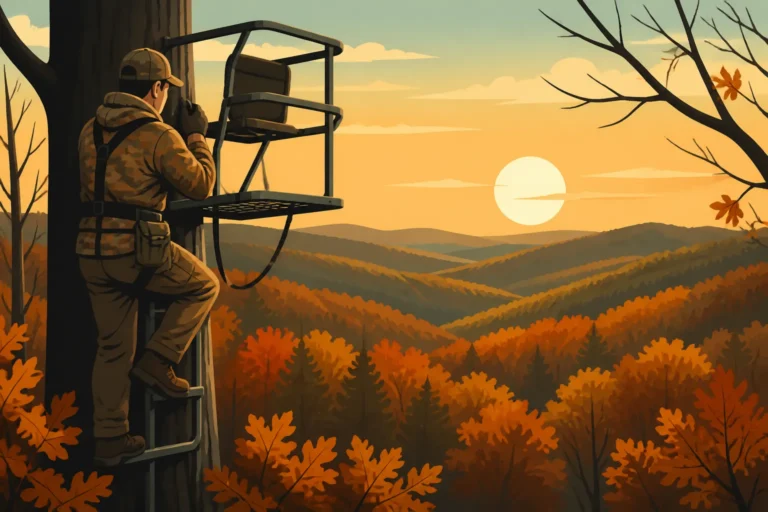
- Treestand: If you're stand hunting, choose a lightweight, portable stand. Climbing stands can be effective on straight-trunked trees, but a good hang-on stand with sturdy climbing sticks is often more versatile in the varied timber. Make sure your stand is quiet and easy to set up in challenging terrain. Remember, public land rules apply, so no screw-in steps!
- Safety Harness: Absolutely non-negotiable. Always wear a full-body safety harness when in a treestand. Accidents happen, especially when you're tired from climbing or setting up in tricky spots.
- Hauling Equipment: If you're lucky enough to tag a deer, getting it out of a deep hollow or off a steep ridge is a monumental task. A good quality hunting pack with a strong frame can help quarter and pack out meat. A game cart, while useful on flatter trails, is often impractical in the steepest parts of the Shawnee. Consider bringing a friend, or be prepared for multiple trips.
- Hydration: Always carry more water than you think you'll need. Climbing these hills, even in cooler weather, will dehydrate you quickly. A hydration bladder in your pack is often more convenient than bottles.
Don't skimp on quality when it comes to the gear that directly impacts your safety and ability to perform in this challenging environment.
Navigational Tools and Safety
Getting lost in the Shawnee National Forest isn't just an inconvenience; it can be genuinely dangerous, especially if you're alone and the weather turns. Proper navigation and safety protocols are paramount.
- GPS Device/App: A reliable GPS unit or a mapping app like GoHunt on your phone is essential. Mark your vehicle's location, your stand sites, any rubs or scrapes, and potential game trails. Offline maps are a must, as cell service is unreliable. Check out onX Layers for Illinois Land Status for understanding boundaries.
- Compass and Map (Backup): Always carry a physical compass and a waterproof topographical map of the area. Batteries die, phones break. Knowing how to use these traditional tools could literally save your life.
- Headlamp/Flashlight: A powerful headlamp with fresh batteries (and spares!) is crucial for navigating in the dark, especially if you're hiking in before dawn or out after sunset, or tracking a deer into the night.
- First-Aid Kit: A compact kit with essentials for cuts, scrapes, blisters, and minor emergencies. Include any personal medications.
- Communication Device: A fully charged phone is important, but consider a satellite messenger (like Garmin InReach or Zoleo) for areas without cell service, especially if you're hunting alone. These allow you to send SOS messages and communicate with loved ones.
- Tell Someone: Always let someone know where you're going, your planned route, and when you expect to be back. This simple step is one of the most effective safety measures.
- Blaze Orange: During firearm seasons, make sure you're wearing the required amount of blaze orange. Even during archery season, wearing some while walking to and from your stand, or while tracking, is a wise precaution on public land.
Hunting the Shawnee Hills can be an incredibly rewarding experience, offering a true sense of wilderness hunting that's rare in Illinois. By understanding the terrain, scouting diligently, employing smart tactics, and preparing with the right gear, you'll greatly increase your chances of success and, most importantly, have a safe and memorable hunt.
Disclaimer
The information provided in this article is for general guidance and informational purposes only. Hunting regulations and conditions can change. Always consult the latest Illinois Department of Natural Resources (IDNR) hunting regulations and local site-specific rules before planning any hunt. Safe hunting practices, including proper weapon handling, treestand safety, and carrying appropriate emergency gear, are the sole responsibility of the individual hunter.