Still-Hunting Southern Illinois Ridges
There's a unique challenge that comes with hunting the rugged, beautiful terrain of Southern Illinois, especially when you're trying to move stealthily through those ancient ridges. Unlike the flat, agricultural fields up north, this landscape demands a different approach, and many hunters find themselves frustrated when their usual tactics fall flat against the wily whitetails that call these hills home. This guide is all about embracing the still-hunt, a patient and deliberate method perfectly suited for dissecting those tricky Southern Illinois ridges, helping you adapt your strategy to the local deer and the demanding environment.
Understanding the Southern Illinois Ridge Country Landscape
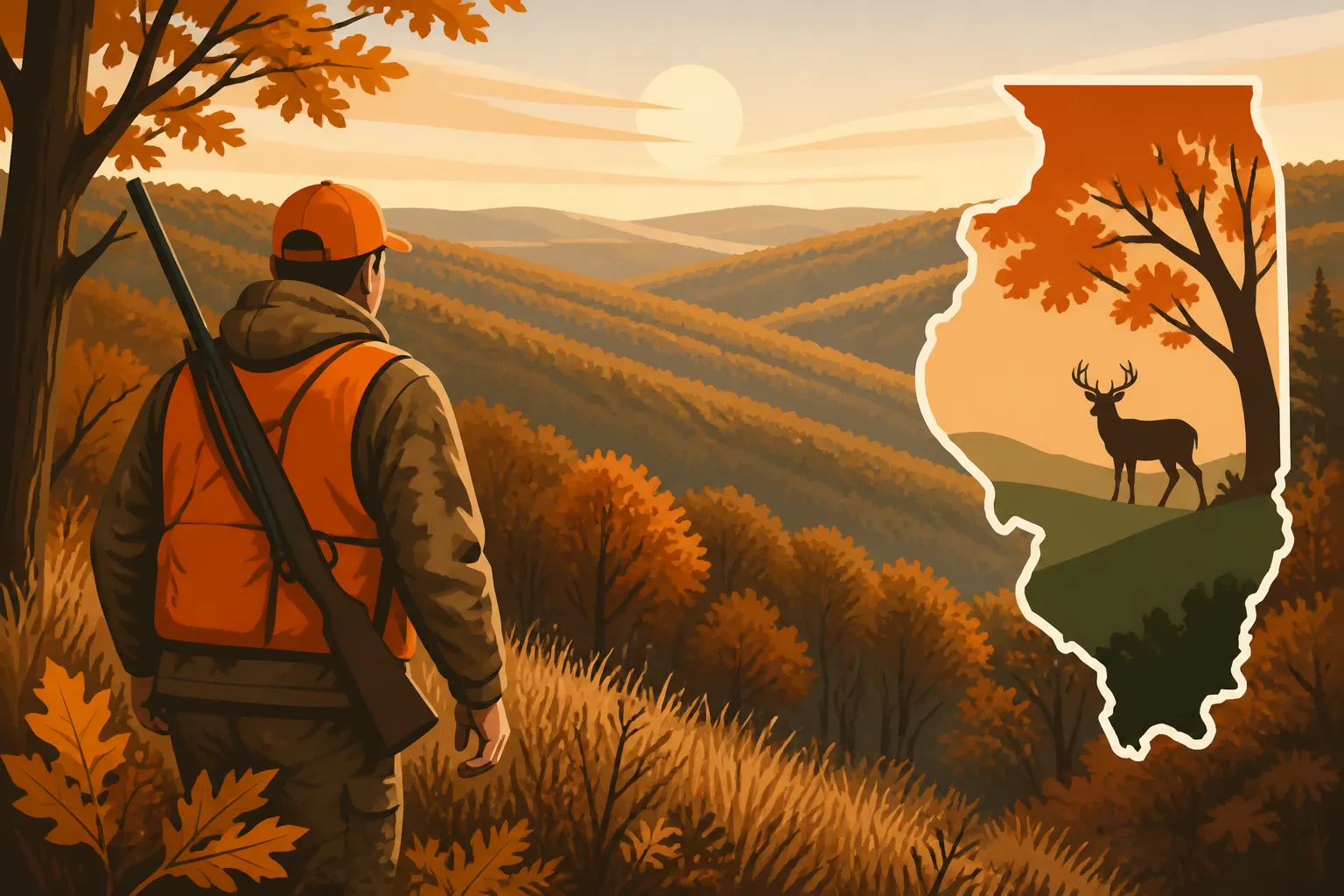
The topography of Southern Illinois is a world away from the gently rolling farmlands that define much of the state. Here, you'll find ancient, eroded hills, deep hollows, and dense timber, all of which conspire to create a truly distinct hunting environment. If you’re used to spotting deer from a distance in open country, still-hunting these ridges will feel like an entirely different ballgame, demanding a complete shift in your mindset and technique.
Topography and Habitat Nuances
Southern Illinois, particularly areas within and surrounding the Shawnee National Forest Hunting, is characterized by steep elevation changes, rocky outcrops, and a mix of hardwood forests. Think oak, hickory, and maple trees dominating the landscape, often interspersed with thick cedar thickets and brushy undergrowth, especially on south-facing slopes. These ridges aren't just hills; they are complex systems of main ridges, finger ridges, saddles, and deep ravines. Water sources, often seasonal creeks or small springs, carve out hollows and dictate deer movement patterns in ways that flatland hunters might not immediately grasp. The sheer density of cover, combined with dramatic elevation changes, means that deer can literally disappear into the landscape, making traditional stand hunting tricky if you haven't done your homework. You have to move at their pace, anticipating where they might be seeking refuge or transitioning between bedding and feeding areas.
Deer Behavior on Ridgelines
Deer in Southern Illinois often behave differently than their prairie counterparts. They are intimately familiar with every dip, rise, and thicket on their home range, using the terrain to their advantage for cover, travel, and escape. On these ridges, deer tend to travel along the sides of the main spines, often on "benches" or subtle changes in elevation, rather than walking directly on the very top or in the bottoms of the hollows. These benches provide a more level path of travel and offer critical vantage points for the deer to detect danger both above and below them. They also often bed on these benches, especially those that offer thermal protection or good visibility. Understanding this inherent connection between the deer and the terrain is paramount. They use thermals to their advantage, bedding high on cool mornings and moving lower as the day warms, or conversely, bedding low in cold weather and moving to sun-drenched slopes. Being able to predict these subtle shifts in behavior is key to a successful still-hunt. You're not just looking for deer; you're trying to think like them, using the very same landscape features they do.
Essential Scouting for Still-Hunting Success
Still-hunting isn't about aimlessly wandering; it's a highly calculated movement that requires extensive pre-season and in-season scouting. Without a solid understanding of the terrain and recent deer activity, you're essentially just taking a walk in the woods. The more intelligence you gather before you even step foot in the woods with your weapon, the higher your chances of success.
Interpreting Topo Maps and Aerial Imagery
Before you ever put boots on the ground, your most powerful scouting tools are often right on your computer or phone. High-quality topographical maps and aerial imagery, like those found on the GoHunt app or other mapping platforms, are invaluable for deciphering the complex layout of Southern Illinois ridges. Look for contour lines that indicate gradual slopes (potential travel corridors or benches) versus steep drop-offs (less likely travel). Identify saddles where deer often cross from one ridge to another, connecting different watersheds. These are natural funnels that can concentrate deer movement.
Similarly, use aerial photos to pinpoint different timber types, areas of dense cover that might serve as bedding sanctuaries, or small openings that could be overlooked food sources. Focus on areas where different habitat types converge, like where a thick cedar patch meets an oak flat. These transition zones are often high-traffic areas. Pay special attention to identifying potential Reading a Ridge for Shawnee Forest Deer, noting where finger ridges extend, how hollows drain, and where the terrain naturally bottlenecks. This "armchair scouting" allows you to prioritize areas for physical investigation, saving you precious time and energy in the woods.
Boots-on-the-Ground Reconnaissance
Once you've identified promising areas on your maps, it's time for some old-fashioned Scouting Illinois Public Land Before Season. This means getting out there and walking, preferably in the off-season or just before the hunting season, to avoid disturbing deer during the hunt. Walk the ridges you plan to still-hunt. Feel the incline, notice how the wind swirls, and mark potential stand locations or ambush points. Your goal is to confirm what you saw on the maps and to discover the subtle features that don't show up on any satellite image – a faint deer trail, a cluster of rubs, or a hidden water source.
Look for heavily used deer trails, especially those that parallel the main ridge on benches. Find fresh tracks in soft soil or mud, indicating recent activity. Discover where deer are crossing saddles or dropping off the ridge into hollows. Pay close attention to pinch points, like where a thicket forces deer into a narrow lane. This type of hands-on scouting provides an intimate knowledge of the land, helping you visualize how deer use the terrain and where your still-hunt path should take you. It's an investment that pays dividends, not just for still-hunting but for all your deer hunting efforts.
Reading Sign on a Southern Illinois Ridge
Interpreting deer sign correctly is a critical skill for any still-hunter, and it's especially important on these Southern Illinois ridges. Don't just look for any sign; look for fresh sign and understand what it tells you about deer movement and activity. Fresh scrapes, especially active ones with a worked licking branch, indicate a buck's presence and possibly a territorial marker. Rubs, particularly those on saplings facing major trails, point to a buck traveling through that area. Bigger, fresher rubs suggest a more dominant buck.
More importantly, look for feeding sign. Are there fresh acorn cuttings? Are leaves disturbed where deer have rooted for mast? Are browse lines evident on certain plants? These tell you what deer are currently eating and where. Droppings can indicate freshness and the type of food consumed. Fresh, moist droppings mean deer have been in the area very recently. Ultimately, you're looking to build a picture of current deer activity. You might find a well-worn trail, but if there’s no fresh sign on it, the deer might have shifted their patterns. Combine these observations with your map knowledge to predict not just where deer are, but when and why they're there.
Mastering the Art of the Still-Hunt Movement
Still-hunting is often misunderstood. It's not about being motionless for hours in a stand; it's about being in constant, controlled motion. It's a dance between moving and pausing, seeing without being seen, and hearing without being heard. The goal is to cover ground, find deer, and get into a shooting position before they even know you're there.
The Pace and Cadence of the Hunt
The pace of a successful still-hunt on Southern Illinois ridges is agonizingly slow. We're talking about moving perhaps 20-50 yards in 10-15 minutes, sometimes even longer. Your eyes and ears should be working overtime, scanning every bit of cover, listening for the faintest sound. This isn't about covering mileage; it's about dissecting the landscape. Take 2-3 slow steps, then pause. Look intently, not just for a whole deer, but for parts of a deer – a horizontal backline, an ear twitch, the flick of a tail, or the dark patch of a body against the lighter timber. Use your binoculars often to pick apart distant cover.
During your pauses, listen. Can you hear the crunch of leaves from a deer feeding? The soft scrape of a hoof? A twig snapping? Train yourself to differentiate between natural forest sounds and those made by deer. This deliberate, start-and-stop cadence allows you to spot deer before they spot you, or to hear them approaching, giving you time to react. It also helps you blend into the natural rhythm of the woods. Rushing through the woods is the fastest way to alert every deer in the county to your presence. Remember, the deer live here; they know every sound and movement. Your job is to be the quietest intruder possible.
Utilizing Wind and Thermals to Your Advantage
Southern Illinois ridges present unique challenges when it comes to scent control and understanding air currents. The wind is rarely constant on a ridge; it swirls, drops, and lifts with the topography and temperature changes. This means a consistent wind direction you feel at the ridge top might be completely different in the hollows. This is where understanding Wind and Thermals on a Southern Illinois Ridge becomes critical.
In the mornings, as the air warms, thermals tend to rise, carrying your scent upwards. This means still-hunting up a ridge or hill can be advantageous, as your scent will be carried away from deer below you. Conversely, in the evenings, as the air cools, thermals drop, carrying scent downwards. Still-hunting down a ridge or side-hill can be effective then. However, always be aware of swirling winds in saddles and points where air currents can become unpredictable. Always try to keep the prevailing wind in your face or quartering to you. Use a wind checker frequently, especially when moving into a new area or as the day progresses. The GoHunt app, for example, often has real-time wind and thermal tools that can help you visualize these complex air currents, allowing you to plan your route more effectively and avoid having your scent betray you.
Stealth and Concealment Techniques
Beyond just moving slowly, true stealth involves a combination of visual and auditory concealment. Wear quiet clothing that won't rustle or snag on brush. Layers of fleece or wool are often preferred over noisy synthetics. Break up your outline with good camouflage, paying attention to head and hand coverings. Use the terrain to your advantage: move from tree to tree, staying behind thick trunks or dense brush whenever possible. Avoid open areas unless absolutely necessary.
When moving, focus on placing your feet softly. "Cat-walk" by slowly lifting your foot, placing your heel down first, and then rolling your foot forward, feeling for twigs or leaves that might snap or crunch. Avoid dragging your feet. If you're wearing a backpack, ensure nothing is rattling or clanking inside. If you need to stop for an extended period, try to position yourself near a large tree or dense cover that helps break up your silhouette. Remember, deer are masters of detecting anomalies. Anything that looks or sounds out of place will put them on high alert. The goal is to blend in so perfectly that you become just another part of the forest, an illusion that takes immense patience and practice.
Strategic Approach to Ridge Features
Still-hunting these Southern Illinois ridges isn't just about moving quietly; it's about moving smartly. You need to understand where deer are likely to be, and how they'll use specific topographical features, to maximize your chances of an encounter. It's like playing a chess game with the deer, anticipating their next move based on the board (the landscape).
Identifying Funnels and Choke Points
Funnels are natural constrictions in the landscape that concentrate deer movement. On Southern Illinois ridges, these can be saddles between two high points, narrow benches that connect wider sections of a ridge, or where dense thickets force deer into a specific travel lane. Often, deer will use the path of least resistance. A steep, rocky bluff on one side of a ridge and a deep, thick ravine on the other might funnel deer onto a relatively flat bench in between. These areas are prime spots to slow down even further, set up for a few minutes, and scan intently. Deer will often pause in these areas, perhaps to scent-check the downwind side before proceeding, offering you a brief window of opportunity.
Similarly, choke points can be man-made, like an old logging road that crosses a ridge, or natural, like a narrow gap in a line of mature timber. Understanding how deer use these spots can inform your still-hunt route. Instead of walking directly through them, you might approach from downwind, set up 50-75 yards away, and observe. Often, deer will use these funnels to transition from bedding to feeding areas, or to move between different parts of their core range. Knowing where these are on your chosen ridge system is critical for a high-percentage still-hunt. You can even use the GoHunt app to highlight these topographical features before you ever step foot in the woods.
Hunting Benches and Secondary Ridges
As mentioned earlier, deer on these ridges love benches. These are subtle, relatively flat sections that run horizontally along a hillside, often just below the main ridge crest or above the steep hollow. They provide easier travel, better vantage points, and often preferred bedding locations. Still-hunting these benches effectively means walking them slowly, paralleling the main ridge, always mindful of what's above and below you. Look for fresh tracks, droppings, and rubs along these benches, as they are highways for deer movement.
Secondary ridges, or "finger ridges," that jut off the main spine are also crucial. These often lead down into food sources in the hollows or connect to other bedding areas. Bucks, especially, will use these to circle downwind of bedding areas or to approach scrapes and rubs. When still-hunting, consider walking out on these finger ridges, pausing at their ends to glass into the hollows or across to other ridges. Don't be afraid to drop down into a hollow a bit, then work your way up a finger ridge, always playing the wind and thermals. This dynamic approach allows you to cover more varied terrain and increase your chances of intercepting a deer moving in unexpected ways. Think about how a buck might travel through these complex systems when Where Shawnee National Forest Bucks Bed.
Focusing on Food Sources and Bedding Areas
Ultimately, still-hunting success hinges on finding deer where they are feeding or bedding, or where they are transitioning between the two. On Southern Illinois ridges, food sources can vary widely. Early season might mean soft mast like persimmons or wild grapes, while late season is all about acorns, especially white oak and red oak acorns. Identify key oak flats on your maps and then verify them on the ground. These become magnets for deer, especially if you're Hunting After a Poor Acorn Year in other areas.
Bedding areas are typically found in dense cover: thick cedar patches, brushy clear-cuts, or areas with blown-down timber that offer security. Often, these are located on southern slopes for thermal advantage in winter, or northern slopes for cooling in early fall. When still-hunting, approach these areas very cautiously, always from downwind. Don't push directly into a bedding area unless it's a planned tactic like a deer drive. Instead, still-hunt the edges, benches, and funnels leading into and out of these sanctuaries, catching deer as they move. During the rut, these areas can be especially hot, as bucks will cruise the perimeters looking for does. Consider also the possibility of Late-Season Food Sources for Illinois Whitetails like standing corn adjacent to timber edges or winter food plots if hunting on private land nearby.
Gear Considerations for Mobile Hunting
Still-hunting demands a specific gear philosophy: light, quiet, and efficient. Every item you carry should serve a purpose, and nothing should hinder your ability to move stealthily through the timber. Unlike sitting in a fixed stand, where comfort and bulk are less of an issue, mobility is king when you're covering ground.
Lightweight and Quiet Apparel
The clothes you wear are arguably the most critical component for still-hunting. Avoid noisy fabrics like stiff denim or crinkly synthetics. Opt for soft, quiet materials such as fleece, wool, or brushed cotton blends. Layering is key, as you'll be exerting yourself moving, then sitting or standing still for periods. A good base layer to wick moisture, a mid-layer for warmth, and a quiet, windproof outer layer are essential. You need to be able to shed or add layers quickly to regulate your body temperature, preventing sweat buildup which can lead to chills during pauses.
Crucially, pay attention to your footwear. You need comfortable, supportive boots that provide good traction on varied, often rocky, terrain. Look for boots that are quiet, without squeaky soles or stiff ankles. Rubber boots are excellent for scent control and waterproofness in wet conditions, but they can be heavy. A good pair of hiking boots designed for quiet movement might be a better choice for drier conditions. Whatever you choose, make sure they are well broken-in to prevent blisters and ensure silent foot placement. Don't forget quiet gloves and a face mask or head net to conceal exposed skin and further dampen movement sounds.
Optics and Navigation Tools
High-quality binoculars are not an optional accessory for a still-hunter; they are an absolute necessity. You'll spend more time looking through your binoculars than with the naked eye. A good pair of 8×42 or 10×42 binoculars allows you to pick apart cover, identify deer at a distance, and confirm subtle movements without having to move your head as much. Practice glassing by focusing on a small section, then moving your eyes slowly across it, looking for anything out of place. It's surprising what you'll miss with the naked eye that a good set of binos will reveal.
For navigation, a reliable GPS unit or a smartphone with a robust hunting app (like GoHunt) is indispensable. These apps not only show your location on topo maps and aerial imagery but also allow you to mark sign, game sightings, and plan your routes while considering wind direction and terrain. Battery life is a concern, so carrying a portable power bank is a smart move. While traditional maps and compasses are excellent backups, digital tools offer unparalleled detail and real-time information for navigating the complex ridge systems. When Scouting With the Illinois DNR App, remember to download offline maps if you expect to lose cell service in remote areas of the Shawnee.
Weapon Choice for Close Encounters
Still-hunting often leads to close-range opportunities, sometimes as close as 20-30 yards. This means your weapon choice should be geared towards quick, quiet handling and effective short-range performance. For archery hunters, a compact bow that's easy to maneuver through brush is ideal. Ensure your broadheads are razor-sharp and your bow is perfectly tuned for accuracy.
Firearm hunters still-hunting in Southern Illinois often opt for a shotgun with slugs, a muzzleloader, or a straight-wall cartridge rifle, depending on the season and specific regulations for Illinois's Two Firearm Deer Seasons or Muzzleloader Deer Hunting in Illinois. A lighter, more compact rifle or shotgun that comes to the shoulder quickly and points naturally is a significant advantage over a long, heavy magnum. Consider a red dot sight or a low-power variable optic (1-4x or 2-7x) for quick target acquisition in dense cover. Whatever your weapon, practice shooting from various positions – kneeling, standing, leaning against a tree – as you rarely get a perfect, rested shot opportunity while still-hunting. Ensure it's sighted in precisely and you're confident in your ability to make an ethical shot under pressure.
Adapting to Pressure and Changing Conditions
Southern Illinois public lands, especially during peak seasons like the firearm opener, can see significant hunting pressure. Still-hunting requires flexibility and the ability to adapt your approach based on what the deer (and other hunters) are doing, as well as the ever-changing weather.
Hunting During Peak Pressure Periods
When hunting public land, especially if you're still-hunting areas like those in the Shawnee National Forest Hunting, you're going to encounter other hunters. Deer quickly learn to avoid high-pressure areas and adapt their movement patterns to become more nocturnal or utilize thicker, harder-to-reach cover. During peak periods, focus your still-hunt efforts on areas that other hunters avoid. This might mean hiking deeper into remote hollows, ascending steeper ridges, or pushing through brushier sections that most people bypass. Deer that are pushed will often try to sneak through these overlooked pockets.
Furthermore, recognize that other hunters' movements can sometimes work to your advantage. If deer are being pushed by a drive or hunters moving through a hollow, they might be pushed into your still-hunt path. Position yourself on a downwind ridge overlooking a natural escape route, and move very slowly, scanning constantly. The key is to anticipate how pressured deer will react and put yourself in a position to intercept them. Don't join the crowd; find the edges of the chaos. Even if it feels like Hunting Pressure on Illinois Public Land is overwhelming, there are always pockets less traveled.
Adjusting Tactics for Weather Shifts
Weather in Illinois can change rapidly, and still-hunting success often hinges on how well you adapt. A sudden cold front can make deer more active, especially if it follows a period of warm weather. They'll be looking to feed heavily to build up energy reserves. Still-hunting the edges of known food sources, like oak flats, can be particularly effective during these times. On the flip side, a warm spell in late season might make deer less active during daylight hours, forcing them into thick cover. You might need to focus your efforts on those dense bedding areas, moving even slower and more deliberately.
Rainy or windy days, while uncomfortable for hunters, can be a still-hunter's best friend. The noise of rain or wind rustling through leaves can mask your footsteps and other sounds, allowing you to get much closer to deer undetected. On these days, deer might also be more inclined to move, using the cover of sound to their advantage. Focus on still-hunting the edges of thick cover or along ridge lines where the wind noise is most pronounced. Heavy fog can also provide excellent concealment, but be extra cautious about safety and visibility. Always check the forecast and adjust your layers and your route accordingly.
Post-Rut and Late-Season Ridge Hunting
Once the chaos of the peak rut subsides, deer behavior shifts dramatically, and still-hunting on Southern Illinois ridges becomes a game of finding food and security. Bucks are often exhausted and looking to replenish their energy stores, while does are still focused on feeding. This period, often called the "late-season lull" or Hunting the Late-Season December Lull, can be tough, but still-hunting is an excellent method for it. Deer will congregate around the most attractive Late-Season Food Sources for Illinois Whitetails, which on these ridges, often means the remaining acorns, browse in recent timber cuts, or any green forage they can find in creek bottoms or sun-drenched slopes.
Focus your still-hunt on these concentrated food sources, especially during the colder parts of the day. Deer will be moving between thick bedding areas and these limited food sources. Still-hunt the connecting funnels, benches, and creek drainages that lead directly to these feeding locations. During this time, deer are hyper-sensitive to pressure and prioritize security, so move slower than ever, use every bit of cover, and pay absolute attention to the wind. Sometimes, calling tactics like soft Grunt Calls in Mature Illinois Timber or subtle rattling sequences, like Rattling Volume in Thick Cover, can still be effective, especially if you know there are bucks in the area trying to find late-cycling does. The colder the weather, the more predictable deer often become in their need for food, making a patient still-hunt a very potent strategy.
Disclaimer
Hunting is an inherently dangerous activity. Always prioritize safety, understand and follow all local, state, and federal hunting regulations, and ensure you have proper training and licensing before heading afield. The information provided here is for educational purposes and should not replace professional instruction or official regulations.