Hunting Pressure on Illinois Public Land
One of the biggest headaches we face as hunters in Illinois, especially those of us who rely on public ground, is the sheer amount of pressure those areas receive. It can feel like every good spot is already taken, or that the deer have vanished into thin air after opening day. This guide is all about understanding that pressure and, more importantly, equipping you with the strategies to find those overlooked pockets where deer still feel safe, even on our most popular public lands.
Understanding the Sources and Patterns of Public Land Pressure
Hunting pressure isn't just a random occurrence; it follows predictable patterns and stems from very clear factors. Knowing these can help you anticipate where the crowds will be and, more importantly, where they won't.
The Draw of Accessible Hunting Grounds
Let's be honest: Illinois doesn't have endless acres of public land like some western states, so the ground we do have gets a lot of love. For many of us, public land is the only option, providing crucial access without the need for private land permission or expensive leases. This accessibility, while wonderful for opportunity, naturally concentrates hunters into finite spaces. You'll see this phenomenon played out at State Fish and Wildlife Areas, State Parks that allow hunting, and even vast tracts like the Shawnee National Forest.
Consider a place like Pyramid State Recreation Area or Jim Edgar Panther Creek Fish and Wildlife Area. These are fantastic places, but they are also well-known and often the first choice for hunters who don't have private ground. Parking lots fill up quickly, especially during prime times. The high visibility means that deer in these areas become incredibly wary, altering their behavior dramatically as soon as human boots hit the dirt. Even seemingly minor events, like a dog walker passing through an area, can contribute to deer feeling pressured over time.
Seasonal Peaks and Weekday Lulls
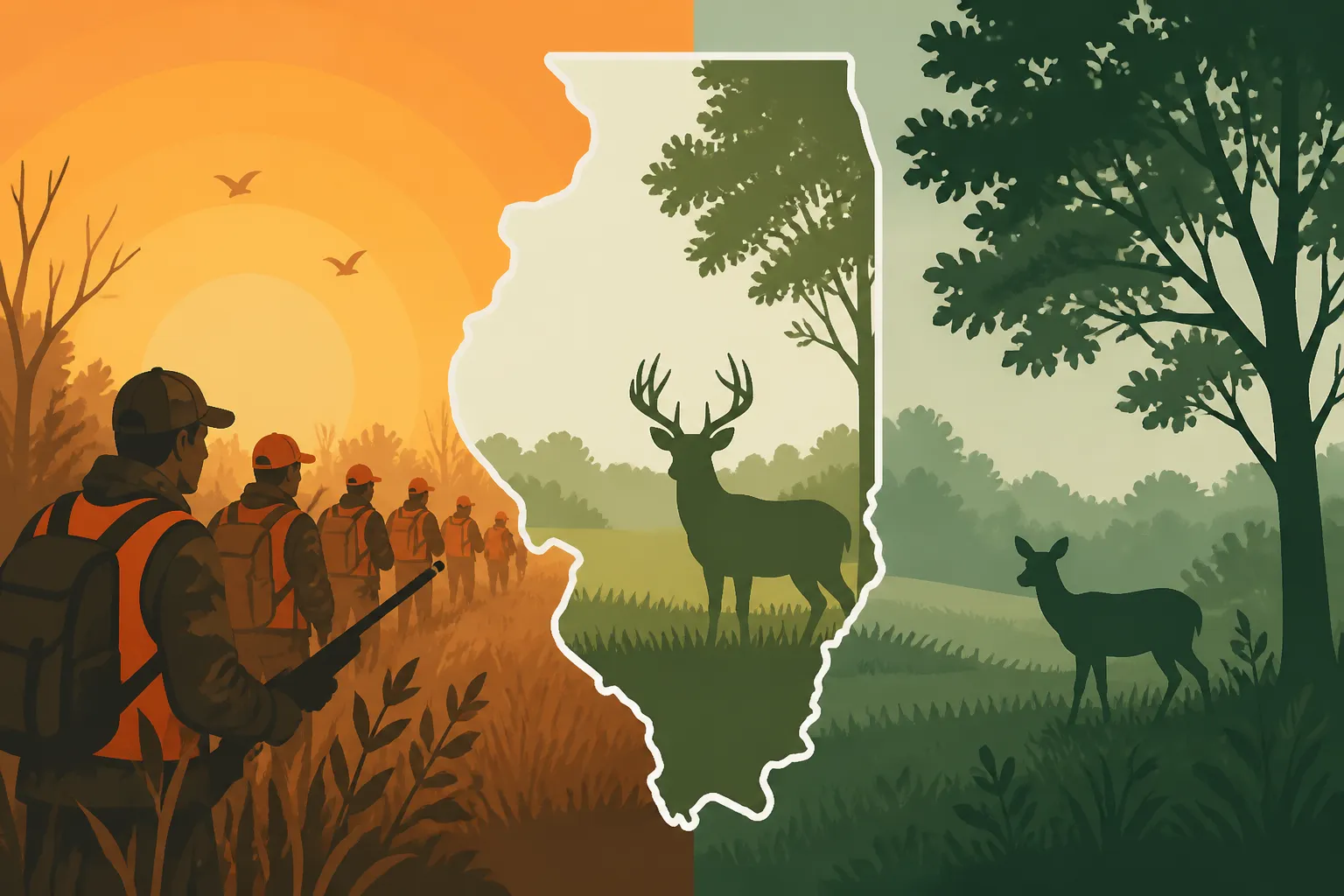
The intensity of hunting pressure in Illinois swings wildly throughout the season. The opening day of archery season, for instance, sees a surge of enthusiasm, but that pales in comparison to the initial rush of Illinois's Two Firearm Deer Seasons. Those firearm weekends are absolute pressure cookers, with hunters pouring into public areas, sometimes driving deer around like crazy. The deer quickly learn to associate human presence with danger during these periods.
Conversely, weekdays, especially in the middle of the season or during less popular seasons, often see a significant drop-off in hunter numbers. Many folks are tied to work or family obligations, leaving vast tracts of public land relatively empty from Monday through Thursday. Weather plays a huge role here too; a cold, rainy Tuesday might be miserable for you, but it's likely to deter fair-weather hunters, potentially leaving you with an entire section of woods to yourself. Understanding these ebbs and flows is crucial to planning when and where to hunt. For example, trying to find solitude during the first firearm season on a popular site is a monumental task, but that same spot might be nearly empty on a Tuesday in late October.
Visible vs. Invisible Pressure
When we talk about hunting pressure, most people immediately picture crowded parking lots, other hunters walking through their setup, or the sound of distant gunshots. This is the "visible" pressure, and it's undeniable. You can literally see the evidence: boot tracks on trails, old treestands, cut shooting lanes, or even discarded snack wrappers. These are all signs that the deer in the area are constantly encountering humans.
However, a more insidious form of pressure is "invisible pressure." This includes human scent lingering in the woods, the sound of slamming truck doors from a mile away, or even the subtle vibrations of nearby activity. Deer are incredibly sensitive creatures, and their natural instincts tell them to avoid human presence. Even if you don't see another hunter, the deer might already be aware of human activity from days prior. This invisible pressure causes deer to become nocturnal, to alter their travel routes, or to bed in incredibly thick, often overlooked cover. It's a constant, low-grade stressor that reshapes their daily patterns, forcing them to adapt to survive.
Strategies for Locating Unpressured Deer Pockets
Finding unpressured deer on Illinois public land can feel like searching for a needle in a haystack, but it's far from impossible. It requires a shift in mindset and a willingness to do what most other hunters aren't.
Going Deeper and Harder Than Most
This is perhaps the most fundamental and effective strategy: simply go where others aren't willing to go. Most hunters will stick to within a quarter-mile of a road or easy trail. Push past that. If you're willing to walk a mile or two (or more) into a public tract, especially through tough terrain, your odds of finding undisturbed deer increase dramatically. This might mean navigating through dense cedar thickets, crossing muddy creek bottoms, or climbing steep, rocky bluffs.
Think about the most unappealing spots on a map. Is there a section that's incredibly swampy, or covered in briars, or has a brutal uphill climb just to get there? Those are the places where deer are most likely to seek refuge from human disturbance. I've found some of my best spots by simply looking at a map and asking myself, "Where would I not want to walk?" Then, that's exactly where I go. It requires physical fitness and a stubborn refusal to give up, but the rewards are often worth the effort. In parts of Shawnee National Forest Hunting, this approach is practically a requirement for consistent success.
Leveraging Digital Scouting Tools and Topography
In today's hunting world, digital tools are an absolute game-changer for identifying potential sanctuaries. Apps like GoHunt, onX Hunt, or even the Illinois DNR Map Tool provide invaluable insights from your couch. Use these tools to meticulously analyze topography and aerial imagery. Look for features that create natural barriers to human traffic:
- Steep Bluffs and Ravines: Areas with significant elevation changes, especially those with rock outcroppings or deep, winding ravines, deter many hunters. Deer, however, are perfectly adapted to navigating these areas.
- Dense Thickets and Swamps: Look for dark green patches on satellite imagery that indicate extremely thick cover or areas marked as wetlands. These are often too nasty for casual hunters but provide prime bedding and sanctuary for deer.
- Water Barriers: Creeks, rivers, and large drainages can be natural fences. If you can find a way to cross a difficult water feature that most hunters avoid, you might unlock a whole new world of unpressured ground.
By combining topographic maps with aerial photos, you can start to piece together a picture of deer movement. You're looking for areas that are geographically difficult to access but still offer good bedding, food, and water. Identifying these spots is a key part of Reading Aerial Photos for Southern Illinois Deer. A good app like GoHunt allows you to drop pins, measure distances, and plan your approach long before you ever set foot in the woods.
Focusing on Overlooked Habitat and Transitional Zones
Sometimes, finding unpressured deer isn't about going miles deep into the wilderness, but rather focusing on smaller, less obvious pieces of cover. Many hunters overlook small, isolated woodlots or fencerows that might connect larger tracts of public land. These areas, though small, can act as crucial travel corridors or bedding areas for deer trying to avoid the main public land pressure. Deer might literally spend their days holed up in a tiny, brushy ditch right next to a busy road, knowing most hunters will drive right past.
Another excellent strategy is to concentrate on transitional zones – the edges where one type of habitat meets another. This could be where thick timber transitions to an old field, or where a dense swamp meets a slight rise in elevation. These "edge habitats" are naturally attractive to deer as they offer both cover and feeding opportunities. Deer often use these edges as travel routes, especially when moving between bedding and feeding areas. Don't be afraid to look at the fringes of public land, even if it borders private property. Deer don't recognize property lines, and they'll often stage in public cover right before slipping into a private field at dusk. GoHunt's detailed mapping can highlight these subtle habitat changes, helping you pinpoint those overlooked transition lines.
Adapting Hunting Tactics to Pressure
Once you've identified those potential low-pressure areas, your tactics need to shift to match the wary nature of deer that have learned to avoid humans.
Changing Your Approach and Timing
One of the most effective ways to counteract pressure is to hunt when others aren't. As mentioned before, weekdays are your friend. If you can take a personal day or hunt a morning before work, you'll often encounter significantly fewer hunters and more relaxed deer. The same goes for adverse weather. A driving rain, a sudden cold snap, or even strong winds will send many hunters home, leaving the woods quieter for those tough enough to brave the elements. Deer often move more on those unpleasant days, making your discomfort a potential advantage.
Furthermore, consider your timing within the day. Instead of just hunting dawn and dusk, think about all-day sits, especially during the rut. While other hunters might come and go, disturbing the woods with their movements, a hunter who commits to staying on stand all day creates a consistent, non-threatening presence that deer might eventually ignore. This is particularly effective during periods like Hunting the Late-Season December Lull, when deer activity can be highly sporadic and dependent on minimizing human interaction.
Stealth and Minimizing Your Impact
Hunting pressured deer demands an almost obsessive commitment to stealth. Every step you take, every sound you make, and every bit of human odor you emit works against you.
- Scent Control: This is paramount. Shower with scent-free soap, wash clothes in scent-free detergent, and store them in airtight bags. Use scent-eliminating sprays before heading out. Consider ozone generators if you're serious about reducing your odor footprint.
- Quiet Movement: Plan your entry and exit routes meticulously to avoid disturbing bedding areas. Walk slowly and deliberately, avoiding crunching leaves or breaking branches. Use game trails only if they offer a clear, quiet path. Often, busting a new, quiet path through thick undergrowth, though more work, will be less disruptive than walking a well-used trail.
- Minimal Disturbance: Once you're in your spot, stay put. The more you fidget, check your phone, or move around, the more likely you are to be detected. Choosing a good location for your Treestand Setups in Shawnee National Forest or Using a Ground Blind on Illinois Public Land that offers good concealment is critical. Ground blinds can be particularly effective in pressured areas because they offer a higher degree of concealment and can be brushed in to blend perfectly with the surroundings, allowing for more subtle movements inside.
GoHunt's mapping tools can be a huge asset here, allowing you to trace out silent, circuitous routes to your stand, avoiding known high-traffic areas and reducing your overall impact on the environment you're hunting.
Understanding Deer Movement Under Pressure
Deer on pressured land behave differently. They're often nocturnal, moving mostly under the cover of darkness. During daylight hours, they'll stick to the densest, nastiest cover available. Your job is to understand how they use this cover and target those specific movements.
Focus on pinch points, funnels, and escape routes. These are natural constrictions in the landscape that force deer into predictable paths. A narrow strip of timber between two open fields, a saddle on a ridge, or a thick brushy creek bottom can all act as funnels. When hunters are pushing through an area, deer will instinctively use these funnels as escape routes to get to thicker cover. By setting up on these natural travel corridors, you're placing yourself in the path of deer that are actively trying to avoid other hunters.
Even deer drives, a common tactic in Illinois (especially with Deer Drives With Three or Four Hunters), can sometimes be used to your advantage. While you might not participate in one, knowing that other hunters are pushing deer can help you position yourself along escape routes or staging areas where bucks might pause before committing to an open area. Mature bucks are particularly adept at finding small, overlooked pockets of cover to stage in, waiting until absolute last light before stepping out into a food source.
Long-Term Strategies and Mindset
Successfully hunting pressured public land in Illinois isn't just about one-off tactics; it's about a consistent, adaptable approach and a resilient mindset.
Consistent Scouting and Adapting to Change
Hunting pressured areas demands year-round commitment, not just during the season. Scouting Illinois Public Land Before Season is invaluable. Even in the off-season, you should be out there, boots on the ground, looking for sign, mapping out new areas, and understanding the terrain. Look for old rub lines, historical scrape locations, and primary travel corridors. But remember, deer patterns aren't static. What worked last year might not work this year due to changes in food sources, logging, or increased pressure.
You need to be a deer detective, always looking for fresh sign: recent tracks, fresh droppings, and newly opened rubs or scrapes. These tell you where the deer are now, not just where they were. As the season progresses, and pressure mounts, deer will constantly shift their patterns. What was a hot spot in early October might be a ghost town by November. The hunter who adapts and keeps scouting, even during the season, will consistently fare better. GoHunt's comprehensive data layers can help you track changes in habitat and land use, giving you an edge in understanding evolving deer behavior.
Being Flexible with Locations
One of the hardest lessons for many public land hunters to learn is that you can't be set on one spot. If you arrive at your meticulously scouted honey hole only to find three trucks in the parking lot or another hunter already in your tree, you need to have a backup plan. And a backup to that backup. Public land hunting is often about reacting to real-time conditions.
Developing a mental rolodex of multiple potential spots – high-pressure spots that you hunt stealthily, deeper spots that require a long walk, and overlooked fringe areas – will be your greatest asset. It's about being able to pivot and find Finding Ground Others Walk Past. The mental game is crucial here; don't get frustrated if your plan A falls through. Simply move on to plan B or C. Sometimes, the unexpected spot you check on a whim turns out to be the most productive. The sheer unpredictability is part of the challenge and reward.
Respecting Other Hunters and the Land
Finally, a crucial aspect of hunting public land, especially pressured areas, is maintaining a respectful attitude towards other hunters and the environment. While it can be frustrating to encounter other people, remember that everyone has the right to be there. Maintaining good spacing, avoiding direct conflicts, and being courteous goes a long way. If you see someone in your spot, simply back out and find another. It's not worth jeopardizing your hunt or anyone else's safety over a piece of ground.
Beyond other hunters, remember to leave no trace. Pack out everything you pack in. Be mindful of your impact on the land itself. We are all stewards of these shared resources, and preserving them for future generations is paramount. Ethical hunting practices, good sportsmanship, and a deep respect for both wildlife and fellow outdoorsmen will ensure that public land hunting remains a viable and enjoyable pursuit for years to come.
| Tactic Category | High Pressure Areas (e.g., Opening Weekend) | Low Pressure Areas (e.g., Weekday, Deep Woods) |
|---|---|---|
| Movement | Slow, stealthy entry/exit; minimal mid-day movement. | More aggressive still-hunting or cruising; less strict entry/exit. |
| Timing | Weekdays, bad weather; all-day sits; target transition times. | Dawn/Dusk focus; flexible hunting hours. |
| Location | Deep cover, hard-to-access pockets, subtle funnels, edge habitat. | Known food sources, major travel corridors, larger bedding areas. |
| Scent | Extreme scent control (clothes, body, sprays); play wind perfectly. | Important, but less critical than in high-pressure spots. |
| Calling | Minimal, soft calling; subtle grunts or bleats. | More aggressive rattling, grunting, social calls possible. |
| Sign Reading | Fresh, subtle sign (tracks, droppings) in thick cover. | More reliance on rub lines, scrape lines, visible trails. |
| Tools | GoHunt, onX, topo maps to find hidden access points and sanctuaries. | Trail cameras on main trails, less reliance on detailed mapping for access. |
Disclaimer
The information provided in this guide is for informational purposes only and is not intended as legal advice. Always consult the official regulations published by the Illinois Department of Natural Resources (IDNR) and any specific site rules before hunting. Hunting regulations can change, and it is the hunter's responsibility to stay informed and comply with all applicable laws.