Deer Drives With Three or Four Hunters
Many hunters find themselves with a small group, perhaps just three or four friends or family members, and wonder if a deer drive is even worth attempting. While big, organized drives with a dozen hunters can certainly push deer, the reality is that smaller groups can be incredibly effective if planned and executed correctly. This comprehensive guide will walk you through how to successfully conduct a deer drive with just three or four hunters in the diverse landscapes of Illinois, maximizing your chances of success.
The Dynamics of Small-Group Deer Drives
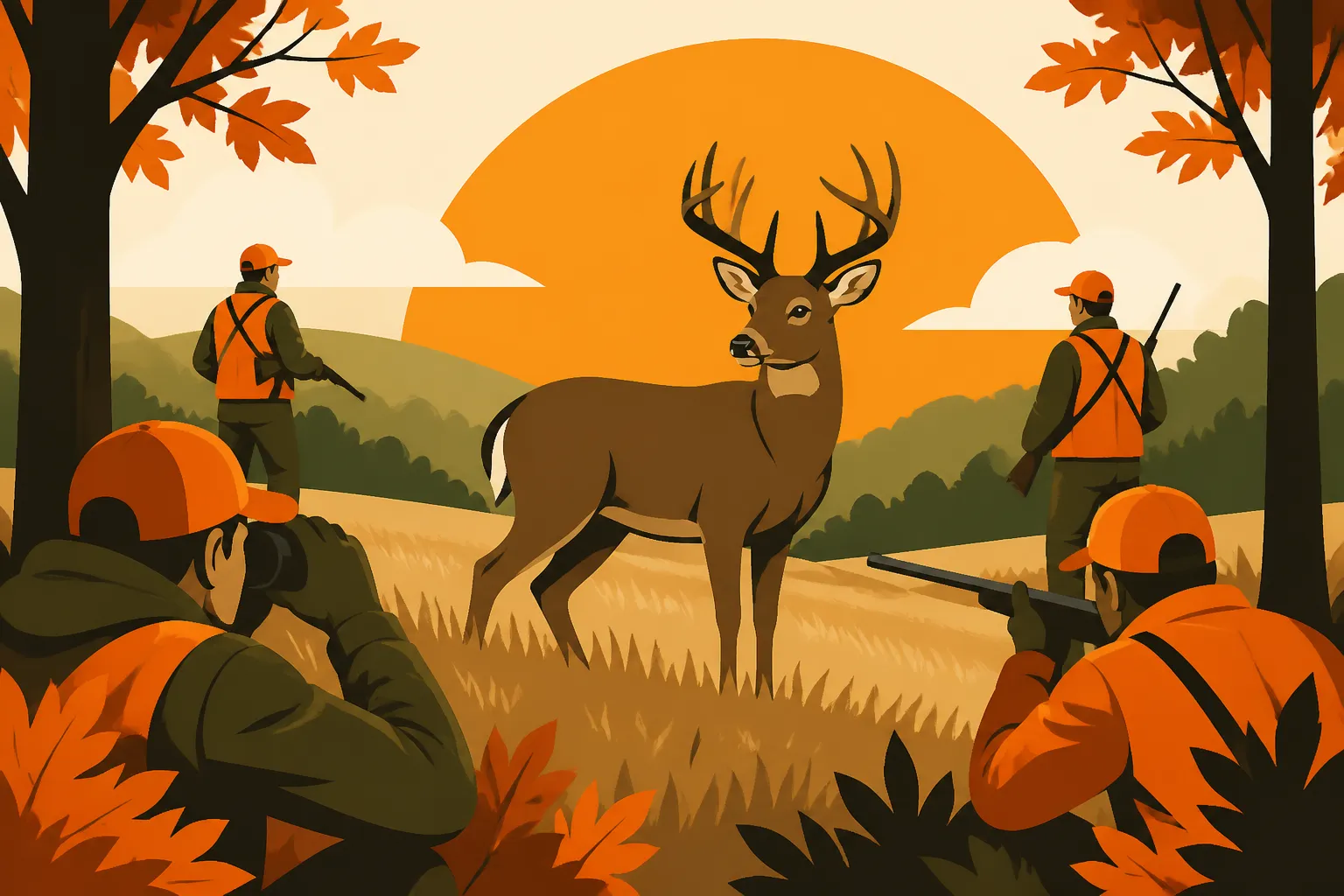
Conducting a deer drive with a limited number of hunters — say, three or four — requires a slightly different mindset and strategy compared to the large, sweeping drives often seen in bigger hunting camps. You're not going to push deer across vast tracts of land. Instead, the focus shifts to precision, understanding deer behavior in smaller pockets of cover, and using terrain to your advantage. This approach often leads to higher quality, safer hunts where every participant feels more engaged.
With fewer people, communication becomes even more critical. You can't rely on sheer numbers to move deer; you need intelligent movement and strategic positioning. The goal isn't to blast every deer out of a section, but to subtly or decisively nudge deer past strategically placed standers who are ready for a shot. This method can be surprisingly effective in areas with smaller woodlots, thick creek bottoms, or brushy fencerows, common features across much of Illinois's hunting landscape. The key is to think like a deer and anticipate its escape routes, which are often dictated by the cover available and the hunting pressure it has experienced.
Strategic Planning for a Successful Three- or Four-Man Drive
Planning is paramount when your numbers are limited. You can't afford wasted effort or missteps. Every hunter needs to know their role, their boundaries, and the anticipated movement of deer. This meticulous preparation is what turns a hopeful walk through the woods into a productive deer drive.
Scouting the Terrain and Deer Movement
Before you even think about stepping into the woods on hunt day, extensive scouting is non-negotiable. With only three or four hunters, you need to identify smaller, manageable pockets of cover where deer are likely bedding or holding tight. Think thickets, brushy draws, isolated patches of timber in agricultural fields, or dense creek bottom areas. Look for fresh tracks, rub lines, and scrape lines that indicate recent deer activity and preferred travel corridors. Pay close attention to how deer might escape these areas when pressured; they'll often follow the path of least resistance or skirt the edges of cover.
Tools like the GoHunt mapping app can be invaluable here. You can identify property lines, topographic features, and different types of cover from the comfort of your home, then verify these details on the ground. Understanding the lay of the land, including subtle elevation changes and natural funnels, will allow you to predict where deer are likely to bolt. Knowing where to focus your efforts means you won't be wasting precious time and energy pushing empty woods. Consider how deer might move when you are Scouting Illinois Public Land Before Season, even on those smaller, overlooked parcels. For hunters venturing into more rugged southern Illinois, learning to interpret Reading Aerial Photos for Southern Illinois Deer can reveal hidden draws and saddles perfect for small-group drives.
Mapping Your Drive and Positioning Hunters
Once you've identified a prime piece of cover, it's time to map out your drive. This involves clearly defining the starting point, the driving path, and the precise locations for your standers. For a three- or four-person drive, you'll typically have one or two drivers and two or three standers.
- Standers: Your standers need to be positioned along anticipated escape routes, ideally where they have good visibility and clear shooting lanes. Think about natural funnels, pinch points, and the edges of heavy cover. Placing a stander overlooking a logging road or a narrow strip of timber connecting two larger woodlots can be incredibly effective. Sometimes, having a stander use a Using a Ground Blind on Illinois Public Land for concealment can make a huge difference, especially in open country or on public land where deer are wary. Remember, the goal is for deer to walk past the stander, not to bust them out wide. Using features like a natural Hunting a Funnel Between Two Woodlots can make your standers incredibly effective. The GoHunt app can help you mark these precise stander locations, ensuring everyone knows where to be.
- Drivers: The driver(s) will initiate the push. Their route should be planned to cover the chosen pocket of cover thoroughly, moving deer towards the standers. The pace of the drive is crucial: too fast, and deer will burst out wildly, potentially avoiding standers; too slow, and they might simply sneak out behind you or circle back. A deliberate, steady pace, making enough noise to encourage movement without panicking the deer, is often best.
The GoHunt app is excellent for drawing out these routes, marking stander positions, and sharing the plan with your group. Everyone needs to understand the plan thoroughly before anyone moves. A brief, in-person huddle before starting ensures everyone is on the same page for Deer Drives With Three or Four Hunters.
The Role of Wind and Thermals
Ignoring wind direction and thermals is a sure-fire way to spook deer before the drive even begins. Deer rely heavily on their sense of smell, so planning your drive with the wind in mind is critical for success.
- For Standers: Standers should always be positioned downwind of the anticipated deer movement. This way, any deer moving toward them won't scent them prematurely. If the wind is swirling or unpredictable, choose positions that offer the best cover and multiple potential shooting lanes, allowing you to react if a deer comes from an unexpected direction. Understanding Wind and Thermals on a Southern Illinois Ridge can be a game-changer, as these natural air currents often dictate deer movement patterns.
- For Drivers: Drivers ideally want a crosswind or even a quartering headwind. This helps them push deer forward without immediately giving away their presence to deer far ahead. A strong tailwind can push your scent too far ahead, alarming deer before you even get close. Always check the current conditions and adjust your plans. Sometimes, a planned drive needs to be completely rethought if the wind shifts drastically on the day of the hunt.
Executing the Small-Group Drive with Precision
With the plan in place, the execution phase is where all your preparation comes to life. This isn't about chaos; it's about controlled movement and keen observation from every member of the team.
Driver Tactics and Pace
The driver, or drivers, are responsible for systematically moving through the chosen cover. The key here is not to charge through like a bulldozer, but to move purposefully, making enough noise to make deer uncomfortable and encourage them to move.
- Pace: A slow, steady pace is generally more effective than a fast one. This allows deer to get up and move, often walking rather than running, which gives standers a better opportunity for a clean shot. If you rush, deer might simply dart out unpredictably or circle back behind you. Think of it as nudging, not stampeding.
- Noise and Pattern: Drivers should walk naturally, perhaps pausing briefly, kicking brush, or occasionally tapping a tree with a stick. Don't be too consistent; varying your noise and pace can make deer nervous and unsure of your exact position, compelling them to move. Focus on pushing through the thickest cover where deer are most likely to be bedded.
- Staying in Line: If you have two drivers, maintain a visual or auditory connection. You don't want to get too far apart, leaving gaps for deer to slip through, nor do you want to converge too quickly and push deer out the sides. A consistent line across the cover is ideal for maximizing coverage, especially when doing Deer Drives With Three or Four Hunters.
Stander Positioning and Readiness
The standers are the critical element of the drive, as they are the ones who will have the opportunity to take a shot. Their role demands patience, quietness, and a deep understanding of their assigned shooting zones.
- Concealment and Silence: Standers must be in position well before the drive begins, ideally 15-30 minutes early, allowing the woods to settle. Choose a spot that offers good cover and a clear view of where deer are expected to emerge. Remain absolutely silent and still. Deer often approach cautiously, stopping to listen and look. Any sudden movement or noise can spoil the entire drive. A well-placed tree stand can provide an elevated perspective and help hide your outline against the sky, as often discussed when considering Treestand Setups in Shawnee National Forest.
- Defining Shooting Lanes: Before the drive, each stander must identify their safe shooting lanes. This is crucial for safety, especially with multiple hunters. Know your zone and only take shots at deer within that zone, ensuring no other hunter or a dwelling is in the line of fire. Communication with your group via two-way radio (on a low volume or with earpieces) can confirm driver progress and deer movement. For example, when Posting a Drive Around a Woodlot, precise communication about stander locations prevents cross-fire scenarios.
- Anticipating Deer: Don't just stare straight ahead. Scan your entire area, paying attention to sounds and subtle movements. Deer might try to sneak out, or they might come trotting. Be ready for both. If a deer appears, let it get into your shooting lane and settle down if possible, giving you the best chance for an ethical shot.
Post-Shot Procedures and Retrieval
Once a shot is taken, the drive typically ends, or at least pauses. Immediate communication is vital.
- Communication: The stander who took the shot should immediately alert the other hunters to prevent further driving and ensure safety.
- Tracking and Recovery: If a deer is hit, make sure to give it adequate time before tracking, unless you're certain of a clean kill or saw it fall. A wounded deer pushed too soon can travel a long way. After waiting, all members of the party can assist in tracking. Having everyone help with Tracking a Deer in Fresh Illinois Snow or through thick brush increases the chances of recovery. This is a crucial ethical responsibility for all hunters.
| Role | Number (3-4 Hunters) | Primary Responsibility | Key Considerations |
|---|---|---|---|
| Driver | 1-2 | Systematically move deer out of cover | Pace, noise level, staying in line, knowing boundaries |
| Stander | 2-3 | Be concealed, silent, ready for ethical shot | Wind direction, shooting lanes, anticipated deer movement |
Safety, Ethics, and Best Practices for Small Drives
Deer drives, even small ones, inherently involve moving hunters and moving deer, which means safety must be the absolute top priority. Beyond safety, ethical considerations ensure a responsible and respectful hunt.
Adhering to Blaze Orange Requirements
In Illinois, during firearm deer seasons, all hunters are required to wear specific amounts of solid blaze orange or blaze pink outerwear. This isn't just a rule; it's a lifesaver. Each stander and driver must be clearly visible to all other members of the hunting party, and to any other hunters who might be in the area. Ensure your group is fully compliant with Illinois Blaze Orange Requirements before stepping into the field. This helps identify each other and prevents tragic accidents.
Always assume that any movement in the woods could be another hunter until you can positively identify it. Never, under any circumstances, take a shot at sound or movement alone. Positively identify your target and ensure you have a safe backdrop.
Clear Communication and Boundaries
Before the hunt, hold a detailed pre-hunt briefing. Every hunter should know the following:
- Their exact role: Driver or stander.
- Their starting and ending points.
- Their planned route (if driving).
- Their assigned shooting lanes and safe zones of fire (if standing).
- Emergency contact procedures.
- Distress signals (e.g., three quick whistles for help).
Using two-way radios can be incredibly helpful for maintaining communication during the drive, especially if the terrain makes visual contact difficult. This allows drivers to update standers on their progress and for standers to report deer movement or shots taken. However, keep the volume low to avoid spooking deer. The GoHunt app's shared mapping feature is also invaluable for everyone to see the plan in real-time, reducing confusion about property lines and safe zones, which is particularly important when conducting Deer Drives on Illinois Public Land or on new private ground.
Respecting Private Property and Landowner Relations
Many excellent deer drive opportunities exist on private land, especially smaller woodlots adjacent to crop fields. If you are hunting private property, ensure you have explicit permission from the landowner. Understand the exact boundaries of the property you are allowed to hunt. Never trespass to retrieve a deer without first contacting the landowner; this is not only illegal but can severely damage hunter-landowner relations for everyone. Always leave gates as you found them, pick up any trash, and show respect for the property. These small courtesies go a long way in securing future hunting opportunities. Illinois has specific laws regarding Illinois Trespass and Permission Law that all hunters should be aware of.
Ethical Shot Placement and Game Recovery
The goal of any hunt is a quick, humane kill. This means taking ethical shots at vital areas only. If you're not confident in your shot, hold off. It's better to let a deer walk than to wound it. As mentioned before, after a shot, give the deer time. If you suspect a gut shot, waiting 6-8 hours, or even overnight if conditions allow (e.g., cold weather), drastically improves your chances of recovery. Blood Trailing After Dark in Illinois can be challenging, but with headlamps and a methodical approach, it's often possible.
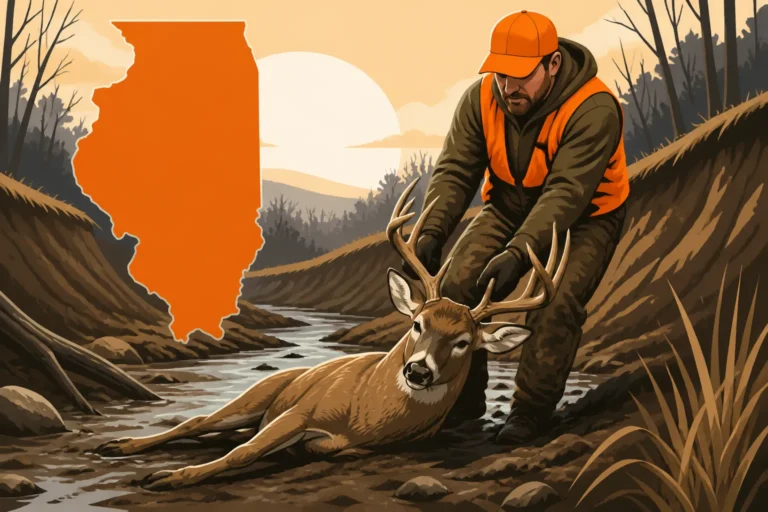
The collective effort of a small hunting party shines during game recovery. Having multiple sets of eyes following a blood trail, even a sparse one, increases the likelihood of finding the animal. Once recovered, proper field dressing is essential, especially if the weather is warm. Knowing how to efficiently Field Dressing a Deer in Cold Weather can help preserve the meat quality. Sharing the workload of dragging a deer out of thick cover or a river bottom also makes the task much more manageable. The camaraderie built through a successful, ethical hunt with a small group of friends is truly a reward in itself.
Disclaimer
The information provided in this guide is for educational purposes only and is not a substitute for official regulations. Always consult the latest Illinois Department of Natural Resources (IDNR) hunting regulations and local ordinances before engaging in any hunting activities. Hunting involves inherent risks; always prioritize safety and ethical practices in the field.