Trapping Illinois Feral Hogs
Feral hogs represent a growing, destructive force across parts of Illinois, laying waste to agricultural fields, timber stands, and delicate ecosystems with their relentless rooting and foraging. If you're a landowner, farmer, or conservation-minded individual battling these invasive animals, you know the frustration of seeing your efforts undermined. This comprehensive guide will walk you through the most effective trapping strategies, equipment, and legal considerations to help you manage and remove feral hog populations from your property.
Understanding the Feral Hog Problem in Illinois
When you see the devastation left behind by a sounder of feral hogs, it's easy to feel overwhelmed. These aren't just nuisance animals; they're an ecological and economic disaster in the making, and understanding their impact and behavior is the first step toward effective management. You might wonder how they even got such a foothold here, but unfortunately, their adaptability and rapid reproduction rate mean they can establish themselves quickly.
The Damage Feral Hogs Inflict
The term "damage" doesn't even begin to cover it. Feral hogs are environmental wrecking balls. Their incessant rooting behavior, where they use their strong snouts to dig up soil in search of roots, tubers, and insects, can completely destroy pastures, cultivated fields, and delicate wetlands in a single night. This isn't just cosmetic; it can lead to significant crop loss for farmers and severe erosion issues in sensitive areas, polluting waterways and harming aquatic life. We're talking about thousands of dollars in repairs and lost revenue for some agricultural operations.
Beyond the physical destruction of habitat and crops, feral hogs also pose a serious threat to native wildlife and livestock. They compete directly with deer, turkeys, and other game animals for food sources, depleting the very forage that supports Illinois's cherished native populations. Even worse, they are opportunistic predators, known to prey on ground-nesting birds like turkeys and quail, fawns, and even young livestock. This direct predation, combined with habitat destruction, puts immense pressure on our native ecosystems.
Then there's the unseen threat: disease. Feral hogs are notorious carriers of diseases that can easily transmit to domestic livestock and even humans. Swine brucellosis, pseudorabies, leptospirosis, and E. coli are just a few examples of the pathogens they carry. This creates a constant bioseosecurity risk for local hog farms, cattle operations, and even family pets. It’s a constant worry for those living in areas where these animals roam, making their removal not just about protecting property, but public health too.
Where Feral Hogs Are Most Prevalent in Illinois
While feral hogs aren't as widespread across Illinois as in some Southern states, their presence is definitely felt in specific regions. Historically, sightings and confirmed populations have been concentrated in the southern and western parts of the state. Counties like Union, Alexander, Johnson, and Gallatin in Southern Illinois, along with others further west like Calhoun and Pike, have reported consistent activity. These areas often feature a mix of dense timber, river bottomlands, and agricultural fields, providing ideal habitat for hogs to thrive and expand their numbers.
The topography of these regions plays a huge role. River bottoms, with their thick cover and abundant food sources like acorns, roots, and insects, act as natural highways and sanctuaries for hogs. The sprawling forests, particularly within areas like Shawnee National Forest, provide excellent bedding and farrowing cover, making it incredibly difficult to pinpoint and eradicate sounders. Understanding that these are often localized, but deeply entrenched, populations is key to developing an effective trapping plan. You can find more details on current hot spots by researching Feral Swine Sightings in Southern Illinois.
It's also worth noting that while these are the main problem areas, transient individuals or smaller groups can pop up almost anywhere. They are highly mobile creatures, and a single sounder can cover significant ground in a short period. This means even if your property isn't in a historically high-density county, staying vigilant for signs of their presence is crucial. The earlier you detect and act on a new sounder, the easier it will be to eradicate them before they establish a breeding population.
Social Structure and Behavior of Hog Sounders
Feral hogs are highly social animals, typically living in family groups called "sounders." These sounders usually consist of a sow and her offspring, along with several other sows and their young. Mature boars often travel alone or in smaller bachelor groups but will join sounders during breeding season. Understanding this social dynamic is absolutely critical to successful trapping. If you only catch a few individuals, the rest of the sounder will quickly learn to avoid your traps, making future efforts much harder.
A typical sounder can range from a handful of animals to upwards of 30 or more, especially in areas with abundant food and cover. Their daily routine often involves feeding during the cooler parts of the day or night, bedding down in thick cover during warmer hours, and traveling between these areas. They are highly intelligent and adaptable, quickly learning to associate certain sights, sounds, or smells with danger. This intelligence is why simply throwing out a small box trap often results in catching one or two young pigs and educating the rest.
Their reproductive capacity is truly astounding. Sows can become sexually mature as early as 6 months of age and can have multiple litters per year, with each litter averaging 4-12 piglets. This means a small initial sounder can explode into a significant population in a very short amount of time, making proactive and persistent trapping efforts absolutely essential. This rapid breeding cycle is a primary reason How Wild Hogs Spread Across Illinois so quickly and why they are such a challenge to control.
Legal Framework and Regulations for Trapping Hogs
Before you even think about setting a trap, you need to be crystal clear on the legalities. Illinois has a distinct approach to feral hog management, primarily because they are considered an invasive, non-native species. Missteps here can lead to fines or other penalties, so understanding the rules is paramount for any trapper.
Illinois's "Unprotected" Status for Hogs
One of the most important things to know is that in Illinois, feral hogs are classified as "unprotected" species. This means they are not considered game animals and can be legally hunted or trapped year-round, day or night, without a permit on private land, provided you have landowner permission. This designation reflects the state's aggressive stance against their spread and the recognition of the severe ecological and agricultural damage they cause. You don't need a hunting license or a special hog permit to pursue them on private property. This is a crucial difference from hunting deer or turkey, where specific seasons, permits, and weapon restrictions apply.
However, "unprotected" doesn't mean "unregulated." While the pursuit itself is less restricted, you still have to adhere to general firearm safety laws, trespass laws, and local ordinances. For instance, discharging a firearm too close to a dwelling or public road could still be illegal, regardless of the target. Always confirm that your method of dispatch aligns with local rules and prioritizes public safety. The primary goal is removal, and the IDNR wants to empower landowners to do so effectively and safely.
The "unprotected" status also means there's no bag limit or possession limit, and you don't need to report a harvest to the state. This is a distinct advantage for trappers focused on complete sounder removal, as it eliminates bureaucratic hurdles that often complicate efforts with other species. This flexibility is what allows for persistent, year-round trapping programs, unlike the strict seasons for other game. For more on this, check out Why Illinois Treats Hogs as Unprotected.
Restrictions on Public vs. Private Land
While private land trapping offers a lot of flexibility, public land is a different ballgame entirely. On most Illinois Department of Natural Resources (IDNR) managed properties, state parks, fish and wildlife areas, and even federal lands like parts of the Shawnee National Forest, there are usually specific regulations or outright prohibitions on trapping feral hogs. Some public lands might have designated control programs where state agencies or authorized personnel conduct trapping, but individual citizens generally cannot set traps on public ground.
The reasoning behind this is multifaceted. Public safety is a major concern, as traps can pose a hazard to other users like hikers, campers, or birdwatchers. Additionally, many public lands are managed for a variety of wildlife, and indiscriminate trapping could unintentionally harm non-target species. Furthermore, effective hog management on public land often requires a coordinated, scientific approach that might conflict with individual trapping efforts. Therefore, if you suspect hog activity on public land, your best bet is to contact the managing agency (IDNR, US Forest Service, etc.) to report it and inquire about their specific control programs.
For private land, the rules are much simpler: you need permission. Always obtain clear, explicit permission from the landowner before accessing their property or setting any traps. This isn't just common courtesy; it's a legal requirement. Verbal permission is often sufficient, but for any long-term or extensive trapping operation, a written agreement can save a lot of headaches down the road. This document should ideally outline the scope of the activity, duration, and any specific expectations from both parties. Remember, even though hogs are "unprotected," trespassing laws still fully apply.
Permitting and Reporting Considerations
For trapping feral hogs in Illinois, there's typically no specific permit required for individual landowners or those with landowner permission on private land. This is a significant advantage, as it streamlines the process and encourages immediate action against these destructive animals. You don't need a trapper's license or a special hog permit, unlike trapping furbearers or other game. This reflects the state's emergency approach to feral swine control.
While no permit is generally needed, it's always a good idea to stay informed about any potential changes in regulations. The IDNR website is your authoritative source for the most current rules. Sometimes, if you're participating in a larger, coordinated control effort, there might be specific guidelines or reporting requirements from the organizing body. But for standard private land trapping, the system is designed to be as unencumbered as possible.
However, if you're considering commercial trapping services or using methods that might fall under different categories (e.g., certain types of snares that could also catch furbearers), you might need to investigate further. Generally, if your intent and method are clearly focused on feral swine eradication, you're usually in the clear. Still, a quick call to your local IDNR office can offer peace of mind and clarify any unique situations you might encounter. Staying informed about Illinois Feral Hog Regulations is key.
Essential Trapping Equipment and Setup
Effective feral hog trapping isn't just about setting a single trap and hoping for the best. It requires the right equipment, strategic baiting, and smart monitoring. These components work together to ensure you're not just catching a few stragglers, but entire sounders, which is the only way to truly impact their population.
Types of Traps: Corrals, Snares, and Box Traps
Choosing the right trap is fundamental to your success. Each type has its advantages and disadvantages, and the best choice often depends on the size of the sounder, the terrain, and your resources.
-
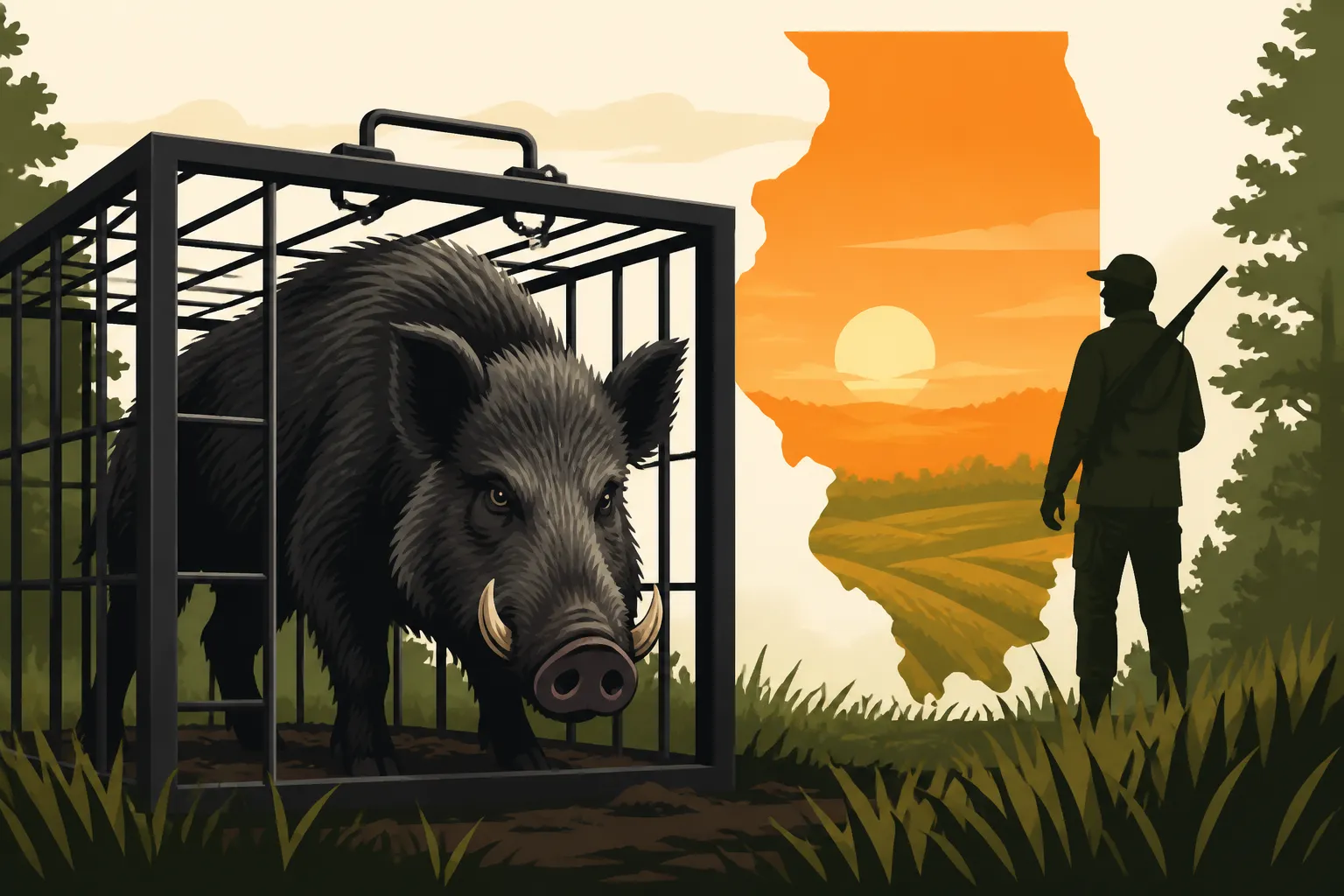
Corral Traps: These are, hands down, the most effective method for removing entire sounders. A corral trap is a large, circular or square enclosure made of heavy-duty hog panels (typically 4-6 feet high), with a specialized gate that allows hogs to enter but prevents them from leaving. The size can vary, but a 20-foot diameter circle is a common starting point. The advantage here is scale; you can bait a large area within the enclosure for days or weeks, allowing the entire sounder to habituate to feeding inside before the gate is finally set. These traps require an initial investment in materials and some effort to build, but their efficiency in catching multiple hogs at once makes them invaluable for serious eradication efforts. Look for designs that allow for remote activation, often through cellular game cameras or trip wires, to ensure the gate only drops when the maximum number of hogs are inside.
-
Box Traps: These are smaller, single-entry traps, typically constructed from heavy-gauge wire or cattle panels, designed to catch one or two hogs at a time. While easier to deploy and move than corral traps, their limited capacity makes them less efficient for sounder removal. Hogs are smart; if you catch a few juveniles in a box trap, the older, wiser individuals will quickly become trap-shy, making them incredibly difficult to catch later. Box traps are best suited for catching a single, known problem hog, or for smaller, isolated populations where a full sounder isn't present. They're also often used for "nuisance" animals in areas where larger corrals aren't feasible or permitted.
-
Snares: Snares are thin wire loops designed to tighten around an animal's neck or leg. While effective in certain scenarios, snares are controversial due to their non-selective nature and potential for injuring or killing non-target animals. In Illinois, while legal for feral hogs on private land with permission, their use comes with significant ethical and practical considerations. They require careful placement to avoid catching deer, domestic animals, or even humans. They also don't allow for the capture of an entire sounder alive, making them less efficient for comprehensive eradication and more suited for targeting specific travel corridors or individual hogs. If you choose to use snares, research proper deployment techniques thoroughly to ensure humaneness and minimize non-target catches, and check local regulations, as some municipalities might have restrictions.
Baiting Strategies for Maximum Attraction
Once you have your trap, the next critical component is bait. Feral hogs have an incredible sense of smell and are opportunistic eaters, making them highly susceptible to well-placed, attractive bait. The goal isn't just to put food out, but to create a consistent, irresistible food source that habituates them to the trapping area.
-
Fermented Corn: This is the gold standard for hog bait. The fermentation process creates a strong, sour smell that hogs find incredibly appealing, and they can smell it from a long distance. To prepare, simply soak shelled corn in water for several days, preferably in a sealable container like a 5-gallon bucket, allowing it to ferment. Adding a packet of yeast, a can of beer, or a bit of overripe fruit can speed up the process and enhance the smell. The stronger and smellier, the better. Spread this fermented corn liberally in and around your chosen trap site.
-
Other Attractive Baits: While fermented corn is king, you can also augment it with other items. Overripe fruits and vegetables like apples, cantaloupe, or sweet potatoes are excellent additions, especially if crushed to release more scent. Sweet treats like molasses, corn syrup, or even flavored gelatin powder can also be mixed with corn to boost its appeal. Some trappers also use commercial hog attractants that mimic natural pheromones or provide extremely potent scents, but often, good old fermented corn is all you need.
-
Consistency is Key: The most important aspect of baiting is consistency and volume. You want to create a reliable food source that hogs come to depend on. Don't just throw out a handful of corn; put out enough to last them a few nights, especially during the pre-baiting phase. Refresh the bait regularly, ideally every 2-3 days, to keep the scent fresh and the supply steady. The goal is to build their confidence in the feeding site before you ever set the trap. Remember, the hogs need to feel safe and secure while feeding in your designated trap location.
Monitoring and Surveillance Tools
You can't effectively trap what you can't see, and modern technology has made monitoring easier than ever. Surveillance is crucial for understanding hog behavior, identifying sounder size, and timing your trap sets perfectly.
-
Trail Cameras: These are indispensable tools for feral hog trapping. Place several trail cameras around your bait site and potential trap location. They will confirm the presence of hogs, show you the number of animals in the sounder, their age class, and their typical feeding times. Crucially, they also allow you to see if the entire sounder is confidently entering the pre-bait area before you decide to set your trap. Look for cameras with good night vision and a fast trigger speed. Cellular trail cameras are even better, sending photos directly to your phone, saving you countless trips to check cards. Brands like Moultrie, Bushnell, and Browning offer excellent options, and checking their activity remotely through an app can be integrated with tools like the GoHunt platform for comprehensive land management.
-
Remote Trap Triggers: For corral traps especially, remote trigger systems are a game-changer. These systems often integrate with cellular trail cameras. Once your camera confirms that the entire sounder, including the elusive matriarch sows, is confidently inside the trap feeding, you can send a signal from your phone to drop the gate. This eliminates the need to be physically present and reduces the risk of spooking hogs. Traditional trip-wire mechanisms are also used, but they are less precise and don't guarantee that every hog is inside before the gate falls.
-
Regular Site Visits (Carefully): While technology helps, occasional, careful site visits are still important. Check for fresh rooting, tracks, and droppings to confirm activity and gauge hog numbers. When visiting, try to do so during the middle of the day when hogs are typically bedded down, and always approach from downwind to minimize spreading human scent. Avoid making loud noises or leaving anything that might spook the hogs. Your goal is to be as invisible as possible, letting them continue to feel secure in their feeding routine.
Effective Trapping Strategies and Best Practices
Trapping feral hogs is an art as much as a science. It requires patience, observation, and a willingness to adapt. Just setting a trap isn't enough; you need to outsmart these intelligent, wary animals.
Pre-Baiting and Conditioned Behavior
This is perhaps the most critical step in successful hog trapping, especially with corral traps. Pre-baiting means consistently feeding hogs in your chosen trap location for an extended period before you ever activate the trap. The goal is to condition the entire sounder to confidently and regularly enter the trap enclosure to feed. Think of it as building trust.
Start by scattering bait (fermented corn is best) in a wide pattern around the proposed trap site, then gradually move it closer to and eventually inside the trap enclosure. Leave the trap gate wide open or even removed during this phase. Use your trail cameras to monitor their activity. You want to see every hog in the sounder, especially the older, more cautious sows, entering the enclosure and feeding without hesitation. This might take days, weeks, or even a couple of months, depending on how trap-shy the hogs are. Patience here is absolutely paramount. Rushing this step is the number one reason trappers fail to catch entire sounders, as the matriarchs will detect danger and keep the group away.
Once the sounder is consistently entering the open trap and feeding confidently, that's your cue. Only then should you consider setting the trap or activating your remote trigger. This methodical approach significantly increases your chances of capturing the entire sounder, which is essential for true population control. Remember, you're not just trying to catch a hog; you're trying to catch all the hogs.
Trap Placement and Funneling Techniques
Where you place your trap is almost as important as the trap itself. Hogs prefer areas with thick cover, access to water, and established travel corridors.
-
Identify Travel Corridors: Look for natural funnels like creek bottoms, fencerows, timber edges, or drainages that hogs habitually use to move between bedding areas and feeding sites. These are prime locations for your trap. Fresh tracks, rooted areas, and rub marks on trees will indicate these travel routes. Hogs are creatures of habit, and placing your trap where they already feel comfortable moving will significantly increase your odds. Consider using a mapping tool like GoHunt or an app from the Illinois DNR to scout aerial photos and identify these natural pinch points.
-
Proximity to Resources: Hogs need water and dense cover. Positioning your trap near a reliable water source (creek, pond, swampy area) and adjacent to thick bedding cover (cedar thickets, dense brush, fallen timber) makes the area more attractive. They'll feel secure approaching the bait knowing refuge is nearby. However, avoid placing the trap directly in their bedding area, as this might make them too wary. A good balance is often an edge habitat – where cover meets a food source or travel route.
-
Building Natural Funnels: You can enhance natural travel corridors by creating artificial funnels that guide hogs directly into your trap. Use downed timber, brush piles, or even temporary fencing to create "wings" leading into the trap entrance. This subtly directs their movement and makes it easier for them to discover the bait and eventually the trap opening. The goal is to make entering the trap feel like the path of least resistance.
Setting the Trap for the Entire Sounder
This is the moment of truth. After weeks of pre-baiting and observation, you're ready to set the trap. The primary objective is to capture the entire sounder at once.
-
Remote Activation is Best: For corral traps, a remote-activated trigger system linked to your cellular trail cameras is ideal. Wait until your camera feed confirms that every hog in the sounder, including the wary older sows and boars, is inside the trap enclosure and actively feeding. Then, and only then, trigger the gate from a distance. This method maximizes your catch and minimizes the chance of educating some hogs while others escape. It's a game of patience and precision.
-
Manual Trigger with Caution: If a remote system isn't feasible, you'll need a reliable manual trigger, often a trip wire or root stick mechanism. This requires the hogs to physically activate the gate themselves. While effective, it carries the risk of some hogs entering, triggering the trap, and others escaping before they can get in. To mitigate this, ensure your baiting has created such high confidence that hogs are practically stampeding into the trap. Some trappers even use a two-stage trigger, where an initial light trigger allows for smaller hogs to enter, and a heavier trigger for the larger, more cautious ones.
-
Post-Capture Plan: Once the trap is sprung and you have hogs contained, approach the trap cautiously. Hogs, especially boars, can be incredibly dangerous when cornered. Have a clear, safe plan for dispatching them and know your methods for dealing with trapped hogs. This isn't a task to be taken lightly; safety for yourself and any assistants should be your top priority. Ensure you have the right firearms and training for a quick, humane dispatch.
Dealing with Trapped Hogs and Carcass Disposal
Capturing feral hogs is only half the battle. What you do next—how you dispatch them and dispose of the carcasses—is equally important for both safety and preventing the spread of disease. This is a serious undertaking that requires respect for the animals and the environment.
Euthanasia Methods and Safety
Approaching a trap full of live feral hogs can be extremely dangerous. These animals are powerful, can be aggressive when threatened, and possess sharp tusks that can cause serious injury. Your safety and the humane dispatch of the animals are the top priorities.
-
Firearms: The most common and recommended method for dispatching trapped hogs is with a firearm. A small-caliber rifle, such as a .22LR, or a handgun in a larger caliber, is often sufficient for headshots at close range within the trap. The key is shot placement: aim for the brain, located between the eyes and ears, to ensure a swift and humane kill. A single, well-placed shot is crucial. Make sure you are comfortable and proficient with your chosen firearm and always follow basic firearm safety rules: treat every gun as loaded, never point it at anything you are not willing to destroy, keep your finger off the trigger until ready to shoot, and know your target and what's beyond it.
-
Safety Protocols: Never enter the trap with live hogs unless absolutely necessary and only if you have a clear escape route and multiple experienced individuals present. Always shoot from outside the trap enclosure if possible. Wear appropriate protective gear, including sturdy boots and hearing protection. Be aware that hogs might thrash around after being shot, so maintain a safe distance. If you're working with others, clearly communicate your actions and ensure everyone is aware of their surroundings and any potential dangers. The unpredictable nature of trapped hogs means caution is never overkill.
-
Humane Dispatch: The goal is to minimize suffering. A quick, clean kill is not just ethical, but it also reduces stress on the animal and potential danger to the handler. If you're unsure about shot placement, consult resources from wildlife agencies or experienced trappers. Practicing with your firearm at a range will build confidence and proficiency, ensuring you can make precise shots under pressure. This is a responsibility you take on when you decide to trap.
Carcass Disposal and Disease Prevention
Proper carcass disposal is paramount to prevent the spread of diseases carried by feral hogs and to avoid attracting other scavengers. You can't just leave them where they lie.
-
Burial: Deep burial is often the preferred method on private land. Carcasses should be buried at least 3-4 feet deep to prevent scavengers from digging them up and to minimize disease transmission. Choose a site away from water sources and residential areas. Covering the carcass with a layer of lime or disinfectant before backfilling can also aid decomposition and prevent odor. Ensure the burial site doesn't interfere with drainage or utility lines.
-
Rendering/Incineration: In some areas, commercial rendering facilities might accept hog carcasses, especially if you have a large number. This is an excellent option for disease control as it completely destroys pathogens. Incineration, if done properly and legally, is another effective method, but often requires specialized equipment and permits, and may not be feasible for individual trappers. Always check local regulations regarding open burning or incinerator use.
-
Disease Watch: Be vigilant for signs of disease in any trapped hog. Lesions, abnormal growths, emaciation, or unusual behavior could indicate a health issue. If you suspect a disease like swine brucellosis or pseudorabies, contact the Illinois Department of Agriculture or your local veterinarian for guidance. They can advise on proper sampling and disposal procedures to prevent further spread. The risk of Chronic Wasting Disease in Illinois Deer is a constant concern for deer hunters, and while feral hogs carry different diseases, the principle of vigilance is the same.
Utilizing Trapped Hogs (if legal and safe)
While the primary goal of trapping is removal and population control due to their invasive nature, some trappers consider utilizing the meat. However, this comes with significant caveats and considerations, particularly regarding safety and disease.
-
Meat Safety Concerns: Feral hogs are known carriers of various diseases, some of which are zoonotic (transmissible to humans), such as brucellosis and trichinosis. Consuming meat from a feral hog, especially one from an unknown source or showing signs of illness, carries risks. If you plan to consume the meat, it is crucial to handle it properly, cook it thoroughly (to at least 160-170°F), and take stringent hygiene precautions during field dressing and butchering. Wear gloves, avoid contact with blood and internal organs, and thoroughly clean all tools and surfaces.
-
Processing: If you choose to process the meat, treat it with the utmost care. Get the carcass cooled down quickly, field dress it efficiently, and then process it into cuts. You might consider having it professionally processed by a reputable butcher who is experienced with wild game. They often have the facilities and expertise to handle the meat safely. Remember, the rule of thumb is "when in doubt, throw it out." If a hog appears sick or has unusual lesions, do not consume the meat; dispose of it properly.
-
Legalities of Sale/Donation: In Illinois, generally, the sale of wild game meat is highly regulated and often prohibited. While you can typically harvest and consume feral hogs for personal use on private land, selling the meat usually falls under strict commercial food safety laws and is generally not allowed without specific permits and inspections. Donating meat might also have restrictions, so if you're considering either, always consult the IDNR and Department of Agriculture for current guidelines. The primary focus for feral hogs remains eradication, not commercial utilization.
Advanced Tactics and Continuous Management
Eradicating feral hogs is rarely a one-and-done deal. It's an ongoing battle that requires persistence, adaptation, and often, a collaborative approach. Thinking beyond a single trap set will dramatically improve your long-term success.
Thermal and Night Vision Assisted Trapping
Feral hogs are often nocturnal, especially in areas with human pressure. This makes traditional daytime trapping less effective. Modern thermal and night vision technology can give you a distinct advantage.
-
Nighttime Surveillance: Thermal monoculars or binoculars allow you to easily spot hogs in complete darkness, even through light cover. This is incredibly useful for scouting new areas, confirming their presence, and observing their movements without being detected. You can pinpoint their bedding areas or watch their approach to a bait site from a safe distance. This kind of scouting can significantly reduce the amount of time spent waiting and guessing. Many dedicated hog hunters utilize these tools for Night Hunting Hogs With Lights on Private Land, and the same principles apply to scouting for trapping.
-
Targeted Remote Triggering: If you're using a remote-triggered corral trap, thermal or night vision optics can help you visually confirm that the entire sounder is inside the trap before you hit the button. This adds another layer of certainty beyond what a trail camera might provide, especially if the camera view is partially obscured. Being able to see the full picture in real-time at night ensures you're maximizing your catch.
-
Follow-up Operations: In instances where a few hogs escape a trap or you're dealing with very trap-shy individuals, night hunting with thermal or night vision gear can be an effective follow-up. While outside the scope of trapping, it's a complementary management strategy. Many outfitters offer What a Guided Night Hog Hunt Costs for persistent sounders. This allows you to target those remaining few individuals that have learned to avoid traps, preventing them from re-establishing a population.
Continuous Trapping and Persistence
Feral hog management is a marathon, not a sprint. Even after a successful trap event, remaining individuals or new sounders can move into the area. A continuous, persistent effort is essential to truly control the problem.
-
Adopt a "Zero Tolerance" Mindset: For effective eradication, every single hog must be removed. If even a few individuals, especially a breeding sow, remain, the population will rebound quickly due to their high reproductive rate. This means returning to trap sites, refreshing bait, and monitoring for new activity even after a successful catch. Don't assume the problem is solved just because you caught one sounder.
-
Relocate Traps: Hogs are intelligent and can become wary of a trap in a single location over time. If activity drops off at one site, consider moving your trap to a new area where you've observed fresh signs. This keeps the hogs guessing and prevents them from associating a specific location with danger. Scouting new areas for fresh signs is a continuous process.
-
Year-Round Effort: Since there's no closed season for feral hogs in Illinois, you can trap them year-round. Don't wait until you see significant damage; implement a proactive, continuous trapping program. This might involve setting up a "sentinel" camera in high-risk areas to alert you to new activity as soon as it appears. Staying ahead of the problem is far easier than trying to catch up once a population is established. This continuous effort is why Illinois's Year-Round Hog Rule on Private Land is so important for landowners.
Working with Landowners and Communities
Feral hogs often cross property lines, meaning a problem on your land is likely a problem for your neighbors too. A coordinated, community-wide approach is far more effective than individual efforts.
-
Educate and Collaborate: Reach out to neighboring landowners, explain the problem, and share information on effective trapping strategies. Offer to help them, or suggest pooling resources for larger traps or remote monitoring equipment. A single landowner's efforts can be quickly undone if their neighbor's property serves as a sanctuary for hogs that then re-infest their land. Share resources and knowledge, and consider forming a local "hog task force."
-
Community Trapping Programs: In some areas, local conservation groups or county extension offices might coordinate community-wide trapping programs, offering equipment loans, training, or assistance with carcass disposal. These programs leverage collective resources and knowledge, significantly increasing the chances of regional success. Inquire with your local IDNR office or county extension for information on any existing initiatives.
-
Data Sharing: Share your observations and trapping success data with your neighbors and local wildlife officials. This collective intelligence can help create a more accurate picture of hog distribution and movement patterns, informing future management decisions across a wider area. Tools like GoHunt can sometimes be used to share activity with trusted individuals, aiding in this collaborative effort. Understanding where hogs are moving and when can help everyone predict their next appearance and set traps accordingly.
By combining robust equipment, strategic baiting, vigilant monitoring, and persistent, collaborative effort, you can significantly reduce the impact of feral hogs on your property and contribute to broader conservation goals in Illinois.
| Trap Type | Advantages | Disadvantages | Ideal Scenario |
|---|---|---|---|
| Corral Trap | Catches entire sounders, highly effective | High initial cost, requires transport/setup | Established sounders, long-term eradication |
| Box Trap | Portable, lower cost, easy to set | Catches few hogs, educates sounders | Single nuisance hog, small isolated groups |
| Snares | Low cost, easy to conceal | Non-selective, potential for injury, labor-intensive | Targeting specific travel paths, individual hogs (use with extreme caution) |
Disclaimer
The information provided in this guide is for informational purposes only and is not intended as legal advice. Hunting and trapping regulations can change, and it is the responsibility of the individual to consult the most current Illinois Department of Natural Resources (IDNR) regulations and any local ordinances before engaging in any hunting or trapping activities. Always prioritize safety and ethical practices.