How Wild Hogs Spread Across Illinois
The problem of wild hogs in Illinois is far more complex than a simple nuisance; it's a rapidly escalating ecological and agricultural crisis that leaves landowners and conservationists tearing their hair out. These destructive animals aren't native to our state, yet they've managed to gain a formidable foothold and continue to spread their devastating impact. This guide will delve into the intricate history and mechanisms behind how wild hogs have proliferated across Illinois, examining everything from their initial introduction to the challenges of managing their relentless expansion.
The Initial Introduction and Early Footholds
It's easy to assume wild hogs just magically appeared, but their presence in Illinois, and indeed much of the United States, is a direct result of human actions, both intentional and unintentional, stretching back centuries. Understanding this history is crucial to grasping the enormity of the problem we face today.
Historical Context of Feral Swine in North America
The story of wild hogs, or feral swine, in North America begins with European colonization. Early Spanish explorers introduced domestic pigs to the southeastern United States as a readily available food source. These animals, left to forage freely or simply escaping their enclosures, quickly adapted to the wild, giving rise to the feral populations we know today. Unlike other livestock, pigs are incredibly resilient and capable of fending for themselves. They can survive on a wide variety of foods, reproduce quickly, and thrive in diverse habitats, making the transition to a wild existence remarkably easy. For hundreds of years, these populations remained largely confined to the deep South, slowly expanding their range as conditions allowed.
However, the more recent proliferation across the Midwest, including Illinois, is a different chapter entirely. It's not just a slow, natural creep from historical populations. There's a significant modern component tied to sport hunting and a misunderstanding of the ecological consequences. These new introductions, often involving Eurasian wild boar genetics, have created a more aggressive, resilient, and challenging animal to manage, fundamentally changing the landscape of nuisance wildlife in many states.
Illinois's Unique Entry Points for Hogs
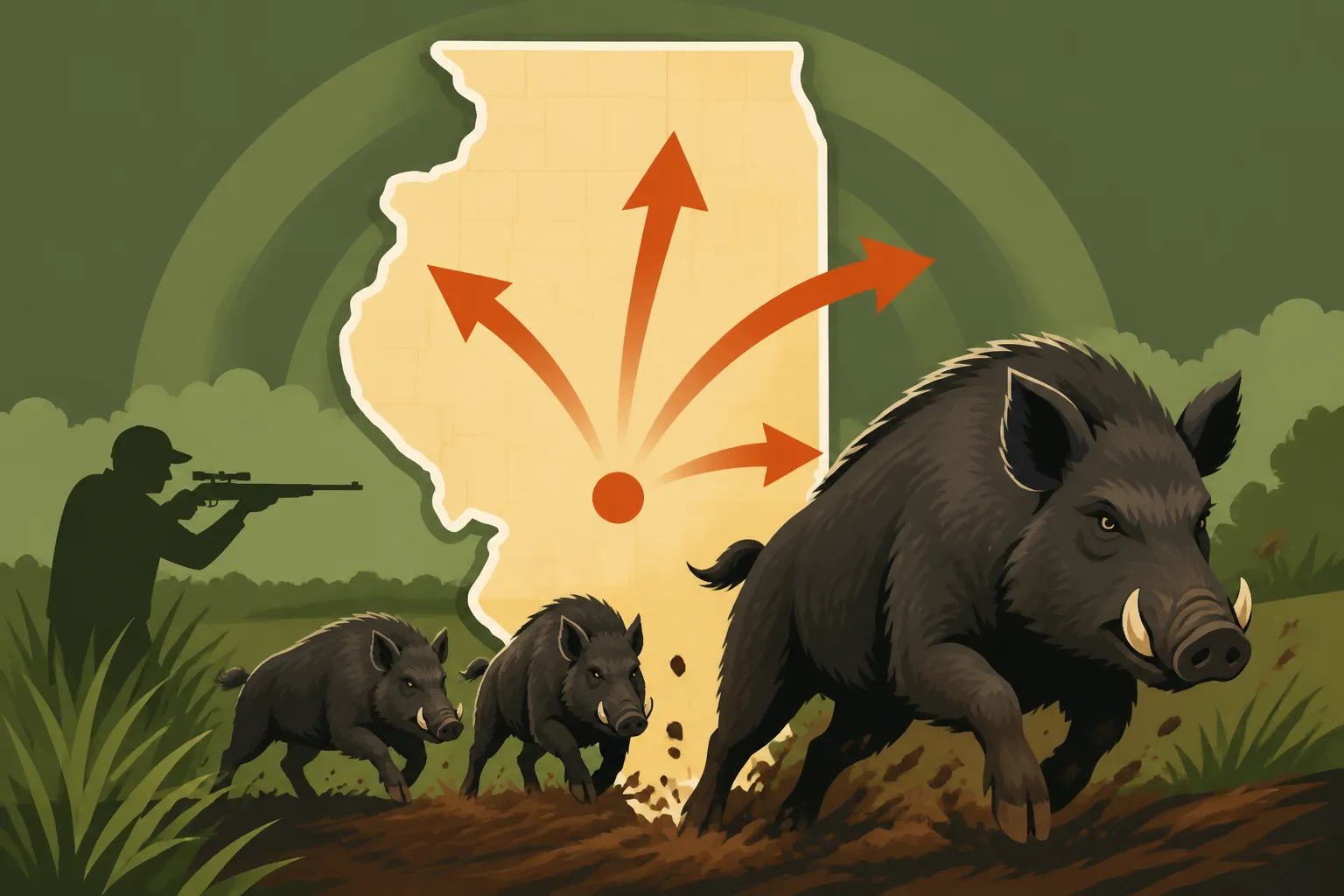
While some parts of the country saw a gradual spread, Illinois experienced a more fragmented and accelerated introduction of feral swine. We weren't simply waiting for them to walk up from Kentucky or Missouri (though that certainly happens along our southern borders). Instead, Illinois faced what's often termed "jump dispersal," where populations suddenly appear in new, unconnected areas. This primarily occurred due to the rise of fenced hunting operations and illegal releases. People, often with good intentions of creating new hunting opportunities or with a complete disregard for the consequences, would release "wild boar" into private lands, sometimes mistakenly believing they wouldn't spread or that they'd be easy to contain.
These early introductions often started as small, isolated pockets. Perhaps a few animals escaped from a high-fence hunting preserve, or a small group was illegally released in a timber block. What seemed like a handful of pigs quickly turned into dozens, then hundreds, as their astounding reproductive capabilities kicked in. These isolated pockets, far from the established southern populations, acted as new epicenters for local spread, making control efforts incredibly difficult as agencies tried to contain multiple, disconnected outbreaks. It's like trying to put out several small fires that keep igniting new ones further down the line.
How Hogs Became Established and Began to Proliferate
Once these animals gain a toehold, their establishment and subsequent population explosion are almost inevitable, thanks to a perfect storm of biological traits and environmental factors. It's a testament to their resilience, but a nightmare for anyone trying to manage them.
The Role of Intentional Release and Escape
Let's be blunt: a major driver of the wild hog problem in Illinois stems directly from human actions. For years, there was a trend, particularly in states without existing wild hog populations, to establish "wild boar" hunting operations. These often involved importing hogs, sometimes with Eurasian wild boar genetics, and releasing them into fenced enclosures for sport hunting. While many of these operations were intended to be secure, pigs are master escape artists. They can root under fences, exploit weak points, and even chew through certain materials. A few determined escapees, or even a single pregnant sow, can quickly establish a new feral population outside the confines of a preserve.
Beyond escapes, there's the even more troubling issue of illegal releases. Some individuals actively captured and transported wild hogs, releasing them into new areas to create hunting opportunities for themselves or others, without any thought for the ecological damage or legal ramifications. This practice, unfortunately, has been a significant factor in accelerating the spread of these animals across states like Illinois. Each new, intentional introduction creates a fresh source population, making containment efforts exponentially harder and more expensive. This selfish act has had, and continues to have, widespread negative consequences for our natural resources and agricultural communities.
Their Incredible Reproductive Prowess
If there's one factor that truly seals the deal on how quickly wild hogs spread, it's their astonishing ability to reproduce. They are, in a word, prolific. Unlike white-tailed deer, which typically have one or two fawns once a year, a wild sow can start breeding as young as six months old. She can then produce two litters of four to twelve piglets each year. Think about that: a single sow could potentially contribute 8 to 24 new piglets to the population annually, and those piglets will be ready to breed within six months. This rapid turnover and high litter size mean that even if you remove a significant number of hogs, the population can rebound incredibly quickly.
This reproductive potential is why eradication or even effective control is such a monumental challenge. It's not enough to just take a few pigs out; you need sustained, intensive removal efforts to even make a dent. If only 70% of a population is removed, the remaining 30% can easily reproduce enough to replenish the numbers, sometimes within a year, creating a seemingly endless cycle of struggle for wildlife managers and landowners. It’s a biological treadmill that makes every management strategy an uphill battle.
Adaptability to Diverse Illinois Landscapes
Another key to their success in spreading across Illinois is their incredible adaptability. Wild hogs aren't picky eaters or choosy about where they live. Our state, with its mosaic of agricultural fields, river bottoms, timber blocks, and even suburban fringes, provides a perfect buffet and shelter for them. They'll root through cornfields and soybean fields, decimate food plots intended for deer, and consume everything from acorns and roots to insects, eggs, small mammals, and even carrion. This omnivorous diet ensures they can find sustenance year-round, regardless of seasonal changes or crop rotations.
Furthermore, their physical hardiness allows them to thrive in various climates. While they prefer dense cover in wooded areas and river bottoms for shelter and farrowing, they readily venture into open fields. They're equipped with thick hides and coarse hair, allowing them to tolerate both the heat of summer and the cold of Illinois winters. This ability to exploit a wide range of habitats, from the thick timber of Southern Illinois to the fencerows and woodlots of Central Illinois farmland, means there are very few places in the state where they couldn't potentially establish themselves, making them a truly pervasive threat.
The Mechanisms of Modern Expansion
While the initial spread may have been due to releases and their biology, the continued expansion of wild hogs across Illinois is a complex dance between their natural behaviors and ongoing human influence. It’s a constant battle of wits.
"Judas Pigs" and Trap Avoidance
You might have heard the term "Judas pig" in discussions about hog control. This isn't some biblical reference, but a modern strategy that actually highlights how intelligent and wary these animals are. Wild hogs quickly learn to avoid traps that are poorly set or that have already captured a few of their group. They become "trap shy," making it incredibly difficult to remove entire sounders (a group of hogs). To counter this, wildlife agencies sometimes employ "Judas pigs." This involves capturing a hog, fitting it with a GPS collar, and then releasing it back into the wild. Because hogs are highly social, the Judas pig will usually lead biologists to the rest of its sounder, allowing for more effective, large-scale trapping efforts.
However, the fact that such a sophisticated strategy is necessary speaks volumes about their intelligence. They quickly associate human scent, specific trap designs, or even the sound of gates closing with danger. This learned behavior makes consistent eradication nearly impossible if hunters or trappers aren't employing advanced techniques. A single, small sounder might be easy, but removing an entrenched population requires far more cunning and persistence than most people realize.
Human-Assisted Translocation (Illegal Releases)
Despite the well-documented harm caused by wild hogs, the problem of human-assisted translocation, meaning illegal releases, persists. This can happen for a variety of reasons. Sometimes it’s simply misguided individuals who capture hogs in one area and release them in another, thinking they're "starting a new population" for future hunting or solving a problem in one spot by creating one elsewhere. Other times, it's a lack of understanding or respect for the potential damage these animals inflict. People might buy "mini pigs" or "pet pigs" that grow too large, only to release them into the wild rather than find them a suitable home. These domestic pigs quickly revert to a feral state, growing tusks and becoming indistinguishable from truly wild hogs within a generation.
The consequence of these continued illegal releases is that, even as wildlife agencies and private landowners work tirelessly to eradicate hogs in known areas, new populations can suddenly pop up in previously clear regions. This makes the battle against their spread feel like a game of whack-a-mole, constantly diverting resources to new outbreaks. It underscores the critical need for public education and stricter penalties for anyone caught facilitating the spread of these invasive animals. You can use tools like GoHunt to scout and understand land features, but identifying and reporting potential illegal releases or managing hog movements requires vigilance and cooperation across communities.
Natural Dispersal and Corridor Use
Beyond direct human intervention, wild hogs are also masters of natural dispersal, constantly seeking new territories and resources. They often use natural corridors like river bottoms, creek drainages, and even fencerows to travel significant distances. These linear features offer cover, water, and food sources, allowing them to move undetected through agricultural lands and connect previously isolated populations. For instance, the extensive network of waterways across Illinois, including the Illinois River Valley, provides prime travel routes for hogs looking to expand their range.
Younger boars, in particular, are known to disperse from their birth sounders to establish new territories, sometimes traveling tens of miles. This natural movement means that even if a county successfully eradicates its internal hog population, it remains vulnerable to re-colonization from neighboring counties where hogs still exist. This constant pressure from natural dispersal makes long-term management a regional, rather than purely local, effort, requiring coordination across county and even state lines. Understanding these movement patterns is crucial for effective trapping and monitoring strategies, helping hunters scout for areas where they might expect to find wild hogs, or how to approach Hunting Illinois's Year-Round Feral Hogs.
| Factor of Spread | Description | Impact on Illinois |
|---|---|---|
| Intentional Release | People releasing hogs for hunting purposes or other misguided reasons. Often involves importing Eurasian wild boar genetics. | Created isolated, unconnected populations that acted as new epicenters for local spread, making coordinated eradication difficult. |
| Accidental Escape | Hogs escaping from high-fence hunting preserves, agricultural facilities, or even domestic pet situations. | Similar to intentional releases, these events introduce new genetic material and create new, unexpected points of infestation, often in areas previously free of wild hogs. |
| High Reproductive Rate | Sows can breed as young as 6 months, producing 2 litters per year, with 4-12 piglets each. | Allows populations to rebound rapidly even after significant removal efforts, making sustained, intensive management critical and challenging. A small remnant population can quickly repopulate an area. |
| Extreme Adaptability | Omnivorous diet (crops, roots, insects, small animals, carrion), tolerant of diverse habitats (forests, fields, swamps), and resilient to varying climates. | Enables hogs to thrive in nearly all parts of Illinois, from dense southern timber to central farmlands, exploiting available resources and establishing themselves widely. |
| Learned Behavior/Waryness | Hogs quickly learn to avoid traps, human presence, and other perceived threats, becoming "trap shy" and harder to capture. | Requires advanced trapping techniques (e.g., pre-baiting, large enclosure traps, "Judas pigs") and consistent pressure to effectively remove sounders, making control efforts labor-intensive and expensive. |
| Natural Dispersal | Young boars and sounders travel along natural corridors like river bottoms, creek drainages, and fencerows, seeking new food sources and territories. | Facilitates the connection of isolated populations and re-colonization of cleared areas from adjacent counties, requiring regional and cooperative management strategies to prevent reinfection. |
Geographic Spread and Current Hotspots
The map of wild hog distribution in Illinois isn't static; it's a dynamic, ever-changing picture, with areas constantly seeing new incursions. While certain regions have become infamous for their entrenched populations, no part of the state is entirely immune.
Southern Illinois as a Primary Battleground
If you talk to anyone familiar with the wild hog issue in Illinois, they'll likely point to Southern Illinois as the primary battleground. Counties like Union, Alexander, Gallatin, and Saline have been dealing with established populations for years. This region's landscape — characterized by extensive timber, dense river bottoms, and rugged terrain, especially within and around the Shawnee National Forest — provides ideal habitat for hogs. The dense cover offers security from hunters and aerial surveillance, while the numerous waterways facilitate easy travel and access to diverse food sources.
The proximity to states like Missouri and Kentucky, which also have significant wild hog populations, means that continuous pressure exists from animals naturally dispersing across state lines. This constant influx, combined with the difficulty of accessing some of the wilder, more remote parts of the Shawnee, makes eradication a Herculean task. Landowners and wildlife agencies in Southern Illinois are engaged in a relentless, ongoing fight, using a combination of trapping, opportunistic hunting, and educational outreach to try and contain the problem. Understanding the specific challenges of Hunting the Shawnee Hills Region or how to set up Treestand Setups in Shawnee National Forest can be critical for hunters trying to do their part in this area.
Isolated Pockets and Emerging Threats in Other Regions
While Southern Illinois bears the brunt, it's a mistake to think the problem is confined there. Due to those initial, often illegal, jump dispersal events, isolated pockets of wild hogs have appeared in various other parts of the state. Central Illinois, known for its vast farmlands, has seen outbreaks in areas with significant timber blocks or along river systems like the Sangamon and Illinois Rivers. These smaller populations can be particularly insidious because they might go unnoticed for a longer period, allowing them to become firmly established before discovery. For instance, there have been confirmed sightings and eradication efforts in areas around Calhoun and Pike counties, which are better known for their trophy deer hunting.
Even further north, reports and eradication efforts have occurred in some counties, often linked to isolated rural areas with suitable cover. These emerging threats are often harder to detect and manage because the public might not be aware of the problem, and landowners might mistake them for domestic pigs. Early detection and rapid response are crucial in these areas to prevent them from becoming entrenched and spreading further, which is why programs encouraging reporting of sightings are so vital. If you’re Scouting Illinois Public Land Before Season, keep an eye out for tell-tale signs of hog activity.
Mapping the Spread with Tools like GoHunt
Keeping track of where wild hogs are spreading is an enormous challenge, but modern technology is a huge asset. State agencies like the Illinois Department of Natural Resources (IDNR) track reported sightings and removal efforts to create a clearer picture of their distribution. This data is critical for understanding where resources need to be allocated and identifying new areas of concern. For hunters and landowners, digital mapping tools and apps have become invaluable.
Platforms such as GoHunt, OnX, or similar mapping applications allow users to mark hog sightings, trail cam locations, and areas of damage. This crowdsourced information, when shared responsibly and within ethical boundaries, can help build a comprehensive understanding of local hog activity. These apps also provide crucial property boundary information, helping hunters ensure they are on legal ground while pursuing these animals. By overlaying public land boundaries, habitat types, and historical sightings, individuals can better plan their Hunting Illinois's Year-Round Feral Hogs efforts and contribute to the collective knowledge of this invasive species' movements. The ability to see topography, analyze cover, and identify potential travel corridors for these animals is a game-changer in a challenging fight.
The Environmental and Economic Consequences of the Spread
The spread of wild hogs isn't just an inconvenience; it's an environmental catastrophe and an economic drain, costing millions in damage and threatening our delicate ecosystems. Many people only see the immediate signs, but the long-term impact is truly staggering.
Agricultural Damage and Resource Destruction
For farmers in Illinois, wild hogs are nothing short of a plague. Their primary method of feeding involves "rooting" – digging up soil with their powerful snouts in search of roots, tubers, insects, and grubs. This activity can utterly destroy vast areas of cropland overnight. Imagine a perfectly planted corn or soybean field, only to wake up and find large swaths of it tilled up and unusable, with young plants ripped from the ground. The financial losses can be devastating, impacting yields and forcing costly replanting or crop abandonment. They also trample crops and create wallows in wet areas, further damaging fields and infrastructure like irrigation systems.
Beyond direct crop damage, wild hogs also destroy pasture lands, making it difficult for livestock to graze and increasing erosion. They contaminate water sources with their feces, posing risks to both wildlife and domestic animals. This constant, pervasive destruction of agricultural resources puts immense pressure on rural communities already facing tight margins. The direct cost of Crop Damage Hogs Cause in Illinois is a heavy burden, not to mention the indirect costs associated with control efforts and reduced land values.
Disease Vectors and Wildlife Health Concerns
One of the most insidious threats posed by wild hogs is their role as disease carriers. They are known to host and transmit a wide array of diseases, many of which can affect livestock, pets, and even humans. Swine brucellosis and pseudorabies are two major concerns for domestic hog operations, capable of causing reproductive failure and significant economic losses. While current regulations regarding Illinois Feral Hog Regulations aim to limit their spread, the presence of wild hogs creates a constant risk of disease transmission to commercial hog farms, which could have catastrophic consequences for the state's agricultural economy.
Furthermore, wild hogs can transmit diseases to native wildlife, potentially impacting deer, raccoons, and other species. For example, they can carry E. coli, Salmonella, and even tuberculosis, posing risks to other animals and, through contaminated water or meat, to humans who might process them or consume contaminated products. This makes responsible handling of harvested wild hogs crucial. Their role as a disease reservoir is a major concern for wildlife managers, adding another layer of complexity to the already difficult task of managing these invasive animals.
Impact on Native Wildlife and Ecosystems
The destructive rooting behavior of wild hogs goes far beyond just agricultural fields; it directly impacts natural ecosystems. By turning over vast amounts of soil, they disrupt delicate plant communities, destroy ground-nesting bird habitats, and alter soil composition, affecting water infiltration and nutrient cycling. This can lead to increased erosion, particularly in sensitive riparian areas along rivers and streams, degrading water quality and impacting aquatic life. They also directly compete with native wildlife, like white-tailed deer and wild turkeys, for critical food sources such as acorns and other mast crops, especially Hunting After a Poor Acorn Year.
Wild hogs are also opportunistic predators. They will raid the nests of ground-nesting birds, like quail and turkey, devouring eggs and young poults. They also prey on small mammals, reptiles, and amphibians, further disrupting the natural food web. The impact on native species can be profound, potentially reducing populations of already struggling species. Their mere presence is a constant stressor on our natural heritage, degrading habitat and altering the ecological balance that Illinois's native wildlife depends on. This makes them a threat to the state's overall biodiversity, highlighting why Illinois's Year-Round Hog Rule on Private Land is so important.
Efforts to Control and Prevent Further Spread
Given the immense damage and rapid proliferation, controlling wild hogs in Illinois is a continuous, multi-faceted effort that requires a collaborative approach from government agencies, landowners, and hunters.
Integrated Pest Management Strategies
Effective wild hog control relies on an integrated pest management (IPM) approach, which combines multiple strategies to maximize impact. The Illinois Department of Natural Resources (IDNR) and USDA Wildlife Services primarily focus on eradication, not just control, given the animals' invasive status and destructive nature. This often involves intensive trapping programs, which are considered the most effective method for removing entire sounders. Large corral traps, often remotely monitored, are used to pre-bait an area, habituating hogs to feed inside the trap before the gate is finally triggered, capturing the entire group.
Beyond trapping, aerial gunning is employed in suitable areas, typically from helicopters, allowing for efficient removal of large numbers of hogs in open or lightly timbered terrain that would be difficult to access on foot. This method is highly effective for reducing populations quickly but is expensive and requires specific conditions. Targeted shooting by trained professionals or landowners also plays a role. The key across all these methods is persistence and combining them to adapt to specific situations, understanding that no single method will solve the problem alone.
Hunter Participation and Public Awareness
While agencies lead organized eradication efforts, hunters play a critical role in the broader fight against wild hogs. In Illinois, wild hogs are classified as unprotected species, meaning they can be hunted year-round with a valid hunting license on private land with landowner permission, and on some public lands where permitted. There are no bag limits, and hunters can use various methods, including thermal and night vision optics on private land, which can be highly effective given the nocturnal nature of hogs. This provides a constant source of pressure on local populations and helps prevent new sounders from becoming established. Hunters pursuing Night Hunting Hogs With Lights on Private Land or engaging in Trapping Illinois Feral Hogs are directly contributing to control efforts.
However, it's crucial that hunter participation is responsible and informed. "Shoot-and-scoot" hunting, where a few hogs are shot from a sounder and the rest scatter, can make the remaining animals even more trap-shy and difficult to catch later. Therefore, hunters are encouraged to remove as many animals as possible from a sounder and to report sightings and removals to the IDNR. Public awareness campaigns are also vital to educate landowners about the dangers of illegal releases, how to identify hog activity, and the importance of reporting sightings to state authorities promptly. The sooner a new population is detected, the higher the chance of successful eradication.
Legislative and Regulatory Approaches
Illinois has implemented specific legislative and regulatory measures to combat the spread of wild hogs. As mentioned, they are not a game animal but an unprotected nuisance species. This classification means they can be hunted year-round without specific seasons or bag limits, reflecting the state's commitment to their eradication. Furthermore, there are strict laws against the possession, release, or propagation of feral swine, with penalties for those caught violating these regulations. These laws are designed to eliminate the very activities that contributed to their initial spread and continue to exacerbate the problem.
The IDNR actively encourages landowners to report any signs of wild hog activity, and they often partner with USDA Wildlife Services to provide assistance with trapping and removal. These programs are essential, especially for landowners who may not have the resources or expertise to tackle a hog infestation on their own. The continuous review and enforcement of these regulations, combined with strong inter-agency cooperation, are critical for managing this invasive species. It's a testament to the serious nature of the threat that such comprehensive and ongoing efforts are required to protect Illinois's agricultural interests and natural ecosystems from these relentless invaders.
Disclaimer
Please remember that hunting regulations and wildlife management practices can change. Always consult the latest Illinois Department of Natural Resources (IDNR) regulations and guidelines before planning any hunting or trapping activities. The information provided here is for general guidance and educational purposes only.