Crop Damage Hogs Cause in Illinois
Farmers across Illinois are battling an escalating threat that's tearing up their fields, devouring their profits, and leaving a trail of destruction: feral hogs. These invasive animals aren't just a nuisance; they're a serious economic burden, causing millions in crop damage annually and wreaking havoc on our natural ecosystems. This comprehensive guide dives deep into the specific ways these intelligent, destructive creatures impact Illinois agriculture, the wider ecological concerns, and what we, as hunters and conservationists, can do to help mitigate this persistent and frustrating problem.
Understanding the Feral Hog Threat in Illinois
It’s easy to dismiss a few hogs as just another challenge, but anyone who has dealt with them knows they are a force of nature when it comes to destruction. The problem with feral hogs in Illinois isn't just about their presence; it's about their sheer numbers, their destructive habits, and their incredible ability to multiply. These aren't your grandpa's barnyard pigs; these are wild, wily animals perfectly adapted to survive and thrive, often at the expense of our precious farmland and natural resources.
The Spread and Population Boom
For Illinois farmers and landowners, the frustration of waking up to a rooted-up field is all too real. Feral hogs, often referred to as wild pigs or wild boars, are an invasive species with an alarming reproduction rate. A sow can become sexually mature as early as six months old and can have two litters of four to twelve piglets each year. Do the math, and you can see how quickly a small group can explode into a population that overwhelms an area. This rapid reproductive cycle is a primary reason why controlling them is such an uphill battle, often feeling like you're trying to empty a bathtub with a teaspoon while the faucet is running full blast.
Their origins in Illinois are a mix of domestic escapees and, unfortunately, deliberate releases for hunting purposes in some areas decades ago. They quickly adapted to Illinois's diverse landscapes, finding ample food and cover in our river bottoms, timber blocks, and, of course, agricultural fields. While historically concentrated in the southern part of the state, especially near the Shawnee National Forest, their populations have shown signs of spreading to central and even some northern counties. Reports of Feral Swine Sightings in Southern Illinois highlight where these populations are most entrenched, but vigilance is needed statewide. These highly intelligent animals are also largely nocturnal, which makes observing their rapid expansion even more challenging. They’re like ghosts, appearing under the cover of darkness to do their damage and vanishing before dawn.
Identifying Hog Sign and Activity
Before you can even begin to address a feral hog problem, you first have to recognize that you have one. Identifying the signs of feral hog activity is crucial for landowners and hunters alike. Their presence leaves a distinct footprint (or, more accurately, snout print) on the landscape that’s hard to miss once you know what to look for. The most obvious and widespread sign is "rooting," where hogs use their powerful snouts to dig into the soil in search of food like roots, tubers, grubs, and fungi. This isn't just a little scratch; it's like a rototiller has gone through the field, often turning over large sections of ground with an almost surgical precision that is utterly devastating to planted crops.
Beyond rooting, look for "wallows" – muddy depressions where hogs cool off and coat themselves in mud to ward off insects. These are typically found near water sources like creeks, ponds, or drainage ditches and are often accompanied by "rubs" on nearby trees or fence posts where they scratch off the mud. Their tracks are also distinctive: cloven hooves, similar to deer but often rounder and wider, with dewclaws that typically register in softer ground, unlike deer. You might also find droppings, often resembling dog scat but varying greatly depending on their diet. In cornfields, you'll see stalks broken over, ears chewed on, and entire sections flattened. In soybean fields, plants will be pulled up, and rows will be completely disrupted. Anyone who has spent time Scouting Illinois Public Land Before Season knows that understanding these signs is the first step in locating any game, but with hogs, it's often more about understanding the extent of the damage.
How Feral Hogs Inflict Damage on Crops
The damage feral hogs cause to crops isn't a singular act; it's a multifaceted assault that attacks every stage of a crop's life, from seedling to harvest. It's a cruel game of hide-and-seek where the farmer always loses, and the hogs move on to the next meal, leaving ruin in their wake.
Rooting and Tilling Damage
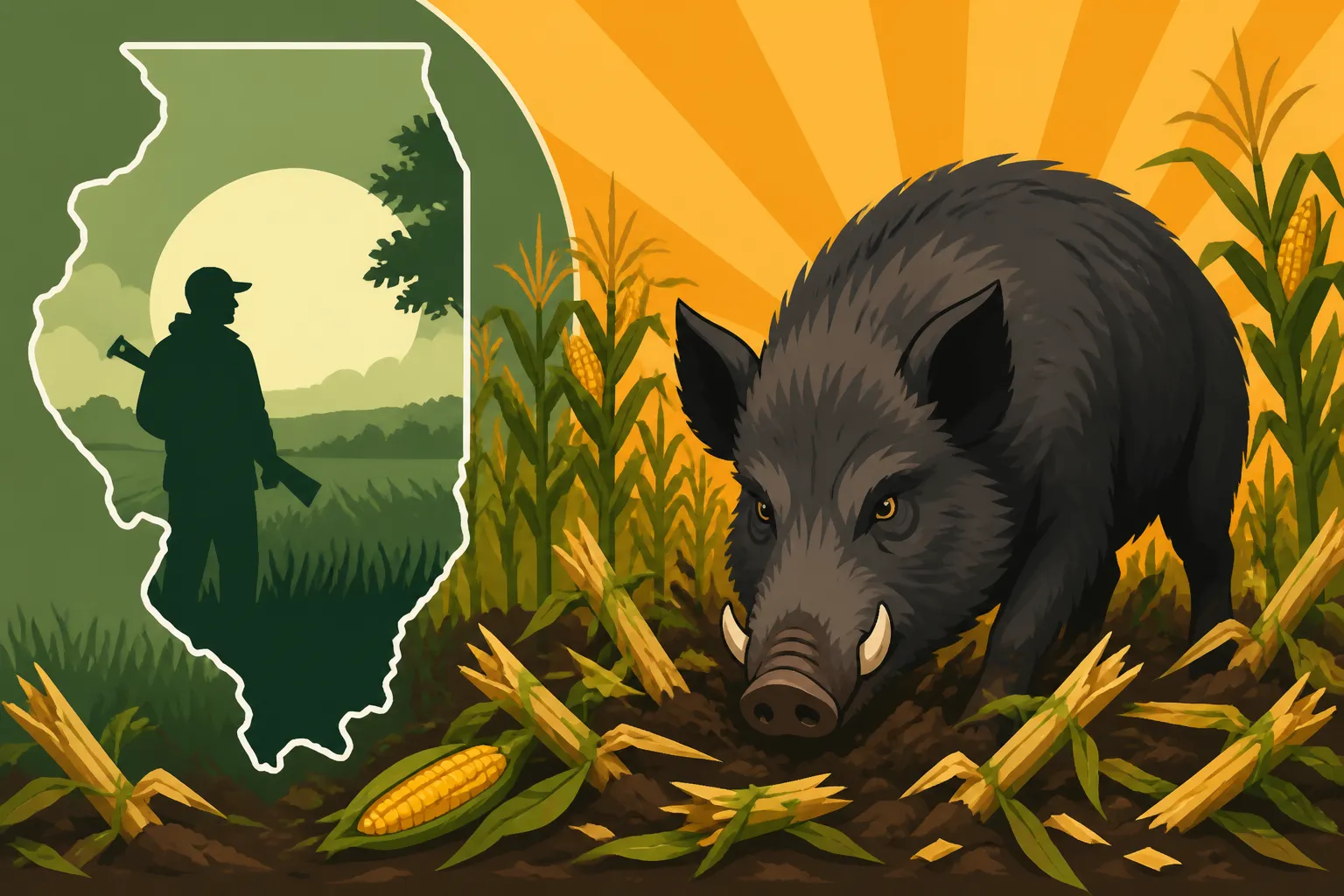
The primary and most visually striking form of damage caused by feral hogs is their incessant rooting. These animals are true "rototillers" of the wild, equipped with powerful snouts and sharp tusks used to dig and overturn soil in search of sustenance. They're not just grazing; they're actively excavating, and they can do it with incredible efficiency. Imagine a field you just meticulously planted, seed by precious seed, only to find large swaths of it torn up the next morning, looking like a bomb went off. This isn't an exaggeration for farmers in affected areas. They will systematically work rows, ripping up young corn or soybean plants right out of the ground, exposing their roots to the sun, or simply devouring the emerging sprouts.
The scale of this damage can be astonishing. A single sounder (a group of hogs) can root up several acres in a single night, making a mockery of carefully planned planting schedules and disrupting the uniform growth crucial for a healthy harvest. This activity doesn't just destroy the immediate plants; it leaves the ground uneven, creating deep holes and furrows that make future farm operations incredibly challenging. Planting equipment can get stuck or broken, and harvesting combines might be unable to navigate the terrain without significant damage. The precision required for modern agricultural machinery simply doesn't stand a chance against a landscape that's been churned up by a hungry group of hogs.
Consumption and Contamination
While rooting is devastating, hogs don't just destroy; they consume. Their omnivorous diet means virtually any crop is fair game, depending on its stage of growth. They particularly love corn, especially in its milk or dough stage, and will tear down stalks to get to the ears. Soybeans are also a favorite, as are wheat, oats, and even hay. They can clear out entire sections of a field, directly reducing the harvestable yield and cutting into a farmer's bottom line. The problem isn't just the sheer volume they eat, which can be considerable; it's also the indirect damage. They'll trample more than they eat, breaking stalks, flattening plants, and making mechanical harvesting impossible for what remains.
Beyond direct consumption, the contamination of crops is a significant and often unseen threat. Hogs carry a host of diseases, including pseudorabies, brucellosis, and leptospirosis, which can be transmitted through their feces and urine. When hogs defecate and urinate in a field, especially one close to harvest, the crops become contaminated. This isn't just an aesthetic problem; it can render an entire section of a field unmarketable due to food safety concerns. Farmers work hard to meet strict quality standards, and the presence of hog waste can easily lead to rejection by buyers or processors, turning a season's worth of effort into a total loss. This hidden cost of contamination often goes unquantified but is deeply felt by those who experience it.
Water Source Destruction
Feral hogs are intimately connected to water. They need it not only for drinking but also for their characteristic wallowing behavior. They seek out muddy depressions in ponds, creeks, and ditches to roll around, coating themselves in mud. This serves multiple purposes: it helps cool them down, protects their skin from sun and insects, and aids in shedding parasites. While this might sound innocuous, the cumulative effect of a sounder wallowing day after day is severe. They churn up the mud, expand the wallows, and destabilize the banks of waterways.
This constant disturbance leads to significant soil erosion, especially along creek beds and pond edges. The eroded soil then washes into the water, increasing sedimentation and turbidity. For farmers who rely on these water sources for irrigation or livestock, this degradation is a major problem. Contaminated or silty water can damage irrigation equipment, reduce its effectiveness, and pose health risks to cattle or other farm animals drinking from affected ponds. Furthermore, the destruction of vegetation around these water bodies removes natural filters, exacerbating water quality issues. It's a continuous cycle of destruction that degrades vital farm infrastructure and natural resources, impacting productivity and increasing long-term environmental costs.
The Financial Burden on Illinois Farmers
The reality for Illinois farmers dealing with feral hogs is often a stark financial hit. It’s not just a matter of losing a few bushels; it’s a complex web of direct losses, unexpected repair costs, and frustrating challenges in seeking assistance that can seriously threaten the viability of a family farm. The constant battle against these destructive animals often feels like an unseen tax on their already thin margins.
Direct Crop Yield Losses
The most immediate and painful financial impact is the direct loss of crop yield. When hogs root up young plants, consume mature crops, or flatten sections of a field, those acres produce nothing or significantly less than projected. Imagine calculating your expected harvest based on 200 bushels per acre, only to find that 10% of your field has been utterly destroyed. That's 20 bushels per acre lost, not just in volume but in potential income. These losses accumulate quickly. A farmer might lose anywhere from a few hundred dollars to several thousands of dollars per season, depending on the severity and scale of the infestation.
This isn't just about the physical crop; it's about the entire investment made in that acreage: the cost of seed, fertilizer, fuel for planting, and the invaluable labor and time spent tending the field. When the crop is destroyed, all that upfront investment is gone with no return. Moreover, these losses are often exacerbated by the volatility of commodity prices. A farmer might be losing yield during a year when prices are high, multiplying the financial pain. The cumulative effect of these repeated losses can make certain fields or even entire farms economically unviable for specific crops, forcing difficult decisions about land use and future investments.
Equipment Repair and Soil Remediation
Beyond the direct loss of harvest, feral hog damage creates a cascade of indirect costs that chip away at a farmer's budget. The uneven terrain, deep holes, and hidden obstacles left by rooting hogs pose a significant hazard to heavy farm machinery. A combine or tractor hitting a deep rut can lead to broken axles, damaged tires, bent implements, and costly repairs that can run into thousands of dollars. Not only is the repair expensive, but the downtime during critical planting or harvesting seasons can be just as damaging, delaying operations and potentially leading to further crop loss if weather windows are missed.
Furthermore, the destruction of soil structure requires significant remediation efforts. Rooting disturbs the soil profile, increases erosion, and can lead to nutrient leaching. Farmers may have to re-till, re-level, or even apply soil amendments to restore the health and productivity of the affected land, all of which come with additional costs for labor, fuel, and materials. It's not uncommon for hogs to also destroy fences, irrigation lines, and drainage tiles, adding another layer of expense and headache for the landowner. These are the hidden tolls that rarely make it into official damage reports but are acutely felt by those living and working on the land.
Insurance and Government Assistance Challenges
One of the most frustrating aspects for farmers battling feral hog damage is the often-insufficient support from insurance and government programs. Standard crop insurance policies may not fully cover, or in some cases, might not cover at all, losses specifically attributed to wildlife damage, especially from non-game, unprotected species like feral hogs. Even if partial coverage exists, the deductibles and the complexity of filing claims can be daunting, and the payouts rarely cover the full extent of the direct and indirect costs incurred. Farmers are often left to bear the majority of the financial burden themselves, adding insult to injury after a hard season's work.
While there are federal initiatives like the USDA’s Feral Swine Eradication and Control Pilot Program (FSECP), these programs often have specific geographic targets, limited funding, and a complex application process. Illinois has participated in some of these programs, but they are not a widespread solution for every farmer experiencing hog damage. The criteria can be strict, and the assistance often comes with specific requirements that may not align perfectly with every farm's unique situation. It's a bureaucratic hurdle race when what farmers really need is swift, effective relief. The struggle to get timely assistance or fair compensation for their losses leaves many feeling abandoned and frustrated in their fight against these destructive invaders.
Ecological Impacts Beyond Crop Loss
Feral hogs aren't just an agricultural pest; they are an ecological wrecking ball, impacting Illinois's natural landscapes, threatening native wildlife, and carrying serious disease risks. Their presence creates a ripple effect throughout the ecosystem, far beyond the boundaries of a farmer's field, impacting the health of our forests, wetlands, and the very species we cherish.
Habitat Degradation and Erosion
The destructive habits of feral hogs extend far beyond row crops. They are equally adept at rooting through sensitive native habitats like wetlands, prairies, and forests, particularly along river bottoms and creek corridors. This constant churning of the soil directly impacts native plant communities, uprooting delicate seedlings, destroying ground cover, and altering the natural composition of plant species. The ground often looks like it's been rototilled, preventing new growth and giving invasive weeds a competitive edge. This widespread disturbance fundamentally changes the habitat, making it less suitable for the native wildlife that relies on it.
This activity also significantly contributes to soil erosion, especially in forested areas with steeper slopes or near waterways. When hogs root, they expose bare soil to the elements, making it vulnerable to wind and water erosion. This eroded soil then washes into streams and rivers, increasing sedimentation. This isn't just an aesthetic issue; increased sediment can suffocate aquatic insect life, fill in important fish spawning beds, and reduce the overall water quality, impacting everything from fish populations to the health of broader aquatic ecosystems. The long-term consequences of this habitat degradation and erosion can be profound, altering ecological processes for decades.
Disease Transmission Risks
One of the most concerning ecological and public health threats posed by feral hogs is their role as a reservoir and vector for various diseases. These animals can carry a laundry list of pathogens, some of which are transmissible to livestock, domestic animals, and even humans. Common diseases associated with feral hogs include pseudorabies, brucellosis, leptospirosis, salmonellosis, and E. coli. For livestock producers, this is a nightmarish scenario. A disease outbreak in domestic hogs or cattle, particularly pseudorabies or brucellosis, could lead to devastating financial losses through herd culling, movement restrictions, and trade impacts.
The risk of disease transmission isn't just to livestock. Hunters who handle hog carcasses must take precautions to avoid exposure, and consuming improperly cooked feral hog meat can also pose human health risks. The presence of these diseases complicates management efforts and adds another layer of concern for public land users and those living in areas with established hog populations. Wildlife biologists and veterinarians are constantly monitoring these risks, as a widespread outbreak could have severe consequences for both animal and human health across the state. This silent threat is a constant reminder of the unseen dangers these invasive animals represent.
Impact on Native Wildlife
Feral hogs aren't just destructive to habitat; they are also direct competitors and predators of native Illinois wildlife. Their omnivorous diet means they will eat anything from acorns, which are a vital food source for deer, turkeys, and squirrels, to ground-nesting bird eggs and even fawns. This competition for food resources can put stress on native populations, especially during lean times or in areas where hog numbers are high. A large sounder can decimate an oak forest's mast crop, leaving little for other species. Many hunters understand the importance of diverse food sources, and Hunting After a Poor Acorn Year reveals just how critical mast crops are for deer survival and movement.
Beyond competition, feral hogs are known predators of ground-nesting birds, including wild turkeys, bobwhite quail, and various waterfowl. They will systematically search for nests, devouring eggs and even young poults. For species like the bobwhite quail, whose populations have already seen significant declines in Illinois, feral hog predation adds another formidable challenge to their recovery. This direct predation, coupled with habitat destruction, creates a double-whammy for vulnerable species. The general disturbance caused by their constant rooting and activity can also stress wildlife, altering their behavior patterns and potentially pushing them out of otherwise suitable habitats. The information in Illinois Songbird Nest Predation by Hogs further underscores the broad impact these animals have on our ecosystems.
Current Management Strategies for Feral Hogs
Dealing with feral hogs requires a multi-pronged approach, integrating science-based strategies with the active participation of landowners and hunters. It's a continuous effort that demands persistence, adaptability, and a strong understanding of how these intelligent animals operate. The goal isn't just reduction; for Illinois, it's eradication wherever possible.
Coordinated Trapping Efforts
When it comes to effective, large-scale removal of feral hogs, trapping is undeniably the most successful method. Unlike recreational hunting, which often scatters sounders and makes them warier, trapping aims for "whole sounder removal" – capturing an entire group of hogs at once. This strategy is critical because hogs are highly intelligent and learn quickly. If only a few individuals are caught or shot from a group, the remaining animals become trap-shy and nocturnal, making future control efforts exponentially harder. Professional trappers, often from organizations like USDA Wildlife Services or specialized private contractors, employ advanced trapping systems. These can include large corral traps with remote-activated gates or drop nets, baited consistently over several days to habituate the hogs before the trap is sprung.
The Illinois Department of Natural Resources (IDNR) works in conjunction with federal partners to implement these coordinated trapping efforts in areas with established populations. These programs often rely on detailed scouting and continuous monitoring, sometimes utilizing trail cameras and mapping tools like those found on GoHunt, to identify hog travel patterns and preferred bait sites. The success of these operations hinges on patience and precision, ensuring that the entire sounder enters the trap before activation. For more detailed insights into effective methods, resources like Trapping Illinois Feral Hogs offer valuable guidance on the techniques and strategies employed by professionals, highlighting the complexity and dedication required.
Targeted Hunting and Control Permits
While trapping is the primary tool for eradication, hunting still plays a vital role in population control, especially when done in a targeted, strategic manner. In Illinois, feral hogs are classified as an unprotected species, meaning there is no closed season, no bag limit, and no permit required to hunt them on private land with landowner permission. This unique status reflects the state's aggressive stance on their eradication, recognizing them as an invasive pest rather than a game animal. You can find more details on this in Illinois Feral Hog Regulations and Illinois's Year-Round Hog Rule on Private Land. This open season allows hunters to contribute to control efforts whenever the opportunity arises, emphasizing that the focus should always be on removal.
However, recreational hunting alone often isn't sufficient for eradication because it rarely removes an entire sounder and can make surviving hogs more elusive. For more effective control, especially on private lands experiencing significant damage, landowners can often seek specific control permits or coordinate with wildlife services for targeted removal. This might include methods like night hunting with thermal optics or lights, which are restricted to private land with proper permission and adherence to local ordinances. Exploring options like Night Hunting Hogs With Lights on Private Land can provide insights into how these specialized methods can be deployed effectively. The key message is clear: if you see a hog in Illinois, the directive is to remove it, ethically and legally, to protect our land and native species.
Public Education and Awareness
An often-underestimated but critical component of any successful feral hog management strategy is public education and awareness. The first step is to prevent new introductions. It is strictly illegal to release feral hogs in Illinois, and educating the public about the severe ecological and economic consequences of such actions is paramount. Unfortunately, some individuals mistakenly believe releasing hogs provides more hunting opportunities, unaware of the devastating impact these animals have. Promoting responsible wildlife stewardship and highlighting the invasive nature of feral hogs is crucial in stemming new outbreaks.
Beyond prevention, encouraging accurate reporting of sightings and damage is vital for tracking populations and directing control efforts. Landowners, farmers, and hunters are often the first to encounter these elusive animals. Utilizing tools like the GoHunt app or the IDNR's online reporting system to document sightings provides invaluable data for wildlife managers. Every report helps to map their spread, identify new hotspots, and allocate resources more effectively. Raising public awareness about How Many Feral Hogs Illinois Has and Which Illinois Counties Have the Most Hogs can galvanize community support and foster a shared responsibility for protecting Illinois's natural heritage from this destructive invader. Effective control is a community effort, and informed citizens are its first line of defense.
What Hunters Can Do to Help
As hunters, we have a unique role to play in the fight against feral hogs in Illinois. We are often out in the woods and fields, scouting and observing, and therefore are frequently the first to detect the presence of these destructive animals. Our participation isn't just about pursuing a target; it's about actively contributing to the conservation of our native ecosystems and the protection of agricultural livelihoods.
Reporting Sightings and Damage
One of the most valuable contributions hunters can make is simply being the eyes and ears in the field. Feral hogs are elusive, often nocturnal, and their populations can expand rapidly before land managers are even aware of a new infestation. If you're out bowhunting or scouting for deer and you come across hog sign – rooting, tracks, wallows, or even see hogs themselves – reporting it immediately is incredibly important. Don't assume someone else has already reported it. Every piece of information helps the Illinois Department of Natural Resources (IDNR) and USDA Wildlife Services track their movements, identify new hotspots, and allocate critical resources for control efforts.
How do you report a sighting? Many states, including Illinois, have online reporting systems or dedicated hotlines. You can visit the IDNR website, or even use popular outdoor apps like GoHunt that allow users to mark and report wildlife sightings, adding valuable data points. When reporting, try to be as specific as possible: include the date, time, location (GPS coordinates are ideal), number of hogs seen, and a description of the activity or damage. This detailed information is critical for wildlife managers. Remember, this isn't just about conservation; it's about protecting the environment we love to hunt in and the farms that feed our communities. Your report could be the first step in preventing a small problem from becoming an uncontrollable disaster, stopping the kind of widespread damage described in Illinois Feral Hog Diet and Rooting Damage.
Participating in Control Efforts
Beyond reporting, active participation in control efforts is where hunters can make a tangible difference. In Illinois, feral hogs are not considered a game animal, but rather an invasive species to be eradicated. This means there's no closed season, no bag limit, and no special permit needed to hunt them on private land with proper permission. This is a rare opportunity where recreational hunting directly aligns with conservation goals. If you have the opportunity to take a feral hog, do so responsibly and effectively. This isn't about trophy hunting; it's about removal.
Many farmers who are plagued by hog damage are often eager to grant access to responsible hunters specifically for hog control. Knocking on doors and offering to help with hog removal can open up new hunting opportunities and forge positive relationships with landowners. It’s a win-win situation: you get to hunt, and the farmer gets relief from crop destruction. Keep in mind that effective control often means being prepared for multiple encounters or even working to take an entire sounder if possible, rather than just scattering them. Exploring resources on Hunting Illinois's Year-Round Feral Hogs will provide even more context on this continuous effort. Remember the goal here is eradication, so every hog removed is a step toward protecting our land.
Ethical and Safe Hunting Practices
While the goal is removal, ethical and safe hunting practices remain paramount. When pursuing feral hogs, always adhere to basic firearm safety rules: treat every firearm as if it's loaded, always point the muzzle in a safe direction, be sure of your target and what's beyond it, and keep your finger off the trigger until ready to shoot. These principles are especially important when engaging in opportunistic hog hunting, as you might encounter them in unexpected places or alongside other game.
Additionally, proper carcass handling is crucial due to the disease risks associated with feral hogs. Wear gloves when field dressing, and dispose of carcasses properly, especially if you're in an area known for diseases like Chronic Wasting Disease (CWD) in deer, or if near livestock operations. It’s always best to check with the IDNR or local authorities for specific guidelines on carcass disposal to prevent any potential spread of pathogens. For further guidance on regulations and responsible practices, understanding Illinois Hog Hunting Permit Requirements (or the lack thereof for hogs specifically due to their unprotected status, but still respecting general hunting laws) and Illinois Feral Hog Regulations is key. By combining effective hunting with ethical practices, we can make a significant difference in the fight against this invasive threat, contributing to healthier ecosystems and more productive farms across Illinois.
| Type of Damage | Description | Impact on Crop/Land | Estimated Annual Cost (Per Acre Affected) |
|---|---|---|---|
| Rooting | Hogs digging and overturning soil, exposing roots | Direct plant loss, soil erosion, uneven ground for equipment | $100 – $300 |
| Consumption | Hogs eating corn, soybeans, wheat, hay | Direct yield loss, reduced harvestable crop | $50 – $250 |
| Contamination | Feces, urine left in fields, spreading disease | Unsaleable crop, disease risk to livestock/humans | $50 – $150 |
| Equipment Damage | Hidden holes and uneven ground causing machinery breakdowns | Costly machinery repair (tires, implements), operational downtime | $20 – $100 |
| Water Source Destruction | Wallowing in and around ponds/streams, churning mud | Reduced water quality, increased erosion, impaired irrigation | $30 – $80 |
| Fence/Infrastructure | Breaking through fences, damaging irrigation lines and drainage tiles | Repair costs, livestock control challenges, maintenance burden | $20 – $70 |
Disclaimer
The information provided in this guide is for general informational purposes only and does not constitute legal advice or official guidance from the Illinois Department of Natural Resources (IDNR). Hunting regulations and policies can change, and it is the responsibility of every hunter and landowner to consult the most current Illinois hunting regulations and local ordinances before engaging in any hunting or control activities. Always prioritize safety and ethical practices in the field.