Night Hunting Hogs With Lights on Private Land
The persistent problem of feral hogs on private land in Illinois can feel like a losing battle. These intelligent, destructive animals cause immense damage to crops and property, and their nocturnal habits make them incredibly challenging to hunt during daylight hours. This comprehensive guide will walk you through the specifics of night hunting feral hogs with lights on private land in Illinois, from understanding the regulations to selecting your gear and employing effective strategies to protect your property.
Understanding Illinois Regulations for Night Hunting Feral Hogs
Before you even think about gearing up, it's absolutely critical to understand the legal landscape for night hunting feral hogs in Illinois. The rules can be a bit nuanced, and you don't want to find yourself on the wrong side of the law. This isn't like hunting deer or turkey with strict seasons and bag limits; feral hogs are treated very differently, primarily because they are an invasive species causing significant ecological and agricultural harm.
Feral Hogs as Unprotected Species
One of the most important distinctions in Illinois hunting law is the classification of feral hogs as an "unprotected species." What this means for you, the hunter, is a lot more flexibility. Unlike native game animals, there are generally no closed seasons, bag limits, or specific hunting hours for feral hogs when you're on private land and have the landowner's permission. This unprotected status is a direct response to their destructive nature and rapid reproduction rates; the state encourages their removal. This allows for proactive measures to control their populations, including the use of methods that are typically restricted for other game. For a deeper dive into their status, you might check out articles like Illinois's Year-Round Hog Rule on Private Land.
However, "unprotected" doesn't mean "unregulated." You still need to adhere to general safety laws, firearms regulations, and, crucially, have explicit landowner permission. It's not a free-for-all, but it does open up effective tools like night hunting with lights, which are usually off-limits for most other species. This reflects the state's intent to reduce damage caused by these animals to agricultural fields, wildlife habitats, and even water quality.
Legal Use of Lights and Night Vision
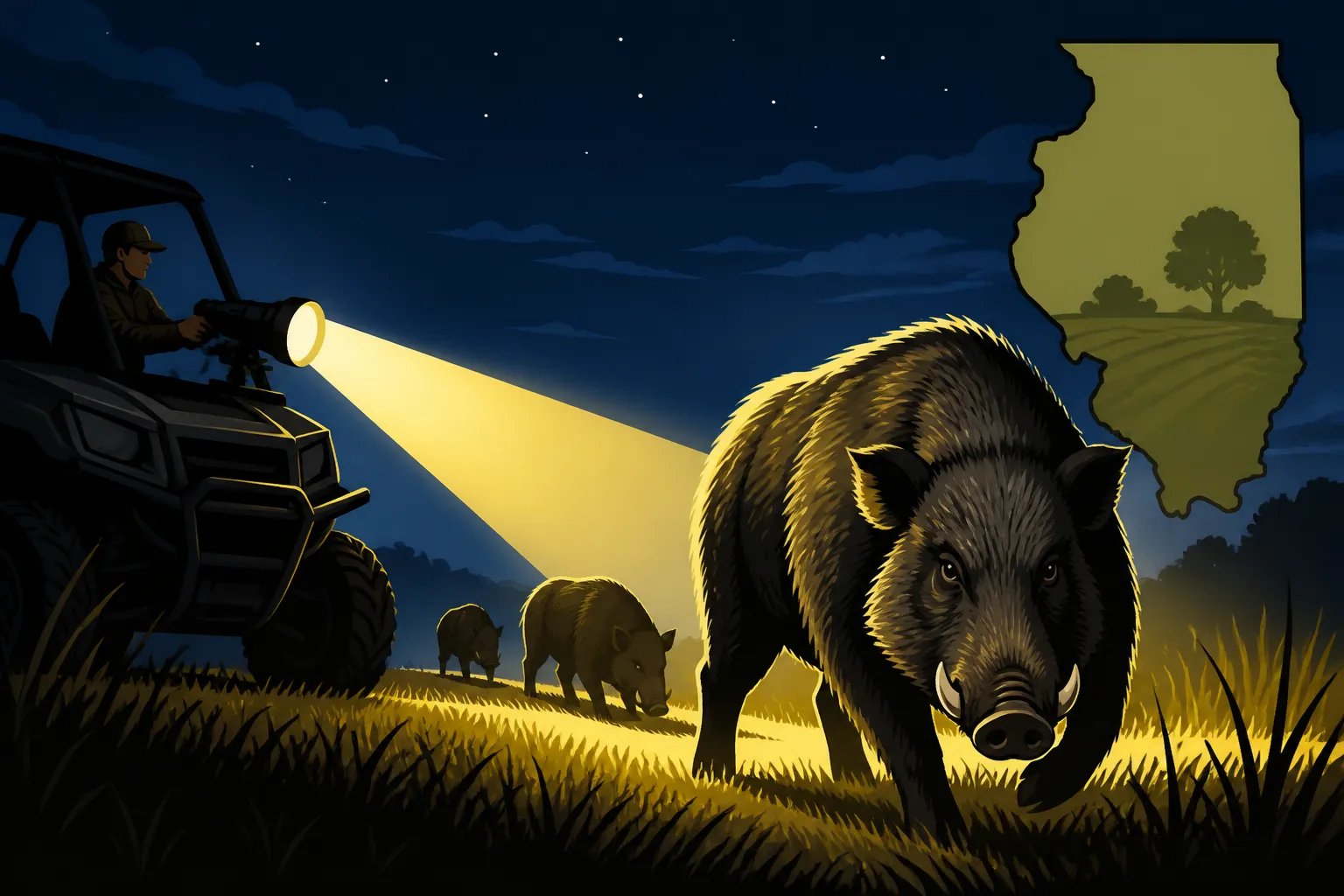
This is where the rubber meets the road for night hunting. For unprotected species like feral hogs and coyotes, Illinois law does permit the use of artificial lights, including spotlights, weapon-mounted lights, and even thermal or night vision devices, for hunting on private property. This is a game-changer because hogs are primarily nocturnal, meaning they do most of their feeding and moving under the cover of darkness. Without lights, you're essentially hunting blind.
However, the key phrase here is "private property." You cannot, under any circumstances, use lights for hunting on public land in Illinois, nor can you use them for protected game animals, even on private land, unless specifically authorized (which is rare, like for some depredation permits). Always ensure you have clear, written permission from the landowner to be on their property at night and to use lights. It's also smart to inform local law enforcement of your intentions, just in case someone in the neighborhood reports lights and shots in the dark. This simple step can save you a lot of hassle and prevent any misunderstandings with concerned citizens or responding officers. Ensure your light use is restricted to the specific property you have permission for and does not cast onto neighboring properties where it might disturb residents or livestock.
Why Night Hunting Hogs is Exceptionally Effective
If you've spent any time trying to hunt feral hogs during the day, you know how frustrating it can be. They're incredibly smart, elusive, and have a remarkable ability to vanish into the thickest cover at the slightest disturbance. Night hunting, however, flips the script, giving hunters a significant advantage.
Hogs are Primarily Nocturnal
It's no secret that hogs are most active under the cover of darkness, especially in areas with hunting pressure. They spend their days bedded down in dense thickets, CRP fields, or deep timber, only emerging as twilight fades to root for food in fields, woodlands, and creek bottoms. This shift to nocturnal behavior is a survival mechanism, allowing them to avoid human activity and the heat of the day, particularly during warmer months.
By hunting at night, you're tapping into their natural feeding patterns. You're catching them when they're most vulnerable, often out in the open, moving between bedding areas and food sources. This means more opportunities for ethical shots and higher success rates. Many hunters who struggle to find hogs during daylight hours often report significant success once they switch to a nocturnal strategy, simply because they are aligning their efforts with the hogs' most active periods. This strategy is particularly effective in counties where Feral Swine Sightings in Southern Illinois are common.
Reduced Hunting Pressure and Increased Vulnerability
During daylight hours, especially on public land or heavily hunted private land, hogs are incredibly wary. They've learned to associate human scent, vehicle noise, and even certain sounds with danger. They'll often feed on the fringes of fields, ready to bolt back into cover at a moment's notice.
At night, this dynamic changes. Hogs, while still cautious, tend to be less on edge. The cover of darkness provides a sense of security, making them more comfortable moving in the open for longer periods. The element of surprise is also heavily in your favor. With the right lighting or thermal gear, you can often spot and approach hogs without them being fully aware of your presence until it's too late. The light itself can sometimes momentarily freeze or disorient them, giving you a crucial window for a clean shot. This reduced pressure allows for a more relaxed and effective hunting experience, leading to better outcomes for controlling the population and mitigating Crop Damage Hogs Cause in Illinois.
Essential Gear for Night Hunting with Lights
Effective night hunting isn't just about showing up after dark; it requires specific gear designed for low-light conditions. While you can certainly start with basic equipment, investing in purpose-built tools will significantly increase your success and safety.
Lighting Options: White, Green, and Red Lights
When it comes to artificial illumination, you have a few choices, each with its own advantages:
- White Lights: These are essentially powerful flashlights or spotlights. They offer the brightest and most natural illumination, making target identification and shot placement very clear. However, white light can be very alarming to hogs, often causing them to scatter quickly. If you use white light, it usually needs to be deployed quickly and decisively for a snap shot, or you need to approach with extreme caution and minimize its use until the last possible moment. They're excellent for tracking a wounded animal if you have to, but less ideal for the initial detection and approach.
- Green Lights: Green lights are widely favored by many hog hunters. The theory is that the green spectrum is less disruptive to animal eyesight, particularly the hogs', and it's also less damaging to human night vision. This means you can often illuminate hogs for longer periods without spooking them as severely as white light. Green light allows for clear target acquisition, especially against dark backgrounds, and helps distinguish hogs from their surroundings. Many weapon-mounted lights from brands like Predator Tactics or Wicked Lights offer interchangeable LEDs, with green being a popular choice.
- Red Lights: Similar to green, red light is thought to be even less detectable by some animals and is excellent for preserving human night vision. If you need to walk to your stand or scan for hogs without fully spooking them, a red light is a good option. Some hunters find red light provides less contrast for target identification on hogs compared to green, making it a bit harder to pick out details at longer ranges. However, it's a solid choice for close-range encounters or when you need maximum stealth.
Choosing between green and red often comes down to personal preference and the specific hunting conditions. Many lights offer adjustable brightness settings, which is incredibly useful for slowly increasing illumination as you get closer or need a better shot.
Night Vision and Thermal Optics
Stepping up from traditional lights, night vision and thermal optics offer distinct advantages, though they come with a higher price tag.
- Night Vision: This technology amplifies ambient light (starlight, moonlight) to create an image. Modern digital night vision devices can be quite impressive, offering clear images even on darker nights. They allow you to see exactly what you're shooting at, similar to daylight, but in monochrome or a green hue. Night vision excels at target identification – you can clearly see the animal's outline, movement, and often discern features like tusks or ear tags. However, they rely on some ambient light, and their performance can degrade in absolute darkness or heavy fog.
- Thermal Optics: Thermal imaging detects heat signatures, displaying warmer objects (like a hog) as distinct from cooler backgrounds. This is a massive advantage for detection, especially in thick cover or complete darkness where night vision struggles. Hogs glow like beacons through brush or across open fields. While thermal is superb for finding hogs, the image quality typically isn't as detailed as night vision, making precise target identification (e.g., distinguishing specific animals in a group or confirming sex/size) slightly more challenging without practice. Many hunters use thermal for scanning and locating, then switch to night vision or a weapon-mounted visible light for the shot. Companies like Pulsar and ATN are popular in this space, offering scopes and handheld monoculars. For scouting new areas, mapping tools like GoHunt can provide valuable insights into terrain and potential hog hotspots, which can then be verified with thermal.
Firearms, Ammunition, and Shooting Aids
Your choice of firearm and ammunition is as critical at night as it is during the day, perhaps even more so due to reduced visibility.
- Firearms: Any reliable hunting rifle suitable for deer is generally effective for hogs. Popular choices include AR-platform rifles chambered in calibers like .223/5.56, .300 Blackout, 6.5 Grendel, or 6.8 SPC, which offer quick follow-up shots. Traditional bolt-action rifles in .243, .270, or .308 are also excellent. Shotguns with slugs are another viable option, especially in denser cover. The key is a firearm you are proficient and comfortable with, one that you can manipulate safely in low light.
- Ammunition: Choose expanding bullets designed for reliable terminal performance. Hog anatomy can be tough, and you want ammunition that will penetrate thick hides and bone to deliver a quick, humane kill. Bonded bullets or those specifically designed for tough game are a good choice. Avoid varmint-specific rounds that may not offer enough penetration.
- Shooting Aids: Since you'll often be taking shots at night from various positions, a stable shooting platform is invaluable. Bipods, shooting sticks, or a sturdy tripod with a shooting rest can provide the stability needed for accurate shot placement under pressure. This is especially important when using a light that might momentarily disorient the hog, giving you a short window. A solid rest helps ensure you make the most of that opportunity. Also, consider a suppressor if legally owned, as it significantly reduces muzzle blast and noise, which can be beneficial for taking multiple hogs from a group without immediately sending the entire sounder scattering.
| Gear Type | Primary Benefit | Best Use Case | Considerations |
|---|---|---|---|
| White Light | Brightest, clearest image | Quick target ID, tracking wounded animals | Most likely to spook hogs, ruins night vision |
| Green Light | Less alarming to hogs, good contrast | General night hunting, target acquisition | Good balance between visibility and stealth |
| Red Light | Least alarming to hogs, preserves human night vision | Stealthy approach, close-range shots, scanning | Can be harder for target identification at longer ranges |
| Night Vision | Amplifies ambient light, clear identification | Target ID, discerning features in low ambient light | Relies on some ambient light, can be expensive |
| Thermal Optics | Detects heat signatures, excellent detection | Locating hogs in thick cover or complete darkness | Lower image detail for ID, generally highest cost |
| Bipods/Tripods | Enhanced stability, accuracy | All shooting scenarios, especially longer shots | Can add weight and bulk, practice deployment |
| Suppressor | Reduces noise and recoil | Taking multiple hogs from a sounder, hearing protection | NFA item, requires permit and tax stamp (check state laws) |
Strategies for Successful Night Hog Hunts
Having the right gear is only half the battle; knowing how to use it effectively is crucial. Night hunting requires a different mindset and approach than daytime hunts, emphasizing stealth, careful observation, and decisive action.
Scouting and Setup
Effective night hunting starts long before sunset. Detailed scouting is paramount to identifying where hogs are feeding, bedding, and moving.
- Daytime Reconnaissance: Spend time during the day locating fresh hog sign: rooted-up fields, wallows, rubs on trees, and tracks. Pay close attention to areas where different types of habitat meet, such as the edge of a timber block and a crop field, or a creek bottom funneling into a food plot. These are often high-traffic zones. Using satellite imagery from tools like GoHunt or ONX Hunt can help you identify these transition areas and potential travel corridors from an aerial perspective, even before you step foot on the property. Look for features like Hunting a Funnel Between Two Woodlots or Working a Creek Bottom for Late-Season Deer as these can be prime hog travel routes.
- Identify Food Sources: Hogs will gravitate towards reliable food sources. This could be acorns in a hardwood bottom, newly planted crops (corn, soybeans), or recently harvested fields where spilled grain is abundant. Understanding what they're currently eating will dictate where they're likely to show up at night.
- Optimal Stand or Ground Blind Placement: Choose a setup that offers a clear view of a likely feeding area or travel corridor, with the prevailing wind in your favor. If using a treestand, select one that offers good shooting lanes in the dark. Ground blinds can be excellent for night hunting as they offer concealment and a stable shooting rest, especially if you're using visible lights, as they help break up your silhouette against the illuminated background. Make sure your entry and exit routes are clear and quiet to avoid spooking game. Setting up along a known trail or a field edge where they cross from cover to feed is a classic tactic.
The Approach and Execution
Once you've scouted and set up, the actual hunt requires patience and a well-thought-out approach.
- Quiet Entry: Approach your hunting location long before dark. Minimize noise, human scent, and light. If you must use a light during your entry, keep it dim and pointed downwards, ideally a red light to preserve your night vision.
- Patience and Observation: Once in your position, settle in and let the woods quiet down. Hogs typically emerge an hour or two after sunset, or often just before dawn. Scan regularly with your thermal or night vision if you have it. If using visible lights, scan intermittently and quickly at first, then hold steady once you detect movement.
- Light Deployment and Shot Placement: When you spot hogs, assess their behavior. If they are feeding calmly, you might have time for a slow, controlled shot. If they appear skittish, be prepared to act quickly. When you deploy your visible light, do so smoothly and bring it directly onto the target. Some hunters prefer to sweep the light over them quickly once, then bring it back, which can sometimes "freeze" them momentarily. Aim for the "sweet spot" – behind the ear for a brain shot (if close and confident), or the shoulder/heart-lung area for a body shot. The brain shot is instantly fatal but requires extreme precision. A shot to the shoulder area (just behind the front leg, a third of the way up the body) will typically drop them in their tracks or put them down quickly. Given their tough nature and tendency to run, a debilitating shot is crucial for a clean harvest and to prevent wounded animals from escaping into thick cover.
Tracking and Recovery
Unfortunately, not all hogs drop where they stand. Tracking at night, especially a dark-colored animal in dark terrain, presents unique challenges.
- Immediate Action: If a hog doesn't drop immediately, keep your light on it for as long as possible, noting the direction of travel and any landmarks. Listen intently for sounds of it crashing or running.
- Marking the Spot: Go to the location where the hog was standing when shot and mark it clearly with flagging tape or a GPS waypoint. This is your starting point for the track.
- Blood Trailing: Use a bright white light for blood trailing. A good quality, high-lumen flashlight is indispensable here. Look for blood, disturbed leaves, tracks, and broken vegetation. Move slowly and systematically. If the blood trail is sparse, expand your search pattern in the direction of travel. Many wounded hogs will run a short distance and then bed down in the thickest cover they can find. If you're having trouble, mark your last blood and consider returning at first light with fresh eyes and better visibility. Remember that Blood Trailing After Dark in Illinois can be tricky, so be prepared for a difficult task.
Safety Considerations for Hunting Hogs at Night
Hunting at night inherently carries greater risks than daytime hunting. Reduced visibility, combined with the excitement of the hunt, demands heightened awareness and strict adherence to safety protocols. Never compromise safety for the sake of a shot.
Familiarity with Your Hunting Area
This cannot be stressed enough. Hunting an unfamiliar area at night is an invitation for trouble. Even a property you've hunted extensively during the day can feel completely different in the dark.
- Daylight Reconnaissance is Key: Before your first night hunt, thoroughly walk the property during daylight hours. Identify potential hazards like ditches, fences, thick brush, steep terrain, and water bodies. Take mental notes or even mark these on a GPS app like GoHunt.
- Know Your Backdrops: Understand the layout of the land beyond your immediate shooting lanes. At night, it's easy for your perceived backdrop to be misleading. Always ensure you have a safe and clear backdrop for every shot, free from roads, buildings, or livestock. Remember that bullet travel can be extensive, and you're responsible for every round fired. Never shoot at a silhouette without positive identification and a clear understanding of what lies beyond.
- Plan Your Movement: If you anticipate needing to move from your stand or blind, plan your routes in advance, noting any obstacles. Minimizing movement in the dark is always the safest option.
Communication and Buddy System
Never hunt alone at night, especially if you're new to it or in an unfamiliar area. A buddy system is not just a good idea; it's a critical safety measure.
- Inform Someone of Your Plans: Always tell a trusted friend or family member exactly where you're going, when you expect to be back, and who you're with. Provide them with a map or GPS coordinates of your hunting location.
- Hunt with a Partner: Ideally, hunt with at least one other person. They can act as a spotter, assist with tracking, or help in case of an emergency. When hunting with a partner, establish clear communication protocols before you even leave the vehicle. How will you signal each other? What are your safety zones? Who takes the shot if multiple hogs appear? Clear communication prevents accidents.
- Emergency Preparedness: Carry a fully charged cell phone (and a power bank), a first-aid kit, and a whistle. Know the location of the nearest emergency services and how to clearly describe your location.
Handling Firearms in Low Light
Manipulating firearms in the dark adds another layer of complexity to standard gun safety rules.
- Positive Target Identification: This is the golden rule of night hunting. Never, ever pull the trigger unless you are 100% positive it's a hog and not a deer, another hunter, or livestock. The combination of low light and excitement can lead to misidentification. Use your optics (thermal/night vision) or lights to confirm your target before aiming your firearm. Many night vision and thermal optics now have rangefinding capabilities, which can assist in confirming targets.
- Finger Off the Trigger: Keep your finger off the trigger until your sights are on the target and you are ready to shoot. This fundamental rule is even more important in low-light conditions where accidental discharges are more likely.
- Muzzle Control: Always be aware of where your muzzle is pointed. In the dark, it's easier to inadvertently point your firearm in an unsafe direction. Practice safe firearm handling with your specific night hunting setup (e.g., weapon-mounted light, night vision scope) during daylight hours to build muscle memory.
- Loading and Unloading: Be extra cautious when loading and unloading your firearm in the dark. Use a headlamp set to a red light or minimal brightness if necessary, but keep the firearm pointed in a safe direction. Double-check that your firearm is clear before moving from your position or transporting it.
Post-Harvest Considerations and Carcass Handling
Successfully harvesting a feral hog is just the first step. Proper handling of the carcass, especially in potentially warm Illinois nights, is vital for food safety and preventing disease spread.
Field Dressing and Cooling
Prompt field dressing and cooling are critical to preserving the meat quality, especially given the variable temperatures in Illinois.
- Immediate Field Dressing: As soon as the hog is down and secured, begin field dressing. Remove the entrails to allow the carcass to cool down as quickly as possible. Hogs have a thick layer of fat, which insulates the body and holds heat, so getting those guts out is paramount.
- Cleaning the Cavity: If possible, rinse the body cavity with clean water (e.g., from a water bottle you brought) to remove any blood or debris. Pat it dry if you can.
- Cooling Options: In cooler temperatures (below 40°F), simply hanging the hog in the shade overnight might suffice for initial cooling. However, if it's a warm night, you'll need more aggressive measures. This could involve placing ice packs (or frozen water bottles) inside the cavity. Consider having a large cooler filled with ice ready at your vehicle for transport. For detailed instructions on processing, consider resources like Butchering a Deer at Camp which shares similar principles for venison.
Disease Awareness and CWD Concerns
Feral hogs can carry a variety of diseases, some of which can be transmitted to humans (zoonotic diseases) or livestock. While Illinois deer hunters have to contend with Illinois's Chronic Wasting Disease Zone, feral hogs present different, but equally serious, concerns.
- Wear Gloves: Always wear latex or nitrile gloves when field dressing a feral hog. This protects you from potential exposure to bacteria and diseases such as brucellosis, leptospirosis, or toxoplasmosis.
- Inspect for Anomalies: While field dressing, pay attention to any unusual lesions, growths, or abscesses in the organs or muscle tissue. If you observe anything concerning, it's best to discard the animal and report your findings to the Illinois Department of Natural Resources (IDNR).
- Thorough Cooking: Always cook feral hog meat thoroughly to an internal temperature of at least 160°F (71°C) to kill any potential parasites or bacteria. Freezing the meat for several weeks can also kill some parasites, but thorough cooking is always the safest bet.
- Carcass Disposal: After processing, dispose of the remaining carcass parts responsibly. Do not leave them where they could attract other scavengers or spread disease. Burying them deeply or taking them to an approved disposal site are good options.
Navigating the Challenges of Night Hog Hunting
While night hunting offers clear advantages, it also comes with its own set of challenges that can test a hunter's patience and skill. Anticipating these issues can help you prepare and overcome them.
Dealing with Weather and Environmental Factors
Illinois weather is notoriously unpredictable, and hunting after dark can amplify its effects.
- Fog and Rain: These conditions severely reduce visibility, making spotting hogs and taking ethical shots incredibly difficult. Fog can also render thermal and night vision less effective. If heavy fog or rain rolls in, it's often safer and more ethical to call off the hunt rather than risk a poor shot or a lost animal.
- Wind: High winds can make hearing hogs difficult and can also interfere with weapon-mounted lights or thermal imaging, causing them to sway or vibrate. On the other hand, a steady breeze can be your friend, carrying your scent away from the hogs. Always hunt with the wind in your favor. Wind and Thermals on a Southern Illinois Ridge is a good example of how wind impacts hunting, a principle that applies to hog hunting as well.
- Terrain: Uneven terrain, dense undergrowth, and obstacles are harder to navigate at night. This increases the risk of falls or getting disoriented. Sticking to known paths and being extra cautious with every step is paramount.
Minimizing Disturbance for Future Hunts
While your primary goal is to remove hogs, doing so in a way that doesn't completely educate the remaining sounder can lead to more successful hunts in the long run.
- One-Shot, One-Kill Mentality: Strive for clean, ethical kills that drop the hog on the spot. Wounded hogs that escape become extremely wary and difficult to hunt in the future.
- Target Selection: If you have multiple hogs in a sounder, consider targeting the largest, or perhaps multiple hogs if you can get follow-up shots quickly and accurately (especially if using a suppressed semi-automatic rifle). However, if shooting multiple hogs means sacrificing accuracy or leaving wounded animals, it's better to focus on one clean kill.
- Quiet Exit: After a successful harvest or if you decide to leave empty-handed, exit your hunting area as quietly and discreetly as possible. Minimize light and noise to avoid alerting any other hogs in the vicinity. This helps maintain the area's appeal to future hogs, making your next hunt more productive. The goal isn't just to get one hog; it's to establish long-term control over their population on the private land.
Night hunting feral hogs on private land in Illinois can be an incredibly effective and rewarding way to manage these destructive animals. By understanding the regulations, equipping yourself with the right gear, employing smart strategies, and prioritizing safety above all else, you can significantly contribute to protecting private property and ecosystems across the state.
Disclaimer
Hunting is an inherently dangerous activity. This guide provides general information and recommendations for night hunting feral hogs in Illinois. Always consult the most current Illinois Department of Natural Resources (IDNR) regulations, practice firearm safety, and obtain proper landowner permission. The author and publisher are not responsible for any accidents, injuries, or legal infractions that may occur from following the advice contained herein. Hunt safely and ethically.