How Many Feral Hogs Illinois Has
You've likely heard the whispers, seen the occasional news report, or maybe even stumbled across some tell-tale rooting in a field corner – feral hogs in Illinois. For many of us who cherish our wild places and pursue game, the thought of an invasive, destructive species taking root is deeply concerning. It's natural to wonder just how many of these animals are out there and what kind of a threat they truly pose. This guide is dedicated to pulling back the curtain on Illinois's feral hog situation, exploring the challenges of tracking them, and understanding the state's determined efforts to keep their numbers in check.
Understanding the Feral Hog Presence in Illinois
The question of "how many feral hogs Illinois has" isn't as simple as counting deer or turkeys. These aren't your typical game animals with established seasons, bag limits, and population surveys in the same vein. Instead, they represent a persistent and often unseen challenge, making precise figures incredibly elusive.
A Constantly Evolving Population Challenge
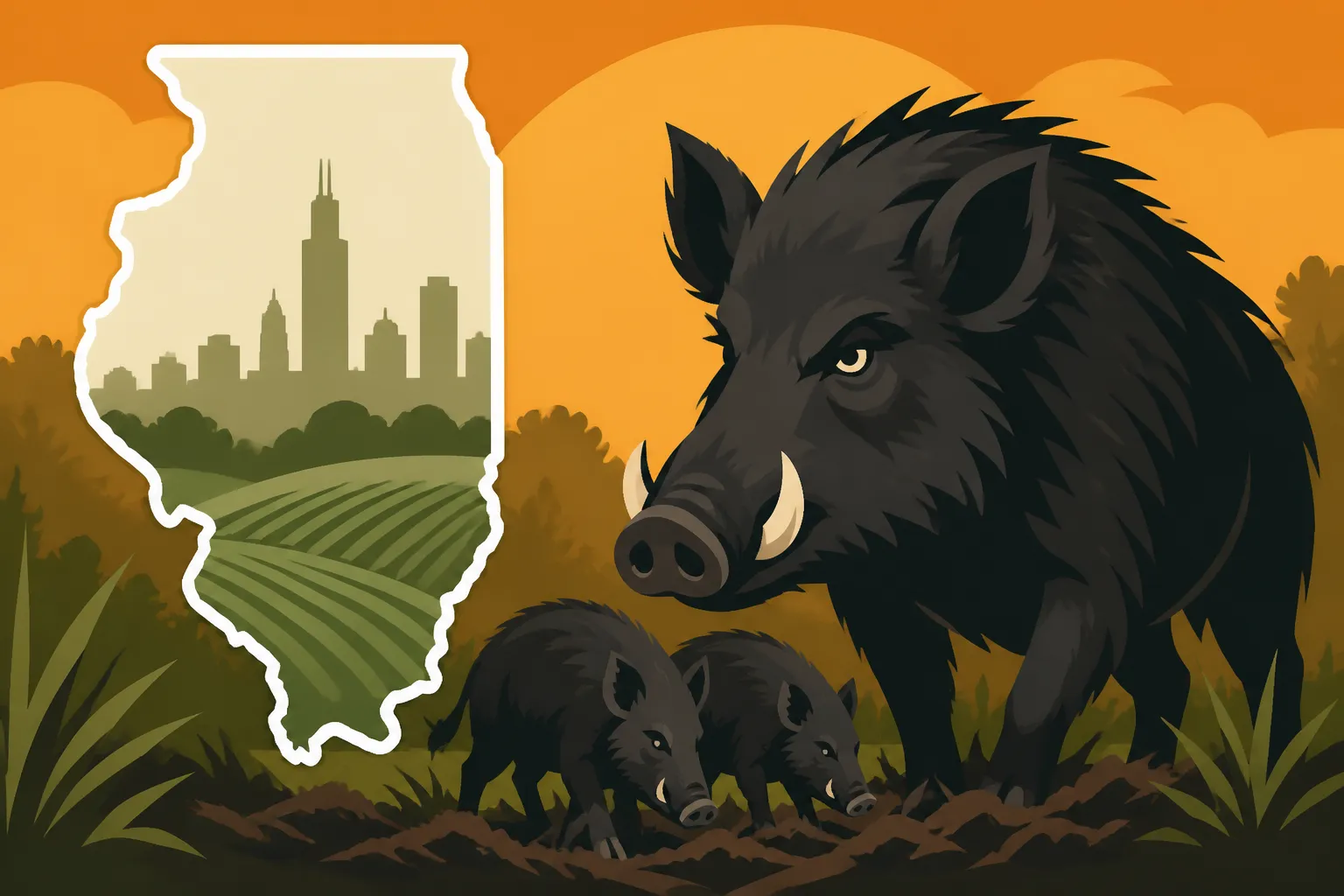
Feral hog populations are a biological nightmare for wildlife managers. They are incredibly prolific, capable of breeding year-round with sows farrowing multiple litters of piglets annually. This isn't just a handful of offspring; a single sow can produce 10-12 piglets in a litter, and they reach sexual maturity shockingly fast. This means that even small groups can explode in number if left unchecked. What might seem like an isolated sighting one year can quickly become a burgeoning sounder (the term for a group of hogs) the next, especially if conditions like food availability and cover are favorable. It's this rapid reproductive rate that makes controlling them a constant uphill battle.
Their spread is often tied to human activity, both intentional and unintentional. Sometimes, domestic pigs escape and go feral, quickly adapting to life in the wild. Other times, unfortunately, people have illegally introduced them for hunting purposes, only to regret the consequences as the populations spiral out of control. This adds another layer of complexity to tracking their numbers, as new individuals can appear from various sources, making population growth unpredictable and regional. The challenge isn't just managing existing populations but preventing new ones from establishing themselves.
Historical Context of Feral Swine in Illinois
Feral hogs aren't native to Illinois, and their presence here is a relatively recent phenomenon compared to other states further south. Historically, Illinois was largely free of truly wild swine. The pigs we see today mostly stem from domestic stock that either escaped farms or, in some unfortunate instances, were illegally released. The problem really started to gain traction in the early 2000s, with scattered reports in southern Illinois, particularly near the Missouri border. These initial sightings often involved individual animals or small groups, likely wanderers from established populations in neighboring states or escapees from local farms.
Over time, these isolated pockets began to grow, especially in areas with dense cover, ample water, and agricultural fields providing easy food sources. The dense river bottoms and heavily timbered areas of southern Illinois, like those found within and around Shawnee National Forest Hunting, proved to be ideal havens. These environments offer sanctuary from human disturbance and plenty of forage. The problem isn't just about the number of pigs, but their distribution – even small, scattered populations can become bridgeheads for wider invasion.
Why Pinpointing a Number is So Tricky
If you're hoping for a concrete number like "Illinois has exactly 2,347 feral hogs," you're going to be disappointed, and honestly, any agency giving you such a precise figure would be guessing. The reality is that getting an accurate count of feral hogs is incredibly difficult for several reasons. First, they are largely nocturnal, meaning they do most of their damage and movement under the cover of darkness. This makes visual surveys incredibly challenging. You're not going to see them lined up in a field like deer at dusk.
Secondly, hogs are masters of concealment. They thrive in thick brush, dense timber, and remote river bottoms, making them hard to spot even during daylight hours. They have a keen sense of smell and hearing, making them adept at avoiding human contact. Combine this with their rapid reproductive rate and transient nature – they can move significant distances – and you can see why getting a static number is practically impossible. The population is a moving target, constantly fluctuating due to births, deaths, and movements. What we rely on instead are estimates based on sightings, damage reports, and eradication efforts. This is where tools like GoHunt and their mapping capabilities can be useful for tracking reported activity, though it's still not a definitive head count.
Illinois's Approach to Feral Hog Management
Given the difficulty in counting them, Illinois has adopted a very clear strategy: eradication, not management. Unlike deer or turkey, which are managed as game species, feral hogs are viewed as destructive invasive pests that need to be removed.
The Illinois DNR's Stance: Eradication, Not Management
The Illinois Department of Natural Resources (IDNR) doesn't consider feral hogs a game species, and for good reason. Allowing them to be managed like deer or turkey, with hunting seasons and bag limits, would inadvertently encourage their presence and potentially illegal introduction. The state's position is unequivocal: these animals have no place in Illinois's ecosystem. The goal is to eliminate them entirely, not to create a sustainable hunting opportunity. This policy is critical because even a small, "managed" population can inflict immense damage on native wildlife, habitats, and agricultural lands.
This eradication philosophy means that all efforts are geared towards reducing their numbers to zero. It's a testament to how seriously the IDNR views the threat. This isn't just about preventing crop damage; it's about protecting the long-term health of Illinois's forests, prairies, and waters. If you're interested in the specifics of this, you can look into the state's policies on Illinois Feral Hog Regulations.
The Role of Public Reporting and Monitoring
Since accurately counting hogs is so tough, the IDNR relies heavily on public cooperation to track their presence. Sightings are incredibly important. When someone reports feral hog activity – whether it's seeing the animals directly, finding rooting damage, or discovering tracks – it helps the IDNR pinpoint problem areas and deploy resources. These reports are often funneled through local conservation police or wildlife biologists, who then investigate and plan removal efforts. It's a collaborative effort, and every pair of eyes in the woods can contribute to the bigger picture.
Monitoring also involves setting up trail cameras in suspected areas to confirm presence and determine group sizes and travel patterns. Trapping efforts, often using large corral traps, are then deployed based on this intelligence. These traps can capture entire sounders, which is a far more effective method for eradication than individual hunting. The data gathered from these efforts, combined with public sightings, provides the best available insight into Feral Swine Sightings in Southern Illinois and beyond.
Illinois's Year-Round Hog Rule on Private Land
One of the most significant tools in Illinois's eradication strategy is the "year-round hog rule." This regulation makes it explicitly clear that feral hogs can be hunted year-round on private land by landowners and those with permission. There are no closed seasons, no specific bag limits, and no permit requirements beyond what's needed for general hunting. This contrasts sharply with regulated game species like deer or turkey, which have specific seasons and tag requirements. This open season reflects the urgency of the eradication goal.
However, there's a crucial caveat for public land. While hunting hogs on private land is largely unregulated, public land often has its own set of rules, which can vary by site. It's always best to check with the specific site superintendent or the IDNR website before attempting to hunt hogs on public property. The main idea behind the year-round private land rule is to empower landowners to protect their property and contribute to the eradication effort without bureaucratic hurdles, encouraging participation in Hunting Illinois's Year-Round Feral Hogs.
Here's a quick comparison of Feral Hogs vs. Regulated Game Species in Illinois:
| Feature | Feral Hogs (Illinois) | White-tailed Deer (Illinois) | Wild Turkey (Illinois) |
|---|---|---|---|
| Status | Invasive Species / Pest | Regulated Game Species | Regulated Game Species |
| Goal | Eradication | Population Management | Population Management |
| Season Length | Year-round on private land | Defined Archery, Firearm, Muzzleloader | Defined Spring & Fall Periods |
| Bag Limits | None | Specific limits per permit | Limited permits per hunter, per season |
| Permit/License | Valid hunting license (no specific hog permit) | Specific deer permits (archery, firearm) | Specific turkey permits (spring, fall) |
| Methods | Trapping, shooting, night hunting (private land) | Archery, shotgun, straight-wall rifle, muzzleloader | Shotgun, archery, crossbow |
| Reporting Requirement | Often requested for tracking, not mandatory for harvest | Mandatory within 48 hours for harvest | Mandatory within 48 hours for harvest |
Impact and Risks Posed by Feral Hogs
The reason Illinois is so committed to eradication isn't just philosophical; it's rooted in the very real and devastating damage these animals inflict on both the environment and the economy.
Crop Damage Hogs Cause in Illinois
For farmers, feral hogs are an absolute nightmare. They cause significant Crop Damage Hogs Cause in Illinois by rooting up fields in search of food. Their powerful snouts can turn a perfectly planted soybean or cornfield into a tilled mess overnight. This doesn't just destroy the immediate crop; it can also damage irrigation systems, field tile, and even farm equipment. Beyond rooting, they trample crops, contaminate food sources with their waste, and feed directly on mature grains. This direct economic impact can be substantial, costing farmers thousands of dollars in lost yields and repairs.
The damage isn't limited to large agricultural operations either. Even small vegetable gardens, orchards, and pastures can be decimated. A sounder of hogs can clear out a pumpkin patch or an entire plot of sweet corn in a single night. This economic burden extends beyond the immediate farmer, impacting local economies through reduced agricultural output and increased costs for fencing and other deterrents. It's a constant battle for those living in areas where hogs have established themselves.
Ecological Damage Beyond Agriculture
The destruction caused by feral hogs extends far beyond crops. They are ecological bulldozers. Their rooting behavior compacts soil, increases erosion, and can destroy delicate wetlands and riparian zones. They indiscriminately consume plant matter, including rare native species, drastically altering habitat structure. This leads to a cascade of negative effects on other wildlife. For instance, their rooting can destroy the nests of ground-nesting birds, including our cherished wild turkeys. They compete with native wildlife like deer and squirrels for food sources such as acorns, impacting the health and sustainability of these populations.
Furthermore, they are significant predators. They will prey on fawns, turkey poults, and other small mammals, reptiles, and amphibians. Their presence can disrupt the natural food chain and reduce the biodiversity of an area. In sensitive ecosystems, the mere presence of feral hogs can set back conservation efforts by decades. Their wallowing in streams and ponds also degrades water quality, introducing sediment and pathogens that can harm aquatic life.
Disease Concerns for Livestock and Wildlife
Perhaps one of the most insidious threats posed by feral hogs is their role as disease carriers. These animals can harbor and spread a host of diseases that are detrimental to both domestic livestock and native wildlife. Some of the most concerning include pseudorabies and brucellosis. While these diseases typically don't affect humans, they can devastate hog and cattle farms, leading to massive economic losses through herd depopulation and quarantines. The concern is particularly acute for swine producers, as an outbreak could force them to cull entire herds to prevent further spread.
Beyond livestock, feral hogs can transmit diseases to wild deer, elk, and other mammals, potentially weakening native populations and making them more susceptible to other threats. They also carry parasites and bacteria that can contaminate water sources and soil, posing risks to other species. The challenge of tracking and testing for these diseases in wild populations is immense, highlighting why the IDNR's eradication strategy is so vital for overall wildlife health in Illinois. The risk of disease transmission is a constant shadow hanging over areas with active feral hog populations.
What Hunters Can Do and What the Future Holds
While the state takes the lead on eradication, hunters can play a crucial role in limiting the spread and numbers of feral hogs in Illinois. Understanding your options and the larger context is key.
The Ethical Hunter's Role in Control Efforts
If you encounter feral hogs while hunting in Illinois, you have an opportunity to contribute to their eradication. On private land, with landowner permission, you can pursue them year-round. This often involves tactics different from traditional deer hunting. Night Hunting Hogs With Lights on Private Land is one method, where legal, that can be highly effective given their nocturnal habits. Trapping is also incredibly efficient, and if you have the resources and knowledge, it's a powerful tool for removing entire sounders. Landowners often appreciate assistance with Trapping Illinois Feral Hogs.
Remember, the goal isn't just to harvest one or two; it's to eliminate as many as possible. This means if you see a sounder, try to take multiple animals if conditions allow. It’s a conservation effort, not just a recreational hunt. If you're using something like GoHunt for scouting, pay attention to any reports or indicators of hog activity. Knowing the proper regulations, especially regarding firearms and reporting, is crucial, and you can find general licensing information through Illinois Hunting Licenses and What They Cost.
Future Outlook for Feral Swine in Illinois
The fight against feral hogs in Illinois is ongoing, and it's a marathon, not a sprint. While the IDNR's eradication program has seen significant success in containing and reducing populations in many areas, complete elimination remains a monumental task. The challenges posed by their prolific breeding, elusive nature, and the potential for reintroduction from neighboring states or illegal releases mean that vigilance must remain high. It's a battle that requires continuous effort from state agencies, landowners, and concerned citizens.
The hope is that through persistent trapping, targeted removal, and public cooperation, Illinois can eventually declare itself largely free of established feral hog populations. This isn't just about protecting cornfields; it's about preserving native ecosystems, safeguarding domestic livestock, and ensuring that our wild spaces remain healthy for generations to come. Your awareness and participation, even if just reporting sightings, are vital in this long-term endeavor.
Disclaimer
This article is for general informational purposes only and does not constitute professional advice. Laws, prices and regulations vary by location and change over time. Consult a qualified professional for guidance on your specific situation.