Hunting Illinois’s Year-Round Feral Hogs
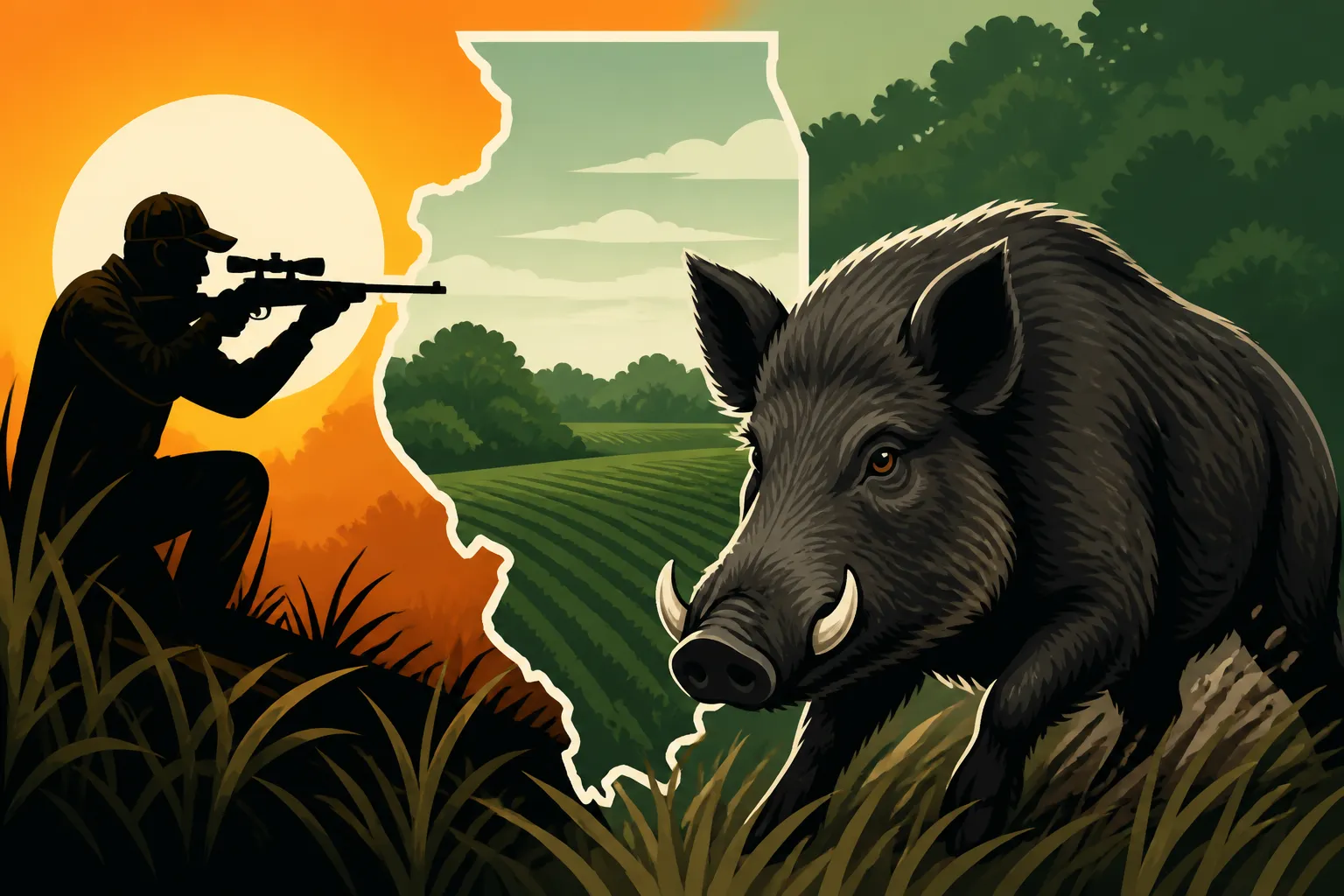
Feral hogs are perhaps one of the most frustrating, destructive invasive species Illinois landowners and hunters face. These animals are relentless, tearing up agricultural fields, rooting through pristine woodlands, and devastating sensitive wildlife habitats at an alarming rate. It often feels like a losing battle, but this comprehensive guide aims to equip you with the knowledge and strategies needed to effectively hunt and control these intelligent, prolific pests year-round.
The Devastating Impact of Feral Hogs in Illinois
When we talk about feral hogs in Illinois, we're not just discussing another game animal. These creatures are a certified ecological and agricultural menace, and understanding the scope of the problem is the first step toward effective management. It's truly a heartbreaking sight to see a healthy field or forest floor utterly ravaged by a sounder of hogs overnight.
Understanding the Threat to Agriculture and Wildlife
The damage feral hogs inflict is profound and widespread. Agriculturally, they can destroy entire fields of corn, soybeans, or specialty crops like pumpkins and melons in a single night, leading to significant financial losses for farmers. Their incessant rooting churns up the soil, compacting it, increasing erosion, and even tearing out irrigation lines. Beyond the direct crop damage, they can contaminate water sources and spread diseases to domestic livestock.
Ecologically, the harm is just as severe. Hogs decimate native plant populations by consuming seeds, tubers, and seedlings. They compete directly with native wildlife, like white-tailed deer and wild turkeys, for food sources like acorns and other mast crops. Even worse, they're prolific predators, eating the eggs and young of ground-nesting birds, reptiles, and even fawns. The sheer scale of their reproduction and destructive habits means that an unchecked sounder can permanently alter an ecosystem in a very short time. It's a constant struggle to balance the natural environment when these invaders are present.
Recognizing Feral Hog Signs: Rooting, Wallows, and Tracks
To hunt feral hogs effectively, you first have to know how to find them. These animals leave distinct and unmistakable signs of their presence. The most obvious is rooting, where they use their powerful snouts to dig up the ground in search of food. This often looks like a rototiller has gone through the area, leaving overturned soil and damaged vegetation. It's not subtle, and you'll typically find it in moist areas, food plots, or agricultural fields.
Wallows are another key indicator, especially during warmer months. Hogs love to cool off and coat themselves in mud to deter insects. These wallows appear as muddy depressions in the soil, often near water sources, and you might see hair rubbed off on nearby trees or fence posts where they've scratched themselves. Tracks are also critical: a hog track resembles a deer track but is generally rounder, wider, and the dewclaws (the two small marks behind the main hooves) are usually more pronounced and spread further apart, especially in soft ground. A good resource like GoHunt's mapping system can help identify potential water sources and low-lying areas where you might find these wallows.
Beyond these, look for scat (droppings) that often vary depending on their diet but can resemble dog or deer droppings, and rubs on trees where they've scratched, leaving mud and hair behind. Fresh sign is key – warm wallows, disturbed rooting, and clear tracks indicate recent activity.
Here's a quick guide to identifying common hog signs:
| Sign Type | Description | What it Indicates | Best Places to Look |
|---|---|---|---|
| Rooting | Ground turned over, resembling a plowed field, often in patches. | Hogs feeding on roots, tubers, grubs. Fresh rooting means recent activity. | Forests, food plots, agricultural fields, moist bottomlands. |
| Wallows | Muddy depressions, often with hair or mud on surrounding trees/vegetation. | Hogs cooling off, coating themselves in mud to deter insects. | Near streams, ponds, muddy areas, low spots in fields. |
| Tracks | Rounded, wide hoof prints; dewclaws often spread wider than deer tracks. | Hog movement patterns, size of sounder. | Soft ground, muddy trails, stream banks, field edges. |
| Rubs/Scratching | Mud and hair rubbed on trees, fence posts, or large rocks. | Hogs marking territory, removing parasites, or cooling. | Along travel corridors, near wallows or bedding areas. |
| Scat (Droppings) | Variable, often pellet-like or clumped, depending on diet; resemble dog/deer. | Indicates recent presence, diet composition. | Trails, feeding areas, near bedding sites. |
| Travel Lanes | Well-worn paths through brush or tall grass, often leading to food or water. | Consistent hog movement patterns between key areas. | Between bedding cover and feeding areas, along creek bottoms. |
The IDNR's Stance: Why Year-Round Removal is Crucial
The Illinois Department of Natural Resources (IDNR) views feral hogs not as a game animal, but as a destructive invasive species. This critical distinction is why there's no closed season, no bag limit, and no specific permit required beyond your standard hunting license and habitat stamp to hunt them on private land. The goal isn't management; it's eradication. The IDNR encourages their removal whenever and wherever possible, recognizing the immense threat they pose.
This year-round, unlimited take policy is a direct response to their rapid reproductive rate and devastating impacts. A single sow can have two litters a year, with up to 10-12 piglets per litter, and those piglets can breed within a year. You can see how quickly a small sounder can explode into a massive problem. The IDNR works with landowners and various agencies, sometimes implementing large-scale trapping efforts, but hunters play a crucial role in reducing populations and preventing their further spread across the state. Remember, any sightings of feral swine on public or private land should be reported to the IDNR, especially if it's a new area. This data helps track their spread, as detailed in Feral Swine Sightings in Southern Illinois.
Legal Framework and Required Gear for Hog Hunting
Before you head out, it's vital to understand the rules of engagement and ensure you have the right tools for the job. Illinois has specific regulations regarding Illinois Feral Hog Regulations that you need to be aware of.
Navigating Illinois Feral Hog Regulations
While the IDNR encourages year-round eradication of feral hogs, there are still rules you must follow. On private land, you can hunt feral hogs 365 days a year, with no daily or season limit, using any legal hunting method for deer, including firearms, archery, and crossbows. However, when hunting on public land, things get a bit more complex. Public land regulations for hogs often align with the open deer or other game seasons, and specific site rules can vary significantly. Some public lands might have specific periods or restrictions for hog hunting, so always check with the individual site superintendent or the IDNR website for the most current rules for the area you intend to hunt. It's never a bad idea to review Illinois Hog Hunting Permit Requirements to ensure you're completely compliant before heading out.
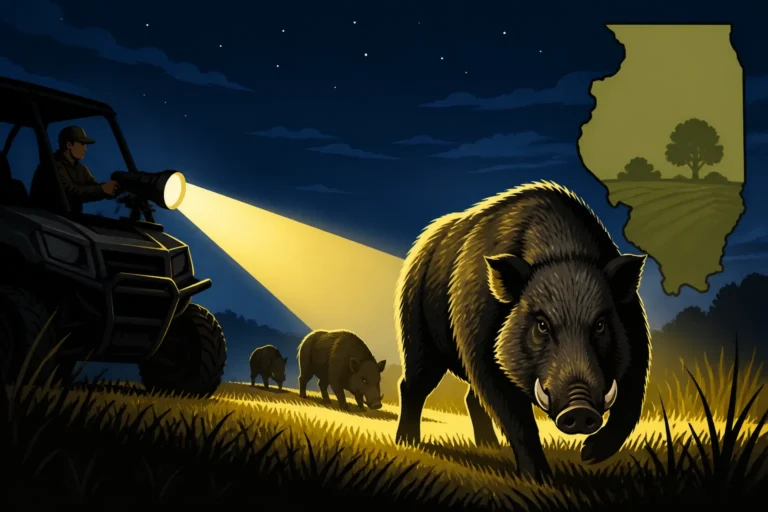
One crucial distinction: on private land, night hunting is legal for hogs with the landowner's permission. This is often the most effective method, but public lands typically restrict hunting to daylight hours. You're also generally required to possess a valid Illinois hunting license and a Habitat Stamp, even if hogs aren't technically a "game animal." Always carry proof of your license and stamp while hunting.
Choosing the Right Firearm for Effective Hog Control
When it comes to firearms for feral hogs, power and rapid follow-up shots are your friends. These animals are incredibly tough, with a thick gristle plate often referred to as a "shield" over their shoulders, making them surprisingly resistant to marginal calibers. While archery equipment is perfectly legal and effective at close range, most hunters opt for firearms.
For rifles, common calibers like .223/5.56, .308 Win, 6.5 Creedmoor, and .30-06 Springfield are excellent choices. Many hunters prefer AR-style platforms for their capacity for quick, accurate follow-up shots on multiple hogs within a sounder. Shotguns loaded with slugs are also highly effective, especially in thicker cover where shots might be closer. Modern straight-wall cartridges like the .450 Bushmaster or .350 Legend, which are popular for deer hunting in Illinois, also make fantastic hog rounds. No matter your choice, always opt for a reliable, well-constructed bullet designed for maximum energy transfer and penetration to ensure humane kills.
Essential Equipment for Day and Night Operations
Beyond your firearm, a few other pieces of gear are non-negotiable for successful hog hunting. For daylight hunting, good optics – a reliable scope on your rifle and a quality pair of binoculars – are paramount for spotting hogs at a distance and identifying fresh sign. A rangefinder is also invaluable. Sturdy hunting boots, durable clothing, and a comfortable pack for carrying essentials like water, snacks, and a first-aid kit are always important.
For night operations, which are often the most productive, specialized gear is a must. This includes high-quality thermal optics or night vision devices, which we'll delve into more deeply later. A powerful red or green hunting light can also be used, depending on local regulations and your preference, to illuminate targets without spooking them as much as white light. A good shooting rest or bipod is essential for accurate shots in low light conditions. Finally, always have a reliable communication device and let someone know your plans, especially if hunting solo at night.
Effective Hunting Strategies for Illinois Hogs
Feral hogs are smart, adaptable, and incredibly wary, especially if they've been pressured. Simply walking into the woods hoping to stumble upon them rarely works. You need a strategic approach tailored to their behavior and the local environment.
The Art of Still-Hunting and Spot-and-Stalk
Still-hunting and spot-and-stalk are highly effective tactics, particularly in areas with good visibility or where hogs are known to be active during daylight hours. This involves moving slowly, deliberately, and quietly through the woods, pausing frequently to scan and listen. You're not just looking for hogs, but for fresh sign: rooting, wallows, tracks, and rubs. When you find fresh sign, slow down even more.
The key to successful spot-and-stalk is understanding wind direction, using cover to your advantage, and moving only when hogs aren't looking in your direction. Hogs have an incredible sense of smell and good hearing, but their eyesight is generally poor. Always approach downwind. In larger timber, focus on creek bottoms, natural funnels, and areas where bedding cover meets feeding opportunities. A high-quality mapping app like those from GoHunt can be invaluable here, helping you identify terrain features, property lines, and potential travel corridors where hogs might be moving. The ability to mark fresh sign and track your movement allows for better planning on subsequent hunts.
Ambush Tactics: Baits, Waterholes, and Food Sources
Ambush hunting is often highly productive, especially on private land where baiting is permitted. Hogs are voracious eaters and will readily come to bait sites. Corn is the most common and effective bait, but various fermented mixtures, commercial hog attractants, and even discarded food scraps can work. When setting up a bait site, consistency is key; replenish the bait regularly to pattern the hogs. Place your bait in a location that offers a clear shot and a safe backdrop, and ensure you have a comfortable ground blind or treestand setup for a long sit.
Waterholes and other natural food sources are equally important ambush points. During dry spells, hogs will frequent any available water. Similarly, during acorn drops in the fall or when specific crops like soybeans or corn are ripe, hogs will concentrate their feeding efforts there. Setting up on a field edge, especially where hogs enter and exit thick cover, can be incredibly effective. Consider the prevailing wind, access routes that won't alert the hogs, and plan for low-light conditions, as hogs are often most active at dawn, dusk, or throughout the night.
Utilizing Hunting Dogs for Feral Hog Control
For some hunters and landowners, using well-trained hunting dogs is the preferred method for hog control. This isn't just a casual hunt; it's a dedicated effort with specialized dogs (often a combination of "bay dogs" that locate and hold the hog at bay by barking, and "catch dogs" that physically restrain the hog). Dog drives are particularly effective in dense cover where hogs might otherwise evade hunters, or for locating and dispatching entire sounders quickly.
Illinois does have regulations regarding the use of dogs for hunting, and it's essential to understand them. On private land, with landowner permission, dogs can be used for hog hunting. On public lands, specific restrictions apply, typically limiting dog use to other game seasons like squirrel or rabbit hunting, and rarely for hogs. When using dogs, safety is paramount for both the dogs and the hunters. Hogs are dangerous animals, and a cornered boar can inflict serious injury. This method often requires a team of experienced hunters and dogs and is usually best left to those with extensive experience in Dog-Drive Hog Guide Services or those operating under the guidance of a professional.
Mastering Night Hunting Techniques
Feral hogs are largely nocturnal, especially when pressured, which makes night hunting one of the most effective ways to target them. However, it requires specific gear, tactics, and an understanding of the legal landscape.
Planning Your Night Hunt for Maximum Success
Successful night hunting hinges on meticulous planning. First, scout your area thoroughly during the day. Identify travel corridors, feeding areas, water sources, and bedding cover. Note any potential obstacles or hazards. Use trail cameras (if legal and permitted) to confirm hog activity and pattern their movements, including entry and exit times. Knowing exactly when and where they show up is half the battle.
Set up your ambush point before dark. This could be a ground blind, a fixed stand, or a strategic position that offers a clear shooting lane. Ensure your approach and exit routes are quiet and won't spook the animals. Consider how light pollution might affect your night vision or thermal optics – sometimes a completely dark sky is your best friend. Pay extra attention to wind direction, as even the slightest shift can give you away in the stillness of the night. Having a partner for night hunts is always a good idea for safety and for recovering animals.
Legalities and Best Practices for Night Operations
As mentioned, Night Hunting Hogs With Lights on Private Land is generally permitted on private land in Illinois, with explicit landowner permission. On public lands, however, night hunting is almost universally prohibited. Always confirm the current regulations for your specific location before planning a night hunt. Most private land hog hunters using thermal or night vision equipment are focused purely on eradication, making quick, ethical shots at multiple animals in a sounder.
Best practices for night hunting include:
- Safety First: Always identify your target and what's beyond it. In the dark, this is even more critical. Use caution and be absolutely sure of your shot.
- Clearance: Ensure your shooting lanes are free of branches or obstructions that could deflect a bullet.
- Ethical Shots: Aim for the vitals (heart/lungs) or a head/neck shot if you're confident and close enough. Hogs are tough, and a poorly placed shot can lead to a long, difficult track.
- Minimizing Disturbance: Try to be as quiet as possible when hogs are in the area. Sound carries further at night.
- Recovery: Plan for how you will recover any downed animals. A strong flashlight (or thermal/NV) will be essential for blood trailing, and a game cart or ATV (if permitted) can be a lifesaver.
Mastering Thermal Optics for Night Operations
Thermal optics have revolutionized night hunting for feral hogs. Unlike traditional night vision that amplifies ambient light, thermal imaging detects heat signatures, allowing you to "see" hogs even in complete darkness, through light fog, or in dense brush where regular night vision might struggle. This gives you a massive advantage. Companies like Pulsar, ATN, and AGM Global Vision offer excellent thermal scopes and monoculars.
When using thermal, practice is key. Get familiar with your device in various conditions before your hunt. Understand its range, resolution, and how different environmental factors affect its performance. Start by using a thermal monocular to scan for heat signatures, then switch to your thermal scope for aiming once a target is identified. Remember that thermal doesn't give you a clear, detailed image of the animal, but rather its heat outline. Therefore, it’s crucial to confirm it’s a hog and not another animal, and to identify the precise aiming point before taking a shot. This technology is incredibly effective for hog eradication, allowing hunters to see and engage entire sounders unseen by the naked eye.
Advanced Trapping Methods for Sustained Removal
While hunting is effective for individual hogs or small sounders, trapping is often the most efficient and scalable method for reducing significant hog populations and achieving sustained control. Hogs are incredibly intelligent, but they can be outsmarted with a well-executed trapping plan.
Selecting and Deploying Advanced Trapping Systems
Gone are the days when a single small box trap was sufficient for a truly problematic sounder. Modern feral hog trapping relies on large, often circular or rectangular corral traps designed to capture multiple hogs, ideally an entire sounder, at once. These systems typically feature a large gate (e.g., a guillotine or saloon door style) that can be triggered remotely or by the hogs themselves. Popular brands include Jager Pro and BoarBuster, which integrate cellular cameras and remote triggers, allowing you to monitor the trap and drop the gate from your phone when the entire sounder is inside.
Choosing the right system depends on the size of the sounder you're targeting, your budget, and the specific terrain. Large, robust panels are essential to prevent hogs from breaking out. Deploy the trap in a high-traffic area, such as a known travel corridor, near fresh rooting, or along a creek bottom that hogs frequent. You'll want to pre-bait the area for several days or even weeks before setting the trap to condition the hogs to feed comfortably within and around the trap's footprint, as covered in Trapping Illinois Feral Hogs.
Implementing Pre-Baiting and Conditioning Strategies
Pre-baiting is arguably the most critical step in successful hog trapping. Hogs are wary, and they'll often avoid new structures in their environment for days or weeks. The goal of pre-baiting is to overcome this "trap shyness" by conditioning them to associate the trap area with a safe, abundant food source. Start by scattering corn or other attractants around the outside of the unset trap. Once they are consistently feeding there, gradually move the bait inside the unset trap. Continue this for several days or even weeks until the entire sounder is comfortable entering and feeding within the trap enclosure.
This conditioning period is where remote cameras, often equipped with cellular capabilities, are invaluable. They allow you to monitor which hogs are visiting, if the entire sounder is present, and their feeding patterns, all without disturbing the site. Only when you observe the entire sounder (including all the dominant boars and sows) feeding calmly inside the trap should you activate it or set the trigger. This patience pays off by maximizing your capture rates and ensuring you don't educate smaller groups while the dominant, breeding animals remain at large.
Efficient Removal and Management of Trapped Hogs
Once you've successfully trapped a sounder, the next step is humane and efficient removal. This is not a task for the faint of heart, as trapped hogs can be incredibly dangerous and stressed. Always approach a trap with extreme caution. The most common method of dispatch is a well-placed shot to the head. Depending on the size of the sounder, multiple hunters might be required for a quick and humane dispatch of all animals to minimize stress to the remaining hogs.
After dispatch, the carcasses must be properly handled. If you plan to process the meat (more on that below), move the hogs out of the trap quickly to begin field dressing. If not, local regulations may require proper disposal, such as burying or transporting to a rendering facility. It's crucial to ensure that any trapped hogs are dealt with ethically and in accordance with all local and state laws. Efficient removal ensures the trap can be reset quickly for future catches, continuing your control efforts. For those interested in deeper insights, knowing Illinois Hog Trapping Success Rates can help refine your strategy.
Finding and Accessing Illinois Hog Country
One of the biggest hurdles for any hunter, especially when dealing with a nomadic and elusive species like feral hogs, is simply finding where they are and getting permission to hunt them.
Identifying Public Lands with Feral Hog Presence
While the majority of Illinois's feral hog population is concentrated in the southern third of the state, particularly in counties bordering Kentucky and Missouri, sporadic populations can pop up elsewhere. The problem is that public land managers are often hesitant to publicize hog presence for fear of attracting unwanted hunting pressure or creating safety concerns.
Your best bet for finding public lands with hogs is to first consult the IDNR's regional offices or their online resources for general distribution maps. Then, focus your scouting efforts on areas known for dense vegetation, river bottoms, and agricultural interfaces within these regions. Areas like the Shawnee National Forest, specific State Fish and Wildlife Areas, and portions of the Cypress Creek National Wildlife Refuge in southern Illinois are potential hotspots. Look for creek systems, thick timber blocks, and remote corners that are less frequented by other hunters. Scouting apps like GoHunt can provide invaluable aerial imagery and public land boundaries to help you narrow down promising areas and avoid unexpected property line issues while Scouting Illinois Public Land Before Season.
Gaining Permission for Private Land Hog Hunts
Private land offers the most consistent and often most productive opportunities for hog hunting, especially with the ability to night hunt and trap. Getting permission, however, requires effort and respect. Start by identifying farms or properties in known hog-infested areas that are experiencing damage. Farmers are often desperate for help with hog control, as these animals can financially cripple their operations.
Approach landowners respectfully, explain your intent to help control the hogs, and highlight your experience and responsible hunting practices. Offer to share meat, provide references, or even assist with other farm tasks. Emphasize that you're there to help solve a problem, not just to hunt. A formal, written agreement outlining dates, access points, and specific hunting methods can build trust and clarity. Being a reliable, low-impact hunter who consistently helps remove hogs will quickly make you a valued asset to any landowner. Remember, Illinois's Year-Round Hog Rule on Private Land gives you a significant advantage once you secure permission.
Collaborative Approaches with Illinois Landowners
The most effective hog control programs often involve a collaborative effort between hunters, landowners, and sometimes even government agencies. If you secure permission on a property, consider inviting other trusted, responsible hunters to assist, especially for larger trapping or hunting efforts. The more consistent pressure applied, the better.
Landowners can provide crucial information on hog movement, fresh damage, and areas to avoid. In return, hunters provide a vital service, helping to protect crops and native wildlife. This partnership is essential because feral hogs don't respect property lines; a successful control program often requires a coordinated effort across multiple adjacent properties. Building these relationships is not only effective for hog control but also enriches the hunting community by fostering a spirit of cooperation and shared responsibility for wildlife management.
Processing and Utilizing Your Harvest
Once you've successfully harvested a feral hog, the work isn't over. Proper field dressing and meat care are crucial, not just for the quality of the meat but also for food safety.
Proper Field Dressing for Wild Hog Meat
Feral hogs are not inherently dirty animals, but like all wild game, their meat needs proper handling. Immediately after a humane kill, begin field dressing. This involves gutting the animal to allow the carcass to cool rapidly, which is especially important in warmer Illinois weather. Lay the hog on its back, make an incision from the breastbone to the pelvis, carefully opening the abdominal cavity without puncturing the intestines. Remove all internal organs.
Once gutted, prop the cavity open to air out and cool. If possible, rinse the cavity with clean water, but if not, wipe it clean with cloths or paper towels. If you're planning to skin the hog later, make sure to keep the carcass as clean as possible to avoid contaminating the meat with hair or dirt. Some hunters like to quarter the hog in the field, especially if it's a large animal and a long drag out. Consider a heavy-duty game cart for transport if you're alone or tackling a big boar.
Ensuring Food Safety and Handling Precautions
Wild hog meat is delicious, but it's crucial to be aware of potential health risks, primarily trichinosis. While rare, it can occur. Always cook wild hog meat thoroughly to an internal temperature of 160°F (71°C). Freezing doesn't reliably kill trichinella larvae, so cooking is your primary defense. Proper handling also means wearing gloves during field dressing and butchering, and thoroughly cleaning all tools and surfaces that come into contact with the meat.
Additionally, feral hogs can carry other diseases like brucellosis, which can be transmitted to humans through direct contact with infected blood or fluids. While cases are rare, it's why gloves are so important. If you notice any abnormalities in the organs or meat, such as lesions or cysts, it's best to discard that portion or the entire animal. The IDNR also monitors Illinois Wildlife Disease Monitoring and encourages reporting of any unusual findings. For areas within the Illinois's Chronic Wasting Disease Zone, while CWD is a deer disease, general caution and proper hygiene are always advised.
Options for Processing, Donation, and Enjoyment
After field dressing, you have several options for your hog. Many hunters choose to butcher their own hogs, converting the meat into roasts, chops, sausage, bacon, and ground meat. This is a rewarding process that gives you complete control over your food. If you're not comfortable butchering, take your hog to a reputable wild game processor. Discuss your preferences for cuts and preparations.
If you find yourself with more meat than you can use or simply wish to help those in need, consider donating the meat. Illinois has programs and organizations that accept wild game donations to feed the hungry. Contact your local food banks or "Hunters Helping the Hungry" type programs for guidelines on donating properly processed and packaged meat. Utilizing your harvest responsibly is an important part of the hunting experience and turns a problem animal into a sustainable food source for your family and community. Remember, wild hog meat, especially from younger animals, can be incredibly flavorful and versatile.
Overcoming Common Hog Hunting Challenges
Hunting feral hogs isn't always easy. These animals are notoriously intelligent and adaptable, presenting a unique set of challenges. Knowing how to overcome them will significantly improve your success rates.
Overcoming Wary Hog Behavior and Patterns
One of the biggest frustrations is dealing with a sounder of hogs that seems to vanish into thin air, only to reappear once you've packed up. Hogs learn quickly from pressure. If they've been shot at, trapped, or even just encountered humans frequently, they become incredibly wary and will shift to a more nocturnal pattern, using dense cover more extensively. They can detect human scent from a quarter-mile away, so playing the wind is non-negotiable.
To combat this wariness, minimize your footprint. Park vehicles far from your hunting area, use scent control, and approach from downwind. Don't overhunt a specific spot; rotate your locations to avoid educating the hogs. Using trail cameras for scouting, especially those with cellular capabilities, can give you real-time intelligence on their movements without putting human scent in the area. Patience is key – sometimes, the best strategy is to lay off an area for a week or two to let them settle down before returning with a fresh approach.
Adapting to Seasonal Changes and Habitat Shifts
Hogs, like all wildlife, adapt their behavior to the seasons and available resources. Their diet, travel patterns, and preferred bedding areas will change throughout the year. In spring and summer, they'll often be in lush creek bottoms, agricultural fields, or near water sources. As fall approaches, they'll gravitate towards mast crops like acorns and pecans. In winter, they might concentrate around persistent food sources, standing corn, or thick thermal cover.
Successful hunters adapt their tactics accordingly. In spring, focus on areas with emerging greenery and water. In fall, scout oak ridges and pecan bottoms, using aerial maps from services like GoHunt to pinpoint these areas. During harsh winter conditions, look for dense cedar thickets, brush piles, or south-facing slopes that offer shelter. Being able to read the landscape and understand what resources are available will help you anticipate hog movements, rather than just reacting to where they were last week.
The Importance of Persistence and Continuous Effort
Hunting feral hogs is rarely a one-and-done deal. Their rapid reproduction rates and nomadic tendencies mean that even if you remove an entire sounder, another one might move into the area within weeks or months. True hog control is a continuous, year-round effort. This means consistent scouting, maintaining bait sites, checking traps, and being ready to hunt whenever and wherever an opportunity arises.
Don't get discouraged by setbacks. There will be nights you sit in the blind and see nothing, or weeks where the hogs seem to disappear. But every hog removed is a win for Illinois's agriculture and native wildlife. Embrace the challenge, learn from every outing, and understand that you are contributing to a vital conservation effort. Your persistence makes a real difference in the ongoing battle against these destructive invaders.
Disclaimer
This guide is for informational purposes only and does not supersede any official regulations or laws set forth by the Illinois Department of Natural Resources (IDNR) or local authorities. Hunters are solely responsible for understanding and adhering to all current hunting laws, licensing requirements, and landowner permissions. Always prioritize safety and ethical hunting practices. Conditions and regulations can change, so always consult the most current official IDNR publications before heading afield.