Illinois Bobwhite Quail Decline
It's a bittersweet truth for many Illinois hunters and outdoor enthusiasts: the cheerful, unmistakable "bob-white!" call of the northern bobwhite quail has become a rarer sound across our prairies and woodlands. For those of us who remember a time when these feisty little game birds were abundant, the decline is more than just a statistic; it's a profound sense of loss for a quintessential piece of our state's natural heritage. This guide will delve into the complex reasons behind the diminishing quail populations, trace their historical highs and lows, examine current challenges, and explore the dedicated efforts being made to bring their distinctive whistle back to Illinois.
A Historical Look at Illinois's Bobwhite Quail
To understand where we are, we first need to appreciate where we've been. There was a time when Illinois was practically synonymous with thriving bobwhite quail populations.
A Look Back at Abundance
If you talk to any old-timer who hunted Illinois in the mid-20th century, they'll often recount stories of bursting coveys and plentiful birds. Illinois was once considered prime quail country, particularly across the central and southern parts of the state. Fields of corn and soybeans were smaller, hedgerows were common, and farms were mosaics of small grain crops, pasture, and brushy draws. This diverse landscape provided everything a quail covey needed: dense cover for roosting and escaping predators, open ground for foraging, and a reliable food source throughout the year. The calls of quail were simply part of the soundtrack of rural Illinois, a sound so common that many took it for granted.
Imagine a crisp autumn morning, a light frost on the ground, and the eager whine of a bird dog working a fencerow. Suddenly, the air erupts with the explosive flush of a dozen or more quail, scattering in every direction. This wasn't a rare occurrence; for many, it was the expected outcome of a good day hunting. The sheer numbers of birds allowed for robust hunting seasons and still left plenty of breeding stock for the following year. It truly was a golden age for quail hunting in Illinois, and those memories now serve as a stark contrast to today's reality.
Early Farming Practices and Quail
The agricultural practices of the past, ironically, often created ideal conditions for quail. Mixed farming, common from the late 1800s through the mid-1900s, meant smaller fields, diverse crop rotations, and a less "clean" approach to farming. Farmers would often leave brushy corners, fencerows, and uncropped areas to prevent erosion or simply because the land wasn't easily tilled. These seemingly unproductive areas were gold mines for quail, offering vital cover, nesting sites, and insects. Small grains like wheat, oats, and hay were much more prevalent, providing excellent nesting cover and insect forage for chicks.
Livestock grazing, particularly in moderation, also contributed to a diverse plant structure that quail favored, creating pockets of taller grasses and open areas for movement. Fields were often bordered by brushy ditches or timber strips, which served as natural highways and escape routes for birds. This patchwork quilt of different habitats was precisely what quail needed to thrive, allowing them to escape predators, raise broods, and find food without having to travel far or expose themselves to danger. It was a balance, perhaps unintended, that perfectly suited the bobwhite.
The Core Problem: Habitat Loss and Fragmentation
When we talk about the decline of Illinois's quail, habitat loss is almost always the lead suspect. It's not just that habitat has disappeared; it's also how the remaining habitat has been fragmented into isolated patches.
Intensified Agriculture's Impact
The most significant driver of quail decline has been the drastic shift in agricultural practices. Starting in the mid-20th century and accelerating since, farming has become increasingly industrialized and efficient. "Fencerow-to-fencerow" farming became the norm, driven by larger machinery, improved genetics in cash crops like corn and soybeans, and economic pressures to maximize yield. This meant the removal of those brushy fencerows, small woodlots, and odd corners that were once so critical for quail. Fields expanded, becoming vast monocultures stretching for hundreds of acres.
While incredibly productive for growing food and feed, these expansive, clean fields offer very little to a bobwhite quail. They lack the diverse cover needed for nesting, brooding, and protection from predators and weather. Think about it: a chick hatched in a vast soybean field has nowhere to hide from a hawk, and a covey trying to escape a coyote has nowhere to run in an open cornfield after harvest. This transformation of the landscape from a mosaic of diverse habitats to a uniform carpet of cash crops has fundamentally altered the environment for quail, leaving them with insufficient places to live, reproduce, and survive.
Loss of Edge Habitat and Fencerows
The removal of edge habitat and fencerows has been particularly devastating. Quail are creatures of the "edge" – the transition zone between different types of cover. A classic quail habitat might include a dense shrubby hedgerow bordering a field of tall grass, which in turn borders a crop field. The hedgerow provides escape cover and roosting sites, the tall grass offers nesting and insect foraging, and the crop field provides winter food. These transitions are crucial.
However, as fields have been consolidated and expanded, fencerows, which once provided linear strips of essential cover and travel corridors, have been systematically removed. What's left are often stark boundaries between a crop field and a road, or between two enormous crop fields. Without these vital edges, quail are forced into less ideal habitats or pushed out entirely. They can't move safely between different types of cover, making them more vulnerable to predators and less likely to find everything they need within their limited home range. The disappearance of these crucial linear habitats has effectively cut off quail from the resources they need to thrive, leaving them isolated and exposed.
Urban Sprawl and Infrastructure Development
While agriculture is often the primary culprit in rural areas, urban sprawl and infrastructure development play a significant role closer to metropolitan and growing regional centers. As towns and cities expand, natural and semi-natural habitats are replaced by houses, roads, shopping centers, and industrial parks. Even if these developments don't directly eliminate quail habitat, they can fragment existing patches, making them too small or isolated to support a viable quail population.
Consider a sprawling housing development that replaces what was once a mix of small farms and woodlands. Even if a few small green spaces remain, they are often too manicured, too disturbed by human activity, or too disconnected from other wild areas to serve as effective quail habitat. New roads, power lines, and other infrastructure also carve up the landscape, creating barriers to movement and further isolating remaining populations. The relentless march of development, while necessary for human growth, unfortunately often comes at the direct expense of wildlife like the bobwhite quail, pushing them out of their traditional ranges and shrinking the overall acreage of suitable land.
Other Contributing Factors to the Decline
While habitat loss is the big kahuna, it's not the only factor at play. Several other elements exacerbate the challenges facing Illinois's quail.
Predation Pressures
Predation is a natural part of any ecosystem, but when prey populations are already stressed by habitat loss, increased predator pressure can have a disproportionate impact. Illinois has seen an increase in generalist predators like raccoons, opossums, skunks, and coyotes in many areas. These animals are highly adaptable and can thrive even in fragmented landscapes and suburban environments. With less dense, contiguous cover, quail become easier targets for these predators, especially during nesting season.
Imagine a quail hen trying to nest in a sparse patch of grass near a field edge, with a hungry raccoon or coyote patrolling the area. Her chances of successfully hatching a clutch are significantly reduced compared to a hen nested deep within a robust, extensive block of cover. While predators rarely "cause" a decline, they can certainly suppress recovery efforts and push already struggling populations closer to the brink, especially when habitat makes quail more vulnerable than they historically were.
Weather Extremes and Disease
Mother Nature, with her unpredictable moods, also plays a role. Quail are particularly sensitive to extreme weather events, especially during critical breeding and wintering periods. Prolonged cold snaps with deep snow cover can be devastating, making it impossible for birds to find food and shelter, leading to high mortality rates. Conversely, severe drought can reduce insect populations (a vital food source for chicks) and stunt the growth of crucial nesting cover. Heavy, prolonged rains during the spring nesting season can flood nests or cause chicks to succumb to hypothermia.
While less understood in wild populations, disease outbreaks can also impact quail. Though not as widely publicized as some deer diseases, local epidemics of avian diseases could certainly contribute to declines in localized populations, especially if birds are already stressed by poor habitat or nutrition. These natural challenges, when coupled with already weakened populations due to habitat loss, can deliver a significant blow from which it takes years to recover.
Pesticides and Herbicides
The widespread use of pesticides and herbicides in modern agriculture also presents a challenge. Herbicides, designed to eliminate "weeds" in crop fields, often remove native plants that would otherwise provide food (seeds, berries) and cover for quail. Many of these plants also host insects, which are absolutely vital for quail chicks in their first few weeks of life. Without a plentiful supply of protein-rich insects, chicks struggle to grow and survive.
Pesticides, of course, directly target insect populations. While intended for agricultural pests, they can inadvertently reduce the availability of beneficial insects that quail rely on. Furthermore, there's always the concern about direct exposure or secondary poisoning for birds that consume contaminated insects or plant material. While the direct link to quail decline can be complex to prove, it's undeniable that a landscape drenched in chemicals becomes a less hospitable place for insect-eating birds like the bobwhite, impacting their food chain and overall health.
Current Status and Monitoring Efforts
Understanding the scope of the problem requires ongoing assessment. Illinois, like many states, employs various methods to track its quail populations.
Survey Methods and Population Trends
The Illinois Department of Natural Resources (IDNR) typically monitors quail populations through various survey methods, with call counts being a primary tool. During the spring breeding season, biologists conduct roadside surveys, stopping at designated points to listen for the distinctive "bob-white!" call of male quail. The number of unique calls heard at each stop helps create an index of population density. This is often supplemented by hunter harvest data, which can provide additional insights into population trends, though harvest numbers are more a reflection of hunter success and effort rather than raw population size.
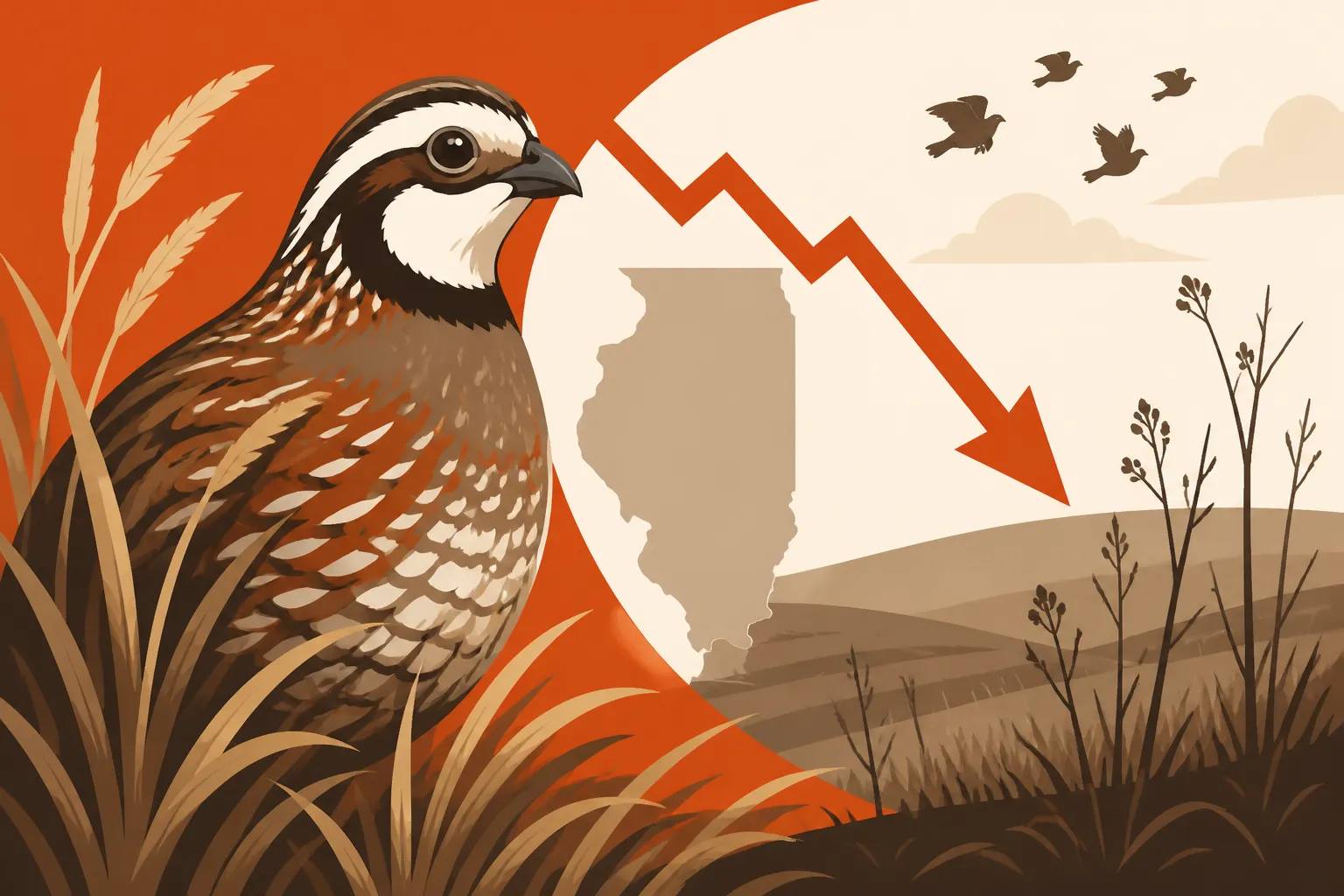
Over the decades, these surveys have painted a clear, albeit grim, picture: a consistent, long-term decline in bobwhite quail numbers across much of the state. While there might be year-to-year fluctuations due to weather or localized conditions, the overall trend has been undeniably downward. Some areas show extremely low densities, while others might retain small, isolated pockets of birds. These trends highlight the urgent need for robust conservation action to reverse the trajectory. The data clearly shows that the days of widespread, booming quail numbers are, for now, behind us.
Regional Variations in Quail Numbers
The decline hasn't been uniform across Illinois. You'll often find that quail populations are doing slightly better in certain regions compared to others. Generally, the southern and west-central parts of the state tend to hold the highest densities of remaining quail. These areas often feature more diverse landscapes, with a mix of row crops, pasture, small woodlots, and more public lands. The Shawnee Hills region in southern Illinois, for instance, with its rolling hills, timbered draws, and smaller agricultural parcels, still offers some of the best remaining habitat.
In contrast, the highly agricultural central and northern regions of Illinois have experienced the most severe declines. Here, the landscape is often dominated by vast, unbroken fields of corn and soybeans, leaving very little suitable cover for quail. Even where small patches of cover exist, they are often too isolated or too small to support a thriving population. Understanding these regional differences helps conservationists target their efforts more effectively, focusing on areas with the greatest potential for recovery or those where populations are clinging on.
Challenges in Accurate Monitoring
Monitoring a secretive, ground-dwelling bird like the bobwhite quail presents its own set of challenges. Call count surveys, while valuable, are an index and not a direct count of every bird. Factors like weather on the survey day (wind, rain) can influence how well calls are heard, as can the timing of the surveys relative to the peak calling period. Furthermore, as populations become very sparse, it becomes harder to detect birds, potentially masking even lower numbers than anticipated.
Another challenge is accounting for birds that may be present but not calling, or birds in habitats not easily surveyed from roadsides. The patchy nature of remaining populations also means that a single survey route might miss an isolated covey that's just a few miles away. Developing more advanced monitoring techniques, such as using acoustic recorders or even citizen science efforts to report sightings, could provide a more comprehensive picture. Despite these hurdles, the consistent trend from existing surveys provides enough evidence to confirm the serious plight of the Illinois bobwhite quail.
| Region of Illinois | Historical Quail Abundance | Current Quail Status (General) | Primary Challenges |
|---|---|---|---|
| Northern Illinois | Moderate | Very Low to Extirpated | Intense Agriculture, Urban Sprawl |
| Central Illinois | High | Low to Very Low | Intense Agriculture, Monoculture |
| West-Central Illinois | Very High | Low to Moderate | Habitat Fragmentation, Ag Intensification |
| Southern Illinois | Very High | Moderate to Low | Habitat Fragmentation, Pine Plantations |
| Shawnee Hills | Very High | Moderate (Best Remaining) | Habitat Fragmentation, Limited Public Access |
Conservation and Restoration Efforts in Illinois
Despite the challenges, many dedicated individuals and organizations are working tirelessly to bring back the bobwhite quail. Their efforts often focus on habitat creation and restoration.
Illinois State Initiatives and Programs
The IDNR and other state agencies are actively involved in quail conservation. Programs often focus on habitat enhancement on public lands, such as state fish and wildlife areas. This can involve prescribed burning, native grass plantings, shrub establishment, and timber stand improvement to create a more diverse understory. Many of these efforts also benefit other small game species like rabbits and pheasants, making them multi-species conservation wins. Illinois State Fish and Wildlife Areas are often key sites for these habitat projects.
The state also administers cost-share programs and technical assistance for private landowners interested in habitat work. These programs can provide financial incentives and expert guidance for planting native grasses, establishing hedgerows, or creating early successional habitat on their properties. Such efforts are crucial because the vast majority of Illinois's land is privately owned. The success of these initiatives relies heavily on landowner participation and a commitment to long-term habitat management.
Private Landowner Incentive Programs
Given that over 90% of Illinois is privately owned, private landowners are absolutely essential to any successful quail recovery effort. Several federal and state programs exist to encourage and support habitat work on private lands. Programs like the Conservation Reserve Program (CRP) offer annual rental payments for taking highly erodible or environmentally sensitive cropland out of production and planting it to grasses and trees. Specific CRP practices, such as CP33 (Habitat Buffers for Upland Birds), are specifically designed to create ideal quail habitat along field borders.
Beyond CRP, other programs like the Environmental Quality Incentives Program (EQIP) provide financial and technical assistance for a range of conservation practices, including prescribed grazing, hedgerow plantings, and establishment of native warm-season grasses. Landowners might also work with organizations like Quail Forever, which provides biologists directly to assist landowners with habitat planning and implementation. The key here is making it financially and logistically feasible for farmers and landowners to dedicate portions of their land to wildlife, recognizing that these smaller, less intensively managed areas are critical refuges for quail. For those looking to manage their land, tools like GoHunt can provide useful insights into land features, even if its primary focus is big game, to help identify potential areas for habitat improvement.
Key Habitat Restoration Techniques
Effective quail restoration hinges on creating the right mix of habitat components. This isn't just about planting "quail food" or "quail cover;" it's about creating a complex, diverse landscape that meets all their needs throughout the year.
- Native Warm-Season Grasses (NWSG): Planting fields of native grasses like switchgrass, big bluestem, and indiangrass provides excellent nesting cover, escape cover, and insect habitat. These grasses stand up well to snow, offering critical winter cover.
- Shrub Thickets and Hedgerows: Dense patches of native shrubs like plum, dogwood, and hawthorn are vital for escape cover from aerial and ground predators, as well as providing roosting sites and some food. Re-establishing or maintaining Rabbit Hunting Illinois Fencerows can provide a dual benefit.
- Early Successional Habitat: Quail thrive in young, brushy areas that are transitioning from open fields to mature timber. This often involves periodic disturbance like prescribed burning, disking, or light timber stand improvement to prevent an area from becoming too dense or too mature.
- Food Plots: While natural food sources are best, small food plots of sorghum, millet, or native seed mixes can supplement winter food supplies, especially in areas with limited natural forage.
- Edge Feathering: This technique involves selectively cutting trees along forest edges and pushing them down to create a brushy transition zone between timber and open fields. This provides valuable cover and allows sunlight to reach the forest floor, promoting diverse plant growth.
These techniques, often used in combination, are designed to mimic the diverse, "weedy" farmscapes that historically supported such robust quail populations. It's about creating a living tapestry that offers everything a quail needs within a small, accessible area.
What Hunters Can Do to Help
Hunters have always been at the forefront of conservation, and their role in the future of Illinois's quail is no different. We have a crucial part to play, not just in advocating, but in actively participating.
Supporting Conservation Organizations
One of the most direct ways hunters can help is by supporting organizations dedicated to quail conservation. Groups like Quail Forever (QF) are specifically focused on the habitat needs of bobwhite quail and other upland birds. They employ biologists who work directly with landowners, implement habitat projects, and advocate for policies that benefit quail. A portion of your membership dues and donations directly funds boots-on-the-ground habitat work.
Other organizations, like Pheasants Forever (which often has overlapping goals with quail), the National Wild Turkey Federation (NWTF), and Ducks Unlimited, also engage in habitat work that can indirectly or directly benefit quail. For example, creating diverse grasslands for pheasants or improving forest understories for turkeys can also provide valuable cover and food for quail. When you buy Illinois Hunting Licenses and What They Cost or contribute to habitat stamps, you're also supporting these efforts at a state level. Every dollar contributed helps expand the reach of these vital conservation programs.
Habitat Improvement on Private Land
For those who own or lease land, active habitat improvement is one of the most impactful things you can do. This isn't just for large landowners; even small parcels can be managed to create valuable habitat. Start by assessing your property for existing quail needs. Do you have dense escape cover? Are there areas for nesting? What about winter food sources?
Consider planting native warm-season grasses along field edges or in fallow areas. Create brush piles or plant native shrub thickets. Implement prescribed burns in grasslands or timber to promote early successional growth. You don't have to be an expert; the IDNR and organizations like Quail Forever offer technical assistance to help you develop a habitat plan tailored to your property. Even leaving un-mowed strips along ditches or field borders can make a significant difference. Reading a Ridge for Shawnee Forest Deer or Hunting a Funnel Between Two Woodlots might primarily be for deer, but thinking about diverse cover for multiple species will benefit quail too. Every acre managed for quail habitat is a step towards bringing back their call.
Advocacy and Education
Beyond financial support and direct habitat work, hunters can be powerful advocates for quail conservation. Speak up about the importance of habitat in conversations with friends, neighbors, and especially policymakers. Educate others about the role of diversified agriculture, native plant communities, and the interconnectedness of healthy ecosystems. Attend local conservation meetings and engage with your local IDNR staff.
Encourage farmers and landowners you know to explore conservation programs available to them. Share success stories of habitat restoration and highlight the aesthetic and ecological benefits of bringing back a diverse array of wildlife. By being informed and vocal, hunters can help build a broader base of support for quail conservation and ensure that future generations have the opportunity to hear that iconic "bob-white!" call echo across the Illinois landscape once again.
Disclaimer
This article is for general informational purposes only and does not constitute professional advice. Laws, prices and regulations vary by location and change over time. Consult a qualified professional for guidance on your specific situation.