Wild Turkeys in Illinois
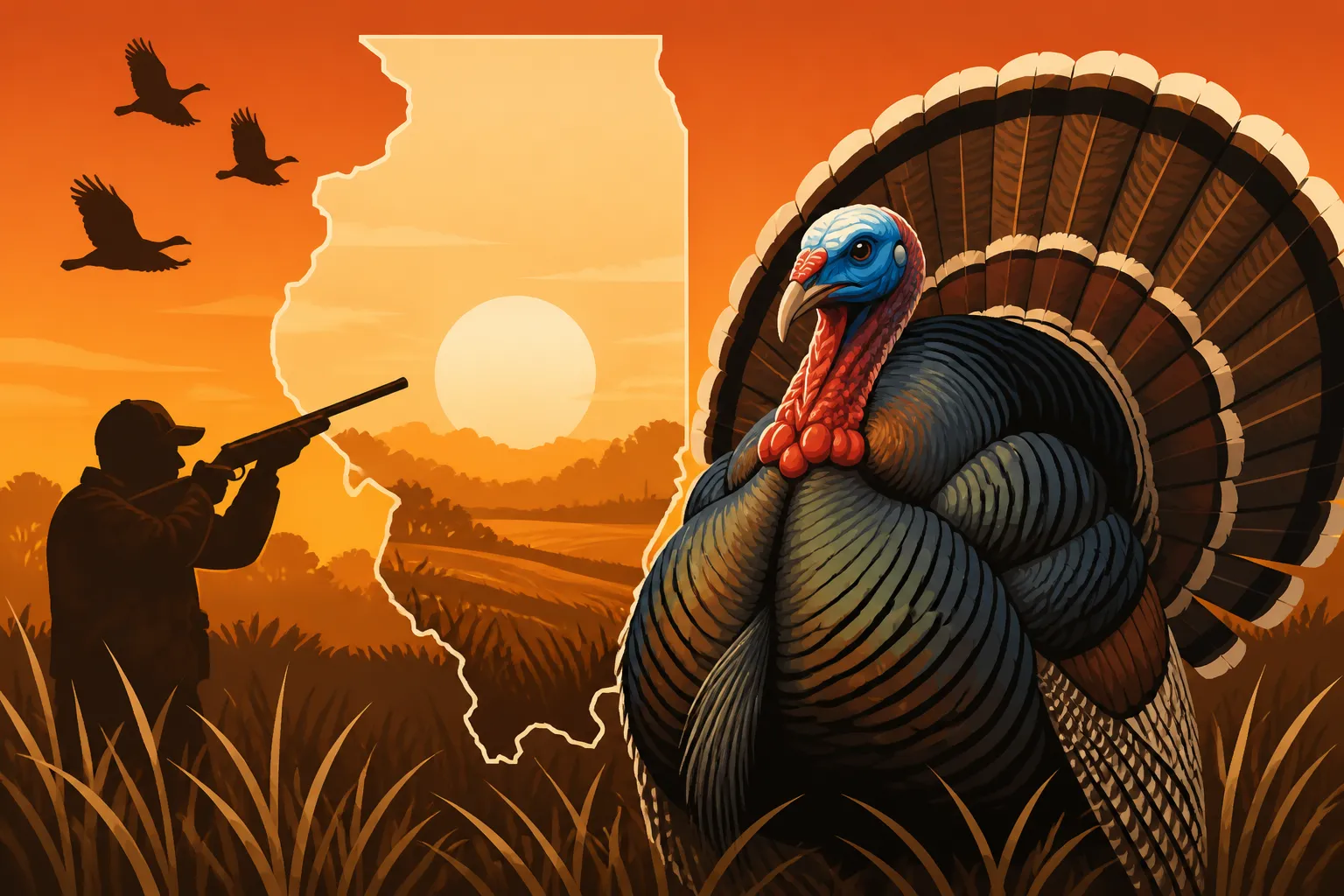
The Illinois landscape, with its vast farmlands, timbered river bottoms, and rolling hills, holds a secret that many hunters know all too well: the wild turkey can be one of the most frustratingly elusive and thrilling game animals to pursue. If you've ever felt the sting of a gobbler cutting off your calls or the utter silence of a woods where birds "should" be, you understand the challenge. This comprehensive guide aims to peel back the layers of mystery surrounding wild turkeys in Illinois, helping you understand their history, current populations, behaviors, and the best strategies to find success in the field, whether it's spring or fall.
The Remarkable Comeback Story of Illinois Turkeys
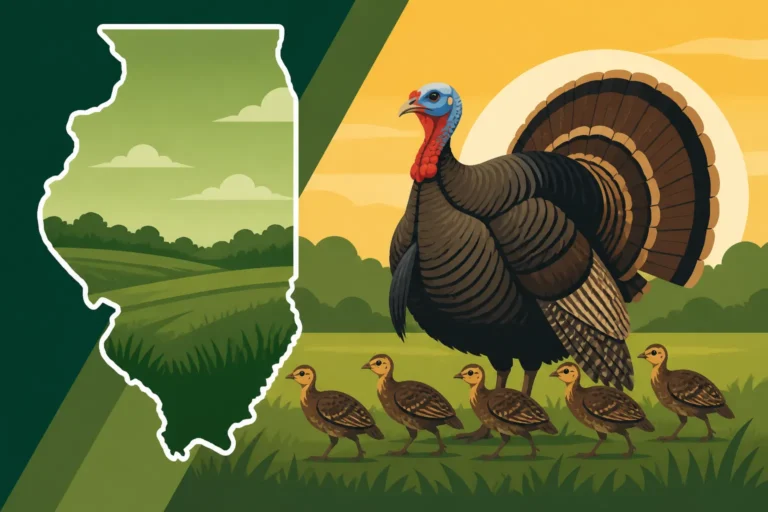
It's hard to imagine Illinois without the booming gobble of a wild turkey echoing through the woods, but for a significant period, this iconic bird was entirely absent from the state. Their return is one of the greatest conservation success stories, a testament to dedicated efforts and the resilience of wildlife.
From Extirpation to Restoration: A Historical Look
By the early 1900s, wild turkeys were completely extirpated from Illinois. Unregulated hunting in the 19th century, coupled with massive deforestation for agriculture and timber, destroyed their habitat and led to their disappearance. The landscape that once supported abundant flocks was drastically altered, leaving no refuge for these majestic birds. For decades, Illinois hunters could only dream of chasing a wild turkey within state lines. It was a stark reminder of how quickly unchecked exploitation and habitat destruction can decimate even robust wildlife populations. The thought of Illinois lacking turkeys now feels almost alien, given their current presence, but it was a harsh reality for generations of hunters and naturalists.
Restoration Efforts and Release Programs
The tide began to turn in the mid-20th century, largely due to a growing conservation movement and new biological understanding. The Illinois Department of Natural Resources (IDNR), alongside other agencies, initiated ambitious trap-and-transfer programs. Instead of relying on pen-raised birds, which had proven largely ineffective in other states, biologists captured truly wild turkeys from states with healthy populations, such as Arkansas, Mississippi, and West Virginia. These wild-trapped birds were then released into carefully selected, suitable habitats in Illinois. The first successful releases began in the 1950s, primarily in the heavily timbered regions of Southern Illinois, like the Shawnee National Forest. These birds, possessing the instincts and hardiness of their wild heritage, were able to adapt, reproduce, and thrive, forming the foundation of Illinois's modern turkey population.
The Role of Habitat Improvement
The success of the trap-and-transfer program wasn't just about releasing birds; it was intrinsically linked to concurrent habitat improvement and protection efforts. Reforestation projects, better forest management practices, and the establishment of state parks and fish and wildlife areas provided the essential cover, nesting sites, and food sources that wild turkeys need to survive and flourish. Strict hunting regulations, including closed seasons, also allowed these newly established populations to grow without undue pressure. As the birds expanded their range, IDNR continued to monitor and manage, ensuring that habitat quality remained a top priority. This holistic approach, combining reintroduction with habitat recovery, was crucial for the long-term sustainability of wild turkeys in Illinois, transforming areas that were once barren of turkeys into prime hunting grounds.
Understanding Illinois's Wild Turkey Populations Today
Today, Illinois boasts a healthy and widespread wild turkey population, offering fantastic opportunities for hunters across the state. However, understanding the nuances of their distribution and health is key to consistent success.
Current Population Estimates and Trends
While exact figures can fluctuate annually, the Illinois Turkey Population Estimate typically hovers around hundreds of thousands, a far cry from their complete absence just decades ago. The IDNR conducts regular surveys, often through brood routes and hunter harvest data, to monitor population trends. Generally, Illinois's turkey population has remained stable or shown slight increases in many areas, particularly in suitable timbered regions. However, like any wildlife population, localized declines can occur due to factors such as severe weather during nesting, disease outbreaks, or significant habitat changes. Hunters play a vital role in this monitoring by accurately reporting their harvest, which helps biologists make informed management decisions. It’s a dynamic system, and while the overall picture is positive, vigilance is always necessary.
Regional Differences in Turkey Density
You'll find wild turkeys across almost all 102 counties in Illinois, but their density can vary significantly from one region to another. Generally, the highest concentrations of turkeys are found in the heavily timbered areas of Southern Illinois, particularly in the Shawnee Hills region and along major river systems like the Illinois and Mississippi. The sheer amount of unbroken forest, coupled with diverse mast crops, provides ideal habitat. As you move northward, the landscape becomes more fragmented, with timber interspersed with vast agricultural fields. Turkeys adapt to this, often utilizing smaller woodlots, creek bottoms, and fencerows. However, the density might be lower, and birds can be more challenging to pattern as they traverse larger areas for food and cover. For instance, areas around the Illinois River Valley are known for good populations, while sections of Central Illinois farmland might hold fewer birds, requiring more diligent scouting. For those wondering Where Illinois Turkeys Are Densest, Southern Illinois and the major river corridors are generally excellent bets.
Poult-to-Hen Ratios and Nesting Success
One of the most critical metrics for assessing the health and future prospects of a turkey population is the Poult-to-Hen Ratios and What They Mean. This ratio, often determined through summer brood surveys, tells biologists how many young turkeys (poults) are surviving per adult hen. A healthy ratio indicates good nesting success and poult survival, suggesting the population is stable or growing. Factors like spring weather (cold, wet springs can be devastating to newly hatched poults), predation pressure, and habitat quality for nesting and brood-rearing all influence this ratio. If the ratio is low for several consecutive years, it can signal a potential decline in the population, prompting biologists to investigate causes and consider management adjustments. Hunters paying attention to these reports can get a sense of what to expect in future seasons; a strong poult crop usually means more juvenile birds to chase in the fall and a good recruitment into the spring gobbler population a couple of years down the line. Nest Predation and Illinois Turkey Hatches are significant factors affecting these numbers, with coyotes, raccoons, and opossums often impacting turkey nests.
Key Wild Turkey Behavior and Habitat Preferences in Illinois
To consistently locate and successfully hunt wild turkeys in Illinois, you need to think like a turkey. Understanding their daily routines, seasonal shifts, and preferred haunts is paramount.
Daily and Seasonal Movements: Roosts, Feed, and Water
Wild turkeys operate on a fairly predictable daily rhythm, especially outside of the peak breeding season. Their day begins on the roost, typically in tall, mature trees that offer security from ground predators. These roost trees are often along ridges, near water, or in larger timber blocks. From the roost, they'll fly down around dawn and immediately begin foraging, often moving towards food sources like agricultural fields (corn, soybeans, wheat), oak ridges with acorns, or clearings with insects and greens. Throughout the day, they will alternate between feeding, dusting, preening, and loafing in secure cover. Access to water is also critical, especially in warmer months, so creek bottoms and ponds are frequent stops. As evening approaches, they will begin moving back towards their roosting areas, often calling to gather the flock before flying up to their nighttime perches. This daily pattern can shift seasonally; in spring, gobblers are focused on breeding, while in fall, flocks are primarily focused on feeding and survival. Understanding Illinois Turkey Roost Tree Preferences can give you a significant advantage in patterning birds.
Breeding Season Dynamics: Gobbling and Strutting
Spring is all about reproduction, and the behavior of wild turkeys dramatically changes. This is when gobblers are most vocal, using their thunderous calls to attract hens and assert dominance. Hens, too, become more vocal, often clucking and yelping to communicate with gobblers and other hens. You'll see gobblers strutting in open areas, displaying their impressive fan and iridescent feathers to passing hens. The peak of this activity, often referred to as the "rut" for turkeys, is when they are most susceptible to calling. Early in the spring, gobblers might be with hens, making them harder to call in. As the season progresses and hens begin to nest, gobblers become "lonely" and more responsive to calls as they search for unbred hens. Knowing the general timing of these phases can dictate your calling strategy and the best times to be in the woods. Early mornings are almost always prime time, as gobblers sound off from the roost, making them easy to locate.
Preferred Illinois Habitats: Timber, Fields, and River Bottoms
Illinois's diverse landscape offers various habitats that turkeys utilize, often blending into an ideal mosaic.
- Mature Hardwood Timber: This is the quintessential turkey habitat. Large tracts of oak, hickory, and other mast-producing trees provide critical food sources (especially acorns in the fall) and secure roosting sites. The open understory often found in mature timber allows turkeys to move freely and see approaching predators.
- Agricultural Fields: Illinois is known for its vast farmlands, and turkeys have adapted to utilize them extensively. Cut cornfields offer waste grain, while soybean fields can provide insects and cover. Wheat and clover fields are also highly attractive, particularly in the spring for greens and insects. Turkeys often feed along field edges or make quick forays into harvested fields.
- River and Creek Bottoms: These linear strips of timber, often dense and bordering water, serve as crucial travel corridors and can hold excellent populations. They provide food, water, and thermal cover. Turkeys will often roost in the tall trees along these waterways and use them to travel between larger timber blocks and agricultural areas.
- Brushy Clearings and Old Fields: These areas, often with a mix of saplings, briars, and grasses, provide excellent nesting and brood-rearing habitat. The dense cover protects hens during incubation and offers security for young poults while they feed on insects.
A hunter using resources like GoHunt maps to identify areas where these habitat types converge, especially near public access points, will drastically increase their odds of finding birds. Think of areas like the Illinois River Valley, where vast timber meets productive agricultural land, creating a turkey paradise.
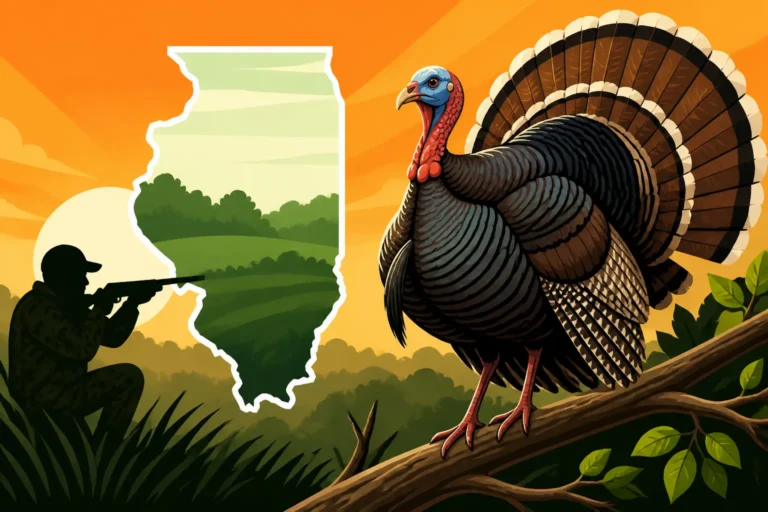
Illinois Spring Turkey Hunting Seasons and Strategies
Spring turkey hunting in Illinois is an annual pilgrimage for many, offering the chance to interact with a vocal gobbler. However, the season structure and bird behavior require specific strategies.
Decoding Illinois's Spring Turkey Zones and Periods
Illinois manages its spring turkey season with a zone and period system, designed to spread hunter pressure and provide ample opportunity. The state is divided into North and South Zones, each with multiple hunting periods. For specific dates and a detailed breakdown of the regulations, refer to the Illinois Spring Turkey Zones and Periods information provided by the IDNR. Typically, the South Zone opens earlier and has more periods than the North Zone. Understanding these periods is crucial because turkey behavior can change as the season progresses. Early periods might see gobblers "henned up," making them less responsive to calling, while later periods can find lonely gobblers more eager to investigate. This staggered system also helps manage harvest pressure across different regions and ensures sustainability. Hunters often need to apply for permits in a lottery system, so knowing your preferred zone and period is essential for planning.
Essential Spring Hunting Tactics: Calling and Decoying
Spring turkey hunting is often a game of calling, but it's not always about making the loudest, most persistent calls.
- Locating Birds: Before you can call, you need to know where the birds are. This often starts before dawn by listening for gobblers on the roost. "Shock gobbling" calls like owl hoots or crow caws can often elicit a response, giving away a bird's position. This initial locate is critical.
- Setting Up: Once a gobbler is located, your setup is paramount. You need to get as close as possible without being detected, choosing a spot with good visibility and a clear shot lane, ideally with a natural backdrop like a wide tree trunk for concealment. Consider the direction the gobbler is likely to approach and position yourself accordingly.
- Calling Strategy: The art of turkey calling involves mimicking various hen vocalizations. Start softly with tree yelps and soft clucks from the roost. Once the gobbler is on the ground, increase the intensity to more excited yelps and cuts, but don't overcall. Sometimes, less is more. Gauge the gobbler's interest; if he's coming, a few soft clucks might be all you need to seal the deal. If he hangs up, try a different call or a subtle change in cadence. Calling an Illinois Gobbler Off the Roost is a skill that takes practice and patience.
- Decoys: Decoys can be incredibly effective, especially for bringing a hesitant gobbler those last few yards. A hen decoy, or a hen and jake combo, can be irresistible to a dominant gobbler looking for a fight or a breeding opportunity. Place decoys where they are visible but not too far from your setup, ensuring a clear shot angle. Always set your decoys so the gobbler approaches them, not you. However, be aware that on heavily pressured public land, some hunters opt out of decoys to avoid giving away their position to other hunters. Decoy Placement for Pressured Illinois Birds involves understanding angles and visibility.
Public Land Challenges and How to Overcome Them
Hunting Illinois public lands for spring turkeys can be both rewarding and challenging due to increased hunter pressure.
- Pressure Management: Public land birds often become "call-shy" or wary quickly. Avoid over-calling and try to sound like a realistic, wary hen. If a gobbler commits, be prepared to wait him out. Consider trying different, less common calls.
- Finding Solitude: To escape pressure, you might need to walk further than most hunters. Use mapping tools like GoHunt to identify remote corners, deep timber, or areas with difficult access that other hunters might overlook. Often, the extra effort of a long hike or navigating tricky terrain is rewarded with unpressured birds.
- Scouting is Key: Pre-season scouting on public land is even more critical. Look for fresh sign, identify roosting areas, and pinpoint travel corridors. Knowing exactly where birds are before opening day gives you a significant advantage. The Scouting Illinois Public Land Before Season is an invaluable step that many hunters skip, costing them success.
- Adaptability: Public land birds can be unpredictable. Be ready to change your tactics if your initial plan isn't working. If a bird isn't responding to aggressive calling, try soft, subtle calls. If he hangs up, consider a "run-and-gun" approach to reposition and get ahead of him. Knowing Run-and-Gun Turkey Tactics on Public Land can be a game-changer when birds aren't cooperating.
Navigating Illinois's Fall Turkey Hunting Opportunities
While spring gets all the glory, fall turkey hunting offers a completely different, yet equally rewarding, experience. The strategies shift from calling in love-struck gobblers to breaking up and re-gathering fall flocks.
Fall Turkey Season Rules and Over-the-Counter Permits
Unlike the lottery system for spring permits, Illinois's Illinois Fall Turkey Season Rules are generally more accessible. Fall turkey permits are often available over-the-counter, making it easier for hunters to decide to go afield without the stress of a lottery. This flexibility means you can plan your hunt closer to the season based on weather, available time, or recent scouting. The season typically runs for several weeks, encompassing both archery and firearm options in many counties. It’s important to check the current year’s regulations for specific dates and county availability, as these can sometimes change. The relaxed permit structure is a big draw for many hunters looking to extend their turkey hunting season or introduce new hunters to the sport without the high pressure of spring. For those curious, Illinois's Over-the-Counter Fall Turkey Season offers great flexibility.
Breaking Up Flocks: A Classic Fall Tactic
The most iconic and effective fall turkey hunting tactic is "breaking up the flock."
- Locate the Flock: First, you need to find a flock of birds, typically a mix of hens and their poults (juvenile turkeys). This can involve extensive scouting, driving backroads, or listening for their characteristic "kee-kee" run calls.
- Scatter Them: Once you locate a flock, the goal is to get into position and rush them, causing them to scatter in all directions. The more effectively you scatter them, the better. This disruption disorients the birds and triggers their instinct to regroup.
- Call Them Back: After the scatter, find a good ambush point in the area where they were broken up, usually within 15-20 minutes. Then, using lost calls like a "kee-kee" run or soft yelps, start calling. The scattered birds, especially the young poults, will be eager to regroup, and they will often come running towards your calls. The key is patience; it can take anywhere from a few minutes to an hour or more for birds to start filtering back. This tactic is incredibly engaging and often leads to close-range encounters. For a detailed breakdown, check out Breaking Up a Fall Turkey Flock.
Hunting Late-Season Fall Turkeys
As the fall season progresses, especially into late November and December, turkey behavior can change significantly.
- Food Focus: Birds become even more focused on food sources to build up fat reserves for winter. They will heavily key in on mature timber with abundant mast crops, particularly oak ridges, or agricultural fields with waste grain. Scouting for these food sources becomes paramount.
- Larger Flocks: Fall turkeys tend to gather into larger, more cohesive flocks as winter approaches, offering communal protection. While harder to scatter effectively, locating these larger flocks can lead to multiple birds if you manage a good break.
- Weather and Roosting: Colder weather can make turkeys more predictable. They might roost in more sheltered areas and tend to feed for longer periods. Snow cover can also make scouting easier, as tracks reveal their movements and preferred feeding areas. Hunting late in the fall often involves more glassing and less calling, patiently waiting for birds to appear at a known food source or travel corridor. It’s a completely different challenge than the verbal sparring of spring, but equally rewarding.
Threats and Conservation Efforts for Illinois Wild Turkeys
Despite their strong comeback, wild turkeys in Illinois still face ongoing threats. Understanding these challenges and the conservation efforts to combat them is essential for their continued prosperity.
Predation, Disease, and Habitat Loss
Wild turkeys, especially young poults, face a gauntlet of challenges.
- Predation: Nest predation is a significant factor in poult survival, with raccoons, opossums, skunks, and snakes preying on eggs. Young poults are vulnerable to coyotes, bobcats, foxes, and various raptors. While predation is a natural part of the ecosystem, abnormally high predator populations can sometimes impact turkey recruitment.
- Disease: Turkeys are susceptible to various diseases, including Avian Pox and Mycoplasmosis. While widespread outbreaks are rare, localized incidents can occur. For instance, Lymphoproliferative Disease Virus (LPDV) has been observed in wild turkeys across North America, though its full impact is still being studied.
- Habitat Loss and Fragmentation: The continuous conversion of timbered areas and brushy habitats into agricultural land or development remains a long-term threat. Even small, isolated woodlots, while used by turkeys, may not provide enough contiguous habitat for optimal nesting and brood-rearing success. Maintaining large blocks of diverse habitat is crucial.
IDNR's Role in Turkey Management
The Illinois Department of Natural Resources (IDNR) plays a pivotal role in managing and conserving wild turkeys.
- Monitoring and Research: Through annual surveys, harvest reports, and scientific research, IDNR biologists track population trends, health, and distribution. This data informs management decisions, such as permit allocations and season structures.
- Habitat Programs: IDNR works to protect, restore, and enhance turkey habitat on both public and private lands. This includes forest management practices, prescribed burns to improve understory health, and promoting conservation programs that incentivize landowners to create turkey-friendly habitat.
- Regulation and Enforcement: By setting hunting seasons, bag limits, and legal methods, IDNR ensures sustainable harvest levels. Conservation police officers enforce these regulations to prevent poaching and ensure fair chase. The success of the Illinois Turkey Population Trends is directly tied to these ongoing efforts.
Hunter Contributions to Conservation
Hunters are, without a doubt, one of the most important stakeholders in wild turkey conservation.
- Funding: Through the purchase of hunting licenses, permits, and federal excise taxes on firearms and ammunition (Pittman-Robertson Act), hunters directly fund wildlife research, habitat acquisition, and management programs. Every permit purchased contributes to the well-being of the species.
- Data Collection: Hunters who accurately report their harvest provide invaluable data to IDNR biologists, helping them assess population health and make informed decisions. This seemingly small act is a critical component of modern wildlife management.
- Advocacy and Stewardship: Many hunters are active in conservation organizations like the National Wild Turkey Federation (NWTF), which dedicates significant resources to habitat restoration, research, and educating the public about wild turkeys. By practicing ethical hunting and land stewardship, hunters ensure a future for both the birds and the traditions surrounding them. Your passion for chasing gobblers directly fuels their continued presence in Illinois.
Advanced Tactics for Illinois Gobblers and Flocks
Moving beyond the basics, seasoned Illinois turkey hunters often employ more refined tactics to outwit pressured birds or find success in challenging conditions.
Reading Turkey Sign and Scouting Effectively
Successful hunting often begins long before the season opener, with thorough scouting.
- Interpreting Sign: Learning to read turkey sign is like reading a newspaper left by the birds. Look for tracks in mud or soft ground, droppings (gobbler droppings are typically larger and J-shaped, hen droppings are more coiled), dusting bowls (depressions in dry dirt or sand where turkeys bathe), feather piles (indicating a roost or a dusting area), and scratch marks in leaf litter from feeding. Knowing Where Illinois Gobblers Roost from sign can be a huge advantage.
- Using Technology: Modern mapping applications like those offered by GoHunt are invaluable. They allow you to overlay property boundaries (crucial for public land hunting), topographical maps to identify ridges and creek bottoms, and aerial imagery to spot openings, field edges, and mature timber. You can mark potential roost sites, feeding areas, and travel corridors digitally.
- Pre-Season Legwork: Physically getting into the woods weeks or even months before the season allows you to identify key areas. Listen for gobblers at dawn and dusk, look for fresh sign, and observe travel patterns. This early scouting reduces guesswork and helps you develop a solid game plan. Don't be afraid to put in the miles; the birds won't come to you.
Run-and-Gun vs. Sit-and-Wait Approaches
Two primary strategies dominate spring turkey hunting, and knowing when to deploy each is key.
- Sit-and-Wait (Ambush): This involves setting up in a known travel corridor, near a roost site, or overlooking a food plot and patiently waiting for a bird to come to you, often using minimal calling or decoys. This works well when you know birds are in an area but are reluctant to vocalize or approach. It's often effective in areas with high hunter pressure where birds are wary of active calling. It requires significant patience and confidence in your scouting.
- Run-and-Gun (Aggressive Locating): This dynamic approach involves actively moving through the woods, stopping frequently to call (often with loud locator calls) and listen for a response. Once a gobbler gobbles, you quickly and stealthily move to cut the distance, set up aggressively, and try to call him in. This is highly effective for covering a lot of ground, especially when birds are scattered or in unfamiliar territory. It's exhilarating but demands physical stamina and quick decision-making. Knowing when to switch from one to the other, or combine elements of both, is a hallmark of an experienced turkey hunter.
Decoy Placement for Pressured Birds
As mentioned earlier, decoys can be a double-edged sword on pressured public land, but when used correctly, they can be deadly.
- Subtlety is Key: For wary birds, sometimes a single, realistic hen decoy in a breeding or feeding posture is more effective than an elaborate spread. Avoid flashy, unnatural movements.
- Distance and Visibility: Place your decoy where it's clearly visible to an approaching gobbler but not so close that he spots you immediately. A common mistake is placing it too far out. Aim for 15-20 yards, giving you a perfect shot opportunity.
- Creating a Safe Approach: Always position your decoy so that a gobbler approaching it presents a broadside shot to you. Never put the decoy directly between you and where you expect the bird to come from, as this can lead to him seeing you first or presenting a head-on shot.
- Motion Decoys: For extremely wary birds, static decoys might not be enough. Subtle motion decoys, like a flapping wing or a rotating fan, can add a touch of realism that pushes a hesitant gobbler over the edge. However, ensure they are used ethically and legally according to Illinois regulations. Again, the article Decoy Placement for Pressured Illinois Birds delves deeper into this often-underestimated aspect of turkey hunting.
Gear and Preparation for Illinois Turkey Hunters
Having the right gear and being properly prepared can make all the difference between a frustrating outing and a successful harvest.
Essential Calling Gear and Practice
Turkey calls are an extension of the hunter, and mastering a few types can greatly enhance your chances.
- Friction Calls (Pot Calls): These are perhaps the most versatile, producing realistic yelps, clucks, purrs, and cuts. They consist of a pot (slate, glass, aluminum) and a striker (wood, carbon, plastic). Practice holding the striker correctly and making smooth, consistent circles or straight lines to produce different sounds. Popular brands like Primos and Zink offer a wide range of options.
- Mouth Calls (Diaphragm Calls): These calls, held in the roof of your mouth, are hands-free, allowing you to keep your shotgun mounted and ready. They take more practice to master but can produce incredibly realistic and varied sounds. Learning a basic yelp, cluck, and gobble on a mouth call is an excellent skill.
- Box Calls: Easy to use and producing loud, resonant yelps, box calls are great for locating birds or reaching out across long distances. They're also relatively durable.
- Locator Calls: Owl hoots, crow calls, and coyote howlers are not used to call turkeys in, but rather to provoke a "shock gobble" from a roosted bird, helping you pinpoint his location.
Practice, practice, practice! Turkeys have excellent hearing, and an unnatural-sounding call can instantly send them running. Record yourself, listen to real turkey sounds, and get comfortable with your chosen calls.
Camouflage, Footwear, and Safety Considerations
Your personal gear needs to be up to the task of the Illinois woods.
- Camouflage: Full head-to-toe camouflage is essential. Turkeys have incredible eyesight and can pick up on even the slightest movement or unnatural color. Choose patterns that blend with the spring or fall foliage you'll be hunting. Make sure to wear a face mask and gloves.
- Footwear: You'll be doing a lot of walking, often over uneven terrain. Comfortable, waterproof boots with good ankle support are non-negotiable. Muck Boots or similar rubber boots are excellent for wet spring conditions, while sturdy hiking boots can be better for dry, hilly terrain.
- Safety: Always assume every sound is another hunter until proven otherwise. When moving, wear blaze orange (or blaze pink, which is also legal in Illinois) on your back to be visible to other hunters, removing it once you're set up. When calling, never imitate a gobbler too realistically close to other hunters, as it can draw them dangerously close. Be absolutely certain of your target and what is beyond it before taking a shot. Carrying a small first-aid kit, a flashlight, and knowing your location using a GPS or phone app are also smart precautions.
Patterning Your Shotgun for Success
Before you head to the field, patterning your shotgun is a critical step that many hunters unfortunately skip.
- Ammunition Choice: Turkey-specific loads, often featuring heavier shot sizes like 4, 5, or 6 and denser patterns (e.g., tungsten super shot), are designed to deliver maximum energy at typical turkey ranges. Brands like Federal Premium and Winchester offer excellent turkey loads.
- Choke Tube Selection: Most turkey hunters use extra-full or super-full choke tubes specifically designed for dense patterns. These constrict the shot column more than standard chokes, putting more pellets on target.
- Range Testing: Take your shotgun to the range and shoot at paper targets (with a turkey head outline if possible) at various distances (20, 30, 40, 50 yards). This will show you exactly how your specific gun, choke, and ammunition combination performs. You might be surprised at the difference a particular choke or shell makes.
- Identify Your Max Range: Based on your patterning, determine your maximum ethical range. This is the distance at which you can consistently place enough pellets into the vitals (head and neck) of a turkey for a clean, humane kill. For most setups, this is typically 40-50 yards, but for some, it might be less. Never shoot beyond your proven maximum ethical range. This preparation ensures you're confident in your equipment when that trophy gobbler finally steps into view.
| Time of Day | Typical Turkey Behavior | Hunter Strategy Focus |
|---|---|---|
| Pre-Dawn | On roost, silent or soft tree calls. | Listen for gobblers; use owl/crow locator calls. |
| Dawn – 9 AM | Fly down, gobblers breed hens, feed. Most vocal. | Aggressive calling to lonely gobblers, ambush from roost. |
| 9 AM – Noon | Gobblers may seek new hens, hens feed, dust. | Patient calling, run-and-gun to locate new birds, focus food. |
| Noon – 3 PM | Loafing, dusting, feeding. Less vocal. | Still-hunting, moving to new areas, focused on water/shade. |
| 3 PM – Dusk | Feeding heavily, moving toward roosting areas. | Locate new flocks, intercept travel routes, listen for evening gobbles. |
Disclaimer
Hunting is an inherently dangerous activity. Always prioritize safety, adhere to all Illinois Department of Natural Resources (IDNR) regulations, and respect private property. The information provided in this guide is for educational purposes only and should not replace official regulations or professional safety instruction. Be aware of your surroundings and hunt responsibly.