Illinois Bobcat Sighting Reports by Year
It can be incredibly frustrating trying to get a clear picture of elusive wildlife in Illinois, especially when you hear whispers of animals like bobcats making a comeback but rarely see them yourself. This guide is here to shed some light on the official and unofficial bobcat sighting reports year by year, helping you understand where these magnificent felines are thriving and what their increasing presence means for the Illinois landscape.
The Elusive Nature of Illinois Bobcats and Their Recovery Journey
For many years, seeing a bobcat in Illinois was akin to spotting a unicorn – rare, exciting, and often met with a healthy dose of skepticism. These animals are masters of stealth, preferring to stay hidden, which makes their official sighting reports so crucial for understanding their numbers and distribution across the state.
Why Bobcat Sightings Are So Valued
Bobcats are incredibly secretive creatures, primarily active during twilight hours and at night. They prefer dense cover, vast timber tracts, and brushy areas where they can move unseen, making a direct visual sighting a truly special event for any hunter or outdoors enthusiast. Their ability to blend into the landscape means that every single report helps wildlife biologists piece together a more accurate picture of their population health and geographic spread. We're talking about an animal that could be watching you from twenty yards away, perfectly still and camouflaged, and you'd never know it. These sightings are tangible proof of their existence in an area and are a testament to their resilience. It's a real thrill, a true privilege, to catch even a fleeting glimpse of one of these amazing animals, and those moments provide invaluable data to the folks working to conserve them.
A History of Bobcat Presence in Illinois
It's hard to imagine now, but bobcats were once nearly extirpated from Illinois due to habitat loss and unregulated hunting pressure in the late 19th and early 20th centuries. For decades, they were rarely seen. However, thanks to dedicated conservation efforts, habitat recovery, and protective measures, their population has been steadily rebounding. The story of Illinois's Recovering Bobcat Population is one of success, showing what's possible when we prioritize wildlife. Increased sightings over the past few decades aren't just random occurrences; they're a direct reflection of this successful management and the bobcats slowly but surely reclaiming their rightful place in our state's ecosystem. Every year, seeing those numbers tick up slightly on official reports feels like a small victory for nature.
Understanding Illinois Bobcat Sighting Reports
So, where do these valuable tidbits of bobcat data actually come from, and how can we make sense of them? It's not just about a simple count; it's about understanding the context behind the numbers.
Where Do These Reports Come From?
Bobcat sighting reports are a mosaic of information from various sources, each playing a vital role. Hunters are often on the front lines, spending countless hours in the woods, making their observations incredibly valuable. Many reports stem from accidental encounters during deer or turkey seasons, or even just driving down a rural road. Wildlife agencies like the Illinois Department of Natural Resources (IDNR) conduct their own surveys and studies, but public input is still a huge piece of the puzzle. Trail camera footage has become an absolute game-changer, capturing these stealthy cats in their natural environment without human disturbance. Roadkill incidents, while tragic, also provide crucial data points on presence and distribution. Landowners who spend every day on their property often share their sightings, giving unique insights into local populations.
Nowadays, with apps like GoHunt, hunters can easily mark the precise location of a sighting or even a track, adding a layer of accuracy that wasn't possible before. This technology has truly democratized data collection, allowing everyday outdoorsmen to contribute meaningfully to wildlife management efforts. When you're out there Scouting Illinois Public Land Before Season, keeping an eye out for tracks or fresh sign of a bobcat, and then accurately marking it, makes a real difference.
Interpreting Annual Sighting Trends
Just seeing a number go up or down isn't enough; we need to dig a little deeper. Annual sighting trends can tell us a lot, but they're influenced by more than just population size. For instance, a sudden spike in sightings in a particular area might indicate bobcats are dispersing from a dense population, or it could mean increased human activity or new developments are pushing them into more visible areas. Conversely, a dip in reported sightings doesn't necessarily mean a population decline; it could be due to factors like plentiful prey allowing them to remain more secretive, or even just fewer people reporting.
It's essential to look at these numbers in conjunction with other data, like scientific surveys and harvest data from the limited trapping season in some parts of Illinois. These reports are often grouped by region or county, which helps paint a clearer picture of where their populations are densest and where they might be expanding.
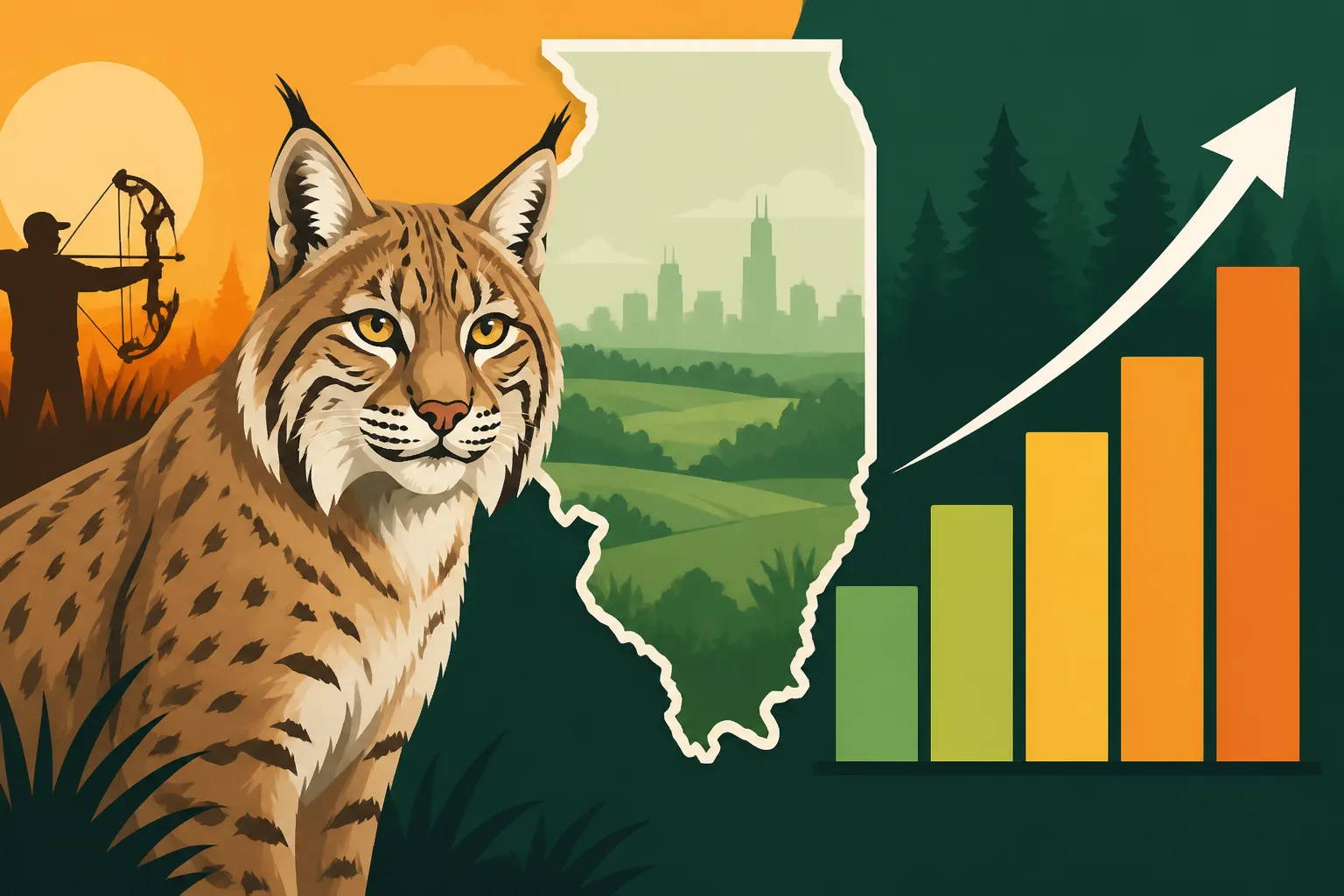
Here's a hypothetical look at how bobcat sightings might fluctuate across different regions over a few years, illustrating how varied the picture can be:
| Year | Northern Illinois (Reports) | Central Illinois (Reports) | Southern Illinois (Reports) | Statewide Total (Reports) | Notes on Trends |
|---|---|---|---|---|---|
| 2018 | 15 | 30 | 120 | 165 | Southern stronghold |
| 2019 | 18 | 35 | 115 | 168 | Stable, slight northern increase |
| 2020 | 25 | 45 | 130 | 200 | Notable increase, possibly due to more trail cameras |
| 2021 | 22 | 40 | 125 | 187 | Slight dip, maybe fewer people afield |
| 2022 | 30 | 55 | 140 | 225 | Continued expansion, especially central |
| 2023 | 38 | 60 | 145 | 243 | Steady growth, northern range extending |
Note: These numbers are illustrative and do not represent actual IDNR data.
As you can see, even in this hypothetical scenario, the trends aren't always linear. Factors like increased trail camera usage, more public awareness leading to better reporting, or even environmental changes like drought or heavy snow forcing animals to move more widely can all affect these annual reports.
What Bobcat Sighting Reports Tell Us About Their Range and Density
The beauty of consistent sighting reports is that they help biologists and hunters alike understand the geographical patterns of bobcat distribution, identifying key areas where they thrive and charting their expansion into new territories.
Hotspots for Bobcat Activity
If you're wondering where you're most likely to spot a bobcat, the sighting reports consistently point to specific regions in Illinois. Historically, and still today, the unfragmented timber and rugged terrain of Southern Illinois are prime bobcat country. Areas like Shawnee National Forest Hunting and the vast river bottoms along the Ohio and Mississippi Rivers provide the dense cover, diverse prey base, and limited human disturbance that bobcats crave. Think about the deep ravines, thickets, and remote creek bottoms – these are the places where bobcats can truly be themselves.
The Illinois River Valley, with its mix of timbered bluffs, marshy areas, and adjacent farmlands, also consistently shows up with higher sighting numbers. These landscapes offer critical corridors for movement and rich hunting grounds for these opportunistic predators. It's in these areas that reports are most consistent, year after year, reinforcing their status as bobcat strongholds.
Expanding Territories and New Sightings
One of the most exciting takeaways from annual bobcat sighting reports is the clear evidence of their expanding territory. While southern Illinois remains a stronghold, we're seeing more and more reports from central and even northern Illinois. These aren't just isolated incidents; they're part of a broader trend demonstrating a healthy and growing population dispersing into new suitable habitats.
This expansion often follows river systems and timbered corridors, allowing bobcats to move through landscapes that might otherwise be less hospitable. Farmers in central Illinois, for instance, are reporting sightings near woodlots and fencerows adjacent to their fields, something that was almost unheard of a few decades ago. It's a testament to their adaptability and the success of conservation efforts that these animals are making inroads into areas where they haven't been consistently present for generations. Illinois's Recovering Bobcat Population continues to grow, and these new sightings are the proof in the pudding.
How Hunters Can Contribute to Bobcat Data
As hunters, we're often the eyes and ears of the wild. We spend more time immersed in these habitats than almost anyone else, putting us in a unique position to contribute valuable data to bobcat conservation.
Reporting Your Observations Responsibly
Every sighting, no matter how brief, can be helpful. If you're lucky enough to spot a bobcat, whether it's a fleeting glimpse or a prolonged observation, reporting it to the IDNR is a fantastic way to contribute. The key is to provide accurate, detailed information. What date and time did you see it? Where exactly were you (GPS coordinates are ideal)? What was the bobcat doing – crossing a road, hunting, just lounging? How many did you see? Was it an adult or a juvenile? Was it healthy or did it appear injured or sick?
Don't assume someone else will report it. Your individual observation, combined with others, helps biologists monitor population health, track disease, and understand movement patterns. It directly informs management decisions, ensuring these incredible animals continue to thrive in our state. You can usually find a specific contact or online form on the IDNR website for reporting such observations.
Using Technology for Sighting Documentation
Modern technology has made contributing to wildlife data easier than ever. Trail cameras have become invaluable tools for not just scouting deer or turkeys, but also for confirming the presence of elusive predators like bobcats. Setting up cameras in potential bobcat habitat – near known game trails, creek crossings, or areas with dense cover – can yield incredible insights. When you capture a bobcat on camera, note the date, time, and location, and share that with the IDNR.
Mapping apps like GoHunt are perfect for this. You can drop a pin exactly where you saw the animal or found its tracks, making your report incredibly precise. This helps wildlife agencies pinpoint areas of high activity and understand preferred habitats. Just remember to always follow Trail Camera Rules on Illinois Public Land to ensure ethical and legal placement, respecting both wildlife and other users of public land. The more precise the data, the more valuable it is to the scientists working to protect these magnificent animals.
Disclaimer
This article is for general informational purposes only and does not constitute professional advice. Laws, prices and regulations vary by location and change over time. Consult a qualified professional for guidance on your specific situation.