Illinois Deer Antler Growth Timeline
For many Illinois hunters, there's a deep fascination with whitetail antlers, extending far beyond simply scoring a buck. Understanding the intricate process of antler growth, from tiny nubs in early spring to hardened racks in the fall, can feel like unlocking a secret code to the deer woods. It helps us interpret what we see on trail cameras, anticipate buck movement, and even gauge the overall health of a local herd. This guide will walk you through the fascinating Illinois deer antler growth timeline, exploring the science and practical implications for hunters.
The Annual Cycle of Antler Development
Antlers are truly remarkable structures, unique to the deer family (Cervidae), and they represent one of the fastest growing tissues in the animal kingdom. Unlike horns, which are permanent, antlers are shed and regrown annually, a process driven by hormonal changes throughout the year.
The Spring Surge – Antler Initiation and Rapid Growth (March-May)
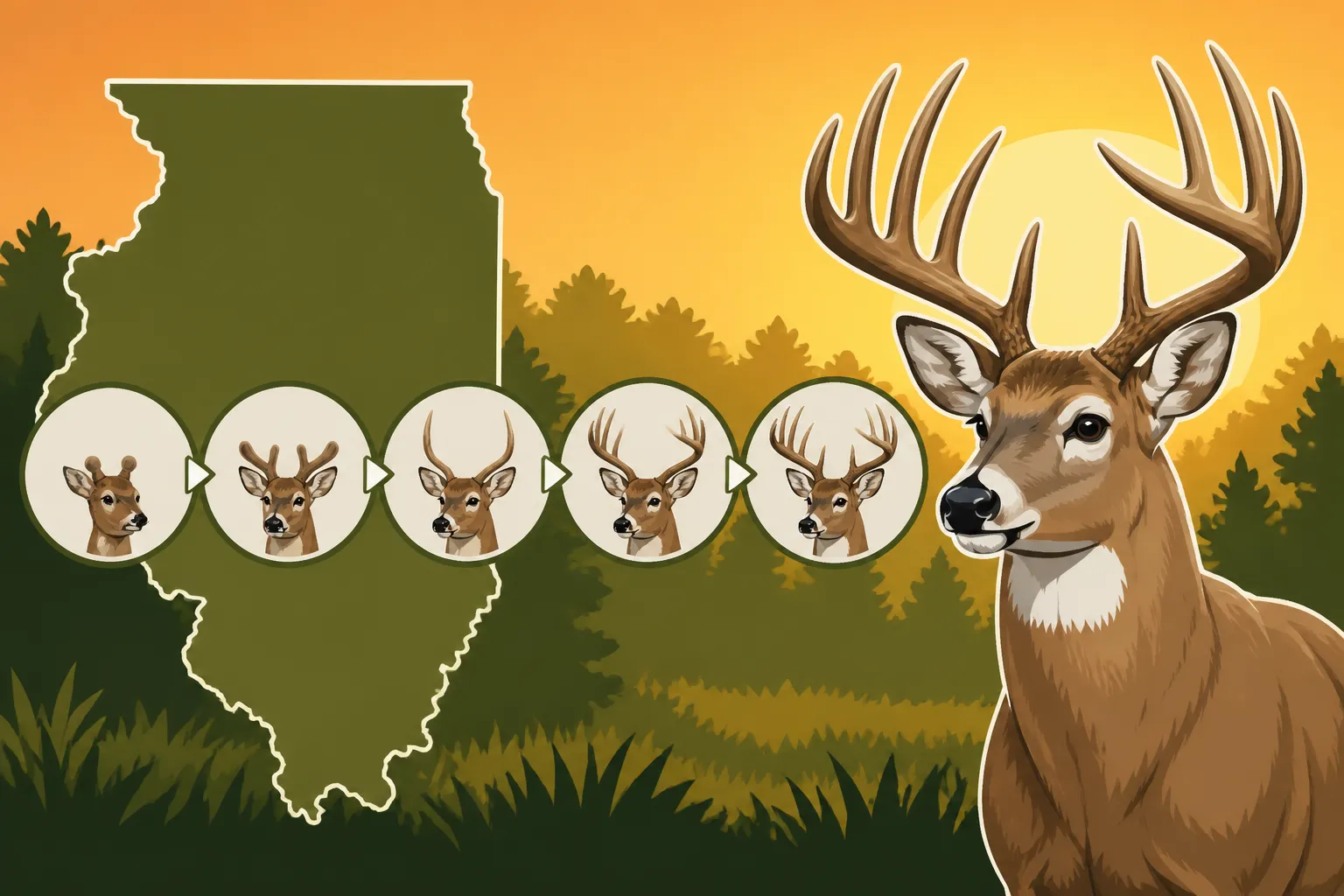
As the cold grip of winter finally loosens its hold on Illinois, usually around late March or early April, the first signs of new antler growth begin to emerge on mature bucks. This is a direct response to increasing daylight hours, which triggers a surge in testosterone. This hormonal shift signals the buck's body to start the incredible process of regeneration.
Initially, you might just see small, fuzzy nubs covered in velvet – a soft, vascularized skin rich with blood vessels and nerves. This velvet provides the essential nutrients and oxygen needed for rapid bone growth. It's a truly explosive period of development. A buck can add significant inches to his rack in a matter of weeks during this time, especially if he has access to high-quality forage. Think about how fast a corn plant shoots up in Illinois in late spring; antler growth isn't far behind! Bucks are often pretty secretive during this stage, sometimes lying low to protect their tender, growing racks from injury. It's an energy-intensive period, so they're focused on feeding and recuperation after the stresses of winter and the rut.
Summer Hardening and Maturation (June-August)
By early summer, typically June and July, antler growth slows considerably. The focus shifts from rapid extension to hardening and mineralization. The once-spongy bone tissue becomes dense and solid as calcium, phosphorus, and other minerals are deposited. This is when the distinctive points, beams, and mass really take shape. The velvet, which served its purpose, starts to lose its blood supply, dry up, and itch.
As August rolls around, Illinois bucks become increasingly uncomfortable with their dying velvet. You'll start to see them rubbing their antlers vigorously on saplings, brush, and even utility poles to strip it off. This process of "shedding velvet" is usually quick, often taking just a day or two once it really gets going. By late August or early September, most bucks will have fully hardened, clean antlers, ready for the upcoming breeding season. It's an exciting time to be checking trail cameras, as the bucks that have been lurking in the shadows all summer suddenly reveal their impressive headgear.
Influences on Antler Size and Quality
While the annual cycle is consistent, the actual size and quality of a buck's antlers are subject to a complex interplay of factors. It's not just about what we see; it's about what we don't see that determines a buck's full potential.
Age – The Primary Driver of Antler Potential
Without a doubt, age is the single most critical factor influencing antler size and development in Illinois whitetails. Many hunters often make the mistake of judging a buck's potential solely on his rack at 1.5 or 2.5 years old, not realizing that he hasn't even begun to hit his prime.
A young buck, say 1.5 years old, will typically grow a small rack, often spikes or a basket 6-point, because his body is still primarily focused on skeletal growth and basic survival. At 2.5 years, he'll likely show more mass and points, but still nowhere near his full genetic potential. It's generally between 3.5 and 5.5 years old that an Illinois buck truly reaches his peak antler growth. This is when his skeletal development is complete, and his body can funnel maximum energy and nutrients into growing a robust rack. After 5.5 or 6.5 years, some bucks may begin to decline in antler size, a natural part of the aging process, though this varies greatly by individual and health. Understanding Illinois Buck Age Structure can really help you set realistic expectations for your hunting area.
Nutrition – Fueling the Rack
You can have the best genetics in the world, but if a buck isn't getting the right fuel, his antlers won't reach their potential. Nutrition plays a massive role in antler development. Deer require a consistent supply of high-quality forage rich in protein, minerals (especially calcium and phosphorus), and carbohydrates to support such rapid bone growth.
In Illinois, this often means areas with diverse agricultural crops like corn and soybeans, combined with natural browse and mast crops. Areas like west-central Illinois, famous for its trophy bucks, often boast exceptional soil quality and agricultural practices that provide a nutritional buffet for deer. Conversely, deer in areas with poorer soils or limited food sources, such as some parts of Southern Hill Country Versus Prairie Deer, might show smaller average antler sizes, even with good genetics. A severe drought year, for example, can significantly impact forage quality and consequently, antler development for the following season. This is why some hunters pay close attention to crop yields and rainfall patterns; it's all part of the puzzle for Hunting Central Illinois Farmland Deer.
Genetics – The Blueprint for Growth
While age and nutrition are the accelerators and fuel for antler growth, genetics provide the blueprint. A buck's genetic makeup determines his potential for antler characteristics like mass, length, tine count, and even unique abnormalities. Some bucks are simply predisposed to grow wider, taller, or more points, regardless of age and nutrition, within reason.
However, it's crucial to understand that managing genetics in a truly wild deer herd is incredibly challenging, if not impossible. We can't pick and choose which bucks breed the does. What we can do, as ethical hunters and land managers, is focus on managing for age and nutrition. By allowing younger bucks to mature and by enhancing habitat to provide abundant, high-quality food sources, we create the optimal conditions for the genetic potential of the local herd to express itself. This approach often naturally leads to more impressive antlers over time, as healthy, older bucks, regardless of their specific genetic lines, generally grow bigger racks.
Shedding and the Cycle's Rebirth
The antler growth timeline isn't just about what grows; it's also about what falls off. The annual shedding of antlers marks the end of one cycle and the promise of another.
When and Why Bucks Shed Their Antlers (January-March)
After the intense physical demands of the rut and the waning daylight of winter, a buck's testosterone levels begin to plummet. This decrease in hormones triggers a process where an abscission layer forms between the pedicle (the bony base on the skull where the antler attaches) and the antler itself. Essentially, the body starts to dissolve the bone connection.
In Illinois, most bucks will begin to shed their antlers from late December through March, with the peak usually occurring in January and February. The exact timing can vary based on individual buck health, the severity of the winter, and the timing of the rut. Bucks that bred heavily and are in poorer condition might shed earlier than healthy bucks who maintained good body mass. Finding a freshly dropped antler, still warm from a buck's head, is like finding a little treasure in the late winter woods. It’s a clear sign that the cycle continues. If you're out looking for these treasures, check out When Illinois Bucks Shed Antlers for more tips on timing and locations.
| Antler Development Stage | Approximate Timing (Illinois) | Key Characteristics | Driving Factor |
|---|---|---|---|
| Initiation | Late March – Early April | Small nubs, velvet appears | Increasing daylight, rising testosterone |
| Rapid Growth | April – June | Fast length & mass gain, soft velvet | Peak testosterone, nutrient intake |
| Mineralization/Hardening | July – August | Growth slows, bone densifies, velvet dries | Testosterone stabilizes |
| Velvet Shed | Late August – Early September | Bucks rub velvet off, antlers harden | Testosterone peak, velvet deterioration |
| Hard Antler Phase | September – December | Antlers are solid bone, ready for rut | High testosterone |
| Shedding | January – March | Antlers detach from pedicles | Decreasing daylight, falling testosterone |
The Post-Shed Recovery Period
Once a buck sheds his antlers, he enters a crucial period of recovery. The exposed pedicles heal quickly, and for a short time, the buck's body can focus solely on regaining lost weight and condition from the rut and winter. This "down time" is essential, as the energetic demands of antler growth are immense. Think about it – a buck's body just spent months growing and carrying around a heavy, bony structure, and now it needs to prepare to do it all over again.
During this post-shed phase, bucks often group up in bachelor herds, spending their days foraging in low-pressure areas. They're typically less wary than during the hunting season, as the primary drivers of aggression (breeding and territory defense) are absent. This makes it a great time for shed hunting, observing deer, and simply enjoying the peacefulness of the winter woods before the whole incredible cycle begins anew.
Tracking Antler Growth for Hunters
For dedicated Illinois hunters, keeping tabs on antler growth isn't just an academic exercise; it's a vital part of scouting and strategizing for the upcoming season. Knowing what bucks are growing in your area can inform your decisions on everything from stand placement to hunting pressure.
Scouting and Trail Camera Strategies
Trail cameras are arguably the most effective tool a hunter has for tracking antler growth. By deploying cameras strategically from spring through late summer, you can literally watch a buck's rack develop week by week. This provides invaluable intelligence, allowing you to identify individual bucks, estimate their age, and assess their potential.
Focus your early season camera placement around known food sources, mineral sites, and heavily used travel corridors. As the season progresses into summer, shift cameras to capture activity around water sources and cooler, shaded bedding areas as bucks seek refuge from the heat. Make sure to check your cameras regularly, but not so frequently that you disturb the deer. Platforms like GoHunt can be incredibly useful here, offering mapping tools that let you pinpoint camera locations, mark sightings, and even integrate aerial imagery to better understand terrain and potential deer movement, helping you visualize where those bucks might be spending their spring and summer. Remember to combine your camera intel with some good old-fashioned boot-leather scouting; check out Scouting Illinois Public Land Before Season to learn how to identify those subtle clues on the ground. When placing cameras, think about how a buck might approach a water source or a field edge, and set your camera to capture those angles, as covered in Where to Hang a Camera on a Logging Road.
Understanding Regional Differences
Antler growth in Illinois can vary significantly from one region to another, largely due to differences in habitat quality, soil fertility, and agricultural intensity. Understanding these regional nuances can help you calibrate your expectations and tailor your hunting approach.
For instance, the fertile farmlands of west-central Illinois, particularly counties like Pike, Adams, and Brown, are renowned for producing exceptionally large-antlered deer. This isn't just a coincidence; it's a direct result of rich soils, abundant agricultural crops (corn, soybeans, alfalfa), and often, a strong tradition of quality deer management. These areas provide bucks with a consistent, high-protein, high-mineral diet that fuels maximum antler development. Learn more about this in Why Pike County Produces So Many Trophy Bucks.
In contrast, areas like the heavily forested, more rugged terrain of Southern Illinois, such as the Shawnee National Forest, might have deer with slightly smaller average antler sizes. While still capable of producing impressive bucks, the natural browse and mast crops, while diverse, often don't offer the same concentrated nutritional punch as prime agricultural land. However, deer in these areas often develop more robust, dense bone structure due to constant travel on hilly terrain. It’s all about context, and recognizing these regional patterns helps paint a more complete picture of the Illinois deer herd.
Disclaimer
This article is for general informational purposes only and does not constitute professional advice. Laws, prices and regulations vary by location and change over time. Consult a qualified professional for guidance on your specific situation.