Illinois Buck Age Structure
It's an age-old question that whispers through the timber and echoes across cut cornfields: just how old is that buck standing in front of you? For many Illinois hunters, deciphering a buck's age isn't just a matter of curiosity; it's a critical piece of the puzzle that informs hunting strategy, helps manage the local deer population, and ultimately, defines what a "trophy" truly means. This guide dives deep into the fascinating world of Illinois buck age structure, exploring why it matters, how to estimate it in the field, and what the data tells us about the deer roaming our beloved state.
Why Understanding Buck Age Matters for Hunters
Every whitetail hunter, from the seasoned veteran to the first-timer, has a unique set of goals. Some are focused on filling the freezer, others dream of a wall-hanger, and many simply cherish the experience of being in the outdoors. Regardless of your personal objectives, having a solid grasp of buck age structure can profoundly impact your success and satisfaction in the field. It’s not just about antlers; it's about understanding the animal, its behavior, and its role in the ecosystem.
Impact on Hunting Strategy
Think about it: a 1.5-year-old buck, full of youthful exuberance and perhaps a bit reckless, behaves very differently from a cagey 4.5-year-old patriarch who has eluded hunters for seasons. Understanding these differences allows you to tailor your hunting strategy with precision. For instance, a young buck might be more prone to wander aimlessly or respond to aggressive calling simply out of curiosity. He might follow does more directly, even through open areas.
On the other hand, a mature buck, especially during peak breeding activity, often moves with purpose, using the terrain and cover to his advantage. He's less likely to expose himself unnecessarily and will often circle downwind of a call or a scent trail before committing. Knowing the likely age of the bucks in your hunting area – or even specifically the buck you're pursuing – can help you choose the right stand location, determine your calling sequence, and even decide when to hold tight versus when to push the envelope. When you're trying to figure out where the big boys are during the breeding frenzy, understanding Hunting the Rut in Early November becomes even more critical when paired with age structure knowledge. Similarly, if you're out late in the season, distinguishing a younger buck from an older one can dictate your approach to Hunting the Late-Season December Lull, as older deer often prioritize food sources with greater caution.
Antler Potential and Genetic Health
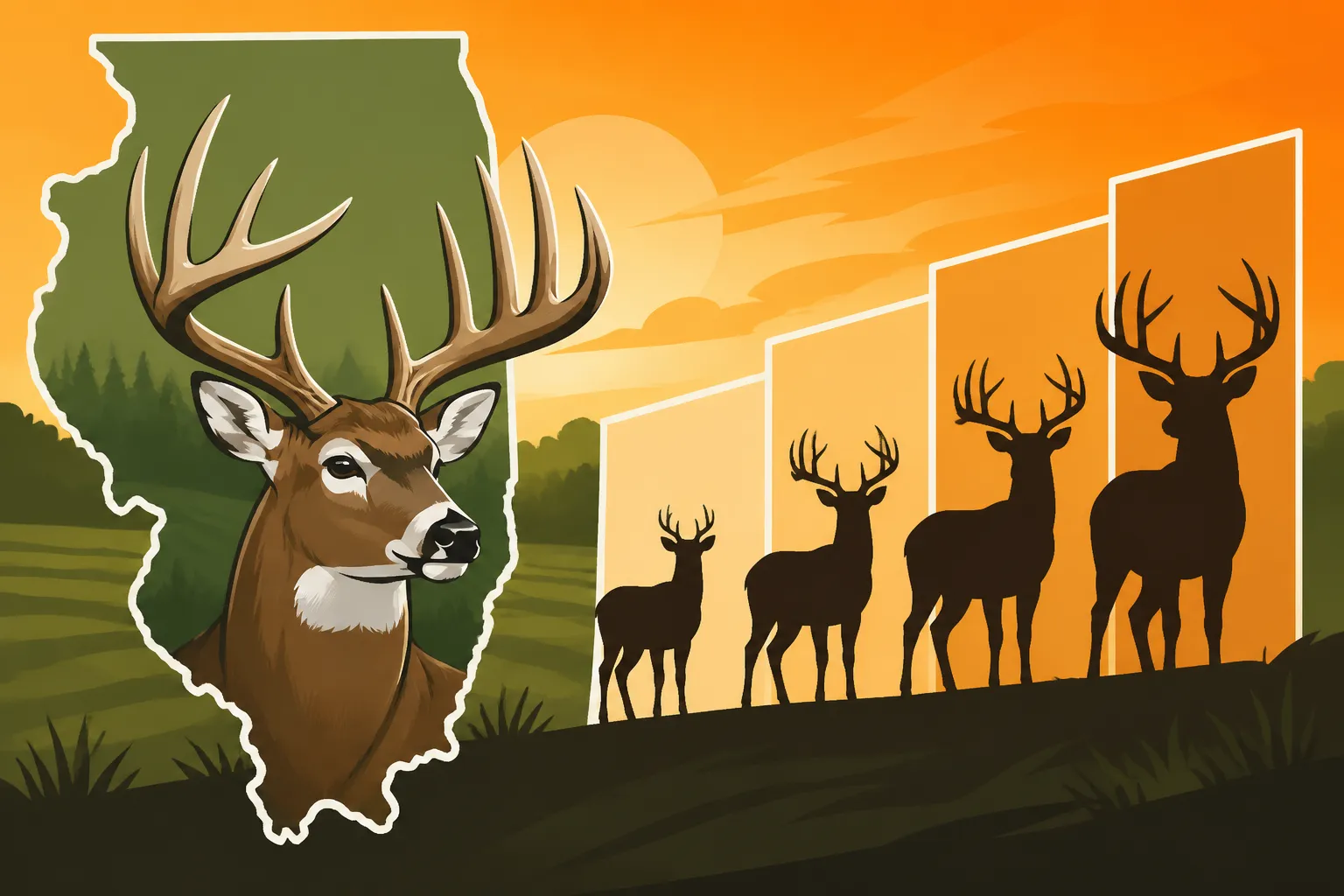
There's a common misconception that big antlers automatically mean superior genetics. While genetics certainly play a role, age is arguably the single most important factor in a buck's antler development. A buck’s antlers will generally increase in size and mass each year until he reaches his physical prime, typically between 4.5 and 6.5 years old, depending on nutrition and herd health. A 2.5-year-old buck might have an impressive 8-point rack, leading some to believe he's a "trophy," but that same buck, if allowed to mature, could develop into a true giant in another two or three years.
By understanding how antlers progress with age, hunters can make informed decisions about passing on younger bucks, giving them a chance to reach their full potential. This practice, often referred to as quality deer management (QDM), doesn't just benefit the individual hunter hoping for a bigger rack; it contributes to the overall genetic health and age balance of the local herd. A healthier age structure means more mature bucks, which can lead to better breeding success and a more robust population overall.
Contribution to Herd Management
When hunters selectively harvest deer based on age, they become active participants in managing the local herd. The Illinois Department of Natural Resources (IDNR) sets regulations to help maintain a healthy and sustainable deer population across the state, and hunter behavior significantly impacts the ground-level reality. By allowing younger bucks to walk, hunters help ensure a balanced buck-to-doe ratio and a more diverse age structure, which can reduce hunting pressure on specific age classes.
This isn't about telling you what to shoot; it's about understanding the wider implications of your choices. Each deer harvested, or passed, contributes to the ongoing story of Illinois's whitetail population. When many hunters in an area practice similar principles, the collective impact can be substantial, leading to a noticeable increase in the number of mature bucks on the landscape. This collective effort is part of the larger picture of Illinois Deer Population Estimate and its management.
How to Visually Age a Buck in the Field
Alright, so we know why understanding a buck's age is important. Now for the million-dollar question: how do you actually do it when that buck steps out at last light, and your heart is pounding like a drum solo? It takes practice, keen observation, and an understanding that antlers are often the least reliable indicator for younger bucks.
Antler Characteristics The Misconception
It’s easy to get fixated on antler size. We’ve all seen photos of enormous racks on young bucks and small racks on older ones. While older bucks generally have larger and more massive antlers at their peak, relying solely on antler size to determine age, especially for bucks under 3.5 years old, is a common pitfall. A yearling (1.5 years old) buck, with excellent nutrition and genetics, might sport a decent 8-point rack that could easily be mistaken for a 2.5-year-old in a poorer habitat. Conversely, a 3.5-year-old buck in a drought-stricken year or poor habitat might have a smaller rack than usual.
However, once a buck hits 4.5 years and beyond, his antlers usually display significant mass, longer tines, and often a wider spread. Look for thicker bases that extend further up the main beam. They tend to look "heavy." Sometimes, bucks past their prime (5.5+ or 6.5+ years old) will start to show antler regression, meaning their racks might decrease in size or become less symmetrical. So, while antlers are part of the equation, they should be considered in conjunction with the buck's overall body characteristics.
Body Characteristics The Key Indicators
This is where the real art of aging in the field comes in. A buck's body tells a much more consistent story about his age than his antlers, especially when comparing younger animals. You're looking for proportions, muscle development, and the overall "look" of the animal.
-
Yearlings (1.5 Years Old): The "Leggy" Look
These bucks are often described as "all legs and neck." They have a very distinct, lanky appearance. Their bodies are slender, with no noticeable muscle definition in the shoulders or hindquarters. Their neck is thin and distinct from their chest, appearing almost pencil-necked. Their stomach is typically tight and tucked up. Think of a teenage boy – tall, skinny, and still growing into his frame. Their antlers, if they have any, are usually spindly spikes or a small basket rack, though as mentioned, this can vary. -
Young Adults (2.5 Years Old): Filling Out, Still a Waist
At 2.5 years, a buck starts to fill out. You'll notice more muscle in the shoulders and hindquarters, though he still appears athletic and sleek. The neck will begin to thicken, especially as the rut approaches, but there will still be a clear distinction between the neck and the chest, often creating a "waistline" appearance. His belly might start to sag slightly, but he's far from having a "barrel" chest. His legs still appear relatively long compared to his body. Antlers often show a significant jump in size from 1.5-year-olds, gaining spread and some mass. -
Mature Bucks (3.5 – 4.5 Years Old): The Barrel Chest and Short Legs
This is often a buck's physical prime. At 3.5 years, a buck will have a deep, well-developed chest that blends smoothly into a thick, muscular neck, especially during the rut. There's no distinct "waist." His legs will appear shorter in proportion to his deep, heavy body. His belly might begin to sag noticeably. At 4.5 years, he’s a true bruiser: his chest is like a barrel, his neck is massive, and his back might show a slight sway. His jowls may be pronounced, and his face might start to look a bit "blocky." This is often when antlers are at or near their genetic peak. Many hunters consider 3.5 to 4.5-year-olds the sweet spot for mature buck hunting in Illinois, as they offer challenging hunts and impressive racks. -
Older Bucks (5.5+ Years Old): The "Grizzled" Veteran
Beyond 4.5, distinguishing exact age becomes tougher without looking at teeth. However, 5.5+ year old bucks often show exaggerated characteristics of maturity. Their bellies can be very saggy, almost reaching their knees, and their back might have a pronounced sway. Their neck can be incredibly thick, even outside the rut. Their face may appear more gaunt, with a gray muzzle, and a pronounced Roman nose. Antlers might start to regress in mass or tine length, or become more unique, sometimes developing non-typical points. These bucks are true survivors, and encountering one is a special event.
Here's a quick reference table for visual aging:
| Age Class | Body Characteristics | Neck & Head | Antler Tendencies (General) |
|---|---|---|---|
| 1.5 Years | Very "leggy" and lanky, thin body, tucked belly | Thin, pencil-like, distinct from chest | Spikes or small basket racks, narrow spread |
| 2.5 Years | Filling out, athletic build, noticeable "waistline" | Thickening, still distinct from chest/shoulders | Increased spread/mass, more points, still slender |
| 3.5 – 4.5 Years | Deep, "barrel" chest, stout body, legs appear shorter, belly may sag | Thick, blends smoothly into chest and shoulders | Significant mass & spread, near genetic peak |
| 5.5+ Years | Very heavy body, pronounced sag in belly/back, short legs | Massive, often with deep jowls | May show regression or unique non-typical points |
Illinois's Buck Age Structure: What the Data Shows
Understanding the statewide and regional buck age structure in Illinois isn't just for biologists; it provides crucial context for hunters. It tells us where mature bucks are more prevalent, where hunting pressure might be higher, and how diseases like CWD are impacting the herd.
General Trends in Illinois
Illinois is generally known for its fantastic whitetail hunting opportunities, and this is partly due to a relatively healthy buck age structure in many areas. While hunter harvest data often skews towards younger bucks – as they are more numerous and less wary – the presence of a significant proportion of 3.5-year-old and older bucks indicates effective management and habitat.
Historically, intense hunting pressure could lead to a younger age structure, with fewer bucks surviving to maturity. However, with improved management practices, habitat conservation efforts, and hunter education promoting selective harvest, many parts of Illinois have seen a positive shift. Hunters are increasingly valuing mature deer for their challenge and potential trophy quality, which helps sustain a good age structure. This contributes to the state's reputation for growing quality deer, as highlighted in discussions around Illinois Deer Population Estimate.
Regional Differences
The age structure of bucks can vary dramatically across Illinois, largely due to habitat, land use, and hunting pressure.
-
West-Central Illinois (The "Golden Triangle"): Areas like Pike, Brown, and Adams counties are legendary for producing trophy whitetails. Here, you'll often find a higher proportion of older-age-class bucks. This isn't just luck; it's a combination of fertile agricultural lands providing abundant nutrition, significant amounts of privately managed land where QDM practices are common, and a culture of passing younger bucks. Hunters in these areas often meticulously scout, using tools like GoHunt to analyze land ownership and historical harvest data, allowing them to pinpoint areas with low pressure and a high likelihood of encountering mature animals. This region is often discussed when looking for Best Illinois Counties for Big Bucks and understanding Why Pike County Produces So Many Trophy Bucks.
-
Southern Illinois (Shawnee Hills): This region, characterized by rolling hills, dense timber, and less agricultural ground, can present a different picture. While still capable of producing mature bucks, the landscape and often higher public land hunting pressure might mean a slightly younger average age structure in some areas. Bucks in the rugged terrain might still become old, but their antler size might not rival those from the rich farmlands to the north, even at the same age, due to nutritional differences. Still, those older timber bucks are some of the toughest to hunt.
-
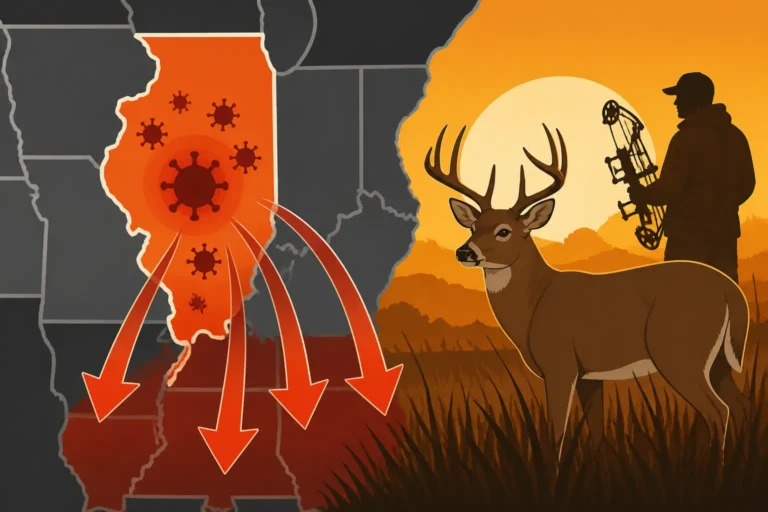
Northern Illinois (CWD Zone): In counties affected by Chronic Wasting Disease (CWD), management efforts can influence age structure. While IDNR has shifted away from targeted culling, the disease itself can impact the survival rates of older bucks, as they are generally more susceptible to contracting CWD. This means that hunters in these zones might encounter a different age profile. Understanding Illinois's Chronic Wasting Disease Zone is vital for hunters in these areas, as it affects not only management but also carcass movement and testing requirements.
CWD and Age Structure Impact
Chronic Wasting Disease (CWD) is a serious concern for Illinois deer, particularly in the northern counties. CWD disproportionately affects older deer, meaning that in areas with high CWD prevalence, the disease can naturally reduce the number of older-age-class bucks. This creates a management challenge: how to maintain a healthy age structure while also trying to mitigate disease spread.
Hunters in CWD counties play a crucial role by participating in mandatory testing programs and adhering to carcass movement restrictions. While the IDNR's approach to CWD management has evolved, the presence of the disease means that hunters need to be aware that the overall age structure, and the health of individual older bucks, might be different than in CWD-free zones. This is a complex issue, but awareness helps every hunter contribute to the solution.
Implications for Hunters and Management
So, what does all this mean for you, the hunter, stepping into the Illinois woods next season? Understanding buck age structure isn't just academic; it's practical, empowering you to make more informed decisions and enjoy a more rewarding hunting experience.
Adjusting Hunting Tactics
Knowing the general age structure of the bucks in your hunting area can profoundly influence your tactics. If you're hunting an area known for mature bucks, your approach might be one of patience and stealth. You'll focus on less-pressured bedding areas, pinch points, and secluded food sources. You might employ more subtle calling techniques, or use rattling sequences specifically designed for challenging older bucks. The knowledge that older bucks are likely present might prompt you to try Rattling and Grunting in Illinois with more conviction, knowing the sounds could draw in a seasoned veteran.
Conversely, if you're in an area with a younger age structure, you might be more aggressive with calls, knowing that curious younger bucks are more likely to investigate. You might focus on high-traffic travel corridors or field edges, where younger deer are more likely to be seen during daylight. Regardless of the age structure, pre-season preparation is key, and understanding Scouting Illinois Public Land Before Season becomes even more effective when you know what kind of deer you're likely to encounter. Utilizing modern mapping platforms, like GoHunt, to analyze topography, access points, and historical harvest data can give you an edge in identifying those often overlooked pockets where older bucks might find sanctuary, especially when studying Reading Aerial Photos for Southern Illinois Deer.
Ethical Harvesting and Personal Goals
Ultimately, the decision of which buck to harvest is a deeply personal one. Understanding buck age structure provides you with the knowledge to make that decision ethically and in line with your personal hunting goals. For some, a buck of any age represents a successful hunt and a freezer full of venison. For others, the challenge of pursuing a truly mature buck—one that has survived multiple hunting seasons—is the ultimate reward.
There’s no right or wrong answer, but informed choices are always better. If your goal is to harvest a mature buck, understanding the visual cues and the local age structure will help you exercise patience and pass on younger deer, knowing that you are contributing to a healthier herd and increasing your chances of finding that older, wiser animal later on. For those considering their first archery tag, knowing the cost and rules for an Illinois Resident Archery Deer Permit Cost is a good first step, and coupling that with age structure awareness can help set realistic expectations.
Looking Ahead: Future Trends
The buck age structure in Illinois is dynamic, constantly shaped by environmental factors, hunting pressure, disease, and management strategies. As hunter demographics change, land use patterns evolve, and the IDNR continues to refine its management approaches, we can expect to see shifts. The increasing popularity of quality deer management principles, even among casual hunters, suggests a continued trend toward a healthier age structure in many areas. However, challenges like CWD and habitat fragmentation will also continue to play a role.
Being informed, adaptable, and respectful of both the animals and the landscape are the hallmarks of a responsible Illinois hunter. By staying educated on topics like buck age structure, you not only improve your own hunting experience but also contribute to the long-term health and vitality of Illinois’s incredible whitetail herd for generations to come.
Disclaimer
This article is for general informational purposes only and does not constitute professional advice. Laws, prices and regulations vary by location and change over time. Consult a qualified professional for guidance on your specific situation.