Why the Disease Keeps Spreading Southward
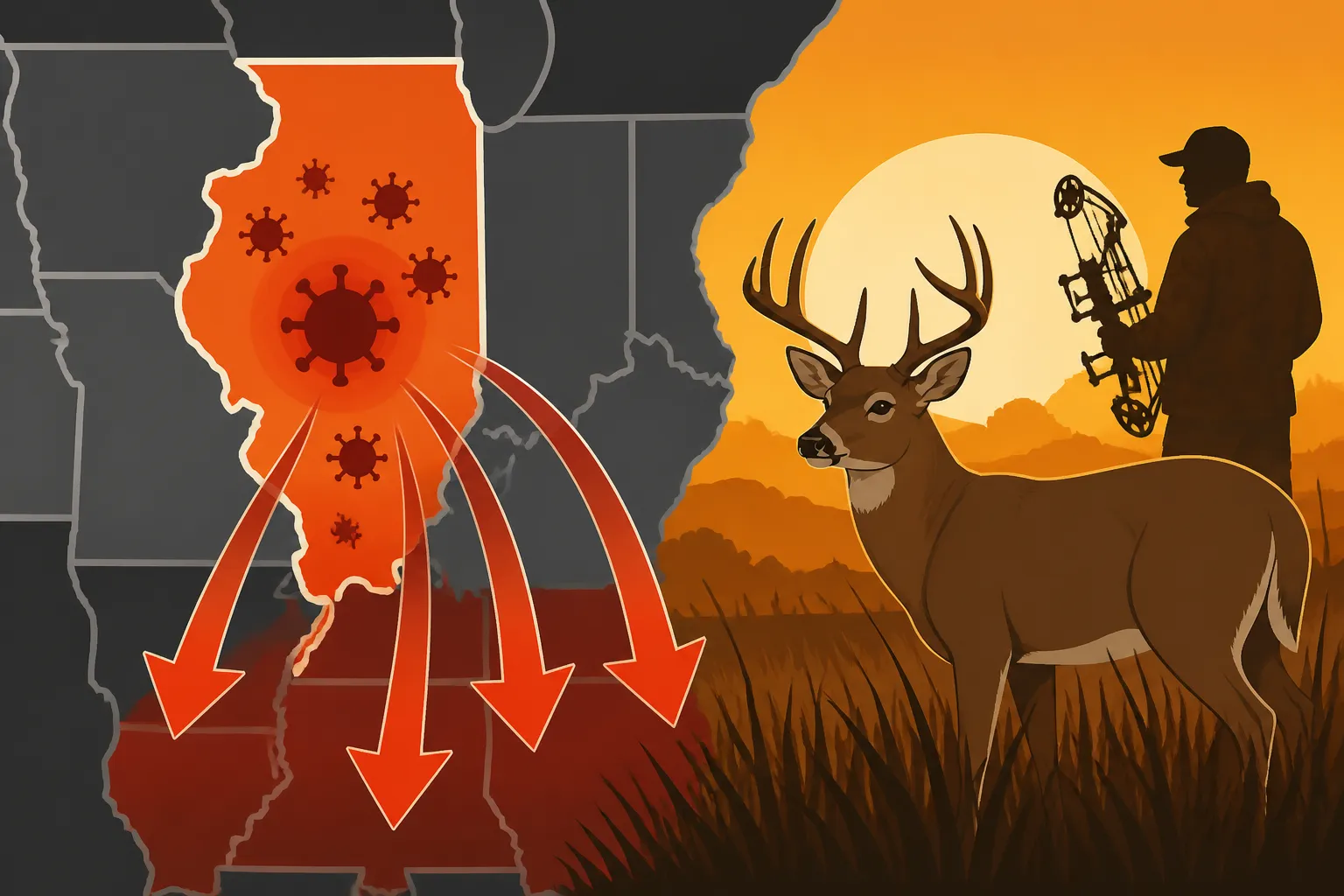
It’s a concern that weighs heavily on the minds of many Illinois hunters: the relentless, slow march of Chronic Wasting Disease (CWD) southward across our beloved whitetail country. We've watched it creep from its initial strongholds, and the question isn't if it will appear in new counties, but when. This guide aims to shed light on the complex factors contributing to this disheartening spread, helping you understand the challenge and what we can all do to help slow its progression.
Understanding the Insidious Nature of CWD
Before we dive into why CWD is spreading, it's vital to grasp what we're up against. Chronic Wasting Disease is a fatal neurological disease that affects deer, elk, moose, and other cervids. It's caused by abnormal proteins called prions, not a virus or bacteria. These prions essentially corrupt normal proteins in the animal's brain and nervous system, leading to deterioration, behavioral changes, emaciation, and ultimately, death. The disease is often compared to Bovine Spongiform Encephalopathy ("Mad Cow Disease") in cattle or Creutzfeldt-Jakob disease in humans, though there's currently no evidence of CWD transmission to humans.
The truly insidious part of CWD lies in its characteristics. First, there's a long incubation period, often 18-24 months or even longer, during which a deer appears perfectly healthy but is already shedding prions into the environment. These prions can be found in saliva, urine, and feces. Second, once shed, these prions are incredibly resistant to decomposition, heat, and disinfectants, meaning they can persist in the soil and water for years, effectively contaminating the environment. A deer doesn't even need direct contact with another infected deer; it can pick up the disease by ingesting prions from the soil or plants where an infected animal has been. This environmental persistence makes CWD a fundamentally different and more challenging disease to manage than, say, Epizootic Hemorrhagic Disease (EHD), which is spread by insect vectors and doesn't linger in the environment in the same way.
The Early Days: CWD's Arrival and Initial Containment Efforts in Illinois
Illinois's battle with CWD began in 2002 when the disease was first detected in a whitetail deer in Boone County, in the northern part of the state. This discovery sent shockwaves through the hunting community and wildlife management agencies. For years prior, CWD had been a distant problem, primarily in western states like Colorado and Wyoming. Its presence in Illinois, a state renowned for its healthy deer population and trophy potential, was a stark awakening. The initial response by the Illinois Department of Natural Resources (IDNR) was aggressive, focusing on intense surveillance and targeted culling in and around the outbreak areas. The goal was to reduce deer densities in infected areas, thereby minimizing deer-to-deer contact and the potential for environmental contamination, and hopefully, containing the disease to the northern counties.
For a time, these efforts saw some success in slowing the rate of increase in prevalence within the established CWD zone. The Illinois's Twenty-Three Year Fight Against CWD has been a testament to the dedication of biologists and wildlife managers. Mandatory testing in certain counties, especially during firearm deer seasons, became a critical tool for monitoring the disease's spread and prevalence. However, the sheer scale of the deer population across the state, combined with the difficulty of truly eradicating an environmentally persistent disease, meant that containment would always be an uphill battle. Despite diligent work and significant resources, CWD continued its slow, inexorable expansion. The story of How CWD Spread From Boone County is one of gradual, relentless progression, illustrating the challenges of managing such a complex wildlife disease.
Key Factors Driving CWD's Southward Expansion
The southward spread of CWD in Illinois isn't due to a single cause but rather a confluence of biological, ecological, and unfortunately, human-influenced factors. Understanding these dynamics is crucial for grasping why this disease continues to move into new territories.
Natural Deer Movement and Dispersal Patterns
Whitetail deer are not static creatures; they move, and this natural movement is perhaps the most significant biological driver of CWD's spread.
- Young Buck Dispersal: Perhaps the biggest factor is the dispersal of young bucks. As yearlings, often around 1.5 years old, bucks will leave their birth area to establish new territories. This can involve traveling significant distances, sometimes tens of miles, particularly in landscapes with connected habitat corridors. If a dispersing buck is infected with CWD but not yet showing symptoms, it can carry the disease to a new, previously unaffected area. Once there, it begins shedding prions, contaminating the local environment and potentially infecting other deer.
- Rutting Movement: The annual rut is another period of increased deer movement. Bucks travel widely in search of does, and does also move more during this time. This heightened activity increases the chances of nose-to-nose contact between infected and uninfected deer, and also increases the amount of prion-shedding over a wider geographic area. In central Illinois, the open farmlands are often broken up by woodlots and creek bottoms, creating natural travel corridors that deer readily utilize, making the landscape highly permeable to deer movement.
- Population Density: While Illinois has seen some fluctuations in its Illinois Deer Population Estimate, areas with higher deer densities naturally provide more opportunities for disease transmission. More deer in a given area means more interactions, more prion shedding, and a higher likelihood of the disease taking hold and spreading locally before radiating outwards.
Human-Assisted Spread: Unintended Consequences
While natural deer movement is a primary driver, human actions, both intentional and unintentional, play a significant role in accelerating CWD's spread.
- Carcass Movement and Disposal: This is one of the most critical human-assisted vectors. A hunter might harvest a deer in a CWD-positive county, then transport the entire carcass (or parts containing nervous system tissue like brain and spinal cord) to their home in an uninfected county for processing. If that deer was infected, and proper precautions aren't taken, prions can be left behind during the butchering process, contaminating local soil or water. The Illinois Carcass Movement Restrictions are specifically designed to mitigate this risk, but compliance isn't always perfect, and education remains an ongoing challenge.
- Feeding and Baiting: Despite being illegal in CWD counties and highly discouraged statewide, the practice of feeding or baiting deer can concentrate animals into unnaturally high densities. This creates a "hot spot" where deer-to-deer contact increases dramatically, and where prions shed into the environment accumulate rapidly. Even if the initial bait site isn't in a CWD area, if an infected deer visits, it can quickly establish a localized infection point that then spreads outwards.
- Transportation of Live Deer: While highly regulated, illegal transportation of live deer (for captive cervid facilities, for instance) presents an enormous risk. Moving an infected animal across state or county lines bypasses all natural barriers and can introduce CWD directly into a new population. Illinois has strict regulations to prevent this, but the risk, however small, always remains.
Environmental Persistence and Landscape Factors
The unique resilience of CWD prions and the characteristics of Illinois's landscape also contribute significantly to the disease's spread.
- Prion Longevity in Soil: Unlike many pathogens, CWD prions are incredibly hardy. They can bind to certain soil particles and remain infectious for years, even decades. This means that an area where an infected deer died or shed prions can continue to be a source of infection long after that particular animal is gone. Rain can wash prions through the soil profile, and deer can ingest them directly from the soil or by consuming plants that have taken up the prions. This "environmental reservoir" makes eradication virtually impossible once CWD has established itself.
- Lack of Strong Geographic Barriers: Much of central Illinois, while featuring expansive agricultural fields, is crisscrossed by numerous small woodlots, fencerows, and river or creek bottoms. These interconnected natural areas act as continuous habitat and travel corridors for deer. Unlike mountainous regions or vast desert landscapes that can naturally limit deer movement, Illinois's topography offers few natural impediments to the gradual, southward drift of deer populations and, consequently, CWD. Even the major rivers, while formidable, aren't absolute barriers, as deer are strong swimmers and will cross them. You can use mapping tools like GoHunt to visualize these interconnected habitats, which can highlight potential corridors for deer movement and disease spread.
What Hunters Can Do: Proactive Measures to Slow the Spread
Given these complex factors, it can feel overwhelming, but hunters are actually on the front lines of defense against CWD. Our actions, collectively, can make a significant difference in slowing its progression and mitigating its impact on the White-Tailed Deer Across Illinois.
Participate in CWD Testing and Surveillance
One of the most important things you can do is participate in the IDNR's CWD surveillance program.
- Get Your Deer Tested: If you harvest a deer in or near a CWD management zone, or even if you're just curious, get your deer tested. Many counties have voluntary or mandatory sampling stations, especially during the firearm seasons. Mandatory Testing Inside an Illinois CWD County is a critical part of monitoring, and your participation helps biologists understand the prevalence and geographic extent of the disease. This data is vital for informed management decisions.
- Report Sick Deer: If you see a deer exhibiting symptoms consistent with CWD – severe emaciation, drooling, neurological problems, abnormal head posture, loss of fear of humans – do not harvest it. Instead, contact the IDNR immediately to Reporting a Sick Animal in Illinois. These sightings provide crucial intelligence on potential new outbreaks.
- Understand CWD Zones: Familiarize yourself with Illinois's Chronic Wasting Disease Zone and the specific regulations that apply to those counties. Websites and hunting apps like GoHunt are excellent resources for staying up-to-date on boundaries and requirements.
Practice Responsible Carcass Management
Proper handling and disposal of deer carcasses are paramount to preventing human-assisted spread.
- Process Deer at the Harvest Site: If possible, field dress your deer at the kill site. Remove and leave the brain, spinal cord, and other high-risk tissues there. This minimizes the chance of transporting infected material.
- Dispose of Carcass Waste Responsibly: If you must transport your deer whole, take it to a professional processor or dispose of carcass waste (bones, brain, spinal cord, lymph nodes) in a landfill. Do not dump these materials in fields, woodlots, or ditches where other deer can come into contact with them. The Illinois Carcass Movement Restrictions are in place for a reason; follow them diligently, especially if you're hunting in a CWD-positive county and plan to transport your deer out of it.
- Consider Quartering: Many hunters are now quartering deer in the field, leaving the skeleton, skull, and other high-risk parts behind. This allows them to transport only deboned meat, antlers (if clean of tissue), and hides, significantly reducing the risk of spreading prions.
Advocate for Responsible Wildlife Management
Your voice as a hunter matters.
- Support IDNR Efforts: The IDNR is working tirelessly to combat CWD, often with limited resources. Support their efforts, understand their regulations, and respect the science behind their decisions.
- Educate Others: Share accurate information about CWD with fellow hunters, landowners, and non-hunters. Dispelling myths and promoting responsible practices is a community effort.
- Avoid Feeding and Baiting: Even outside CWD zones, feeding and baiting concentrate deer, increasing the risk of disease transmission for not only CWD but other illnesses as well. Adhere to regulations and promote natural food sources.
The southward spread of CWD is a challenging reality for Illinois hunters, but it's not a reason for despair. By understanding the mechanisms of its spread – from natural deer dispersal to environmental persistence and human-assisted vectors – and by actively participating in surveillance and responsible practices, we can all contribute to mitigating its impact. The future of White-Tailed Deer Across Illinois depends on our vigilance and commitment.
Illinois CWD County Spread Overview (Example)
This table illustrates the approximate timeline and progression of CWD detections across various Illinois counties, highlighting the pattern of southward spread from the initial northern outbreak areas. Please note that "Current Status/Prevalence" is a generalized descriptor and actual prevalence rates fluctuate.
| County | CWD First Detected (Approx.) | Initial Zone | Current Status/Prevalence |
|---|---|---|---|
| Boone | Early 2000s | Northern CWD | Established, ongoing |
| Winnebago | Early 2000s | Northern CWD | Established, ongoing |
| DeKalb | Mid-2000s | Northern CWD | Established, ongoing |
| Ogle | Mid-2000s | Northern CWD | Established, ongoing |
| McHenry | Late 2000s | Northern CWD | Established, ongoing |
| Stephenson | Late 2000s | Northern CWD | Established, ongoing |
| Jo Daviess | Late 2000s | Northern CWD | Established, ongoing |
| LaSalle | Early 2010s | Expanding CWD | Increasing, monitored |
| Grundy | Mid-2010s | Expanding CWD | Increasing, monitored |
| Kane | Mid-2010s | Northern CWD | Established, ongoing |
| Woodford | Late 2010s | Southern Edge | Sporadic, closely watched |
| Tazewell | Early 2020s | Southern Edge | Recent detection |
| Kankakee | Early 2020s | Southern Edge | Recent detection |
Disclaimer
This article is for general informational purposes only and does not constitute professional advice. Laws, prices and regulations vary by location and change over time. Consult a qualified professional for guidance on your specific situation.