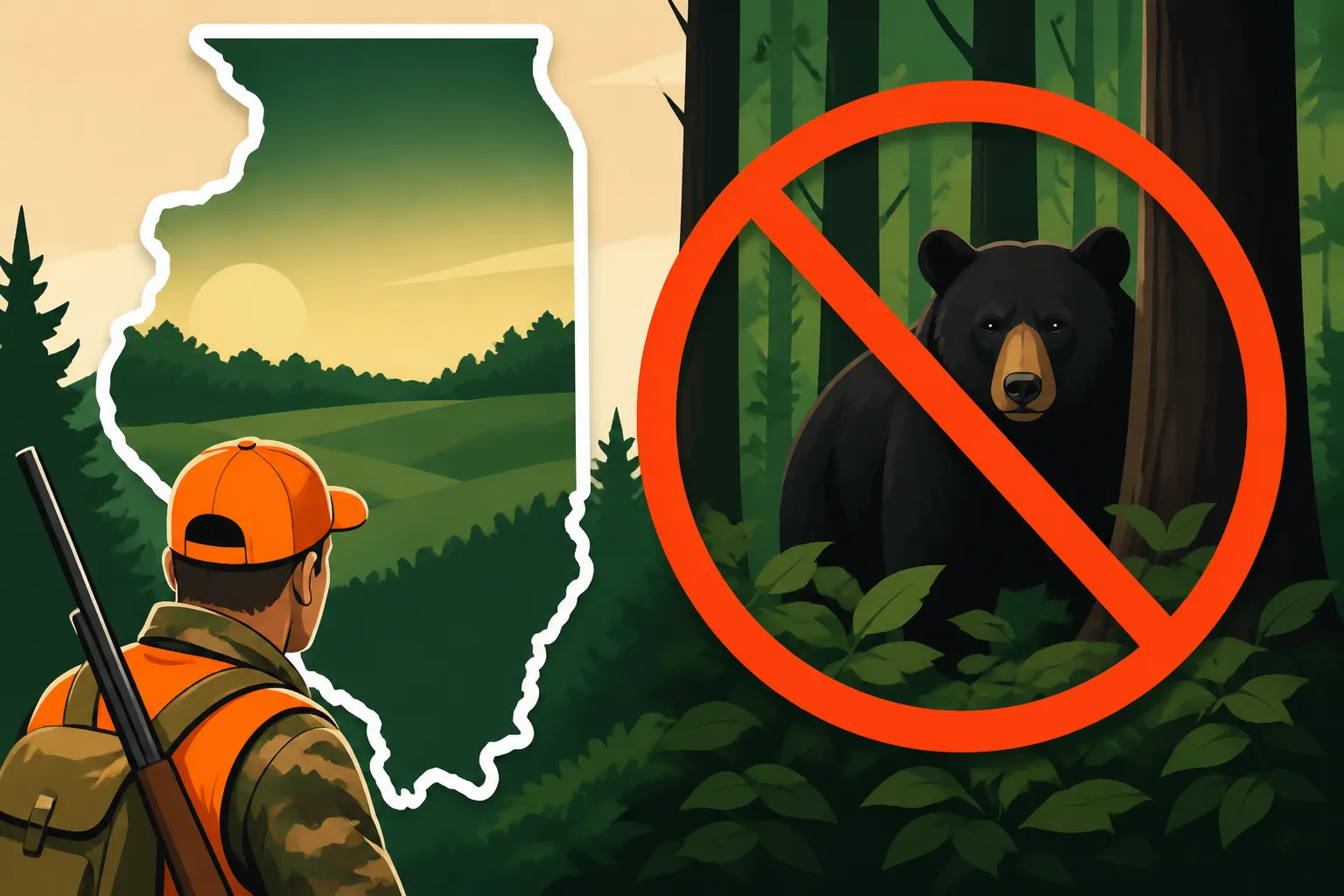
Why Black Bear Sightings Are So Rare in Illinois
If you're an Illinois hunter, you've probably heard the whispers, seen the occasional news story, or even spotted a blurry photo on social media: a black bear sighting in Illinois. For a state renowned for its deer, turkey, and waterfowl, the idea of a majestic black bear roaming our fields and forests can be quite exciting, almost mythical. Yet, these sightings are incredibly rare, fleeting moments often captured by trail camera or a quick glimpse from a bewildered motorist. It's a common question among those who spend time in the outdoors: why don't we have a thriving black bear population like our neighbors? This guide dives deep into the fascinating reasons behind the scarcity of black bears in the Prairie State, exploring their historical presence, crucial habitat needs, and the very real geographic challenges they face in trying to make Illinois their home.
A Ghost from the Past: Illinois's Original Bear Population
It’s easy to think of black bears as something entirely foreign to Illinois, but that's not quite accurate. Our state once boasted a healthy population of these magnificent animals, roaming vast tracts of wilderness long before European settlement reshaped the landscape. Understanding what happened to those original bears helps us grasp why their presence today is such an anomaly.
The Original Illinois Bear Population
Imagine Illinois hundreds of years ago – a land dominated by immense, unbroken forests, particularly in the southern and western parts of the state, interspersed with vast prairies. This was a very different place than the agricultural powerhouse we know today. These ancient forests, rich with acorns, berries, nuts, and teeming with small game, provided an ideal environment for black bears. They were an integral part of the ecosystem, sharing the woods with buffalo, elk, wolves, and a staggering number of white-tailed deer. Their diet, largely omnivorous, meant they could thrive on the abundance of food resources available in these natural habitats. They weren't just passing through; they were home.
Historical accounts from early explorers and settlers often mention encounters with bears, painting a picture of a landscape where these large mammals were a common, if sometimes formidable, presence. From the forested bluffs along the Mississippi River to the deep woods of what is now southern Illinois, bears foraged, denned, and raised their young, an unquestioned part of the state's natural heritage. They were part of a truly wild Illinois, a stark contrast to the highly managed and fragmented wilderness we experience today.
The Disappearance of Illinois Bears
So, what happened? The story of the black bear's disappearance from Illinois is a familiar one, echoing the fate of many large predators and herbivores across the continent. It’s a tale woven from habitat destruction, relentless hunting pressure, and the rapid expansion of human settlements. As pioneers pushed westward, forests were cleared for agriculture, timber, and towns. The vast, unbroken expanses that bears need to survive and reproduce began to shrink, fragment,, and disappear entirely. Bears, with their need for large territories and relatively secluded habitats, were particularly vulnerable to this transformation.
Compounding the habitat loss was unregulated hunting. Bears were seen as competitors for game, threats to livestock, and sometimes, simply as a food source or trophy. Without any protective regulations, their numbers dwindled quickly. By the mid-to-late 1800s, black bears were effectively extirpated from Illinois – meaning they were locally extinct. The last reliable reports of a breeding population date back well over a century. This loss wasn't a sudden event, but a gradual erosion of their presence, driven by a combination of factors that permanently altered the Illinois landscape. We lost these incredible animals for good, or so it seemed for a very long time. It’s why today, we talk about Illinois Elk History and Extirpation and Illinois Wolf History and Extirpation as cautionary tales for native species that once thrived here.
Habitat Requirements Versus Illinois's Current Landscape
Black bears are resilient animals, but they have fundamental needs when it comes to habitat. Illinois, as it exists today, simply doesn't offer what a healthy, reproducing bear population requires to thrive. This is the crux of why sightings remain so rare.
What a Black Bear Needs to Thrive
Black bears aren't just looking for a snack; they need a comprehensive suite of habitat features to establish a stable population. First and foremost, they require vast tracts of relatively undisturbed forest – hundreds, if not thousands, of acres for individual bears, especially sows with cubs, to roam without constant human interaction. These forests must offer dense cover for bedding and security, particularly for denning during winter. Think of thickets, large hollow trees, or secluded rock crevices.
Food is another critical component. Bears are omnivores, and their diet shifts with the seasons. They rely heavily on hard mast (acorns, hickory nuts, walnuts) in the fall to build fat reserves for hibernation. Spring and summer bring berries (blackberries, raspberries), soft mast, roots, insects, and occasionally carrion or small mammals. A healthy bear habitat needs a diverse forest structure that consistently produces these food sources year after year. Access to water is also vital, as is a general sense of seclusion. Bears are shy creatures, and while they can adapt to some human presence, they generally avoid areas with high population density or frequent disturbance. Without these core elements – vast, diverse, undisturbed forests with abundant food and water – a transient bear might survive for a bit, but a population cannot take root.
Illinois's Fragmented Forest Cover
Now, let's look at Illinois. When you compare the ideal bear habitat to our current landscape, the disconnect becomes glaringly obvious. Illinois is an agricultural state, and rightly proud of its fertile soils. However, this means that the vast majority of our land is devoted to corn and soybean fields. What forest cover remains is often highly fragmented – small woodlots, narrow creek bottoms, or thin strips of timber along fencerows. While these pockets can support robust deer and turkey populations, they simply aren't large enough or interconnected enough for bears.
Even our largest forested areas, like the magnificent Shawnee National Forest Hunting grounds in Southern Illinois, or the beautiful bluffs of the Hunting the Shawnee Hills Region, while offering significant timber, are often bordered by farmlands, roads, and small towns. These areas represent the best chances for a wandering bear to find temporary refuge, but they rarely provide the sheer acreage of contiguous, low-disturbance habitat needed for a stable, breeding population. A bear needs space to be a bear, to roam widely, find mates, and establish a territory without constantly encountering human infrastructure. Our fragmented landscape, crisscrossed by roads and dotted with homes, acts as a significant barrier, essentially creating islands of habitat that are too small and too isolated for bears to truly call home. While you can find good deer habitat in a Hunting a Funnel Between Two Woodlots, a bear is looking for the whole forest.
Geographic Barriers and Dispersal Challenges
Beyond the local habitat issues, black bears face significant geographic hurdles just to reach Illinois in the first place, let alone establish a presence. The journey from established bear populations in neighboring states is fraught with challenges.
The Nearest Healthy Bear Populations
To understand why bears don't settle in Illinois, you need to look at where they do thrive. The closest robust, breeding black bear populations are found in Missouri, Wisconsin, and Michigan.
- Missouri: To our west and southwest, the Ozark Mountains of Missouri hold a healthy and expanding black bear population. These rugged, heavily forested hills provide ample habitat, and bears have been slowly but steadily re-colonizing areas they once inhabited.
- Wisconsin: To our north, Wisconsin has a significant bear population, particularly in its northern forests. These bears are well-established and managed.
- Michigan: Across Lake Michigan and in the Upper Peninsula, Michigan boasts another strong bear population.
Each of these states offers extensive, unbroken forest cover that Illinois simply lacks. Their populations serve as the primary sources for the transient bears that occasionally wander into our state, like curious adolescents striking out on their own.
The Journey to Illinois: An Uphill Battle
Imagine you're a young male black bear, perhaps pushed out of your mother's territory or seeking new stomping grounds. From Missouri, you'd need to cross the vast Mississippi River, then navigate a patchwork of farmland, roads, and smaller woodlots. From Wisconsin, the journey south involves crossing more rivers, major highways, and a significant amount of open agricultural land, not to mention navigating around dense urban and suburban areas, especially near Chicago. These aren't easy treks for a shy, forest-dwelling animal.
These dispersal corridors are often "ecological traps" – areas that appear to offer some cover but ultimately lead bears into dangerous situations, like crossing busy roads or encountering populated areas. A bear moving through these areas is constantly exposed to human activity, increasing the risk of vehicle collisions or conflicts with people. Without continuous, suitable habitat connecting these source populations to potential (but limited) habitat in Illinois, the chances of bears successfully migrating, finding mates, and establishing breeding groups are incredibly slim.
You might use a mapping tool like GoHunt to visualize these landscapes, seeing the vast stretches of open fields or dense urban sprawl that act as formidable barriers. It clearly illustrates just how challenging it would be for a bear to safely traverse from, say, the Missouri Ozarks all the way to the Illinois River Valley. The journey itself often filters out many individuals, leaving only the most adventurous (or perhaps disoriented) to make it deep into Illinois. This is why when we do hear about a bear, it's almost always a single male, usually young, and often looking a little worse for wear after a long, difficult journey. It's truly a testament to their incredible resilience that any make it at all.
Illinois's Response to Bear Sightings and Management
Given the rarity of black bear sightings in Illinois, the state's approach to these animals is very different from how they manage established game species like deer or turkey. There’s no season, no tags, just careful observation and public education.
How the IDNR Handles Bear Sightings
When a black bear is sighted in Illinois, it's typically big news, both locally and with the Illinois Department of Natural Resources (IDNR). The IDNR's primary goal in these situations is public safety and the welfare of the bear. They track sightings, often relying on public reports and verified photographic evidence. This tracking helps them understand the bear's movements and can sometimes indicate if an individual bear is becoming a repeat visitor to certain areas. You can learn more about how the state monitors these infrequent occurrences by looking into How Illinois Tracks Wandering Bear Sightings.
The standard protocol when a bear is sighted is to observe, educate, and, if absolutely necessary, intervene. Unless a bear poses an immediate threat to humans or livestock, or is injured, the IDNR's preference is to let the bear move through on its own. They emphasize that these are usually transient animals, often young males, exploring new territory. They are not typically aggressive unless provoked or cornered. Public education focuses on what to do (and not do) if you encounter a bear: never approach, never feed it, secure food sources, and give it plenty of space. You can find detailed advice on What to Do If You See an Illinois Black Bear from the state's wildlife experts. The ultimate goal is to minimize human-bear conflict and allow the animal to continue its journey, hopefully back to more suitable habitat.
Why Illinois Has No Bear Season
Because black bears are not considered a resident, breeding population in Illinois, the state has no hunting season for them. They are protected by law, even as an occasional wanderer. This is a critical distinction from states like Missouri or Wisconsin, where bears are managed as a game species with specific hunting regulations, seasons, and tag allocations designed to maintain a healthy population balance. For Illinois, the few bears that show up are simply not numerous enough, nor are they part of a self-sustaining population, to warrant a hunting season.
Instead, black bears fall under a "protected" status, much like other rare or endangered species that may occasionally be sighted but don't have a stable presence. This means it is illegal to hunt, harass, or intentionally harm a black bear in Illinois. The focus remains on conservation and allowing nature to take its course with these rare visitors. It’s why black bears are definitively on the list of Game You Cannot Hunt in Illinois. The lack of a season reinforces the message that these sightings are anomalies, not indications of a burgeoning population, and that any bear here needs to be left alone to find its way.
Understanding the Ecological Void
The rarity of black bear sightings in Illinois isn't just about the absence of a large, charismatic mammal; it speaks to deeper ecological shifts and the profound impact of human development on natural landscapes. The story of the black bear in Illinois is a mirror reflecting the historical transformation of our state from a wild frontier to an agricultural and urbanized hub.
The Impact of Missing Keystone Species
When a large animal like a black bear is absent from an ecosystem where it once thrived, there's an ecological void. Bears, as omnivores, play a role in seed dispersal, forest regeneration, and even controlling small mammal populations. While Illinois's ecosystems have adapted to their absence over the past century and a half, their historical presence highlights the richness and complexity of the original landscape. The occasional wanderer reminds us of what once was and what, perhaps, could be again if vast tracts of interconnected wilderness were to return.
However, the reality is that reintroducing or naturally re-establishing a black bear population in Illinois would require monumental changes in land use, attitudes, and management. It's not simply a matter of a few bears showing up; it's about creating an entire support system for a self-sustaining population, something that seems incredibly challenging given the current state of our landscape and population density. For now, we content ourselves with the knowledge that our deer herd is strong, as evidenced by the Illinois Deer Population Estimate, and we cherish the rare glimpse of a majestic black bear as a fleeting connection to our wild past.
The Future for Illinois Bears: Wanderer or Resident?
So, what does the future hold? It’s unlikely that Illinois will see a return of a breeding black bear population anytime soon. The fundamental habitat limitations and geographic barriers are simply too significant. The occasional wandering males will likely continue to make headlines, especially as bear populations in neighboring states like Missouri expand and push their boundaries. These transient bears serve as a reminder of the amazing resilience of wildlife and their incredible drive to explore.
For the Illinois outdoors enthusiast, these sightings are a moment to appreciate the wild spirit that still tries to find its way into our state. They are a call to protect and enhance the limited wild spaces we do have, knowing that even small pockets of natural habitat can offer refuge to a wide variety of wildlife. While we might not be packing a bear tag for an Illinois season, we can certainly be aware, informed, and respectful of these powerful animals should we ever be lucky enough to cross paths with one of Illinois's truly rare, four-legged wanderers. Keep your trail cameras rolling and your eyes peeled, because you never know what surprises the Illinois woods might hold, even if they're just passing through.
Disclaimer
This article is for general informational purposes only and does not constitute professional advice. Laws, prices and regulations vary by location and change over time. Consult a qualified professional for guidance on your specific situation.