Illinois Elk History and Extirpation
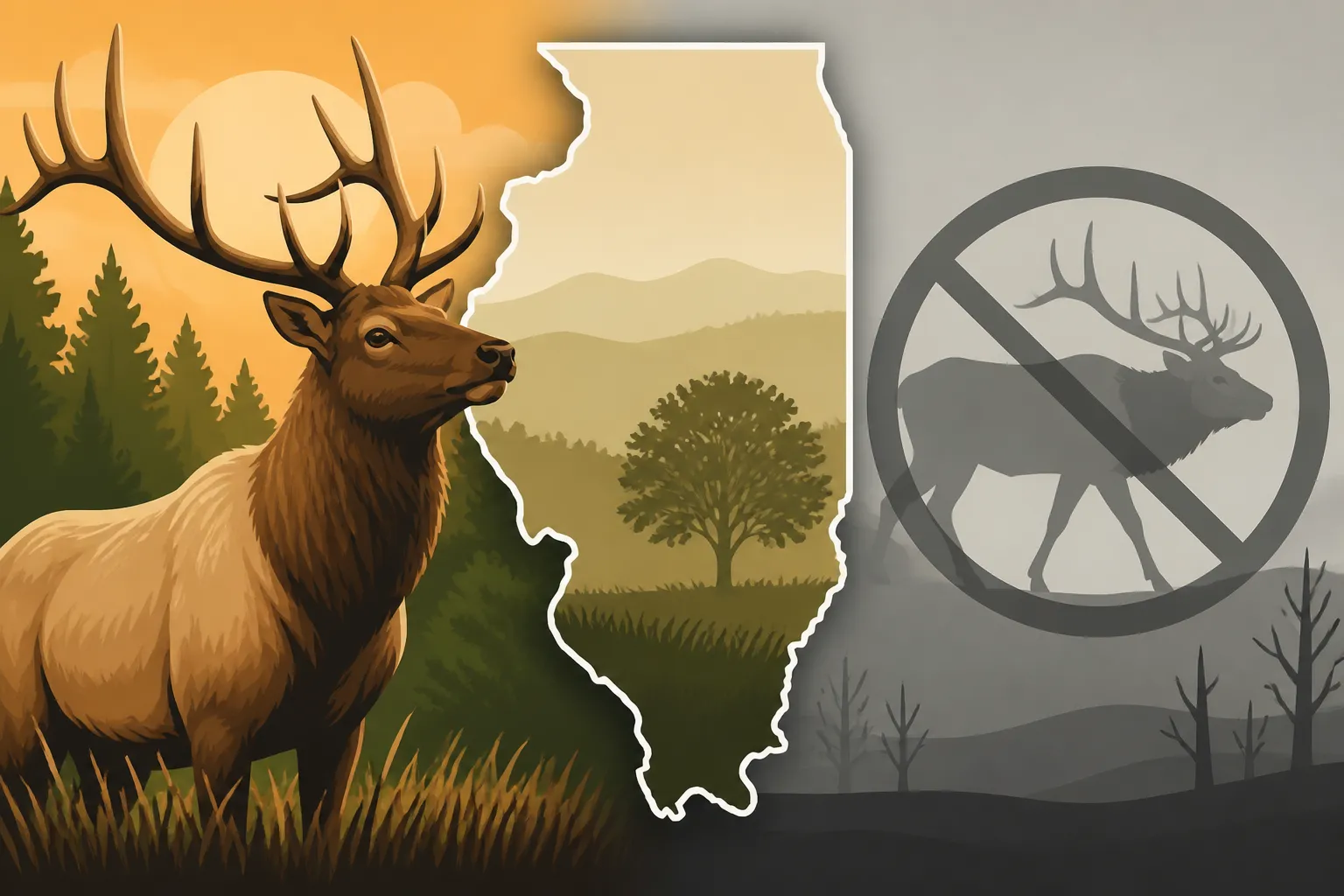
It’s a thought that might surprise many: elk once roamed wild across the vast prairies and woodlands of Illinois. While today you might only hear tales or see them in other states, these magnificent animals were a vital part of our state's ecosystem. This guide dives deep into the historical presence of elk in Illinois, explores the reasons behind their unfortunate disappearance, and discusses the ongoing conversations about their potential return.
The Majestic Ghost: Elk in Pre-Settlement Illinois
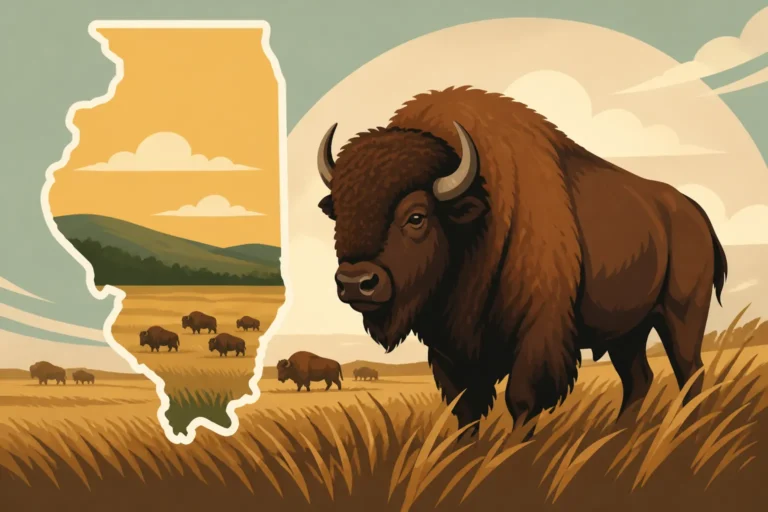
Imagine Illinois not as endless cornfields and bustling cities, but as a mosaic of tallgrass prairies, oak savannas, and dense river bottom forests. In this landscape, a creature as impressive as a bison, yet more agile and graceful, held its own: the elk. Before European settlement reshaped our state, elk were not just present; they were a powerful, undeniable force of nature, a true symbol of the American wilderness right here in the Prairie State.
A Native Presence Before European Arrival
Long before any European boots touched Illinois soil, the native North American elk, or wapiti, thrived here. These weren't some isolated, small pockets of animals; they were widespread, robust populations that played a crucial role in shaping the very landscape. Elk are big animals, second only to moose among deer species in North America, and their grazing and browsing habits helped maintain the open character of prairies and savannas, preventing brush encroachment and promoting the diversity of plant life. They moved in herds, leaving trails, consuming vast amounts of forage, and generally acting as ecological engineers, much like bison did in the more open plains. Their presence meant a richer, more complex ecosystem, supporting a wide array of predators and scavengers, and providing a significant food source for indigenous peoples who lived in harmony with the land. Their bugling calls would have echoed across the wide-open spaces, a sound now lost to Illinois's wild places.
Historical Distribution Across the Prairie State
Elk were remarkably adaptable, occupying diverse habitats from the rolling hills of what is now Southern Illinois all the way up to the wooded river valleys near Lake Michigan. While many associate elk with mountains, the Illinois subspecies, thought to be the Eastern elk (Cervus canadensis canadensis), was perfectly at home in the rich, fertile lowlands and expansive grasslands. Early historical accounts, surveys, and archaeological findings suggest they were found throughout the state, though perhaps with higher densities in certain areas. They favored the edges of timbered areas adjacent to vast prairies, using the woods for cover and browsing during certain times of the year, and the grasslands for grazing. River bottoms, with their abundant water and lush vegetation, would have been natural highways and prime habitat. Even the patchwork of smaller prairie groves surrounded by larger expanses of open prairie provided perfect environments for them to thrive, offering both sustenance and security. The notion that elk were only western animals simply doesn't hold up when you look at Illinois's original natural heritage.
The Rapid Decline: Factors Leading to Extirpation
The story of the elk's disappearance from Illinois is a stark reminder of humanity's impact on the natural world, particularly during periods of intense settlement and resource exploitation. It wasn't a slow, natural fade, but rather a dramatic and rapid decline driven by a combination of human pressures that fundamentally altered the landscape and pushed these magnificent animals to their breaking point.
Unregulated Market Hunting and Subsistence Pressure
Perhaps the most significant factor in the elk's rapid disappearance was relentless, unregulated hunting. As European settlers poured into Illinois, bringing with them a burgeoning population and a demand for resources, elk became a prime target. This wasn't just recreational hunting as we know it today; it was primarily market hunting and subsistence hunting. Elk provided a tremendous amount of meat, which could feed families through harsh winters or be sold in growing towns. Their hides were valuable for clothing, blankets, and other goods, and their antlers, especially the large bull racks, were prized.
Without any form of wildlife management, bag limits, or season restrictions, hunters could take as many elk as they could find and process. This economic incentive drove many to actively seek out and harvest elk wherever they could be found. Hunting technology, while rudimentary by today's standards, was effective against large, relatively slow-moving herd animals, especially during vulnerable times like harsh winters or calving seasons. The sheer volume of animals taken, year after year, without any chance for populations to recover, quickly began to decimate the herds across the state.
Habitat Loss and Landscape Transformation
Closely intertwined with market hunting was the wholesale transformation of Illinois's landscape. The very habitats that elk relied upon – the vast prairies, oak savannas, and expansive river bottom forests – were systematically converted to agricultural land. Prairies were plowed under to grow corn and wheat, wetlands were drained, and forests were cleared for timber, fuel, and more farmland. Fences crisscrossed the land, fragmenting once continuous habitats and disrupting natural migration patterns and seasonal movements of elk.
This wasn't just a loss of cover; it was a loss of food sources, calving grounds, and wintering areas. Elk, like all large ungulates, require significant acreage to support a healthy population, offering diverse forage throughout the year and ample space to avoid human disturbance. As their habitat shrank and became increasingly fragmented, the remaining elk were concentrated into smaller, more vulnerable pockets, making them even easier targets for hunters and more susceptible to other pressures. This profound change in land use made it impossible for even small populations to persist, sealing their fate long before the last individual was taken. Hunters today, using tools like GoHunt, can see just how much of the original landscape has been altered, which makes understanding this historical habitat loss even more poignant.
Disease and Other Contributing Factors
While habitat loss and hunting pressure were undeniably the primary drivers of elk extirpation in Illinois, other factors likely played a contributing role, though perhaps to a lesser degree. As elk populations dwindled and became stressed, they may have become more susceptible to diseases, potentially introduced by domestic livestock brought in by settlers. For instance, diseases like brucellosis or tuberculosis, which can affect both cattle and cervids, could have further weakened already struggling herds.
Furthermore, competition with expanding populations of domestic animals for forage, particularly in transitional areas between wildlands and farms, could have added another layer of pressure. While not as impactful as direct human exploitation, these secondary factors compounded the challenges faced by the last remaining elk in Illinois. The cumulative effect of these various pressures created an environment where survival for large, free-ranging elk herds became increasingly impossible.
The Last Stand: Documenting Illinois's Elk Demise
The disappearance of elk from Illinois wasn't a silent event. While the precise date of the very last elk is hard to pinpoint, historical records, naturalists' accounts, and the fading memories of early settlers provide a somber timeline of their final decline. These records paint a picture of scattered remnants, isolated individuals, and a gradual, heartbreaking farewell to a native species.
Eyewitness Accounts and Early Records
For historians and conservationists, piecing together the story of Illinois's extirpated elk relies heavily on the journals, letters, and published accounts of early explorers, travelers, and settlers. These firsthand observations, though sometimes anecdotal, offer invaluable glimpses into a bygone era. Naturalists like Robert Ridgway, who spent considerable time documenting Illinois's wildlife in the mid-19th century, mentioned elk in their writings, often noting their increasing rarity. There are records from the early 1800s describing elk being hunted in areas like Bureau County in northern Illinois and even down into the heavily wooded regions of the south.
As settlements expanded, these accounts shifted from describing thriving populations to lamenting the scarcity of elk. Local newspapers sometimes carried reports of an "unusual" elk sighting, indicating just how rare they had become. These fragmented records serve as a crucial window into the rapid decline, showcasing how quickly a once-plentiful species could vanish under the relentless pressures of a developing frontier. They also underscore the importance of documenting wildlife populations, a practice that modern hunters often engage in through apps and record-keeping.
The Official Extirpation: When and Where
Determining the exact year the last wild elk was killed in Illinois is a subject of historical debate, but most sources converge on the mid-19th century as the period of their final disappearance. By the 1830s and 1840s, elk were already considered extremely rare across much of the state. The heavily populated northern and central regions, which had been quickly converted to agriculture, likely saw their last elk depart or fall to hunters earliest.
The very last confirmed elk sightings and harvests likely occurred in the more remote, less settled parts of Illinois, particularly in the rugged Shawnee Hills region of Southern Illinois, or perhaps in the dense river bottomlands of the Illinois or Mississippi Rivers, where pockets of wilderness persisted longer. While an exact date is elusive, the common consensus among wildlife historians is that the Eastern elk was officially extirpated from Illinois sometime around the 1850s or 1860s. This marked a profound loss, leaving a void in the state's natural heritage that would endure for generations. It’s a stark contrast to the abundant White-Tailed Deer Across Illinois we see today, a testament to modern conservation efforts.
| Region of Illinois | Estimated Period of Elk Abundance | Estimated Period of Last Sightings/Harvests | Primary Reason for Decline |
|---|---|---|---|
| Northern Illinois | Pre-1820s | 1830s – 1840s | Rapid agricultural conversion, market hunting |
| Central Illinois | Pre-1830s | 1840s – 1850s | Extensive prairie plowing, market hunting |
| Southern Illinois | Pre-1840s | 1850s – 1860s | Market hunting, timber clearing |
| Overall State | Pre-1800s | Circa 1850s-1860s | Habitat Loss & Unregulated Hunting |
Modern Sightings and the "Elk Restoration Debate"
While the native Eastern elk is long gone from Illinois, the occasional appearance of an elk in the state today often sparks excitement and ignites conversations about what could be. These modern wanderers are not descendants of Illinois's original herds, but their presence nonetheless keeps the dream of wild elk in Illinois alive for many.
Wanderer Elk and Nearby Populations
Every few years, news outlets in Illinois might report an unusual sighting: an elk has been spotted roaming through a county. These occurrences are incredibly rare and typically involve a solitary young bull elk that has wandered a significant distance from an established population in a neighboring state. For example, some may come from Wisconsin's reintroduced elk herd, while others might originate from Missouri or Kentucky, where successful reintroduction programs have established thriving populations. These young males, often driven by an instinct to disperse and find new territories or mates, can travel hundreds of miles.
It's important to understand that these wanderer elk are just that – transient individuals. They do not represent a resident breeding population in Illinois, nor do they typically stay for long. They are a testament to the resilience of the species and the success of conservation efforts elsewhere. However, their infrequent visits often lead to public fascination and a renewed interest in the species' history in the state, making people wonder if Illinois could ever host its own wild elk herds again. Hunters interested in game movements can use advanced mapping tools like those offered by GoHunt to understand potential corridors these wanderers might use.
The Pros and Cons of Reintroduction Discussions
The topic of elk reintroduction in Illinois is one that periodically surfaces, often sparking passionate debate among wildlife enthusiasts, conservationists, landowners, and hunters. There's a strong romantic appeal to bringing back a majestic native species, but the practicalities are complex.
Arguments for Reintroduction:
- Ecological Restoration: Reintroducing elk could help restore a missing ecological component to Illinois's natural systems. As large grazers and browsers, they could influence vegetation structure, promote biodiversity, and interact with the landscape in ways that no other species currently does.
- Hunting Opportunities: A thriving elk population could eventually lead to limited, highly sought-after hunting opportunities, drawing hunters and their revenue to the state, much like the successful Illinois River Otter Recovery has shown with other species.
- Tourism and Wildlife Viewing: Elk are charismatic megafauna that attract considerable public interest. A visible, wild elk herd could boost nature tourism, offering unique wildlife viewing experiences for residents and visitors alike.
- Cultural Significance: For many, the return of elk would be a powerful symbol of successful conservation and a reconnection to Illinois's wild past.
Arguments Against Reintroduction:
- Habitat Availability: Critics often point to the vastly altered landscape of Illinois. With over 80% of the state dedicated to agriculture and significant urban development, finding large, contiguous blocks of suitable habitat, free from human conflict, is a monumental challenge. While Public Hunting Land in Illinois exists, it might not be enough for a self-sustaining herd.
- Crop Damage: Elk are large animals with hearty appetites. Farmers are naturally concerned about potential crop damage if elk were to establish themselves near agricultural fields, leading to significant economic losses and conflicts.
- Vehicle Collisions: Increased numbers of large animals, particularly near roads, raise concerns about a rise in vehicle-elk collisions, posing risks to human safety and property.
- Disease Transmission: There are legitimate concerns about the potential for elk to transmit diseases to domestic livestock or other wild cervids, such as Chronic Wasting Disease in Illinois Deer. This would require rigorous health monitoring and management.
- Public Acceptance: Gaining broad public acceptance, especially from rural landowners who would bear the brunt of potential negative impacts, is crucial for any reintroduction program. Without it, success is unlikely.
The discussion around Illinois Elk Restoration Debate is ongoing, with no immediate plans for a large-scale reintroduction. The challenges are significant, requiring careful consideration of ecological, social, and economic factors.
Lessons from the Past: Protecting Illinois's Wildlife Future
The story of the elk in Illinois is more than just a historical footnote; it’s a powerful cautionary tale and a valuable lesson in what can happen when natural resources are exploited without foresight. But it also offers insights into how we can better manage and protect the wildlife that still graces our state today.
The Importance of Habitat Conservation Today
The primary takeaway from the elk's extirpation is the undeniable importance of habitat. It wasn't just hunting that wiped them out; it was the wholesale destruction and fragmentation of their homes. This lesson continues to resonate profoundly in modern conservation efforts. For species like the Bobwhite Quail in Illinois or many migratory birds, the availability of quality habitat – prairies, wetlands, diverse forests, and healthy riparian zones – is the single most critical factor for their survival.
Today, conservation initiatives focus on preserving existing natural areas, restoring degraded habitats, and creating connectivity between isolated patches of land. Programs that encourage landowners to plant native grasses, establish buffer strips along waterways, or maintain wooded areas are vital. Organizations and state agencies work tirelessly to manage areas like Illinois State Fish and Wildlife Areas to provide suitable homes for a diversity of species. Understanding the historical context of elk loss underscores why every acre of conserved or restored habitat in Illinois is so incredibly valuable for our current and future wildlife.
Modern Wildlife Management and Hunting Ethics
The disappearance of the Illinois elk also directly contributed to the evolution of modern wildlife management and hunting ethics. The era of unregulated market hunting that decimated elk, bison, and other game species led to the realization that without intervention, many species faced extinction. This dire situation spurred the development of game laws, hunting seasons, bag limits, and the establishment of wildlife agencies.
Today, hunting in Illinois is a highly regulated activity, managed scientifically to ensure sustainable populations. Licenses and permits, like those outlined in Illinois Hunting Licenses and What They Cost, fund critical conservation programs, habitat acquisition, and research. Modern hunters are often the most ardent conservationists, actively participating in habitat improvement projects, adhering to ethical hunting practices, and supporting agencies that manage wildlife. They understand that sustainable hunting is not about taking as much as possible, but about contributing to the health and abundance of wildlife for future generations. Resources like GoHunt are used by modern hunters to not only scout but also to understand regulations and contribute to responsible hunting practices, ensuring that no other species in Illinois suffers the same fate as our native elk.
Disclaimer
This article is for general informational purposes only and does not constitute professional advice. Laws, prices and regulations vary by location and change over time. Consult a qualified professional for guidance on your specific situation.