Bobwhite Quail in Illinois
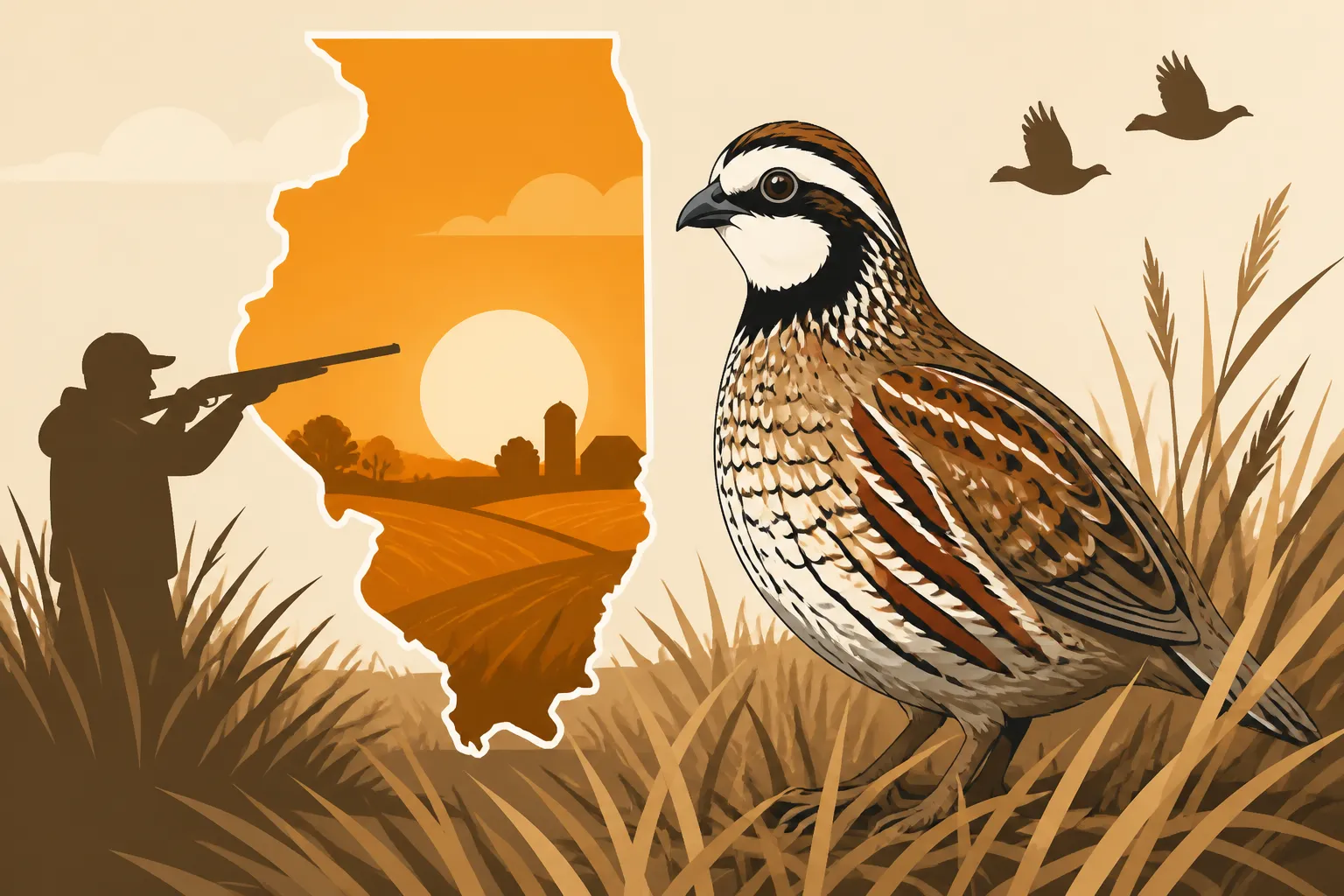
For many of us who grew up hunting Illinois, the thought of a covey of bobwhite quail exploding from underfoot sends a shiver of nostalgia down the spine. It's a sound and a sight that's become increasingly rare, a poignant reminder of how much our wild landscapes have changed. This guide dives deep into the world of the Illinois bobwhite, exploring its past glory, the challenges it faces today, and what we, as hunters and conservationists, can do to help bring back this iconic game bird.
The Enduring Charm of Illinois Bobwhite Quail
There’s something uniquely special about the bobwhite quail. It's not just another game bird; it’s a symbol of a bygone era, a bird whose very call, "bob-white!", evokes images of sun-drenched fields, brushy fencerows, and the thrilling rush of a pointer locking up. For many Illinois hunters, particularly those of us with a few decades under our belts, the bobwhite isn't just a bird; it's a memory, a tradition, and a deeply felt connection to the land and the dogs we share it with.
A Glimpse into the Past: Quail's Heyday in Illinois
Cast your mind back a few generations, and you'd find a very different Illinois landscape. Small family farms were the norm, characterized by a mosaic of crop fields, pastures, woodlots, and neglected fencerows that stitched them all together. This patchwork of diverse cover was absolutely prime habitat for bobwhite quail, and the bird thrived. My grandpa used to tell stories about how, even in the depths of winter, you could reliably find several coveys just by walking the edges of their small 80-acre farm in central Illinois. The sheer abundance was incredible, a testament to a landscape perfectly suited for these birds.
Hunting wasn't necessarily easy, mind you, but it was certainly more consistent. You knew where the birds would be – the edges of standing corn, a brushy creek bottom, or a tangle of multiflora rose in a field corner. The challenge was more about outwitting a clever covey and making the shot, rather than simply finding them in the first place. This era instilled a deep love for quail hunting in generations, a passion for the pursuit that continues to this day, even as the birds themselves have become more elusive.
Why Bobwhites Hold a Special Place in Hunters' Hearts
The appeal of bobwhite quail hunting goes far beyond just putting meat in the freezer. It’s a holistic experience that engages all your senses. There’s the crisp autumn air, the rustle of dry leaves underfoot, and the anticipation building with every step. But perhaps the most captivating element is the dog work. Watching a well-trained pointer meticulously quarter a field, nose to the ground, before slamming on point, is a thing of beauty. That moment, when the dog is rigid, tail vibrating, and you know the birds are just ahead, is pure magic.
Then comes the explosive covey flush – a sudden eruption of wings and calls that can startle even the most seasoned hunter. It’s a heart-stopping moment, a pure adrenaline rush as you pick out a bird and try to connect. And after the shot, the retrieve, the camaraderie with your hunting partners, and the quiet appreciation of a wild bird in hand – it all combines into an unforgettable experience. It’s a demanding sport, requiring patience, good conditioning, and a keen eye, but the rewards are immeasurable. The tradition of passing down this knowledge, working with well-bred bird dogs, and sharing stories after a hunt solidifies the bobwhite's special place in the hunting heritage of Illinois.
Understanding the Illinois Bobwhite's Habitat Needs
If you want to understand why quail numbers have changed, you first have to understand what makes a quail happy – or, more accurately, what makes a quail survive and thrive. Bobwhite quail are incredibly particular about their home. They aren't big travelers; their home range is often quite small, sometimes no more than 10 to 40 acres. This means that all of their essential needs – food, cover, nesting sites, and brood rearing areas – must be present within a very small footprint. Think of them as tiny, self-sufficient farmers who need every aspect of their farm to be productive and close at hand.
The Ideal Landscape: Patches of Perfection
An ideal bobwhite quail habitat is a patchwork quilt of different cover types, often described as early successional habitat. This isn't dense, mature forest, nor is it a wide-open, perfectly manicured lawn. Instead, it's a mosaic of young, brushy growth, native grasses, weedy fields, and open areas. Imagine a field that hasn't been tilled for a few years, now growing up in ragweed, foxtail, and broom sedge. Interspersed with this might be clumps of native warm-season grasses like switchgrass or indiangrass, providing excellent nesting and loafing cover. Thickets of brambles, sumac, or multiflora rose offer critical escape cover from predators and protection from harsh winter winds and snow.
Crucially, these different habitat elements need to be within easy reach of each other. Quail don't want to travel far from secure cover to find food, nor do they want to raise their young in an exposed area. They need bare ground interspersed with vegetation for chicks to move through and forage for insects, which are vital for their growth. Think of a strip of switchgrass for nesting, adjacent to a weedy field edge for insects and seeds, and then a thicket of brush nearby for quick escape. This diverse, "patchy" environment provides everything a quail needs year-round, minimizing exposure to predators and the elements.
The Role of Agriculture and Land Use Changes
The agricultural landscape of Illinois has undergone a dramatic transformation over the last 70-80 years, and these changes have profoundly impacted bobwhite quail. What was once a diverse mix of small farms, hay fields, pastures, and timber has largely become a vast expanse of monoculture – primarily corn and soybeans. Larger machinery meant that smaller, irregularly shaped fields were consolidated, and the fencerows, brushy draws, and odd corners that once broke up the landscape were cleared to maximize acreage for planting.
This shift to "clean farming" practices has effectively eliminated millions of acres of prime quail habitat. Fencerows, once crucial travel corridors and cover, are now often gone. Fields are tilled right up to the drainage ditch or road, leaving no room for the weeds and native plants that provide food and cover. Pesticide use has reduced the insect populations vital for quail chicks, and herbicides have wiped out the broadleaf plants that produce valuable seeds. While these changes have made agriculture more efficient, they have inadvertently created a landscape that is largely hostile to bobwhite quail, leaving them with fewer and fewer places to call home.
The Decline: Why Illinois Quail Numbers Fell Since the 1960s
It's no secret that seeing a covey of wild quail in Illinois is far rarer than it used to be. The stories from our grandparents' generation paint a picture of relative abundance that many modern hunters can only dream of. The truth is, Illinois's bobwhite quail population has seen a steep and steady decline since the 1960s, a trend that is well-documented by wildlife biologists and felt acutely by hunters. This isn't just a simple decline; it's a complex ecological shift driven by multiple interacting factors, with habitat loss standing out as the undisputed primary culprit.
Habitat Loss: The Primary Culprit
As we touched on earlier, the shift in agricultural practices has been devastating for bobwhite quail. When Illinois farmers embraced larger equipment and intensified crop production, the small, diverse farms of yesteryear gave way to vast, homogenous fields of corn and soybeans. This meant the wholesale removal of critical features like brushy fencerows, small woodlots, and uncultivated field corners – exactly the places where quail nested, fed, and found refuge. The loss isn't just about acreage; it's about the quality and interconnectedness of the remaining habitat. Quail need a contiguous mosaic of cover types. When these patches become too small, too isolated, or too far apart, they effectively become death traps for coveys.
Consider a quail's life cycle. They need dense, sturdy cover for nesting, usually native grasses or weedy patches that offer concealment from predators. Brood-rearing requires open, bare ground with plenty of insects for protein-rich chick development. Winter survival hinges on thick, woody cover to protect from harsh weather and predators. When these elements are absent or too separated by vast, open crop fields, nesting success plummets, young birds starve, and adult birds freeze or are easily picked off by predators. The ongoing urbanization and suburban sprawl in certain parts of Illinois also contribute, paving over remaining natural areas and further fragmenting vital habitat corridors.
Predation and Other Factors
While habitat loss is the dominant force behind the quail decline, it's not the only factor. Predation plays a significant, albeit secondary, role, often exacerbated by poor habitat. When quail are forced into smaller, more fragmented cover, they become easier targets for a host of predators. Coyotes, raccoons, opossums, skunks, and even domestic cats and dogs can take a toll on nesting hens, eggs, and young chicks. The decline in fur prices over the decades has also led to a reduction in trapping pressure on some of these mid-sized predators, allowing their populations to potentially increase in some areas, further impacting vulnerable ground-nesting birds like quail.
Beyond predation, severe weather events can deliver crushing blows to already stressed populations. Harsh winters with prolonged periods of deep snow and ice can decimate coveys, making it impossible for them to find food or shelter from the cold. A single ice storm, freezing vegetation to the ground, can be enough to wipe out an entire local population. Diseases, while not as widely studied for wild quail in Illinois as for other game species, can also contribute to localized declines. Lastly, the widespread use of certain pesticides and herbicides, while targeting agricultural pests and weeds, can inadvertently reduce the insect biomass that quail chicks depend on, leading to higher chick mortality rates and ultimately fewer birds recruiting into the population.
Current Status and Regional Distribution of Bobwhite Quail in Illinois
It can be disheartening to talk about the decline of bobwhite quail, but it's important to remember that they haven't vanished entirely from Illinois. While widespread covey flushes across every farm field are a thing of the past, there are still pockets, even regions, where wild bobwhites persist and, in some cases, even show signs of modest recovery thanks to dedicated efforts. Understanding where these birds are, and more importantly, why they're there, is key for any hunter hoping to pursue them or any conservationist looking to help their cause.
Where Wild Quail Still Persist: Pockets of Hope
If you're searching for wild bobwhite quail in Illinois, your best bet will generally be in the southern and western portions of the state. These areas, particularly in counties with more diverse topography, less intensive agriculture, and more timber and pastureland, tend to hold the most stable populations. Think of regions where farming practices might be a bit less "clean," where there are more unkempt fencerows, brushy creek bottoms, or areas enrolled in conservation programs. Specific counties in Southern Illinois, with their rolling hills and mixture of forest, fallow fields, and small-scale agriculture, often come up in discussions about the Best Illinois Counties for Wild Quail.
These areas are essentially refuges where habitat remains somewhat intact or has been actively managed to create suitable conditions. Often, these populations are found on private land where landowners have consciously implemented quail-friendly practices, such as prescribed burning, planting native warm-season grasses, or allowing brushy cover to proliferate. While state-managed areas might also have quail, hunting pressure can be higher, making birds even more wary. The key is finding those overlooked or intentionally managed parcels that provide the year-round habitat diversity the bobwhite so desperately needs.
Reading the Landscape: How to Spot Potential Quail Country
For the modern quail hunter, scouting is more critical than ever before. You can't just drive down any country road and expect to find birds. Instead, you need to become a detective, reading the landscape for clues. Start by looking for that mosaic of cover types we discussed: brushy edges, uncultivated fields, fencerows thick with brambles and multiflora rose, and patches of native warm-season grasses. Any area where agriculture isn't meticulously clean, where there's a transition zone between timber and open ground, or where different types of cover meet, is potential quail habitat.
Mapping tools are invaluable in this effort. Services like GoHunt or onX Hunt, for example, allow you to pour over satellite imagery and topographic maps from the comfort of your home. You can identify potential areas – brushy draws, CRP fields, old pastureland, or sections with diverse vegetation – long before you ever set foot on the ground. Look for areas where fields are irregular, where there are thickets along creeks, or where timber edges meet open areas with dense undergrowth. After identifying these potential hotspots, a physical scouting trip can confirm sign, such as tracks in the mud, dusting bowls, or even the distinct "bob-white!" call on a quiet morning. Pay close attention to features that offer both overhead cover from avian predators and ground-level escape from mammalian threats.
Conservation Efforts and Habitat Improvement for Illinois Quail
The story of the bobwhite quail in Illinois isn't just one of decline; it's also a story of resilience and dedicated conservation efforts. While the challenges are immense, a growing understanding of quail ecology, coupled with passionate individuals and organizations, is driving initiatives to reverse the trend. These efforts range from large-scale state programs to the work of individual landowners, all focused on restoring and maintaining the critical habitat that these birds need to survive and thrive.
State Programs and Landowner Initiatives
The Illinois Department of Natural Resources (IDNR), in partnership with federal agencies and conservation groups, offers several programs designed to benefit bobwhite quail and other grassland birds. Programs like the Conservation Reserve Program (CRP) are instrumental. CRP pays landowners to take environmentally sensitive land out of agricultural production and plant it with species that improve environmental health and wildlife habitat. For quail, this often means establishing native warm-season grasses (e.g., big bluestem, indiangrass, switchgrass), which provide excellent nesting and brooding cover, as well as crucial winter thermal protection. Other programs, such as the Environmental Quality Incentives Program (EQIP), offer financial and technical assistance to implement conservation practices like prescribed burning, brush management, and food plot establishment, all of which can significantly enhance quail habitat.
These programs provide landowners with the financial incentives and expert guidance needed to implement effective habitat management practices. For instance, prescribed fire is a powerful tool to manage succession, reduce woody encroachment, and stimulate the growth of desirable forbs and grasses that provide food and cover. Planting shrubby cover, like plum thickets or native dogwoods, can create essential escape and winter cover. By working with IDNR biologists and partners like Quail Forever, landowners can develop tailored management plans that not only benefit quail but also improve soil health, water quality, and biodiversity across their property. Supporting these initiatives is vital for the future of quail.
What Individual Hunters Can Do to Help
As hunters, we have a vested interest in the health of game populations, and bobwhite quail are no exception. Our role extends beyond simply purchasing a hunting license and going afield. One of the most impactful things individual hunters can do is to become advocates and active participants in conservation. Joining and financially supporting organizations like Quail Forever, the National Wild Turkey Federation, or other local conservation groups directly contributes to habitat projects on the ground. These organizations often have chapters in Illinois that organize workdays, provide seed for habitat plantings, and lobby for policies that benefit wildlife.
Furthermore, being a responsible hunter means respecting private land and building relationships with landowners. If you hunt private land, consider offering to help with habitat work, even if it's just cutting a few brush piles for rabbit or quail cover, or assisting with prescribed burns where appropriate and safe. Even on a smaller scale, if you own a few acres, evaluate its potential for quail. Could you let a field corner go fallow for a few years? Plant a shrubby hedgerow? Manage a small timber stand for early successional growth? Every little bit of dedicated habitat makes a difference. Lastly, educate yourself and others about the challenges facing quail. The more people understand the critical role of habitat, the greater the collective will to implement effective conservation strategies.
Hunting Illinois's Elusive Bobwhites: Strategies and Seasons
Hunting bobwhite quail in Illinois today is a different beast than it was decades ago. It's a pursuit that demands patience, persistence, and a deep understanding of habitat. You're not just looking for birds; you're looking for the right kind of habitat, and then you're relying on your dog, your instincts, and a bit of luck to connect with a covey. It's a challenging hunt, but the rewards—a hard-earned flush, a well-executed shot, and the unparalleled thrill of working a good bird dog—are incredibly fulfilling.
Best Illinois Counties for Wild Quail
When thinking about where to find wild quail in Illinois, it's less about specific county names and more about the type of landscape present within those counties. Generally, the more rugged, less intensively farmed regions offer better prospects. These are areas where you'll find a higher percentage of timber, pastureland, and smaller, less "clean" agricultural fields, often with brushy draws and fencerows still intact. For a comprehensive overview, hunters should consult resources that detail the Best Illinois Counties for Wild Quail, as these areas often show higher population densities due to more favorable habitat conditions.
These preferred counties typically exhibit a blend of critical habitat elements: diverse early successional cover, thickets, native warm-season grass fields, and varied topography that prevents uniform, large-scale farming. While the northern and central parts of the state are largely dominated by intensive row cropping, southern and western Illinois counties, particularly those bordering the rivers or within the Shawnee Hills region, often offer more opportunities. Remember, even within these "better" counties, finding birds will still depend heavily on localized habitat quality and access to land that has been managed with quail in mind. Scouting, as always, is paramount.
Essential Gear and Tactics for Success
The bedrock of any successful quail hunt is a good bird dog. Whether you prefer a pointing breed like a German Shorthaired Pointer or an English Setter, or a flushing dog like a Springer Spaniel or Labrador, a dog with a keen nose and a strong retrieve is indispensable. They cover ground far more efficiently than any human and, crucially, can locate birds that are holding tight in thick cover. Investing in good dog training, even if it’s just basic obedience and retrieving, will significantly enhance your hunting experience.
For shotguns, lighter gauges are popular, with 20-gauge and 28-gauge being common choices due to their quick handling and reduced recoil, which is nice when you're shooting multiple times in a covey flush. A 12-gauge with light loads can certainly work, but the smaller gauges are often preferred. Use open chokes like Improved Cylinder or Skeet, as shots are usually close and fast. For shot size, 7 ½ or 8 lead shot (or non-toxic equivalents where required) is standard. When hunting, focus on working the edges of cover: fencerows, field borders, creek bottoms, and the transition zones between different habitat types. Walk slowly and deliberately, allowing your dog to work thoroughly. Don't be afraid to push through dense cover; quail often hold incredibly tight, even allowing you to step almost on top of them before flushing. Listening for the distinct "bob-white!" call can also help locate coveys, especially in the early morning. Understanding the Illinois Small Game Season Rules and Illinois Rabbit Season Dates (as rabbits often share similar cover) is essential before heading afield.
Reading Weather and Conditions
Quail hunting success can often hinge on understanding how weather and environmental conditions affect the birds. Cold fronts, for instance, can make birds hunker down, seeking thicker thermal cover. After a cold snap or a heavy dew, quail might be slower to move in the mornings, and scenting conditions for your dog could be reduced. As the day warms up and the ground dries, scenting typically improves. On very cold, windy days, quail will gravitate towards dense, protective cover, such as cedar thickets, plum hedges, or brush piles, to escape the wind and maintain body temperature.
Snow, while beautiful, can be incredibly challenging for quail. Deep, fluffy snow makes it hard for them to move and find food. Crusting snow or ice, which can seal off food sources, can be particularly devastating. In such conditions, focus your efforts on the thickest, most protective cover, especially south-facing slopes that might receive more sun. Pay attention to how the birds act – are they holding tight, or are they spooky? Adjust your tactics accordingly. Good conditions for quail hunting often involve clear, cool, calm days, with just enough moisture for good scenting but not so much that the birds are soaked.
The Future of Bobwhite Quail in Illinois
The road ahead for bobwhite quail in Illinois is undeniably challenging, yet it's also filled with opportunities born from dedicated conservation efforts and a growing appreciation for this iconic bird. We've seen significant changes over the past decades, and while we might not return to the extreme abundance of the early 20th century, there's real potential for healthier, more robust local populations across the state. Understanding both the ongoing hurdles and the avenues for positive change is critical for anyone invested in the bobwhite's future.
Challenges and Opportunities Ahead
The primary challenge for bobwhite quail remains the continued loss and fragmentation of suitable habitat. Modern agriculture shows no signs of reversing its intensive practices, and urban and suburban development continues to consume natural areas. Climate change introduces another layer of uncertainty, with potential impacts on weather patterns, insect populations, and the distribution of native plant species vital for quail. Funding for conservation programs, while crucial, can also fluctuate, making long-term planning difficult. We've certainly learned much about How Illinois Quail Numbers Fell Since the 1960s, and preventing further decline requires constant vigilance and adaptation.
However, amidst these challenges, significant opportunities exist. There's a growing awareness among landowners, hunters, and the general public about the importance of biodiversity and habitat restoration. Collaborative efforts between state agencies, federal programs, and non-governmental organizations like Quail Forever are becoming more sophisticated and effective. The science of habitat management has advanced, allowing for more precise and impactful interventions, from prescribed fire regimes to the strategic planting of native cover. Furthermore, the economic benefits of healthy ecosystems, including improved soil health and water quality, are increasingly recognized, which can incentivize landowners to adopt quail-friendly practices. We also benefit from deeper insights into general wildlife health, including Illinois Wildlife Disease Monitoring, which helps address localized threats.
A Call to Action for Quail Enthusiasts
For those of us who cherish the sound of the bobwhite's call and the thrill of a covey flush, the future of quail in Illinois rests largely in our hands. It's a call to action that extends beyond the hunting season. We need to continue to support and advocate for robust conservation funding at both state and federal levels. Engage with your local IDNR offices, participate in public forums, and voice your support for programs that benefit early successional habitat. Consider taking the step to become a more active conservationist yourself; volunteer for habitat projects, offer assistance to landowners, or even start managing your own property, no matter how small, with quail in mind.
It’s about being a part of the solution. By investing our time, our resources, and our passion, we can help create a future where the bobwhite quail not only survives but thrives once again in Illinois. It may not be easy, and the path will certainly be long, but the enduring charm of these little birds and the unique hunting experiences they provide are well worth the effort. Let's work together to ensure that the iconic "bob-white!" call continues to echo across the Illinois landscape for generations to come.
Understanding Quail Habitat: Past vs. Present
| Feature | Historical Illinois Quail Habitat (Pre-1960s) | Current Illinois Quail Habitat (Typical) | Ideal Quail Habitat (Target) |
|---|---|---|---|
| Farm Fields | Small, irregular, diverse crops, rotational grazing | Large, uniform, monoculture (corn/soybeans) | Managed crop edges, food plots, diverse rotations |
| Fencerows | Wide, brushy, herbaceous, connected | Narrow, clean-tilled, often removed, fragmented | Thick, diverse shrub/herbaceous corridors, windbreaks |
| Woodlots/Timber | Smaller, edge-heavy, varied age, timber harvest | Larger, mature, dense understory, less edge | Varied age classes, open understory, frequent edge |
| Grasslands | Native prairies, diverse pastures, hay fields | Cool-season monoculture, limited native species | Native warm-season grass plantings (CRP), diverse forbs |
| Bare Ground | Ample due to grazing/small-scale disturbance | Limited (tilled fields only) | Patches within cover, especially for chick foraging |
| Predator Cover | Abundant, dense, interconnected | Scarce, fragmented, isolated | Well-distributed, secure thickets, brush piles |
| Connectivity | High, allowing easy movement between resources | Low, creating isolated "habitat islands" | Managed corridors, diverse landscape mosaics |
Disclaimer
The information provided in this guide is for general informational purposes only and is not intended as legal advice or a substitute for professional wildlife management consultation. Hunting regulations, seasons, and habitat conditions in Illinois are subject to change. Always consult the latest Illinois Department of Natural Resources (IDNR) regulations and local ordinances before hunting or implementing any land management practices. Adherence to all applicable laws and ethical hunting practices is the responsibility of each individual.