Best Illinois Counties for Wild Quail
If you're an Illinois hunter dreaming of the classic flush of a wild covey of bobwhite quail, you've likely felt the sting of disappointment more often than not. The truth is, finding wild quail in the Land of Lincoln can feel like searching for a needle in a haystack, a stark contrast to the covey rises our grandfathers often spoke about. This guide is here to shed some light on why that's the case and, more importantly, to help you identify the best Illinois counties where remnant populations of these elusive birds still cling on, offering you a glimmer of hope and a strategy for finding them.
The Harsh Reality: Why Wild Quail Are So Hard to Find in Illinois
Let's be honest, the days of finding quail coveys behind every fencerow are, for the most part, long gone in much of Illinois. It's a tough pill to swallow for many hunters who remember a different time, or who've heard the stories. The bobwhite quail population in Illinois, like in many parts of the Midwest, has faced significant challenges over the past several decades, leading to a dramatic decline in their numbers. This isn't just a casual observation; it's a deeply researched and documented trend that affects how and where we can even think about hunting them today.
Historical Decline and Habitat Changes
The primary culprit behind the scarcity of wild quail is undeniable: habitat loss and degradation. Illinois is a powerhouse of agriculture, and while that feeds the nation, it has come at a cost to wildlife that relies on diverse, natural landscapes. Historically, Illinois was a patchwork of tallgrass prairie, savannas, and woodlands, all interspersed with brushy edges and small family farms that provided a mosaic of cover and food sources perfect for quail. These birds thrive in what we call "early successional" habitats – areas with a mix of grasses, forbs, and shrubs that are constantly changing, providing dense cover for nesting and escape, alongside open ground for feeding.
However, modern agricultural practices have systematically removed much of this crucial habitat. Small farms gave way to large, industrial operations, and with them went the fencerows, small woodlots, and odd corners of untillable land that once offered refuge. The conversion of grasslands to row crops, the use of broad-spectrum herbicides, and the "clean farming" mentality that leaves little room for brushy edges or weedy fields have left quail with fewer and fewer places to live and reproduce. This extensive habitat alteration across the state is the single biggest factor contributing to the Illinois Bobwhite Quail Decline. It's a systemic issue that individual hunters can't solve alone, but understanding it is the first step toward finding the birds that remain.
The Importance of Specific Habitat Needs
Quail aren't just looking for any cover; they need specific types of habitat components throughout their life cycle. For nesting, they need dense, grassy cover, often clumped grasses or native prairie remnants. For foraging, they require open ground with abundant seeds, insects, and soft mast, usually found in herbaceous fields or disturbed areas. Crucially, for protection from predators and harsh weather, they depend on thick, brushy cover – think plum thickets, multiflora rose, or briar patches, often adjacent to more open feeding areas. This "edge habitat" is absolutely vital.
Without these interconnected elements in close proximity, a covey simply cannot survive. A vast cornfield offers no escape cover. A dense, mature timber stand provides no open foraging ground. Quail are relatively weak fliers and prefer to run or hide, making proximity to thick cover paramount for their survival. When you're searching for wild quail, you're not just looking for birds; you're looking for these very specific habitat elements. Areas that have undergone careful habitat management, perhaps through programs like the Conservation Reserve Program (CRP) or other private land initiatives, are often your best bet, as they attempt to recreate these vital conditions.
Identifying Pockets of Promise: Key Quail Counties
Given the widespread habitat loss, you can't just pick any county in Illinois and expect to find huntable quail. You need to focus your efforts on regions where the landscape still offers at least some of those critical habitat elements. While no county boasts a "booming" quail population like in historical times, certain areas offer better odds than others. These are typically areas where agriculture is less intense, where timbered tracts are larger, or where landowners have made concerted efforts to manage for small game.
Southern Illinois: A Quail Stronghold
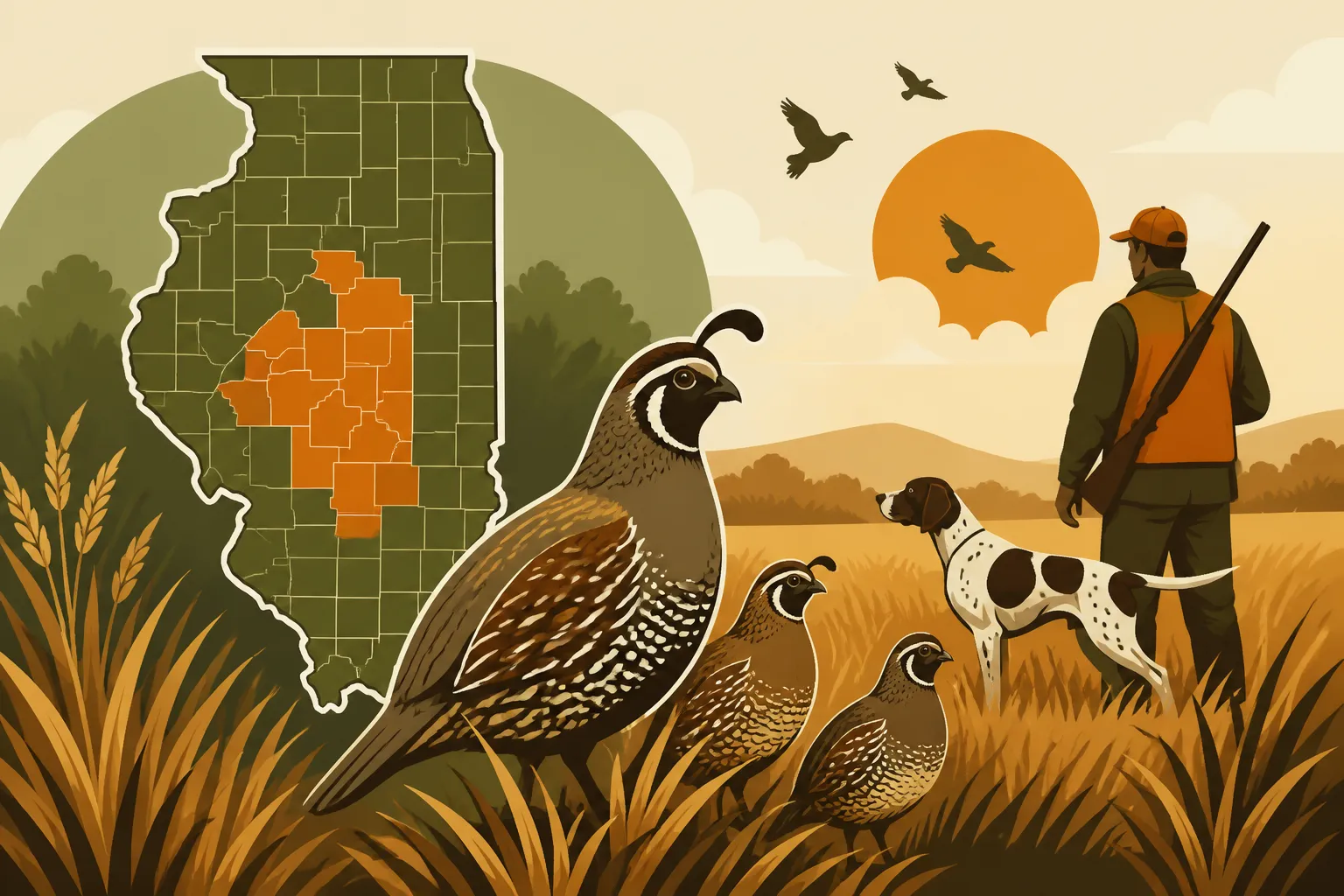
When hunters talk about wild quail in Illinois, the conversation almost inevitably turns to the southern third of the state. The rolling hills, more diverse timber tracts, and often less expansive agricultural fields in this region provide a better foundation for quail habitat than the flat, intensively farmed prairies to the north. Specifically, the counties within or bordering the Hunting the Shawnee Hills Region often hold the most promise.
Counties like Jackson, Union, Williamson, Perry, Franklin, Saline, Pope, and Hardin are frequently mentioned as having more consistent, albeit still localized, quail populations. These areas feature a greater mix of timber, pasture, and smaller farm fields, which naturally creates more edge habitat, brushy draws, and early successional growth along forest lines and creek bottoms. You'll find a higher prevalence of suitable cover types such as mature hardwoods, pine plantations, and reverting fields that are slowly turning into brush. These areas are far from a quail paradise, but compared to the rest of the state, they represent your best chance for a wild covey encounter.
For example, a hunter exploring public lands in Union County or the fringes of Shawnee National Forest might encounter old clear-cuts grown up in briars and saplings, adjacent to timber and small openings. These are the kinds of places where quail can find all their needs met in a compact area. It's not about huge numbers, but rather finding these concentrated pockets of survival.
Central and Western Illinois: Isolated Opportunities
While Southern Illinois is often cited as the best region, it doesn't mean quail are entirely absent from the rest of the state. There are isolated opportunities in parts of Central and Western Illinois, particularly in counties with river breaks, extensive CRP lands, or where specific private landowners have focused on habitat restoration. These opportunities are generally much rarer and more dependent on localized habitat conditions.
Counties bordering major river systems, such as parts of Pike, Calhoun, Adams, or even some areas along the Illinois River, might have small, scattered populations. The broken topography of river bluffs often makes large-scale agriculture more difficult, leaving pockets of timber, brush, and old fields that can support quail. Similarly, counties that have a high enrollment in programs like CRP, which promote grass and wildflower plantings, can occasionally harbor quail, particularly if those plantings are adjacent to escape cover like timber edges or brushy draws.
However, hunters in these regions must be prepared for extensive scouting and often disappointing results. These are not areas where you can expect to just walk a field edge and find birds. Success here is almost entirely dependent on finding a landowner who has actively managed for quail or stumbling upon a unique confluence of favorable habitat features. Tools like GoHunt can be invaluable for identifying potential cover types and property boundaries, but ground-truthing is always going to be necessary. It’s a testament to the resilience of the bobwhite that they persist in these isolated spots at all, a stark reminder of what once was.
Strategies for Locating Wild Quail in These Counties
Finding wild quail in Illinois isn't a walk in the park, even in the "best" counties. It requires a strategic approach, a keen eye for habitat, and often, a lot of legwork. It's about being a habitat detective first and a hunter second. If you head out expecting birds to be everywhere, you'll quickly become frustrated. Instead, shift your mindset to looking for the habitat that might hold birds.
Scouting for Prime Quail Habitat
Your boots-on-the-ground scouting is the most critical tool in your arsenal. Before the season even begins, you should be out exploring potential areas, looking for those specific habitat components that quail need. Start with topographical maps and aerial imagery, which can be found through platforms like GoHunt or the Illinois DNR Map Tool. Look for areas with a mix of:
- Diverse Cover: This means a blend of tall grasses (for nesting), shrubby thickets (for escape), and scattered trees (for roosting). Avoid vast monoculture fields and dense, unbroken timber. You want a mosaic.
- Edge Habitat: Quail thrive on edges – where a field meets a woodlot, where a brushy creek bottom winds through an open area, or where an old logging road has grown up. These transitional zones provide both cover and food sources.
- Food Sources: Look for areas with natural seed-producing plants (ragweed, lespedeza, partridge pea) or remnants of agricultural crops like corn or soybeans, especially if they are left standing near cover. Small patches of berries or soft mast are also attractive.
- Water Access: While quail don't need standing water, they do get moisture from dew and insects. Areas that retain some moisture, like creek bottoms or low-lying fields, can be more productive, especially in dry years.
When you're out there, look for signs of quail, though these can be subtle. Dust bowls, scattered feathers, or even calling birds can give away their presence. Pay close attention to south-facing slopes in winter, as these areas often provide warmer, drier cover. In summer, look for broods in grassy areas near escape cover. Remember that quail ranges are relatively small; if you find good habitat, the birds likely aren't far from it. This meticulous scouting is what separates the successful quail hunter from those who return empty-handed.
Utilizing Resources and Local Knowledge
Beyond your own scouting, don't underestimate the power of information and local connections. The Illinois Department of Natural Resources (IDNR) often conducts surveys and can provide general insights into regional quail populations, though they rarely pinpoint exact locations. Reviewing Illinois Quail Season Status reports can give you a statewide overview. Attending local conservation meetings or talking to IDNR biologists in the counties you're interested in can sometimes yield valuable clues, though they are often hesitant to give out specific "honey holes."
Perhaps even more valuable is local knowledge. Talk to farmers, landowners, and other small game hunters in the areas you're scouting. They often have an intimate understanding of the land and where birds might hold out. Remember that a significant portion of huntable land in Illinois is privately owned, so Getting Private Land Permission in Illinois is often a prerequisite for success. A polite, respectful approach, combined with a willingness to share your harvest or help with small tasks, can open doors that no map ever could. Also, consider reaching out to local chapters of conservation organizations like Quail Forever or Pheasants Forever; their members are often actively involved in habitat projects and might know of areas with healthy bird populations. These organizations are also great resources for understanding Illinois Small Game Season Rules.
Responsible Quail Hunting and Conservation
Hunting wild quail in Illinois is as much about the experience and the challenge as it is about the harvest. Given their precarious status, responsible hunting practices and a commitment to conservation are paramount. We want to ensure that these birds are here for future generations to pursue, even if it's in limited numbers.
Ethical Hunting Practices and Regulations
First and foremost, always adhere to all Illinois Small Game Season Rules and regulations. This includes understanding season dates, daily bag limits, and possession limits. These regulations are in place to protect the species and ensure sustainable hunting opportunities. Quail hunting typically involves bird dogs, and using well-trained dogs not only increases your efficiency in finding and retrieving birds but also minimizes the chance of wounding and losing game. Dogs are essential for this type of hunting, helping you cover more ground and pinpoint coveys quickly and efficiently.
When a covey flushes, resist the urge to "shoot into the brown blob." Take aim at individual birds to ensure clean kills and avoid crippling losses. After the flush, always take the time to thoroughly search for downed birds. Every retrieved bird is a testament to ethical hunting. Remember, the goal is not to decimate a covey but to harvest a few birds and leave the bulk of the covey intact for future reproduction. A good rule of thumb is to take no more than a third of the covey, allowing them to regroup and thrive. And of course, always prioritize safety, especially when hunting with others and dogs. Illinois Hunter Education Requirements ensure that all hunters understand these critical safety aspects.
Supporting Quail Conservation Efforts
Beyond ethical hunting, actively supporting quail conservation efforts is vital. Many organizations, both local and national, are working tirelessly to restore and enhance quail habitat in Illinois. Joining groups like Quail Forever, Pheasants Forever, or your local conservation club means your membership dues and volunteer hours directly contribute to habitat projects. These projects often involve planting native grasses, creating brush piles, conducting prescribed burns, or establishing food plots – all actions that directly benefit quail and other small game.
Consider getting involved in habitat work on your own land, or offering to help local landowners improve habitat on their properties. Even small efforts, like leaving brushy field corners uncut, planting native cover, or installing hedgerows, can make a difference. Advocating for sound wildlife management policies and supporting programs that incentivize habitat creation for landowners are also critical. For example, understanding how different species are monitored, through programs like Illinois Wildlife Disease Monitoring, helps inform better management practices. The future of wild quail hunting in Illinois depends heavily on these collective conservation efforts. By being a responsible hunter and a proactive conservationist, you play a direct role in preserving this cherished hunting tradition.
| Habitat Feature | Southern Illinois (Shawnee Hills) | Central/Western Illinois (River Breaks/CRP) |
|---|---|---|
| Topography | Rolling hills, timbered ridges, creek bottoms | River bluffs, broken ground, flatter farmlands |
| Primary Cover Types | Hardwoods, pine plantations, brushy clear-cuts, briars, reverting fields | CRP grasslands, brushy draws, fencerows, small woodlots |
| Agricultural Impact | Less intensive, smaller fields, more edge | Highly intensive, large fields, fewer natural edges |
| Natural Food Sources | Diverse native seeds, insects, soft mast | Primarily native seeds from CRP, some crop remnants |
| Hunter Density | Generally moderate to high, especially on public land | Variable, can be low in isolated private land pockets |
| Quail Population Trend | Remnant populations, localized pockets | Very scattered, highly dependent on specific parcels |
Disclaimer
This article is for general informational purposes only and does not constitute professional advice. Laws, prices and regulations vary by location and change over time. Consult a qualified professional for guidance on your specific situation.