Reporting a Sick Animal in Illinois
Spotting a sick or injured animal in the wild can be really disheartening, making you feel helpless and unsure of what steps to take. It's a common dilemma for anyone who spends time outdoors in Illinois, whether you're a seasoned hunter, a casual hiker, or just someone enjoying your backyard. Knowing how to properly report these sightings, and understanding why it's so important, can make a real difference in protecting both wildlife and public health in our beautiful state. This guide will walk you through the process, explaining what to look for, who to contact, and how your observations contribute to broader wildlife management efforts.
Why Reporting Sick Wildlife Matters in Illinois
It might seem like a small thing, just one animal among many, but reporting a sick or injured animal is a crucial piece of the puzzle for wildlife conservation and public safety here in Illinois. Your eyes on the ground can provide vital information that professionals need to track diseases, understand population health, and even prevent potential outbreaks from spreading further.
Protecting Animal Populations and Ecosystems
When you see a deer acting strangely, a bird with unusual growths, or a fox that seems disoriented, it could be a sign of a larger issue affecting the local wildlife population. Diseases like Chronic Wasting Disease (CWD) in deer, or avian influenza in waterfowl, don't just affect individual animals; they can decimate entire herds or flocks, impacting the delicate balance of our ecosystems. Early detection through public reporting can sometimes lead to faster responses from wildlife agencies, potentially containing a disease before it spirals out of control. It helps biologists understand where outbreaks are occurring, how quickly they're spreading, and what species are most at risk. This data is critical for making informed decisions about wildlife management strategies, such as targeted culling in specific CWD zones or managing hunting quotas to account for disease impacts. The health of our wild animals directly reflects the health of our environment, and every report contributes to that overall understanding. For more context on some of these challenges, check out Illinois's Chronic Wasting Disease Zone and EHD Die-Offs in Illinois Deer.
Safeguarding Public and Domestic Animal Health
Beyond the animals themselves, sick wildlife can pose a significant risk to human and domestic animal health. Diseases can jump species, and while many wildlife diseases aren't transmissible to humans, some certainly are. Think about rabies in foxes, raccoons, or bats, or the potential for avian influenza to affect backyard poultry. When a wildlife agency receives a report of a sick animal, they can assess the risk to both people and pets in the area. This isn't about creating panic, but about proactive management. For instance, if a coyote is reported acting aggressively or showing neurological symptoms, authorities might investigate to confirm rabies, which then triggers public health warnings and protocols for pet vaccinations in that vicinity. Farmers and pet owners, especially those in rural areas, have a vested interest in healthy wildlife populations, as a sick animal could easily transmit something to their livestock or beloved companions. Your report isn't just for the wild animal; it's a piece of community health monitoring.
Identifying Signs of Illness in Illinois Wildlife
Knowing what to look for is the first step in effective reporting. It’s not always obvious if an animal is truly sick or just acting naturally. A deer might be limping from an old injury, or a bird might just be resting. However, certain behaviors and physical symptoms can be strong indicators that something is seriously wrong.
Common Symptoms and Behaviors to Watch For
When you're out in the field, maybe even using your GoHunt app to scout new areas, keep an eye out for anything that just seems off. Normal wildlife behavior usually involves alertness, clear movement, and a healthy appearance. Here are some red flags that an animal might be sick:
- Neurological Impairment: This is one of the most concerning categories. Look for animals that are staggering, walking in circles, losing their balance, or showing unusual lack of coordination. They might also appear disoriented, confused, or unusually docile, allowing humans to approach too closely without reacting. Conversely, an animal that is typically shy but is now acting aggressively or exhibiting unprovoked attacks can also be a sign of neurological issues, such as rabies.
- Physical Appearance: A healthy animal usually has a sleek coat or clean plumage. Look for matted fur, lesions, unusual lumps or growths on the body, or discharge from the eyes, nose, or mouth. Emaciation (being extremely thin and bony) is another clear sign of distress, indicating the animal isn't feeding properly due to illness.
- Respiratory Distress: Labored breathing, coughing, sneezing, or excessive nasal discharge can point to respiratory infections. In birds, this might manifest as gasping or head shaking.
- Behavioral Changes: An animal that is usually active but is now lethargic, unresponsive, or hiding excessively could be sick. Conversely, nocturnal animals seen during the day, especially if they appear disoriented, might also be ill. If a group of animals is usually together, but one is isolated and showing other symptoms, that's another sign.
It's important to differentiate natural behaviors from actual illness. For instance, a deer might look thin in late winter after a hard season, but if it also has matted fur and is stumbling, that's a different story.
Diseases Prevalent in Illinois Wildlife
Illinois is home to a variety of wildlife, and unfortunately, several diseases can impact these populations. Being aware of the most common ones can help you understand the urgency of your report.
- Chronic Wasting Disease (CWD): This is a serious neurological disease affecting deer, elk, and moose. In Illinois, it's primarily a concern in the northern and north-central counties. Infected deer often appear emaciated (hence "wasting"), exhibit drooling, excessive thirst and urination, and display behavioral changes like listlessness, lowered head, and a lack of fear of humans. It's always fatal. For more detailed information on monitoring efforts, see Illinois CWD Testing for Hunters.
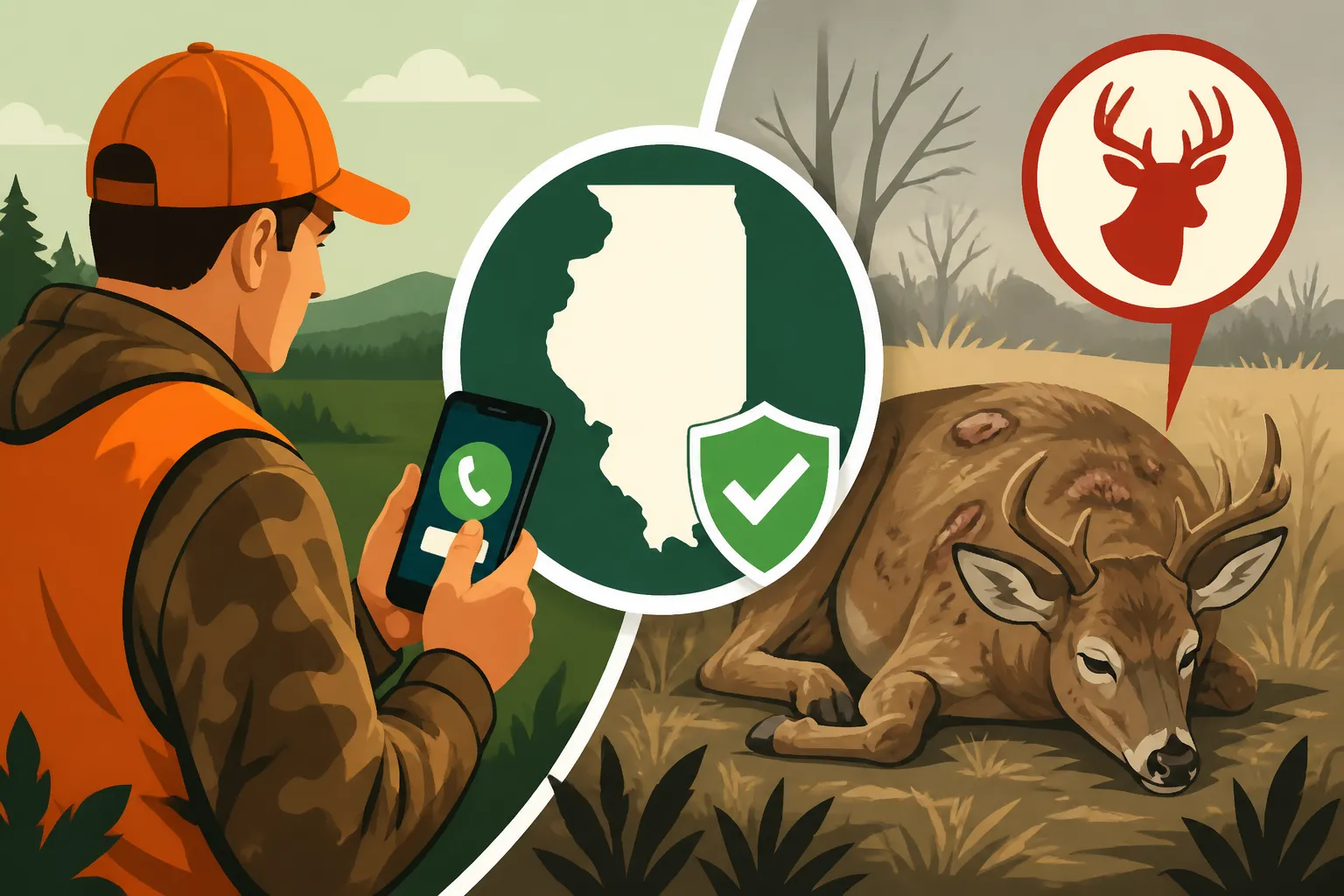
- Epizootic Hemorrhagic Disease (EHD) and Blue Tongue (BT): These viral diseases primarily affect white-tailed deer and are transmitted by biting midges. Symptoms include high fever, swelling of the head, neck, tongue, and eyelids, and internal hemorrhaging. Affected deer often seek water sources and may be found dead or dying near streams, ponds, or lakes. While EHD outbreaks are usually seasonal and don't typically lead to long-term population impacts, they can cause significant localized deer die-offs.
- Rabies: A viral disease that can affect all mammals, including humans. It's often associated with foxes, skunks, raccoons, and bats in Illinois. Symptoms vary but generally involve neurological signs: aggression, disorientation, foaming at the mouth, paralysis, and an unusual lack of fear of humans. This is highly dangerous and requires immediate reporting.
- Avian Influenza (Bird Flu): This can affect wild birds, particularly waterfowl and shorebirds. While some strains cause mild illness, highly pathogenic strains can lead to widespread mortality. Symptoms in birds can include neurological signs (tremors, head tilting, swimming in circles), respiratory distress, and swelling of the head or wattles. You might find multiple dead birds in an area. Learn more about its impact in Avian Influenza in Illinois Birds.
- Mange: Primarily affects furbearers like coyotes and foxes, caused by mites that burrow under the skin. Animals with mange often have severe hair loss, thickened, crusty skin, and may appear emaciated due to the constant irritation and difficulty hunting. While not usually fatal on its own, it can weaken an animal significantly. We have a lot of good info on Mange in Illinois Coyotes and Foxes.
Knowing these common ailments helps you provide a more accurate description when you make your report, which in turn helps the wildlife professionals assess the situation more quickly.
How and Where to Report a Sick Animal in Illinois
So, you’ve spotted an animal you believe is sick. Now what? It’s crucial to know exactly who to contact and what information to have ready. This isn't a situation for social media posts; it requires official channels to ensure proper action is taken.
Official Channels and Contact Information
The primary agency responsible for wildlife health in Illinois is the Illinois Department of Natural Resources (IDNR). They have specific protocols for handling these situations.
-
Illinois Department of Natural Resources (IDNR): This is your first and most important point of contact for sick or injured wildlife in Illinois.
- Wildlife Biologists/District Wildlife Managers: For non-emergency situations, especially concerning chronic diseases like CWD or large-scale die-offs, you can often find contact information for your local IDNR district wildlife biologist on the IDNR website. These are the experts who monitor wildlife populations and health trends.
- IDNR Law Enforcement (Conservation Police): For more urgent situations, particularly if the animal poses a public safety risk (like a potentially rabid animal), or if you find multiple dead animals, contacting the Conservation Police is appropriate. They are trained to respond to these situations and can dispatch other personnel if needed. Their main dispatch line is often listed on the IDNR site or can be found through a quick search for "Illinois Conservation Police non-emergency."
- IDNR Online Reporting System: The IDNR may also have online forms or email addresses specifically for reporting wildlife disease observations. Check their official website for the most current methods.
-
Local Animal Control or Police (for immediate public safety threats): If the animal is in a highly populated urban or suburban area, or if it appears aggressive and poses an immediate threat to people or pets, and you cannot immediately reach the IDNR, call your local animal control or even the non-emergency line of your local police department. They can assess the immediate danger and often have direct communication with IDNR or licensed wildlife rehabilitators.
It's wise to have these numbers saved in your phone, especially if you regularly spend time outdoors. A quick search on your GoHunt map layer could also help you identify which county you're in, which can be useful when calling. For broader context on how such information feeds into larger management, consider Illinois Wildlife Disease Monitoring.
What Information to Provide in Your Report
When you make that call or fill out an online form, the more detailed and accurate information you can provide, the better. This helps the responders understand the severity and scope of the situation, allowing them to prioritize and prepare.
Here's a checklist of information to gather before you make contact:
- Date and Time of Sighting: When did you first notice the animal? This helps establish a timeline.
- Specific Location: Be as precise as possible. GPS coordinates from your phone or GoHunt app are ideal. If not, use street addresses, landmarks, mile markers, cross streets, or even a description like "about 200 yards west of the old barn on Smith Road." Knowing the exact location is crucial for any follow-up investigation.
- Species of Animal: Is it a deer, fox, raccoon, bird (and what kind if you can tell)? Be specific.
- Number of Animals: Is it one sick animal or several? Are there any dead animals nearby?
- Observed Symptoms/Behaviors: Describe exactly what you saw. Is it staggering? Foaming at the mouth? Emaciated? Does it have visible lesions? Is it unusually aggressive or docile? The more detail, the better.
- Animal's Current Condition and Position: Is it alive or dead? If alive, is it moving? Where is it now?
- Your Contact Information: Provide your name and phone number in case they need more details or want to follow up.
- Photos/Videos (if safe to obtain): If you can safely take a photo or short video from a distance without disturbing the animal or putting yourself at risk, this can be incredibly helpful for identification and assessment. Do not approach the animal to get a better shot.
| Information Category | Specific Details to Provide | Why it's Important |
|---|---|---|
| Location | GPS coordinates, street address, nearest landmark, county, township, descriptive cross-reference (e.g., "north side of Willow Creek, 1/4 mile west of Rt. 3") | Allows responders to find the animal quickly and accurately. |
| Species | White-tailed deer, red fox, raccoon, Canada goose, mallard, etc. | Helps identify potential diseases specific to that species. |
| Number Affected | Single animal, multiple sick animals, multiple deceased animals | Indicates the potential scale of a disease outbreak. |
| Symptoms | Staggering, drooling, matted fur, lesions, lethargy, aggression, unusual fearlessness | Provides critical clues about the type of illness. |
| Date/Time | When observation was made | Establishes a timeline for disease progression or response. |
| Public Safety Risk | Is it near homes, schools, parks? Is it acting aggressively? | Helps prioritize response based on potential harm to people or pets. |
What to Do (and Not Do) When You Encounter a Sick Animal
Your intentions are good, but when it comes to sick or injured wildlife, sometimes the best thing you can do is less. It’s about protecting yourself and giving the professionals the space to do their job correctly.
Prioritizing Safety for Yourself and Others
It’s natural to want to help, but a sick or injured animal is unpredictable and can be dangerous. Your safety, and the safety of anyone with you, must be the absolute priority.
- Maintain a Safe Distance: This is the golden rule. Never approach, touch, or attempt to capture a sick or injured wild animal. Diseases like rabies can be transmitted through bites or scratches, even from animals that appear weak. Even non-rabid animals can strike out defensively when they are in pain or fear. Use binoculars if you need a closer look.
- Keep Pets Away: If you're out walking your dog or have other pets, ensure they are leashed and kept far away from the sick animal. Pets can contract diseases from wildlife or provoke an attack, escalating the situation.
- Do Not Feed: Offering food might seem compassionate, but it can draw the animal closer and habituate it to humans, creating more problems down the line. It also doesn't address the underlying illness.
- Secure the Area (if safe and necessary): If the animal is in a very high-traffic area (like a roadway or playground) and you believe it poses an immediate risk before help arrives, you might consider gently guiding people away or putting up a visible marker like a jacket, but only if you can do so without getting close to the animal. Never put yourself in harm's way.
- Wash Your Hands: If you somehow come into accidental contact with the animal or an area it contaminated, wash your hands thoroughly with soap and water immediately.
Remember, wildlife professionals are equipped with the knowledge and tools to handle these situations safely. Your role is to report and observe from a distance.
Understanding Your Role as a Concerned Citizen
As a member of the community and someone who cares about Illinois's natural heritage, your vigilance is invaluable. Your part in this isn't about direct intervention; it's about being a responsible observer and communicator.
- Be a Good Witness: Your detailed observations from a safe distance are the most important contribution you can make. Note the symptoms, the location, and the animal's behavior without interfering. Just like using GoHunt to mark a good buck scrape, apply that same detail to marking the location of a sick animal.
- Report Promptly: Don't delay. The sooner the IDNR or local authorities are informed, the sooner they can respond, potentially preventing further suffering or spread of disease.
- Do Not Self-Diagnose or Treat: You are not a veterinarian, and wild animals are not pets. What might seem like a simple injury could be a symptom of a serious, contagious disease. Attempting to treat an animal yourself can cause more harm than good and puts you at risk.
- Follow Instructions: When you make your report, listen carefully to any instructions given by the wildlife official or dispatcher. They might ask you to keep an eye on the animal from a distance, or they might tell you to simply leave the area.
- Educate Others: Share this knowledge with friends and family who also spend time outdoors. Understanding the correct procedure for reporting sick animals helps build a more informed and responsible community that contributes positively to wildlife management. For example, knowing about Why Illinois Treats Hogs as Unprotected can help people understand why certain management strategies are employed for specific species.
By knowing when to step back, who to call, and what information to provide, you become a vital link in protecting Illinois's diverse wildlife populations and ensuring public safety. It’s a quiet but incredibly important contribution to the health of our wild spaces.
Disclaimer
This article is for general informational purposes only and does not constitute professional advice. Laws, prices and regulations vary by location and change over time. Consult a qualified professional for guidance on your specific situation.