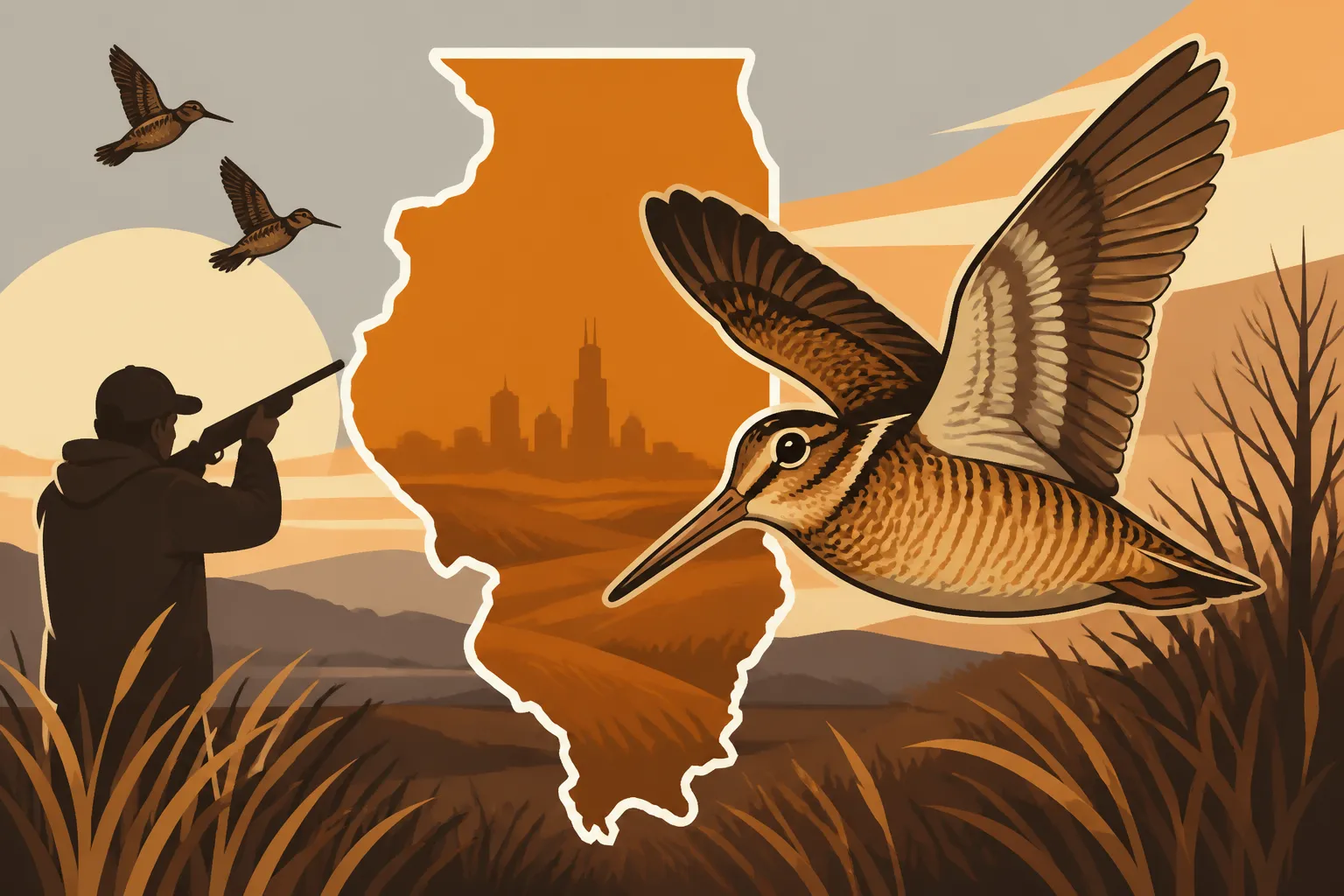
Illinois’s Place on the Woodcock Flight
For many hunters, the American woodcock, often affectionately called a timberdoodle, is a bird of mystery, an enigmatic presence that flits through the dense thickets and moist bottomlands. If you’ve ever wondered about these fascinating migratory birds and how Illinois plays a vital role in their incredible journey, you're not alone. This guide aims to pull back the curtain on Illinois's unique position along the woodcock flight path, helping you understand their movements and perhaps even find success in pursuing these challenging, rewarding birds.
Understanding the American Woodcock Migration
The allure of the woodcock lies in its elusive nature and peculiar habits. Unlike larger game birds, finding a timberdoodle often feels like stumbling upon a secret, a hidden gem in the undergrowth. To truly appreciate Illinois's role, we first need to grasp the basics of their yearly odyssey.
The Mystique of the Timberdoodle
The American woodcock is truly a marvel of adaptation, a bird built for probing soft earth with its incredibly long, flexible bill. They are crepuscular, meaning most active at dawn and dusk, and nocturnal, primarily feeding and migrating under the cover of darkness. This naturally makes them a challenge for hunters who are more accustomed to diurnal species. Their cryptic, mottled brown plumage provides perfect camouflage in the fallen leaves and brush, making them incredibly difficult to spot until they burst forth from underfoot.
These small, stocky shorebirds, despite their classification, are truly birds of the forest floor, preferring young, regenerating forests, brushy fields, and moist, rich soils where they can easily probe for earthworms – their primary food source. They aren't flocking birds like ducks or geese; you'll typically find them individually or in small, scattered groups, especially during migration. Their erratic, whistling flight, often described as a "zig-zag" through the timber, adds another layer to their mystique and difficulty. Hunting woodcock isn't just about bagging a bird; it’s an immersive experience in thick cover, often shared with a keen-nosed dog, celebrating the unique challenge of these little "bog suckers."
The Atlantic and Mississippi Flyways
North America's migratory birds largely funnel through four major corridors, known as flyways, on their seasonal journeys between breeding and wintering grounds. For the American woodcock, the two most relevant are the Atlantic Flyway, stretching along the eastern seaboard, and the vast Mississippi Flyway, which acts as a grand avian highway running directly through the heart of the continent. Illinois sits squarely within this latter flyway, making it a critical staging area and travel route for countless migratory species, including our beloved timberdoodle.
Think of these flyways as massive, invisible highways in the sky. As fall approaches and northern breeding grounds begin to freeze or lose their insect populations, woodcock from as far north as Canada and New England begin their journey south. They utilize these flyways, often following major river systems and topographical features, to navigate efficiently towards their wintering grounds in the southern United States. Illinois's central location ensures that a significant portion of the woodcock population passes through its diverse landscapes each autumn.
Key Migration Stages and Timing
The woodcock's year is a constant cycle of movement, driven by instinct and the changing seasons. While both spring and fall migrations occur, it's the autumn movement that captivates hunters. Spring migration sees birds heading north to breed, performing their famous sky dances at dusk, but these birds are protected and not open for hunting.
Fall migration, however, is when the action happens. As temperatures drop and the ground begins to harden in their northern breeding grounds, woodcock are compelled to move south. This southbound journey is less about a single, massive wave and more about a series of smaller "flights" of birds pushed by cold fronts. The prime hunting window in Illinois is often fleeting, dictated by these weather patterns. We call it the "woodcock window" – that magical, often brief, period in late October and early November when birds are most abundant in Illinois before another cold snap pushes them further south. Tracking When Woodcock Migrate Through Illinois can be tricky, as it varies year to year based on weather, but generally, once the leaves begin to drop and the first hard frosts hit the northern states, it’s time to hit the thickets.
Illinois as a Critical Migration Corridor
Illinois might be known for its vast agricultural fields, but beneath that exterior lies a crucial network of habitats and waterways that serve as a vital stopover for migrating woodcock. Our state isn't just a place birds fly over; it's a place they stop, refuel, and rest.
The Mississippi River's Influence on Flight Paths
The mighty Mississippi River, forming Illinois's western border, is more than just a waterway; it's a powerful geographical landmark that dictates the movement of countless migratory birds. For woodcock, the river system acts like a natural funnel, guiding them southward. The extensive bottomland hardwoods, river bluffs, and tributary valleys that feed into the Mississippi provide an almost continuous ribbon of ideal stopover habitat.
These rich river bottoms offer everything a migrating woodcock needs: moist, loamy soil teeming with earthworms, and dense, regenerating vegetation for cover. Birds will drop into these areas, sometimes for only a day or two, to feed and rest before continuing their journey. Think about areas along the Illinois River Valley, where the convergence of the Illinois and Mississippi rivers creates expansive floodplains. These are natural magnets for migratory birds, including the woodcock. Hunters who understand this can focus their efforts along these major river corridors and their tributaries to intercept fresh flights of birds.
The Role of Illinois's Diverse Habitats
While river bottoms are undeniably key, Illinois's broader ecological diversity also plays a significant role. Our state isn't just flat prairie; it encompasses everything from the rugged hills of the Shawnee National Forest in the south to the rolling farmlands dotted with woodlots in central Illinois. Each of these regions offers unique, albeit sometimes scattered, opportunities for woodcock.
In southern Illinois, the extensive public lands of the Shawnee offer large tracts of regenerating timber, creek drainages, and brushy clear-cuts that are perfect. Further north, even seemingly fragmented landscapes hold potential. Small woodlots, particularly those with moist ground, along fencerows, or bordering creeks in agricultural areas, can host surprisingly good numbers of birds during the peak of migration. These areas, often overlooked by deer or turkey hunters, can be hotspots for the timberdoodle. It really is about understanding the specific habitat needs of the woodcock and then finding where those conditions exist within Illinois’s varied terrain.
Weather Patterns and Their Impact on Woodcock Movement
If there's one thing woodcock hunters obsess over, it's the weather. Predicting the "flight" of woodcock can feel like trying to catch smoke, but understanding how weather patterns influence their movement is absolutely critical. Woodcock are primarily driven by food availability. As soon as a hard freeze threatens to lock up the earthworms in their northern breeding grounds, they get an undeniable urge to move.
Cold fronts, especially those originating from Canada and bringing strong north winds, are often the catalysts for these major migratory pushes. A sharp drop in temperature can literally "dump" new birds into Illinois overnight. Conversely, prolonged periods of warm weather can stall migration, leaving hunters wondering where all the birds have gone. This unpredictability can be frustrating, especially when you've scheduled a hunt, only for the birds to be a week early or a week late. But it also adds to the thrill: knowing that with the right cold snap, your favorite cover could be brimming with new arrivals, ready to be worked. Understanding Illinois Woodcock Singing Ground Surveys can help biologists track populations, but for hunters, watching the weather map is often the best real-time indicator.
Prime Illinois Woodcock Hunting Grounds
Finding woodcock is less about sprawling fields and more about dense, often overlooked pockets of cover. It's a game of hide-and-seek in the brush, and knowing what to look for is half the battle.
Identifying Productive Cover
Woodcock aren't looking for mature, open timber. They crave dense, early successional habitat – the kind of stuff that rips your clothes and snags your gun. Think young, regenerating timber stands that are only 5-20 years old, old field edges that are growing back into brush, shrubby creek bottoms with soft, moist soil, and tangled thickets of hawthorn, dogwood, or willow. These areas provide both the overhead cover woodcock need to feel secure from aerial predators and the moist, soft ground essential for probing for earthworms.
When you're out scouting, look for evidence of their feeding: small, dime-sized probe holes in the ground. These are telltale signs that woodcock have been present. While you might use a mapping tool like GoHunt to identify potential habitat, nothing beats boots on the ground to truly assess the quality of the cover and the soil conditions. Woodcock are found in places that other hunters often avoid because it's too thick. This is your advantage!
Public Land Hotspots and Challenges
Illinois offers a surprising amount of public land that can be excellent for woodcock. The key is to seek out specific habitat types within these larger areas. State Fish and Wildlife Areas across Illinois, particularly those with active timber management plans that include clear-cutting or habitat restoration, can be prime locations. Look for areas designated for early successional habitat. Even in the massive Shawnee National Forest Hunting, focus your efforts on stream corridors, regenerating clear-cuts (often indicated on forest service maps), and brushy draws rather than mature, open oak ridges.
The challenge on public land, as with most hunting, is pressure. However, because woodcock hunting is a niche pursuit, these birds often see less direct hunting pressure than deer or turkey. Your biggest competition might be other small game hunters or simply the difficulty of navigating such dense cover. Persistence and a willingness to explore deeper into the thick stuff often pay off. Finding Public Hunting Land in Illinois that holds woodcock often means getting away from the easy access points.
Private Land Opportunities and Access
While public lands offer great opportunities, some of the best woodcock hunting in Illinois can be found on private land. Many farmers or landowners have small, neglected woodlots, overgrown fencerows, or brushy creek bottoms that aren't suitable for farming or grazing. These areas, often dismissed as "waste ground," are absolute goldmines for migrating timberdoodles.
The beauty of asking for permission to hunt woodcock on private land is that you're often not competing with deer or turkey hunters. In fact, many landowners are happy for someone to walk through and "clean up" some of the brushy areas, even if it's just by trampling it down. A polite knock on the door, explaining your interest in these specific birds, and offering to share any small game taken, can open up access to phenomenal, unpressured cover. Always respect the landowner’s property and leave it better than you found it.
Hunting Strategies and Tactics for Illinois Woodcock
Pursuing woodcock is a unique hunting experience, requiring different tools and approaches than many other upland birds. It's a game of patience, stealth, and quick reflexes.
The Importance of a Good Bird Dog
Let’s be honest: hunting woodcock without a dog is like trying to find a needle in a haystack blindfolded. These birds hold incredibly tight, often letting you walk right past them before flushing. This is where a good bird dog becomes not just an asset, but almost a necessity. Whether you prefer a pointing dog, like a Setter or Pointer, that locks up on scent, or a flushing dog, such as a Springer Spaniel or Cocker Spaniel, that works the cover ahead of you and pushes birds into the air, a canine companion elevates the experience exponentially.
A dog will cover far more ground, penetrate denser cover, and use its superior nose to pinpoint birds that you would undoubtedly walk by. The pure joy of watching a dog work a strong woodcock scent, only to have the bird rocket out of the brush, is one of the most rewarding aspects of timberdoodle hunting. Just be prepared for your dog to get tangled in briars; it's part of the woodcock game!
Shotguns, Loads, and Chokes for Close-Quarters Action
Woodcock hunting is a fast, close-range affair. These birds flush quickly, fly erratically, and disappear into the thick cover almost as soon as they appear. This calls for a different shotgun setup than you might use for pheasants or ducks. A fast-handling, lightweight shotgun is ideal. Many hunters favor a 20 gauge, 28 gauge, or even a .410 for woodcock due to their quick maneuverability in tight cover.
As for loads, light target or field loads with small shot sizes are perfect. Seven-and-a-half or 8 shot are common choices, as they provide a dense pattern for close-range birds without over-penetrating. When it comes to chokes, open is the name of the game. A skeet or improved cylinder choke will give you the widest pattern at close range, maximizing your chances on those quick-flushing, zig-zagging birds. Remember, it's about getting enough pellets on a small, fast target in very limited windows of opportunity. For more on shotgun choices, see Choosing Between Slugs and Straight-Wall Rifles which, while focused on deer, highlights weapon selection principles.
Walking Patterns and Flushing Techniques
Successfully hunting woodcock involves a methodical approach to working cover. Don't rush. Slow, deliberate movements are key. Woodcock often hold incredibly tight, so a fast pace will simply cause you to walk past birds. Walk with your gun ready, eyes scanning for any subtle movement or a tell-tale flush. If possible, work into the wind, as this allows your dog (and you, to a lesser extent) to pick up scent more easily.
One of the most effective tactics is to frequently pause. Woodcock, feeling safe and hidden, often let you pass, but when you stop, they sometimes get nervous and flush. Count to three or five after every few steps, then continue. This stop-and-go rhythm can trigger flushes. Also, pay attention to the sun. In dense cover, working with the sun at your back can sometimes illuminate birds momentarily as they flush, giving you a fraction of a second more visibility. Always be mindful of your hunting partners and dog, especially in dense cover, ensuring safe shooting lanes.
Conservation and the Future of Illinois Woodcock Hunting
While often overshadowed by deer and waterfowl, woodcock are an important part of Illinois's migratory bird heritage. Their future, and the future of hunting them, depends on ongoing conservation efforts and hunter participation.
Monitoring and Survey Efforts
To ensure sustainable hunting opportunities, wildlife agencies like the Illinois Department of Natural Resources (IDNR) and federal partners actively monitor woodcock populations. One of the most important tools for this is the annual Illinois Woodcock Singing Ground Surveys. These surveys, conducted at dawn during spring migration, involve observers listening for the distinct "peent" calls of male woodcock, providing an index of population trends.
Beyond these surveys, hunter harvest data is also critical. By accurately reporting your harvest and participating in programs like the national Migratory Bird Harvest Information Program (HIP), you directly contribute to the data biologists use to set season dates and bag limits. This information is vital for understanding population dynamics, migration patterns, and the overall health of the woodcock resource. Even brands like GoHunt, by providing platforms for hunters to share experiences and insights, indirectly contribute to a more informed hunting community that understands the importance of these conservation efforts.
Habitat Management for Migratory Birds
The biggest challenge facing woodcock populations, not just in Illinois but across their range, is the loss of suitable habitat. Woodcock are specialists; they need young, brushy, early successional forests. Unfortunately, much of the landscape has matured into older timber or been converted to agriculture or development, leading to a decline in these crucial habitats.
Effective habitat management for woodcock often involves active timber management, such as clear-cutting or selective logging, which creates the necessary regenerating conditions. Prescribed burns can also be a valuable tool to set back succession and promote the growth of favored shrubby vegetation. Conservation organizations and agencies are constantly working to create and maintain these habitats on public lands, such as Illinois State Fish and Wildlife Areas, and through programs that encourage private landowners to implement woodcock-friendly practices. Hunters who want to contribute can support these organizations or educate themselves on habitat management principles.
Hunter's Role in Stewardship
As woodcock hunters, we have a vital role to play in ensuring the health of this unique species. Beyond reporting harvest and participating in HIP, there are many ways to be a good steward. If you encounter a banded bird, always report the band number; this provides invaluable data to biologists about migration routes and survival rates. Adhering strictly to bag limits and season dates, which you can find under Illinois Small Game Season Rules, is non-negotiable for sustainable hunting.
Consider supporting organizations dedicated to upland bird and habitat conservation. These groups often fund the research and habitat projects that directly benefit woodcock. Finally, advocating for sound land management practices, both on public and private lands, that create and maintain early successional habitats is crucial. By being informed, responsible, and active, Illinois woodcock hunters can help ensure that the unique flights of the timberdoodle continue to grace our state for generations to come.
| Woodcock Habitat Feature | Description | Importance for Woodcock | Example Illinois Locations |
|---|---|---|---|
| Young, Regenerating Forest | Areas that have been recently clear-cut or logged, growing back with dense saplings and brush. | Provides dense overhead cover for security and protection from predators. | Portions of Shawnee National Forest, specific State Fish and Wildlife Areas |
| Moist Bottomland Thickets | Low-lying areas along rivers, creeks, and drainages with perpetually damp soil and dense shrubs. | Essential for easy probing for earthworms, their primary food source. | Illinois River Valley, Mississippi River backwaters, creek bottoms |
| Overgrown Field Edges | Abandoned agricultural fields or fencerows that are reverting to brush and small trees. | Offers scattered feeding areas and cover, especially when adjacent to denser woods. | Private farmland woodlots, transition zones on public lands |
| Willow and Aspen Stands | Specific tree/shrub species that often grow in wet areas and provide ideal dense canopy. | Creates preferred microclimates and soil conditions for foraging. | Marshy areas, stream banks, old beaver ponds, some State Fish and Wildlife Areas |
Disclaimer
This article is for general informational purposes only and does not constitute professional advice. Laws, prices and regulations vary by location and change over time. Consult a qualified professional for guidance on your specific situation.