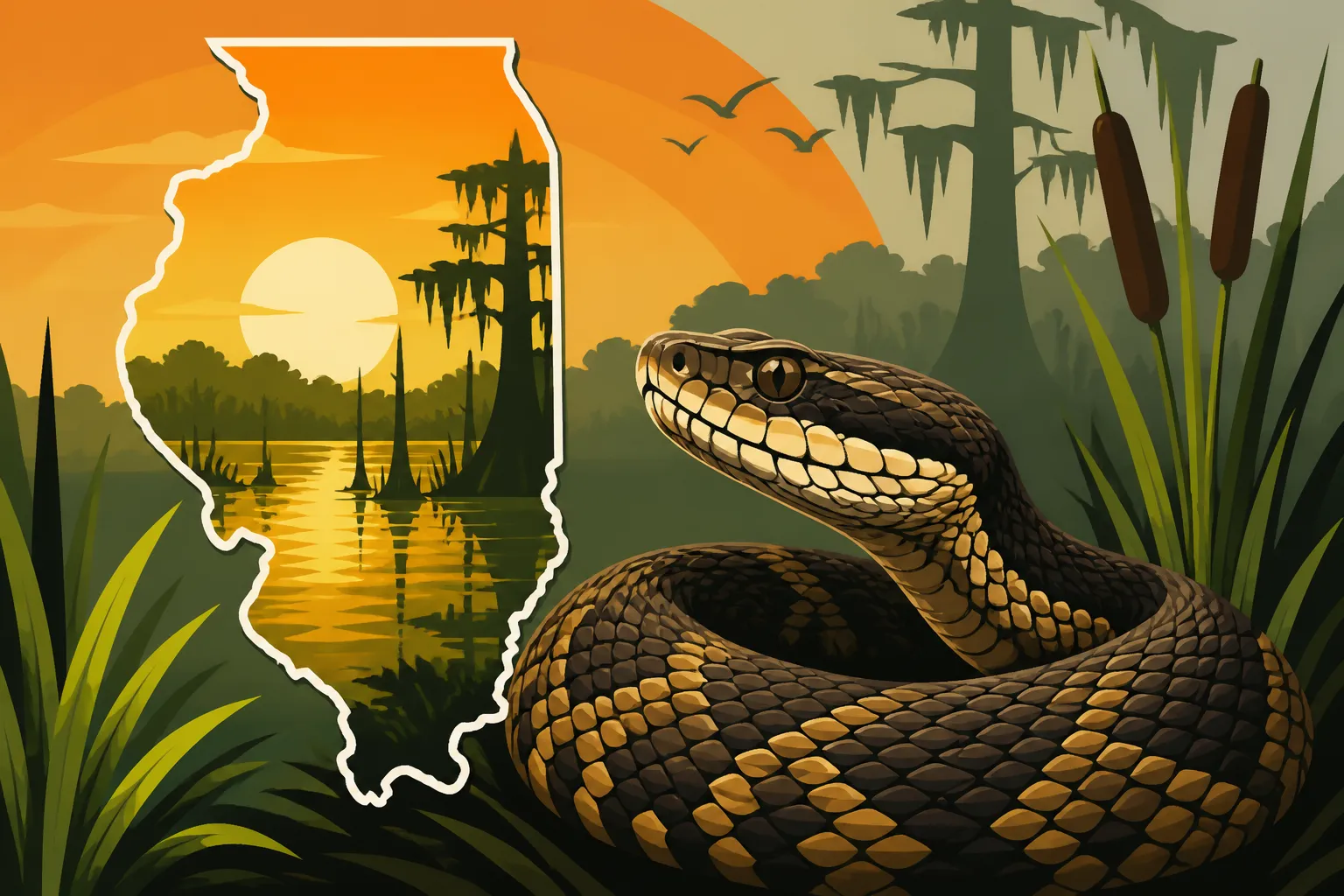
Illinois Cottonmouth Range in Swamp Country
Many of us who venture into Illinois's wild places, especially around water, carry a natural apprehension about snakes. There's a persistent myth, fueled by campfire stories and misidentifications, that venomous cottonmouths lurk in nearly every murky slough across the state. It's a concern that can make you tread lightly, but the truth is far more nuanced. This guide will help you understand the actual, limited range of the cottonmouth in Illinois, particularly in its true "swamp country" habitats, and how to confidently identify and avoid encounters with these misunderstood reptiles.
Understanding the Cottonmouth: Identifying Features and Behavior
Before we dive into where cottonmouths are in Illinois, let's talk about what they are. This is often where the biggest confusion lies. Many a harmless water snake has been mistakenly identified as a cottonmouth, leading to unnecessary fear or, worse, unwarranted harm to a beneficial creature. Knowing the real signs is your first line of defense and respect for the wildlife around you. Without a clear understanding of their characteristics, it's easy to jump to conclusions, especially when adrenaline is pumping after spotting a serpentine shape near a fishing hole or a deer stand.
Physical Characteristics to Look For
Cottonmouths, also known as water moccasins, have several distinct features that set them apart from their non-venomous cousins. They are pit vipers, meaning they possess heat-sensing pits located between their eyes and nostrils. This specialized organ allows them to detect warm-blooded prey, a tell-tale sign of a venomous snake in North America. Their heads are quite broad and somewhat triangular, significantly wider than their neck, giving them a very "blocky" or "chunky" appearance when viewed from above. Compare this to most non-venomous snakes whose heads flow more smoothly into their bodies. Their pupils are vertical, like a cat's, unlike the round pupils of most non-venomous water snakes you'll encounter in Illinois. This feature, however, requires you to be uncomfortably close to discern.
Body-wise, they are stout, heavy-bodied snakes, giving them a thick, muscular feel. Their coloration is typically dark – ranging from dark olive to brown or black, often with faded or indistinct crossbands, especially in older adults. These bands can be very difficult to see, making them appear uniformly dark. Juveniles, on the other hand, are often lighter with more distinct, reddish-brown crossbands, and they famously sport a sulfur-yellow tail tip, which they wiggle to lure frogs or other small prey. One of the most famous identifiers is the inside of their mouth. When severely threatened, a cottonmouth will often open its mouth wide, revealing a startlingly white, cotton-like interior – hence the name. This is a clear defensive display, a stark warning before striking. It's a warning you should heed immediately.
Cottonmouth Behavior and Temperament
Cottonmouths have a reputation for being aggressive, but this is largely undeserved. Like most wildlife, they prefer to avoid confrontation. When disturbed, their first instinct is usually to retreat. They are generally not looking for a fight; they're looking for an escape route or to be left alone. If cornered or feeling threatened, they will often coil their body, vibrate their tail (which can sound surprisingly like a rattle if in dry leaves), and display that characteristic white mouth. They might also emit a musky odor, an unpleasant smell that serves as another warning. These are all clear warnings, and striking is a last resort after these cues have been ignored.
They are semi-aquatic, meaning they spend a lot of time in and around water. You'll often see them basking on logs, rocks, or branches overhanging water, soaking up the sun's warmth. Unlike many non-venomous water snakes that tend to flee into the water and swim away quickly when approached, cottonmouths are more likely to hold their ground or slowly retreat. A distinct behavioral trait is their swimming posture: they can often swim with their entire body on top of the water, almost buoyant. In contrast, most non-venomous water snakes typically swim with only their head above the surface, submerging the rest of their body. This difference in swimming posture is another key identifier, although it takes a keen eye and some practice to discern from a distance, especially if the snake is only partially visible. This unique swimming style makes them particularly memorable if you've ever seen one in its natural element, silently gliding across a murky pond or slough.
Pinpointing Illinois's Cottonmouth Habitat: Where "Swamp Country" Really Is
This is where we cut through the folklore and get down to brass tacks. Despite popular belief, cottonmouths are not found statewide in Illinois. Their range is incredibly restricted, primarily to the southernmost tip of the state. If you're Pheasant Hunting Illinois Grassland in central Illinois or Hunting the Rock River Valley for waterfowl, a true cottonmouth encounter is exceedingly unlikely. Understanding this limited distribution is crucial for responsible outdoor recreation and alleviating unnecessary anxieties.
The Southern Illinois Stronghold
The true "swamp country" of Illinois, where cottonmouths genuinely thrive, is concentrated in the extreme southern counties. We're talking about places like Alexander, Pulaski, Massac, and Union counties, particularly within the cypress-tupelo swamps and sluggish backwater sloughs of the Cache River watershed and along certain sections of the Mississippi River floodplain. Think about areas like Horseshoe Lake State Fish and Wildlife Area in Alexander County, the Cache River State Natural Area near Cypress, or specific wetland management units within the Shawnee National Forest that feature extensive wetlands and bottomland hardwoods. These are habitats characterized by standing, often stagnant, water, dense vegetation, submerged logs, and a rich aquatic ecosystem – perfect for a semi-aquatic ambush predator like the cottonmouth.
These areas are biologically distinct from much of the rest of Illinois. They share more in common with the Deep South's bayou habitats than with the prairie landscapes to the north. The climate is milder, and the specific wetland types provide the ideal conditions for cottonmouths to hunt fish, amphibians, and small mammals, as well as to find shelter and suitable denning sites for overwintering. If you're hunting deer in Southern Illinois Deer Density areas or traversing cypress-lined sloughs in these southernmost counties, you absolutely need to be aware and practice vigilance. These are the places where a cottonmouth encounter is a real, albeit still infrequent, possibility.
Beyond the Deep South: Isolated Pockets
While the deep southern tip is the undisputed primary stronghold for cottonmouths in Illinois, there have been very rare, isolated sightings further north along major river systems, particularly the Mississippi and its larger tributaries. These sightings, however, are often considered outlier populations, sometimes attributed to accidental transport via floodwaters or human activity, or individuals pushing the very limits of their viable habitat. They are not indicative of established, widespread populations. It's a bit like seeing a polar bear in Chicago – highly unusual and not representative of its typical range.
The vast majority of Illinois, including its central and northern regions, simply lacks the specific combination of wetland habitat, year-round water sources, and consistent climatic conditions necessary to support a sustainable, breeding cottonmouth population. The cold winters and the general absence of extensive cypress swamps or permanent, sluggish backwaters in these regions act as natural barriers. This means it's vital for hunters, anglers, and hikers not to automatically conflate every "water snake" with a venomous cottonmouth. The northern water snake, for instance, is incredibly common across Illinois and is frequently mistaken for a cottonmouth, even in areas hundreds of miles from actual cottonmouth range. It's an important distinction to make for both your peace of mind and the well-being of the ecosystem. Understanding that their range is so specific allows you to relax your guard in most of the state, while remaining appropriately vigilant in the true cottonmouth country of the far south.
Distinguishing Cottonmouths from Look-Alikes
This is perhaps the most crucial section for anyone spending time outdoors in Illinois. Misidentification is rampant, and it often leads to unnecessary fear and the unfortunate killing of harmless, beneficial snakes. Learning to tell the difference can save a snake's life and give you much greater confidence in the field. Many seasoned hunters and anglers will admit to a moment of panic when they first spot a large water snake, only to realize it's a non-venomous species upon closer inspection. That initial reaction is natural, but education empowers you to respond correctly.
The Non-Venomous Water Snakes
The most common "look-alike" is the Northern Water Snake (Nerodia sipedon), a non-venomous species found throughout Illinois, often in the very same aquatic environments where cottonmouths could exist in the south. These snakes can be quite robust, have variable patterns (from distinct bands to nearly solid dark in older individuals), and can be quite aggressive when cornered. They frequently flatten their heads when threatened to appear more menacing, which unfortunately makes their heads look more "triangular" and therefore "venomous" to an untrained eye. They will bite readily, but their bite is not venomous, though it can be painful and bloody due to their numerous small teeth. Remember, a defensive bite from a non-venomous snake is still unpleasant and should be avoided, but it's not life-threatening.
Here's a quick comparison of key features that can help you distinguish between them in the field:
| Feature | Cottonmouth (Venomous) | Northern Water Snake (Non-Venomous) |
|---|---|---|
| Head Shape | Broad, distinctly triangular, narrow neck | More slender, head tapers into body |
| Pupils | Vertical, elliptical (cat-like) | Round |
| Heat Pits | Present (small pits between eye and nostril) | Absent |
| Swimming | Often entire body floating on surface | Typically only head and neck above surface |
| Defensive Display | White mouth open, tail vibrate, musky odor | Flattened head, hiss, repeated biting, musky odor |
| Body Build | Very heavy-bodied, stout | More slender to moderately robust |
| Markings | Faded/dark crossbands (adults), bright crossbands & yellow tail (juveniles), often dark overall | Distinct dark bands/blotches (often lighter ventral side), highly variable |
Another species that can sometimes cause confusion, though less frequently, is the Diamondback Water Snake (Nerodia rhombifer). It has a more restricted range in Illinois, mostly south of I-70, and also favors aquatic habitats. These are also non-venomous but can grow quite large and have a similar stout build, often leading to misidentification in areas like the Illinois River bottoms.
Behavior and Habitat as Key Identifiers
Beyond physical traits, behavior is a huge clue. As mentioned, cottonmouths tend to be more defensive, giving multiple warnings (coiling, vibrating tail, opening white mouth) before resorting to a strike. Northern water snakes are more prone to simply bite repeatedly if handled or cornered, often without much preamble. Observing how a snake moves and reacts to your presence can tell you a lot about its disposition and species. A snake that holds its ground, slowly coils, and flashes a warning is behaving differently than one that zips away or thrashes aggressively the moment it feels threatened.
Habitat is another critical piece of the puzzle, perhaps the most reliable for initial identification. If you're in northern Illinois or even central Illinois and you see a snake in or near the water, the odds of it being a cottonmouth are astronomically low. It's almost certainly a Northern Water Snake or another harmless species. Even in southern Illinois, cottonmouths prefer very specific, heavily vegetated, slow-moving or stagnant water bodies like cypress swamps, oxbow lakes, and marshy areas, not fast-flowing rivers or open lakes with strong currents. If you're on a manicured lake shore, a concrete boat ramp, or a rocky river bank, a large water snake sighting is almost certainly a Northern Water Snake looking for an easy meal of fish or frogs. This knowledge can give you immense confidence, especially when Scouting Illinois Public Land Before Season in various regions. Always consider your location first: Are you truly in cottonmouth country? If not, you can likely rule it out right away.
Safety and Awareness for Hunters and Anglers
For those of us who love to explore Illinois's wetlands and waterways, especially in the southern part of the state, being cottonmouth-aware is about responsible outdoor practice, not about being paralyzed by fear. A little knowledge goes a long way in ensuring a safe and enjoyable experience, whether you're chasing squirrels in a Squirrel Hunting Illinois Bottomland Hardwoods or setting decoys for ducks. Understanding where they live and how they behave allows you to make informed decisions and enjoy the abundant wildlife Illinois offers.
Best Practices in Cottonmouth Territory
If you find yourself in the genuine "swamp country" of southern Illinois, where cottonmouths are known to reside, here are some practical tips to minimize risk and promote a respectful coexistence:
- Watch Your Step and Reach: This is paramount. Always look where you are placing your hands and feet, especially when navigating dense vegetation, crossing logs, stepping over embankments near water, or reaching into blind spots. A cottonmouth's camouflage is excellent, and they often blend seamlessly with their surroundings. They are often just trying to bask or hide, and startling them is how encounters turn risky.
- Wear Appropriate Footwear: High-top, waterproof boots (like rubber knee boots or waders) are an excellent investment and offer significant protection in snake country, especially when wading through water, walking through wet, marshy areas, or traversing overgrown banks. Even thick leather hunting boots offer a layer of protection against accidental encounters. This is true whether you're Hunting Illinois River Valley Diving Ducks or scouting a deer trail in dense cover.
- Use a Stick to Probe Ahead: When clearing brush, walking through tall grass, or probing dense cover ahead of you, use a walking stick or a long branch to gently disturb the area before reaching in with your hand or stepping directly. This gives any hidden snake a chance to move away without being directly confronted or stepped on. This proactive approach can prevent many accidental close calls.
- Leave Them Alone: This is the golden rule for all snakes, but especially venomous ones. Do not attempt to catch, handle, or harass any snake, regardless of whether you think it's venomous or not. Most bites occur when people try to interact with them, either out of curiosity, fear, or an misguided attempt to remove them. Give them space, and they will almost always opt to escape.
- Be Aware of Overhanging Branches: While primarily ground dwellers, cottonmouths are known to climb low-hanging branches or brush over water to bask. Keep an eye out not just on the ground but also at eye level or slightly above when moving through densely vegetated waterways.
- Understand Their Active Times: Like many snakes, cottonmouths are often most active during warmer parts of the day, basking in the sun to regulate their body temperature. They can also be active at night, especially during the summer months when they hunt for amphibians and fish. If you're moving through their habitat after dark, carry a good headlamp and use it frequently to scan the ground and water's edge.
What to Do in an Encounter
If you do encounter a cottonmouth (or any snake you suspect might be one), the best course of action is simple: give it space. Your goal is always to avoid a confrontation.
- Stop and Assess: Freeze your movement immediately. Locate the snake and determine its direction of travel or defensive posture. Do not make any sudden moves that might startle it further.
- Maintain Distance: Slowly and calmly back away. Give the snake a wide berth, allowing it plenty of room to move off on its own. Cottonmouths are generally not aggressive pursuers and will typically retreat if given the opportunity.
- Do Not Provoke: Resist the urge to poke it with a stick, throw things at it, or try to shoo it away. This is how bites most frequently happen. Any interaction from you will be interpreted as an escalation of threat.
- If Bitten: While highly unlikely if you follow the above advice, bites do happen. If you or someone with you is bitten by a suspected cottonmouth, here's what to do:
- Stay Calm: Panic can accelerate the spread of venom through the body. Try to remain as still and calm as possible.
- Immobilize the Limb: Keep the bitten limb as still as possible and, if practical, positioned below heart level to slow the spread of venom.
- Remove Jewelry/Tight Clothing: Swelling will occur rapidly at the bite site. Remove any rings, watches, or tight clothing from the affected limb before swelling starts.
- Seek Medical Attention Immediately: Call 911 or get to the nearest hospital as quickly as possible. Time is of the essence. Do not try to cut the wound, apply a tourniquet, suck out venom, apply ice, or use any other folk remedies. Antivenom administered by medical professionals is the only effective treatment for a venomous snakebite.
Remember, seeing a snake in Illinois's "swamp country" doesn't automatically mean danger. With proper identification knowledge and respectful outdoor practices, you can share these beautiful habitats safely and confidently. It’s all about understanding and respecting the wildlife that calls these unique places home, allowing you to enjoy your hunting and fishing adventures without undue worry.
Disclaimer
This article is for general informational purposes only and does not constitute professional advice. Laws, prices and regulations vary by location and change over time. Consult a qualified professional for guidance on your specific situation.