Duck Migration Timing Through Illinois
Few things are as frustrating for an Illinois waterfowler as standing in a blind, looking at empty skies, while you know the ducks are "up north" somewhere, just waiting for the right moment to migrate. It's a constant dance with Mother Nature, trying to predict when those waves of ducks will finally make their way down the Mississippi and Illinois River flyways. This guide is all about helping you understand the complex, ever-shifting patterns of duck migration through Illinois, giving you the insights you need to be in the right place at the right time.
The First Waves: September Teal and Early October Flights
When you think of duck season in Illinois, the first images that come to mind might be greenheads cupping over decoys in November. But for many, the waterfowl season kicks off much earlier with the high-octane action of the September teal season, followed by the more subtle movements of wood ducks and the first pushes of mallards in early October. These early birds often dictate the mood of the initial hunting periods and offer a unique set of challenges and rewards.
The September Teal Rush: Fast and Fleeting
The teal season is a special beast, a short, intense sprint that relies heavily on the weather further north. Blue-winged teal are some of the earliest migrants, often moving through Illinois even before the official season opens for other ducks. They are incredibly sensitive to changes in temperature, and just a whisper of cold weather in the prairie pothole region of the Dakotas or Canada can send them south in droves. One day your local marsh might be barren, and the next, it's buzzing with hundreds of these little rockets.
The migration of blue-wings is often less about gradual movements and more about sudden, large-scale pushes. They don't linger for long, feeding voraciously to fuel their journey to their wintering grounds in the Gulf Coast states and beyond. This means hunters need to be incredibly vigilant and ready to hit the water as soon as conditions align. Missing a day or two can mean missing the entire peak of their movement through your specific area. If you're not checking the weather maps and local reports daily, you might just wave goodbye to the majority of the blue-wings without ever getting a shot.
Early October: Wood Ducks and Resident Mallards
Once teal season wraps up, there's often a bit of a lull before the main event. However, early October is prime time for wood ducks and a good opportunity to target resident mallards that have been hanging around all summer. Wood ducks, with their incredible agility and vibrant plumage, are early migrants as well, though not quite as dramatic as the blue-winged teal. They prefer wooded swamps, timber holes, and smaller backwater sloughs, areas where they can dart through cover with ease. You can often find them roosting in dense timber along river bottoms.
Resident mallards, on the other hand, are the local birds that hatched and grew up right here in Illinois. They're smart, accustomed to local pressure, and often hold tight until significant cold fronts push new birds into the area. Hunting these birds requires intimate knowledge of their feeding and loafing patterns. They might use a secluded farm pond one day and a hidden slough the next. While not the mass migration everyone dreams of, targeting these local ducks and the last of the woodies can provide some excellent early season action, especially for those willing to scout hard. You'll also want to review the Illinois Waterfowl Zones and Seasons to make sure you're always within the legal framework for whatever species you're pursuing.
Peak Migration: November's Mallard Main Event
Ah, November. This is the month etched into every Illinois duck hunter's mind as the potential for the "mallard flood." It's when the big movements happen, when the skies can truly blacken with birds, and when the hard work of scouting and blind brushing really pays off. But even within November, there are nuances and specific triggers that dictate when these birds will arrive and where they'll decide to settle.
Northern Cold Fronts and the Mallard Flood
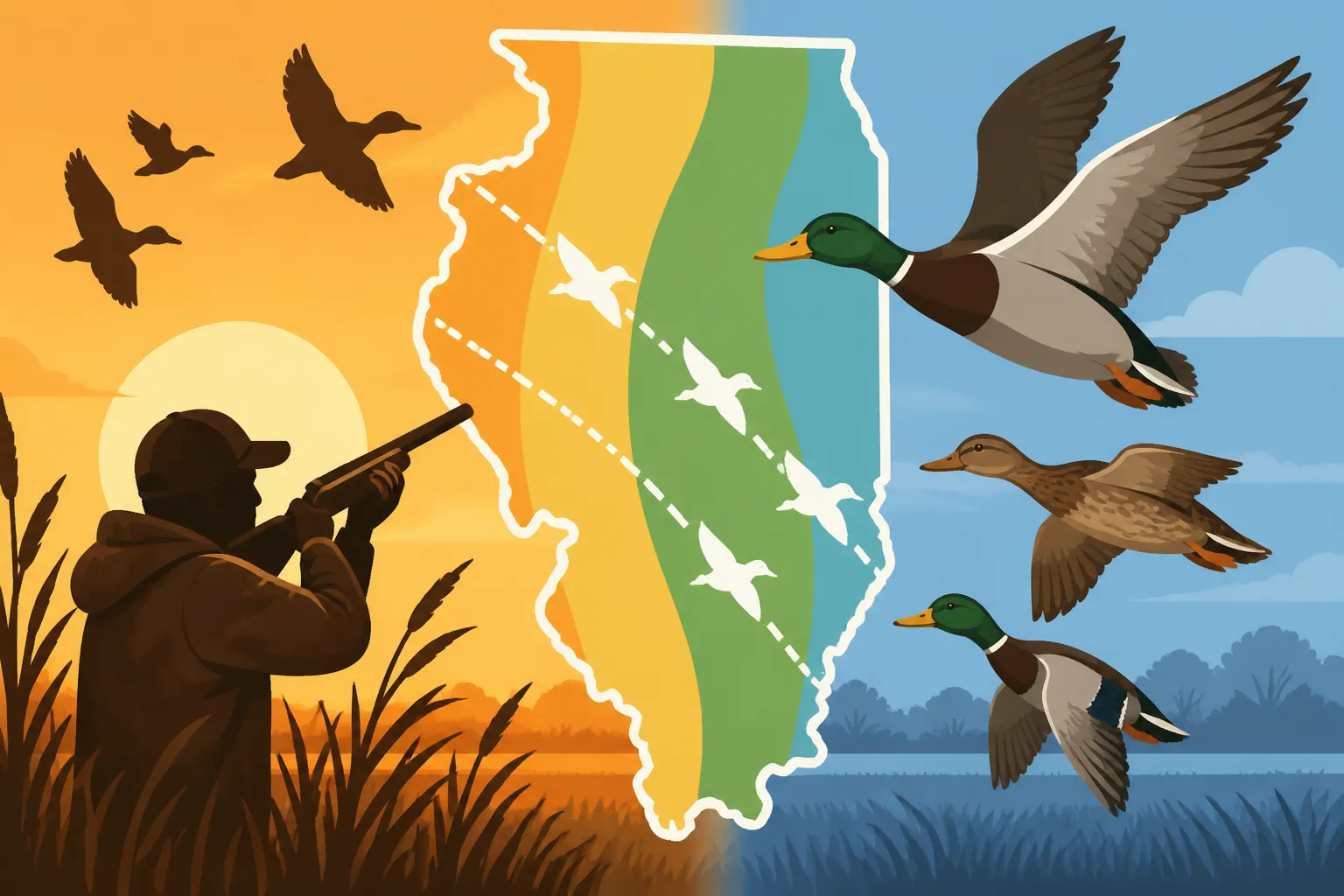
The single biggest factor driving the major mallard migration into Illinois is cold weather further north, particularly in the northern states and Canadian prairies. When temperatures consistently drop below freezing, water bodies begin to lock up, and food sources become scarce. This is the cue for the vast majority of mallards, pintails, wigeon, and gadwall to make their big push south. A strong, sustained northerly wind accompanying a cold front acts like a duck express lane, funneling thousands upon thousands of birds down the Mississippi and Illinois River flyways.
These major cold fronts often hit Illinois around the second or third week of November. Suddenly, fields that were empty are teeming with ducks, and the sounds of chuckling mallards fill the air. The initial wave of fresh birds can be less wary, offering incredible hunting opportunities. However, as the season progresses and pressure mounts, these birds quickly become educated, demanding more sophisticated calling, decoy spreads, and camouflage. This is also when having a good mapping app like GoHunt can be invaluable for identifying potential new feeding areas or less pressured water.
Divers on the Big Waters
While mallards might get all the glory, November is also a fantastic time for diver ducks on Illinois's larger bodies of water. Lakes like Lake Michigan, the vast expanses of the Mississippi River, and wider sections of the Illinois River become temporary homes for species like canvasbacks, redheads, bluebills (scaup), and buffleheads. These birds prefer large, open water where they can dive for submerged aquatic vegetation or small invertebrates.
The timing for diver migrations is often similar to dabblers, driven by northern freezes. When the smaller, shallower lakes up north start to ice over, divers are forced onto larger, deeper waters that remain open longer. Hunting divers requires different tactics, often involving large spreads of decoys, specialized boats, and robust blinds that can withstand the open water conditions. If you're planning a trip to the big rivers, understanding Diver Hunting on the Illinois River is a must. These are resilient birds, and their presence adds another exciting dimension to the Illinois waterfowl scene.
Mid-Season Strategy Adjustments
As the peak migration unfolds through November, hunters often need to adjust their strategies. Early season ducks might be gone, and the constant influx of new birds means conditions are always changing. Birds that were hammering a particular cornfield might suddenly shift to soybeans, or move from river sloughs to flooded timber depending on water levels and food availability. This is where diligent scouting and flexibility are key.
One week you might be focusing on Hunting Central Illinois Farmland Deer, and the next, you're looking for new pockets of ducks that have settled in. Keeping an eye on weather patterns not just locally, but hundreds of miles north, can give you a crucial edge. Ducks that arrive after a long flight are often looking for easy food and a safe place to rest, presenting opportunities for those who can quickly identify new feeding patterns. The constant vigilance required in mid-season is what separates the consistently successful hunters from those who just shoot birds when they happen to show up.
The Late Season Grind: December's Winter Warriors
As November fades into December, Illinois duck hunting takes on a different character. The majority of the migratory birds have typically pushed through, but strong late-season pushes can still occur. The challenge ramps up significantly as cold weather settles in, water begins to freeze, and the remaining ducks become incredibly wary.
The December Lull and Last Pushes
December often starts with a noticeable drop in duck numbers. Many of the earlier migrants have moved further south, and the birds that remain in Illinois are often battle-hardened and incredibly shy. This period can feel like a "lull," where successful hunts are hard-earned, often requiring deep penetrations into remote areas or hunting during specific weather windows. However, don't write off December entirely. One significant cold snap, especially if it freezes up key staging areas in Missouri or Iowa, can send a fresh wave of birds into Illinois.
These late pushes usually consist of hardy mallards, often big, fat birds that have been feasting on agricultural grains. They are looking for open water and readily available food. Areas with aerated water, natural springs, or flowing rivers that resist freezing become magnets for these birds. Hunters prepared for extreme cold, with well-camouflaged blinds and patience, can find incredible late-season action during these specific pushes. It's truly a test of endurance and dedication.
Geese Joining the Fray
While this article focuses on duck migration, it's impossible to talk about late-season waterfowl in Illinois without mentioning Canada geese. As ducks become scarcer and water freezes, large numbers of Canada geese, often from the North Woods and Canada, descend upon Illinois. These big birds provide excellent hunting opportunities and can often be found sharing feeding fields with late-season mallards. Their migration patterns are similar, triggered by extreme cold to the north.
During late season, it's not uncommon to find mixed bags of ducks and geese, particularly in agricultural settings where grain is plentiful. Layout blind hunting in cut corn or soybean fields becomes a popular and highly effective tactic. Understanding Layout Blind Hunting Illinois Farm Fields tactics can be crucial here. Geese are often more resilient to colder temperatures and can tolerate frozen conditions longer than many duck species, making them a consistent target even when duck numbers dwindle. However, always be mindful of Illinois Duck Daily Bag Limit and goose limits, as they differ.
Factors Influencing Migration Timing
Understanding the general timeline of duck migration is a great start, but real success comes from knowing why ducks move when they do. It's a complex interplay of environmental factors, with some having a much more immediate impact than others. Being able to read these signs is like having a crystal ball for waterfowl hunters.
The Crucial Role of Weather Systems
Weather is, without a doubt, the most significant driver of duck migration. It's not just local weather, but conditions hundreds, even thousands, of miles north. A severe cold front bringing sustained freezing temperatures to the prairie potholes of Canada or the Dakotas is like ringing the dinner bell for hunters in Illinois. These fronts force birds south, literally pushing them down the flyway.
It's not just temperature; precipitation and wind play huge roles too. Heavy snows to the north can cover food sources, prompting ducks to move. Strong northerly winds provide a tailwind, making long-distance flights easier and faster. Conversely, unseasonably warm weather can delay migration significantly, leaving hunters in Illinois frustrated and wondering where all the birds are. This is where tools like GoHunt's weather overlays can become indispensable, allowing you to monitor conditions across the flyway and anticipate major pushes. Staying informed about large-scale weather patterns is key to predicting when the skies might finally open up.
Food Sources and Staging Areas
Ducks don't just fly aimlessly south; they follow a path dictated by available food and safe resting areas. Major river systems like the Illinois and Mississippi provide critical staging grounds where ducks can refuel before continuing their journey. Illinois's abundant agricultural fields, particularly those with waste grain like corn and soybeans, are huge draws. Ducks will linger in areas with plentiful, easily accessible food, even in colder temperatures, until those resources are depleted or frozen over.
Understanding what ducks are feeding on and where those food sources are located is vital. Early season ducks might prefer natural aquatic vegetation or invertebrates in marshes. Later in the season, mallards often switch almost exclusively to waste grain in flooded fields. Changes in farming practices, harvest timing, and crop rotation can all influence where ducks decide to stop and feed. For instance, a year with a late corn harvest might mean ducks utilize those fields longer into the season, while an early harvest could see them move on more quickly.
Water Levels and Habitat Availability
Water is obviously essential for ducks, and its availability and condition heavily influence migration and staging patterns. Low water levels in marshes and sloughs can force ducks to seek out larger, deeper bodies of water or abandon an area entirely. Conversely, ideal water conditions, such as sheet water in agricultural fields or flooded timber, can create prime habitat that holds thousands of birds.
The large rivers of Illinois, such as the Illinois River and the Mississippi River, are perennial magnets for waterfowl, especially during times of freeze-up in smaller areas. The movement of water, whether it's flowing current or simply large, deep pools, can keep ice at bay, providing crucial open water habitat. Hunters often scout extensively, even using tools like GoHunt, to identify areas with optimal water depth and a lack of ice. When smaller potholes and shallow marshes freeze, ducks consolidate on these larger, open water bodies, creating exciting opportunities. Knowing about Hunting the Mississippi River Backwaters or focusing on Waterfowl Hunting the Illinois River Valley becomes even more critical during these periods.
Here's a general overview of when different duck species typically peak in Illinois:
| Species | Early Season (Sept – Mid-Oct) | Peak Season (Mid-Oct – Nov) | Late Season (Dec – Jan) | Primary Food Source | Preferred Habitat |
|---|---|---|---|---|---|
| Blue-winged Teal | High | Low | Very Low | Invertebrates, seeds, small aquatic vegetation | Shallow marshes, flooded fields, mudflats |
| Wood Duck | High | Medium | Low | Acorns, seeds, insects | Wooded swamps, timber holes, small rivers |
| Mallard | Medium | High | High | Waste grain (corn, soybeans), acorns, aquatic plants | Flooded fields, rivers, large marshes, timber holes |
| Gadwall | Medium | High | Medium | Aquatic vegetation, seeds | Marshes, shallow lakes, flooded fields |
| American Wigeon | Medium | High | Medium | Aquatic vegetation, grasses, waste grain | Shallow lakes, marshes, flooded fields |
| Green-winged Teal | Low | High | Medium | Seeds, invertebrates, small aquatic vegetation | Shallow marshes, flooded fields |
| Northern Pintail | Low | High | Medium | Seeds, waste grain, aquatic vegetation | Shallow marshes, flooded fields, open water |
| Canvasback | Low | Medium | High | Submerged aquatic vegetation (sago pondweed) | Large, deep open lakes and rivers |
| Redhead | Low | Medium | High | Submerged aquatic vegetation | Large, deep open lakes and rivers |
| Lesser Scaup (Bluebill) | Low | Medium | High | Invertebrates, seeds | Large, deep open lakes and rivers |
This table provides a general guide, but remember that actual timing can shift dramatically from year to year based on the factors discussed. Always stay flexible and adjust your plans based on real-time conditions.
Disclaimer
This article is for general informational purposes only and does not constitute professional advice. Laws, prices and regulations vary by location and change over time. Consult a qualified professional for guidance on your specific situation.