Illinois Predator Impact on Fawn Recruitment
It’s a tale as old as time in the Illinois woods: you’re out scouting, excited for the upcoming deer season, but you just aren't seeing the young deer you expect. This can be incredibly disheartening, making you wonder what’s happening to the next generation of our whitetail herd. This guide will dive deep into a significant factor influencing those numbers: the impact of predators on fawn recruitment, and what that means for hunters and the overall health of Illinois's deer population.
Understanding Fawn Recruitment and Its Importance
When we talk about "fawn recruitment," we're not just counting how many baby deer are born. It's actually a more nuanced measure that looks at how many fawns survive to join the adult population, typically reaching about six months of age or older. This figure is absolutely critical because it dictates the future health, size, and age structure of the deer herd. Without enough fawns making it to maturity, a population can stagnate or even decline, impacting hunter success and the ecological balance of an area.
What "Recruitment" Really Means for the Herd
Think of fawn recruitment as the lifeblood of the deer herd. A strong recruitment rate means a healthy, growing population with plenty of younger animals to replace older ones that are harvested or succumb to natural causes. Conversely, a low recruitment rate means fewer young deer entering the breeding pool, potentially leading to an aging population, fewer deer to hunt in future seasons, and a generally less robust herd. It's a key metric biologists monitor closely to assess the overall health of the White-Tailed Deer Across Illinois. For us hunters, it translates directly into future opportunities and the quality of the deer we might encounter. If recruitment is consistently low in an area, you'll feel it in the woods years down the line.
Why Fawn Numbers Can Fluctuate
It's easy to point a finger solely at predators, but fawn numbers are influenced by a complex web of factors. Habitat quality plays a huge role; fawns need dense cover to hide from predators, and does need nutritious forage to produce healthy milk and raise robust offspring. Weather can be a major player too – severe spring floods can drown fawns in river bottoms, and late-season blizzards can stress both does and fawns. Disease, like epizootic hemorrhagic disease (EHD), can also sweep through a herd, decimating adult deer and leaving fewer does to even produce fawns the following year. Nutrition, overall deer density, and even human disturbance can all contribute to the survival odds for a young deer. So, while predators are certainly a piece of the puzzle, they rarely act in a vacuum. Understanding these interconnected elements is crucial for anyone serious about the long-term health of our deer resource. You can often glean insights into these factors by reviewing the Illinois Deer Population Estimate and related reports.
Key Predators Affecting Illinois Deer
Illinois is home to several effective predators, and while all contribute to the natural order, some have a more pronounced impact on vulnerable fawns than others. It's not about villainizing these animals; it's about understanding their role in the ecosystem and how their populations might influence deer dynamics.
The Ever-Present Coyote
Without a doubt, the coyote is the most widespread and impactful fawn predator across Illinois. These adaptable canids thrive in nearly every habitat, from dense forests to fragmented farmlands and even suburban fringes. They are opportunistic hunters, and young, vulnerable fawns present an easy meal, especially in the first few weeks of life. Coyotes are incredibly efficient, often hunting alone or in small family groups, systematically covering ground. Their keen sense of smell and relentless nature make them formidable threats. Many a hunter has found remnants of fawn kills, evidence of a coyote's successful hunt. Understanding Illinois Coyote Range and Density helps grasp just how ubiquitous this challenge can be for fawns. Engaging in Coyote Calling in Illinois Farm Country is one way hunters try to manage these populations.
Bobcats on the Rebound
While less numerous than coyotes, bobcats are another efficient predator that will absolutely take fawns. Their impact is generally localized to areas with good habitat, particularly in southern Illinois, where their populations have been steadily rebounding. Bobcats are ambush predators, masters of stealth, and their silent approach can be deadly for unsuspecting fawns bedded down in thick cover. Unlike coyotes, which can roam vast distances, bobcats tend to be more territorial and may have a more localized, but intense, impact on fawn survival within their specific home range. Their presence is a sign of healthy ecosystems, but it also adds another layer of pressure on young deer. For more on their resurgence, see Illinois's Recovering Bobcat Population.
Other Opportunistic Predators
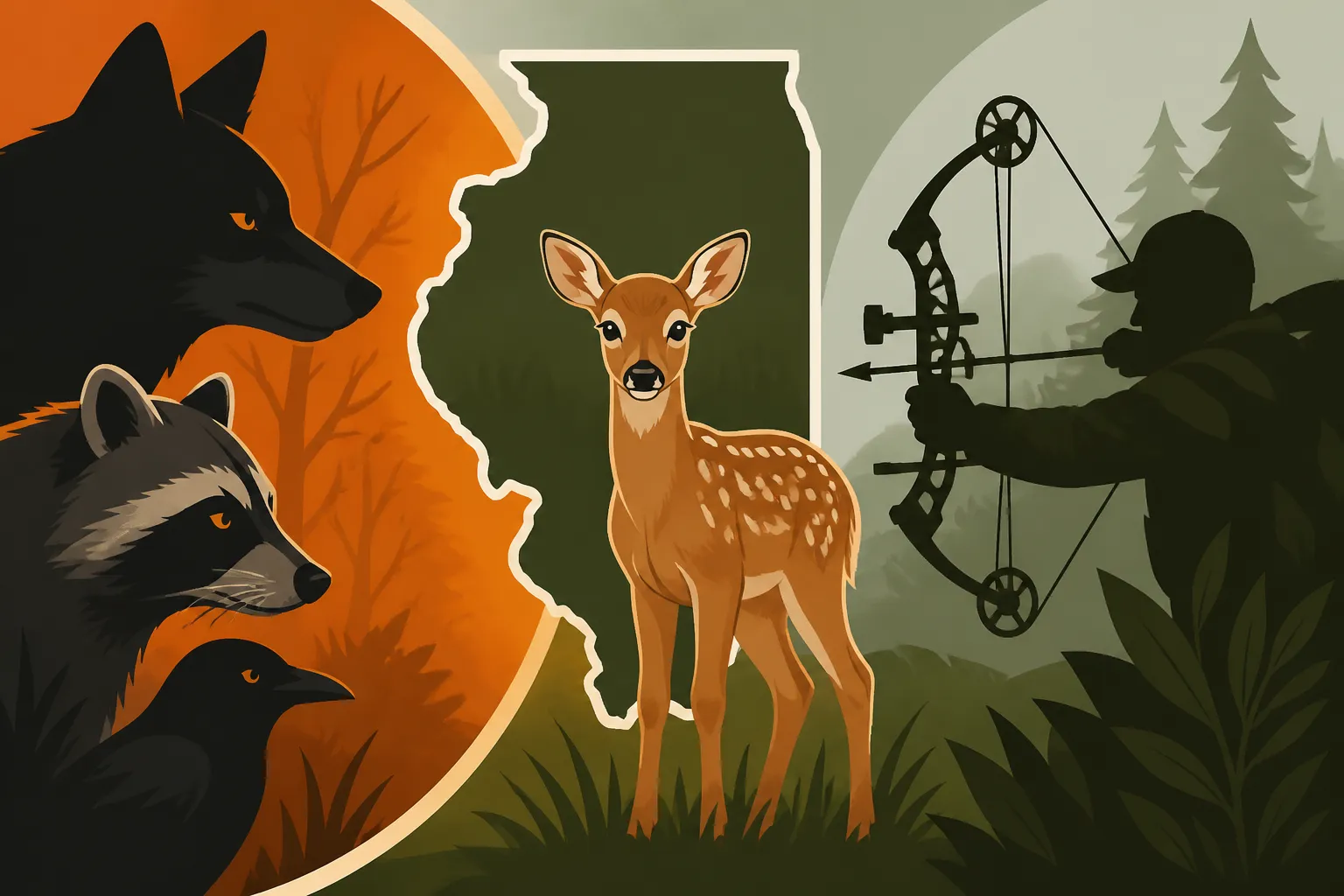
Beyond coyotes and bobcats, other animals can occasionally prey on fawns, particularly those that are sick, weak, or very young. This includes common scavengers and smaller predators like raccoons, especially if a fawn is left unattended or is already compromised. We also can't forget about Illinois Feral Hog Regulations. While hogs primarily cause habitat damage and compete for food resources, large feral hogs can and do kill fawns, especially in the southern parts of the state where they are more prevalent. Their indiscriminate rooting and aggressive nature make them a significant threat to ground-nesting birds and other small mammals, and unfortunately, fawns are sometimes on that menu. While their impact isn't as widespread or consistent as coyotes, it's a factor in certain regions.
How Predators Impact Fawn Survival
The relationship between predators and fawns isn't just a simple equation of "more predators equals fewer fawns." It’s far more intricate, involving direct kills, indirect stress, and complex ecological dynamics. Understanding these mechanisms helps us grasp the full picture of what predator presence truly means for the future of our deer herds.
Direct Predation of Vulnerable Fawns
This is the most obvious and often discussed impact. Very young fawns, particularly in their first few weeks of life, are incredibly vulnerable. They are small, relatively slow, and their primary defense mechanism is to lie still, relying on camouflage and lack of scent to avoid detection. However, keen-nosed predators like coyotes can often locate them. Does will typically separate from the main herd to fawn, choosing dense cover to give birth, but they must still leave their fawns periodically to feed, making them susceptible. A fawn's survival often comes down to pure luck, the density of hiding cover, and the sheer number of predators patrolling an area. Studies have shown that the vast majority of fawn mortality occurs within the first month after birth, and predation is a leading cause during this critical window. Knowing this helps us understand why Illinois Fawn Survival Rates can vary so widely year to year.
Indirect Pressure and Maternal Stress
Beyond direct kills, the constant presence of predators can create significant indirect pressure on the deer herd. Pregnant does and new mothers are under immense stress. They must find enough nutritious food to support lactation, while simultaneously remaining hyper-vigilant to protect their fawns. This continuous stress can lead to reduced fawn growth rates, lower milk production, and even cause does to abandon fawns if they feel too pressured. If a doe is constantly harassed by coyotes, she might spend less time feeding or move to less-than-ideal fawning cover, all of which negatively impacts her fawns' chances of survival. It's a subtle but powerful influence that can weaken the next generation before they even face a direct threat.
Compensatory vs. Additive Mortality
This is a really important concept in wildlife management. Compensatory mortality suggests that predators primarily take fawns that would have died anyway from other causes, such as disease, starvation, or abandonment. In this scenario, predator control might not significantly increase the overall deer population because those fawns were already "doomed." Additive mortality, on the other hand, means that predators are taking fawns that would have otherwise survived. In this case, predator pressure directly reduces the overall population size.
The reality often lies somewhere in the middle and can vary greatly by location and year. In areas with abundant, high-quality habitat and a healthy deer population, predation might be largely compensatory. However, in areas with poor habitat, high deer density (leading to lower fawn health), or unusually high predator numbers, predation can become additive, genuinely limiting herd growth. Recognizing this distinction is key to informed management decisions and understanding why simply "killing all the coyotes" isn't always the silver bullet some hope for. Analyzing Reading an Illinois Harvest Report can offer clues to whether a herd is truly struggling with recruitment.
Strategies to Potentially Mitigate Predator Impact
While we can't eliminate every predator, there are practical steps landowners and hunters can consider to help fawns survive and thrive. It's a multifaceted approach that combines habitat improvements with strategic management efforts.
Enhancing Fawn Habitat and Security Cover
One of the most effective long-term strategies is creating and maintaining high-quality fawning cover. Fawns need dense, thorny thickets, tall grasses, or regenerating timber where they can effectively hide from predators. Think about areas with blackberry brambles, honeysuckle, or dense conifer stands. Does will seek out these areas for fawning, knowing their young have a better chance of concealment. For landowners, this might involve selective timber stand improvements to encourage dense undergrowth, planting warm-season grasses, or allowing certain areas to grow into brushy sanctuaries. The more secure cover available, the harder it is for predators to find fawns. A tool like GoHunt can be invaluable here, allowing you to use satellite imagery and topo maps to identify areas on your property or public ground that offer the thickest security cover, helping you predict where does might drop their fawns and where predators might be concentrating their efforts. Understanding features like Hunting a Funnel Between Two Woodlots can also help identify key travel corridors for both deer and predators.
Strategic Predator Management and Its Effectiveness
Direct predator management, such as trapping and hunting, can be effective in reducing localized predator pressure, especially in key fawning areas during critical periods. For coyotes, year-round hunting, and trapping outside of deer seasons can help keep their numbers in check. Trapping is often cited by wildlife professionals as the most effective method for localized population reduction. For those interested in Trapping Illinois Furbearers, understanding the regulations and proper techniques is vital. However, it's important to remember that predators like coyotes have high reproductive rates, and removing individuals often creates a "vacuum effect" where new coyotes quickly move in. Consistent, sustained effort is usually required to see a noticeable impact. While GoHunt might not directly aid in the physical act of predator removal, its mapping features can help identify optimal trap locations or ambush points for calling coyotes, based on terrain, cover, and known deer movement patterns.
Understanding the Broader Ecosystem
Ultimately, predator management shouldn't be viewed in isolation. It's part of a larger ecosystem management plan. A healthy deer herd is robust enough to withstand natural predator pressure. This means focusing on overall habitat quality, ensuring a diverse and abundant food source, and managing deer numbers to prevent overpopulation and disease. When deer are healthy and habitat is optimal, does produce stronger fawns, and there's ample cover for them to hide, making them less susceptible to predation. It’s a holistic approach that recognizes the interconnectedness of all species. Sometimes, the best "predator management" is actually "habitat management," giving fawns the tools they need to survive on their own. Continual monitoring of herd health through resources like Illinois Deer Herd Size and Illinois Wildlife Disease Monitoring provides important context for these management decisions.
| Predator Species | Primary Fawn Predation Method | Typical Impact Level on Fawns | Management Considerations |
|---|---|---|---|
| Coyote | Opportunistic hunter, scent-based tracking | High, widespread | Year-round hunting/trapping, habitat improvement |
| Bobcat | Ambush predator, stealth | Moderate, localized | Habitat improvement, less direct management due to protected status |
| Feral Hog | Opportunistic, aggressive, rooting damage | Low to Moderate, localized | Trapping, hunting (especially night hunting) |
| Raccoon | Opportunistic, typically weak/sick fawns | Low | Minimal direct management for fawn protection |
Conclusion
The impact of predators on fawn recruitment in Illinois is a complex, dynamic issue with no simple solutions. While predators certainly play a role in fawn mortality, it's rarely the sole factor determining the health and size of our deer herds. Habitat quality, disease, weather, and overall deer density are equally, if not more, influential. As hunters and stewards of the land, our most effective strategies often involve improving the environment where fawns are born and raised, providing them with the best chance to survive their most vulnerable weeks. By understanding these intricate relationships, we can make more informed decisions that truly contribute to a thriving whitetail population for generations to come.
Disclaimer
This article is for general informational purposes only and does not constitute professional advice. Laws, prices and regulations vary by location and change over time. Consult a qualified professional for guidance on your specific situation.