Where Illinois Turkeys Are Densest
For many Illinois hunters, finding where the wild turkeys actually are can feel like a game of hide-and-seek against a ghost. With our state's diverse landscape, from the rolling hills of the south to the flat farmlands of the north, turkey populations aren't uniformly distributed. It’s not enough to just know turkeys exist; you need to understand where they concentrate to truly improve your odds. This guide will help you pinpoint the areas in Illinois where turkey densities are highest, giving you a better chance to fill your tag.
Understanding Illinois's Turkey Comeback and Population Distribution
It's truly remarkable to think that Illinois once had virtually no wild turkeys. Through dedicated conservation efforts and successful reintroduction programs starting in the 1950s, these magnificent birds have made an incredible comeback across the state. This success story is something we hunters can all be proud of, showing what's possible when wildlife management is prioritized. However, this reintroduction wasn't a blanket operation; it focused on areas with suitable habitat, which naturally led to variations in where turkeys established strongholds.
The Role of Habitat in Turkey Density
Turkeys, like all wildlife, are creatures of specific habitat requirements. They need a combination of mature timber for roosting, open woodlands for foraging on acorns and insects, and grassy areas for nesting and bugging for poults. Areas lacking one or more of these critical components simply won't sustain a high density of turkeys, even if birds might occasionally pass through. Think about it: a vast, unbroken cornfield isn't going to hold many turkeys, but a timbered creek bottom winding through that same farmland? Now you're talking turkey habitat. The better the mix of these elements, the more turkeys you'll find, and the healthier those local populations will be. The quality of this habitat also dictates factors like Nest Predation and Illinois Turkey Hatches and overall Poult-to-Hen Ratios and What They Mean, which directly impact density.
Historical Reintroduction and Current Concentrations
The initial reintroduction efforts focused on southern Illinois, where expansive timber tracts in places like the Shawnee National Forest provided ideal conditions. As populations grew, birds naturally expanded their range, or were trapped and relocated to other suitable areas across the state. This history means that some of the earliest and most successful reintroduction sites still boast some of the highest turkey densities. These foundational populations have had more time to expand and solidify their numbers, making these regions perennial hotspots for turkey hunters. Understanding this historical context helps explain why certain regions continue to be top producers for spring and fall turkey harvests.
Key Regions Where Illinois Turkeys Thrive
When you're trying to figure out Where Illinois Gobblers Roost and where they roam, it really boils down to finding those areas that consistently offer the perfect combination of food, cover, and water. Illinois is blessed with some incredible turkey country, but a few regions stand out above the rest for their robust populations.
Southern Illinois Hill Country and Shawnee National Forest
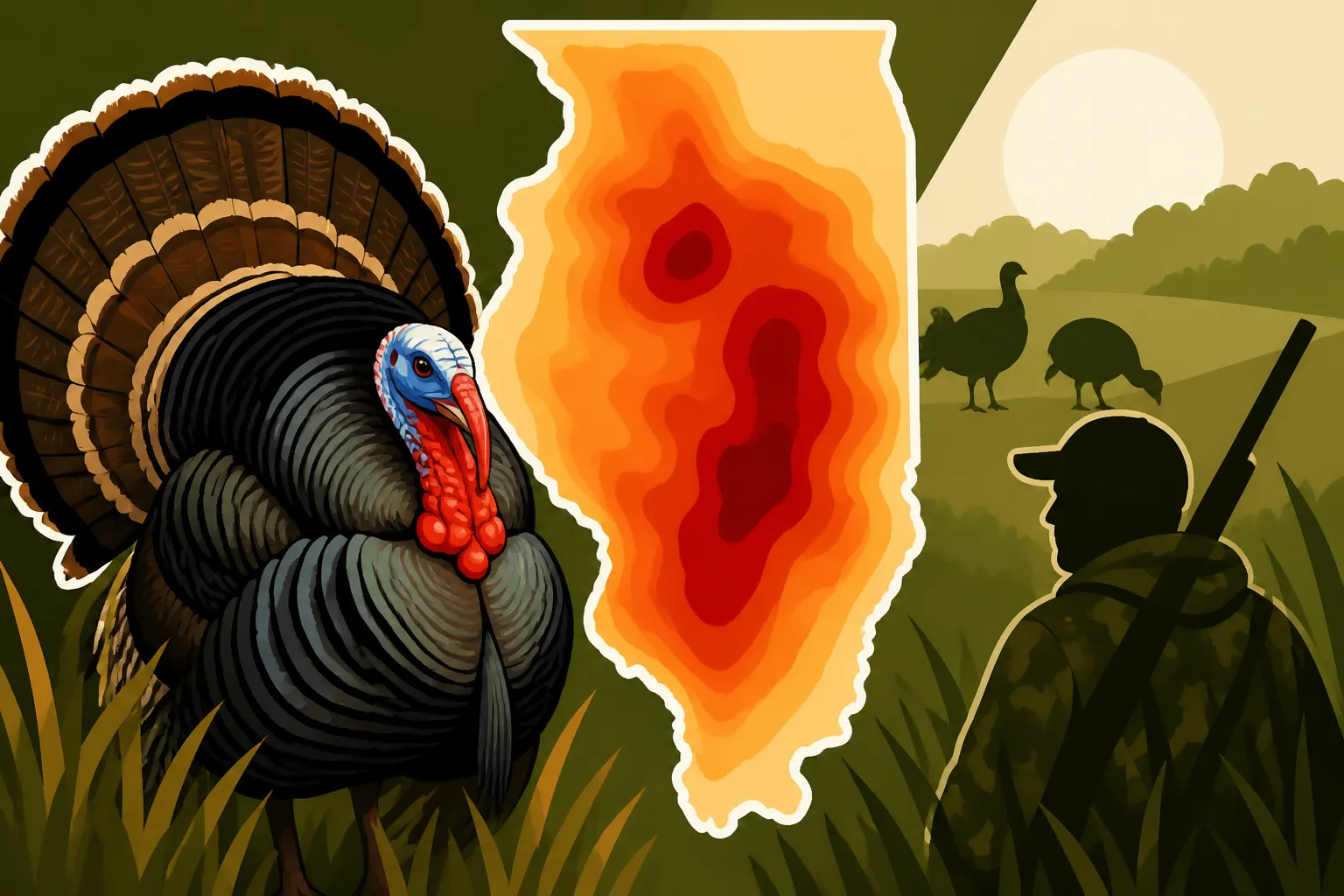
Without a doubt, the rolling hills and extensive timber of Southern Illinois, particularly within and surrounding the Shawnee National Forest, offer some of the densest turkey populations in the state. This region is a turkey hunter's dream, characterized by mature hardwoods, steep ridges, and countless creek drainages. The sheer acreage of contiguous timber provides ample roosting sites, while the diverse understory and mast crops offer abundant food sources.
Hunters in this area often find themselves navigating challenging terrain, but the reward is often encountering numerous birds. Public lands here, like the Shawnee, are vast, meaning there's plenty of room to spread out. These areas were central to the turkey reintroduction efforts and have maintained strong populations ever since. If you're looking for high bird numbers and a true wilderness feel, this is your prime destination. Consider tactics used in Run-and-Gun Turkey Tactics on Public Land for these areas.
West-Central Illinois Timber and River Bottoms
Moving north, the counties in West-Central Illinois, especially those bordering the Illinois and Mississippi Rivers, also boast exceptionally dense turkey populations. While perhaps not as expansive as the Shawnee, these areas are characterized by significant timber blocks, often interspersed with agricultural fields. The river bluffs and bottomlands create excellent habitat mosaics.
The timbered river corridors provide critical roosting and travel lanes, while adjacent fields offer easy foraging opportunities, especially in the spring when insects are abundant. Counties known for their deer hunting, like Pike and Adams, are often equally renowned for their turkey numbers. The blend of mature timber and agricultural edges creates a rich environment where turkeys can thrive, offering a different but equally rewarding hunting experience compared to the deep woods of the south. These areas can be excellent for Hunting the Illinois River Bottom Funnels.
East-Central and North-Central Illinois Woodlots and River Systems
While perhaps less talked about than the southern and west-central strongholds, many areas in East-Central and North-Central Illinois also hold respectable, and in some localized spots, dense turkey populations. These areas often feature smaller, fragmented woodlots, creek bottoms, and timbered river corridors that act as vital arteries for turkey movement and habitat. The key here is finding those larger tracts of timber that provide adequate roosting cover, surrounded by agricultural fields that serve as feeding grounds.
Turkeys here adapt well to living closer to human activity, often using drainage ditches and fencerows for travel. The Kankakee and Vermilion River systems, for example, create linear ribbons of prime habitat that can concentrate birds. Success in these regions often comes down to meticulous scouting and identifying those critical patches of cover that link larger food sources. It can be a challenge to find these birds, but the rewards are there for the persistent hunter.
Habitat Features That Attract and Hold Illinois Turkeys
It's not just about broad regional descriptions; turkeys are drawn to specific micro-habitats within those larger areas. Knowing what to look for on a smaller scale can transform your scouting efforts and lead you directly to where birds are most likely to be.
Mature Timber for Roosting and Thermal Cover
Turkeys absolutely need mature trees for roosting at night, especially large oaks and hickories that offer strong horizontal limbs. These trees provide safety from ground predators and a vantage point to survey their surroundings in the morning. Beyond just roosting, mature timber offers essential thermal cover during harsh weather, protecting them from cold winds and snow in winter, and providing shade in the summer. Areas with significant stands of mature timber, particularly on higher ground or along river bluffs, will consistently hold turkeys.
Look for areas with a good understory in the timber, providing protective cover for nesting hens and poults, as well as a rich supply of insects and forbs. The presence of large, older trees is a non-negotiable for high turkey density. You can learn a lot about what to look for by studying Where Illinois Gobblers Roost and understanding their preferences.
Openings, Fields, and Food Sources
While timber is crucial, turkeys also rely heavily on open areas like agricultural fields, food plots, and natural clearings for feeding. In the spring, they'll forage for insects and tender new growth in fields. In the fall and winter, they'll seek out waste grain in harvested corn and soybean fields, or acorns in oak-dominated woods. The juxtaposition of dense timber and open food sources creates ideal turkey habitat.
This interspersion allows turkeys to easily move from safe roosting cover to productive feeding areas. Fields with good edge cover, like fencerows or brushy borders, offer security as birds move in and out. If you're scouting, pay close attention to the edges where timber meets fields; these are often prime spots for turkey activity. A tool like GoHunt can be invaluable here, allowing you to layer public and private land boundaries with satellite imagery to identify these prime transitions.
Water Sources and Creek Drainages
Like all wildlife, turkeys need access to water. While they can get a lot of moisture from their diet, readily available water sources like creeks, ponds, and even temporary puddles are important, especially for poults. Creek drainages are also natural travel corridors and often contain a mix of timber and brushy cover, making them excellent turkey habitat.
These drainages frequently cut through various terrain, linking different habitat types and providing protected pathways for turkeys to move between roosting areas, feeding grounds, and nesting sites. During dry spells, these water sources become even more critical, concentrating birds that might otherwise be more spread out. Identifying these natural funnels can be a game-changer when Scouting Illinois Public Land Before Season.
Here's a quick overview of how some regions stack up:
| Region | Primary Habitat Type | Turkey Density (General) | Key Counties (Examples) | Best Hunting Type |
|---|---|---|---|---|
| Southern Hill Country | Mature Hardwood Forests, Ridges | Very High | Pope, Hardin, Union, Jackson | Deep Woods, Challenging Hike |
| West-Central River Bluffs | Timbered River Bottoms, Ag-Edged Woods | High | Pike, Adams, Calhoun | Mixed Terrain, Field Edges |
| East/North-Central | Fragmented Woodlots, Creek Systems | Moderate to High (local) | Kankakee, Vermilion, LaSalle | Scouting Intensive, Small Tracts |
| Northeast/Urban Fringe | Small Woodlots, Limited Cover | Low (occasional) | Lake, Cook (very rare) | Opportunistic, Highly Localized |
Utilizing Tools and Scouting for Personal Success
Knowing the general areas is one thing, but pinpointing the specific spots where turkeys are densest for your hunt requires diligent scouting and smart use of available resources. Even in a high-density county, turkeys aren't everywhere. They're often in very specific pockets.
Harnessing Mapping Apps and Online Resources
Modern mapping applications are absolute game-changers for turkey hunters. Tools like GoHunt or other detailed mapping apps allow you to virtually scout vast areas from the comfort of your home. You can identify mature timber, locate potential roosting ridges, pinpoint water sources, and see where timber meets agricultural fields. Look for areas with a high density of contour lines, indicating varied terrain, which turkeys often prefer. You can also identify public land boundaries and even discern different timber types.
These apps help you develop a "game plan" before you ever set foot in the woods, saving you countless hours of blind walking. They are essential for understanding terrain, finding access points, and avoiding private land. For instance, using satellite overlays to find dark timber lines along a ridge can reveal prime roosting locations, allowing you to strategize Calling an Illinois Gobbler Off the Roost before dawn.
The Importance of Boots-on-the-Ground Scouting
No matter how good your mapping app is, there's no substitute for actual boots-on-the-ground scouting. Before the season, spend time walking the areas you've identified as potential hotspots. Look for fresh turkey sign: tracks in mud, droppings under large roost trees, shed feathers, and dusting bowls. Listen for gobblers in the morning and evening, pinpointing their general locations.
Pay attention to what the birds are actually doing. Are they feeding in a particular field? Are they roosting on a specific ridge? Are they using a certain creek crossing? Observing their patterns firsthand is the best way to understand local turkey behavior and truly confirm high-density areas. This pre-season reconnaissance is critical to success, especially on public land where pressure can move birds around. Hunting Illinois's Fall Turkey Zones also benefits immensely from this kind of detailed scouting.
Leveraging Local Knowledge and DNR Resources
Don't underestimate the value of talking to local landowners, farmers, or even other hunters (if they're willing to share!). These individuals often have decades of experience with local turkey populations and can offer invaluable insights into traditional roosting areas, travel corridors, or seasonal patterns.
Additionally, the Illinois Department of Natural Resources (IDNR) website is a fantastic resource. They publish harvest reports, turkey population trends, and often have information specific to various State Fish and Wildlife Areas or other public lands. These resources can help you understand the overall health and distribution of the Illinois Turkey Population Estimate and refine your search for those high-density areas. Looking at success rates for specific public land sites can give you a hint as to where birds are consistently harvested, indicating better populations.
Disclaimer
This article is for general informational purposes only and does not constitute professional advice. Laws, prices and regulations vary by location and change over time. Consult a qualified professional for guidance on your specific situation.