Hunting Illinois’s Fall Turkey Zones
Trying to navigate Illinois's fall turkey hunting can feel like you're playing a whole different game than spring, with birds acting completely uncooperative and regulations that seem to shift under your feet. It's frustrating when you're used to eager gobblers, only to find silent flocks scattering at the first sign of a hunter. This comprehensive guide will strip away that confusion, walking you through the unique challenges and rewarding strategies for successfully hunting Illinois's diverse fall turkey zones.
Understanding Illinois's Fall Turkey Zone System
Illinois offers a fantastic opportunity for fall turkey hunting, but it's crucial to understand the state's zone system before you even think about stepping into the woods. Unlike the relatively straightforward statewide approach for some other game, fall turkey hunting is divided into specific zones, each with its own nuances in season dates and permit availability. Getting this wrong can quickly turn a hopeful hunt into a costly mistake.
North Zone vs. South Zone Differences
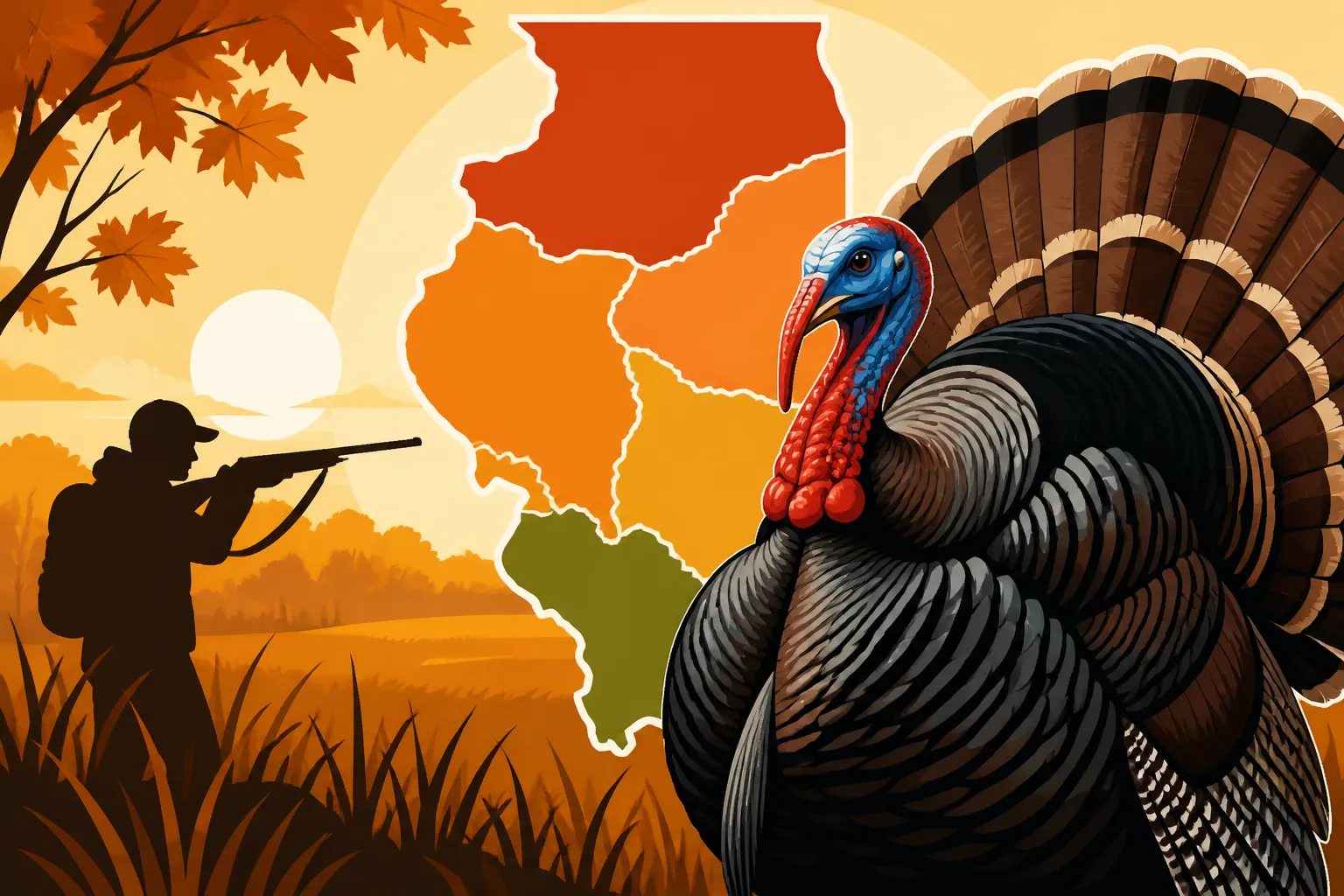
The most significant distinction for fall turkey hunters in Illinois is the split between the North Zone and the South Zone. Geographically, this division generally runs along Illinois Route 16, extending west to the Mississippi River and east to the Indiana border, though it's always wise to consult the most current Illinois Department of Natural Resources (IDNR) hunting digests for the precise boundary lines. The primary reason for these zones is ecological; the turkey populations and habitat characteristics vary significantly from the intensively farmed northern prairies to the timbered hills of southern Illinois.
In the North Zone, turkeys often spend more time in and around agricultural fields, especially after harvest, using standing timber for roosting and cover. The season dates here tend to be a bit later, reflecting the later crop harvest and potentially different migration patterns of the birds. Conversely, the South Zone, encompassing much of the Shawnee Hills and larger blocks of contiguous timber, usually sees an earlier season opening. Turkeys in these more heavily forested areas might be found closer to hard mast crops like acorns, often in remote timber blocks or river bottoms. Understanding these geographical and ecological differences is the first step in tailoring your fall turkey strategy.
Permit Availability and Purchase
One of the biggest advantages, and sometimes a point of confusion, for fall turkey hunters in Illinois is how permits are allocated. Unlike the highly competitive lottery system for spring turkey permits in many counties, fall turkey permits are generally available over-the-counter (OTC). This means you don't typically have to apply months in advance or worry about drawing a specific county permit. You can often walk into a license vendor, or buy online, and purchase a permit right up until the season closes. This flexibility is a huge boon for hunters with unpredictable schedules or those who decide last minute to chase fall birds.
However, "over-the-counter" doesn't mean "unlimited." While many counties have ample permits, specific counties, especially those with historically high turkey populations or significant public land access, might still see permits sell out. It's always a good idea to check the IDNR website or use a tool like GoHunt to confirm permit availability for your target county before making your plans. The process is straightforward: choose your desired county and zone, and purchase the permit. Remember, each hunter is limited to a maximum of two fall turkey permits, and they must be for separate counties. For more details on this, check out the guide on Illinois Fall Turkey Season Rules and Hunting Illinois's Over-the-Counter Fall Turkey Season.
Season Dates and Overlaps
The season dates for fall turkey hunting in Illinois are relatively long compared to spring, but they differ between the North and South Zones, and there can be overlaps with other hunting seasons. Generally, the fall archery turkey season runs concurrently with the statewide archery deer season, often from early October through mid-January, excluding firearm deer seasons. This overlap means archers have a lengthy window to pursue turkeys, but also need to be mindful of specific regulations regarding legal weapons and hunter orange if hunting during firearm deer periods.
The firearm fall turkey season is typically shorter and also split by zone. The South Zone usually opens in late October, running for a couple of weeks, while the North Zone's firearm season often starts in early November and might run into mid-November. These dates are crucial because they dictate when you can use a shotgun for turkeys. If you're planning to hunt turkeys with a firearm, you must adhere to these specific windows. It’s important to always consult the current year's IDNR digest for precise opening and closing dates, as they can shift slightly from year to year. During firearm deer seasons, fall turkey hunting is often paused or requires specific hunter orange protocols, even for archers, so always double-check.
Key Differences in Fall Turkey Behavior
If you've spent any time chasing longbeards in the spring, you know how exhilarating it can be to hear a booming gobble shatter the morning silence. Fall turkey hunting, however, is a completely different ballgame, primarily because the birds' behavior undergoes a radical transformation once the breeding season is over. This shift is probably the biggest frustration for spring hunters trying to transition to fall, but understanding it is key to adapting your tactics.
Flock Dynamics and Roosting Habits
In the spring, turkeys are all about breeding. Gobblers are strutting, seeking hens, and often breaking off from groups. Hens are focused on nesting and raising poults. Come fall, all that changes. Turkeys revert to large, cohesive flocks. These flocks are typically segregated by sex and age: you'll find large groups of hens and their poults (known as "family groups"), and separate "bachelor groups" of gobblers. Sometimes, a super flock can form, combining multiple family groups or even bachelor groups, especially in areas with abundant food. These large numbers provide safety in numbers against predators.
Their roosting habits also become more communal. While a lone gobbler might roost by himself in spring, fall birds will almost always fly up to roost together, often in the same general area night after night, especially if it's secure and close to a preferred food source. You might find a whole flock of 20-30 birds packed into a handful of mature trees on a secluded ridge or along a river bottom. This predictable communal roosting can be an advantage for scouting, but it also means approaching quietly and not spooking the entire flock before they even hit the ground. For contrast, consider the spring roosting behavior discussed in Roost Hunting Illinois Gobblers.
Food Sources and Foraging Patterns
Spring turkeys are driven by the need to breed and, for hens, to lay eggs. Their diet might consist of insects, fresh greens, and whatever else they can find to support their energy needs. In the fall, their primary driver is survival through the colder months, and that means one thing: food. Turkeys become absolute gluttons, packing on fat reserves. Their foraging patterns revolve almost entirely around reliable and abundant food sources.
Hard mast, particularly acorns, is king in the fall woods. If you can find a good stand of oak trees dropping acorns, you've likely found where turkeys will spend a significant portion of their day. They'll also hit agricultural fields for waste grain—especially corn, but also soybeans—after harvest. Green fields, clover plots, and even certain berry bushes can attract them. Their daily routine often involves roosting, flying down to feed heavily, dusting, loafing, and then heading back to roost. Understanding these predictable food-driven patterns, and knowing what food sources are available in your specific hunting area, is crucial. Using mapping tools like GoHunt to identify different timber types and nearby agricultural fields can give you a significant leg up in finding these food sources.
The Lack of Gobbling and Courtship Behavior
This is perhaps the most disorienting difference for spring turkey hunters. In the spring, the gobble is your locator, your attractant, and often the key to a successful hunt. In the fall, gobbling is almost non-existent. The breeding season is over, and with it, the need for gobblers to loudly proclaim their dominance or attract hens. You might hear an occasional "shock gobble" if a loud sound surprises them, but relying on this is a fool's errand.
Instead, fall turkeys communicate with clucks, yelps, purrs, and kee-kees. These are primarily contact calls, used by flock members to stay together, locate lost individuals, or warn of danger. Hens will lead their poults with soft clucks and yelps, and the poults will often respond with the distinctive, high-pitched "kee-kee" run. Courtship displays, like strutting, are also rare. This means your calling strategy needs a complete overhaul. Forget the aggressive cutting and loud gobbling of spring; fall hunting demands softer, more realistic flock-oriented calling to mimic lost birds or a contented flock.
Essential Fall Turkey Hunting Tactics
Given the radical shift in turkey behavior from spring to fall, your hunting tactics need to adapt just as drastically. What worked for a love-struck gobbler in April will likely send a fall flock scattering in every direction. The name of the game in fall is often stealth, patience, and understanding flock dynamics.
Locating Fall Flocks (Scouting is Key)
Finding fall turkeys is 90% scouting, and 10% knowing what to do once you find them. Since you can't rely on gobbling, you have to put boots on the ground long before the season opens, or at the very least, spend ample time scouting on your first hunting day. Focus your scouting efforts on areas with prime fall food sources. This means looking for good stands of oak, hickory, and beech trees, especially those showing signs of recent acorn drops. In agricultural areas, pay close attention to harvested corn and soybean fields, looking for tracks, droppings, and scratchings where turkeys have been feeding.
River bottoms and creek drainages with mature timber are also hot spots, as they provide both food and secure roosting sites. Don't forget to look for dusting bowls – bare spots of earth where turkeys have taken dust baths. These are clear indicators of recent turkey activity. Driving rural roads slowly at dawn or dusk can help you spot flocks moving to or from roosts, giving you a starting point for more detailed ground scouting. Using an app like GoHunt can help you overlay public land boundaries with satellite imagery, identifying potential food sources and roosting areas from your couch, making your on-the-ground scouting more efficient. Remember, fresh sign is paramount. If the sign isn't fresh, the turkeys have likely moved on.
Breaking Up Flocks and Calling Them Back
The classic fall turkey tactic, and for good reason, is to break up a flock and then call the scattered birds back together. This works because fall turkeys have an incredibly strong social instinct; they want to be together. Once you've located a flock, the goal is to surprise them and get them to scatter in all directions. A well-executed run-and-gun approach, rushing into a feeding flock, can often achieve this. However, this requires careful planning to ensure you don't send them all in one direction, or worse, have them fly over a property line you don't have permission to hunt.
Once the flock is busted, find a good setup spot that offers concealment and a clear shooting lane in the direction you expect birds to return from. Wait at least 15-30 minutes for the woods to settle down before you start calling. Begin with soft, pleading "kee-kee" runs and occasional lost hen yelps. Mimicking a lost young bird is often the most effective way to draw in scattered poults and even hens, who feel a maternal instinct to gather the young. Older gobblers might be slower to respond, but they too feel the pull of the flock. Patience is crucial here; birds might take an hour or more to start filtering back. For more on this specific tactic, check out Breaking Up a Fall Turkey Flock.
Ambushing and Still-Hunting Strategies
While the "bust and call" method is popular, it's not always feasible or the only way to hunt fall turkeys. Sometimes, a flock might be too wary, or the terrain might make a successful bust difficult. In these situations, ambushing and still-hunting become incredibly effective. Ambushing involves setting up ahead of a known turkey travel route or feeding area. If you've scouted and identified a consistent pattern—say, birds flying down from a specific ridge to a cornfield edge every morning—you can position yourself quietly along that route. This requires early arrival, excellent camouflage, and absolute stillness.
Still-hunting, on the other hand, is a slow, methodical approach through timber, often employed when you're looking for sign or trying to close the distance on distant turkeys you've heard softly calling. It involves taking a few slow steps, pausing, and scanning every tree, bush, and shadow for movement. This is particularly effective in large blocks of timber in the South Zone, where turkeys might be scattered but still moving through predictable areas like creek bottoms or along ridges. Both ambushing and still-hunting demand extreme patience and attention to detail, but they can be incredibly rewarding ways to tag a fall bird without ever having to bust a flock. When still-hunting, utilizing natural terrain features like creek beds or logging roads for quiet movement can be highly effective, especially when trying to pinpoint Where Illinois Turkeys Are Densest are likely to be found.
Gear and Equipment for Fall Turkey
Having the right gear is always important in hunting, but for fall turkeys, it's often more about functionality and less about the specialized, high-tech gadgets sometimes associated with spring hunting. Your equipment should primarily aid in stealth, concealment, and effective calling, while also being appropriate for the weather conditions of an Illinois autumn.
Shotgun, Ammunition, and Choke Choices
For firearm fall turkey hunting in Illinois, a shotgun is the legal and traditional choice. Most common gauges are 12-gauge or 20-gauge, with 12-gauge offering a wider range of ammunition options and patterns. When selecting a shotgun, consider one that you can carry comfortably, as you might be doing a good bit of walking while scouting or still-hunting. Pump-action or semi-automatic models are both popular.
A crucial component is your choke tube. For turkeys, a tight constriction is typically preferred to produce a dense pattern at range. "Turkey" specific chokes, often in the Extra Full or Super Full range, are designed for this purpose. When it comes to ammunition, modern high-density loads like those utilizing tungsten alloy shot (e.g., Federal TSS) have revolutionized turkey hunting, dramatically increasing effective range and pattern density. While these are more expensive, they can be a game-changer. Otherwise, lead shot in sizes #4, #5, or #6 is effective. Always pattern your shotgun with your chosen choke and ammunition before the season to know its effective range. Remember to check the specific legal firearms allowed for Illinois Legal Firearms for Deer Hunting if you are hunting during periods that overlap, as turkey hunting laws can sometimes differ or have additional requirements.
Decoy Strategies or Lack Thereof
Unlike spring turkey hunting, where a decoy setup is often a standard and effective part of the strategy, decoys are rarely used in fall turkey hunting, and sometimes can even be counterproductive. In the spring, you're trying to attract a love-struck gobbler or a jealous hen. In the fall, turkeys are in survival mode, and their instinct is to stick together. A single decoy might not mimic a flock well enough and could even spook wary birds.
If you do decide to use a decoy, it's generally best to use a small, non-descript hen or jake decoy if you're trying to call in scattered birds. The goal isn't to draw them into a fight or a breeding scenario, but rather to give them a visual to home in on as they try to rejoin the flock. However, the vast majority of successful fall turkey hunters forgo decoys entirely, relying instead on calling, camouflage, and strategic positioning. When hunting dense cover or trying to break up a flock, decoys can be more of a hindrance than a help, potentially limiting your mobility or giving away your position.
Optics, Calls, and Other Essentials
Beyond your shotgun, several other pieces of gear are indispensable for fall turkey hunting.
- Optics: A good pair of binoculars (8×42 or 10×42 are excellent choices) is invaluable for spotting distant turkeys in fields, identifying specific birds in a scattered flock, or even scouting from afar. A rangefinder is also useful for confirming distances before a shot, especially if you've patterned your gun to a specific range.
- Calls: You'll need a variety of calls, but focus on those that mimic lost or contact calls. Mouth diaphragms, slate calls, and box calls are all effective. Practice your clucks, yelps, purrs, and especially the high-pitched "kee-kee" run of a lost young bird. A wingbone call can also be very effective for mimicking the kee-kee.
- Camouflage: Full head-to-toe camouflage is a must. Breakup patterns that blend with the autumn woods (browns, grays, and subtle greens) are ideal. A headnet or face paint is critical to hide exposed skin.
- Comfort and Safety: Layered clothing is essential for the variable fall weather in Illinois. Good hunting boots are crucial for walking long distances and staying dry. A comfortable hunting vest with plenty of pockets for calls, ammo, and other essentials is also helpful. Don't forget a small first-aid kit, a compass or GPS (like the one on your GoHunt app), and plenty of water. And, of course, during any firearm season, remember your blaze orange for safety, even if just walking in and out. For more details on specific regulations during certain seasons, you might consult resources like How Much Blaze Orange Illinois Requires.
| Feature/Tactic | Spring Turkey Hunting | Fall Turkey Hunting |
|---|---|---|
| Bird Behavior | Breeding-focused, gobblers dominant, seeking hens | Flock-focused, survival-driven, food-oriented |
| Primary Motivation | Reproduction, territorial display | Food acquisition, safety in numbers, staying together |
| Vocalizations | Loud gobbling, aggressive calling, fighting purrs | Soft clucks, lost yelps, "kee-kee" runs, minimal gobbling |
| Scouting Focus | Roosts, strut zones, travel corridors, fresh tracks | Food sources (mast, waste grain), tracks, dusting bowls |
| Key Tactic | Calling gobblers to you, ambushing strutters | Busting flocks, calling lost birds back together, still-hunting |
| Decoy Use | Highly effective (strutters, hens) | Rarely used, often counterproductive |
| Season Duration | Shorter, specific periods, often lottery permits | Longer, OTC permits (mostly), often overlaps with deer |
| Flock Structure | Gobblers solitary or small groups, hens nesting/brooding | Large, sex-segregated flocks (family groups, bachelor groups) |
Hunting Specific Illinois Fall Turkey Zones
Illinois is a diverse state, stretching from the northern plains down to the rugged hills of the Shawnee National Forest. This geographical variety means that hunting strategies, while sharing core principles, need to be adapted to the specific characteristics of each fall turkey zone. What works best in the intensively farmed North Zone might not be as effective in the vast timber blocks of the South Zone.
Tactics for the North Zone (Farmland Focus)
The North Zone of Illinois is dominated by agriculture. Corn and soybean fields stretch for miles, punctuated by smaller woodlots, fencerows, and creek drainages. Turkeys in this zone are highly dependent on these agricultural resources, especially after harvest. When hunting the North Zone, your primary focus should be on these food sources and the limited cover available.
Scouting involves driving back roads and observing fields, looking for flocks feeding on waste grain. Pay close attention to woodlots adjacent to these fields; these often serve as prime roosting sites. Once you locate a flock, the strategy often revolves around either ambushing them as they enter or exit a field, or, more effectively, trying to get into their general area and busting them up. If you succeed in scattering a flock, set up quickly along the edge of the woodlot or a fencerow where you have good visibility and concealment, then begin calling with soft clucks and kee-kees. Don't underestimate the cover a thick fencerow can provide; turkeys will use these travel corridors extensively. For targeting deer in similar landscapes, insights from Hunting Central Illinois Farmland Deer can also apply to understanding turkey movement along field edges.
Tactics for the South Zone (Timber Focus)
The South Zone, particularly the sprawling Shawnee National Forest and other large timber tracts, presents a completely different challenge. Here, turkeys are much more timber-oriented, relying heavily on hard mast crops. While some agriculture exists, the vast, unbroken woods dictate a different approach. Public land hunting is far more prevalent and accessible in this region.
In the South Zone, extensive pre-season scouting is non-negotiable. You'll need to walk miles, searching for fresh turkey sign in oak ridges, creek bottoms, and along old logging roads. Look for scratchings under oak trees, dusting bowls, and fresh droppings near potential roost sites. When hunting, still-hunting through the timber, moving incredibly slowly and scanning for movement, is a highly effective tactic. If you bump into a flock, try your best to get them to scatter, then set up in a dense area and call. The terrain can be rugged, so good boots and a light setup are essential. Remember that turkeys will use terrain to their advantage, often moving along ridges or through saddles, making a strategy like Hunting Shawnee Hills Ridgelines highly relevant for turkeys too.
Public vs. Private Land Considerations
Whether you're hunting in the North or South Zone, the type of land you're on—public or private—will significantly impact your approach.
-
Public Land: Illinois has some excellent public land opportunities, particularly in the South Zone, including parts of the Shawnee National Forest and numerous State Fish and Wildlife Areas. Public land often means more hunting pressure, so you'll need to work harder to find undisturbed birds. This usually means walking further, getting off the beaten path, and being willing to explore less accessible areas. Using mapping tools to identify remote pockets or areas with difficult access can pay dividends. Patience and persistence are critical. Keep in mind the rules for Treestand Setups in Shawnee National Forest or other public areas, as they apply to turkey hunters too.
-
Private Land: Gaining access to private land, especially in the North Zone, can dramatically increase your success rate. Farmers often welcome turkey hunters, particularly if turkeys are causing crop damage. When seeking permission, be polite, respectful, and offer to share some of your harvest. Once you have permission, private land often means less pressure, and turkeys might be more predictable in their movements. Always respect property boundaries and landowner wishes. A strong relationship with a landowner can secure a hunting spot for years to come.
Safety and Ethics in the Fall Woods
Hunting in the fall brings unique considerations for safety and ethics, especially with multiple seasons often running concurrently. Being a responsible hunter means prioritizing safety for yourself and others, understanding proper protocols, and maintaining a high ethical standard.
Hunter Orange Requirements and Visibility
During Illinois's firearm deer seasons, hunter orange requirements are strictly enforced for all hunters, regardless of what species they are pursuing. This often includes periods when fall firearm turkey season is open, or during the archery turkey season if it overlaps with firearm deer seasons. It is typically required to wear a solid blaze orange cap and outer garment with at least 400 square inches of blaze orange material visible from all directions. This is paramount for preventing accidental shootings, as deer hunters are actively moving through the woods.
Even if hunter orange isn't legally required during certain fall turkey-only periods, many hunters choose to wear a blaze orange vest or hat while walking to and from their hunting spots, removing it only once they are set up. This dramatically increases your visibility to other hunters and can be a smart, proactive safety measure. Always be aware of other hunters, identify your target clearly, and never shoot at sounds or movement without positive identification.
Identifying Your Target and Backstop
In fall turkey hunting, particularly when trying to call in scattered birds, there's always a risk of another hunter trying to do the same thing. This makes target identification absolutely critical. Never assume the sound of a kee-kee or a yelp is definitely a turkey. It could be another hunter. Always wait until you can clearly see the entire bird and identify it as a legal turkey before raising your gun.
Furthermore, always be conscious of your backstop. When shooting a shotgun at turkeys, the pellets can travel farther than you might think, especially if using modern high-density loads. Make sure there is a safe, clear background behind your target, free of roads, buildings, or other hunters. This is especially important in the rolling terrain of southern Illinois or in crowded public land areas. Take the extra moment to confirm your target and backstop; a missed opportunity is always better than a tragic mistake.
Respecting Landowners and Fellow Hunters
Whether you're on public or private land, demonstrating respect is fundamental to hunting ethics. On private land, this means always getting explicit permission, following any specific rules the landowner has, leaving gates as you found them, and packing out everything you pack in. Consider offering to share some of your harvest or help with a chore as a token of appreciation. A good relationship with a landowner is invaluable and helps ensure future hunting opportunities for everyone.
On public land, respecting fellow hunters means giving them ample space. If you encounter another hunter, a polite wave or a quiet conversation can prevent conflicts. If you see their vehicle parked, consider moving to a different area to avoid crowding. Be mindful of noise, especially at dawn and dusk. Ethical behavior ensures a positive experience for everyone and helps maintain the good public image of hunting. Furthermore, understanding the nuances of how hunting pressure can impact animal behavior, particularly as discussed in Hunting Pressure on Illinois Public Land, can help you plan your hunts to minimize interference with others.
Post-Harvest: Tagging, Reporting, and Processing
Successfully harvesting a fall turkey is a rewarding experience, but the hunt isn't over until you've properly tagged, reported, and processed your bird according to Illinois regulations. These steps are crucial for legal compliance and for ensuring your hard-earned wild game is cared for properly.
Mandatory Reporting Procedures
In Illinois, reporting your harvest is a mandatory step for all hunters. This is vital for the IDNR to collect data on turkey populations, harvest numbers, and trends, which in turn helps them manage the resource effectively. The reporting process is typically straightforward and can often be done online through the IDNR website or via their mobile app. You'll need specific information from your permit, the date and county of harvest, and often the sex of the bird.
The deadline for reporting is usually by 10:00 PM on the same day the turkey was harvested. Failing to report your harvest is a violation and can result in fines or penalties. Make sure you understand the specific reporting requirements for fall turkeys, as they might differ slightly from spring turkey or deer. Always carry proof of your license and permit, either a physical copy or an electronic version on your phone, while hunting. For specific guidance on the reporting process, you can refer to resources like The Illinois Deer Reporting Deadline, which offers parallels to turkey reporting.
Field Dressing and Meat Care
Proper field dressing and meat care are essential to ensure your wild turkey meat is delicious and safe to eat. Immediately after harvest, you should field dress the bird. This involves removing the entrails to allow the carcass to cool down as quickly as possible. Rapid cooling inhibits bacterial growth, which is critical for meat quality, especially in warmer fall temperatures.
Hang the bird upside down by its feet or neck to allow blood to drain, and then remove all organs from the body cavity. If you plan to pluck the bird, you can leave the skin on. If you're going to breast out the bird and remove the leg/thigh meat, plucking isn't necessary. Once field dressed, get the bird on ice or into a cooler as soon as possible. Avoid letting the bird sit in a warm vehicle for extended periods. If you have a long drive home, a cooler packed with ice around the bird (not submerged in water) is your best friend.
Wild Turkey Recipes and Preservation
Once your turkey is home and properly cooled, you have several options for processing and preservation. Many hunters choose to breast out the bird, removing the large breast meat, which is often light and tender. The legs and thighs also contain excellent meat, though it's typically darker and tougher, often best suited for slow cooking, stewing, or grinding.
- Breasting Out: This involves carefully removing the skin and then slicing the breast meat away from the keel bone and ribs. You can then cut the breast into cutlets or leave it whole.
- Legs and Thighs: The legs and thighs can be skinned and deboned, or cooked on the bone. They contain tendons that can be challenging, but slow cooking breaks them down beautifully.
- Recipes: Wild turkey meat is incredibly versatile. Breast meat can be grilled, pan-fried, or roasted. Think about making turkey schnitzel, stir-fries, or even a classic turkey sandwich. The tougher leg and thigh meat shines in dishes like turkey chili, pulled turkey sandwiches, or a hearty turkey stew. Don't forget the opportunity to utilize the full bird, similar to tips found in Cooking a Wild Turkey Breast.
- Preservation: For long-term storage, vacuum-sealing and freezing your turkey meat is the best option. Properly vacuum-sealed turkey can last for a year or more in a freezer without significant loss of quality. You can also smoke or can turkey for different flavors and preservation methods.
Disclaimer
Please note: Hunting regulations and seasons can change annually. Always consult the current Illinois Department of Natural Resources (IDNR) hunting digests and local regulations before planning any hunt. This guide is for informational purposes only and does not supersede official state regulations.