Illinois Spring Turkey Zones and Periods
The anticipation of spring gobblers drumming through the timber, echoing across Illinois farmlands, is a feeling most hunters know well. However, trying to figure out the maze of Illinois Department of Natural Resources (IDNR) regulations regarding spring turkey hunting, especially the confusing system of zones and periods, can feel like you need a degree in deciphering bureaucratic code. This guide aims to demystify Illinois’s spring turkey zones and periods, helping you understand how they work, how to navigate the permit system, and how to plan your hunt effectively, so you can focus on the birds, not the paperwork.
Understanding Illinois's Spring Turkey Program
Illinois's spring wild turkey hunting program is carefully managed to ensure sustainable populations while providing ample opportunity for hunters. Unlike some other states with a simpler statewide season, Illinois employs a nuanced approach involving distinct zones and staggered hunting periods. This system is designed to spread out hunting pressure, maximize hunter success, and align with the biological rhythms of wild turkeys across the diverse landscapes of the state.
Why Zones and Periods Exist
The primary reason Illinois utilizes separate zones and multiple hunting periods for spring turkey is rooted in wildlife management principles. The state's geography stretches over 385 miles from north to south, encompassing vastly different climates, habitats, and turkey population densities. Turkeys in southern Illinois often begin their breeding activities weeks, sometimes even a full month, earlier than their counterparts in the northern reaches of the state. A single, statewide season would either open too early for northern birds, resulting in low success rates and potential over-pressuring of early breeders, or too late for southern birds, missing the peak gobbling activity.
By dividing the state into a North and South Zone, the IDNR can tailor season dates to better match the biological timing of turkey breeding and gobbling activity in each region. Furthermore, staggering the hunting periods within each zone helps distribute hunting pressure over several weeks. This prevents excessive crowding on public lands, reduces the likelihood of over-harvest in specific areas, and ensures that turkeys aren't subjected to continuous pressure, which can make them "go quiet" and become difficult to hunt. It allows birds to settle back into their routines between periods, offering better hunting experiences for everyone. This thoughtful segmentation ensures that all hunters have a fair shot at a gobbler, whether they're calling one off the roost in the southern hills or working a field edge in the northern plains.
The Evolution of Illinois Turkey Hunting
The journey of the wild turkey in Illinois is a remarkable conservation success story, illustrating why careful management, like the zone and period system, is so vital. By the early 1900s, wild turkeys were virtually extirpated from Illinois due to unregulated hunting and widespread habitat destruction from logging and agricultural expansion. For decades, the iconic gobbler was absent from the state's forests.
However, thanks to dedicated restoration efforts beginning in the 1950s and extending through the 1970s and 80s, turkeys were reintroduced into suitable habitats across Illinois. These efforts involved trap-and-transfer programs, where wild turkeys from healthy populations in other states (and eventually, from strong Illinois populations themselves) were captured and released into new areas. The restoration was incredibly successful, and by the mid-1970s, turkey populations had rebounded sufficiently to allow for a limited hunting season. The first modern spring turkey season in Illinois was held in 1970 in just three southern counties: Alexander, Jackson, and Union. It was a permit-only season with very strict quotas. As populations continued to expand northward and stabilize, additional counties were opened to hunting, and the zone and period system gradually evolved to accommodate the growing turkey numbers and geographic spread. This phased approach, from reintroduction to carefully managed hunting, ensures that the wild turkey remains a thriving game species for future generations of Illinois hunters. The success of this program is why you can now find robust turkey populations in nearly every county across the state. We often discuss Illinois Turkey Population Trends and how they reflect these ongoing management efforts.
Illinois's Spring Turkey Zones Explained
Understanding the geographical split between Illinois's North and South Spring Turkey Zones is absolutely critical for any hunter. Getting this wrong can lead to applying for the wrong permit, hunting outside of legal dates, or worse, hunting in an area where your permit isn't valid. The IDNR has a clear dividing line that impacts everything from season dates to permit availability.
The North Zone Boundaries and Characteristics
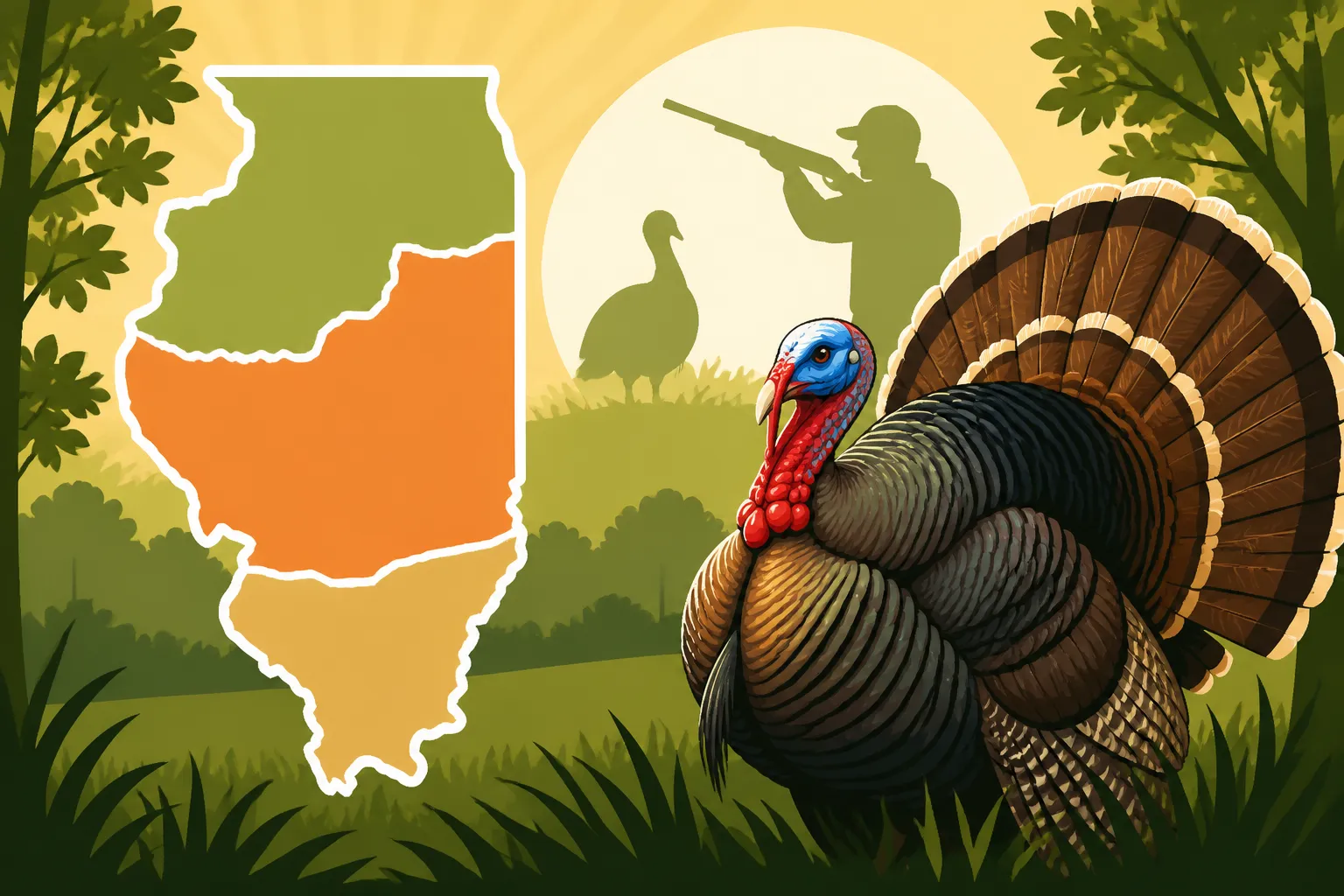
The North Zone for spring turkey hunting in Illinois generally covers the upper two-thirds of the state. The official boundary separating the North and South Zones is Illinois Route 36 and Interstate 72, extending from the Indiana state line west to the Missouri state line. This means any county north of this specific highway corridor falls into the North Zone.
Counties in the North Zone typically include popular hunting destinations like Jo Daviess, Carroll, Whiteside, Lee, Ogle, Boone, Winnebago, McHenry, Lake, Kane, DeKalb, Kendall, DuPage, Cook, Will, LaSalle, Grundy, Kankakee, Livingston, Iroquois, Ford, McLean, Woodford, Marshall, Putnam, Bureau, Henry, Knox, Stark, Peoria, Tazewell, Mason, Logan, DeWitt, Piatt, Champaign, Vermilion, Edgar, Douglas, Moultrie, Coles, Shelby, Macon, Christian, Sangamon, Morgan, Scott, Pike, Adams, Brown, Cass, Schuyler, Fulton, Henderson, Warren, Mercer, Rock Island, and Hancock.
Hunting in the North Zone often presents different challenges and opportunities compared to the South. Much of central and northern Illinois is characterized by expansive agricultural fields interspersed with woodlots, creek bottoms, and river drainages. Turkeys in these areas frequently roost in mature timber along waterways or in isolated groves, then fly down to feed in fields of corn, soybeans, or winter wheat. Hunters might find themselves setting up along field edges, working fencerows, or pursuing birds in the more fragmented timber blocks. The later spring green-up in the North Zone also means less dense undergrowth during the earlier periods, which can sometimes aid visibility, but later periods can become very thick. For those scouting, using resources like the Illinois DNR Map Tool can be incredibly helpful for identifying these prime habitats and understanding property lines.
The South Zone Boundaries and Characteristics
Conversely, the South Zone encompasses the lower third of Illinois. This zone comprises all counties south of the Illinois Route 36 and Interstate 72 corridor.
Prominent counties in the South Zone include Calhoun, Greene, Macoupin, Montgomery, Fayette, Effingham, Jasper, Crawford, Clark, Cumberland, Bond, Clinton, Washington, Jefferson, Marion, Clay, Richland, Lawrence, Wayne, Edwards, Wabash, White, Hamilton, Franklin, Jackson, Perry, Randolph, Monroe, St. Clair, Madison, Jersey, Alexander, Pulaski, Massac, Pope, Hardin, Gallatin, Saline, Williamson, Union, Johnson, and Pope.
The South Zone is often synonymous with Illinois's more rugged, timbered landscape, particularly the Shawnee National Forest region. Here, you'll find larger tracts of contiguous timber, rolling hills, steep ravines, and extensive river bottomlands. Turkey populations are historically very strong in these areas, and the terrain offers a completely different hunting experience. Birds might be found on high ridges, in deep hollows, or along the vast hardwood forests that line the Ohio and Mississippi Rivers. The spring green-up happens earlier here, meaning that by the later periods, foliage can be quite dense, making long-range visibility and movement more challenging. Hunters often rely on aggressive calling, careful scouting, and navigating rugged terrain. This region is renowned for its turkey hunting, and understanding its unique characteristics is key to a successful hunt. We frequently refer to these tactics when discussing Hunting an Early South Zone Turkey Period.
Navigating the Spring Turkey Hunting Periods
Beyond the two major zones, Illinois further segments its spring turkey season into multiple, distinct hunting periods. This tiered approach, combined with the zone boundaries, creates a complex but effective management strategy. For hunters, it means carefully planning not just where you'll hunt, but when you'll be there, as each period offers a unique set of conditions and opportunities.
How the Staggered Periods Work
Within both the North and South Zones, the IDNR establishes five separate hunting periods for the regular spring turkey season. These periods typically last for several days each, with the specific dates shifting slightly year to year based on the calendar. The idea is to stagger the pressure, allowing birds to recover from one wave of hunters before the next begins, and to give hunters opportunities throughout the varying stages of the spring breeding cycle.
- Period 1 (Early Season): Often considered the most exciting for many hunters, as gobblers are typically very active and less pressured. Birds are intensely focused on breeding, hens might not be fully bred or nesting yet, and gobblers are often eager to respond to calls. However, variable weather can be a factor.
- Period 2 & 3 (Mid-Season): These periods often see increased hunting pressure. Hens are becoming more receptive and starting to nest, which can make gobblers a bit more call-shy or "henned up" (i.e., staying with hens rather than responding to a lonesome hen call). However, birds are still very active, and consistent gobbling can be heard.
- Period 4 & 5 (Late Season): By the later periods, many hens are on the nest, which can mean lonely gobblers are actively seeking the few remaining receptive hens. This can lead to some fantastic hunting, as gobblers might be more willing to travel and respond to calls. However, foliage is typically thick, making visibility challenging, and birds might have heard every trick in the book by this point. Hunters often adapt their tactics, focusing on specific food sources or midday activity. Our guide on Hunting a Late North Zone Turkey Period delves into these strategies.
Each permit is valid for a specific zone and a specific period. You cannot use a Period 1 permit in Period 3, for example. This system means hunters need to commit to their timing and scout accordingly. It also encourages a diversity of hunting experiences, from chasing eager early-season birds to patiently working call-shy gobblers in thick cover later in the season.
Understanding the Youth Spring Turkey Weekend
Before the regular five periods kick off, Illinois offers a special statewide Youth Spring Turkey Weekend. This is a fantastic opportunity specifically designed for young hunters (typically under 18 years old, but check current regulations for exact age limits) to experience spring turkey hunting in a less pressured environment. The youth season usually runs for a couple of days and covers both the North and South Zones simultaneously, pre-dating the first regular period in either zone.
The purpose of the Illinois Youth Spring Turkey Weekend is multi-faceted. It provides a dedicated window for youth hunters to pursue turkeys without competing with the larger volume of adult hunters. This can be crucial for introducing new hunters to the sport, building confidence, and fostering a love for the outdoors. Mentored youth hunts often occur during this time, with experienced adult hunters guiding the youngsters.
While the youth season is statewide, it still requires a specific youth turkey permit. These permits are typically available over-the-counter or through a simpler application process than the regular lottery permits. Regulations are generally consistent with the regular season regarding legal weapons (shotguns or archery equipment), hunting hours, and bag limits (one male or bearded bird per permit). The relaxed atmosphere and potential for less competition can lead to higher success rates for youth, making it an invaluable part of Illinois's turkey hunting tradition. It’s truly a special time to get kids hooked on the thrill of turkey hunting.
Permit Applications and Availability
Securing a spring turkey permit in Illinois can sometimes feel like a high-stakes game of chance, especially for desirable zones and periods. The IDNR uses a multi-stage application process to distribute permits fairly, balancing demand with conservation goals. Understanding this process is key to maximizing your chances of getting a tag for your preferred hunting spot and time.
The Lottery System for Spring Turkey Permits
The primary method for obtaining a spring turkey permit in Illinois is through a lottery system. This applies to both resident and nonresident hunters, though the application windows and quotas differ significantly. The lottery is designed to allocate permits for the limited number of tags available for specific counties, zones, and periods.
Hunters typically apply for the first lottery in the fall of the preceding year. During this initial application period, you'll specify your desired county, zone (North or South), and your top choices for hunting periods (e.g., first choice Period 1, second choice Period 2). It's crucial to be accurate with your choices, as a successful draw locks you into that specific permit. Non-resident hunters face a more competitive lottery, and their success rates can be lower, especially for popular counties. The number of permits for non-residents is often capped and subject to change, making early application vital.
If you are unsuccessful in the first lottery, there is typically a second lottery application period. This offers another chance to apply for any remaining permits or permits that were returned. The odds might still be competitive, but it's a good fallback. Many experienced hunters will often discuss Illinois Spring Turkey Permit Limits and how they influence strategy for application. After the second lottery, any permits that are still available usually move into an over-the-counter sales phase.
Over-the-Counter Permit Options
For hunters who missed the lottery deadlines, were unsuccessful in the draws, or simply decided to hunt later in the season, Illinois offers over-the-counter (OTC) permit sales. This is where many hunters, especially those looking for flexibility or last-minute opportunities, find their tags.
OTC permits usually become available shortly after the second lottery results are announced, typically in late winter or early spring. These permits are sold on a first-come, first-served basis. The availability of OTC permits depends entirely on how many permits were allocated in the lotteries and how many were returned. Popular counties and earlier periods (especially Period 1) are often gone quickly, if they even make it to OTC sales. However, later periods (Period 4 and 5) in various counties often have good availability.
Hunters can purchase up to three spring turkey permits in Illinois. This means you could potentially draw two permits in the lottery and then purchase a third OTC, or even purchase all three OTC if available. This flexibility allows dedicated hunters to extend their season or hunt multiple locations. Many successful late-season hunters rely on OTC permits. The ability to buy these permits online through the IDNR's license and permit system makes the process relatively straightforward once sales open. It’s always a good idea to check the IDNR website regularly for exact dates for lottery applications and OTC sales, as these can shift annually. Remember that a basic Illinois Hunting Licenses and What They Cost is required before you can even apply for a turkey permit.
Key Regulations and Restrictions
Beyond understanding the zones and periods, a successful and legal hunt in Illinois hinges on knowing and adhering to the core regulations. These rules are in place for safety, fair chase, and to ensure the long-term health of the wild turkey population. Ignoring them can lead to fines, permit revocation, and even loss of hunting privileges.
Legal Hunting Hours and Methods
Illinois maintains specific rules regarding when you can hunt and how you can harvest a spring turkey. Knowing these details is paramount for every hunter.
-
Hunting Hours: For spring turkey, legal hunting hours are generally from one-half hour before sunrise until 1:00 PM CST each day. This timing is critical, as hunting outside of these hours is illegal. Most turkey activity, especially gobbling and strutting, occurs in the early morning, so these hours cover the prime hunting window. However, don't underestimate the mid-morning and late-morning hours, particularly on pressured birds or during later periods when gobblers might range more to find hens.
-
Legal Weapons:
- Shotguns: Hunters may use a shotgun, 20-gauge or larger, firing shotshells with a shot size no larger than #4 lead or #2 steel, or other approved non-toxic shot. Single-shot, pump-action, and semi-automatic shotguns are common.
- Archery Equipment: Compound bows, recurve bows, longbows, and crossbows are legal. Broadheads must be fixed-blade or expandable, with a minimum cutting diameter of 7/8 inch. Crossbows are permitted for all hunters during the archery turkey season.
-
Decoys: The use of decoys is generally permitted and can be highly effective for drawing in wary gobblers. However, it's critical to place decoys where you have a clear line of sight and where other hunters will not mistake them for a live turkey, especially if hunting public land.
-
Calling: Various turkey calls (mouth calls, slate calls, box calls, locator calls) are allowed. Electronic calls are illegal for turkey hunting in Illinois.
-
Bag Limit: The bag limit is one male or bearded turkey per permit, with a maximum of three permits per hunter per spring season. Only male or bearded turkeys are legal to harvest. A bearded hen, while rare, is legal game.
-
Blaze Orange: While not always strictly required while actively hunting from a stationary position for turkey, wearing blaze orange or blaze pink when entering or exiting hunting areas, or when carrying an unloaded firearm, is always a good safety practice, especially when other hunters might be afield.
Always double-check the current IDNR Digest of Hunting and Trapping Regulations for the most up-to-date and complete information, as rules can occasionally be modified.
Tagging and Reporting Requirements
After the shot, the responsibility of the hunter doesn't end. Illinois has strict rules for tagging and reporting your harvest, designed to gather vital data for wildlife management and prevent poaching. This information helps the IDNR track Illinois Turkey Harvest Numbers and monitor population health.
-
Immediately After Harvest: As soon as you harvest a wild turkey, you must immediately complete the harvest tag provided with your permit. This tag needs to be securely attached to the turkey before it is moved from the place of kill. The tag information typically includes the date, time, and county of harvest. This "field tagging" is non-negotiable and must be done at the site of the kill.
-
Reporting Your Harvest: All harvested turkeys must be reported to the IDNR. This can typically be done in one of three ways:
- Online Reporting: The most common and convenient method is through the IDNR website's harvest reporting system. You'll need your permit number and the information from your harvest tag.
- Phone Reporting: A toll-free phone number is usually provided for reporting harvests.
- Check Stations: While less common now, some areas, particularly in certain state parks or wildlife areas, might still have designated check stations.
The deadline for reporting is typically by 10:00 PM CST on the same calendar day the turkey was harvested. This strict deadline ensures timely data collection. Failing to report your harvest by the deadline is a violation and can result in penalties.
-
Transporting the Turkey: Once legally tagged and reported, you can transport your turkey. Make sure the confirmation number received after reporting is easily accessible, as law enforcement may ask for it. The tag must remain attached to the turkey until it is at your home or a commercial processing facility.
These steps are not just bureaucratic hurdles; they are essential components of sound wildlife management. The data collected from hunter reports allows biologists to assess turkey population health, adjust future season dates or permit quotas, and make informed decisions to ensure robust turkey hunting opportunities for years to come. Hunters play a crucial role in this data collection process, contributing directly to the conservation of Illinois's wild turkeys.
Maximizing Your Success Within the System
Navigating Illinois's spring turkey zones and periods is one thing, but actually connecting with a gobbler requires adapting your hunting tactics to the specific conditions each period presents. Smart hunters understand that what works on opening day in the South Zone might be entirely different from what works during the late season in the North.
Hunting Different Periods Strategically
Each of the five spring turkey hunting periods in Illinois, within both the North and South Zones, offers a unique set of challenges and opportunities. Adapting your strategy to the period you've drawn a permit for is crucial for success.
-
Early Periods (Period 1 & 2): This is often when gobbling is most intense. Birds are fresh, less pressured, and very vocal. Hens are often still with gobblers in large flocks, but many haven't committed to nesting yet, making gobblers eager to respond to a lonely hen call.
- Strategy: Focus on locating roosted birds before dawn. Aggressive calling can work wonders to pull a gobbler away from his hens. Decoys are highly effective, as gobblers are often looking for a fight or a willing hen. Be patient but persistent. If a bird hangs up, try subtle clucks and purrs to entice him the last few yards. Early season often provides the best opportunity for Calling an Illinois Gobbler Off the Roost.
- Frustrations: Unpredictable weather (cold fronts, rain) can mute gobbling. Being "henned up" can still be an issue, where a gobbler has real hens and ignores your calls.
-
Mid-Periods (Period 3): Pressure can start to build, and birds might become a bit warier. Many hens are now bred and beginning to nest, meaning gobblers might be more solitary and actively searching.
- Strategy: Still effective to locate roosted birds, but be prepared for more quiet approaches. Try cutting off birds as they fly down. Mid-day hunting can pick up as gobblers leave their hens who are on the nest. Focus on travel corridors, pinch points, and food sources. You might need to be more mobile, utilizing Run-and-Gun Turkey Tactics on Public Land if birds aren't responding from one setup.
- Frustrations: Birds may have heard a lot of calling by now and are more call-shy. Increased competition from other hunters, especially on public land.
-
Late Periods (Period 4 & 5): Most hens are now on the nest, leaving gobblers lonely and actively cruising for any remaining receptive hens. Foliage is fully developed, making visibility tougher.
- Strategy: Patience is key. Gobbling might be less frequent from the roost, but mid-morning and mid-day gobbling can be excellent as solitary toms roam. Focus on areas with good visibility like field edges, open timber, or logging roads where birds might be traveling. Aggressive calling can sometimes work on lonely birds, but subtle tactics are often more effective for pressured, late-season toms. Try covering ground, listening, and setting up quickly. Hunting a Late North Zone Turkey Period requires a different mindset, often focusing on silent movement and ambush.
- Frustrations: Very thick cover makes seeing and shooting difficult. Birds might be extremely educated and prone to circling or hanging up just out of range. Heat and insects can also be a factor.
By understanding these nuances, you can tailor your calling, setup locations, and overall approach to maximize your chances, no matter which period your permit is for.
Scouting Based on Zone and Period
Effective scouting is the bedrock of spring turkey hunting success, and in Illinois, it needs to be tailored to both your chosen zone and hunting period. Simply scouting generically won't cut it; you need to anticipate what the birds will be doing and where they'll be doing it at your specific hunting window.
-
Pre-Season Scouting (Winter/Early Spring): Long before permits are drawn, you should be doing general scouting for signs of turkey activity.
- Roosting Areas: Look for large, mature trees (especially oaks or sycamores near water) with droppings and feather piles beneath them. These are prime evening fly-up and morning fly-down locations.
- Travel Corridors: Identify ridges, creek bottoms, logging roads, and fencerows that turkeys use to move between roosts, feeding areas, and strutting zones.
- Strutting Zones: Look for open areas, often field edges, old logging decks, or flat ridgetops, where gobblers might display for hens. Look for wing drag marks in the dirt.
- Food Sources: Turkeys will be looking for insects, waste grain, and tender green shoots. Identify agricultural fields, newly greening plots, or areas with good mast crop from the previous fall.
- Mapping Tools: Utilize satellite imagery and topographic maps from services like onX Hunt or even general mapping platforms to identify potential hotspots. While not a direct fit for Illinois turkeys, the general mapping capabilities offered by companies like GoHunt can provide a starting point for understanding terrain and access. This digital reconnaissance can save you countless hours of walking. Consider our article on Scouting Illinois Public Land Before Season for more detailed methods.
-
Adapting to Specific Zones:
- South Zone: In the more timbered southern counties, focus on understanding topography – ridge lines, saddles, drainages, and creek crossings. Birds will use these features heavily. Large contiguous timber means you might have to cover more ground or sit longer in key areas.
- North Zone: In the more agricultural northern and central counties, scouting revolves around woodlot-to-field transitions. Identify which fields turkeys are using for feeding and strutting, and the specific timber blocks they roost in. Permission to hunt private land is often key here, so identify potential access points from roads.
-
Adapting to Specific Periods:
- Early Periods: Focus on finding primary roost sites and strutting areas near those roosts. Gobblers will be very consistent in their morning routines. Scout for fresh tracks and droppings in high-traffic areas.
- Mid-Periods: Turkeys might become more scattered as hens begin nesting. Look for smaller groups of gobblers or solitary birds. Expand your scouting to include more secondary food sources and travel routes.
- Late Periods: By this point, most hens are nesting, and gobblers might be roaming much wider areas looking for the last receptive hens. Scout for fresh sign in new areas, listen for mid-day gobbling, and pay attention to subtle clues like fresh tracks along dirt roads. The dense foliage means you'll need to scout for setups with clear lanes of fire.
Effective scouting isn't just about finding birds; it's about understanding their patterns, anticipating their movements, and adapting to the conditions that the specific zone and period will present.
Common Misconceptions and Troubleshooting
Even with a good understanding of the regulations, hunters often run into questions or make assumptions that can complicate their Illinois spring turkey hunt. Addressing these common misconceptions and providing troubleshooting tips can save a lot of headaches and ensure a smoother, more enjoyable experience afield.
Confusing Zone Boundaries
One of the most frequent mistakes hunters make in Illinois is misinterpreting the zone boundaries. While the IDNR clearly states the dividing line, it's easy to get confused, especially if a county you plan to hunt borders the line. The result of hunting in the wrong zone, even if unintentional, can be severe, including fines and permit invalidation.
- The Specifics: Remember, the division is Illinois Route 36 and Interstate 72, from the Indiana state line to the Missouri state line. This is a precise highway corridor. It's not "the general area around I-72" or "counties split by the highway." If your hunting property or public land is north of this specific roadway, you're in the North Zone. If it's south, you're in the South Zone.
- Troubleshooting:
- Consult Official Maps: Always refer to the most current IDNR spring turkey hunting guide or map. Many counties are entirely within one zone, making it straightforward. For border counties, pay extra close attention.
- Use Mapping Apps: Modern mapping applications like onX Hunt or even Google Maps are invaluable. You can overlay your hunting location with the specified highway boundary to confirm which side you are on. Simply plot I-72/IL-36 and visually check your location.
- Don't Rely on Anecdotal Information: Just because "Uncle Bob always hunts in X County in the South Zone" doesn't mean his specific hunting spot isn't technically in the North Zone if it's on the wrong side of the highway. Verify for yourself.
- Permit Check: Your permit will clearly state "North Zone" or "South Zone." If you've applied for the wrong zone for your hunting location, you will not be legally covered. It's better to realize this before the season starts than to risk a violation.
Being meticulous about knowing your zone is fundamental. When hunting for Illinois Turkey Population Trends or specific harvest data, biologists are also precise about zone data, so your accuracy helps contribute to better management.
Navigating Permit Leftovers and Transfers
The lottery system can be frustrating when you don't draw your desired permit. This often leads hunters to explore leftover permits and, less commonly, permit transfers. Understanding how these work is key to still getting afield even if the initial draw didn't go your way.
-
Leftover Permits (OTC): As discussed, permits not claimed in the lottery phases become available for over-the-counter purchase.
- Troubleshooting:
- Act Fast: Leftover permits, especially for popular counties or earlier periods, can sell out very quickly. Have the IDNR website open and be ready to purchase the moment sales begin. Set reminders for the exact date and time.
- Be Flexible: You might not get your first-choice county or period. Be open to hunting a different period (often later ones) or a less popular county. Sometimes, less pressured birds in a less-sought-after county can offer a better hunt than fighting crowds in a "trophy" county.
- Multiple Permits: Remember you can purchase up to three permits. If you struck out on your prime Period 1 tag, you might still be able to grab a Period 4 and 5 tag for the same county or nearby ones, extending your season.
- Check Frequently: Inventory can fluctuate as permits are processed. If you don't see what you want initially, check back over the following days.
- Troubleshooting:
-
Permit Transfers (Limited): Illinois generally does not allow the transfer of regular spring turkey permits between hunters. Once a permit is issued to a specific hunter, it's tied to their ID and cannot be given or sold to another individual.
- Exception: There might be specific, rare instances or special programs where transfers are allowed, but these are exceptions and usually involve very specific circumstances, such as youth permits being transferred within a family in certain scenarios, or for certain landowner permits. Always check the absolute latest IDNR regulations for any such exceptions.
- Troubleshooting: Do not attempt to buy or sell a turkey permit from another individual outside of official IDNR channels. This is illegal and could result in serious penalties for both parties. If you can't use a permit you drew, your only option is usually to let it go unused.
Navigating the permit system requires diligence, flexibility, and a commitment to staying within the legal framework. With proper planning, even if your first choice doesn't pan out, there are usually still opportunities to experience a rewarding spring turkey hunt in Illinois.
The Future of Illinois Spring Turkey Hunting
Illinois has come a long way from the days of no wild turkeys, to a thriving population that supports enthusiastic hunters statewide. However, conservation is an ongoing process, and the future of spring turkey hunting depends on continued monitoring, adaptive management, and the crucial role hunters play in supporting these efforts.
Population Trends and Management Challenges
While Illinois boasts a successful turkey restoration story, like all wildlife populations, wild turkeys face various challenges that influence their numbers and distribution. The IDNR constantly monitors these factors to ensure sustainable hunting.
- Population Stability: Generally, Illinois's wild turkey population is considered stable to slightly declining in some areas, particularly in parts of the North Zone. Harvest numbers, poult (young turkey) production rates, and brood surveys are key indicators that biologists track. A strong poult-to-hen ratio is crucial for future populations, indicating successful nesting and chick survival.
- Habitat Loss and Fragmentation: One of the biggest long-term threats is the continued loss and fragmentation of suitable habitat. Urban sprawl, increased agricultural intensity, and changes in land use can reduce the contiguous timber blocks and brushy areas turkeys need for nesting, roosting, and foraging. This is particularly prevalent in heavily farmed areas of Central and Northern Illinois.
- Predation: While natural, predation pressure on nests and poults from animals like raccoons, opossums, skunks, and coyotes can impact recruitment rates, especially in areas with imbalanced predator populations.
- Disease: Diseases, though not as widespread or impactful as Chronic Wasting Disease in deer, can occasionally affect local turkey populations. Avian pox or other respiratory issues can occur.
- Weather Extremes: Severe spring weather, including prolonged cold snaps or heavy rains during nesting and brooding periods, can significantly reduce poult survival, impacting future turkey numbers.
- Hunting Pressure: While the zone and period system aims to mitigate excessive pressure, localized heavy hunting pressure, especially on public lands, can make birds warier and harder to hunt. This is a delicate balance the IDNR constantly manages through permit quotas and season structures. Analyzing Illinois Turkey Harvest Numbers is a critical part of understanding these trends.
Addressing these challenges requires a multifaceted approach involving habitat restoration, public education, and adaptive management strategies by the IDNR.
Conservation Efforts and Hunter Contributions
The success of Illinois's wild turkey population is a testament to dedicated conservation efforts, and hunters are at the very heart of these initiatives. Without hunters, much of this progress would simply not be possible.
- Funding Conservation: Every time you purchase an Illinois Resident License Options or Illinois Nonresident License Options and a turkey permit, a portion of those funds directly supports wildlife management and habitat conservation programs. The federal excise tax on firearms and ammunition (Pittman-Robertson Act) further bolsters these funds, providing millions of dollars annually for wildlife agencies. This direct funding is the backbone of wildlife conservation in the state.
- Habitat Improvement: IDNR biologists and land managers actively work to restore and enhance turkey habitat on public lands, including prescribed burns, timber stand improvements, and planting native vegetation. Many private landowners, often hunters themselves, also engage in habitat management on their properties.
- Data Collection: As discussed, mandatory harvest reporting by hunters provides crucial data that informs IDNR's management decisions. This citizen science aspect is invaluable for understanding population trends, harvest success, and identifying areas of concern. Your accurate reporting is a direct contribution to conservation.
- Ethical Hunting Practices: Hunters who adhere to ethical hunting practices, including respecting regulations, practicing fair chase, and promoting responsible land use, contribute to the positive public perception of hunting and ensure that turkey hunting remains a valued outdoor tradition.
- Organizations: Groups like the National Wild Turkey Federation (NWTF) play a significant role. NWTF volunteers and members work tirelessly to conserve turkey habitat, introduce new hunters to the sport, and advocate for sound wildlife management policies in Illinois and across the country.
The story of the wild turkey in Illinois is a powerful example of how humans, through dedicated effort and sustainable practices, can bring a species back from the brink. As hunters, our continued participation, financial contributions, and ethical conduct are essential to ensuring that the thrilling gobble of a spring tom continues to echo across the Illinois landscape for generations to come.
Disclaimer
Please note that hunting regulations, season dates, and permit application periods are subject to change by the Illinois Department of Natural Resources (IDNR). While this guide strives for accuracy based on current information, it is the hunter's responsibility to consult the most recent official IDNR Hunting and Trapping Digest or website before participating in any hunting activities. Always prioritize safety, legality, and ethical hunting practices.