Illinois Osprey Nesting Platforms
For those of us who cherish Illinois's wild spaces, it can be truly disheartening to see the struggle some of our native wildlife faces. Ospreys, with their majestic fishing dives and impressive nests, were once a rare sight across the state, their numbers decimated by habitat loss and environmental contaminants. This guide will walk you through the remarkable journey of their recovery and, specifically, how dedicated osprey nesting platform projects have become a cornerstone of ensuring these magnificent raptors not only survive but thrive in the Land of Lincoln.
The Comeback Story of Ospreys in Illinois
It’s easy to take for granted the sight of an osprey soaring over a large body of water, but for many decades, this image was almost entirely absent from the Illinois landscape. These incredible birds, often mistaken for eagles due to their size and impressive wingspan, faced a dire situation. Their comeback is a testament to persistent conservation efforts, and artificial nesting platforms have played an undeniable role in this success.
A History of Decline and Restoration
Think back to the mid-20th century. The widespread use of pesticides like DDT had a devastating effect on raptor populations, including ospreys. DDT accumulated in the fish they ate, leading to thin eggshells that often broke before chicks could hatch. Combine that with significant wetland drainage and shoreline development, and you had a recipe for disaster. Ospreys, being highly specialized fish-eaters, rely on clean, healthy aquatic environments and tall, sturdy structures for nesting. As these disappeared, so did the ospreys. By the 1970s, they were virtually extirpated as a breeding species from Illinois.
The good news began in the late 1980s and early 1990s with restoration programs. These efforts involved hacking, a process where young osprey chicks were relocated from healthy populations in other states to artificial nesting sites in Illinois. The idea was that these young birds would imprint on their release site and return to Illinois to nest as adults. Places like the Clinton Lake State Recreation Area became crucial hacking sites. Slowly but surely, the population started to rebound, a real glimmer of hope after years of decline. It took incredible dedication, careful planning, and a deep understanding of osprey biology to even begin to turn the tide.
Why Ospreys Need a Helping Hand (or Platform)
Even with environmental protections in place and the banning of harmful pesticides, ospreys still face significant challenges in finding suitable nesting locations. Naturally, they prefer the tops of dead snags, large trees near water, or even man-made structures like transmission towers. However, suitable snags are often removed for safety, and competition for prime nesting spots can be fierce, especially with other large birds like bald eagles, which have also seen a phenomenal recovery. This is where nesting platforms become absolutely critical.
These platforms provide a safe, elevated, and stable alternative to natural sites, offering protection from ground predators and minimizing disturbances from human activity. They act as a beacon, signaling to returning ospreys that this is a safe and viable place to raise their young. Without these strategic placements, many ospreys might struggle to find a suitable home, or they might attempt to nest in less secure locations, leading to failed breeding attempts. It's truly a practical, hands-on solution that directly addresses a core need for the species, allowing them to focus on hunting and raising their broods. The health of these fish-eating raptors is also a good indicator of the overall health of our aquatic ecosystems, which is important for all kinds of wildlife, including the Illinois River Otter Recovery and Illinois Waterfowl on the Mississippi Flyway.
Understanding Osprey Nesting Platform Design and Placement
Creating an effective osprey nesting platform isn't just about sticking a pole in the ground; there's a real science and art to it. The design has to be robust enough to withstand Illinois's varied weather, and the placement needs to be spot-on to attract and retain these particular birds. When done right, these platforms become long-term homes for generations of ospreys.
Key Components of an Effective Platform
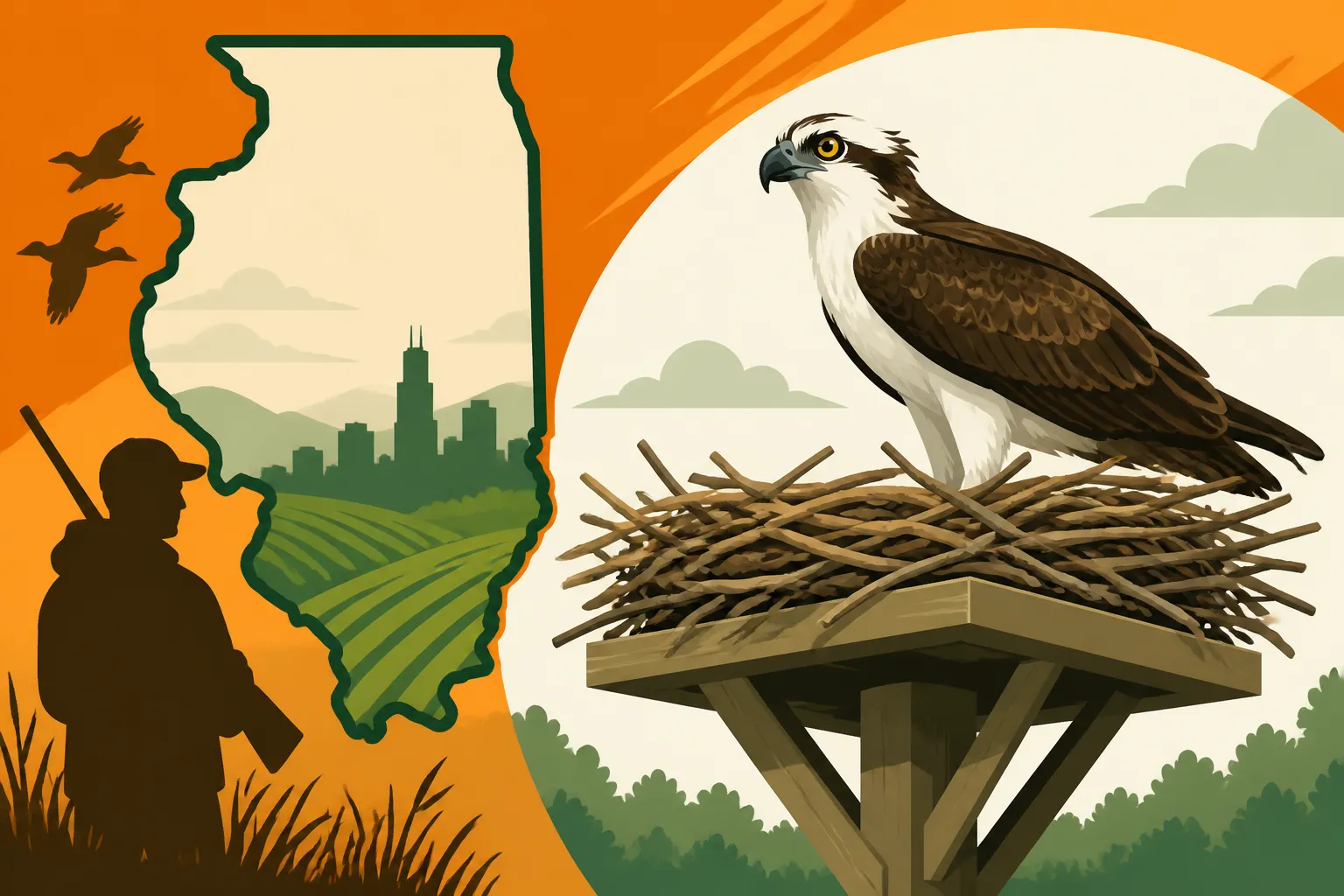
An ideal osprey nesting platform typically consists of a few essential elements. First, and most importantly, is a sturdy pole. This pole needs to be tall enough to elevate the nest above potential floodwaters, ground predators, and human disturbance, often reaching 30 to 50 feet high. Utility poles, either new or repurposed, are frequently used due to their durability and height. The pole itself needs to be firmly anchored in the ground, usually with concrete, to ensure it can withstand strong winds and the weight of a large nest and family of birds.
At the top of the pole, a square or circular platform is affixed. This platform provides the base for the nest. Often, a small starter nest of sticks or a basket is placed on the platform to encourage ospreys to adopt it. This initial material signals to passing ospreys that it's a potential nesting site and saves them some initial construction effort. The platform should have drainage holes to prevent water from pooling and rotting the nest material. Additionally, predator guards—smooth metal or PVC sleeves—are often installed around the pole to deter raccoons, snakes, and other climbing predators from reaching the nest. These components are vital for the long-term success and safety of the birds, ensuring they have a secure environment to raise their young. Hunters often use tools like GoHunt to scout and understand terrain, and while not for ospreys directly, it highlights the importance of good mapping and planning for wildlife endeavors.
Ideal Locations for Success
Placement is paramount when it comes to osprey nesting platforms. You can build the most perfect platform, but if it's in the wrong spot, it will likely remain empty. Ospreys are primarily fish-eaters, so their nests absolutely must be located near a reliable, abundant source of fish. This means large lakes, reservoirs, major rivers like the Illinois River or Mississippi River, or extensive wetland complexes are prime candidates. Areas within sight of shallow water where fish are easily spotted are particularly attractive. Think about places like Horseshoe Lake or portions of the Illinois River Valley.
Beyond food, ospreys also require relatively open airspace around the nest for easy access and departure. They are large birds with wide wingspans, so they need a clear flight path. This means avoiding dense forest canopies directly over the platform. Ideally, the platform should be somewhat isolated from heavy human disturbance, though ospreys have shown a remarkable tolerance for human activity once they've established a nest. Good access for maintenance and monitoring is also a consideration for the people installing and caring for the platforms. A well-chosen location near good aquatic habitat is often the difference between an empty platform and a bustling osprey nursery. Understanding these habitat needs can even inform decisions for hunters scouting game near water, like for Illinois River Valley Diving Ducks.
| Feature | Ideal Osprey Platform Characteristics | Why it Matters |
|---|---|---|
| Height | 30-50 feet tall | Deters ground predators, provides clear flight path, visible to ospreys. |
| Platform Size | 3-4 feet square/diameter | Ample space for large nest, multiple chicks, and adult birds. |
| Material | Treated wood or composite, sturdy utility pole | Durability, weather resistance, longevity. |
| Starter Nest | Few sticks or a woven basket | Encourages initial occupation, signals nesting potential. |
| Predator Guard | Smooth metal/PVC sleeve on pole | Prevents climbing predators (raccoons, snakes) from reaching the nest. |
| Drainage | Holes in platform base | Prevents water accumulation, keeps nest dry, reduces rot. |
| Proximity to Water | Within 0.5-1 mile of reliable fish source (lake, river, large pond) | Ensures easy access to food, critical for raising young. |
| Clear Flight Path | Open airspace around the platform | Allows large birds to easily land and depart. |
| Human Disturbance | Relatively isolated, or where birds are accustomed to passive activity | Reduces stress on nesting birds, improves breeding success. |
The Impact of Nesting Platforms on Osprey Populations
The proof is in the soaring birds themselves. Osprey nesting platforms aren't just feel-good projects; they are a profoundly effective conservation tool that has demonstrably contributed to the species' recovery in Illinois. The long-term data collected through various monitoring programs shows a clear correlation between the availability of these structures and increasing osprey numbers.
Monitoring and Success Rates
Once a platform is erected, the real work of monitoring begins. Conservation groups, state agencies like the Illinois Department of Natural Resources, and dedicated volunteers regularly observe these platforms, especially during the breeding season. They track whether a platform is occupied, if eggs are laid, how many chicks hatch, and how many fledge successfully. This data is absolutely crucial for understanding the effectiveness of the platforms and identifying any emerging issues, whether it's predator problems, lack of food, or other environmental stressors. The use of banding, where a small, uniquely numbered band is placed on a chick's leg, further helps track individual birds and their movements, offering insights into migration patterns and fidelity to nesting sites.
The success rates of these platforms in Illinois have been incredibly encouraging. Many platforms are occupied year after year, with pairs returning to raise multiple broods. In some areas, these platforms have allowed ospreys to establish breeding populations in locations where they had been absent for decades. This hands-on management approach, combined with the earlier hacking programs, has seen the osprey population grow to a point where they are regularly seen throughout appropriate habitats in the state, from the northern lakes down to the deep south. It's a true conservation victory where direct intervention has yielded tangible, positive results for a struggling species. When hunters go Scouting Illinois Public Land Before Season, they might even spot these birds using platforms, a sign of a healthy ecosystem.
Broader Ecological Benefits
The presence of a healthy osprey population, supported by these nesting platforms, offers benefits that stretch far beyond just the species itself. Ospreys are apex predators in their aquatic environment, meaning they sit at the top of the food chain for fish. Their health is a fantastic indicator of the overall ecological health of our waterways. If ospreys are thriving, it suggests that fish populations are robust, and the water quality is generally good – both things that are important for human communities and other wildlife alike.
Furthermore, these platforms can sometimes indirectly benefit other species. While primarily designed for ospreys, other birds might utilize the sturdy structures for roosting or even nesting on lower sections, contributing to local biodiversity. The sheer spectacle of watching an osprey dive for a fish, or seeing a pair tend their nest, also raises public awareness and appreciation for wildlife conservation. It inspires people to care about their local environment, to protect wetlands, and to support efforts that ensure a future for all of Illinois's magnificent creatures. For those interested in the broader picture of game species, observing these raptors can offer insights into the overall health of the environment, something tools like GoHunt can help visualize with mapping layers showing water bodies and land features.
How Communities and Individuals Can Get Involved
The success of osprey nesting platforms in Illinois hasn't happened in a vacuum; it's the result of collective effort. If you're passionate about wildlife and conservation, there are definitely ways you can contribute to this ongoing success story. Every little bit helps, whether it's directly building a platform or simply being an informed advocate.
Partnership Opportunities and Resources
Many conservation initiatives, including osprey platform projects, rely heavily on partnerships. State agencies like the Illinois Department of Natural Resources (IDNR) often work with local park districts, forest preserve districts, wildlife conservation groups such as the Illinois Audubon Society, and even private landowners. These partnerships pool resources, expertise, and labor to identify suitable sites, secure funding, and construct the platforms. If you're part of a community group, a scout troop, or a landowner with suitable habitat, reaching out to your local IDNR office or a regional conservation organization is a great first step. They can provide guidance on regulations, best practices for platform construction, and often have lists of priority areas where new platforms are needed. Illinois State Fish and Wildlife Areas are often prime locations for these kinds of partnerships and projects.
Sometimes, grants are available from conservation funds or private foundations to help cover the costs of materials and installation. Don't be afraid to ask about these resources. Becoming part of a broader network of conservationists can not only help ospreys but also connect you with like-minded individuals who share a passion for Illinois's natural heritage. Whether you're an avid hunter who values healthy ecosystems or just a nature enthusiast, contributing to these efforts helps everyone.
Maintaining and Observing Platforms
Putting up a platform is just the beginning. To ensure its long-term effectiveness, regular maintenance and observation are essential. Nesting platforms, exposed to the elements, can eventually wear down, and materials might need to be replaced. Sometimes, invasive vines might try to grow up the pole, or debris could accumulate on the platform. Periodic checks, ideally outside of nesting season, can ensure the structure remains safe and sound for its occupants. This is particularly important on public lands like those found in Public Hunting Land in Illinois, where dedicated volunteers often play a crucial role.
Perhaps one of the most rewarding ways to get involved is through simple observation. Becoming a citizen scientist by regularly observing a platform near you and reporting your sightings can provide invaluable data to biologists. Organizations often have online portals or forms where you can submit observations of nesting activity, chick numbers, and any unusual events. Being a keen observer means you become the eyes and ears for these birds, helping to detect problems early on. Just like hunters use detailed maps and scouting, a dedicated observer can monitor and report on the health and success of an osprey nest, contributing directly to conservation without ever lifting a hammer. It's a wonderful way to connect with wildlife and contribute to a truly successful conservation story in Illinois.
Disclaimer
This article is for general informational purposes only and does not constitute professional advice. Laws, prices and regulations vary by location and change over time. Consult a qualified professional for guidance on your specific situation.