Donating Venison in Illinois
You've just had a banner deer season, or perhaps you just tagged a magnificent buck, and now your freezer is overflowing with delicious venison. It’s a great problem to have, truly, but it can also leave you wondering, "What do I do with all this meat?" Many Illinois hunters find themselves in this exact spot, with a strong desire to share their bounty, but unsure of the proper, legal channels for donating venison to those in need. It's not as simple as dropping off a package of ground venison at your local soup kitchen, and navigating the rules can feel a bit daunting. This comprehensive guide will walk you through everything you need to know about donating venison in Illinois, from the programs designed to help to the essential regulations you absolutely must follow.
The Heart Behind Donating Venison: Why It Matters
As hunters, we often talk about the harvest, the thrill of the chase, and the satisfaction of putting food on the table. But there's a deeper layer to it all: stewardship and giving back. When your freezer is full, and you're contemplating what to do with the excess, donating that lean, healthy protein to families struggling with food insecurity is one of the most impactful ways to honor the animal and give back to your community. It’s a powerful testament to the ethical hunter’s commitment to minimizing waste and supporting their fellow citizens.
Addressing Food Insecurity in Illinois
Think about the sheer number of families in Illinois who face daily challenges in putting nutritious meals on their tables. Food pantries and soup kitchens across the state work tirelessly to fill this gap, but they are always in need of high-quality protein sources. Venison, with its low fat content and rich nutritional profile, is an absolute goldmine for these organizations. It’s a healthy, natural protein that many people would otherwise never have access to, and it makes a huge difference in the diets of countless individuals, from children to seniors.
Imagine a single mother trying to stretch her budget to feed her growing kids. A package of ground venison or a venison roast, provided through a donation program, could be the centerpiece of several healthy meals, offering protein and nutrients that are often hard to come by with limited resources. It’s not just about filling stomachs; it’s about providing nourishing food that supports health and well-being. Your successful hunt, therefore, can directly translate into tangible support for those who need it most, truly extending the harvest beyond your own dinner table.
The Ethos of a Hunter
For many of us, hunting isn't just a pastime; it's a way of life that instills a deep respect for nature and the animals we pursue. The idea of letting any part of the harvest go to waste feels wrong, almost sacrilegious. Donating venison perfectly aligns with this core hunting ethos. It’s about more than just taking an animal; it’s about utilizing every possible resource from that animal, ensuring its life contributes as much as possible.
This act of generosity reinforces the hunter's role as a conservationist and a provider. It showcases the responsible side of hunting to the wider public and demonstrates that hunters are often deeply committed to their communities. There's an immense satisfaction in knowing that your efforts in the woods are not only feeding your family but also bringing vital nutrition and comfort to others. It transforms a personal achievement into a communal benefit, tying the cycle of the hunt directly to the welfare of your neighbors. This kind of thoughtful action truly embodies the spirit of conservation and community that so many of us value. For tips on preparing your harvest, check out Butchering a Deer at Camp.
Navigating Illinois's Venison Donation Programs
Okay, so you're ready to donate. That's fantastic! But here's where it gets a little nuanced. You can't just drop off a field-dressed deer at a food bank's back door. There are specific programs and rules in place to ensure food safety and proper distribution. Illinois has established channels to make this process smooth and secure, primarily through its "Hunters Helping Others" program.
Finding Participating Processors
The cornerstone of any successful venison donation in Illinois is working with a state-approved, participating meat processor. These aren't just any butcher shops; they are facilities that have agreed to participate in the donation program, understand the specific handling requirements for wild game, and can properly prepare the meat for distribution to food banks. This is critical for health and safety regulations. You absolutely cannot take your deer, process it yourself, and then hand it directly to a food pantry – it just won't be accepted.
The Illinois Department of Natural Resources (IDNR) typically maintains a list of approved processors that participate in venison donation programs. This list is your go-to resource. A quick call to your local IDNR office or checking their website can usually point you in the right direction. It's a good idea to call the processor before you head out on your hunt, or at least before you harvest a deer, to confirm their participation, current drop-off procedures, and any fees. While general hunting resources like GoHunt can help you plan your hunt, when it comes to specific donation logistics, direct contact with the IDNR and the processor is key. Remember, not all processors participate, so don't assume your usual butcher is part of the program.
The "Hunters Helping Others" Program
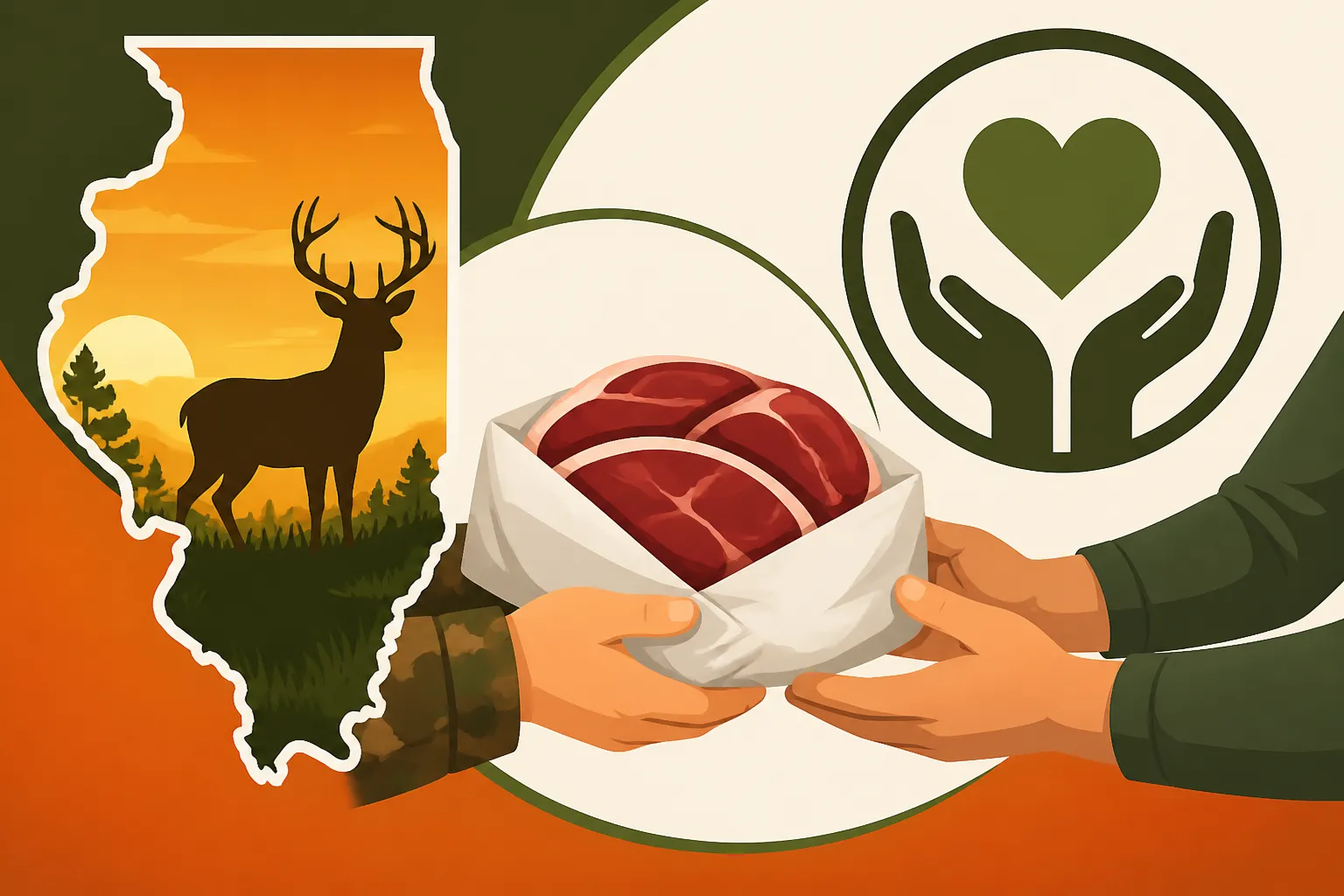
Illinois's premier venison donation initiative is often referred to as the "Hunters Helping Others" program, or something similar depending on the year and specific partnerships. This program is designed to facilitate the donation of legally harvested deer to charitable organizations that feed the hungry. The way it generally works is that a hunter harvests a deer, follows all legal tagging and reporting requirements, and then takes the field-dressed deer to a participating processor.
In many cases, the hunter is responsible for the processing fee. However, some programs may have funds available, often through donations or grants, to help cover these costs. This is why checking with the processor beforehand is so important – they can tell you if any such funds are currently available. Once processed, the meat is then distributed to food banks, soup kitchens, and other charitable organizations that can safely store and prepare it for those in need. For example, if you just tagged a deer during Illinois's Two Firearm Deer Seasons, you'd report it via Registering an Illinois Deer Online and then take it to one of these designated processors.
A crucial aspect here is the condition of the deer. Processors will only accept deer that have been properly field-dressed, kept clean, and handled in a way that ensures the meat is safe for consumption. This means gutting the deer quickly after the shot, keeping it cool, and getting it to the processor in a timely manner. They won't accept deer that are spoiled, heavily damaged, or not properly prepared. It’s about ensuring that the highest quality product reaches those who need it.
Practicalities and Regulations for Donating Your Harvest
Donating venison isn't just a matter of good intentions; it involves adhering to specific practical steps and regulations to ensure the process is legal, safe, and effective. Understanding these details can save you a lot of headache and ensure your generous donation makes it to the plates of hungry families.
Proper Field Care and Transport
The journey of your venison donation begins the moment your deer hits the ground. Proper field care is paramount for meat quality and acceptance by a processor. You need to field dress the deer quickly and cleanly to begin cooling the carcass immediately. Especially in warmer early seasons, or even during Hunting the Rut in Early November if temperatures are mild, heat can spoil meat incredibly fast. Many hunters in Illinois will pack the cavity with ice or snow if available, or hang the deer in a cool, shaded place.
Transporting the deer legally means ensuring all your tags are properly affixed and your permit information is readily available. The deer needs to be transported in a way that keeps it clean and cool, avoiding contamination from road grime or excessive heat. This might mean laying it on a tarp in the bed of your truck rather than dragging it uncovered down a dusty gravel road. Good hygiene and quick action are the best insurance for a successful donation. For more on this, consider reading Field Dressing a Deer in Cold Weather.
Understanding Processing Fees and Costs
While the act of donating venison is a generous one, it's important to understand that there are typically costs involved for the hunter. The processor performs a valuable service, and they generally charge a fee for turning a whole deer into usable cuts of meat. These fees can vary widely depending on the processor, the weight of the deer, and the specific cuts you request (if you're donating your own processed meat).
As a general rule, expect processing fees to be comparable to what you'd pay for processing a deer for your own consumption. It's not a trivial cost, but many hunters view it as a worthwhile investment in supporting their community. As mentioned earlier, some "Hunters Helping Others" programs might have funds available to cover these costs, so always inquire when you contact a participating processor. Even if you're paying out of pocket, knowing that your hard-earned dollars are contributing to feeding those in need can make that cost feel a lot lighter. Tracking these kinds of expenses, along with other hunting costs, is something general hunting apps like GoHunt can help you manage for your overall hunting budget.
CWD and Carcass Movement Restrictions
This is a critically important section for hunters in Illinois, especially given the ongoing battle with Chronic Wasting Disease (CWD). Illinois has specific CWD management areas, and if you harvest a deer in one of these counties, there are mandatory testing and carcass movement restrictions that directly impact donation.
First, if you harvest a deer in a CWD-positive county, mandatory testing of the animal for CWD might be required, or at least strongly encouraged, before it can be processed for donation or consumption. Processors participating in donation programs will be well-versed in these requirements. They will often collect the necessary samples (lymph nodes) and submit them to the proper authorities. You can find more details on this in Illinois CWD Testing for Hunters.
Second, Illinois Carcass Movement Restrictions are in place to prevent the spread of CWD. This means if you harvest a deer in a CWD county, there are rules about what parts of the carcass can be moved out of that county. Generally, only deboned meat, antlers, hides, and cleaned skulls are allowed to cross county lines from CWD zones. This is vital to understand if you plan to donate a whole deer to a processor located outside of the CWD county where you harvested it. Always check the most current IDNR regulations for Illinois's Chronic Wasting Disease Zone before you hunt, as these rules can change. This ensures your donation is not only generous but also compliant with disease management efforts, making your hunt a responsible one from start to finish. For more details on this topic, read Handling Venison From an Illinois CWD County.
Here's a quick comparison of the two main ways you might share your venison:
| Feature | Formal Donation Program (e.g., Hunters Helping Others) | Gifting to Friends/Family (Personal Shares) |
|---|---|---|
| Recipient | State-approved food banks, charities, soup kitchens | Individuals you know personally |
| Processing | Mandatory use of participating, licensed processor | Can be self-processed or by any licensed butcher |
| Cost | Hunter typically pays processing fee; some funds may exist | Hunter pays processing fee (if applicable) |
| Regulations | Strict adherence to program rules, CWD testing often required, carcass movement restrictions apply | Standard hunting & harvest laws, CWD rules still apply for carcass movement |
| Purpose | Address widespread food insecurity, community support | Share personal harvest, foster community |
| Documentation | Processor handles official documentation for donation | No formal documentation required |
Beyond Formal Programs: Sharing With Friends and Family
While formal donation programs are wonderful for larger-scale charity, sometimes you just want to share a portion of your harvest with a neighbor, a friend, or an elderly relative who can't get out hunting anymore. This is a time-honored tradition and a fantastic way to spread the joy of the hunt. It's generally much simpler than formal donation, but there are still a few things to keep in mind.
The Legalities of Gifting Venison
When you're sharing your venison with friends and family, you're essentially "gifting" it, not selling it. This is an important distinction. In Illinois, as long as you legally harvested the deer and comply with all tagging and reporting requirements for your own permit (Illinois Deer Reporting Requirements), you are generally free to give away portions of your processed meat to others. You cannot, however, sell wild game.
The key here is that the meat should be processed and properly packaged. Giving someone a chunk of raw, unprocessed deer meat from your garage isn't usually advisable, and could raise eyebrows from a health and safety perspective. Most people prefer to receive meat that's ready for the freezer and clearly labeled. It's a gesture of care and respect to give them a product that's been handled well from field to table. Consider a deeper dive into Illinois Deer Camp Traditions to see how sharing the harvest has always been a core part of the hunting experience.
Preparing Venison for Sharing
To make your venison gifts truly appreciated, a little extra effort in preparation goes a long way. This includes proper packaging and labeling. Vacuum sealing is the gold standard, as it protects against freezer burn and keeps the meat fresh for longer. If you don't have a vacuum sealer, heavy-duty freezer paper or double-bagging with freezer bags will work, but be mindful of air exposure.
Always label your packages clearly. Include the type of cut (e.g., "ground venison," "backstrap steaks," "venison roast"), and the date it was packaged. This helps your friends and family know exactly what they're getting and how long it's been in the freezer. Imagine receiving a mystery package of meat – not nearly as exciting as knowing you have delicious venison tenderloins ready for a special meal!
Think about what cuts are most versatile. Ground venison is almost universally appreciated, as it can be used in so many recipes. Steaks and roasts are also popular. The joy of sharing your harvest is immense, and seeing your friends and loved ones enjoy a meal made from an animal you personally harvested is incredibly rewarding. It connects them to the land, to the effort of the hunt, and to your generosity, making for a truly memorable shared experience. Plus, everyone loves some Best-Eating Game in Illinois!
Disclaimer
This article is for general informational purposes only and does not constitute professional advice. Laws, prices and regulations vary by location and change over time. Consult a qualified professional for guidance on your specific situation.