Recovering a Deer From a River Bottom
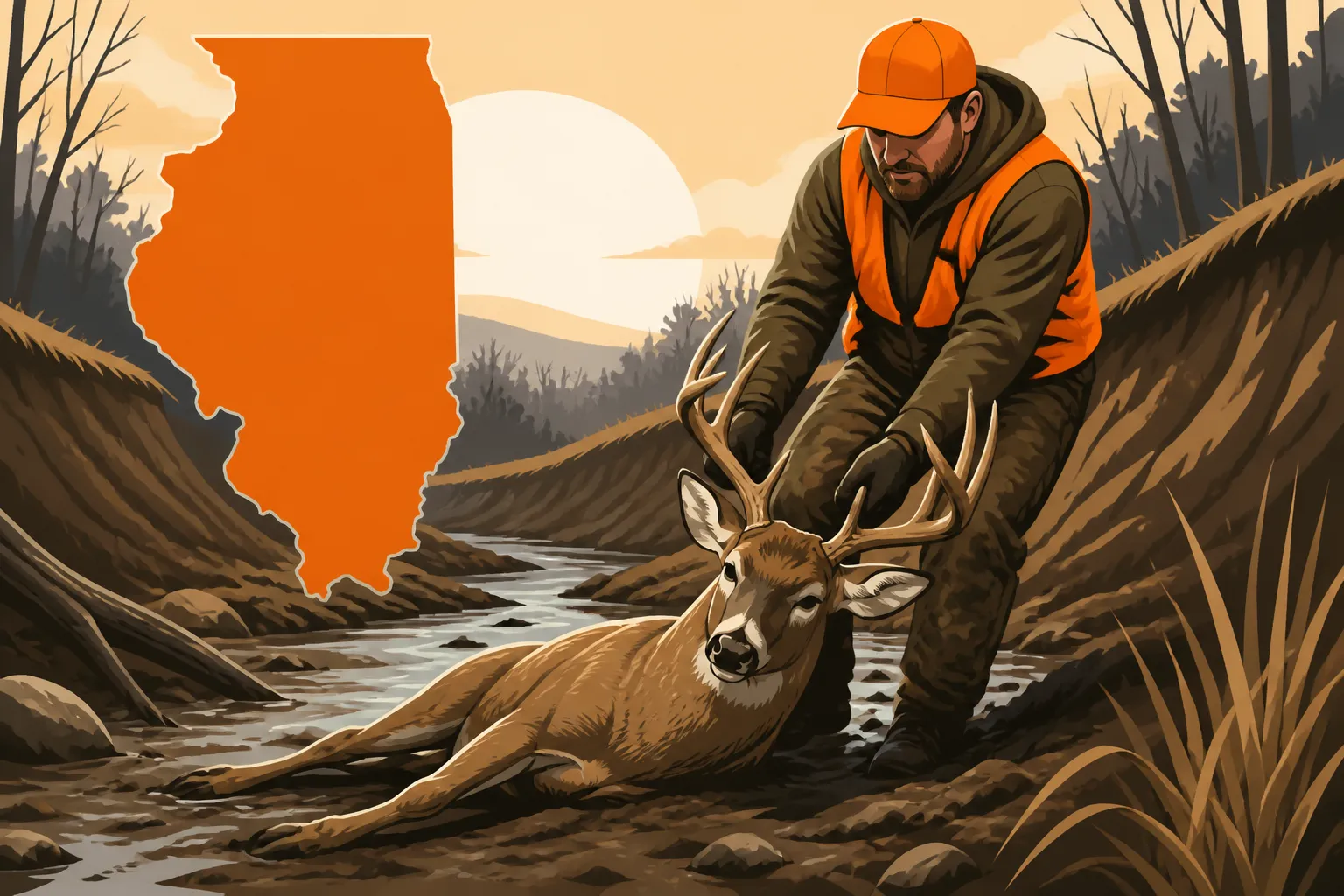
It's that moment every hunter dreads: you make a great shot, you're confident in the hit, but instead of piling up in the timber, your deer takes off, and the last thing you see is a splash as it disappears into the murky depths of a river or creek. The heart sinks, doesn't it? That feeling of despair mixed with the urgent need to recover your hard-earned game is something many of us in Illinois have faced, especially when hunting our expansive river bottoms. This guide is here to help you navigate that challenging situation, providing practical steps and realistic advice for successfully recovering a deer from an Illinois river bottom, ensuring your efforts aren't in vain and your venison makes it to the freezer.
The Heart-Sinking Moment: When Your Deer Heads for Water
Finding a blood trail abruptly ending at the water's edge can be incredibly frustrating and disheartening. It's a common scenario in Illinois, given our numerous rivers, creeks, and drainage ditches that dissect prime deer habitat. The immediate reaction might be to jump right in, but a thoughtful, methodical approach is crucial for both your safety and the successful retrieval of your deer.
Initial Shock and Safety Considerations
The first thing to do when you realize your deer has entered the water is to take a deep breath. Panic won't help. This situation demands a calm, calculated response. Your safety, and the safety of anyone assisting you, is paramount. River bottoms in Illinois, especially along major waterways like the Illinois River or the Mississippi, can be treacherous. We're talking about slick mud, hidden snags, swift currents, and often very cold water, especially during late-season hunts. Don't rush into a potentially dangerous situation without proper planning and equipment. Consider the water temperature, the depth, and the speed of the current. If it's a small, shallow creek, it might be a straightforward wade. If it's a wide, fast-moving river, you might need a boat and a whole lot more caution.
Beyond the immediate physical dangers, consider the time of day. Are you losing daylight? Blood trailing after dark in Illinois can be a challenge even on dry land, let alone in a river. If night is approaching, and the situation seems too risky, it might be safer to mark the location, develop a plan, and return at first light with the right gear and crew. Never compromise your safety or the safety of others for a deer.
Assessing the Water and the Terrain
Once you've taken a moment to compose yourself, start making a careful assessment of the immediate environment. Look for any signs of the deer on the opposite bank – disturbed mud, tracks, or even more blood. Sometimes, a deer will swim across and expire shortly after reaching the other side. Use binoculars if you have them to scan the far bank and any debris or logjams in the water.
Pay close attention to the water itself. Is it stagnant, like a slough or backwater, or is it a moving current? If there's a current, which way is it flowing? This will dictate where the deer might drift. Look for any obstacles in the water, such as fallen trees, submerged branches, or thick aquatic vegetation that could hold up a carcass. The terrain leading down to the water and on the opposite bank is also important. Is it steep and muddy, or a gradual slope? Are there easy access points for a recovery team? Knowing these details will help you formulate a safer and more effective recovery plan. Using tools like GoHunt's mapping features can be incredibly helpful for visualizing the contour of the river bottom and identifying potential access points or choke points the deer might have used.
Gear Up for the Extraction: Essential Tools and Preparations
Successfully recovering a deer from a river bottom often requires more than just your hunting knife. You'll need specialized tools and, often, extra hands to get the job done safely and efficiently. Planning ahead and having the right equipment can turn a seemingly impossible task into a manageable one.
Must-Have Items for Water Recovery
Before you even think about wading into that water, make sure you have the right gear. This isn't just about getting the deer out, but about doing it safely.
- Ropes/Cordage: Essential for pulling, securing, and maneuvering the deer. Have at least 50-100 feet of sturdy rope. Floating rope is a huge plus, as it won't sink and become a tangled mess.
- Waders or Neoprene Gear: If the water isn't too deep or swift, good quality chest waders or a full neoprene suit will keep you dry and much warmer. Being cold and wet can quickly lead to hypothermia, even on a mild day, and impairs decision-making.
- Personal Flotation Device (PFD): A life vest is non-negotiable if you're entering water that's deep, has a current, or if you're using a boat. Even strong swimmers can get into trouble with cold water shock or tangled in submerged debris.
- Headlamp/Flashlight: If you're recovering close to dusk or after dark, a reliable light source is critical. This is especially true for tasks like Blood Trailing After Dark in Illinois.
- Boat (Canoe, Kayak, Small Jon Boat): For wider rivers or deeper water, a small boat can be invaluable. It allows you to reach the deer without wading and provides a platform to work from. Make sure it's stable and suitable for the conditions.
- Grappling Hook/Gaff: If the deer is just out of reach, or in deeper water, a grappling hook or a long gaff can help you snag the deer and pull it closer.
- Long Poles/Sticks: Useful for probing depths, pushing the deer, or untangling ropes.
- First-Aid Kit: Accidents happen, especially in rugged terrain and wet conditions. Have a well-stocked kit readily accessible.
- Communication Device: A fully charged cell phone or satellite messenger is crucial for calling for help if needed. Cell service can be spotty in river bottoms, so plan accordingly.
- Warm, Dry Clothes: Have a change of clothes waiting in your vehicle. Getting out of wet gear immediately is vital for preventing hypothermia.
- GoHunt Mapping App: Before you even head out, reviewing the detailed topo maps and aerial imagery on GoHunt can give you a significant advantage. You can mark the last known location, scout potential routes to the water's edge, and even identify shallower crossings or sandbars.
Assembling Your Recovery Team
Trying to recover a deer from a river bottom by yourself is extremely dangerous and often impossible. This is a job for at least two, if not three or four, people.
More hands make the work lighter and safer. One person can be on shore with a rope, while another enters the water. A third person can be a spotter, looking for hazards or keeping an eye on the deer's location. Having a diverse skill set within your team, from strong swimmers to those with boating experience, will be highly beneficial.
Before anyone enters the water, clearly communicate the plan. Assign roles, discuss potential hazards, and establish clear signals for distress or needing assistance. Ensure everyone knows how to use the equipment safely. It's not a bad idea to review basic water safety and cold-weather emergency procedures with your team. Tell someone not involved in the recovery where you are going and your estimated return time, so they can raise an alarm if you don't check in.
Strategic Approaches to Retrieve Your Game
Once you have your team and equipment ready, it's time to execute the recovery plan. The specific tactics you employ will heavily depend on the water conditions, the depth, and the proximity of the deer.
Navigating Shallow Water and Muddy Banks
Many river bottoms in Illinois feature oxbows, sloughs, and shallow backwater areas, or smaller creeks with slow-moving water. If your deer is in one of these areas, the challenge often isn't the water itself, but the incredibly thick, deep mud. This "gumbo" mud can suck your waders right off or trap your feet, making every step an exhausting struggle.
- Pace Yourself: Don't try to power through the mud. Take slow, deliberate steps. Use a long stick or pole to test the depth of the mud and the water before you commit.
- Anchor Point and Rope: If you're wading, have someone on solid ground anchor a rope for you to hold onto. This provides stability and a lifeline if you slip or get stuck. You can also use this rope to pull the deer once you reach it.
- "Deer Walk": Once you reach the deer, securing a rope around its antlers or neck (if it's a doe) is key. If the water is shallow enough, you might be able to "walk" the deer by pulling it parallel to the bank until you find a shallower exit point. This is often easier than trying to pull it straight out through thick mud.
- Log Jams and Debris: These areas can be natural traps for deer carcasses. They can also be extremely unstable and dangerous. Approach with extreme caution. If the deer is tangled, try to free it using a long pole, rather than risking climbing onto unstable logs.
Dealing with Deeper Water and Stronger Currents
If your deer has drifted into deeper water or a stronger current, the recovery becomes significantly more complex and dangerous. This is where a boat becomes almost essential, and personal flotation devices are mandatory for everyone near or in the water.
- Upstream Approach: If there's a current and the deer is floating downstream, try to approach from an upstream position with your boat. This allows the current to work with you, pushing the deer towards you or making it easier to maneuver your boat to intercept it.
- Long Ropes for Retrieval: If you can't reach the deer directly with the boat, cast a rope with a grappling hook or even a sturdy stick tied to the end. The goal is to snag an antler or a leg. Once secured, slowly pull the deer to the boat or to a bank.
- Securing to the Boat: Never try to lift a whole deer into a small boat in open water. It can easily capsize you. Instead, pull the deer alongside the boat and secure it with ropes. You can then slowly paddle or motor to a shallower bank where it can be pulled out onto land. For a large buck, you might need to tie it to the stern and tow it.
- Finding a Landfall: Often, the best strategy is to tow the deer to the nearest accessible bank, even if it's not where you originally entered. Once on solid ground, you can begin the arduous task of Dragging a Deer Out of a River Bottom to your vehicle. Remember that GoHunt can help identify potential boat launches or easy access points along the river.
- Patience is Key: Fighting a strong current and a heavy carcass is exhausting. Take breaks, conserve your energy, and communicate constantly with your team. Rushing will only increase the risk of an accident.
Securing and Transporting Your Harvest Out of the Bottom
Once the deer is out of the water and on solid ground, the immediate danger might be over, but the work isn't. Now you have to get it out of the often-dense river bottom.
- Field Dressing: Depending on the temperature and how long the deer has been in the water, Field Dressing a Deer in Cold Weather (or any weather) as quickly as possible is crucial to preserve the meat quality. Even if it's cold, water can draw heat out of the carcass, but it can also introduce bacteria. Get the guts out, wipe the cavity clean, and allow it to cool.
- Game Cart or Sled: If the terrain allows, a sturdy game cart or a heavy-duty sled can save your back. River bottoms can be flat, but they're often choked with brush, downed timber, and uneven ground, making a cart difficult to use.
- Team Effort Drag: If a cart isn't feasible, revert to the old-fashioned drag. Use a sturdy rope, or a specialized deer drag harness. With multiple people, you can take turns or work together to pull the deer over obstacles. Look for natural paths or game trails.
- Marking Your Path: If the river bottom is dense, it can be easy to get disoriented. Pay attention to landmarks or use your GoHunt app to drop pins as you go, ensuring you can find your way back to your vehicle.
Here’s a quick overview of essential gear:
| Item | Purpose | Best For | Safety Rating |
|---|---|---|---|
| Sturdy Rope (Floating) | Pulling, securing, anchoring | All water depths, muddy banks | High |
| Chest Waders/Neoprene | Staying dry and warm | Shallow to medium depth, cold water | High |
| PFD (Life Vest) | Personal safety, flotation | Deep/swift water, boat recovery | Critical |
| Small Boat (Canoe, Jon) | Reaching/towing deer | Wider rivers, deeper water, strong currents | High |
| Grappling Hook/Gaff | Snagging deer out of reach | Deep water, entangled deer | Medium |
| Headlamp | Visibility in low light | Dusk/night recovery | High |
| First-Aid Kit | Treating injuries | All situations | High |
| Communication Device | Calling for help | All situations, remote areas | High |
| Dry Clothes | Post-recovery warmth | All situations, especially cold weather | Medium |
| Game Cart/Sled | Transporting deer over land | Accessible, relatively flat terrain | Medium |
After the Recovery: Care, Logistics, and Legalities
Congratulations, you've successfully recovered your deer from the clutches of the river bottom! But the process isn't quite over. There are still crucial steps to ensure the meat is handled properly and all legal requirements are met.
Field Dressing and Preservation Challenges
A deer that has been in the water presents unique challenges for meat preservation. While cold water can help cool the carcass quickly, it can also introduce bacteria and mud, potentially compromising the meat if not handled swiftly and correctly.
- Immediate Field Dressing: As soon as you get the deer to solid ground, begin field dressing. Remove all internal organs, paying close attention to any water or mud that might have entered the body cavity. Wipe it clean with paper towels or a clean cloth, avoiding rinsing with more water if possible, especially if the river water was questionable.
- Checking for Water Damage: Inspect the meat carefully. If the deer was submerged for an extended period, especially in warmer temperatures, some parts of the meat might be compromised. Look for discoloration or an off-smell. Generally, if you recover it within a few hours, and especially in cold weather, the meat should be fine.
- Cooling and Transport: Once field dressed, continue to cool the carcass as rapidly as possible. If the temperatures are low, hanging it in a shaded, well-ventilated area for a few hours can help. When transporting, ensure air can circulate around the deer, avoiding direct contact with hot vehicle surfaces. Ice can be packed in the cavity for longer hauls, but keep it in sealed bags to prevent water contamination. This attention to detail is vital for quality venison, whether you're butchering it yourself or taking it to a processor.
Illinois Reporting and CWD Considerations
The final, but equally important, step is to fulfill your legal obligations as an Illinois hunter. This includes reporting your harvest and, if applicable, addressing Chronic Wasting Disease (CWD) concerns.
- Harvest Reporting: In Illinois, all deer harvested during any season must be reported to the Illinois Department of Natural Resources (IDNR) by 10 p.m. on the same day it was killed. You can do this online via the IDNR website or by phone. Make sure you have your permit number and the date, time, and county of harvest ready. For more details, refer to the official Illinois Deer Reporting Requirements.
- CWD Zone Protocol: If you harvested your deer in one of Illinois's CWD counties, you have additional responsibilities. The IDNR maintains a list of counties in the CWD Management Area where specific rules apply. You may be required to submit a sample for CWD testing. Knowing how to find an Finding an Illinois CWD Sampling Location is critical. Additionally, there are Illinois Carcass Movement Restrictions for deer harvested in CWD counties, meaning you cannot transport the whole carcass out of the zone until CWD test results are negative. Always check the current regulations for the most up-to-date information regarding CWD. Using resources like GoHunt or the IDNR website to understand your specific county's status can save you a lot of hassle.
Recovering a deer from an Illinois river bottom is never easy, but with patience, the right tools, a good team, and careful planning, it's absolutely achievable. Stay safe, stay smart, and enjoy the satisfaction of knowing you did everything possible to recover your game.
Disclaimer
The information provided in this guide is for general informational purposes only and does not constitute legal advice. Hunting regulations, safety protocols, and environmental conditions can change. Always consult the official Illinois Department of Natural Resources (IDNR) regulations and local weather advisories before engaging in any hunting or recovery activities. Prioritize safety above all else.