Working a Fencerow for Late-Season Deer
The late season in Illinois can be a real test of patience and willpower. The rut is long gone, the woods are often silent and cold, and the deer, having survived weeks of hunting pressure, become notoriously skittish. It's easy to feel defeated when those big, open fields seem barren and the deep timber is quiet. But don't throw in the towel just yet! This comprehensive guide will walk you through exactly how to capitalize on an often-overlooked hotspot: the humble fencerow, transforming those chilly hunts into successful ones.
Why Fencerows Are Late-Season Deer Magnets
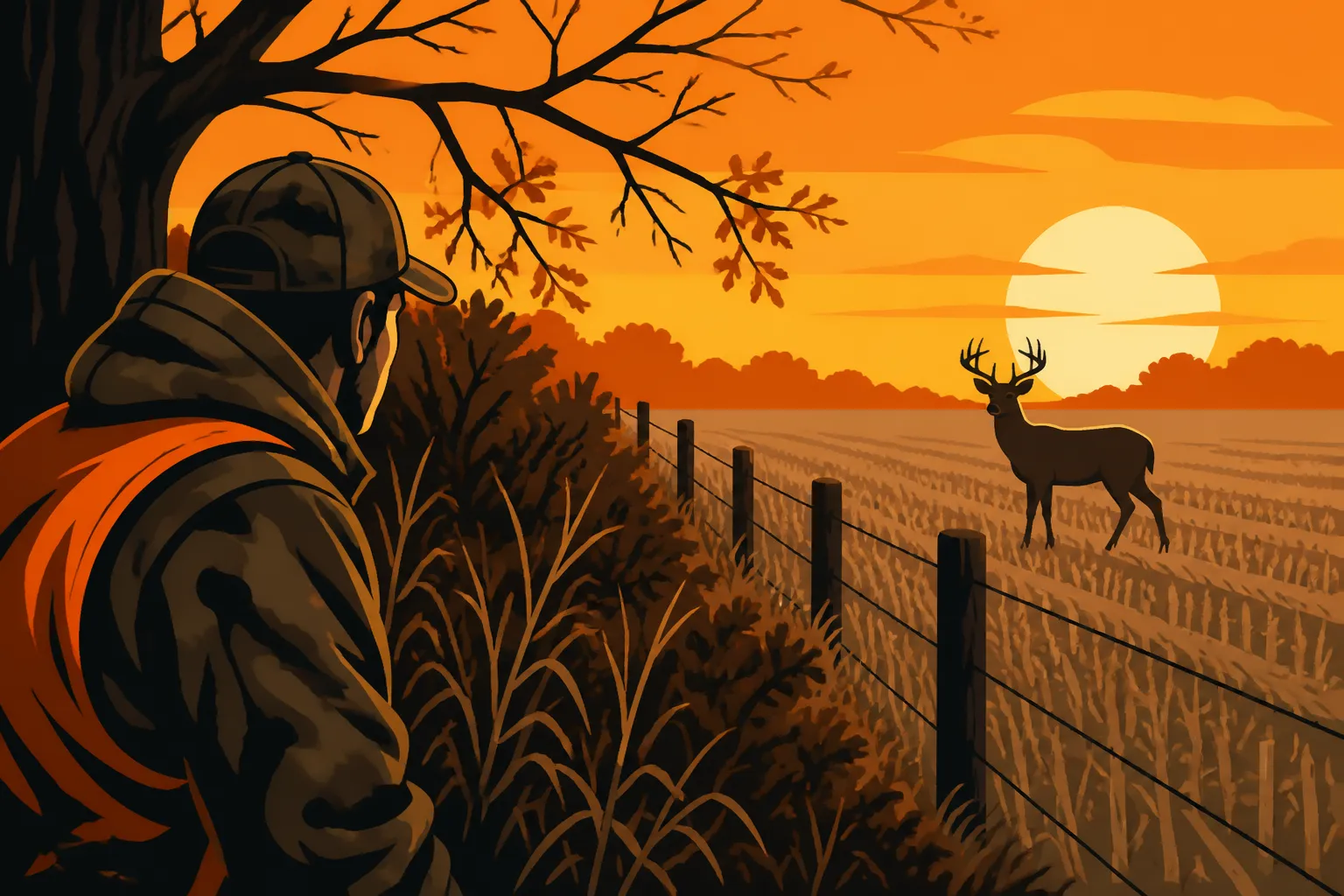
When the temperatures drop and the winds pick up, deer aren't just looking for food; they're desperately seeking comfort and security. Fencerows, those often-narrow strips of brush and timber dissecting farmlands and property lines, become crucial pieces of the puzzle for whitetails trying to survive the lean months. They offer a unique blend of shelter, travel corridors, and even residual food sources that can be irresistible to late-season deer.
Shelter and Thermal Cover
Imagine standing in an open field in December, with a biting northwest wind cutting through you. Now picture the comparative warmth and reduced wind chill tucked behind a dense line of multiflora rose, thorny locust, or a thicket of young cedars and osage orange. That's exactly what deer are doing. Fencerows, especially those with heavy, tangled growth, provide invaluable thermal cover. This dense vegetation breaks up the wind, allowing deer to conserve precious body heat and energy that they would otherwise expend simply trying to stay warm. A deer that doesn't have to shiver as much or burn extra calories fighting the cold is a deer that is more likely to bed down and move through these protected areas. They're trying to make it through winter, and a comfortable, wind-protected bed is gold.
These narrow bands of cover also offer visual security, allowing deer to move with confidence, knowing they're largely hidden from prying eyes. In heavily agricultural areas, where vast expanses of fields are broken only by these lines, a fencerow can be the only place a deer feels safe enough to pause, browse, or even bed for a short period during daylight hours. They’re not just windbreaks; they're vital sanctuaries against the elements and human disturbance.
Travel Corridors to Food
Beyond just shelter, fencerows are essentially highways for deer. They act as natural travel corridors, linking bedding areas, remote woodlots, and prime late-season food sources like cut cornfields, standing soybeans, or even winter wheat. After the general firearm seasons, deer become incredibly sensitive to pressure and will almost always choose the path of most resistance—meaning the path with the most cover—to move from one point to another. A deer crossing an open field is a vulnerable deer, but one slipping along a brushy fencerow is significantly harder to spot and provides a greater sense of security.
These linear features often funnel deer movement into predictable patterns, especially where they intersect other habitat types or pinch down into narrow openings. If you can identify a fencerow that connects a bedding thicket to a known food plot or a field of waste grain, you've found a high-odds travel route. They concentrate movement, making it easier for you to anticipate where a deer might appear. Think of them as natural conduits that guide deer exactly where you want them to be, often within bow or firearm range if you set up correctly. For more on how deer use such features, check out our guide on Hunting a Funnel Between Two Woodlots.
Browse and Forage Opportunities
While the primary food sources in late season are typically waste grain in agricultural fields, don't underestimate the subtle forage opportunities that fencerows can offer. Even in the depths of winter, certain woody browse, lingering forbs, and thorny thickets can provide a surprising amount of nutrition for deer. Multiflora rose, honeysuckle, and various briers, often abundant in neglected fencerows, retain some palatability and can provide essential roughage and moisture when other options are scarce.
Deer will often nip at these plants as they travel, supplementing their diet of corn and soybeans. In areas where traditional food plots are buried under snow or picked clean, these hidden pockets of browse can be crucial. This combination of thermal cover, secure travel, and a snack bar on the side makes fencerows incredibly attractive. Observing where deer have been browsing recently can give you critical clues about their preferred travel lines and the specific sections of a fencerow they utilize most heavily.
Scouting Fencerows for Active Sign
Finding a fencerow is one thing; finding an active fencerow is another. Late-season scouting isn't about covering miles; it's about being meticulous and reading the subtle clues deer leave behind. The cold weather often means less visible fresh sign, but with a keen eye and a strategic approach, you can pinpoint the exact spots deer are using.
Interpreting Tracks and Trails
In late season, fresh tracks are your best friend. A dusting of snow or a muddy patch along a fencerow can reveal a treasure trove of information. Look for lines of tracks that are crisp and defined, indicating recent passage. Pay attention to the size of the tracks; larger, deeper prints might signal a mature deer. More importantly, observe the direction and consistency of the tracks. Are they just cutting across the fencerow, or is there a distinct, worn path running parallel to it for a significant distance? The latter suggests a preferred travel corridor.
Look for areas where multiple tracks converge or where a single, heavy track shows consistent use. These indicate high-traffic zones. Don't just focus on the main fencerow itself; check the edges where deer step into the adjacent field or woodlot. These entry and exit points are critical ambush locations. Remember, in cold weather, deer move slowly and deliberately, so their tracks won't be as spread out as during the rut. Fresh tracks near a food source at dawn or dusk are a strong indicator of current activity. To aid in this, having a good mapping app like GoHunt can help you mark specific track locations and plan your approach for the next hunt. For more detailed insights on interpreting deer movement, explore our article on Reading Illinois Mud for Fresh Deer Movement.
Rubs, Scrapes, and Old Sign
While the peak rut is over, and fresh scrapes are less common, don't completely discount old sign. Late-season bucks might still rub trees, especially if they're feeling a surge of testosterone from a late-estrus doe or simply marking territory. A new rub or a freshened scrape along a fencerow in December or January is a huge sign that a buck is actively using that area. Even older rubs and scrapes from earlier in the season, particularly those on sturdy trees within the fencerow, indicate historical use and suggest a buck might return to that same travel route.
It's not uncommon for a mature buck to follow a consistent pattern year after year, especially when it comes to preferred travel routes. If you find a series of older rubs along a fencerow, it tells you that this particular line of cover has been important to bucks in the past. This isn't a guarantee of current activity, but it significantly increases the odds compared to a fencerow with no sign at all. Think of it as historical data that, when combined with fresh tracks, paints a very compelling picture.
Entry and Exit Points to Fields
The real magic of fencerows often happens where they meet a productive food source. These junctions are prime locations to focus your efforts. As deer travel the safety of the fencerow, they'll eventually need to enter an open field to feed. Look for distinct trails that lead from the fencerow directly into a cut cornfield, a standing bean field, or even a winter wheat plot. These trails will often be well-worn, showing trampled vegetation, especially noticeable if there's any snow.
Pay close attention to subtle breaks in the fencerow, small gaps, or low spots where deer prefer to cross. These are natural pinch points that concentrate deer movement. Use a tool like GoHunt to mark these spots on a digital map. Consider the prevailing wind direction in relation to these entry/exit points; deer will almost always approach a field with the wind in their face, trying to scent-check for danger ahead. Setting up downwind of these preferred crossing points, with good visibility into the field and along the fencerow, is a classic late-season tactic. Our article on Entry Routes Through Standing Corn offers additional tips on identifying these key areas.
Strategic Hunting Approaches for Fencerows
Once you've identified an active fencerow with promising sign, it's time to decide how you'll hunt it. Late-season conditions demand adaptable strategies, whether you're sitting patiently in a stand, still-hunting through the cover, or coordinating a small drive.
Stand Placement and Wind Considerations
For static hunting, both treestands and ground blinds can be highly effective along fencerows. The key is concealment and playing the wind. If you're using a treestand, look for a mature tree within the fencerow that offers good cover and allows you to overlook the primary travel corridor and any adjacent food sources. Ideally, you want to be positioned so that deer are walking into your shooting lane, not directly under you. The dense nature of many fencerows can provide excellent natural backdrop for a treestand, breaking up your silhouette.
Ground blinds are another fantastic option, especially in fencerows with thick brush that can conceal a blind effectively. Remember to brush in your blind thoroughly, making it blend seamlessly with the surroundings. Regardless of your choice, the wind is paramount. Always approach and set up with the wind in your favor, blowing your scent away from where you expect deer to approach or pass. A common mistake is setting up too close to the fencerow, letting your scent drift directly into it. Positioning yourself 10-20 yards off the fencerow, slightly downwind, can allow your scent to dissipate while still offering a clear shot. Consider reading Using a Ground Blind on Illinois Public Land for more detailed ground blind strategies.
Still-Hunting and Drives
Fencerows can also be excellent for more active hunting methods. Still-hunting, moving slowly and deliberately through or alongside a fencerow, can be incredibly productive, especially if the fencerow is long and winding. The idea is to cover ground quietly, pausing frequently to scan ahead for deer that might be bedded or slowly feeding within the cover. Focus on moving into the wind or with a quartering wind, allowing you to smell deer before they smell you, and hear any subtle movements. The visual cover of the fencerow can help conceal your own movement as you slip through.
For longer fencerows, a small, coordinated deer drive can also be very effective. This usually involves one or two "pushers" walking slowly and quietly through the fencerow, while one or two "blockers" are strategically positioned at the other end, overlooking potential escape routes into adjacent timber or fields. This is not about running deer; it's about gently nudging them towards waiting hunters. Communication is key, and safety is paramount. This tactic works exceptionally well on linear features that naturally bottleneck deer movement. If you're considering a more active approach, our article on Deer Drives With Three or Four Hunters offers invaluable advice.
Decoys and Calling
In the late season, calling and decoys are generally less effective than during the rut, but they still have their place under specific circumstances. If you're hunting an area where you suspect a late-estrus doe might be present, or if you simply observe a buck that seems to be cruising for does, a subtle doe bleat or a few soft grunts might pique its interest. Avoid aggressive calling, as deer are much warier now. A quiet, inquisitive call is often best.
Decoys are a trickier proposition in late season. Most deer, especially bucks, are no longer actively seeking mates. However, if you're targeting a dominant buck that might be territorial, a small buck or doe decoy placed strategically at an entry point to a field from a fencerow could work. The goal isn't to draw them in for breeding, but rather to exploit their natural curiosity or aggression. Place the decoy quartering away from you, presenting a good shot opportunity. Always weigh the pros and cons carefully, as a poorly placed decoy can spook more deer than it attracts.
Gear and Tactics for Cold Weather Fencerow Hunting
Late-season hunting is synonymous with cold weather, and being prepared is half the battle. If you're uncomfortable, you won't stay out long enough to be successful. Beyond basic hunting skills, having the right gear and employing smart cold-weather tactics are crucial for success when working fencerows.
Thermal Layering and Staying Warm
Staying warm is the absolute priority in late season. A multi-layer clothing system is indispensable. Start with a good moisture-wicking base layer to pull sweat away from your skin. Add insulating mid-layers like fleece or down to trap body heat, and top it off with a windproof and waterproof outer shell. Focus on critical areas like your hands, feet, and head; these are where you lose the most heat. High-quality insulated gloves or mittens, warm wool socks, and insulated boots are non-negotiable. A warm hat or balaclava can make a huge difference.
Beyond clothing, consider chemical hand warmers and foot warmers, especially if you're static hunting. A small, insulated pad to sit on can also prevent heat loss to the cold ground or stand. Remember to bring a Thermos of hot coffee, tea, or broth. Proper hydration and warm internal temperatures can extend your sit significantly. Don't forget scent control, even in freezing temperatures, as deer can still pick up human odor.
Optics and Observation
Good optics are invaluable when hunting fencerows, especially in late season. The sparse foliage means deer can be spotted at greater distances, and a quality pair of binoculars or a spotting scope allows you to thoroughly scan the entire length of a fencerow, the adjacent fields, and any intersecting cover. Deer often move very subtly in late season, and a careful glassing session can reveal a flick of an ear, a patch of brown hide, or the tell-tale silhouette of a deer moving along the tree line that you might otherwise miss with the naked eye.
Use your optics to scan for deer feeding in the distance, slowly working their way towards the fencerow, or already bedded within its protective cover. Pay attention to movement at first light and last light, as these are prime times for deer activity. Before you even head to the field, you can use mapping apps like GoHunt to analyze aerial photos, identify potential travel corridors, and mark points of interest, saving you valuable time in the field. This detailed observation is often what separates successful late-season hunters from those who go home empty-handed.
Strategic Timing
Late-season deer, particularly during periods of extreme cold, often adapt their movement patterns to conserve energy. This means that while traditional dawn and dusk hours are still critical, deer may also move during the warmest parts of the day if temperatures are frigid. During a severe cold snap, a sunny, calm midday period can be when deer emerge from their thermal cover in fencerows to feed. Conversely, if the weather is milder, they might stick to typical low-light feeding.
Pay close attention to weather forecasts, especially temperature drops and wind shifts. A major cold front pushing through Illinois will almost certainly trigger increased deer activity as they anticipate and react to the conditions. Plan your hunts around these changes. Mornings after a particularly cold night, when deer are looking to fill their bellies, can be incredibly productive. Similarly, the hour before dark, as deer leave their fencerow cover to hit a food source, is prime time. For more on enduring the chill, check out our guide on Cold-Weather Sitting Strategy in Illinois.
| Hunting Method | Pros for Fencerows | Cons for Fencerows | Best Conditions |
|---|---|---|---|
| Treestand | Excellent vantage, scent control from height, good concealment in taller trees. | Limited mobility, colder for long sits, setup can be noisy/intrusive. | Known travel routes, windy days (for scent dispersal), near food sources. |
| Ground Blind | Great concealment, warmth, can be used by multiple hunters, adaptable. | Limited visibility in dense cover, scent can be trapped low, harder to move quickly. | Thicker fencerows, open fields adjacent, still hunting approach. |
| Still-Hunting | Active, covers more ground, adaptable to changing deer movement. | Requires extreme stealth, easy to spook deer if not careful, physically demanding. | Long fencerows, light snow (for tracking), moderate wind for cover. |
| Small Drive | Forces deer movement, can be highly effective in linear features. | Requires multiple hunters, coordination is crucial, can push deer off property. | Dense, long fencerows, known escape routes, private land access. |
Disclaimer
Hunting is a challenging and rewarding activity that requires adherence to all local, state, and federal regulations. Always prioritize safety, ethical hunting practices, and respect for wildlife and private property. Laws and regulations can change, so consult the latest Illinois Department of Natural Resources (IDNR) guidelines before heading afield. Ensure you have all necessary licenses and permits.