Hunting Small Woodlots Near Suburban Chicago
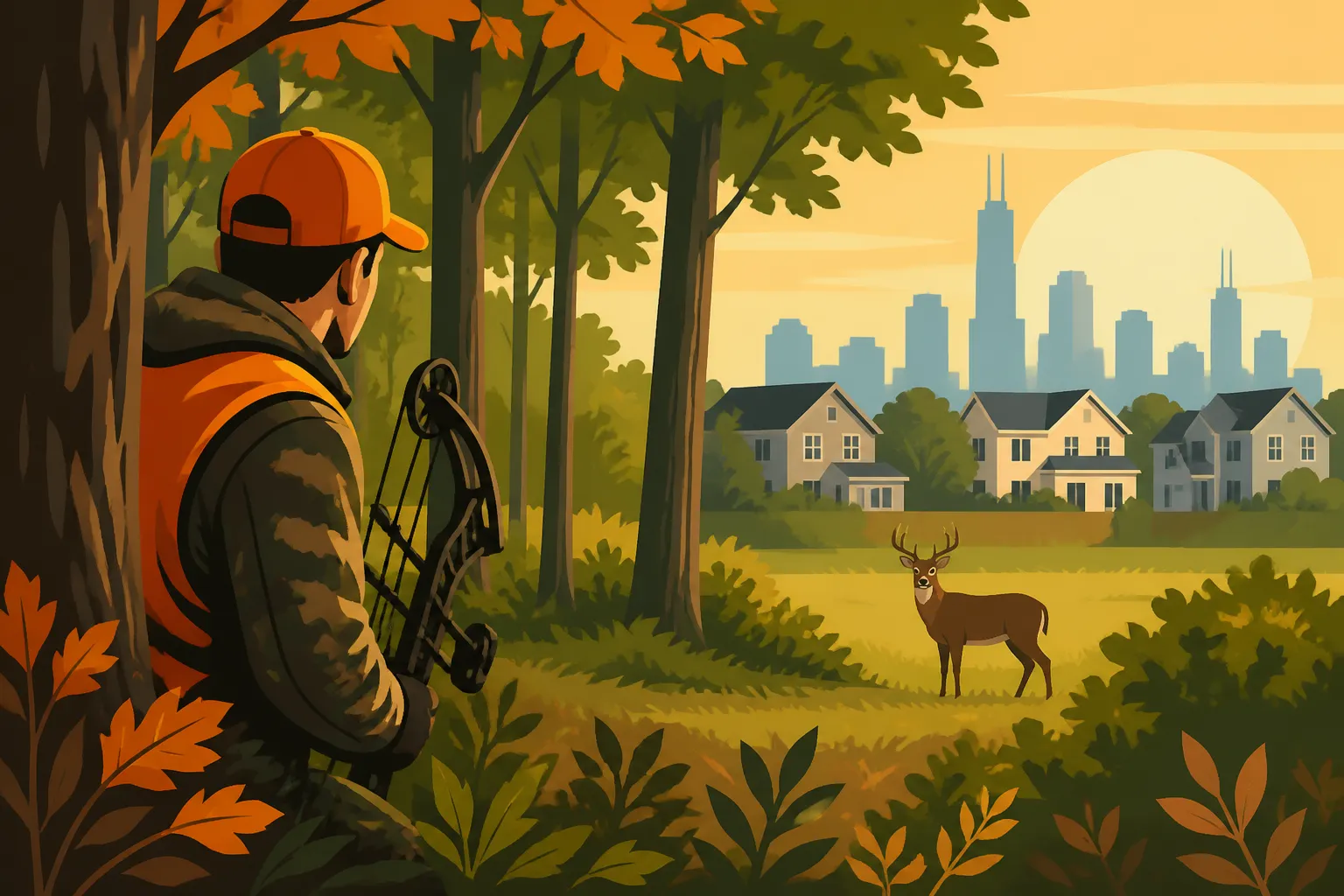
Hunting small woodlots near suburban Chicago can feel like a contradiction in terms, a frustrating puzzle of limited space, wary deer, and endless "No Trespassing" signs. It’s easy to get discouraged when you dream of sprawling timber but face postage-stamp-sized parcels. This guide is here to help you navigate those challenges, offering practical strategies to unlock the hidden potential of these overlooked pockets of whitetail habitat, proving that successful hunting isn't just for rural giants.
Understanding the Unique Challenges of Suburban Hunting
Let's be honest, hunting near Chicago isn't like heading out to Pike County. You're not going to find vast tracts of unbroken timber or low-pressure deer that rarely see a human. Instead, you're dealing with a landscape heavily influenced by human presence, which presents its own set of hurdles and, surprisingly, unique advantages.
High Human Pressure and Wary Deer
The biggest difference when you're targeting a small woodlot just outside the city limits is the constant human activity. Think about it: dog walkers, joggers, kids playing, suburban development—all of these create a background hum that deer in these areas are intimately familiar with. This means the deer are often nocturnal, moving mostly under the cover of darkness, and extremely sensitive to sudden changes or unfamiliar sights and sounds. The deer here aren't necessarily bigger or smarter, but they've adapted to human patterns in a way their rural cousins haven't. They know when people are most active and when the coast is clear.
Moreover, these small parcels are often hit by multiple hunters if access isn't tightly controlled. This further educates the deer, making them even more skittish. Your approach, your scent control, and your ability to remain unseen and unheard become paramount. You can't just wander in and expect success; every step needs to be calculated. The margin for error is significantly smaller than in less pressured environments.
Navigating Local Ordinances and Regulations
Before you even think about setting foot in a suburban woodlot with your bow, you must know the local laws. This isn't just about state hunting regulations; it's about municipal ordinances, which can vary wildly from one town to the next. Some areas are strictly archery-only, like many of the Illinois Suburban Archery-Only Zones put in place for deer management. Others might have specific setback requirements from roads, homes, or schools. Discharging a firearm, even a shotgun slug or straight-wall rifle, is almost certainly prohibited in these close-knit areas due to Illinois Firearms Discharge Setback Rules.
It's not uncommon for townships to have specific hours when hunting is permitted, or even rules about where you can park. You might also find that while the Illinois Department of Natural Resources (IDNR) allows certain activities, the local park district or municipality has stricter rules. For example, some towns require special permits even if you have landowner permission. Always check with the local police department or municipal office before you hunt. A quick call can save you a huge headache, a hefty fine, or worse. Ignorance of local laws is never a good defense, especially when dealing with public safety concerns in populated areas.
Gaining Access to Suburban Hunting Spots
Finding a place to hunt in rural Illinois is one thing; securing permission on a small, suburban woodlot is another beast entirely. It requires a different approach, more persistence, and a healthy dose of charm and respect.
Identifying Potential Woodlots and Landowners
The first step is often the most overlooked: scouting from a distance. Before you knock on any doors, spend time driving or even using online mapping tools like GoHunt, Google Earth, or the Illinois DNR's mapping resources. Look for those small, overlooked patches of timber, creek bottoms, or overgrown fencerows that might connect larger parcels. Often, deer use these tiny corridors as bedding areas or travel routes between suburban food sources (like gardens and ornamental plantings) and more secluded spots. Don't be afraid to look at parcels as small as 5-10 acres; deer can live their entire lives in shockingly small spaces if they feel secure.
Once you've identified a few promising spots, the real work begins: identifying the landowner. This might involve looking up parcel information through the county assessor's website, which is usually public record. You'll need the parcel number or address to find owner details. Sometimes, these small woodlots are remnants of larger properties now owned by people who have no interest in hunting but are tired of deer eating their landscaping. These are your prime targets. Be prepared to invest some time in this research; it's often the most critical part of the process.
The Art of Asking for Permission
This is where your interpersonal skills truly shine. Cold-calling or knocking on doors can be intimidating, but it's often the only way to get in. When you approach a landowner, remember a few key principles:
- Be Respectful and Presentable: Dress neatly. Don't show up in camo with your bow in hand. You're making a first impression, and you want to convey responsibility, not a wild hunter stereotype.
- Introduce Yourself Clearly: State your name, where you live (if comfortable), and explain why you're there. "Hello, my name is John Smith, and I live just a few miles south of here. I was driving by and noticed this beautiful woodlot you have. I'm an avid bowhunter and was wondering if you ever allow anyone to hunt deer on your property."
- Address Their Concerns: Landowners' biggest worries are usually safety, liability, and respect for their property. Emphasize that you are a safe hunter, fully insured (if you have hunting insurance, which is a great idea), and will respect their property as if it were your own. Offer to share venison.
- Offer Value: Deer in suburban areas can be a nuisance, causing property damage or increasing the risk of vehicle collisions. Position yourself as someone who can help manage the deer population. Mention that you'll be discrete, use a bow, and focus on ethical harvesting.
- Be Persistent, But Not Pushy: You might hear "no" a lot. Don't take it personally. Thank them for their time and move on. But sometimes, a "no" today can become a "yes" next year if you leave a good impression. Consider leaving a neatly written note with your contact information if they're not home.
- Written Permission is Key: Even if they give verbal permission, always follow up with a written agreement. This protects both you and the landowner. You can find templates online, or use the IDNR's recommended forms. Illinois law on trespass can be complex, and Do You Need Written Permission in Illinois? makes it clear that written consent is your best defense. This is especially true given the higher scrutiny in suburban areas.
- Referral Advantage: If you know anyone in the area, a personal referral can open doors like nothing else. It builds instant trust.
Remember, you're building a relationship. If you get permission, go above and beyond to be a good steward of their land. Offer to help with chores, pick up trash, or even keep an eye on their property. This goodwill is how you maintain access and potentially gain more. This approach is key to Hunting Small Private Tracts in Illinois.
Effective Hunting Tactics for Suburban Woodlots
Once you've secured permission, the real tactical game begins. Suburban deer are different, and your hunting methods need to adapt accordingly.
Low-Impact Scouting and Stand Placement
The first rule of hunting suburban woodlots: do no harm. You want to minimize your presence and disturbance. This means low-impact scouting. Resist the urge to tromp through every inch of the property. Instead, use binoculars from a distance, check edges, and identify obvious funnels or bedding areas. Look for well-worn trails, fresh rubs, and scrapes, but don't over-press the area. If you're going to put up trail cameras, set them discreetly and check them infrequently. The less you disturb the deer, the more likely they are to stick around.
For stand placement, think about escape routes for deer and your entry/exit routes. Deer will quickly pattern any disturbance. Because these woodlots are small, you often don't have many options. A portable treestand or a ground blind is often the best choice. Ground blinds, especially, can be brushed in naturally to blend seamlessly, making them less intrusive than a permanent structure. Consider using a compact, lightweight blind that you can set up quickly and quietly. When hunting these smaller parcels, scent control is paramount. Deer in these areas are constantly smelling human activity, so anything out of the ordinary will quickly send them packing. Think about how deer are likely to enter and exit the woodlot, often paralleling property lines or using thick cover to their advantage. Your stand should be set up to intercept them along these routes, ideally with the wind in your favor, of course.
Adapting to Nocturnal Movement Patterns
As mentioned, suburban deer are masters of nocturnal movement. This means traditional sunrise and sunset hunting might need a tweak. While dawn and dusk are still prime times, the first and last half-hour of legal light become incredibly critical. Deer might hold tight in thickets or even suburban backyards until just after dark, then move back just before light. Focus your efforts on these twilight windows.
Consider hunting during inclement weather—a light rain, fog, or heavy overcast conditions can often get deer moving a little earlier or staying out a little later, as human activity might be reduced. Also, the rut can temporarily override some of their cautious behavior, making midday hunts more productive, even in pressured areas. Remember to check the Illinois Deer Season Structure Explained for overall season dates, but always double-check those local ordinances for specific hunting hours. Using mapping apps like GoHunt can help you understand property boundaries and deer movement patterns across the fragmented landscape.
Another tactic is to focus on food sources that deer might access at odd hours. Perhaps there's an apple tree on the edge of the woodlot, or a neighbor's garden that deer frequent. Setting up on these staging areas, even small ones, can pay off. The key is to be patient, silent, and scent-free.
Utilizing Ground Blinds and Natural Cover
In small, pressured woodlots, having a permanent, highly visible treestand can be a huge deterrent. Deer in these areas are accustomed to specific visual cues, and a new structure can stick out like a sore thumb. This is where ground blinds truly shine. A well-placed and brushed-in ground blind offers several advantages:
- Concealment: They break up your silhouette completely, making it easier to draw your bow undetected.
- Scent Control: While not foolproof, a blind can help contain some of your scent, especially with a crosswind or thermals.
- Mobility: Portable ground blinds allow you to adapt to changing deer patterns or wind directions. You can pick up and move to a different location on the property if needed, giving you flexibility.
- Safety: Hunting from the ground eliminates the risk of falling from a tree, which is a significant concern for any hunter.
When setting up your ground blind, think about natural cover. Place it against a thick hedge row, a cluster of cedars, or at the base of a large oak. Use branches, leaves, and local vegetation to blend it in even further. The goal is to make it look like part of the landscape. As this applies to many situations, the tips in Using a Ground Blind on Illinois Public Land are very relevant here too.
Remember, in these small parcels, your entry and exit are critical. Plan your routes to avoid disturbing the deer. Walk slowly, quietly, and use existing cover to your advantage. Early morning entries and late evening exits are often best, allowing you to move when human activity is minimal and deer are either already bedded or just beginning to move.
Safety and Ethics in Suburban Settings
Hunting near homes and roads demands an even higher level of responsibility and ethical conduct than hunting in the wilderness. Your actions not only reflect on you but on the entire hunting community, especially when non-hunters are watching.
Prioritizing Safety Distances and Backstops
Safety is non-negotiable. When hunting with a bow in a suburban environment, you absolutely must be aware of your surroundings at all times. This means knowing what lies beyond your target. Are there houses? Roads? Walking trails? Never take a shot unless you have an absolutely clear, safe backstop. A missed arrow or a pass-through could travel a considerable distance, and an unintended consequence is unthinkable.
Always maintain a safe distance from any occupied dwellings, roads, or other structures. While state law has specific setback requirements, local ordinances can be even stricter. For example, some towns might require you to be 100 yards from any structure, not just the one you're hunting on. Always double-check. The responsibility for a safe shot rests entirely on you.
| Feature | Rural Woodlot | Suburban Woodlot |
|---|---|---|
| Deer Pressure | Moderate to Low | High |
| Deer Movement | More daytime activity, wider range | Heavily nocturnal, tight core areas |
| Human Activity | Minimal | High (walkers, cars, pets) |
| Access Difficulty | Easier to find public, private permission possible | Challenging private access, limited public land |
| Primary Weapon | Firearm or Archery | Primarily Archery (due to local ordinances) |
| Regulations | State-level mostly | State + Local municipal ordinances |
| Scouting Impact | Moderate impact tolerated | Minimal disturbance crucial |
| Backstop Needs | Generally open, less critical | Absolute clear, safe backstop required |
| Noise Levels | Low | Higher ambient noise |
This table highlights just how different the mindset needs to be when you're hunting in a more populated area. Every decision has heightened implications. And, of course, during firearm seasons, blaze orange is required by state law. Ensure you understand Illinois Blaze Orange Requirements if your permit allows for a firearm during a special season, although this is rare in suburban settings.
Ethical Conduct and Public Perception
Your behavior in a suburban hunting scenario is constantly under scrutiny. Even if you're out of sight, residents know you're there. Therefore, maintaining the highest ethical standards is crucial.
- Be Respectful of Neighbors: This includes parking legally and considerately, not making excessive noise, and keeping your gear out of public view as much as possible. If a neighbor approaches you with questions, be polite and informative, even if they seem hostile. Calmly explain that you have permission and are hunting legally and safely.
- Clean Harvests: Strive for clean, quick harvests. A wounded deer running through a residential area is a terrible look and can cause public outcry. Practice regularly to ensure your shot placement is impeccable.
- Discreet Field Dressing: If you harvest a deer, handle the field dressing and removal as discreetly as possible. Many suburban landowners won't want a bloody scene on their property or for their neighbors to see it. Have a plan for quick removal, perhaps after dark, or with a cart that can cover the animal. Consider doing the actual field dressing off-site if that's an option.
- Follow All Laws: Beyond state and local hunting laws, adhere to all general laws. This means no littering, no speeding on local roads, and generally being a model citizen.
The goal is to be a good ambassador for hunting. When done right, hunting can be a vital tool for managing deer populations in suburban areas, where traditional methods of control are often impractical or unpopular. By being highly ethical and safe, you help maintain positive public perception and potentially open doors for future hunting opportunities for yourself and others.
Disclaimer
This article is for general informational purposes only and does not constitute professional advice. Laws, prices and regulations vary by location and change over time. Consult a qualified professional for guidance on your specific situation.