Do You Need Written Permission in Illinois?
One of the biggest hurdles many hunters face, especially when they're new to the sport or new to an area, is figuring out where they can actually hunt. And when you finally find a promising spot that isn't public land, the question inevitably pops up: do I need written permission, or is a friendly handshake enough? Navigating Illinois's land access laws can feel like walking through a minefield, but this guide is here to clear up the confusion and help you understand the ins and outs of permission for hunting in the Prairie State.
Understanding Illinois Trespass Law for Hunters
Let's get right to it: Illinois is a permission state. That means you absolutely, unequivocally, must have permission to be on private land for any recreational purpose, including hunting. It’s not just a polite request; it's the law.
The Basic Rule: Permission is Required
Unlike some states where "posted" signs are strictly required to enforce trespass laws, Illinois operates under the principle that all private land is, by default, off-limits unless you have explicit permission. This can be a tough pill to swallow for hunters accustomed to different rules elsewhere, but it's crucial for staying on the right side of the law and maintaining good relationships with landowners. You can’t assume that because there isn't a "No Trespassing" sign every 50 feet, the land is fair game. The burden of proof is on you, the hunter, to ensure you have the right to be there. This applies whether you're chasing White-Tailed Deer Across Illinois, calling Wild Turkeys in Illinois, or even just scouting for next season.
Imagine this scenario: you've been scouting a fantastic-looking woodlot adjacent to public land, seeing all sorts of deer sign. You assume since there are no signs, it's either abandoned or okay to enter. You go in, set up a stand, and have a great hunt. Then, suddenly, a pickup truck pulls up, and an irate landowner is staring you down. Even if you packed up immediately, you've already committed trespass. It's an uncomfortable situation for everyone involved, and it can lead to fines, confiscation of your harvest, and even loss of hunting privileges. Always assume private land is permission-only.
Verbal vs. Written Permission: What's the Difference?
So, if permission is required, does it have to be written down? Legally, in Illinois, verbal permission can be sufficient. A clear "yes, you can hunt my back forty" from the landowner is, in the eyes of the law, technically permission. However, and this is a big however, relying solely on verbal permission can be a recipe for trouble down the road. It leaves a lot of room for misunderstanding and misinterpretation.
Think about it: memory fades, landowners change their minds, or perhaps a family member gives permission without the actual owner's full authority. What if the landowner passes away, and the new owner has no idea they granted you access? Or what if you simply encounter a new tenant or someone unfamiliar with the verbal agreement? A friendly chat at the coffee shop might feel solid at the time, but when you're standing in a cornfield with your shotgun and someone challenges your presence, a verbal agreement can quickly fall apart. This is why most seasoned hunters will strongly advocate for written permission whenever possible, even if it's not strictly mandated by law for every single situation. It's about peace of mind and bulletproof security in your access.
The Benefits of Written Permission
While verbal permission might pass legal muster in some situations, written permission is truly your best friend as a hunter trying to access private ground in Illinois. It elevates your agreement from a casual conversation to a clear, defensible understanding.
Clarity and Proof in the Field
Having a physical piece of paper (or even a digital document on your phone) explicitly stating you have permission to hunt is invaluable. It eliminates ambiguity. When you're out there, focused on the hunt, the last thing you want is a confrontation. If a game warden approaches you, or if another individual questions your presence, simply presenting a signed document quickly resolves the situation. It shows you've done your due diligence and respected the landowner's rights. This is especially true on large tracts or properties with multiple access points, where different family members or caretakers might not be fully aware of all arrangements.
Consider a scenario where you've obtained verbal permission from a farmer to hunt deer on their property during Illinois's Two Firearm Deer Seasons. You’re out there on opening morning, and suddenly a new neighbor, who just bought the adjacent parcel and isn't familiar with the previous owner's agreements, walks up demanding to know why you're there. Without written proof, it becomes a "he-said, she-said" argument, potentially escalating into an unpleasant situation. With a signed permission slip, you simply show it, calmly explain, and usually, the matter is settled instantly. This clarity protects you from accusations and the landowner from liability concerns if you have an accident on their property.
Protecting Both Hunter and Landowner
Written permission is a two-way street that offers significant protection for both the hunter and the landowner. For the hunter, it's a solid, undeniable right to be on that land. It details exactly what you're allowed to do, where you're allowed to go, and when. This prevents misunderstandings that could accidentally lead to trespass charges if you step a foot outside the verbally agreed-upon boundary.
For the landowner, it's equally beneficial. A written agreement allows them to set clear boundaries and expectations. They can specify:
- Which species you can hunt (e.g., deer only, not turkey).
- Specific dates or seasons (e.g., Bowhunting Illinois's Long Archery Season only, not firearm season).
- Which areas of their property are off-limits (e.g., staying clear of livestock, barns, or sensitive areas).
- Whether you can bring guests, use ATVs, or erect permanent treestands. (Many public lands also have specific Treestand Rules on Illinois Public Land).
- Who to contact in case of an emergency or a harvested animal.
This level of detail helps prevent damage to their property, ensures safety for their family or livestock, and can even help them manage their own liability. By providing a clear record, everyone involved knows the rules, fostering a much more positive and sustainable relationship. It turns a favor into a formal understanding, which is almost always a good thing.
What to Include in a Written Permission Agreement
Alright, so you're convinced that written permission is the way to go. But what exactly should you include to make sure it's comprehensive and effective? You don't need a fancy legal document, but clarity and key details are essential.
Key Elements for a Solid Agreement
A good written permission slip acts as a mini-contract, outlining the terms of your access. Here are the crucial pieces of information that should be included:
- Landowner's Full Name and Contact Information: This verifies who granted permission.
- Hunter's Full Name and Contact Information: Clearly identifies who has been granted permission.
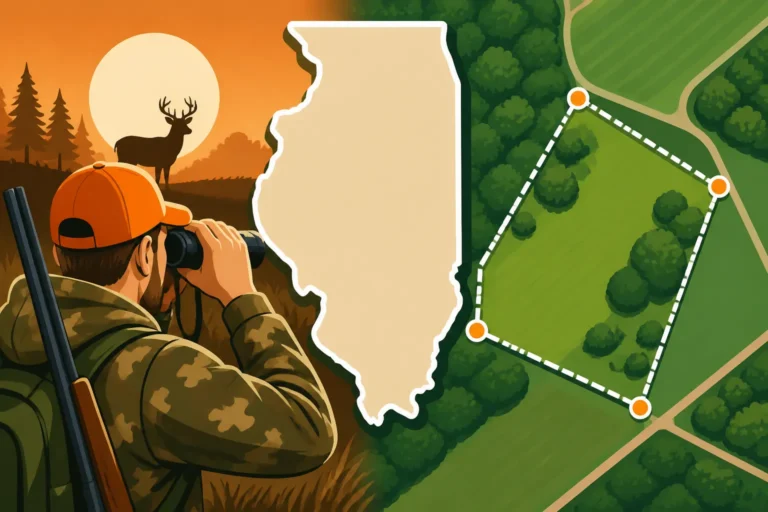
- Property Description: Be specific! Include the full address, county, and ideally a legal description or a parcel number. If possible, attach a map (like a screenshot from a mapping app) with the specific hunting area outlined. This prevents any confusion about boundaries, which is critical when hunting Central Illinois Farmland Deer where fields might be broken up by small woodlots.
- Dates of Permission: Specify the exact dates the permission is valid (e.g., "October 1, 2024, to January 15, 2025," or "during the entirety of the 2024-2025 Illinois Archery Deer Season").
- Species Allowed: Clearly state what you are permitted to hunt (e.g., "white-tailed deer," "wild turkeys," "squirrels").
- Method of Take: Indicate if you're allowed to use archery, firearm, or muzzleloader. This is especially important given Illinois's diverse seasons, including Muzzleloader Deer Hunting in Illinois.
- Specific Conditions/Restrictions: This is where the landowner can add any particular rules, such as:
- No vehicle access beyond a certain point.
- Specific entry and exit routes.
- Areas that are strictly off-limits (e.g., around the house, barns, or livestock fields).
- Whether guests are allowed and if they also need to be named on the permission slip.
- Rules regarding treestands, ground blinds, or trail cameras.
- What to do if a deer is harvested (e.g., contacting the landowner before retrieving).
- Signatures and Date: Both the landowner and the hunter should sign and date the document. This signifies mutual agreement to the terms.
Including these details leaves little room for doubt and provides a solid record for both parties. It shows professionalism on your part and offers peace of mind to the landowner.
Crafting Your Own Permission Slip
You don't need fancy legal software or a lawyer to draft a permission slip. A simple, clearly written document on a piece of paper can be perfectly effective. You can even create a basic template on your computer, print it out, and fill in the specifics when you meet with a landowner.
Here’s a basic structure you could use:
Hunting Permission Agreement
Date of Agreement: [Month Day, Year]
Landowner Information:
Full Name: [Landowner's Full Name]
Address: [Landowner's Address]
Phone: [Landowner's Phone Number]
Email: [Landowner's Email Address]
Hunter Information:
Full Name: [Hunter's Full Name]
Address: [Hunter's Address]
Phone: [Hunter's Phone Number]
Email: [Hunter's Email Address]
Illinois Hunter ID (if applicable): [Hunter ID]
Property Description:
I, [Landowner's Full Name], hereby grant [Hunter's Full Name] permission to enter and hunt on my property located at:
Street Address: [Property Street Address]
City, State, Zip: [City, IL Zip Code]
County: [County Name]
Legal Description/Parcel ID (if known): [Optional Parcel ID]
A map of the property outlining specific hunting areas may be attached.
Period of Permission:
This permission is valid from [Start Date] to [End Date] for the following hunting seasons: [e.g., Illinois Archery Deer Season, Spring Turkey Season].
Species Permitted:
[List of species, e.g., White-tailed Deer, Eastern Wild Turkey]
Methods of Take Permitted:
[List methods, e.g., Archery Equipment, Shotgun with Slugs, Straight-Wall Rifle]
Specific Conditions and Restrictions:
- [e.g., Hunter must park vehicles at designated area only.]
- [e.g., No hunting within 200 yards of occupied dwellings.]
- [e.g., Hunter must contact landowner upon harvesting an animal.]
- [e.g., No permanent treestands or ground blinds without express written consent.]
- [e.g., No guests allowed unless explicitly named on this agreement.]
Signatures:
Landowner Signature: ____________________________ Date: ___________
Hunter Signature: ____________________________ Date: ___________
Keep it concise but thorough. The simpler it is to read and understand, the better. Always ensure the landowner understands and agrees to all terms before they sign. Having a clear, signed document in hand can make all the difference, especially when you're Hunting Pressure on Illinois Public Land makes private access so valuable.
Here's a quick table summarizing key items:
| Category | Essential Information to Include | Why It Matters |
|---|---|---|
| Parties | Full Names & Contact Info for Landowner & Hunter | Establishes who is granting and receiving permission. |
| Property | Full Address, County, Parcel ID (if available), Map | Defines the exact area where hunting is allowed, preventing boundary disputes. |
| Duration | Specific Start and End Dates | Clearly states when the permission begins and expires. |
| Game | Permitted Species (e.g., deer, turkey, small game) | Avoids hunting species not authorized by the landowner. |
| Methods | Allowed Weapon Types (e.g., archery, shotgun, rifle) | Ensures compliance with landowner preferences and local ordinances. |
| Conditions | Parking, Off-Limit Areas, Guest Policy, Stand Rules | Sets clear boundaries and expectations, protecting both parties and property. |
| Authorization | Dated Signatures of Both Landowner and Hunter | Legally validates the agreement and confirms mutual understanding of the terms. |
Finding and Securing Private Land Access
So, you understand why written permission is so important. Now comes the exciting (and sometimes daunting) part: actually getting it. Many hunters feel uncomfortable approaching strangers, but with the right mindset and tools, it's absolutely doable.
Approaching Landowners Respectfully
This is perhaps the most crucial step. How you present yourself and approach a landowner can make or break your chances of getting permission. Here are some tips that have worked for many hunters in Illinois:
- Timing is Everything: Don't knock on doors during dinner time, early in the morning, or late at night. Weekday afternoons or early evenings are often best. Avoid hunting season openers when landowners might be busy with their own plans or already dealing with other hunters. Pre-season scouting visits are ideal.
- Appearance Matters: Dress presentably. You don't need a suit, but clean clothes and a tidy appearance convey respect. Leave your muddy hunting clothes at home.
- Be Polite and Clear: Introduce yourself, state your purpose directly but politely, and explain why you're interested in their property. "Hello, my name is [Your Name], and I'm a local hunter. I've noticed you have some beautiful timber behind your fields, and I was wondering if you ever allow respectful hunters to access it for deer."
- Offer Something in Return: This isn't always necessary, but it can help. Offer to help with chores, fix a fence, share some venison, or simply keep an eye on their property. Building a relationship is key.
- Be Prepared for "No": Not every landowner will grant permission, and that's okay. Respect their decision without arguing or pouting. A gracious "Thank you for your time, I understand" can leave a positive impression for future attempts or perhaps even a change of heart.
- Show Responsibility: Emphasize that you're a safe, ethical hunter who respects property and rules. Talk about your commitment to leaving no trace and strictly adhering to their wishes. This helps landowners overcome their natural apprehension about strangers on their land. Many of these principles apply whether you're asking for a simple day hunt or exploring options like Illinois Hunting Lease Costs for longer-term access. For more in-depth advice on this, you might find Knocking on Doors in Central Illinois Farm Country to be a helpful resource.
Leveraging Mapping Tools
In today's age, technology is a hunter's best friend when it comes to finding private land and identifying landowners. Tools like onX Hunt and GoHunt have revolutionized how we scout and acquire permission.
These mapping apps provide incredibly detailed aerial imagery, topographical maps, and, most importantly for private land access, property ownership data. You can zoom in on a promising piece of timber, see the exact property lines, and often identify the landowner's name and address. This means you can:
- Target Your Efforts: Instead of randomly knocking on doors, you can identify the specific parcels that look promising and whose owners you want to contact.
- Know Whose Land is Whose: This is huge. Imagine thinking a piece of woods belongs to one farmer, only to find out it's owned by someone else entirely. These apps prevent such embarrassing and potentially problematic mix-ups. This is crucial for understanding Illinois Trespass and Permission Law.
- Outline Boundaries Clearly: Once you have permission, you can use these apps to clearly mark the boundaries of the permitted area, share it with the landowner, and even track your own movements to ensure you don't accidentally cross onto unpermitted land. This level of precision benefits everyone.
- Identify Public vs. Private: Before you even consider asking for permission, these apps quickly show you what's public land and what's private. This saves you valuable time and prevents unnecessary approaches. It's a game-changer for scouting, whether you're looking for Shawnee National Forest Hunting or a small, overlooked private woodlot.
By combining respectful, direct communication with the powerful information provided by modern mapping technology, you significantly increase your chances of securing private land access and enjoying a successful, stress-free hunt in Illinois. Always remember, the best way to ensure future access for yourself and other hunters is to be an exemplary guest and leave the property in better shape than you found it.
Disclaimer
This article is for general informational purposes only and does not constitute professional advice. Laws, prices and regulations vary by location and change over time. Consult a qualified professional for guidance on your specific situation.