Finding Access Near Peoria
Hunting in central Illinois, especially around a city like Peoria, can feel like a daunting challenge. You're surrounded by productive farmland and beautiful timber, but it often seems like every inch is private, posted, or leased. It's enough to make any hunter feel a little discouraged when trying to find a spot to pursue game. This guide is here to cut through that frustration, offering realistic strategies and actionable advice for both public and private land access near Peoria, so you can spend less time searching and more time hunting.
Public Land Opportunities Near Peoria
When you think about hunting near a medium-sized city, public land might feel like a needle in a haystack. However, Illinois does offer some excellent, albeit often pressured, public hunting grounds within a reasonable drive of Peoria. The key is knowing where to look, understanding the specific rules, and being prepared to work a little harder than folks hunting vast tracts of national forest down south. Don't let the initial thought of crowds deter you; smart scouting and timing can make all the difference.
Local State Sites and Their Challenges
Within an hour's drive of Peoria, you'll find a few gems that offer public hunting, but they often come with a catch: popularity. Sites like Jubilee College State Park, just west of Peoria, offer deer, turkey, and small game hunting. However, these areas typically operate under specific site permits or quota hunts, especially for deer, meaning you can't just show up and hunt. You'll need to apply, sometimes months in advance, and hope your name is drawn. The competition for these permits can be stiff, as many local hunters are vying for the same limited opportunities.
Beyond the permit process, these local sites often see significant hunting pressure, particularly during opening weekends of various seasons. This means deer and turkey can become wary quickly, changing their patterns and moving into thicker, harder-to-reach cover. Small game, like squirrel and rabbit, might be more forgiving, but even they will adjust to human presence. Hunters need to be prepared for competition, and sometimes, that means walking further, hunting mid-week, or focusing on areas that others overlook. Always check the specific site regulations for areas like Jubilee or Woodford State Fish and Wildlife Area, as rules can vary greatly from statewide regulations, including hunter orange requirements, weapon restrictions, and open hunting days.
Larger Regional Preserves and Forests
Venturing a bit further from Peoria can open up more expansive public land options, though you'll be extending your drive. Areas like Snakeden Hollow State Fish and Wildlife Area, located southwest of Peoria, offer a mix of habitat including reclaimed strip mine land, timber, and water bodies, providing diverse opportunities for deer, turkey, and waterfowl. Similarly, Banner Marsh State Fish and Wildlife Area near Glasford is a premier waterfowl destination, though it also hosts limited deer and upland game hunting. These sites often require specific applications or check-in procedures, especially for popular species like waterfowl, which might involve a daily lottery draw.
The advantage of these larger regional sites is that they can sometimes absorb more hunting pressure than smaller local parks. While still popular, their size and varied terrain might allow for more diffusion of hunters, creating opportunities to find quieter spots. You might need to hike deeper into the property, navigate dense cover, or utilize a boat for waterfowl access, but the reward can be a more immersive and successful hunting experience. Keep an eye on the Illinois DNR website for detailed maps and specific rules for these sites, as well as application deadlines for any special hunts. Understanding the terrain and how game might move through it is crucial for success on these larger, more complex properties. Illinois State Fish and Wildlife Areas are critical resources to explore.
Navigating Illinois Fish and Wildlife Areas
Illinois boasts an impressive network of Fish and Wildlife Areas (FWAs), many of which offer public hunting opportunities. For hunters near Peoria, these sites can be a lifeline, providing access to diverse habitats and game species. However, successfully navigating them requires more than just showing up. You need to understand the nuances of their management, the permit systems, and how to scout effectively to find success.
Understanding Site-Specific Rules and Permits
One of the biggest hurdles for hunters on Illinois FWAs is the sheer variety of rules. While statewide regulations set a baseline, almost every FWA has its own set of site-specific regulations that can dictate everything from hunting hours and legal weapons to permit requirements and daily check-in/check-out procedures. For example, some sites might allow archery deer hunting with an over-the-counter permit, while others require a special site-specific permit drawn in a lottery. Waterfowl hunting on many FWAs involves a daily draw for blind sites, which can be fiercely competitive during peak migration.
It's absolutely critical to research each FWA individually before planning your hunt. The Illinois DNR website is your best friend here. Navigate to the specific FWA you're interested in, and look for their fact sheet or public hunting rules document. These will detail open seasons, legal species, required permits, and any special conditions like mandatory harvest reporting at a check station or blaze orange requirements beyond statewide norms. Failing to understand these rules can not only lead to a frustrating experience but also potential violations. Think of it as studying for a test – the more you know the rules, the better your chances of a successful and legal hunt. Remember to always carry proof of your licenses and permits, just in case. Using the Illinois DNR Map Tool can help you find these sites and their associated information.
Finding Less-Pressured Pockets
Public land, by its nature, attracts hunters. This is especially true for popular FWAs within a reasonable drive of population centers like Peoria. While you can't entirely escape pressure, you can employ strategies to find less-pressured pockets within these sites. The most common advice is to "walk further," and it's true. Most hunters won't venture more than a quarter or half-mile from a parking area or access road. If you're willing to put in the miles, especially through dense cover or over challenging terrain, you're more likely to find areas where game feels safer and sees fewer human encounters.
Another strategy is to identify overlooked habitats. Are there small, isolated woodlots surrounded by marsh? Are there steep, brushy ravines that are difficult to access? Often, these areas hold pockets of deer or turkey that escape the main flow of hunting pressure. Scouting outside of hunting season, using aerial maps, and even on foot, can help you identify these hidden gems. Pay attention to wind direction, terrain features, and potential bottlenecks. For waterfowl, consider less obvious water bodies or field edges that might not have traditional blind setups but could hold birds on certain days. Being adaptable and thinking outside the box can lead to surprising success on pressured public land. Don't be afraid to try a new approach; sometimes the road less traveled really does lead to better hunting. Hunting Pressure on Illinois Public Land is a constant, so finding these pockets is key.
The Art of Knocking on Doors: Private Land Access
In central Illinois, where agriculture dominates the landscape, private land holds the vast majority of prime hunting opportunities. While public land offers a starting point, gaining access to private property can unlock incredible experiences and significantly reduce hunting pressure. However, securing permission requires more than just showing up; it’s an art form that blends respect, persistence, and a genuine connection with landowners.
Approach and Etiquette for Landowners
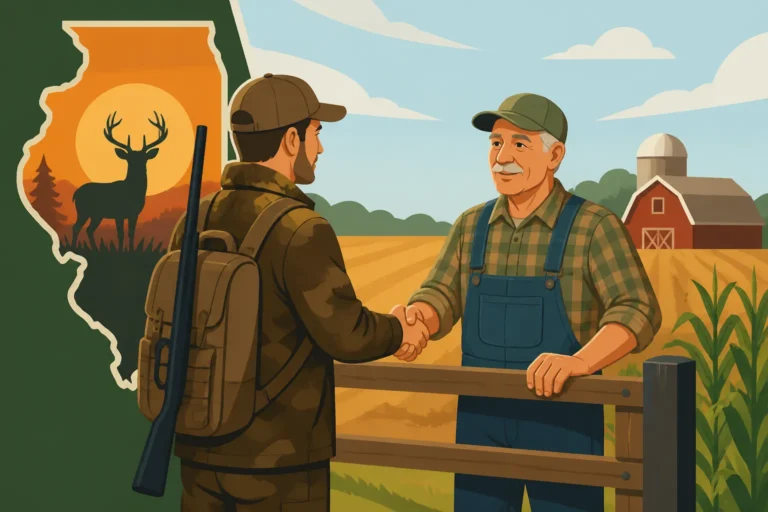
Approaching a landowner about hunting permission can feel intimidating, but a respectful, well-thought-out approach is key. First and foremost, choose your timing wisely. Avoid planting or harvest seasons when farmers are incredibly busy and stressed. Weekday afternoons or evenings, or a quiet Saturday morning, tend to be better. Always dress neatly and presentably – this isn't the time for your camo and hunting gear. Be polite, introduce yourself clearly, and state your purpose directly but respectfully. Something like, "Hello, Mr./Ms. [Last Name], my name is [Your Name], and I live nearby. I was wondering if you ever allow respectful hunters on your property for [specific game, e.g., deer/squirrel]?"
Be prepared for "no," and accept it graciously if that's the answer. A "no" today doesn't mean a "no" forever. If they say yes, clarify the terms: where you can hunt, when, what species, and where to park. Ask about fences, gates, and any specific areas they want you to avoid. Emphasize that you will treat their land with the utmost respect, leave no trace, and be mindful of their property and livestock. Offering to share a portion of your harvest, if successful, can also be a nice touch, but only if it feels natural and appropriate to the conversation. Remember, you are a guest on their land, and your behavior directly reflects on future opportunities. This is especially true for Knocking on Doors in Central Illinois Farm Country.
Offering Value Beyond a Thank You
Once you've secured permission, maintaining that relationship is paramount. Don't just show up, hunt, and disappear until next season. Landowners, especially those with larger properties, often appreciate an extra set of hands. Offering to help with chores like mending fences, clearing brush, checking on livestock, or even assisting during planting or harvest season can build immense goodwill. Even small gestures, like stopping by to chat for a few minutes, dropping off a box of donuts, or offering them some venison from your successful hunt, can go a long way.
Think about the problems a landowner might face. Feral hogs, for example, are a nuisance in some parts of Illinois and cause significant crop damage; offering to help control them could be a huge benefit. Illinois Feral Hog Regulations allow for year-round hunting on private land with landowner permission. By becoming a trusted helper rather than just a hunter, you move from a temporary guest to a valued friend. This builds a strong, reciprocal relationship that often lasts for years, securing invaluable hunting access and fostering community spirit. The goal is to make them want you on their property.
Leveraging Technology for Land Scouting
In today's hunting world, technology isn't just a convenience; it's a game-changer. For hunters trying to find access near Peoria, digital tools can dramatically reduce the time spent driving around aimlessly and increase the effectiveness of your scouting efforts, whether you're eyeing public parcels or researching private ground.
Mapping Tools for E-Scouting
Modern mapping applications are arguably the most powerful tools in a hunter's arsenal. Platforms like onX Hunt and GoHunt allow you to "e-scout" from your couch, identifying property boundaries, public land ownership, and crucial topographical features without ever setting foot in the woods. You can switch between satellite imagery, topographic maps, and even 3D views to get an unparalleled understanding of the landscape. Near Peoria, where private land is dominant, these apps are invaluable for quickly identifying public access points, even small, overlooked parcels that might be landlocked or difficult to discern from ground level.
These tools let you pinpoint potential bedding areas, food sources, pinch points, and travel corridors. You can mark waypoints for future stand locations, plan routes to avoid alerting game, and measure distances to better understand the scale of the terrain. Moreover, onX Hunt specifically provides property owner information in many areas, which can be a vital first step for those considering knocking on doors for private land permission. Imagine identifying a prime piece of timber next to a standing cornfield, knowing exactly whose land it is, and having the ability to approach them informed. This level of detail empowers you to make smarter decisions and spend your precious time more efficiently in the field. Reading Aerial Photos for Southern Illinois Deer can be adapted to any region, highlighting the importance of e-scouting.
DNR Resources and Online Portals
Beyond commercial mapping apps, the Illinois Department of Natural Resources (IDNR) provides a wealth of online resources that hunters often overlook. The IDNR website features interactive maps detailing public hunting sites, including Fish and Wildlife Areas, State Parks, and other managed properties. These maps frequently offer specific boundary lines, parking areas, and even site-specific regulations. While they may not have the granular detail of a premium mapping app, they are the authoritative source for official public land information.
The IDNR also maintains online portals for purchasing licenses and permits, applying for lottery hunts (especially crucial for deer and turkey around Peoria), and checking harvest statistics. These statistics can give you an idea of overall game populations and hunting success in specific counties or regions, helping you decide where to focus your efforts. Don't forget about the Illinois DNR's mobile app, which can often be used to view maps and even check game from the field, even if cell service is spotty. Combining these official resources with detailed mapping tools gives you a comprehensive picture of your hunting opportunities and obligations near Peoria.
Beyond Deer: Other Game Near Peoria
While white-tailed deer often capture the spotlight for Illinois hunters, especially those chasing big bucks in central Illinois, the Peoria area offers a much broader spectrum of hunting opportunities. Diversifying your pursuits not only extends your time in the field but can also reveal less-pressured hunting grounds and unique experiences. Sometimes, the best way to find access isn't to chase the most popular game.
Small Game Potential in the Peoria Area
If deer season feels too crowded or permission for private land seems elusive, consider the rewarding world of small game. Squirrel, rabbit, and pheasant hunting can offer fantastic experiences, often with more accessible public land options or easier private land permission. Many landowners who might be hesitant to allow deer hunters will readily grant permission for squirrel or rabbit hunting, especially if those animals are seen as a nuisance or simply an underutilized resource.
Around Peoria, you'll find ample habitat for squirrels in timbered creek bottoms, woodlots, and mature oak-hickory stands. Rabbit populations thrive in brushy fencerows, field edges, and overgrown pastures. Hunting small game often requires less specialized gear and can be a great way to introduce new hunters to the sport. Squirrel and Small Game Hunting in Illinois provides a great overview. Pheasant hunting, while primarily confined to stocked areas or remnant wild populations in specific grass cover, can still be found on some public sites and private land. These hunts can also be excellent training grounds for hunting dogs, adding another layer of enjoyment to the experience. Don't underestimate the deliciousness of a squirrel stew or fried rabbit!
Waterfowl Hotspots and Considerations
The Illinois River, a stone's throw from Peoria, is a major artery of the Mississippi Flyway, making the area a prime location for waterfowl hunting. Ducks and geese utilize the river, its backwaters, and surrounding agricultural fields during their migration. While public land opportunities like Banner Marsh State Fish and Wildlife Area are world-renowned, they are also highly competitive and often require a daily lottery draw for blind sites.
However, many smaller backwater sloughs, private ponds, and agricultural fields along the river corridor can offer excellent waterfowl hunting. Gaining permission for these private spots can sometimes be easier than for deer, particularly if you offer to help manage goose populations or alleviate crop damage. Learning to read the river, understanding migration patterns, and adapting to changing water levels are crucial for success. Waterfowl Hunting the Illinois River Valley is a deep dive into this particular pursuit. Whether you're setting out decoys in a flooded timber hole or calling geese into a cut cornfield, the thrill of waterfowl hunting on the Illinois River cannot be overstated. It’s a completely different challenge and reward than deer hunting and a fantastic way to enjoy the hunting season near Peoria.
Respecting the Land and Your Fellow Hunters
Hunting in any area, especially near populated centers like Peoria, comes with a responsibility to both the land and the people around you. Ethical conduct, environmental stewardship, and respectful interactions are not just good practice; they are essential for preserving hunting opportunities for everyone.
Minimizing Your Impact and Leaving No Trace
The principle of "Leave No Trace" is fundamental to responsible hunting. This means packing out everything you pack in, and then some. Don't leave spent shell casings, food wrappers, or any other trash on public or private land. This includes not leaving behind flagging tape, stand accessories, or gut piles in highly visible areas. If you hang a tree stand, make sure it's removed at the end of the season according to site-specific regulations or landowner agreements. When scouting or hunting, avoid damaging crops, fences, or natural vegetation. Stay on designated trails or follow agreed-upon routes on private land.
When processing game in the field, choose a discreet location away from trails or public view. If you're on public land, be especially mindful of other users like hikers, bird watchers, or photographers. Our actions as hunters directly influence public perception. By leaving the land better than you found it, you not only respect the environment but also bolster the image of responsible hunters in the community. This diligence helps ensure that future generations will have similar access and opportunities.
Interacting with Other Hunters and Non-Hunters
Hunting close to a city means you're more likely to encounter other people, both hunters and non-hunters. Courtesy and clear communication are vital. If you encounter another hunter on public land, a simple nod or friendly "Good morning" is usually sufficient. Avoid encroaching on someone else's setup or getting into heated arguments over hunting spots. If a situation arises, try to de-escalate and find a peaceful resolution. Remember, everyone is out there to enjoy their experience. For example, knowing Illinois Public Land Hunting Hours can help avoid conflicts.
When it comes to non-hunters, whether they are hikers, dog walkers, or property owners adjacent to your hunting grounds, maintaining a positive image is crucial. Be visible, especially by wearing appropriate hunter orange, and be polite if approached. Answer questions respectfully, and avoid confrontational behavior. Education and positive interactions can go a long way in bridging the gap between hunting and non-hunting communities. Our collective future as hunters depends on demonstrating that we are responsible, respectful, and an integral part of wildlife conservation.
Public vs. Private Land Hunting Near Peoria
Choosing between public and private land near Peoria involves weighing various factors. Here's a quick comparison to help you strategize your hunt:
| Feature | Public Land (e.g., FWAs, State Parks) | Private Land (with permission) |
|---|---|---|
| Availability | Defined, limited acreage; often permit/draw based | Vast majority of land in central Illinois; requires permission |
| Hunting Pressure | Generally high, especially near parking/access roads | Varies greatly; usually lower if exclusive access granted |
| Species Diversity | Good, but specific rules apply per site | Excellent, if habitat is suitable and landowner permits |
| Permit/Cost | Often requires specific site permits, state license, habitat stamp | State license, habitat stamp; no land-use fee (if permission is free) |
| Flexibility | Highly restricted by site-specific rules, hours, dates | More flexible, determined by landowner agreement |
| Scouting | Critical for finding unpressured areas | Critical for understanding game movement and landowner expectations |
| Relationship | N/A (with land itself) | Essential for long-term access and goodwill |
| Gear Required | Often minimal, but check site-specific rules (e.g., ATV rules) | As needed; sometimes can include landowner equipment (e.g., tractor help) |
This comparison highlights why many hunters eventually seek private land access, but it also shows the importance of understanding the public land opportunities that do exist. Both require effort, but the type of effort differs significantly. Illinois Hunting Licenses and What They Cost regardless of whether you're on public or private ground.
Disclaimer
This article is for general informational purposes only and does not constitute professional advice. Laws, prices and regulations vary by location and change over time. Consult a qualified professional for guidance on your specific situation.