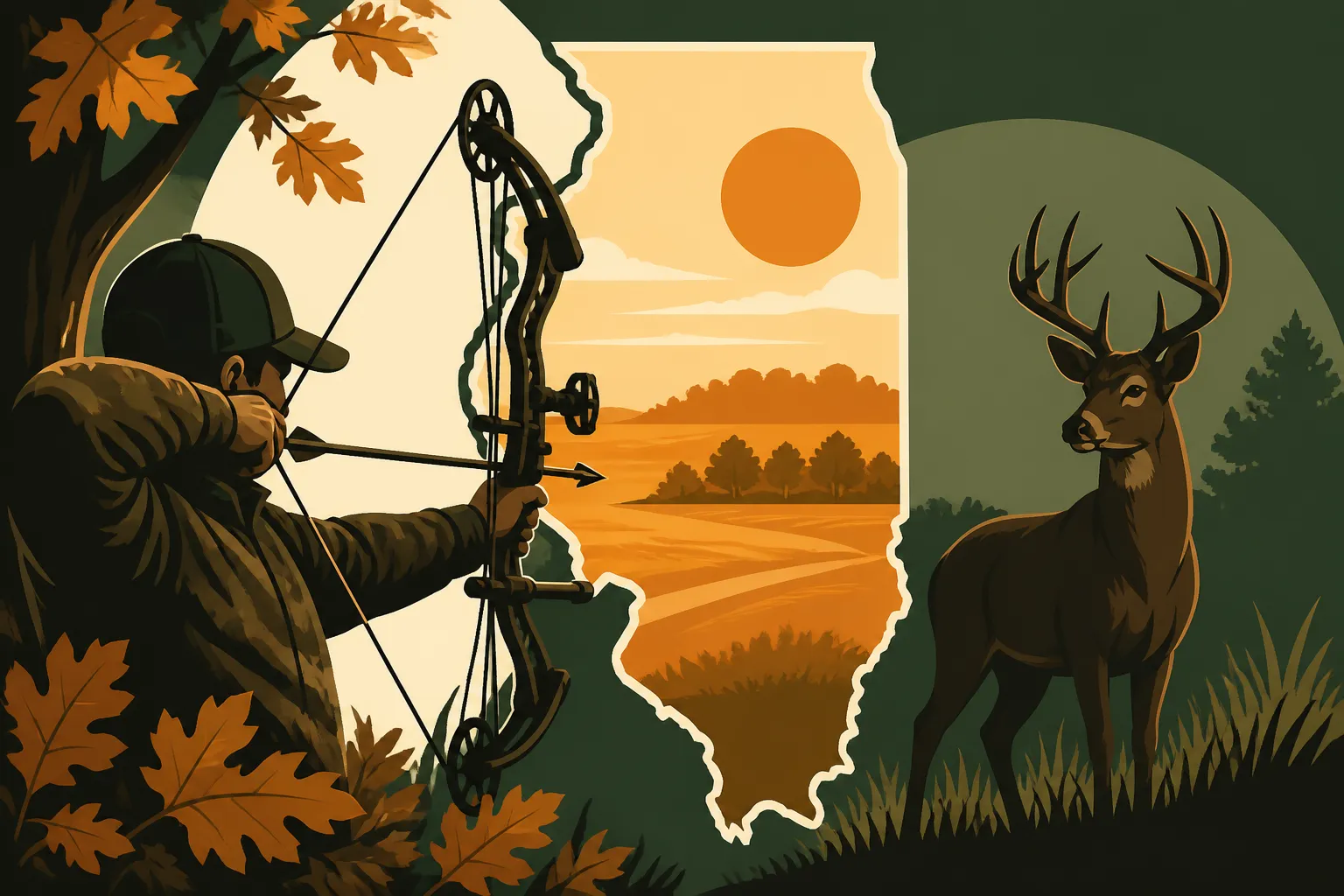
Bowhunting Illinois’s Long Archery Season
The sheer length and diverse conditions of Illinois's archery season, stretching from early fall into the bitter depths of winter, can leave many bowhunters feeling overwhelmed and unsure how to consistently find success. It's tough to stay motivated and adapt your tactics as the deer's behavior shifts dramatically with each passing month. This comprehensive guide aims to demystify Illinois bowhunting, breaking down the season into actionable phases, offering tactical advice, and providing insights into gear and scouting to help you capitalize on every opportunity, from that hopeful opening day to the very last minute of the late-season close.
Understanding Illinois's Generous Archery Season Structure
Illinois truly offers a marathon for bowhunters, a season that spans over four months, from October 1st all the way through January 14th. This extended window is a blessing, but it also presents unique challenges. You're not just hunting "deer season"; you're hunting multiple seasons within one, each with its own rhythm and set of tactical demands. Navigating the various permits, understanding when certain weapons are legal, and knowing the reporting requirements are crucial first steps for any bowhunter, resident or nonresident, looking to chase whitetails across the Prairie State.
Key Dates and Permit Information
The Illinois archery season kicks off on October 1st, a date circled in red on countless calendars, and runs until January 14th of the following year. This long stretch means hunters need to be prepared for everything from warm, early-fall conditions to frigid, snowy winter days. During this period, both vertical bows (recurve and compound) and crossbows are legal. For those wondering about the specifics, Illinois has clear guidance on Crossbow Rules During Illinois Archery Season, ensuring everyone understands the equipment requirements.
When it comes to permits, residents typically obtain an Illinois hunting license along with an Archery Deer Permit, which often includes both an antlered-deer tag and an antlerless-only tag. Nonresidents face a slightly different process and higher fees, and often need to apply well in advance, sometimes even in the summer, to secure their desired permits. It's always a good idea to check the IDNR website for the most current information regarding permit availability and application deadlines. For instance, understanding the Illinois Resident Archery Deer Permit Cost is essential for budgeting your season. Remember, you're responsible for knowing the rules, so a quick double-check before the season opens can save a lot of headaches later.
Reporting Requirements and Legal Weapons
Harvest reporting is mandatory in Illinois. Every deer taken, whether by bow or firearm, must be reported to the Illinois Department of Natural Resources (IDNR) by 10 PM on the same day it was harvested. This can usually be done online through the IDNR website or by phone. It's a critical step that helps biologists manage the herd and ensures accurate data collection for future seasons. Failing to report a harvest is a violation, so make it a habit the moment your deer is down and recovered.
As for legal weapons, during the archery season, vertical bows (compound and recurve) and crossbows are permitted. There are no minimum draw weight requirements for vertical bows, but broadheads must be at least 7/8 inch wide. Crossbows must have a minimum draw weight of 100 pounds and a working safety. Mechanical broadheads are widely accepted, provided they meet the minimum width when deployed. It's always best practice to confirm your equipment meets all legal specifications before heading into the field. This clarity allows hunters to confidently choose the right tool for their individual hunting style and physical capabilities throughout the long season.
Early Season Strategies: Capitalizing on Summer Patterns
The early season, primarily October, is a time of transition and often frustration for bowhunters. Deer are still largely operating on their summer patterns, heavily reliant on readily available food sources, and daylight movement can be minimal. Hunters often feel the pressure to fill a tag quickly, but patience and a deep understanding of early-season deer behavior are far more effective than aggressive tactics. This period is prime for observing and adapting, laying the groundwork for later success.
Focusing on Food Sources and Water
In October, deer are primarily focused on food, and their patterns are largely dictated by the availability of acorns, standing crops like soybeans and corn, and lush green fields. White oaks are often the first to drop their acorns, becoming immediate deer magnets. Scouting for fresh acorn sign – chewed caps, tracks, and droppings – around white oak stands can pinpoint early season hotspots. As October progresses, red oaks will start dropping, offering a sustained food source.
Beyond acorns, standing agricultural fields are crucial. Deer will often bed in thick cover nearby and filter into bean fields in the evenings. If you have access to private land with standing beans or corn, setting up along the edges or in strategic transition zones can be incredibly effective. On public land, identifying natural clearings or areas with abundant soft mast (persimmons, wild grapes) can provide similar opportunities. Water sources, especially during warmer early-season days, are also key. A small pond or creek often becomes a natural hub for deer activity, offering a chance for a mid-day drink before they head back to bedding or food.
Minimizing Pressure and Scouting Smarter
One of the biggest mistakes early-season bowhunters make is putting too much pressure on prime spots. Deer are still relatively unpressured at this point, and any perceived threat can quickly push them nocturnal or off your property entirely. It's often wiser to ease into the season with less intrusive scouting and hunting methods. Think about setting trail cameras on low-impact routes or observing from a distance with binoculars. Use a mapping tool like GoHunt to analyze aerial photos for hidden travel corridors or thick bedding areas before ever stepping foot in the woods.
When you do hunt, consider your entry and exit routes meticulously. Try to approach your stand when deer are least likely to be in the area, and leave discreetly. Thermal currents can be tricky in early fall; remember that thermals often rise in the morning and fall in the evening. Understanding Wind and Thermals on a Southern Illinois Ridge can be critical for stand placement, ensuring your scent doesn't blow into bedding areas. Focus on catching deer in transition, moving from bedding to feeding, rather than trying to get right on top of their beds. The goal is to observe and learn without alerting them to your presence, preserving those spots for later in the season.
Pre-Rut and Rut Tactics: High-Stakes Hunting in October and November
This is what many bowhunters live for – the exhilarating, often unpredictable, chaos of the pre-rut and the full-blown rut. In Illinois, these periods generally span from late October through mid-November, offering the best chance to encounter mature bucks on their feet during daylight hours. Deer behavior shifts dramatically from the early season's food-focused patterns to a single-minded pursuit of does. This is when aggressive tactics, perfectly timed calls, and strategic stand placements can truly pay off.
Capitalizing on Scrapes and Rubs
As testosterone levels rise in bucks, they begin to leave more visible signs of their presence and dominance: rubs and scrapes. Rubs, where bucks strip bark from trees with their antlers, are signposts that indicate a buck's travel route and aggression. While fresh rubs are exciting, it's often more productive to focus on areas with clusters of rubs or "rub lines" that show consistent buck travel over time. These pathways can often lead you to staging areas or funnels that bucks use as they cruise for does.
Scrapes are even more telling. These patches of bare earth, typically under a licking branch, are communication hubs where bucks deposit scent from their forehead glands and urine. Active scrapes, especially large "community scrapes" used by multiple deer, are goldmines. Rather than hunting directly over a scrape, which can be hit-or-miss, focus on setting up downwind of it, or along a primary travel corridor leading to or from the scrape. The buck may check the scrape from a distance, or does may be drawn to it, attracting bucks. Using rattling and grunting calls effectively near these areas can draw curious bucks in for a closer look, especially when you understand Rattling Volume in Thick Cover or Grunt Calls in Mature Illinois Timber.
Stand Placement and Calling Strategies During the Rut
During the rut, bucks abandon their cautious, nocturnal habits and become much more active, covering significant ground in search of receptive does. This heightened activity makes travel corridors, pinch points, and natural funnels incredibly effective places to set up. Think about saddles on ridges, creek crossings, fence lines, and strips of timber connecting larger woodlots. These are areas where deer are naturally funneled into a smaller area, increasing your odds of an encounter. For example, understanding how to hunt Hunting a Funnel Between Two Woodlots can drastically improve your success.
Calling can be a game-changer during the rut. Grunt calls can attract cruising bucks, especially if you mimic a tending grunt from a buck chasing a doe. Rattling antlers, simulating two bucks fighting, can draw in dominant bucks eager to assert their territory. Decoys, particularly a buck or doe decoy, can also be effective, drawing a buck in for a confrontation or a closer look. However, always be mindful of hunting pressure and the specific buck you're targeting. Over-calling or using a decoy in highly pressured areas might spook deer. The peak rut in Illinois often occurs around Hunting the Rut in Early November, a time when intense calling sequences can be most effective. Patience, observation, and an understanding of how deer respond to various calls in your specific hunting area will be key.
Late Season Challenges and Opportunities: December and January Persistence
As November fades and winter takes hold, Illinois bowhunters face a new set of challenges and, surprisingly, some excellent opportunities. The late season, from December through the January 14th close, is often characterized by colder temperatures, snow, and a drastic shift in deer behavior. The rut is over, deer are exhausted, and their focus returns almost entirely to survival: finding reliable food sources and conserving energy. Many hunters hang up their bows, but for the persistent few, this can be a truly rewarding time to fill a tag.
Finding Reliable Food Sources in Winter
The late season is all about food. With natural browse diminishing and most crops harvested, deer will concentrate heavily around the few remaining high-energy food sources. Standing corn or soybean fields that have been left unharvested are absolute magnets. Farmers who leave strips of corn or beans can create incredible late-season hunting opportunities. If you have access to such fields, scouting for heavy traffic entering and exiting them is paramount.
Additionally, food plots specifically designed for late-season hunting, such as standing brassicas, winter wheat, or clover, can draw deer from a wide area. Even subtle food sources like remaining acorns under snow, or browse in sheltered areas, can be critical. Hunters need to be diligent in their scouting, often needing to walk fields or use mapping tools like GoHunt to locate these critical late-season buffets. Identifying Late-Season Food Sources for Illinois Whitetails is the single most important late-season tactic, dictating where deer will be spending their limited daylight hours.
Adapting Tactics to Cold Weather and Pressure
Cold weather changes everything. Deer need to consume more calories, and they become highly efficient with their movements. Expect shorter, more intense feeding windows, often closer to midday as temperatures rise slightly. Bedding areas will shift to thick, south-facing slopes or dense thermal cover that offers protection from biting winds and captures what little sunlight there is. This is where Hunting the Late-Season December Lull requires a different approach.
Your own gear needs to adapt too, with layering being key to staying warm and comfortable during long sits. Ground blinds can be incredibly effective in the late season, offering warmth and concealment, especially when hunting field edges. Consider Using a Ground Blind on Illinois Public Land for static sits near prime food sources. Hunting pressure has usually waned significantly by this point, which can make deer a bit more relaxed, but they are also incredibly wary. Focus on ambushing deer as they move from bedding to feeding, choosing stand sites that offer a clear shot and a quiet, scent-controlled approach. Early morning and late afternoon sits can be productive, but don't overlook midday as deer often move more in the warmer parts of the day.
Essential Gear for Illinois Bowhunters: From Broadheads to Blinds
Having the right gear isn't about buying the most expensive items; it's about having reliable equipment that performs when it counts and is suited to the diverse conditions you'll encounter during Illinois's long archery season. From the small but critical components like broadheads to larger investments like treestands and optics, each piece plays a role in your success and safety.
Bows, Broadheads, and Arrows
First and foremost, your bow setup needs to be meticulously tuned. Whether you shoot a compound, recurve, or crossbow, consistent accuracy is paramount. Regular practice, not just before the season but throughout, is essential. Ensure your peep sight is aligned, your rest is tuned, and your arrows are flying true. For compounds, a draw weight that you can comfortably and repeatedly hold and shoot accurately is far more important than maxing it out. Crossbow hunters should also practice regularly, confirming their scope is dialed in for various distances.
Broadheads are often debated among bowhunters, but reliability and sharpness are universal requirements. Fixed-blade broadheads offer incredible penetration and durability, while mechanical broadheads provide a larger cutting diameter and potentially better flight characteristics if your bow isn't perfectly tuned. Regardless of your choice, ensure your broadheads are razor sharp and match your arrow weight and spine for optimal flight. Carry at least three sharp broadhead-tipped arrows in your quiver, and consider a small broadhead wrench or sharpener for field adjustments.
Optics, Scent Control, and Stands
Good optics are invaluable. A quality pair of binoculars (8×42 or 10×42 are common choices) can save you countless steps by allowing you to scout and identify deer from a distance, especially crucial in early season or when hunting pressured public land. A rangefinder is non-negotiable for ethical bowhunting, allowing you to confidently know the exact distance to your target.
Scent control is a constant battle, but it's particularly important when deer are less mobile and more wary. Invest in quality scent-eliminating sprays, wash your hunting clothes in scent-free detergent, and store them in airtight containers. Consider using an ozone generator in a scent-proof bag to refresh your clothes before a hunt. While you can never be "scent-free," minimizing your odor significantly increases your odds.
Finally, your choice of stand depends heavily on your hunting style and the land you hunt. Mobile public land hunters often rely on lightweight climbers or hang-on stands with a good set of climbing sticks. These allow flexibility to adapt to changing deer patterns. Private land hunters might utilize ladder stands or strategically placed ground blinds, especially for late-season sits. Always prioritize safety, using a full-body harness with every elevated hunt. Knowing how to create Treestand Setups in Shawnee National Forest or selecting the right blind for Brushing In a Blind on a Field Edge are skills that pay dividends.
Scouting and E-Scouting for Illinois Whitetails
The most successful bowhunters are often the best scouts. You simply can't consistently put yourself in front of mature deer without understanding their movements, habits, and preferences. In Illinois, where deer densities vary and pressure can be high, effective scouting is not just a seasonal activity; it's a year-round commitment. Modern technology, combined with boots-on-the-ground effort, has revolutionized how we approach this critical aspect of hunting.
Year-Round Scouting Strategies
Scouting doesn't stop when the season closes. Post-season is an ideal time to assess your season's successes and failures. With leaves off the trees, you can easily identify travel corridors, bedding areas, and overlooked pinch points that were hidden by foliage. This is also a great time to shed hunt, which can tell you a lot about the quality of bucks in an area and their wintering grounds.
Spring and summer scouting focus on observing deer movements without disturbance. Set up trail cameras on mineral sites or early season food plots to get an inventory of bucks. Pay attention to how deer use different parts of the landscape as crops grow and new food sources become available. Observing deer from a distance with good optics can reveal consistent patterns you can exploit come October. Even checking old logging roads for Scrape Lines Along a Logging Road in the off-season can inform future stand locations. Pre-season scouting in late summer helps you pinpoint initial food sources and confirm that bucks are still in the area before the season opener, helping you plan for When Illinois's Archery Season Opens.
Leveraging Technology: Mapping Tools and Trail Cameras
E-scouting has become an indispensable tool for Illinois bowhunters. Platforms like GoHunt offer detailed satellite imagery, topographic maps, and public/private land ownership overlays. You can mark potential bedding areas, identify funnels, trace likely travel routes, and plan your entry and exit strategies all from your computer or phone. This is particularly valuable for Reading Aerial Photos for Southern Illinois Deer where terrain features heavily influence deer movement. Before you ever step foot on a new piece of public land, GoHunt can help you understand the lay of the land, identify potential water sources, and pinpoint areas that might hold deer.
Trail cameras, used responsibly and legally, are another powerful scouting tool. Strategically place cameras on scrapes, food plot edges, or along known travel corridors to monitor deer activity. Time-stamped photos provide invaluable data on when deer are moving and which bucks are present. Cellular trail cameras can provide real-time updates, allowing you to react quickly to changing patterns. Just remember to check regulations regarding trail camera use on public land, as some areas may have restrictions. When placing cameras, consider factors like wind direction and potential human intrusion to avoid spooking deer.
Public vs. Private Land: Navigating Access and Pressure
Hunting in Illinois, whether you're chasing trophy bucks or just looking to fill your freezer, often boils down to a fundamental choice: public land or private land. Each comes with its own set of advantages and challenges, particularly when it comes to managing deer behavior and hunter pressure during a long archery season. Understanding how to approach both scenarios is vital for consistent success.
Strategies for Public Land
Illinois offers a surprising amount of public hunting land, from expansive areas like the Shawnee National Forest in the south to numerous State Fish and Wildlife Areas scattered across the state. The biggest challenge on public land is often hunter pressure. During archery season, especially in October and November, popular spots can see a lot of activity. To succeed, you need to find areas that other hunters overlook or are unwilling to access. This often means walking further, getting off the beaten path, and exploring dense, overlooked pockets of cover.
Utilizing mapping tools like GoHunt to find remote corners, steep ravines, or swampy areas that deter others is key. Focus on areas where deer feel safe, often in dense thermal cover or thickets that provide security. Don't be afraid to Hunting Shawnee Hills Ridgelines or other rugged terrain where fewer hunters venture. Adaptability is crucial on public land; be prepared to move your stand frequently based on current sign and observed pressure. Early season on public land might mean focusing on transition areas near agriculture, while the rut could shift your focus to thicker bedding cover and cruising lanes away from main trails. Always respect property boundaries and be aware of other hunters.
Securing and Maximizing Private Land Access
Access to private land can dramatically increase your chances of success, especially for mature bucks that often gravitate towards less pressured areas. However, securing permission requires effort and respect. Start by knocking on doors in rural areas, politely introducing yourself, and asking permission to hunt. Be prepared to offer something in return, such as helping with chores, sharing venison, or assisting with property maintenance. Building a good relationship with landowners is paramount; it's about trust and mutual respect. For more detailed advice, check out Asking an Illinois Farmer for Permission.
Once you have private land access, you have more control over pressure and habitat. You can implement year-round food plot strategies, hinge-cutting for bedding, and strategically place stands and blinds without worrying about other hunters. Even a small tract of private land can be incredibly productive if managed well. Consider allowing the land to "rest" by not over-hunting certain areas, keeping deer patterns more natural. Utilize trail cameras to monitor activity without disturbing the property. Private land offers the opportunity to truly pattern specific deer and implement long-term strategies, giving you an edge throughout the marathon Illinois archery season.
Staying Mentally Tough: The Marathon of Illinois Bowhunting
Bowhunting Illinois's long archery season is as much a mental game as it is a physical one. From the early season heat and mosquito bites to the late-season bitter cold and snow, staying motivated, patient, and persistent is a continuous challenge. Deer behavior is constantly changing, weather conditions can be brutal, and the inevitable lulls in activity can test even the most seasoned hunter's resolve.
Overcoming Frustration and Burnout
It's completely normal to feel frustrated when you're putting in hours in the stand without seeing the deer you want, or when a mature buck slips by out of range. The key is to manage these feelings and prevent burnout. One effective strategy is to break the season down into smaller, more manageable segments. Instead of thinking of it as a 3.5-month grind, focus on each phase: early season, pre-rut, rut, post-rut, and late season. Each phase presents new opportunities and challenges, keeping things fresh.
Another tip is to diversify your hunting experiences. If the deer aren't moving, consider spending a day scouting new areas, checking trail cameras, or even pursuing small game like squirrels or rabbits (where seasons overlap and legal) to stay engaged in the outdoors. Sometimes, a break from the intense focus on deer can actually recharge your mental battery. Remember that hunting is about the experience, not just the kill. Enjoy the sunrise, the sounds of nature, and the challenge of the chase. This mental fortitude is what separates truly persistent hunters from those who quit when the going gets tough.
Maintaining Motivation Through the Long Haul
Motivation often wanes in the face of slow action or changing conditions. To combat this, set realistic expectations for each phase of the season. Early season might be more about observation and doe harvest, while the rut offers a higher chance for a buck. Late season is about finding food and enduring the cold. Celebrate small victories, whether it's patterning a new buck, discovering a promising new travel corridor, or simply enjoying a beautiful day in the woods.
Lean on your hunting partners or a strong hunting community for support and shared experiences. Discuss strategies, share stories, and encourage each other. Keeping a hunting journal can also be a powerful tool, allowing you to track deer sightings, weather conditions, and stand choices. This data not only helps you learn and adapt for future hunts but also reminds you of past successes, fueling your drive. The Illinois archery season is a marathon, not a sprint, and cultivating a resilient mindset will be your greatest asset in seeing it through to a successful finish.
| Season Phase | Typical Dates | Deer Behavior Focus | Recommended Tactics | Key Food Sources |
|---|---|---|---|---|
| Early Season | Oct 1 – Mid-Oct | Summer feeding patterns, nocturnal movement, undisturbed | Low-impact observation, quiet entry/exit, stand near edges | White Oak acorns, standing soybeans/corn, lush green fields, soft mast |
| Pre-Rut | Mid-Oct – Early Nov | Increased buck movement, rubs & scrapes, seeking does | Hunting travel corridors, scrape lines, light calling/rattling | Red Oak acorns, still-standing crops, established food plots |
| Peak Rut | Early Nov – Mid-Nov | Bucks actively chasing does, less cautious, covering ground | Hunting funnels, pinch points, aggressive calling/rattling, decoys | Less food-focused, but still use high-traffic areas |
| Post-Rut | Mid-Nov – Early Dec | Bucks recovering, returning to food, still some cruising | Focusing on prime food sources, transition zones, patience | High-energy foods like corn/beans, quality food plots |
| Late Season | Early Dec – Jan 14 | Survival, heavy focus on calorie intake, thermal cover | Ambushing food sources, ground blinds, long waits, midday hunting | Unharvested crops, brassicas, winter wheat, sheltered browse |
Disclaimer
Hunting is an inherently dangerous activity. Always prioritize safety, understand and follow all local, state, and federal hunting regulations, and obtain proper landowner permission before entering private property. This guide is for informational purposes only and does not supersede official Illinois Department of Natural Resources (IDNR) regulations. Always consult the current IDNR hunting digests and regulations before planning your hunt.